This eBook is for the use of anyone anywhere at no cost and with
almost no restrictions whatsoever.  You may copy it, give it away or
re-use it under the terms of the Project Gutenberg License included
with this eBook or online at www.gutenberg.org
Title: Zoonomia, Vol. II
Or, the Laws of Organic Life
Author: Erasmus Darwin
Release Date: December 23, 2008 [eBook #27600]
Language: English
Character set encoding: ISO-8859-1
***START OF THE PROJECT GUTENBERG EBOOK ZOONOMIA, VOL. II***
| Transcriber's note: | A few typographical errors have been corrected. They appear in the text like this, and the explanation will appear when the mouse pointer is moved over the marked passage. |
OR,
OF
AUTHOR OF THE BOTANIC GARDEN.
Principiò cœlum, ac terras, camposque liquentes,
Lucentemque globum lunæ, titaniaque astra,
Spiritus intùs alit, totamque infusa per artus
Mens agitat molem, et magno se corpore miscet.—Virg. Æn. vi.
Earth, on whose lap a thousand nations tread,
And Ocean, brooding his prolific bed,
Night's changeful orb, blue pole, and silvery zones,
Where other worlds encircle other suns,
One Mind inhabits, one diffusive Soul
Wields the large limbs, and mingles with the whole.
LONDON:
PRINTED FOR. J. JOHNSON, IN ST. PAUL'S CHURCH-YARD.
1796.
CONTAINING
DISTRIBUTED INTO
WITH THEIR
AND WITH
Hæc, ut potero, explicabo; nec tamen, quasi Pythius Apollo, certa ut sint et fixa, quæ dixero; sed ut Homunculus unus e multis probabiliora conjecturâ sequens.—Cic. Tusc. Disp. l. 1. 9.
All diseases originate in the exuberance, deficiency, or retrograde action, of the faculties of the sensorium, as their proximate cause; and consist in the disordered motions of the fibres of the body, as the proximate effect of the exertions of those disordered faculties.
The sensorium possesses four distinct powers, or faculties, which are occasionally exerted, and produce all the motions of the fibrous parts of the body; these are the faculties of producing fibrous motions in consequence of irritation which is excited by external bodies; in consequence of sensation which is excited by pleasure or pain; in consequence of volition which is excited by desire or aversion; and in consequence of association which is excited by other fibrous motions. We are hence supplied with four natural classes of diseases derived from their proximate causes; which we shall term those of irritation, those of sensation, those of volition, and those of association.
In the subsequent classification of diseases I have not adhered to the methods of any of those, who have preceded me; the principal of whom are the great names of Sauvages and Cullen; but have nevertheless availed myself, as much as I could, of their definitions and distinctions.
The essential characteristic of a disease consists in its proximate cause, as is well observed by Doctor Cullen, in his Nosologia Methodica, T. ii. Prolegom. p. xxix. Similitudo quidem morborum in similitudine causæ eorum proximæ, qualiscunque sit, reverâ consistit. I have taken the proximate cause for the classic character. The characters of the orders are taken from the excess, or deficiency, or retrograde action, or other properties of the proximate cause. The genus is generally derived from the proximate effect. And the species generally from the locality of the disease in the system.
Many species in this system are termed genera in the systems of other writers; and the species of those writers are in consequence here termed varieties. Thus in Dr. Cullen's Nosologia the variola or small-pox is termed a genus, and the distinct and confluent kinds are termed species. But as the infection from the distinct kind frequently produces the confluent kind, and that of the confluent kind frequently produces the distinct; it would seem more analogous to botanical arrangement, which these nosologists profess to imitate, to call the distinct and confluent small-pox varieties than species. Because the species of plants in botanical systems propagate others similar to themselves; which does not uniformly occur in such vegetable productions as are termed varieties.
In some other genera of nosologists the species have no analogy to each other, either in respect to their proximate cause, or to their proximate effect, though they may he somewhat similar in less essential properties; thus the thin and saline discharge from the nostrils on going into the cold air of a frosty morning, which is owing to the deficient action of the absorbent vessels of the nostrils, is one species; and the viscid mucus discharged from the secerning vessels of the same membrane, when inflamed, is another species of the same genus, Catarrhus. Which bear no analogy either in respect to their immediate cause or to their immediate effect.
The uses of the method here offered to the public of classing diseases according to their proximate causes are, first, more distinctly to understand their nature by comparing their essential properties. Secondly, to facilitate the knowledge of the methods of cure; since in natural classification of diseases the species of each genus, and indeed the genera of each order, a few perhaps excepted, require the same general medical treatment. And lastly, to discover the nature and the name of any disease previously unknown to the physician; which I am persuaded will be more readily and more certainly done by this natural system, than by the artificial classifications already published.
The common names of diseases are not well adapted to any kind of classification, and least of all to this from their proximate causes. Some of their names in common language are taken from the remote cause, as worms, stone of the bladder; others from the remote effect, as diarrhœa, salivation, hydrocephalus; others from some accidental symptom of the disease, as tooth-ach, head-ach, heart-burn; in which the pain is only a concomitant circumstance of the excess or deficiency of fibrous actions, and not the cause of them. Others again are taken from the deformity occasioned in consequence of the unnatural fibrous motions, which constitute diseases, as tumours, eruptions, extenuations; all these therefore improperly give names to diseases; and some difficulty is thus occasioned to the reader in endeavouring to discover to what class such disorders belong.
Another difficulty attending the names of diseases is, that one name frequently includes more than one disease, either existing at the same time or in succession. Thus the pain of the bowels from worms is caused by the increased action of the membrane from the stimulus of those animals; but the convulsions, which sometimes succeed these pains in children, are caused by the consequent volition, and belong to another class.
To discover under what class any disease should be arranged, we must first investigate the proximate cause; thus the pain of the tooth-ach is not the cause of any diseased motions, but the effect; the tooth-ach therefore does not belong to the class of Sensation. As the pain is caused by increased or decreased action of the membranes of the tooth, and these actions are owing to the increase or decrease of irritation, the disease is to be placed in the class of irritation.
To discover the order it must be inquired, whether the pain be owing to increased or defective motion of the pained membrane; which is known by the concomitant heat or coldness of the part. In tooth-ach without inflammation there is generally a coldness attends the cheek in its vicinity; as may be perceived by the hand of the patient himself, compared with the opposite cheek. Hence odontalgia is found to belong to the order of decreased irritation. The genus and species must be found by inspecting the synopsis of the second order of the class of Irritation. See Class I. 2. 4. 12.
This may be further elucidated by considering the natural operation of parturition; the pain is occasioned by the increased action or distention of the vessels of the uterus, in consequence of the stimulus of the fetus; and is therefore caused by increased irritation; but the action of the abdominal muscles in its exclusion are caused by the pain, and belong to the class of increased sensation. See Class II. 1. 1. 12. Hence the difficulty of determining, under what class of diseases parturition should be arranged, consists in there being two kinds of diseased actions comprehended under one word; which have each their different proximate cause.
In Sect. XXXIX. 8. 4. and in Class II. 1. 1. 1. we have endeavoured to give names to four links of animal causation, which conveniently apply to the classification of diseases; thus in common nictitation, or winking with the eyes without our attention to it, the increased irritation is the proximate cause; the stimulus of the air on the dry cornea is the remote cause; the closing of the eyelid is the proximate effect; and the diffusion of tears over the eye-ball is the remote effect. In some cases two more links of causation may be introduced; one of them may be termed the pre-remote cause; as the warmth or motion of the atmosphere, which causes greater exhalation from the cornea. And the other the post-remote effect; as the renewed pellucidity of the cornea; and thus six links of causation may be expressed in words.
But if amid these remote links of animal causation any of the four powers or faculties of the sensorium be introduced, the reasoning is not just according to the method here proposed; for these powers of the sensorium are always the proximate causes of the contractions of animal fibres; and therefore in true language cannot be termed their remote causes. From this criterion it may always be determined, whether more diseases than one are comprehended under one name; a circumstance which has much impeded the investigation of the causes, and cures of diseases.
Thus the term fever, is generally given to a collection of morbid symptoms; which are indeed so many distinct diseases, that sometimes appear together, and sometimes separately; hence it has no determinate meaning, except it signifies simply a quick pulse, which continues for some hours; in which sense it is here used.
In naming diseases I have endeavoured to avoid the affectation of making new compound Greek words, where others equally expressive could be procured: as a short periphrasis is easier to be understood, and less burthensome to the memory.
In the Methodus Medendi, which is marked by M.M. at the end of many of the species of diseases, the words incitantia, sorbentia, torpentia, &c. refer to the subsequent articles of the Materia Medica, explaining the operations of medicines.
The remote causes of many diseases, their periods, and many circumstances concerning them, are treated of in the preceding volume; the descriptions of many of them, which I have omitted for the sake of brevity, may be seen in the Nosologia Methodica of Sauvages, and in the Synopsis Nosologiæ of Dr. Cullen, and in the authors to which they refer.
In this arduous undertaking the author solicits the candour of the critical reader; as he cannot but foresee, that many errors will be discovered, many additional species will require to be inserted; and others to be transplanted, or erased. If he could expend another forty years in the practice of medicine, he makes no doubt, but that he could bring this work nearer perfection, and thence render it more worthy the attention of philosophers.——As it is, he is induced to hope, that some advantages will be derived from it to the science of medicine, and consequent utility to the public, and leaves the completion of his plan to the industry of future generations.
Derby, Jan. 1, 1796.
I. DISEASES OF IRRITATION.
II. DISEASES OF SENSATION.
III. DISEASES OF VOLITION.
IV. DISEASES OF ASSOCIATION.
DISEASES OF IRRITATION.
DISEASES OF IRRITATION.
| 1. Febris irritativa. | Irritative fever. |
| 2. Ebrietas. | Drunkenness. |
| 3. Hæmorrhagia arteriosa. | Arterial hæmorrhage. |
| 4. Hæmoptoe arteriosa. | Spitting of arterial blood. |
| 5. Hæmorrhagia narium. | Bleeding from the nose. |
| 1. Calor febrilis. | Febrile heat. |
| 2. Rubor febrilis. | Febrile redness. |
| 3. Sudor calidus. | Warm sweat. |
| —— febrilis. | Sweat in fevers. |
| —— a labore. | —— from exercise. |
| —— ab igne. | —— from fire. |
| —— a medicamentis. | —— from medicines. |
| 4. Urina uberior colorata. | Copious coloured urine. |
| 5. Diarrhœa calida. | Warm diarrhoea. |
| —— febrilis. | —— from fever. |
| —— crapulosa. | —— from indigestion. |
| —— infantum. | —— of infants. |
| 6. Salivatio calida. | —— salivation. |
| 7. Catarrhus calidus. | —— catarrh. |
| 8. Expectoratio calida. | —— expectoration. |
| 9. Exsudatio pone aures. | Discharge behind the ears. |
| 10. Gonorrhœa calida. | Warm gonorrhœa. |
| 11. Fluor albus calidus. | —— fluor albus. |
| 12. Hæmorrhois alba. | White piles. |
| 13. Serum e visicatorio. | Discharge from a blister. |
| 14. Perspiratio fœtida. | Fetid perspiration. |
| 15. Crines novi. | New hairs. |
| 1. Lingua arida. | Dry tongue. |
| 2. Fauces aridæ. | Dry throat. |
| 3. Nares aridi. | Dry nostrils. |
| 4. Expectoratio solida. | Solid expectoration. |
| 5. Constipatio alvi. | Costiveness. |
| 6. Cutis arida. | Dry skin. |
| 7. Urina parcior colorata. | Diminished coloured urine. |
| 8. Calculus felleus et icterus. | Gall-stone and jaundice. |
| 9. —— renis. | Stone of the kidney. |
| 10. —— vesicæ. | Stone of the bladder. |
| 11. —— arthriticus. | Gout-stone. |
| 12. Rheumatismus chronicus. | Chronic rheumatism. |
| 13. Cicatrix vulnerum. | Healing of ulcers. |
| 14. Corneæ obfuscatio. | Scar on the cornea. |
| 1. Nictitatio irritativa. | Irritative nictitation. |
| 2. Deglutitio irritativa. | Irritative deglutition. |
| 3. Respiratio et tussis. | Respiration and cough. |
| 4. Exclusio bilis. | Exclusion of the bile. |
| 5. Dentitio. | Toothing. |
| 6. Priapismus. | Priapism. |
| 7. Distensio mamularum. | Distention of the nipples. |
| 8. Descensus uteri. | Descent of the uterus. |
| 9. Prolapsus ani. | Descent of the rectum. |
| 10. Lumbricus. | Round worm. |
| 11. Tænia. | Tape-worm. |
| 12. Ascarides. | Thread-worms. |
| 13. Dracunculus. | Guinea-worm. |
| 14. Morpiones. | Crab-lice. |
| 15. Pediculi. | Lice. |
| 1. Visus acrior. | Acuter sight. |
| 2. Auditus acrior. | —— hearing. |
| 3. Olfactus acrior. | —— smell. |
| 4. Gustus acrior. | —— taste. |
| 5. Tactus acrior. | —— touch. |
| 6. Sensus caloris acrior. | —— sense of heat. |
| 7. —— extensionis acrior. | —— sense of extension. |
| 8. Titillatio. | Tickling. |
| 9. Pruritus. | Itching. |
| 10. Dolor urens. | Smarting. |
| 11. Consternatio. | Surprise. |
| 1. Febris inirritativa. | Inirritative fever. |
| 2. Paresis inirritativa. | —— debility. |
| 3. Somnus interruptus. | Interrupted sleep. |
| 4. Syncope. | Fainting. |
| 5. Hæmorrhagia venosa. | Venous hæmorrhage. |
| 6. Hæmorrhois cruenta. | Bleeding piles. |
| 7. Hæmorrhagia renum. | —— from the kidneys. |
| 8. —— hepatis. | —— from the liver. |
| 9. Hæmoptoe venosa. | Spitting of venous blood. |
| 10. Palpitatio cordis. | Palpitation of the heart. |
| 11. Menorrhagia. | Exuberant menstruation. |
| 12. Dysmenorrhagia. | Deficient menstruation. |
| 13. Lochia nimia. | Too great lochia. |
| 14. Abortio spontanea. | Spontaneous abortion. |
| 15. Scorbutus. | Scurvy. |
| 16. Vibices. | Extravasations of blood. |
| 17. Petechiæ. | Purple spots. |
| 1. Frigus febrile. | Coldness in fevers. |
| —— chronicum. | —— permanent. |
| 2. Pallor fugitivus. | Paleness fugitive. |
| —— permanens. | —— permanent. |
| 3. Pus parcius. | Diminished pus. |
| 4. Mucus parcior. | Diminished mucus. |
| 5. Urina parcior pallida. | Pale diminished urine. |
| 6. Torpor hepaticus. | Torpor of the liver. |
| 7. Torpor pancreatis. | Torpor of the pancreas. |
| 8. Torpor renis. | Torpor of the kidney. |
| 9. Punctæ mucosæ vultus. | Mucous spots on the face. |
| 10. Maculæ cutis fulvæ. | Tawny blots on the skin. |
| 11. Canities. | Grey hairs. |
| 12. Callus. | Callus. |
| 13. Cataracta. | Cataract. |
| 14. Innutritio ossium. | Innutrition of the bones. |
| 15. Rachitis. | Rickets. |
| 16. Spina distortio. | Distortion of the spine. |
| 17. Claudicatio coxaria. | Lameness of the hip. |
| 18. Spina protuberans. | Protuberant spine. |
| 19. Spina bifida. | Divided spine. |
| 20. Defectus palati. | Defect of the palate. |
| 1. Mucus faucium frigidus. | Cold mucus from the throat. |
| 2. Sudor frigidus. | —— sweat. |
| 3. Catarrhus frigidus. | —— catarrh. |
| 4. Expectoratio frigida. | —— expectoration. |
| 5. Urina uberior pallida. | Copious pale urine. |
| 6. Diarrhœa frigida. | Cold diarrhœa. |
| 7. Fluor albus frigidus. | —— fluor albus. |
| 8. Gonarrhœa frigida. | —— gonorrhœa. |
| 9. Hepatis tumor. | Swelling of the liver. |
| 10. Chlorosis. | Green sickness. |
| 11. Hydrocele. | Dropsy of the vagina testis. |
| 12. Hydrocephalus internus. | —— of the brain. |
| 13. Ascites. | —— of the belly. |
| 14. Hydrothorax. | —— of the chest. |
| 15. Hydrops ovarii. | —— of the ovary. |
| 16. Anasarca pulmonum. | —— of the lungs. |
| 17. Obesitas. | Corpulency. |
| 18. Splenis tumor. | Swelling of the spleen. |
| 19. Genu tumor albus. | White swelling of the knee. |
| 20. Bronchocele. | Swelled throat. |
| 21. Scrophula. | King's evil. |
| 22. Schirrus. | Schirrus. |
| 23. —— recti. | —— of the rectum. |
| 24. —— urethræ. | —— of the urethra. |
| 25. —— œsophagi. | —— of the throat. |
| 26. Lacteorum inirritabilitas. | Inirritability of the lacteals. |
| 27. Lymphaticorum inirritabilitas. | Inirritability of the lymphatics. |
| 1. Sitis calida. | Thirst warm. |
| —— frigida. | —— cold. |
| 2. Esuries. | Hunger. |
| 3. Nausea sicca. | Dry Nausea. |
| 4. Ægritudo ventriculi. | Sickness of stomach. |
| 5. Cardialgia. | Heart-burn. |
| 6. Arthritis ventriculi. | Gout of the stomach. |
| 7. Colica flatulenta. | Flatulent colic. |
| 8. Colica saturnina. | Colic from lead. |
| 9. Tympanitis. | Tympany. |
| 10. Hypochondriasis. | Hypochondriacism. |
| 11. Cephalæa frigida. | Cold head-ach. |
| 12. Odontalgia. | Tooth-ach. |
| 13. Otalgia. | Ear-ach. |
| 14. Pleurodyne chronica. | Chronical pain of the side. |
| 15. Sciatica frigida. | Cold sciatica. |
| 16. Lumbago frigida. | —— lumbago. |
| 17. Hysteralgia frigida. | —— pain of the uterus. |
| 18. Proctalgia frigida. | —— pain of the rectum. |
| 19. Vesicæ felleæ inirritibilitas et icterus. | Inirritability of the gall-bladder and jaundice. |
| 1. Stultitia inirritabilis. | Folly from inirritability. |
| 2. Visus imminutus. | Impaired vision. |
| 3. Muscæ volitantes. | Dark moving specks. |
| 4. Strabismus. | Squinting. |
| 5. Amaurosis. | Palsy of the optic nerve. |
| 6. Auditus imminutus. | Impaired hearing. |
| 7. Olfactus imminutus. | —— smell. |
| 8. Gustus imminutus. | —— taste. |
| 9. Tactus imminutus. | —— touch. |
| 10. Stupor. | Stupor. |
| 1. Ruminatio. | Chewing the cud. |
| 2. Ructus. | Eructation. |
| 3. Apepsia. | Indigestion, water-qualm. |
| 4. Vomitus. | Vomiting. |
| 5. Cholera. | Cholera. |
| 6. Ileus. | Iliac passion. |
| 7. Globus hystericus. | Hysteric strangulation. |
| 8. Vomendi conamen inane. | Vain efforts to vomit. |
| 9. Borborigmus. | Gurgling of the bowels. |
| 10. Hysteria. | Hysteric disease. |
| 11. Hydrophobia. | Dread of water. |
| 1. Catarrhus lymphaticus. | Lymphatic catarrh. |
| 2. Salivatio lymphatica. | Lymphatic salivation. |
| 3. Nausea humida. | Moist nausea. |
| 4. Diarrhœa lymphatica. | Lymphatic flux. |
| 5. Diarrhœa chylifera. | Flux of chyle. |
| 6. Diabætes. | Diabetes. |
| 7. Sudor lymphaticus. | Lymphatic sweat. |
| 8. Sudor asthmaticus. | Asthmatic sweat. |
| 9. Translatio puris. | Translation of matter. |
| 10. —— lactis. | —— of milk. |
| 11. —— urinæ. | —— of urine. |
| 1. Capillarium motus retrogressus. | Retrograde motion of the capillaries. |
| 2. Palpitatio cordis. | Palpitation of the heart. |
| 3. Anhelatio spasmodica. | Spasmodic panting. |
DISEASES OF IRRITATION.
The irritability of the whole, or of part, of our system is perpetually changing; these vicissitudes of irritability and of inirritability are believed to depend on the accumulation or exhaustion of the sensorial power, as their proximate cause; and on the difference of the present stimulus, and of that which we had previously been accustomed to, as their remote cause. Thus a smaller degree of heat produces pain and inflammation in our hands, after they have been for a time immersed in snow; which is owing to the accumulation of sensorial power in the moving fibres of the cutaneous vessels during their previous quiescence, when they were benumbed with cold. And we feel ourselves cold in the usual temperature of the atmosphere on coming out of a warm room; which is owing to the exhaustion of sensorial power in the moving fibres of the vessels of the skin by their previous increased activity, into which they were excited by unusual heat.
Hence the cold fits of fever are the occasion of the succeeding hot ones; and the hot fits contribute to occasion in their turn the succeeding cold ones. And though the increase of stimulus, as of heat, exercise, or distention, will produce an increased action of the stimulated fibres; in the same manner as it is produced by the increased irritability which was occasioned by a previous defect of stimulus; yet as the excesses of irritation from the stimulus of external things are more easily avoided than the deficiencies of it; the diseases of this country, except those which are the consequences of drunkenness, or of immoderate exercise, more frequently begin with torpor than with orgasm; that is, with inactivity of some parts, or of the whole of the system, and consequent coldness, than with increased activity, and consequent heat.
If the hot fit be the consequence of the cold one, it may be asked if they are proportionate to each other: it is probable that they are, where no part is destroyed by the cold fit, as in mortification or death. But we have no measure to distinguish this, except the time of their duration; whereas the extent of the torpor over a greater or less part of the system, which occasions the cold fit; or of the exertion which occasions the hot one; as well as the degree of such torpor or exertion, are perhaps more material than the time of their duration. Besides this some muscles are less liable to accumulate sensorial power during their torpor, than others, as the locomotive muscles compared with the capillary arteries; on all which accounts a long cold fit may often be followed by a short hot one.
1. Febris irritativa. Irritative fever. This is the synocha of some writers, it is attended with strong pulse without inflammation; and in this circumstance differs from the febris inirritativa of Class I. 2. 1. 1. which is attended with weak pulse without inflammation. The increased frequency of the pulsation of the heart and arteries constitutes fever; during the cold fit these pulsations are always weak, as the energy of action is then decreased throughout the whole system; and therefore the general arterial strength cannot be determined by the touch, till the cold part of the paroxysm ceases. This determination is sometimes attended with difficulty; as strong and weak are only comparative degrees of the greater or less resistance of the pulsation of the artery to the compression of the finger. But the greater or less frequency of the pulsations affords a collateral evidence in those cases, where the degree of strength is not very distinguishable, which may assist our judgment concerning it. Since a moderately strong pulse, when the patient is in a recumbent posture, and not hurried in mind, seldom exceeds 120 strokes in a minute; whereas a weak one often exceeds 130 in a recumbent posture, and 150 in an erect one, in those fevers, which are termed nervous or putrid. See Sect. XII. 1. 4.
The increased frequency of the pulsation of the heart and arteries, as it is occasioned either by excess or defect of stimulus, or of sensorial power, exists both in the cold and hot fits of fever; but when the cold fit ceases, and the pulse becomes strong and full as well as quick, in consequence of the increased irritability of the heart and arteries, it constitutes the irritative fever, or synocha. It is attended with considerable heat during the paroxysm, and generally terminates in a quarter of a lunation, without any disturbance of the faculties of the mind. See Class IV. 1. 1. 8.
M. M. Venesection. Emetics. Cathartics. Cool the patient in the hot fit, and warm him in the cold one. Rest. Torpentia.
2. Ebrietas. Drunkenness. By the stimulus of wine or opium the whole arterial system, as well as every other part of the moving system, is excited into increased action. All the secretions, and with them the production of sensorial power itself in the brain, seem to be for a time increased, with an additional quantity of heat, and of pleasureable sensation. See Sect. XXI. on this subject. This explains, why at the commencement of the warm paroxysm of some fevers the patient is in greater spirits, or vivacity; because, as in drunkenness, the irritative motions are all increased, and a greater production of sensation is the consequence, which when in a certain degree, is pleasureable, as in the diurnal fever of weak people. Sect. XXXVI. 3. 1.
3. Hæmorrhagia arteriosa. Arterial hæmorrhage. Bleeding with a quick, strong, and full pulse. The hæmorrhages from the lungs, and from the nose, are the most frequent of these; but it sometimes happens, that a small artery but half divided, or the puncture of a leech, will continue to bleed pertinaciously.
M. M. Venesection. Cathartic with calomel. Divide the wounded artery. Bind sponge on the puncture. If coffee or charcoal internally? If air with less oxygen?
4. Hæmoptoe arteriosa. Spitting of arterial blood. Blood spit up from the lungs is florid, because it has just been exposed to the influence of the air in its passage through the extremities of the pulmonary artery; it is frothy, from the admixture of air with it in the bronchia. The patients frequently vomit at the same time from the disagreeable titillation of blood about the fauces; and are thence liable to believe, that the blood is rejected from the stomach.
Sometimes an hæmoptoe for several successive days returns in gouty persons without danger, and seems to supply the place of the gouty paroxysms. Is not the liver always diseased previous to the hæmoptoe, as in several other hæmorrhages? See Class I. 2. 1. 9.
M. M. Venesection, a purge, a blister, diluents, torpentia; and afterwards sorbentia, as the bark, the acid of vitriol, and opium. An emetic is said to stop a pulmonary hæmorrhage, which it may effect, as sickness decreases the circulation, as is very evident in the great sickness sometimes produced by too large a dose of digitalis purpurea.
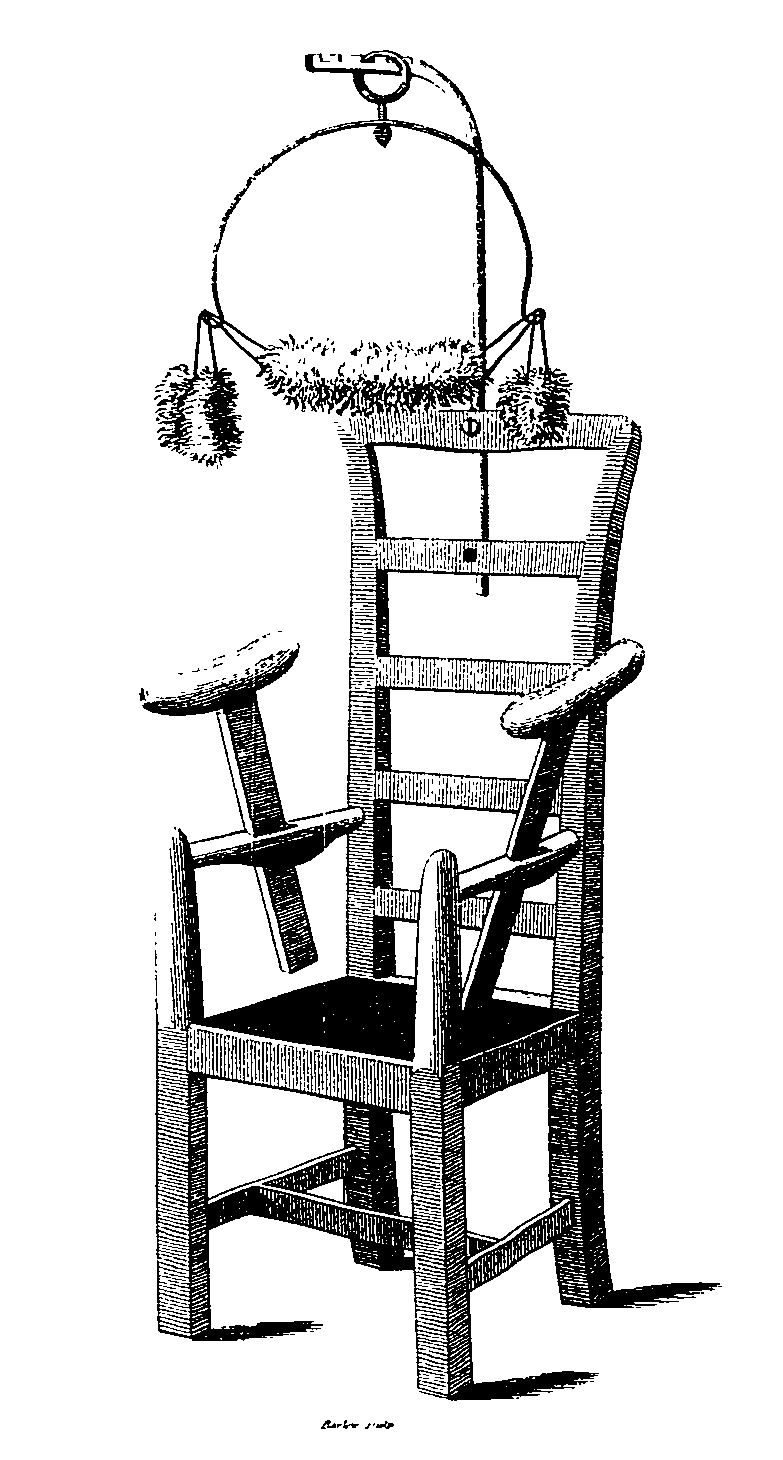
Dr. Rush says, a table spoonful or two of common salt is successful in hæmoptoe; this may be owing to its stimulating the absorbent systems, both the lymphatic, and the venous. Should the patient respire air with less oxygen? or be made sick by whirling round in a chair suspended by a rope? One immersion in cold water, or a sudden sprinkling all over with cold water, would probably stop a pulmonary hæmorrhage. See Sect. XXVII. 1.
5. Hæmorrhagia narium. Epistaxis. Bleeding at the nose in elderly subjects most frequently attends those, whose livers are enlarged or inflamed by the too frequent use of fermented liquors.
In boys it occurs perhaps simply from redundancy of blood; and in young girls sometimes precedes the approach of the catamenia; and then it shews a disposition contrary to chlorosis; which arises from a deficiency of red blood.
M. M. It is stopped by plunging the head into cold water, with powdered salt hastily dissolved in it; or sometimes by lint strewed over with wheat flour put up the nostrils; or by a solution of steel in brandy applied to the vessel by means of lint. The cure in other respects as in hæmoptoe; when the bleeding recurs at certain periods, after venesection, and evacuation by calomel, and a blister, the bark and steel must be given, as in intermittent fevers. See Section XXVII. 1.
These are always attended with increase of partial or of general heat; for the secreted fluids are not simply separated from the blood, but are new combinations; as they did not previously exist as such in the blood vessels. But all new combinations give out heat chemically; hence the origin of animal heat, which is always increased in proportion to the secretion of the part affected, or to the general quantity of the secretions. Nevertheless there is reason to believe, that as we have a sense purposely to distinguish the presence of greater or less quantities of heat, as mentioned in Sect. XIV. 6. so we may have certain minute glands for the secretion of this fluid, as the brain is believed to secrete the sensorial power, which would more easily account for the instantaneous production of the blush of shame, and of anger. This subject deserves further investigation.
1. Calor febrilis. The heat in fevers arises from the increase of some secretion, either of the natural fluids, as in irritative fevers; or of new fluids, as in infectious fevers; or of new vessels, as in inflammatory fevers. The pain of heat is a consequence of the increased extension or contraction of the fibres exposed to so great a stimulus. See Class I. 1. 5. 6.
2. Rubor febrilis. Febrile redness. When the cold fit of fever terminates, and the pulsations of the heart and arteries become strong as well as quick from the increase of their irritability after their late quiescence, the blood is impelled forwards into the fine extremities of the arteries, and the anastomozing capillaries, quicker than the extremities of the veins can absorb and return it to the heart. Hence the pulse at the wrist becomes full, as well as quick and strong, and the skin glows with arterial blood, and the veins become empty and less visible.
In elderly people the force of the heart and arteries becomes less, while the absorbent power of the veins remains the same; whence the capillary vessels part with the blood, as soon as it is received, and the skin in consequence becomes paler; it is also probable, that in more advanced life some of the finer branches of the arteries coalesce, and become impervious, and thus add to the opacity of the skin.
3. Sudor calidus. Warm sweat may be divided into four varieties, according to their remote causes. First, the perspirable matter is secreted in as great quantity during the hot fit of fever, as towards the end of it, when the sweat is seen upon the skin. But during the hot fit the cutaneous absorbents act also with increased energy, and the exhalation is likewise increased by the greater heat of the skin; and hence it does not appear in drops on the surface, but is in part reabsorbed, and in part dissipated in the atmosphere. But as the mouths of the cutaneous absorbents are exposed to the cool air or bedclothes; whilst those of the capillary glands, which secrete the perspirable matter, are exposed to the warmth of the circulating blood; the former, as soon as the fever-fit begins to decline, lose their increased action first; and hence the absorption of the sweat is diminished, whilst the increased secretion of it continues for some hours afterwards, which occasions it to stand in drops upon the skin.
As the skin becomes cooler, the evaporation of the perspirable matter becomes less, as well as the absorption of it. And hence the dissipation of aqueous fluid from the body, and the consequent thirst, are perhaps greater during the hot fit, than during the subsequent sweat. For the sweats do not occur, according to Dr. Alexander's experiments, till the skin is cooled from 112 to 108 degrees of heat; that is, till the paroxysm begins to decline. From this it appears, that the sweats are not critical to the hot fit, any more than the hot fit can be called critical to the cold one; but simply, that they are the natural consequence of the decline of the hot fit, commencing with the decreased action of the absorbent system, and the decreased evaporation from the skin. And from hence it may be concluded, that a fever-fit is not in general an effort of nature to restore health, as Sydenham considered it, but a necessary consequence of the previous torpor; and that the causes of fevers would be less detrimental, if the fever itself could be prevented from existing; as appears in the cool treatment of the small-pox.
It must be noted that the profuse sweats on the skin are more frequent at the decline of fever-fits than the copious urine, or loose stools, which are mentioned below; as the cutaneous absorbents, being exposed to the cool air, lose their increased action sooner than the urinary or intestinal absorbents; which open into the warm cavities of the bladder and intestines; but which are nevertheless often affected by their sympathy with the cutaneous absorbents. Hence few fevers terminate without a moisture of the skin; whence arose the fatal practice of forcing sweats by the external warmth of air or bedclothes in fevers; for external warmth increases the action of the cutaneous capillaries more than that of the other secerning vessels; because the latter are habituated to 98 degrees of heat, the internal warmth of the body; whereas the cutaneous capillaries being nearer the surface are habitually kept cooler by the contact of the external air. Sweats thus produced by heat in confined rooms are still more detrimental; as the air becomes then not only deprived of a part of its oxygene by frequent respiration, but is loaded with animal effluvia as well as with moisture, till it can receive no more; and in consequence, while the cutaneous secretion stands upon the skin in drops for want of exhalation, the lungs are exposed to an insalubrious atmosphere.
I do not deny, that sweating may be so managed as to be serviceable in preventing the return of the cold paroxysm of fevers; like the warm bath, or any other permanent stimulus, as wine, or opium, or the bark. For this purpose it should be continued till past the time of the expected cold fit, supported by moderate doses of wine-whey, with spirit of hartshorn, and moderate degrees of warmth. Its salutary effect, when thus managed, was probably one cause of its having been so much attended to; and the fetid smell, which when profuse is liable to accompany it, gave occasion to the belief, that the supposed material cause of the disease was thus eliminated from the circulation.
When too great external heat is applied, the system is weakened by excess of action, and the torpor which causes the cold paroxysm recurs sooner and more violently. For though some stimuli, as of opium and alcohol, at the same time that they exhaust the sensorial power by promoting increase of fibrous action, may also increase the production or secretion of it in the brain, yet experience teaches us, that the exhaustion far out-balances the increased production, as is evinced by the general debility, which succeeds intoxication.
In respect to the fetor attending copious continued sweats, it is owing to the animalized part of this fluid being kept in that degree of warmth, which most favours putrefaction, and not suffered to exhale into the atmosphere. Broth, or other animal mucus, kept in similar circumstances, would in the same time acquire a putrid smell; yet has this error frequently produced miliary eruptions, and increased every kind of inflammatory or sensitive fever.
The ease, which the patient experiences during sweating, if it be not produced by much external heat, is similar to that of the warm bath; which by its stimulus applied to the cutaneous vessels, which are generally cooler than the internal parts of the system, excites them into greater action; and pleasureable sensation is the consequence of these increased actions of the vessels of the skin. From considering all these circumstances, it appears that it is not the evacuation by sweats, but the continued stimulus, which causes and supports those sweats, which is serviceable in preventing the returns of fever-fits. And that sweats too long continued, or induced by too great stimulus of warmth, clothes, or medicines, greatly injure the patient by increasing inflammation, or by exhausting the sensorial power. See Class I. 1. 2. 14.
Secondly, The sweats produced by exercise or labour are of the warm kind; as they originate from the increased action of the capillaries of the skin, owing to their being more powerfully stimulated by the greater velocity of the blood, and by a greater quantity of it passing through them in a given time. For the blood during violent exercise is carried forwards by the action of the muscles faster in the arteries, than it can be taken up by the veins; as appears by the redness of the skin. And from the consequent sweats, it is evinced, that the secretory vessels of the skin during exercise pour out the perspirable matter faster, than the mouths of the absorbent vessels can drink it up. Which mouths are not exposed to the increased muscular action, or to the stimulus of the increased velocity and quantity of the blood, but to the cool air.
Thirdly, the increased secretion of perspirable matter occasioned by the stimulus of external heat belongs likewise to this place; as it is caused by the increased motions of the capillary vessels; which thus separate from the blood more perspirable matter, than the mouths of their correspondent absorbent vessels can take up; though these also are stimulated by external heat into more energetic action. If the air be stationary, as in a small room, or bed with closed curtains, the sweat stands in drops on the skin for want of a quicker exhalation proportioned to the quicker secretion.
A fourth variety of warm perspiration is that occasioned by stimulating drugs, of which opium and alcohol are the most powerful; and next to these the spices, volatile alkali, and neutral salts, especially sea salt; that much of the aqueous part of the blood is dissipated by the use of these drugs, is evinced by the great thirst, which occurs a few hours after the use of them. See Art. III. 2. 12. and Art. III. 2. 1.
We may from hence understand, that the increase of this secretion of perspirable matter by artificial means, must be followed by debility and emaciation. When this is done by taking much salt, or salted meat, the sea-scurvy is produced; which consists in the inirritability of the bibulous terminations of the veins arising from the capillaries; see Class I. 2. 1. 14. The scrophula, or inirritability of the lymphatic glands, seems also to be occasionally induced by an excess in eating salt added to food of bad nourishment. See Class I. 2. 3. 21. If an excess of perspiration is induced by warm or stimulant clothing, as by wearing flannel in contact with the skin in the summer months, a perpetual febricula is excited, both by the preventing the access of cool air to the skin, and by perpetually goading it by the numerous and hard points of the ends of the wool; which when applied to the tender skins of young children, frequently produce the red gum, as it is called; and in grown people, either an erysipelas, or a miliary eruption, attended with fever. See Class II. 1. 3. 12.
Shirts made of cotton or calico stimulate the skin too much by the points of the fibres, though less than flannel; whence cotton handkerchiefs make the nose sore by frequent use. The fibres of cotton are, I suppose, ten times shorter than those of flax, and the number of points in consequence twenty times the number; and though the manufacturers singe their calicoes on a red-hot iron cylinder, yet I have more than once seen an erysipelas induced or increased by the stimulus of calico, as well as of flannel.
The increase of perspiration by heat either of clothes, or of fire, contributes much to emaciate the body; as is well known to jockeys, who, when they are a stone or two too heavy for riding, find the quickest way to lessen their weight is by sweating themselves between blankets in a warm room; but this likewise is a practice by no means to be recommended, as it weakens the system by the excess of so general a stimulus, brings on a premature old age, and shortens the span of life; as may be further deduced from the quick maturity, and shortness of the lives, of the inhabitants of Hindostan, and other tropical climates.
M. Buffon made a curious experiment to shew this circumstance. He took a numerous brood of the butterflies of silkworms, some hundreds of which left their eggs on the same day and hour; these he divided into two parcels; and placing one parcel in the south window, and the other in the north window of his house, he observed, that those in the colder situation lived many days longer than those in the warmer one. From these observations it appears, that the wearing of flannel clothing next the skin, which is now so much in fashion, however useful it may be in the winter to those, who have cold extremities, bad digestions, or habitual coughs, must greatly debilitate them, if worn in the warm months, producing fevers, eruptions, and premature old age. See Sect. XXXVII. 5. Class I. 1. 2. 14. Art. III. 2. 1.
4. Urina uberior colorata. Copious coloured urine. Towards the end of fever-fits a large quantity of high coloured urine is voided, the kidneys continuing to act strongly, after the increased action of the absorbents of the bladder is somewhat diminished. If the absorbents continue also to act strongly, the urine is higher coloured, and so loaded as to deposit, when cool, an earthy sediment, erroneously thought to be the material cause of the disease; but is simply owing to the secretion of the kidnies being great from their increased action; and the thinner parts of it being absorbed by the increased action of the lymphatics, which are spread very thick on the neck of the bladder; for the urine, as well as perhaps all the other secreted fluids, is produced from the kidnies in a very dilute state; as appears in those, who from the stimulus of a stone, or other cause, evacuate their urine too frequently; which is then pale from its not having remained in the bladder long enough for the more aqueous part to have been reabsorbed. The general use of this urinary absorption to the animal œconomy is evinced from the urinary bladders of fish, which would otherwise be unnecessary. High coloured urine in large quantity shews only, that the secreting vessels of the kidnies, and the absorbents of the bladder, have acted with greater energy. When there is much earthy sediment, it shews, that the absorbents have acted proportionally stronger, and have consequently left the urine in a less dilute state. In this urine the transparent sediment or cloud is mucous; the opake sediment is probably coagulable lymph from the blood changed by an animal or chemical process. The floating scum is oil. The angular concretions to the sides of the pot, formed as the urine cools, is microcosmic salt. Does the adhesive blue matter on the sides of the glass, or the blue circle on it at the edge of the upper surface of the urine, consist of Prussian blue?
5. Diarrhœa calida. Warm diarrhœa. This species may be divided into three varieties deduced from their remote causes, under the names of diarrhœa febrilis, diarrhœa crapulosa, and diarrhœa infantum. The febrile diarrhœa appears at the end of fever-fits, and is erroneously called critical, like the copious urine, and the sweats; whereas it arises from the increased action of those secerning organs, which pour their fluids into the intestinal canal (as the liver, pancreas, and mucous glands), continuing longer than the increased action of the intestinal absorbents. In this diarrhœa there is no appearance of curdled chyle in the stools, as occurs in cholera. I. 3. 1. 5.
The diarrhœa crapulosa, or diarrhœa from indigestion, occurs when too great a quantity of food or liquid has been taken; which not being compleatly digested, stimulates the intestines like any other extraneous acrid material; and thus produces an increase of the secretions into them of mucus, pancreatic juice, and bile. When the contents of the bowels are still more stimulant, as when drastic purges, or very putrescent diet, have been taken, a cholera is induced. See Sect. XXIX. 4.
The diarrhœa infantum, or diarrhœa of infants, is generally owing to too great acidity in their bowels. Milk is found curdled in the stomachs of all animals, old as well as young, and even of carnivorous ones, as of hawks. (Spallanzani.) And it is the gastric juice of the calf, which is employed to curdle milk in the process of making cheese. Milk is the natural food for children, and must curdle in their stomachs previous to digestion; and as this curdling of the milk destroys a part of the acid juices of the stomach, there is no reason for discontinuing the use of it, though it is occasionally ejected in a curdled state. A child of a week old, which had been taken from the breast of its dying mother, and had by some uncommon error been suffered to take no food but water-gruel, became sick and griped in twenty-four hours, and was convulsed on the second day, and died on the third! When all young quadrupeds, as well as children, have this natural food of milk prepared for them, the analogy is so strong in favour of its salubrity, that a person should have powerful testimony indeed of its disagreeing, before he advises the discontinuance of the use of it to young children in health, and much more so in sickness. The farmers lose many of their calves, which are brought up by gruel, or gruel and old milk; and among the poor children of Derby, who are thus fed, hundreds are starved into the scrophula, and either perish, or live in a state of wretched debility.
When young children are brought up without a breast, they should for the first two months have no food but new milk; since the addition of any kind of bread or flour is liable to ferment, and produce too much acidity; as appears by the consequent diarrhœa with green dejections and gripes; the colour is owing to a mixture of acid with the natural quantity of bile, and the pain to its stimulus. And they should never be fed as they lie upon their backs, as in that posture they are necessitated to swallow all that is put into their mouths; but when they are fed, as they are sitting up, or raised up, when they have had enough, they can permit the rest to run out of their mouths. This circumstance is of great importance to the health of those children, who are reared by the spoon, since if too much food is given them, indigestion, and gripes, and diarrhœa, is the consequence; and if too little, they become emaciated; and of this exact quantity their own palates judge the best.
M. M. In this last case of the diarrhœa of children, the food should be new milk, which by curdling destroys part of the acid, which coagulates it. Chalk about four grains every six hours, with one drop of spirit of hartshorn, and half a drop of laudanum. But a blister about the size of a shilling is of the greatest service by restoring the power of digestion. See Article III. 2. 1. in the subsequent Materia Medica.
6. Salivatio calida. Warm salivation. Increased secretion of saliva. This may be effected either by stimulating the mouth of the gland by mercury taken internally; or by stimulating the excretory duct of the gland by pyrethrum, or tobacco; or simply by the movement of the muscles, which lie over the gland, as in masticating any tasteless substance, as a lock of wool, or mastic.
In about the middle of nervous fevers a great spitting of saliva sometimes occurs, which has been thought critical; but as it continues sometimes two or even three weeks without the relief of the patient, it may be concluded to arise from some accidental circumstance, perhaps not unsimilar to the hysteric ptyalisms mentioned in Class I. 3. 2. 2. See Sect. XXIV.
M. M. Cool air, diluents, warm bath, evacuations.
7. Catharrhus calidus. Warm catarrh. Consists in an increased secretion of mucus from the nostrils without inflammation. This disease, which is called a cold in the head, is frequently produced by cold air acting for some time on the membranes, which line the nostrils, as it passes to the lungs in respiration. Whence a torpor of the action of the mucous glands is first introduced, as in I. 2. 3. 3. and an orgasm or increased action succeeds in consequence. Afterwards this orgasm and torpor are liable to alternate with each other for some time like the cold and hot fits of ague, attended with deficient or exuberant secretion of mucus in the nostrils.
At other times it arises from reverse sympathy with some extensive parts of the skin, which have been exposed too long to cold, as of the head, or feet. In consequence of the torpor of these cutaneous capillaries those of the mucous membrane of the nostrils act with greater energy by reverse sympathy; and thence secrete more mucus from the blood. At the same time the absorbents, acting also with greater energy by their reverse sympathy with those of some distant part of the skin, absorb the thinner parts of the mucus more hastily; whence the mucus is both thicker and in greater quantity. Other curious circumstances attend this disease; the membrane becomes at times so thickened by its increased action in secreting the mucus, that the patient cannot breathe through his nostrils. In this situation if he warms his whole skin suddenly by fire or bed-clothes, or by drinking warm tea, the increased action of the membrane ceases by its reverse sympathy with the skin; or by the retraction of the sensorial power to other parts of the system; and the patient can breathe again through the nostrils. The same sometimes occurs for a time on going into the cold air by the deduction of heat from the mucous membrane, and its consequent inactivity or torpor. Similar to this when the face and breast have been very hot and red, previous to the eruption of the small-pox by inoculation, and that even when exposed to cool air, I have observed the feet have been cold; till on covering them with warm flannel, as the feet have become warm, the face has cooled. See Sect. XXXV. 1. 3. Class II. 1. 3. 5. IV. 2. 2. 10. IV. 1. 1. 5.
M. M. Evacuations, abstinence, oil externally on the nose, warm diluent fluids, warm shoes, warm night-cap.
8. Expectoratio calida. Warm expectoration consists of the increased secretion of mucus from the membrane, which lines the bronchiæ, or air-cells of the lungs, without inflammation. This increased mucus is ejected by the action of coughing, and is called a cold, and resembles the catarrh of the preceding article; with which it is frequently combined.
M. M. Inhale the steam of warm water, evacuations, warm bath, afterwards opium, sorbentia.
9. Exsudatio pone aures. A discharge behind the ears. This chiefly affects children, and is a morbid secretion; as appears from its fetor; for if it was owing to defect of absorption, it would be saline, and not fetid; if a morbid action has continued a considerable time, it should not be stopped too suddenly; since in that case some other morbid action is liable to succeed in its stead. Thus children are believed to have had cholics, or even convulsions, consequent to the too sudden healing of these morbid effusions behind their ears. The rationale of this is to be explained from a medical fact, which I have frequently observed; and that is, that a blister on the back greatly strengthens the power of digestion, and removes the heart-burn in adults, and green stools in children. The stimulus of the blister produces sensation in the vessels of the skin; with this additional sensorial power these vessels act more strongly; and with these the vessels of the internal membranes of the stomach and bowels act with greater energy from their direct sympathy with them. Now the acrid discharge behind the ears of children produces sensation on that part of the skin, and so far acts as a small blister. When this is suddenly stopped, a debility of the digestive power of the stomach succeeds from the want of this accustomed stimulus, with flatulency, green stools, gripes, and sometimes consequent convulsions. See Class II. 1. 5. 6. and II. 1. 4. 6.
M. M. If the matter be absorbed, and produces swelling of the lymphatics of the neck, it should be cured as soon as possible by dusting the part with white lead, cerussa, in very fine powder; and to prevent any ill consequence an issue should be kept for about a month in the arm; or a purgative medicine should be taken, every other day for three or four times, which should consist of a grain of calomel, and three or four grains of rhubarb, and as much chalk. If there be no appearance of absorption, it is better only to keep the parts clean by washing them with warm water morning and evening; or putting fuller's earth on them; especially till the time of toothing is past. The tinea, or scald head, and a leprous eruption, which often appears behind the ears, are different diseases.
10. Gonorrhea calida. Warm gleet. Increased discharge of mucus from the urethra or prostrate gland without venereal desire, or venereal infection. See Class I. 2. 3. 8.
M. M. Cantharides, balsams, rhubarb, blister in perinæum, cold bath, injections of metallic salts, flannel shirt, change of the form of the accustomed chair or saddle of the patient.
11. Fluor albus calidus. Warm fluor albus. Increased secretion of mucus in the vagina or uterus without venereal desire or venereal infection. It is distinguished from the fluor albus frigidus by the increased sense of warmth in the part, and by the greater opacity or spissitude of the material discharged; as the thinner parts are reabsorbed by the increased action of the absorbents, along with the saline part, whence no smarting or excoriation attends it.
M. M. Mucilage, as isinglass, hartshorn jelly, gum arabic. Ten grains of rhubarb every night. Callico or flannel shift, opium, balsams. See Class I. 2. 3. 7.
12. Hæmorrhois alba. White piles. An increased discharge of mucus from the rectum frequently mistaken for matter; is said to continue a few weeks, and recur like the bleeding piles; and to obey lunar influence. See Class I. 2. 1. 6.
M. M. Abstinence from vinous spirit. Balsam of copaiva. Spice swallowed in large fragments, as ten or fifteen black pepper-corns cut in half, and taken after dinner and supper. Ward's paste, consisting of black pepper and the powdered root of Helenium Enula.
13. Serum e vesicatorio. Discharge from a blister. The excretory ducts of glands terminate in membranes, and are endued with great irritability, and many of them with sensibility; the latter perhaps in consequence of their facility of being excitable into great action; instances of this are the terminations of the gall-duct in the duodenum, and of the salivary and lachrymal glands in the mouth and eye; which produce a greater secretion of their adapted fluids, when the ends of their excretory ducts are stimulated.
The external skin consists of the excretory ducts of the capillaries, with the mouths of the absorbents; when these are stimulated by the application of cantharides, or by a slice of the fresh root of bryonia alba bound on it, the capillary glands pour an increased quantity of fluid upon the skin by their increased action; and the absorbent vessels imbibe a greater quantity of the more fluid and saline part of it; whence a thick mucous or serous fluid is deposited between the skin and cuticle.
14. Perspiratio fœtida. Fetid perspiration. The uses of the perspirable matter are to keep the skin soft and pliant, for the purposes of its easier flexibility during the activity of our limbs in locomotion, and for the preservation of the accuracy of the sense of touch, which is diffused under the whole surface of it to guard us against the injuries of external bodies; in the same manner as the secretion of tears is designed to preserve the cornea of the eye moist, and in consequence transparent; yet has this cutaneous mucus been believed by many to be an excrement; and I know not how many fanciful theories have been built on its supposed obstruction. Such as the origin of catarrhs, coughs, inflammations, erysypelas, and herpes.
To all these it may be sufficient to answer, that the antient Grecians oiled themselves all over; that some nations have painted themselves all over, as the Picts of this island; that the Hottentots smear themselves all over with grease. And lastly, that many of our own heads at this day are covered with the flour of wheat and the fat of hogs, according to the tyranny of a filthy and wasteful fashion, and all this without inconvenience. To this must be added the strict analogy between the use of the perspirable matter and the mucous fluids, which are poured for similar purposes upon all the internal membranes of the body; and besides its being in its natural state inodorous; which is not so with the other excretions of feces, or of urine.
In some constitutions the perspirable matter of the lungs acquires a disagreeable odour; in others the axilla, and in others the feet, emit disgustful effluvia; like the secretions of those glands, which have been called odoriferæ; as those, which contain the castor in the beaver, and those within the rectum of dogs, the mucus of which has been supposed to guard them against the great costiveness, which they are liable to in hot summers; and which has been thought to occasion canine madness, but which, like their white excrement, is more probably owing to the deficient secretion of bile. Whether these odoriferous particles attend the perspirable matter in consequence of the increased action of the capillary glands, and can properly be called excrementitous; that is, whether any thing is eliminated, which could be hurtful if retained; or whether they may only contain some of the essential oil of the animal; like the smell, which adheres to one's hand on stroking the hides of some dogs; or like the effluvia, which is left upon the ground, from the feet of men and other creatures; and is perceptible by the nicer organs of the dogs, which hunt them, may admit of doubt.
M. M. Wash the parts twice a day with soap and water; with lime water; cover the feet with oiled silk socks, which must be washed night and morning. Cover them with charcoal recently made red hot, and beaten into fine powder and sifted, as soon as cold, and kept well corked in a bottle, to be warned off and renewed twice a day. Internally rhubarb grains vi. or viii. every night, so as to procure a stool or two extraordinary every day, and thus by increasing one evacuation to decrease another. Cool dress, diluting liquids?
15. Crines novi. New hairs. The black points on the faces of some people consist of mucus, which is become viscid, and which adheres in the excretory ducts of the glands of the skin; as described in Class I. 2. 2. 9. and which may be pressed out by the fingers, and resembles little worms. Similar to this would seem the fabrication of silk, and of cobweb by the silk worm and spider; which is a secreted matter pressed through holes, which are the excretory ducts of glands. And it is probable, that the production of hair on many parts of the body, and at different periods of life, may be effected by a similar process; and more especially as every hair may be considered as a slender flexible horn, and is an appendage of the skin. See Sect. XXXIX. 3. 2. Now as there is a sensitive sympathy between the glands, which secrete the semen, and the throat, as appears in the mumps; see Hydrophobia, Class IV. 1. 2. 7. and Parotitis, Class IV. 1. 2. 19. The growth of the beard at puberty seems to be caused by the greater action of the cutaneous glands about the chin and pubes in consequence of their sympathy with those of the testes. But this does not occur to the female sex at their time of puberty, because the sensitive sympathy in them seems to exist between the submaxillary glands, and the pectoral ones; which secrete the milk, and afford pleasure both by that secretion, and by the erection of the mamulæ, or nipples; and by delivering the milk into the mouth of the child; this sensitive sympathy of the pectoral and submaxillary glands in women is also observable in the Parotitis, or mumps, as above referred to.
When hairs grow on the face or arms so as to be disagreeable, they may be thus readily removed without pain or any ill consequence. Warm the ends of a pair of nippers or forceps, and stick on them a little rosin, or burgundy pitch; by these means each single hair may be taken fast hold of; and if it be then plucked off slowly, it gives pain; but if plucked off suddenly, it gives no pain at all; because the vis inertiæ of the part of the skin, to which it adheres, is not overcome; and it is not in consequence separated from the cellular membrane under it. Some of the hairs may return, which are thus plucked off, or others may be induced to grow near them; but in a little time they may be thus safely destroyed; which is much to be preferred to the methods said to be used in Turkey to eradicate hair; such as a mixture of orpiment and quick lime; or of liver of sulphur in solution; which injure the skin, if they are not very nicely managed; and the hair is liable to grow again as after shaving; or to become white, if the roots of it have been much inflamed by the causticity of the application. See Class I. 2. 2. 11. on grey hairs.
These are not attended with so great increase of heat as in the former genus, because the fluids probably undergo less chemical change in the glands of the absorbent system; nor are the glands of the absorbent vessels so numerous or so extensive as those of the secerning ones. Yet that some heat is produced by the increased action of the absorbents appears from the greater general warmth of the skin and extremities of feeble patients after the exhibition of the peruvian bark, and other medicines of the article Sorbentia.
1. Lingua arida. Dry tongue occurs in those fevers, where the expired air is warmer than natural; and happens to all those, who sleep with their mouths open; the currents of air in respiration increasing the evaporation. There is also a dryness in the mouth from the increased action of the absorbent vessels, when a sloe or a crab-apple are masticated; and after the perforation has been much increased by eating salt or spice, or after other copious secretions; as after drunkenness, cathartics, or fever fits, the mucus of the mouth becomes viscid, and in small quantity, from the increased absorption, adhering to the tongue like a white slough. In the diabætes, where the thirst is very great, this slough adheres more pertinaciously, and becomes black or brown, being coloured after a few days by our aliment or drink. The inspissated mucus on the tongue of those, who sleep with their mouths open, is sometimes reddened as if mixed with blood, and sometimes a little blood follows the expuition of it from the fauces owing to its great adhesion. When this mucus adheres long to the papillæ of the tongue, the saliva, which it contains in its interstices, like a sponge, is liable to become putrid, and to acquire a bitter taste, like other putrid animal substances; which is generally mistaken for an indication of the presence of bile.
M. M. Warm subacid liquids. See Class I. 2. 5. 8.
2. Fauces aridæ. Dry throat. The expuition of a frothy mucus with great and perpetual hawking occurs in hydrophobia, and is very distressing to the patient; which may be owing to the increased irritability or sensibility of the upper part of the œsophagus, which will not permit any fluid to rest on it.
It affects some people after intoxication, when the lungs remain slightly inflamed, and by the greater heat of the air in expiration the mucus becomes too hastily evaporated, and is expectorated with difficulty in the state of white froth.
I knew a person, who for twenty years always waked with his tongue and throat quite dry; so that he was necessitated to take a spoonful of water, as soon as he awoke; otherwise a little blood always followed the forcible expuition of the indurated mucus from his fauces. See Class II. 1. 3. 17.
M. M. Steel-springs fixed to the night-cap so as to suspend the lower jaw and keep it closed; or springs of elastic gum. Or a pot of water suspended over the bed, with a piece of list, or woollen cloth, depending from it, and held in the mouth; which will act like a syphon, and slowly supply moisture, or barley water should be frequently syringed into the mouth of the patient.
3. Nares aridi. Dry nostrils with the mucus hardening upon their internal surface, so as to cover them with a kind of skin or scale, owing to the increased action of the absorbents of this membrane; or to the too great dryness of the air, which passes into the lungs; or too great heat of it in its expiration.
When air is so dry as to lose its transparency; as when a tremulous motion of it can be seen over corn fields in a hot summer's day; or when a dry mist, or want of transparency of the air, is visible in very hot weather; the sense of smell is at the same time imperfect from the dryness of the membrane, beneath which it is spread.
4. Expectoratio solida. Solid expectoration. The mucus of the lungs becomes hardened by the increased absorption, so that it adheres and forms a kind of lining in the air-cells, and is sometimes spit up in the form of branching vessels, which are called polypi of the lungs. See Transact. of the College, London. There is a rattling or weezing of the breath, but it is not at first attended with inflammation.
The Cynanche trachealis, or Croup, of Dr. Cullen, or Angina polyposa of Michaelis, if they differ from the peripneumony of infants, seem to belong to this genus. When the difficulty of respiration is great, venesection is immediately necessary, and then an emetic, and a blister. And the child should be kept nearly upright in bed as much as may be. See Tonsillitis, Class II. 1. 3. 3.
M. M. Diluents, emetics, essence of antimony, fœtid gums, onions, warm bath for half an hour every day for a month. Inhaling the steam of water, with or without volatile alcali. Soap.
5. Constipatio alvi. Costiveness from increased action of the intestinal absorbents. The feces are hardened in lumps called scybala; which are sometimes obliged to be extracted from the rectum with a kind of marrow spoon. This is said to have happened from the patient having taken much rust of iron. The mucus is also hardened so as to line the intestines, and to come away in skins, rolled up as they pass along, so as to resemble worms, for which they are frequently mistaken; and sometimes it is evacuated in still larger pieces, so as to counterfeit the form of the intestines, and has been mistaken for a portion of them. Balls of this kind, nearly as heavy as marble, and considerably hard, from two inches to five in diameter, are frequently found in the bowels of horses. Similar balls found in goats have been called Bezoar.
M. M. Cathartics, Diluents, fruit, oil, soap, sulphur, warm bath. Sprinkling with cold water, cool clothing. See Class I. 2. 4. 18.
6. Cutis arida. Dry skin. This dry skin is not attended with coldness as in the beginning of fever-fits. Where this cutaneous absorption is great, and the secreted material upon it viscid, as on the hairy scalp, the skin becomes covered with hardened mucus; which adheres so as not to be easily removed, as the scurf on the head; but is not attended with inflammation like the Tinea, or Lepra. The moisture, which appears on the skin beneath resinous or oily plasters, or which is seen to adhere to such plasters, is owing to their preventing the exhalation of the perspirable matter, and not to their increasing the production of it, as some have idly imagined.
M. M. Warm bathing, oil externally, oil-skin gloves, resinous plasters. Wax.
7. Urina parca colorata. Diminished urine, which is high coloured, and deposits an earthy sediment, when cold, is owing to the great action of the urinary absorbents. See Class I. 1. 2. 4. In some dropsies the cutaneous absorbents are paralytic, as well as those opening into the cellular membrane; and hence, no moisture being acquired from the atmosphere, or from the cellular membrane, great thirst is excited; and great absorption from all parts, where the absorbents are still capable of action. Hence the urine is in very small quantity, and of deep colour, with copious sediment; and the kidneys are erroneously blamed for not doing their office; stimulant diuretic medicines are given in vain; and very frequently the unhappy patient is restrained from quenching his thirst, and dies a martyr to false theory.
M. M. Diluent liquids, and warm bathing, are the natural cure of this symptom; but it generally attends those dropsies, which are seldom curable; as they are owing to a paralysis both of the cutaneous and cellular lymphatics.
8. Calculus felleus. Gall-stone. From the too hasty absorption of the thinner parts of the bile, the remainder is left too viscid, and crystallizes into lumps; which, if too large to pass, obstruct the ductus choledochus, producing pain at the pit of the stomach, and jaundice. When the indurated bile is not harder than a boiled pea, it may pass through the bile-duct with difficulty by changing its form; and thus gives those pains, which have been called spasms of the stomach; and yet these viscid lumps of bile may afterwards dissolve, and not be visible among the feces.
In two instances I have seen from thirty to fifty gall-stones voided after taking an oil vomit as below. They were about the size of peas, and distinguishable when dry by their being inflammable like bad wax, when put into the flame of a candle. For other causes of jaundice, see Class I. 2. 4. 19.
M. M. Diluents, daily warm bathing. Ether mixed with yolk of egg and water. Unboiled acrid vegetables, as lettice, cabbage, mustard, and cresses. When in violent pain, four ounces of oil of olives, or of almonds, should be swallowed; and as much more in a quarter of an hour, whether it stays or not. The patient should lie on the circumference of a large barrel, first on one side, and then on the other. Electric shocks through the gall-duct. Factitious Selter's water made by dissolving one dram of Sal Soda in a pint of water; to half a pint of which made luke-warm add ten drops of marine acid; to be drank as soon as mixed, twice a day for some months. Opium must be used to quiet the pain, if the oil does not succeed, as two grains, and another grain in half an hour if necessary. See Class IV. 2. 2. 4.
9. Calculus renis. Stone of the kidney. The pain in the loins and along the course of the ureter from a stone is attended with retraction of the testicle in men, and numbness on the inside of the thigh in women. It is distinguished from the lumbago or sciatica, as these latter are seldom attended with vomiting, and have pain on the outside of the thigh, sometimes quite down to the ankle or heel. See Herpes and Nephritis.
Where the absorption of the thinner parts of the secretion takes place too hastily in the kidnies, the hardened mucus, and consequent calculous concretions, sometimes totally stop up the tubuli uriniferi; and no urine is secreted. Of this many die, who have drank much vinous spirit, and some of them recover by voiding a quantity of white mucus, like chalk and water; and others by voiding a great quantity of sand, or small calculi. This hardened mucus frequently becomes the nucleus of a stone in the bladder. The salts of the urine, called microcosmic salt, are often mistaken for gravel, but are distinguishable both by their angles of crystallization, their adhesion to the sides or bottom of the pot, and by their not being formed till the urine cools. Whereas the particles of gravel are generally without angles, and always drop to the bottom of the vessel, immediately as the water is voided.
Though the proximate cause of the formation of the calculous concretions of the kidneys, and of chalk-stones in the gout, and of the insoluble concretions of coagulable lymph, which are found on membranes, which have been inflamed in peripneumony, or rheumatism, consists in the too great action of the absorbent vessels of those parts; yet the remote cause in these cases is probably owing to the inflammation of the membranes; which at that time are believed to secrete a material more liable to coagulate or concrete, than they would otherwise produce by increased action alone without the production of new vessels, which constitutes inflammation. As defined in Class II. 1. 2.
The fluids secreted from the mucous membranes of animals are of various kinds and consistencies. Hair, silk, scales, horns, fingernails, are owing to natural processes. Gall-stones, stones found in the intestines of horses, scurf of the skin in leprosy, stones of the kidnies and bladder, the callus from the inflamed periosteum, which unites broken bones, the calcareous cement, which repairs the injured shells of snails, the calcareous crust on the eggs of birds, the annually renewed shells of crabs, are all instances of productions from mucous membranes, afterwards indurated by absorption of their thinner parts.
All these concretions contain phosphoric acid, mucus, and calcareous earth in different proportions; and are probably so far analogous in respect to their component parts as well as their mode of formation. Some calcareous earth has been discovered after putrefaction in the coagulable lymph of animals. Fordyce's Elements of Practice. A little calcareous earth was detected by Scheel or Bergman in the calculus of the bladder with much phosphoric acid, and a great quantity of phosphoric acid is shewn to exist in oyster-shells by their becoming luminous on exposing them a while to the sun's light after calcination; as in the experiments of Wilson. Botanic Garden, P. 1. Canto 1. l. 182, note. The exchange of which phosphoric acid for carbonic acid, or fixed air, converts shells into limestone, producing mountains of marble, or calcareous strata.
Now as the hard lumps of calcareous matter, termed crabs' eyes, which are found in the stomachs of those animals previous to the annual renewal of their shells, are redissolved, probably by their gastric acid, and again deposited for that purpose; may it not be concluded, that the stone of the bladder might be dissolved by the gastric juice of fish of prey, as of crabs, or pike; or of voracious young birds, as young rooks or hawks, or even of calves? Could not these experiments be tried by collecting the gastric juice by putting bits of sponge down the throats of young crows, and retracting them by a string in the manner of Spallanzani? or putting pieces of calculus down the throat of a living crow, or pike, and observing if they become digested? and lastly could not gastric juice, if it should appear to be a solvent, be injected and born in the bladder without injury by means of catheters of elastic resin, or caoutchouc?
M. M. Diluents. Cool dress. Frequent change of posture. Frequent horizontal rest in the day. Bathe the loins every morning with a sponge and cold water. Aerated alcaline water internally. Abstinence from all fermented or spirituous liquors. Whatever increases perspiration injures these patients, as it dissipates the aqueous particles, which ought to dilute the urine. When the constitution begins to produce gravel, it may I believe be certainly prevented by a total abstinence from fermented or spirituous liquors; by drinking much aqueous fluids; as toast and water, tea, milk and water, lemonade; and lastly by thin clothing, and sleeping on a hardish bed, that the patient may not lie too long on one side. See Class IV. 2. 2. 2. There is reason to believe, that the daily use of opium contributes to produce gravel in the kidnies by increasing absorption, when they are inflamed; in the same manner as is done by fermented or spirituous liquor. See Class I. 3. 2. 11.
When the kidnies are so obstructed with gravel, that no urine passes into the bladder; which is known by the external appearance of the lower part of the abdomen, which, when the bladder is full, seems as if contracted by a cord between the navel and the bladder; and by the tension on the region of the bladder distinguishable by the touch; or by the introduction of the catheter; the following methods of cure are frequently successful. Venesection to six or eight ounces, ten grains of calomel, and an infusion of senna with salts and oil, every three hours, till stools are procured. Then an emetic. After the patient has been thus evacuated, a blister on the loins should be used; and from ten to twenty electric shocks should be passed through the kidnies, as large as can be easily borne, once or twice a day. Along with this method the warm bath should be used for an hour once or twice a day. After repeated evacuations a clyster, consisting of two drams of turpentine dissolved by yolk of egg, and sixty drops of tincture of opium, should be used at night, and repeated, with cathartic medicines interposed, every night, or alternate nights. Aerated solution of alcali should be taken internally, and balsam of copaiva, three or four times a day. Some of these patients recover after having made no water for nine or ten days.
If a stone sticks in the ureter with incessant vomiting, ten grains of calomel must be given in small pills as above; and some hours afterwards infusion of senna and salts and oil, if it can be made to stay on the stomach. And after the purge has operated four or five times, an opiate is to be given, if the pain continues, consisting of two grains of opium. If this does not succeed, ten or twenty electric shocks through the kidney should be tried, and the purgative repeated, and afterwards the opiate. The patient should be frequently put into the warm bath for an hour at a time. Eighty or an hundred drops of laudanum given in a glyster, with two drams of turpentine, is to be preferred to the two grains given by the stomach as above, when the pain and vomiting are very urgent.
10. Calculus vesicæ. Stone of the bladder. The nucleus, or kernel, of these concretions is always formed in the kidney, as above described; and passing down the ureter into the bladder, is there perpetually increased by the mucus and salts secreted from the arterial system, or by the mucus of the bladder, disposed in concentric strata. The stones found in the bowels of horses are also formed on a nucleus, and consist of concentric spheres; as appears in sawing them through the middle. But as these are formed by the indurated mucus of the intestines alone without the urinary salts, it is probable a difference would be found on their analysis.
As the stones of the bladder are of various degrees of hardness, and probably differ from each other in the proportions at least of their component parts; when a patient, who labours under this afflicting disease, voids any small bits of gravel; these should be kept in warm solutions of caustic alcali, or of mild alcali well aerated; and if they dissolve in these solutions, it would afford greater hopes, that that which remains in the bladder, might be affected by these medicines taken by the stomach, or injected into the bladder.
To prevent the increase of a stone in the bladder much diluent drink should be taken; as half a pint of water warmed to about eighty degrees, three or four times a day: which will not only prevent the growth of it, by preventing any microcosmic salts from being precipitated from the urine, and by keeping the mucus suspended in it; but will also diminish the stone already formed, by softening, and washing away its surface. To this must be added cool dress, and cool bed-clothes, as directed above in the calculus renis.
When the stone is pushed against or into the neck of the bladder, great pain is produced; this may sometimes be relieved by the introduction of a bougie to push the stone back into the fundus of the bladder. Sometimes by change of posture, or by an opiate either taken into the stomach, or by a clyster.
A dram of sal soda, or of salt of tartar, dissolved in a pint of water, and well saturated with carbonic acid (fixed air), by means of Dr. Nooth's glass-apparatus, and drank every day, or twice a day, is the most efficacious internal medicine yet discovered, which can be easily taken without any general injury to the constitution. An aerated alcaline water of this kind is sold under the name of factitious Seltzer water, by J. Schweppe, at No 8, King's-street, Holborn, London; which I am told is better prepared than can be easily done in the usual glass-vessels, probably by employing a greater pressure in wooden ones.
Lythotomy is the last recourse. Will the gastric juice of animals dissolve calculi? Will fermenting vegetable juices, as sweet-wort, or sugar and water in the act of fermentation with yest, dissolve any kind of animal concretions?
11. Calculus arthriticus. Gout-stones are formed on inflamed membranes, like those of the kidnies above described, by the too hasty absorption of the thinner and saline parts of the mucus. Similar concretions have been produced in the lungs, and even in the pericardium; and it is probable, that the ossification, as it is called, of the minute arteries, which is said to attend old age, and to precede some mortifications of the extremities, may be a process of this kind.
As gout-stones lie near the surface, it is probable, that ether, frequently applied in their early state, might render them so liquid as to permit their reabsorption; which the stimulus of the ether might at the same time encourage.
12. Rheumatismus chronicus. Chronic rheumatism. After the acute rheumatism some inspissated mucus, or material similar to chalk-stones of the gout, which was secreted on the inflamed membrane, is probably left, owing to the too hasty absorption of the thinner and saline part of it; and by lying on the fascia, which covers some of the muscles, pains them, when they move and rub against it, like any extraneous material.
The pain of the shoulder, which attends inflammations of the upper membrane of the liver, and the pains of the arms, which attend asthma dolorificum, or dropsy of the pericardium, are distinguished from the chronic rheumatism, as in the latter the pain only occurs on moving the affected muscles.
M. M. Warm bath, cold bath, bandage of emplastrum de minio put on tight, so as to compress the part. Cover the part with flannel. With oiled silk. Rub it with common oil frequently. With ether. A blister. A warmer climate. Venesection. A grain of calomel and a grain of opium for ten successive nights. The Peruvian bark.
13. Cicatrix vulnerum. The scar after wounds. In the healing of ulcers the matter is first thickened by increasing the absorption in them; and then lessened, till all the matter is absorbed, which is brought by the arteries, instead of being deposed in the ulcer.
M. M. This is promoted by bandage, by the sorbentia externally, as powder of bark, white lead; solution of sugar of lead. And by the sorbentia internally after evacuations. See Sect. XXXIII. 3. 2.
In those ulcers, which are made by the contact of external fire, the violent action of the fibres, which occasions the pain, is liable to continue, after the external heat is withdrawn. This should be relieved by external cold, as of snow, salt and water recently mixed, ether, or spirits of wine suffered to evaporate on the part.
The cicatrix of an ulcer generally proceeds from the edges of it; but in large ones frequently from the middle, or commences in several places at the same time; which probably contributes to the unevenness of large scars.
14. Corneæ obfuscatio. Opacity of the cornea. There are few people, who have passed the middle of life, who have not at some time suffered some slight scratches or injuries of the cornea, which by not healing with a perfectly smooth surface, occasion some refractions of light, which may be conveniently seen in the following manner: fill a tea-saucer with cream and tea, or with milk, and holding it to your lips, as if going to drink it, the imperfections of the cornea will appear like lines or blotches on the surface of the fluid, with a less white appearance than that surface. Those blemishes of the eye are distinguished from the muscæ volitantes described in Class I. 2. 5. 3. by their being invariably seen at any time, when you look for them.
Ulcers may frequently be seen on the cornea after ophthalmy, like little pits or indentations beneath the surface of it: in this case no external application should be used, lest the scar should be left uneven; but the cure should be confined to the internal use of thirty grains of bark twice a day, and from five to ten drops of laudanum at night, with five grains of rhubarb, if necessary.
After ulcers of the cornea, which have been large, the inequalities and opacity of the cicatrix obscures the sight; in this case could not a small piece of the cornea be cut out by a kind of trephine about the size of a thick bristle, or a small crow-quill, and would it not heal with a transparent scar? This experiment is worth trying, and might be done by a piece of hollow steel wire with a sharp edge, through which might be introduced a pointed steel screw; the screw to be introduced through the opake cornea to hold it up, and press it against the cutting edge of the hollow wire or cylinder; if the scar should heal without losing its transparency, many blind people might be made to see tolerably well by this slight and not painful operation. An experiment I wish strongly to recommend to some ingenious surgeon or oculist.
1. Nictitatio irritativa. Winking of the eyes is performed every minute without our attention, for the purpose of cleaning and moistening the eye-ball; as further spoken of in Class II. 1. 1. 8. When the cornea becomes too dry, it becomes at the same time less transparent; which is owing to the pores of it being then too large, so that the particles of light are refracted by the edges of each pore, instead of passing through it; in the same manner as light is refracted by passing near the edge of a knife. When these pores are filled with water, the cornea becomes again transparent. This want of transparency of the cornea is visible sometimes in dying people, owing to their inirritability, and consequent neglect of nictitation.
The increase of transparency by filling the pores with fluid is seen by soaking white paper in oil; which from an opake body becomes very transparent, and accounts for a curious atmospheric phenomenon; when there exists a dry mist in a morning so as to render distant objects less distinct, it is a sign of a dry day; when distant objects are seen very distinct, it is a sign of rain. See Botan. Garden, Part I. add. note xxv. The particles of air are probably larger than those of water, as water will pass through leather and paper, which will confine air; hence when the atmosphere is much deprived of moisture, the pores of the dry air are so large, that the rays of light are refracted by their edges instead of passing through them. But when as much moisture is added as can be perfectly dissolved, the air becomes transparent; and opake again, when a part of this moisture collects into small spherules previous to its precipitation. This also accounts for the want of transparency of the air, which is seen in tremulous motions over corn-fields on hot summer-days, or over brick-kilns, after the flame is extinguished, while the furnace still remains hot.
2. Deglutitio irritativa. The deglutition of our saliva is performed frequently without our attention, and is then an irritative action in consequence of the stimulus of it in the mouth. Or perhaps sometimes for the purpose of diffusing a part of it over the dry membranes of the fauces and pharinx; in the same manner as tears are diffused over the cornea of the eye by the act of nictitation to clean or moisten it.
3. Respiratio et Tussis irritativæ. In the acts of respiration and of coughing there is an increased motion of the air-cells of the lungs owing to some stimulating cause, as described above in Class I. 1. 2. 8. and I. 1. 3. 4. and which are frequently performed without our attention or consciousness, and are then irritative actions; and thus differ from those described in Class II. 1. 1. 2. and 5. To these increased actions of the air-cells are superadded those of the intercostal muscles and diaphragm by irritative association. When any unnatural stimulus acts so violently on the organs of respiration as to induce pain, the sensorial power of sensation becomes added to that of irritation, and inflammation of the membranes of them is a general consequence.
4. Exclusio bilis. The exclusion of the bile from the gall-bladder, and its derivation into the duodenum, is an irritative action in consequence of the stimulus of the aliment on the extremity of the biliary duct, which terminates in the intestine. The increased secretion of tears is occasioned in a similar manner by any stimulating material in the eyes; which affects the excretory ducts of the lacrymal glands. A pain of the external membrane of the eye sometimes attends any unusual stimulus of it, then the sensorial power of sensation becomes added to that of irritation, and a superficial inflammation is induced.
5. Dentitio. Toothing. The pain of toothing often begins much earlier than is suspected; and is liable to produce convulsions; which are sometimes relieved, when the gum swells, and becomes inflamed; at other times a diarrhœa supervenes, which is generally esteemed a favourable circumstance, and seems to prevent the convulsions by supplying another means of relieving the pain of dentition by irritative exertion; and a consequent temporary exhaustion of sensorial power. See Class I. 1. 2. 5. Sect. XXXV. 2. 1.
The convulsions from toothing generally commence long before the appearance of the teeth; but as the two middle incisors of the lower jaw generally appear first, and then those of the upper, it is adviseable to lance the gums over these longitudinally in respect to the jaw-bones, and quite down to the periosteum, and through it.
As the convulsions attending the commencement of toothing are not only dangerous to life in their greatest degree, but are liable to induce stupor or insensibility by their continuance even in a less degree, the most efficacious means should be used to cure them.
M. M. Lance the gum of the expected teeth quite through the periosteum longitudinally. Venesection by the lancet or by two or three leeches. One grain of calomel as a purge. Tincture of jalap, five or six drops in water every three hours til it purges, to be repeated daily. After evacuations a small blister on the back or behind the ears. And lastly, two or three drops of laudanum according to the age of the child. Warm bath. See Class III. 1. 1. 5. and 6.
6. Priapismus chronicus. I have seen two cases, where an erection of the penis, as hard as horn, continued two or three weeks without any venereal desires, but not without some pain; the easiest attitude of the patients was lying upon their backs with their knees up. At length the corpus cavernosum urethræ became soft, and in another day or two the whole subsided. In one of them a bougie was introduced, hoping to remove some bit of gravel from the caput gallinaginis, camphor, warm bathing, opium, lime-water, cold aspersion, bleeding in the veins of the penis, were tried in vain. One of them had been a free drinker, had much gutta rosacea on his face, and died suddenly a few months after his recovery from this complaint. Was it a paralysis of the terminations of the veins, which absorb the blood from the tumid penis? or from the stimulus of indurated semen in the seminal vessels? In the latter case some venereal desires should have attended. Class III. 1. 2. 16.
The priapismus, which occurs to vigorous people in a morning before they awake, has been called the signum salutis, or banner of health, and is occasioned by the increase of our irritability or sensibility during sleep, as explained in Sect. XVIII. 15.
7. Distentio mamularum. The distention of the nipples of lactescent women is at first owing to the stimulus of the milk. See Sect. XIV. 8. and Sect. XVI. 5. See Class II. 1. 7. 10.
8. Descensus uteri. This is a very frequent complaint after bad labours, the fundus uteri becomes inverted and descends like the prolapsus ani.
M. M. All the usual pessaries are very inconvenient and ineffectual. A piece of soft sponge about two inches diameter introduced into the vagina gives great ease to these patients, and supports the uterus; it should have a string put through it to retract it by.
There are also pessaries now made of elastic gum, which are said to be easily worn, and to be convenient, from their having a perforation in their centre.
9. Prolapsus ani. The lower part of the rectum becomes inverted, and descends after every stool chiefly in children; and thus stimulates the sphincter ani like any other extraneous body.
M. M. It should be dusted over with very fine powder of gum sandarach, and then replaced. Astringent fomentations; as an infusion of oak-bark, or a slight solution of alum. Horizontal rest frequently in the day.
10. Lumbricus. Round worm. The round worm is suspected in children when the belly is tumid, and the countenance bloated and pale, with swelling of the upper lip. The generation of these worms is promoted by the too dilute state of the bile, as is evident in the fleuke-worm found in the biliary ducts and substance of the liver in sheep; and in water-rats, in the livers of which last animals they were lately detected in large numbers by Dr. Capelle. Transactions of the college at Philadelphia, v. i.
Now as the dilute state of the bile depends on the deficiency of the absorption of its thinner parts, it appears, that the tumid belly, and bloated countenance, and swelled upper lip, are a concomitant circumstance attending the general inactivity of the absorbent system; which is therefore to be esteemed the remote cause of the generation of worms.
The simplicity of the structure of worms probably enables them to exist in more various temperatures of heat; and their being endued with life prevents them from being destroyed by digestion in the stomach, probably in the same manner as the powers of life prevent the fermentation and putrefaction of the stomach itself. Hence I conclude, that worms are originally taken into our alimentary canal from without; as I believe similar worms of all kinds are to be found out of the body.
M. M. The round worm is destroyed by a cathartic with four or six grains of calomel; and afterwards by giving six or eight grains of filings of iron twice a day for a fortnight. See Hepatis tumor, Class I. 2. 3. 9. As worms are liable to come away in fevers, whether of the hectic or putrid kind, could they be removed by purulent matter, or rotten egg, or putrid flesh, since in those fevers from the enfeebled action of the intestines the fæces become highly putrid?
11. Tænia. Tape-worm consists of a chain of animals extending from the stomach to the anus. See Sect. XXXIX. 2. 3. It frequently exists in cats, rats, and geese, and probably in many other animals.
The worms of this genus possess a wonderful power of retaining life. Two of them, which were voided by a pointer dog in consequence of violent purgatives, each of which were several feet in length, had boiling water poured on them in a bason; which seemed not much to inconvenience them. When the water was cool, they were taken out and put into gin or whiskey of the strongest kind, in which their life and activity continued unimpaired; and they were at length killed by adding to the spirit a quantity of corrosive sublimate. Medic. Comment. for 1791, p. 370.
The tape-worm is cured by an amalgama of tin and quicksilver, such as is used on the back of looking-glasses; an ounce should be taken every two hours, till a pound is taken; and then a brisk cathartic of Glauber's salt two ounces, and common salts one ounce, dissolved in two wine pints of water, half a pint to be taken every hour till it purges. The worm extends from the stomach to the anus, and the amalgama tears it from the intestine by mechanical pressure, acting upon it the whole way. Electric shocks through the duodenum greatly assists the operation. Large doses of tin in powder. Iron filings in large doses. The powder of fern-root seems to be of no use, as recommended by M. Noufflier.
12. Ascarides. Thread-worms. These worms are said to be more frequent in some parts of this kingdom than in others, as near the fens of Lincolnshire. Do they escape from the body and become flies, like the bott-worm in horses? Do they crawl from one child to another in the same bed? Are they acquired from flies or worms, which are seen in putrid necessary houses, as these worms as well as the tapeworms, are probably acquired from without? this may account for their re-appearance a few weeks or months after they have been destroyed; or can this happen from the eggs or parts of them remaining?
Ascarides appear to be of two kinds, the common small ones like a thread; which has a very sharp head, as appears in the microscope; and which is so tender, that the cold air soon renders it motionless; and a larger kind above an inch long, and nearly as thick as a very small crow-quill, and which is very hard in respect to its texture, and very tenacious of life. One of these last was brought to me, and was immediately immersed in a strong solution of sugar of lead, and lived in it a very long time without apparent inconvenience.
M. M. Ascarides are said to be weakened by twenty grains of cinnabar and five of rhubarb taken every night, but not to be cured by this process. As these worms are found only in the rectum, variety of clysters have been recommended. I was informed of a case, where solutions of mercurial ointment were used as a clyster every night for a month without success. Clysters of Harrowgate water are recomended, either of the natural, or of the factitious, as described below, which might have a greater proportion of liver of sulphur in it. As the cold air soon destroys them, after they are voided, could clysters of iced water be used with advantage? or of spirit of wine and water? or of ether and water? Might not a piece of candle, about an inch long, or two such pieces, smeared with mercurial ointment, and introduced into the anus at night, or twice a day, be effectual by compressing their nidus, as well as by the poison of the mercury.
The clysters should be large in quantity, that they may pass high in the rectum, as two drams of tobacco boiled a minute in a pint of water. Or perhaps what might be still more efficacious and less inconvenient, the smoke of tobacco injected by a proper apparatus every night, or alternate nights, for six or eight weeks. This was long since recommended, I think by Mr. Turner of Liverpool; and the reason it has not succeeded, I believe to have been owing to the imperfections of the joints of the common apparatus for injecting the smoke of tobacco, so that it did not pass into the intestine, though it was supposed to do so, as I once observed. The smoke should be received from the apparatus into a large bladder; and it may then be certainly injected like the common clyster with sufficient force; otherwise oiled leathers should be nicely put round the joints of the machine; and a wet cloth round the injecting pipe to prevent the return of the smoke by the sides of it. Clysters of carbonated hydrogen gas, or of other factitious airs, might be tried.
Harrowgate water taken into the stomach, so as to induce six or seven stools every morning, for four or six weeks, is perhaps the most efficacious method in common use. A factitious Harrowgate water may be made probably of greater efficacy than the natural, by dissolving one ounce of marine salt, (called bay salt) and half an ounce of magnesia Glauber's salt, (called Epsom salt, or bitter purging salt) in twenty-eight ounces of water. A quarter or half a pint of this is to be taken every hour, or two hours in the morning, till it operates, with a tea-spoonful of a solution of liver of sulphur, which is to be made by putting an ounce of hepar sulphuris into half a pint of water. See Class IV. 1. 2. 9.
13. Dracunculus. A thin worm brought from the coast of Guinea. It is found in the interstices of the muscles, and is many yards long; it makes a small ulcer; which is cured by extracting an inch of the worm a day, and wrapping the extracted part slowly round a bit of tobacco pipe till next day, so as not to break it. I have twice seen long worms, like a thick horse-hair, in water in July in this country, which appeared hard and jointed.
14. Morpiones. Crab-lice. The excrement of this animal stains the linen, and appears like diluted blood.
M. M. Spirit of wine. Mercurial ointment, shaving the part. Oil destroys other insects, if they be quite covered with it, as the ticks on dogs, and would probably therefore destroy these. Its manner of operation is by stopping up or filling their spiracula, or breathing pores; a few drops of oil poured on a wasp, so as to cover it, destroys it in a few seconds.
15. Pediculi. Lice. There is said to be a disease, in which these animals are propagated in indestructible numbers, so as to destroy the patient.
M. M. Cleanliness, mercurial ointment, stavis acria in powder, or the tincture of it in spirit of wine. Spirit of wine alone? Bath of oil?
1. Visus acrior. Acuter sight. There have been instances of people, who could see better in the gloom of the evening, than in the stronger light of the day; like owls, and bats, and many quadrupeds, and flying insects. When the eye is inflamed, great light becomes eminently painful, owing to the increased irritative motions of the retina, and the consequent increased sensation. Thus when the eye is dazzled with sudden light, the pain is not owing to the motion of the iris; for it is the contraction of the iris, which relieves the pain from sudden light; but to the too violent contractions of the moving fibres, which constitute the extremities of the optic nerve.
2. Auditus acrior. The irritative ideas of hearing are so increased in energy as to excite our attention. This happens in some diseases of the epileptic kind, and in some fevers. Hence the whispering of the currents of air in a room, the respiration of the company, and noises before unperceived, become troublesome; and sounds louder than usual, or unexpected, produce starting, and convulsions.
M. M. Put oil of almonds into the ears. Stop the meatus auditorius with cotton wool. Set the feet of the patient's bed on cushions, or suspend it by cords from the ceiling.
3. Olfactus acrior. The irritative ideas of smell from the increased action of the olfactive nerve excite our attention. Hence common odours are disagreeable; and are perceived from variety of objects, which were before thought inodorous. These are commonly believed to be hallucinations of the sense.
M. M. Snuff starch up the nostrils.
4. Gustus acrior. The irritative ideas of taste, as of our own saliva, and even of the atmospheric air, excite our attention; and common tastes are disagreeably strong.
M. M. Water. Mucilage. Vegetable acids. Scrape the tongue clean. Rub it with a sage-leaf and vinegar.
5. Tactus acrior. The irritative ideas of the nerves of touch excite our attention: hence our own pressure on the parts, we rest upon, becomes uneasy with universal soreness.
M. M. Soft feather-bed. Combed wool put under the patients, which rolls under them, as they turn, and thus prevents their friction against the sheets. Drawers of soft leather. Plasters of cerate with calamy.
6. Sensus caloris acrior. Acuter sense of heat occurs in some diseases, and that even when the perceptible heat does not appear greater than natural to the hand of another person. See Class I. 1. 2. See Sect. XIV. 8. All the above increased actions of our organs of sense separately or jointly accompany some fevers, and some epileptic diseases; the patients complaining of the perception of the least light, noises in their ears, bad smells in the room, and bad tastes in their mouths, with soreness, numbness, and other uneasy feels, and with disagreeable sensations of general or partial heat.
7. Sensus extensionis acrior. Acuter sense of extension. The sense of extension was spoken of in Sect. XIV. 7. and XXXII. 4. The defect of distention in the arterial system is accompanied with faintness; and its excess with sensations of fulness, or weight, or pressure. This however refers only to the vascular muscles, which are distended by their appropriated fluids; but the longitudinal muscles are also affected by different quantities of extension, and become violently painful by the excess of it.
These pains of muscles and of membranes are generally divided into acute and dull pains. The former are generally owing to increase of extension, as in pricking the skin with a needle; and the latter generally to defect of extension, as in cold head-aches; but if the edge of a knife, or point of a pin, be gradually pressed against the fibres of muscles or membranes, there would seem to be three states or stages of this extension of the fibres; which have acquired names according to the degree or kind of sensation produced by the extension of them; these are 1. titillation or tickling. 2. itching, and the 3. smarting; as described below. See Sect. XIV. 9.
8. Titillatio. Tickling is a pleasureable pain of the sense of extension above mentioned, and therefore excites laughter; as described in Sect. XXXIV. 1. 4. The tickling of the nostrils, which precedes the efforts of sneezing, is owing to the increased irritation occasioned by external stimulus; and is attended with a pleasureable sensation in consequence of the increased action of the part. When this action is exerted in a greater degree, the sensation becomes painful, and the convulsion of sneezing ensues; as the pain in tickling the soles of the feet of children is relieved by laughter.
A lady after a bruise on her nose by a fall was affected with incessant sneezing, and relieved by snuffing starch up her nostrils. Perpetual sneezings in the measles, and in catarrhs from cold, are owing to the stimulus of the saline part of the mucous effusion on the membrane of the nostrils. See Class II. 1. 1. 3.
9. Pruritus. Itching seems to be a greater degree of titillation, and to be owing to the stimulus of some acrid material, as the matter of the itch; or of the herpes on the scrotum, and about the anus; or from those universal eruptions, which attend some elderly people, who have drank much vinous spirit. It occurs also, when inflammations are declining, as in the healing of blisters, or in the cure of ophthalmia, as the action of the vessels is yet so great as to produce sensation; which, like the titillations that occasion laughter, is perpetually changing from pleasure to pain.
When the natural efforts of scratching do not relieve the pain of itching, it sometimes increases so as to induce convulsions and madness. As in the furor uterinus, and satyriasis, and in the sphincter ani and scrotum. See Class II. 1. 4. 14. IV. 2. 2. 6.
M. M. Warm bath. Fomentation. Alcohol externally. Poultice. Oiled silk. Mercurial ointments on small surfaces at once. See Class II. 1. 4. 12. Solutions of lead on small surfaces at once.
10. Dolor urens. Smarting follows the edge of a knife in making a wound, and seems to be owing to the distention of a part of a fibre, till it breaks. A smarting of the skin is liable to affect the scars left by herpes or shingles; and the callous parts of the bottoms of the feet; and around the bases of corns on the toes; and frequently extends after sciatica along the outside of the thigh, and of the leg, and part of the foot. All these may be owing to the stimulus of extension, by blood or serum being forced into vessels nearly coalesced.
M. M. Emplastrum de minio put like a bandage on the part. Warm fomentation. Oil and camphor rubbed on the part. Oil-silk covering. A blister on the part. Ether, or alcohol, suffered to evaporate on the part.
11. Consternatio. Surprise. As our eyes acquaint us at the same time with less than half of the objects, which surround us, we have learned to confide much in the organ of hearing to warn us of approaching dangers. Hence it happens, that if any sound strikes us, which we cannot immediately account for, our fears are instantly alarmed. Thus in great debility of body, the loud clapping of a door, or the fall of a fire-shovel, produces alarm, and sometimes even convulsions; the same occurs from unexpected sights, and in the dark from unexpected objects of touch.
In these cases the irritability is less than natural, though it is erroneously supposed to be greater; and the mind is busied in exciting a train of ideas inattentive to external objects; when this train of ideas is dissevered by any unexpected stimulus, surprise is excited; as explained in Sect. XVII. 3. 7. and XVIII. 17. then as the sensibility in these cases is greater, fear becomes superadded to the surprise; and convulsions in consequence of the pain of fear. See Sect. XIX. 2.
The proximate cause of surprise is the increased irritation induced by some violent stimulus, which dissevers our usual trains of ideas; but in diseases of inirritability the frequent starting or surprise from sounds not uncommon, but rather louder than usual, as the clapping of a door, shews, that the attention of the patient to a train of sensitive ideas was previously stronger than natural, and indicates an incipient delirium; which is therefore worth attending to in febrile diseases.
The reader should be here apprized, that the words strength and debility, when applied to animal motions, may properly express the quantity of resistance such motions may overcome; but that, when they are applied to mean the susceptibility or insusceptibility of animal fibres to motion, they become metaphorical terms; as in Sect. XII. 2. 1. and would be better expressed by the words activity and inactivity.
There are three sources of animal inactivity; first, the defect of the natural quantity of stimulus on those fibres, which have been accustomed to perpetual stimulus; as the arterial and secerning systems. When their accustomed stimulus is for a while intermitted, as when snow is applied to the skin of the hands, an accumulation of sensorial power is produced; and then a degree of stimulus, as of heat, somewhat greater than that at present applied, though much less than the natural quantity, excites the vessels of the skin into violent action. We must observe, that a deficiency of stimulus in those fibres, which are not subject to perpetual stimulus, as the locomotive muscles, is not succeeded by accumulation of sensorial power; these therefore are more liable to become permanently inactive after a diminution of stimulus; as in strokes of the palsy, this may be called inactivity from defect of stimulus.
2. A second source of animal inactivity exists, when the sensorial power in any part of the system has been previously exhausted by violent stimuli; as the eyes after long exposure to great light; or the stomach, to repeated spirituous potation; this may be termed inactivity from exhaustion of sensorial power. See Sect. XII. 2. 1.
3. But there is a third source of inactivity owing to the deficient production of sensorial power in the brain; and hence stimuli stronger than natural are required to produce the accustomed motions of the arterial system; in this case there is no accumulation of sensorial power produced; as in the inactivity owing to defect of stimulus; nor any previous exhaustion of it, as in the inactivity owing to excess of stimulus.
This third kind of inactivity causes many of the diseases of this genus; which are therefore in general to be remedied by such medicines as promote a greater production of sensorial power in the brain; as the incitantia, consisting of wine, beer, and opium, in small repeated quantities; and secondly of such as simply stimulate the arterial and glandular system into their natural actions; as small repeated blisters, spices, and essential oils. And lastly the sorbentia, which contribute to supply the more permanent strength of the system, by promoting the absorption of nourishment from the stomach, and intestines; and of the superfluous fluid, which attends the secretions.
1. Febris inirritativa. Inirritative fever. This is the typhus mitior, or nervous fever of some writers; it is attended with weak pulse without inflammation, or symptoms of putridity, as they have been called. When the production of sensorial power in the brain is less than usual, the pulse becomes quick as well as weak; and the heart sometimes trembles like the limbs of old age, or of enfeebled drunkards; and when this force of the contractions of the heart and arteries is diminished, the blood is pushed on with less energy, as well as in less quantity, and thence its stimulus on their sides is diminished in a duplicate ratio. In compressions of the brain, as in apoplexy, the pulse becomes slower and fuller; for in that disease, as in natural sleep, the irritative motions of the heart and arteries are not diminished, volition alone is suspended or destroyed.
If the absorption of the terminations of the veins is not equally impaired with the force of the heart and arteries, the blood is taken up by the veins the instant it arrives at their extremities; the capillary vessels are left empty, and there is less resistance to the current of the blood from the arteries; hence the pulse becomes empty, as well as weak and quick; the veins of the skin are fuller than the arteries of it; and its appearance becomes pale, bluish, and shrunk. See Class II. 1. 3. 1.
When this pulse persists many hours, it constitutes the febris inirritativa, or typhus, or nervous fever, of some writers; it is attended with little heat, the urine is generally of a natural colour, though in less quantity; with great prostration of strength, and much disturbance of the faculties of the mind. Its immediate cause seems to be a deficient secretion of the sensorial power from the inaction of the brain; hence almost the whole of the sensorial power is expended in the performance of the motions necessary to life, and little of it can be spared for the voluntary actions of the locomotive muscles, or organs of sense, see Class I. 2. 5. 3. Its more remote cause may be from a paralysis or death of some other part of the body; as of the spleen, when a tumour is felt on the left side, as in some intermittents; or of the kidnies, when the urine continues pale and in small quantity. Does the revivescence of these affected parts, or their torpor, recurring at intervals, form the paroxysms of these fevers? and their permanent revivescence establish the cure? See Class IV. 2. 1. 19.
M. M. Wine and opium in small quantities repeated every three hours alternately; small repeated blisters; warm but fresh air; sorbentia; nutrientia; transfusion of blood. Small electric shocks passed through the brain in all directions. Oxygene air?
2. Paresis inirritativa. Inirritative debility. A defective action of the irritative motions without increase of the frequency of the pulse. It continues three or four weeks like a fever, and then either terminates in health, or the patient sinks into one kind of apoplexy, and perishes. Many symptoms, which attend inirritative fevers, accompany this disease, as cold hands and feet at periodic times, scurf on the tongue, want of appetite, muddy urine, with pains of the head, and sometimes vertigo, and vomiting.
This disease differs from the inirritative fever by the pulse not being more frequent than in health. The want of appetite and of digestion is a principal symptom, and probably is the cause of the universal debility, which may be occasioned by the want of nourishment. The vertigo is a symptom of inirritability, as shewn in Class IV. 2. 1. 16. the muddy urine is owing to increased absorption from the bladder in consequence of the diminished cutaneous and cellular absorption, as in anasarca, explained in Sect. XXIX. 5. 1. and is therefore a consequence of the inirritability of that part of the system; the foul tongue is owing to an increased absorption of the thinner part of the mucus in consequence of the general deficiency of fluid, which should be absorbed by the skin and stomach. The sickness is owing to decreased action of the stomach, which is probably the primary disease, and is connected with the vertigo.
M. M. An emetic. Calomel, grains iv. once or twice. Then a blister. Peruvian bark. Valerian. Columbo. Steel. Opium and wine in small quantities, repeated alternately every three hours. Small electric percussions through the stomach.
3. Somnus interruptus. Interrupted sleep. In some fevers, where the inirritability is very great, when the patient falls asleep, the pulse in a few minutes becomes irregular, and the patient awakes in great disorder, and fear of dying, refusing to sleep again from the terror of this uneasy sensation. In this extreme debility there is reason to believe, that some voluntary power during our waking hours is employed to aid the irritative stimuli in carrying on the circulation of the blood through the lungs; in the same manner as we use voluntary exertions, when we listen to weak sounds, or wish to view an object by a small light; in sleep volition is suspended, and the deficient irritation alone is not sufficient to carry on the pulmonary circulation. This explanation seems the most probable one, because in cases of apoplexy the irritative motions of the arterial system do not seem to be impaired, nor in common sleep. See Incubus III. 2. 1. 13.
M. M. Opium in very small doses, as three drops of laudanum. A person should watch the patient, and awaken him frequently; or he should measure the time between slumber and slumber by a stop-watch, and awaken the patient a little before he would otherwise awake; or he should keep his finger on the pulse, and should forcibly awaken him, as soon as it becomes irregular, before the disorder of the circulation becomes so great as to disturb him. See Class I. 2. 1. 9. and Sect. XXVII. 2.
4. Syncope. Fainting consists in the decreased action of the arterial system; which is sometimes occasioned by defect of the stimulus of distention, as after venesection, or tapping for the dropsy. At other times it arises from great emotions of the mind, as in sudden joy or grief. In these cases the whole sensorial power is exerted on these interesting ideas, and becomes exhausted. Thus during great surprise or fear the heart stops for a time, and then proceeds with throbbing and agitation; and sometimes the vital motions become so deranged, as never to recover their natural successive action; as when children have been frightened into convulsions. See Sect. XII. 7. 1.
Miss ——, a young lady of Stafford, in travelling in a chaise was so affected by seeing the fall of a horse and postillion, in going down a hill, though the carriage was not overturned, that she fainted away, and then became convulsed, and never spoke afterwards; though she lived about three days in successive convulsions and stupor.
5. Hæmorrhagia venosa. A bleeding from the capillaries arising from defect of venous absorption, as in some of those fevers commonly termed putrid. When the blood stagnates in the cellular membrane, it produces petechiæ from this torpor or paralysis of the absorbent mouths of the veins. It must be observed, that those people who have diseased livers, are more liable to this kind of hæmorrhages, as well as to the hæmorrhagia arteriosa; the former, because patients with diseased livers are more subject to paralytic complaints in general, as to hemiplegia, and to dropsy, which is a paralysis of the lymphatics; and the latter is probably owing to the delay of the circulation in the vena porta by the torpor of this hepatic vessel, when the liver is not much enlarged; and to its pressure on the vena cava, when it is much enlarged.
M. M. Vitriolic acid, opium, steel, bark. Sponge bound on the part. Steel dissolved in spirit of wine externally. Flour.
6. Hæmorrhois cruenta. In the bleeding piles the capillary vessels of the rectum become distended and painful from the defect of the venous absorption of the part, and at length burst; or the mucous glands are so dilated as to give a passage to the blood; it is said to observe lunar periods.
M. M. Venesection, poultices, cathartics, spice, cold bath, and sorbentia. External compression by applying lint, sponge, or cotton. Internal compression by applying a bit of candle smeared with mercurial ointment. Strangulate the tumid piles with a silk string. Cut them off. See Class I. 2. 3. 22.
Mrs. —— had for twelve or fifteen years, at intervals of a year or less, a bleeding from the rectum without pain; which however stopped spontaneously after she became weakened, or by the use of injections of brandy and water. Lately the bleeding continued above two months, in the quantity of many ounces a day, till she became pale and feeble to an alarming degree. Injections of solutions of lead, of bark and salt of steel, and of turpentine, with some internal astringents, and opiates, were used in vain. An injection of the smoke of tobacco, with ten grains of opium mixed with the tobacco, was used, but without effect the two first times on account of the imperfection of the machine; on the third time it produced great sickness, and vertigo, and nearly a fainting fit; from which time the blood entirely stopped. Was this owing to a fungous excrescence in the rectum; or to a blood-vessel being burst from the difficulty of the blood passing through the vena porta from some hepatic obstruction, and which had continued to bleed so long? Was it stopped at last by the fainting fit? or by the stimulus of the tobacco?
7. Hæmorrhagia renum. Hæmorrhage from the kidnies, when attended with no pain, is owing to defect of venous absorption in the kidney. When attended with pain on motion, it is owing to a bit of gravel in the ureter or pelvis of the kidney; which is a much more frequent disease than the former. See Sect. XXVII. 1.
M. M. 1. Venesection in small quantity, calomel, bark, steel, an opiate; cold immersion up to the navel, the upper part of the body being kept cloathed. Neville-Holt water. 2. Alcalized water aerated. Much diluent liquids. Cool dress. Cool bed-room.
Cows are much subject to bloody urine, called foul water by the farmers; in this disease about sixty grains of opium with or without as much rust of iron, given twice a day, in a ball mixed with flour and water, or dissolved in warm water, or warm ale, is, I believe, an efficacious remedy, to which however should be added about two quarts of barley or oats twice a day, and a cover at night, if the weather be cold.
8. Hæmorrhagia Hepatis. Hæmorrhage from the liver. It sometimes happens in those, who have the gutta rosea, or paralytic affections owing to diseased livers induced by the potation of fermented liquors, that a great discharge of black viscid blood occasionally comes away by stool, and sometimes by vomiting: this the ancients called Melancholia, black bile. If it was bile, a small quantity of it would become yellow or green on dilution with warm water, which was not the case in one experiment which I tried; it must remain some time in the intestines from its black colour, when it passes downwards, and probably comes from the bile-ducts, and is often a fatal symptom. When it is evacuated by vomiting it is less dangerous, because it shews greater remaining irritability of the intestinal canal, and is sometimes salutary to those who have diseased livers.
M. M. An emetic. Rhubarb, steel, wine, bark.
9. Hæmoptoe venosa. Venous hæmoptoe frequently attends the beginning of the hereditary consumptions of dark-eyed people; and in others, whose lungs have too little irritability. These spittings of blood are generally in very small quantity, as a tea-spoonful; and return at first periodically, as about once a month; and are less dangerous in the female than in the male sex; as in the former they are often relieved by the natural periods of the menses. Many of these patients are attacked with this pulmonary hæmorrhage in their first sleep; because in feeble people the power of volition is necessary, besides that of irritation, to carry on respiration perfectly; but, as volition is suspended during sleep, a part of the blood is delayed in the vessels of the lungs, and in consequence effused, and the patient awakes from the disagreeable sensation. See Class I. 2. 1. 3. II. 1. 6. 6. III. 2. 1. 10.
M. M. Wake the patient every two or three hours by an alarum clock. Give half a grain of opium at going to bed, or twice a day. Onions, garlic, slight chalybeates. Issues. Leeches applied once a fortnight or month to the hemorrhoidal veins to produce a new habit. Emetics after each period of hæmoptoe, to promote expectoration, and dislodge any effused blood, which might by remaining in the lungs produce ulcers by its putridity. A hard bed, to prevent too sound sleep. A periodical emetic or cathartic once a fortnight.
10. Palpitatio cordis. The palpitation of the heart frequently attends the hæmoptoe above mentioned; and consists in an ineffectual exertion of the heart to push forwards its contents in due time, and with due force. The remote cause is frequently some impediment to the general circulation; as the torpor of the capillaries in cold paroxysms of fever, or great adhesions of the lungs. At other times it arises from the debility of the action of the heart owing to the deficient sensorial power of irritation or of association, as at the approach of death.
In both these cases of weak exertion the heart feels large to the touch, as it does not completely empty itself at each contraction; and on that account contracts more frequently, as described in Sect. XXXII. 2. 2. Another kind of palpitation may sometimes arise from the retrograde motions of the heart, as in fear. See Class I. 3. 1. 2. and IV. 3. 1. 6.
11. Menorrhagia. Continued flow of the catamenia. The monthly effusion of blood from the uterus or vagina is owing to a torpor of the veins of those membranes in consequence of the defect of venereal stimulus; and in this respect resembles the mucus discharged in the periodical venereal orgasm of the female quadrupeds, which are secluded from the males. The menorrhagia, or continued flow of this discharge, is owing to a continued defect of the venous absorption of the membranes of the uterus or vagina. See Class IV. 2. 4. 7.
M. M. Venesection in small quantity. A cathartic. Then opium, a grain every night. Steel. Bark. A blister. Topical aspersion with cold water, or cold vinegar.
12. Dysmenorrhagia. A difficulty of menstruation attended with pain. In this complaint the torpor of the uterine vessels, which precedes menstruation, is by sympathy accompanied with a torpor of the lumbar membranes, and consequent pain; and frequently with cold extremities, and general debility. The small quantity and difficulty of the discharge is owing to arterial inactivity, as in chlorosis. Whence it happens, that chalybeate medicines are of efficacy both to stop or prevent too great menstruation, and to promote or increase deficient menstruation; as the former is owing to inirritability of the veins, and the latter of the arteries of the uterus. See Article IV. 2. 6. in the Materia Medica.
M. M. Opium, steel, pediluvium. Warm bath.
13. Lochia nimia. Too great discharge after delivery. In that unnatural practice of some hasty accoucheurs of introducing the hand into the uterus immediately after the delivery of the child, and forcibly bringing away the placenta, it frequently happens, that a part of it is left behind; and the uterus, not having power to exclude so small a portion of it, is prevented from complete contraction, and a great hæmorrhage ensues. In this circumstance a bandage with a thick compress on the lower part of the belly, by appressing the sides of the uterus on the remaining part of the placenta, is likely to check the hæmorrhage, like the application of a pledget of any soft substance on a bleeding vessel.
In other cases the lochia continues too long, or in too great quantity, owing to the deficiency of venous absorption.
M. M. An enema. An opiate. A blister. Slight chalybeates. Peruvian bark. Clothes dipped in cold vinegar and applied externally. Bandages on the limbs to keep more blood in them for a time have been recommended.
14. Abortio spontanea. Some delicate ladies are perpetually liable to spontaneous abortion, before the third, or after the seventh, month of gestation. From some of these patients I have learnt, that they have awakened with a slight degree of difficult respiration, so as to induce them to rise hastily up in bed; and have hence suspected, that this was a tendency to a kind of asthma, owing to a deficient absorption of blood in the extremities of the pulmonary or bronchial veins; and have concluded from thence, that there was generally a deficiency of venous absorption; and that this was the occasion of their frequent abortion. Which is further countenanced, where a great sanguinary discharge precedes or follows the exclusion of the fetus.
M. M. Opium, bark, chalybeates in small quantity. Change to a warmer climate. I have directed with success in four cases half a grain of opium twice a day for a fortnight, and then a whole grain twice a day during the whole gestation. One of these patients took besides twenty grains of Peruvian bark for several weeks. By these means being exactly and regularly persisted in, a new habit became established, and the usual miscarriages were prevented.
Miscarriages more frequently happen from eruptive fevers, and from rheumatic ones, than from other inflammatory diseases. I saw a most violent pleurisy and hepatitis cured by repeated venesection about a week or ten days before parturition; yet another lady whom I attended, miscarried at the end of the chicken pox, with which her children were at the same time affected. Miscarriages towards the termination of the small pox are very frequent, yet there have been a few instances of children, who have been born with the eruption on them. The blood in the small pox will not inoculate that disease, if taken before the commencement of the secondary fever; as shewn in Sect. XXXIII. 2. 10. because the contagious matter is not yet formed, but after it has been oxygenated through the cuticle in the pustules, it becomes contagious; and if it be then absorbed, as in the secondary fever, the blood of the mother may become contagious, and infect the child. The same mode of reasoning is applicable to the chicken pox. See Class IV. 3. 1. 7.
15. Scorbutus. Sea-scurvy is caused by salt diet, the perpetual stimulus of which debilitates the venous and absorbent systems. Hence the blood is imperfectly taken up by the veins from the capillaries, whence brown and black spots appear upon the skin without fever. The limbs become livid and edematous, and lastly ulcers are produced from deficient absorption. See Sect. XXXIII. 3. 2. and Class II. 1. 4. 13. For an account of the scurvy of the lungs, see Sect. XXVII. 2.
M. M. Fresh animal and vegetable food. Infusion of malt. New beer. Sugar. Wine. Steel. Bark. Sorbentia. Opium?
16. Vibices. Extravasations of blood become black from their being secluded from the air. The extravasation of blood in bruises, or in some fevers, or after death in some patients, especially in the parts which were exposed to pressure, is owing to the fine terminations of the veins having been mechanically compressed so as to prevent their absorbing the blood from the capillaries, or to their inactivity from disease. The blood when extravasated undergoes a chemical change before it is sufficiently fluid to be taken up by the lymphatic absorbents, and in that process changes its colour to green and then yellow.
17. Petechiæ. Purple spots. These attend fevers with great venous inirritability, and are probably formed by the inability of a single termination of a vein, whence the corresponding capillary becomes ruptured, and effuses the blood into the cellular membrane round the inert termination of the vein. This is generally esteemed a sign of the putrid state of the blood, or that state contrary to the inflammatory one. As it attends some inflammatory diseases which are attended with great inirritability, as in the confluent small pox. But it also attends the scurvy, where no fever exists, and it therefore simply announces the inactivity of the terminations of some veins; and is thence indeed a bad symptom in fevers, as a mark of approaching inactivity of the whole sanguiferous system, or death. The blue colour of some children's arms or faces in very cold weather is owing in like manner to the torpor of the absorbent terminations of the veins, whence the blood is accumulated in them, and sometimes bursts them.
These are always attended with decrease of partial, or of general heat; for as the heat of animal bodies is the consequence of their various secretions, and is perpetually passing away into the ambient air, or other bodies in contact with them; when these secretions become diminished, or cease, the heat of the part or of the whole is soon diminished, or ceases along with them.
1. Frigus febrile. Febrile coldness. There is reason to believe, that the beginning of many fever-fits originates in the quiescence of some part of the absorbent system, especially where they have been owing to external cold; but that, where the coldness of the body is not owing to a diminution of external heat, it arises from the inaction of some part of the secerning system. Hence some parts of the body are hot whilst other parts are cold; which I suppose gave occasion to error in Martyn's Experiments; where he says, that the body is as hot in the cold paroxysms of fevers as at other times.
After the sensorial power has been much diminished by great preceding activity of the system, as by long continued external heat, or violent exercise, a sudden exposure to much cold produces a torpor both greater in degree and over a greater portion of the system, by subtracting their accustomed stimulus from parts already much deprived of their irritability. Dr. Franklin in a letter to M. Duberge, the French translator of his works, mentions an instance of four young men, who bathed in a cold spring after a day's harvest work; of whom two died on the spot, a third on the next morning, and the other survived with difficulty. Hence it would appear, that those, who have to travel in intensely cold weather, will sooner perish, who have previously heated themselves much with drams, than those who have only the stimulus of natural food; of which I have heard one well attested instance. See Article VII. 2. 3. Class III. 2. 1. 17.
Frigus chronicum. Permanent coldness. Coldness of the extremities, without fever, with dry pale skin, is a symptom of general debility, owing to the decreased action of the arterial system, and of the capillary vessels; whence the perspirable matter is secreted in less quantity, and in consequence the skin is less warm. This coldness is observable at the extremities of the limbs, ears, and nose, more than in any other parts: as a larger surface is here exposed to the contact of the air, or clothes, and thence the heat is more hastily carried away.
The pain, which accompanies the coldness of the skin, is owing to the deficient exertion of the subcutaneous vessels, and probably to the accumulation of sensorial power in the extremities of their nerves. See Sect. XII. 5. 3. XIV. 6. XXXII. 3. and Class I. 2. 4. 1.
M. M. A blister. Incitantia, nutrientia, sorbentia. Exercise. Clothes. Fire. Joy. Anger.
2. Pallor fugitivus. The fugitive paleness, which accompanies the coldness of the extremities, is owing to a less quantity of blood passing through the capillaries of the skin in a given time; where the absorbent power of the veins is at the same time much diminished, a part of the blood lingers at their junction with the capillary arteries, and a bluish tinge is mixed with the paleness; as is seen in the loose skin under the eye-lids, and is always a mark of temporary debility. See Class II. 1. 4. 4. Where the paleness of the skin is owing to the deficiency of red globules in the blood, it is joined with a yellowish tinge; which is the colour of the serum, with which the blood then abounds, as in chlorosis, and in torpor or paralysis of the liver, and is often mistaken for a superabundance of bile.
A permanent paleness of the skin is owing to the coalescence of the minute arteries, as in old age. See Class I. 2. 2. 9. There is another source of paleness from the increased absorption of the terminations of the veins, as when vinegar is applied to the lips. See Sect. XXVII. 1. and another from the retrograde motions of the capillaries and fine extremities of the arteries. See Class II. 3. 1. 1.
M. M. A blister, nutrientia, incitantia, exercise, oxygene gas.
3. Pus parcius. Diminished pus. Dryness of ulcers. In the cold fits of fever all the secretions are diminished, whether natural or artificial, as their quantity depends on the actions of the glands or capillaries, which then share in the universal inaction of the system. Hence the dryness of issues and blisters in great debility, and before the approach of death, is owing to deficient secretion, and not to increased absorption.
M. M. Opium, wine in very small quantities, Peruvian bark.
4. Mucus parcior. Diminished mucus. Dryness of the mouth and nostrils. This also occurs in the cold fits of intermittents. In these cases I have also found the tongue cold to the touch of the finger, and the breath to the back of one's hand, when opposed to it, which are very inauspicious symptoms, and generally fatal. In fevers with inirritability it is generally esteemed a good symptom, when the nostrils and tongue become moist after having been previously dry; as it shews an increased action of the mucous glands of those membranes, which were before torpid. And the contrary to this is the facies Hippocratica, or countenance so well described by Hippocrates, which is pale, cold, and shrunk; all which are owing to the inactivity of the secerning vessels, the paleness from there being less red blood passing through the capillaries, the coldness of the skin from there being less secretion of perspirable matter, and the shrunk appearance from there being less mucus secreted into the cells of the cellular membrane. See Class IV. 2. 4. 11.
M. M. Blisters. Incitantia.
5. Urina parcior pallida. Paucity of pale urine, as in the cold fits of intermittents; it appears in some nervous fevers throughout the whole disease, and seems to proceed from a palsy of the kidnies; which probably was the cause of the fever, as the fever sometimes ceases, when that symptom is removed: hence the straw-coloured urine in this fever is so far salutary, as it shews the unimpaired action of the kidnies.
M. M. Balsams, essential oil, asparagus, rhubarb, a blister. Cantharides internally.
6. Torpor hepaticus. Paucity of bile from a partial inaction of the liver; hence the bombycinous colour of the skin, grey stools, urine not yellow, indigestion, debility, followed by tympany, dropsy, and death.
This paralysis or inirritability of the liver often destroys those who have been long habituated to much fermented liquor, and have suddenly omitted the use of it. It also destroys plumbers, and house-painters, and in them seems a substitute for the colica saturnina. See Sect. XXX.
M. M. Aloe and calomel, then the bark, and chalybeates. Mercurial ointment rubbed on the region of the liver. Rhubarb, three or four grains, with opium half a grain to a grain twice a day. Equitation, warm bath for half an hour everyday.
7. Torpor Pancreatis. Torpor of the pancreas. I saw what I conjectured to be a tumour of the pancreas with indigestion, and which terminated in the death of the patient. He had been for many years a great consumer of tobacco, insomuch that he chewed that noxious drug all the morning, and smoaked it all the afternoon. As the secretion from the pancreas resembles saliva in its general appearance, and probably in its office of assisting digestion, by preventing the fermentation of the aliment; as would appear by the experiments of Pringle and Macbride; there is reason to suspect, that a sympathy may exist between the salivary and pancreatic glands; and that the perpetual stimulus of the former by tobacco might in process of time injure the latter. See Tobacco, Article III. 2. 2.
8. Torpor renis. Inirritability or paralysis of the kidnies is probably frequently mistaken for gravel in them. Several, who have lived rather intemperately in respect to fermented or spirituous liquors, become suddenly seized about the age of sixty, or later, with a total stoppage of urine; though they have previously had no symptoms of gravel. In these cases there is no water in the bladder; as is known by the introduction of the catheter, of which those made of elastic gum are said to be preferable to metallic ones; or it may generally be known by the shape of the abdomen, either by the eye or hand. Bougies and catheters of elastic gum are sold at No 37, Red Lion-street, Holborn, London.
M. M. Electric shocks, warm bath. Emetics. See calculus renis, Class I. 1. 3. 9. When no gravel has been previously observed, and the patient has been a wine-drinker rather than an ale-drinker, the case is generally owing to inirritability of the tubuli uriniferi, and is frequently fatal. See Class I. 2. 4. 20.
9. Punctæ mucosæ vultûs. Mucous spots on the face. These are owing to the inactivity of the excretory ducts of the mucous glands; the thinner part of this secretion exhales, and the remainder becomes inspissated, and lodges in the duct; the extremity of which becomes black by exposure to the air.
M. M. They may be pressed out by the finger-nails. Warm water. Ether frequently applied. Blister on the part?
10. Maculæ cutis fulvæ. Morphew or freckles. Tawny blotches on the skin of the face and arms of elderly people, and frequently on their legs after slight erysipelas. The freckles on the face of younger people, who have red hair, seem to be a similar production, and seem all to be caused by the coalescence of the minute arteries or capillaries of the part. In a scar after a wound the integument is only opake; but in these blotches, which are called morphew and freckles, the small vessels seem to have become inactive with some of the serum of the blood stagnating in them, from whence their colour. See Class III. 1. 2. 12.
M. M. Warm bathing. A blister on the part?
11. Canities. Grey hair. In the injection of the vessels of animals for the purposes of anatomical preparations, the colour of the injected fluid will not pass into many very minute vessels; which nevertheless uncoloured water, or spirits, or quicksilver will permeate. The same occurs in the filtration of some coloured fluids through paper, or very fine sand, where the colouring matter is not perfectly dissolved, but only diffused through the liquid. This has led some to imagine, that the cause of the whiteness of the hair in elderly people may arise from the diminution, or greater tenuity, of the glandular vessels, which secrete the mucus, which hardens into hair; and that the same difference of the tenuity of the secerning vessels may possibly make the difference of colour of the silk from different silk-worms, which is of all shades from yellow to white.
But as the secreted fluids are not the consequence of mechanical filtration, but of animal selection; we must look out for another cause, which must be found in the decreasing activity of the glands, as we advance in life; and which affects many of our other secretions as well as that of the mucus, which forms the hair. Hence grey hairs are produced on the faces of horses by whatever injures the glands at their roots, as by corrosive blisters; and frequently on the human subject by external injuries on the head; and sometimes by fevers. And as the grey colour of hair consists in its want of transparency, like water converted into snow; there is reason to suppose, that a defect of secreted moisture simply may be the cause of this kind of opacity, as explained in Cataracta, Class I. 2. 2. 13.
M. M. Whatever prevents the inirritability and insensibility of the system, that is, whatever prevents the approach of old age, will so far counteract the production of grey hairs, which is a symptom of it. For this purpose in people, who are not corpulent, and perhaps in those who are so, the warm bath twice or thrice a week is particularly serviceable. See Sect. XXXIX. 5. 1. on the colours of animals, and Class I. 1. 2. 15.
12. Callus. The callous skin on the hands and feet of laborious people is owing to the extreme vessels coalescing from the perpetual pressure they are exposed to.
As we advance in life, the finer arteries lose their power of action, and their sides grow together; hence the paleness of the skins of elderly people, and the loss of that bloom, which is owing to the numerous fine arteries, and the transparency of the skin, that encloses them.
M. M. Warm bath. Paring the thick skin with a knife. Smoothing it with a pumice stone. Cover the part with oiled silk to prevent the evaporation of the perspirable matter, and thus to keep it moist.
13. Cataracta is an opacity of the crystalline lens of the eye. It is a disease of light-coloured eyes, as the gutta serena is of dark ones. On cutting off with scissars the cornea of a calf's eye, and holding it in the palm of one's hand, so as to gain a proper light, the artery, which supplies nutriment to the crystalline humour, is easily and beautifully seen; as it rises from the centre of the optic nerve through the vitreous humour to the crystalline. It is this point, where the artery enters the eye through the cineritious part of the optic nerve, (which is in part near the middle of the nerve,) which is without sensibility to light; as is shewn by fixing three papers, each of them about half an inch in diameter, against a wall about a foot distant from each other, about the height of the eye; and then looking at the middle one, with one eye, and retreating till you lose sight of one of the external papers. Now as the animal grows older, the artery becomes less visible, and perhaps carries only a transparent fluid, and at length in some subjects I suppose ceases to be pervious; then it follows, that the crystalline lens, losing some fluid, and gaining none, becomes dry, and in consequence opake; for the same reason, that wet or oiled paper is more transparent than when it is dry, as explained in Class I. 1. 4. 1. The want of moisture in the cornea of old people, when the exhalation becomes greater than the supply, is the cause of its want of transparency; and which like the crystalline gains rather a milky opacity. The same analogy may be used to explain the whiteness of the hair of old people, which loses its pellucidity along with its moisture. See Class I. 2. 2. 11.
M. M. Small electric shocks through the eye. A quarter of a grain of corrosive sublimate of mercury dissolved in brandy, or taken in a pill, twice a day for six weeks. Couching by depression, or by extraction. The former of these operations is much to be preferred to the latter, though the latter is at this time so fashionable, that a surgeon is almost compelled to use it, lest he should not be thought an expert operator. For depressing the cataract is attended with no pain, no danger, no confinement, and may be as readily repeated, if the crystalline should rise again to the centre of the eye. The extraction of the cataract is attended with considerable pain, with long confinement, generally with fever, always with inflammation, and frequently with irreparable injury to the iris, and consequent danger to the whole eye. Yet has this operation of extraction been trumpeted into universal fashion for no other reason but because it is difficult to perform, and therefore keeps the business in the hands of a few empyrics, who receive larger rewards, regardless of the hazard, which is encountered by the flattered patient.
A friend of mine returned yesterday from London after an absence of many weeks; he had a cataract in a proper state for the operation, and in spite of my earnest exhortation to the contrary, was prevailed upon to have it extracted rather than depressed. He was confined to his bed three weeks after the operation, and is now returned with the iris adhering on one side so as to make an oblong aperture; and which is nearly, if not totally, without contraction, and thus greatly impedes the little vision, which he possesses. Whereas I saw some patients couched by depression many years ago by a then celebrated empyric, Chevalier Taylor, who were not confined above a day or two, that the eye might gradually be accustomed to light, and who saw as well as by extraction, perhaps better, without either pain, or inflammation, or any hazard of losing the eye.
As the inflammation of the iris is probably owing to forcing the crystalline through the aperture of it in the operation of extracting it, could it not be done more safely by making the opening behind the iris and ciliary process into the vitreous humour? but the operation would still be more painful, more dangerous, and not more useful than that by depressing it.
14. Innutritio ossium. Innutrition of the bones. Not only the blood effused in vibices and petechiæ, or from bruises, as well as the blood and new vessels in inflamed parts, are reabsorbed by the increased action of the lymphatics; but the harder materials, which constitute the fangs of the first set of teeth, and the ends of exfoliating bones, and sometimes the matter of chalk-stones in the gout, the coagulable lymph, which is deposited on the lungs, or on the muscles after inflammation of those parts, and which frequently produces difficulty of breathing, and the pains of chronic rheumatism, and lastly the earthy part of the living bones are dissolved and absorbed by the increased actions of this system of vessels. See Sect. XXXIII. 3. 1.
The earthy part of bones in this disease of the innutrition of them seems to suffer a solution, and reabsorption; while the secerning vessels do not supply a sufficient quantity of calcareous earth and phosphoric acid, which constitute the substance of bones. As calcareous earth abounds every where, is the want of phosphoric acid the remote cause? One cause of this malady is given in the Philosophic Transactions, where the patient had been accustomed to drink large quantities of vinegar. Two cases are described by Mr. Gouch. In one case, which I saw, a considerable quantity of calcareous earth, and afterwards of bone-ashes, and of decoction of madder, and also of sublimate of mercury, were given without effect. All the bones became soft, many of them broke, and the patient seemed to die from the want of being able to distend her chest owing to the softness of the ribs.
M. M. Salt of urine, called sal microcosmicum, phosphorated soda. Calcined hartshorn. Bone-ashes. Hard or petrifying water, as that of Matlock, or such as is found in all limestone or marly countries. The calcareous earth in these waters might possibly be carried to the bones, as madder is known to colour them. Warm bath. Volatile or fixed alcali as a lotion on the spine, or essential oils.
The innutrition of the bones is often first to be perceived by the difficulty of breathing and palpitation of the heart on walking a little faster than usual, which I suppose is owing to the softness of the ends of the ribs adjoining to the sternum; on which account they do not perfectly distend the chest, when they are raised by the pectoral and intercostal muscles with greater force than usual. After this the spine becomes curved both by the softness of its vertebræ, and for the purpose of making room for the disturbed heart. See Species 16 of this genus.
As these patients are pale and weak, there would seem to be a deficiency of oxygene in their blood, and in consequence a deficiency of phosphoric acid; which is probably produced by oxygene in the act of respiration.
Mr. Bonhome in the Chemical Annals, August, 1793, supposes the rickets to arise from the prevalence of vegetable or acetous acid, which is known to soften bones out of the body. Mr. Dettaen seems to have espoused a similar opinion, and both of them in consequence give alcalies and testacea. If this theory was just, the soft bones of such patients should shew evident marks of such acidity after death; which I believe has not been observed. Nor is it analogous to other animal facts, that nutritious fluids secreted by the finest vessels of the body should be so little animalized, as to retain acetous or vegetable acidity.
The success attending the following case in so short a time as a fortnight I ascribed principally to the use of the warm bath; in which the patient continued for full half an hour every night, in the degree of heat, which was most grateful to her sensation, which might be I suppose about 94. Miss ——, about ten years of age, and very tall and thin, has laboured under palpitation of her heart, and difficult breathing on the least exercise, with occasional violent dry cough, for a year or more, with dry lips, little appetite either for food or drink, and dry skin, with cold extremities. She has at times been occasionally worse, and been relieved in some degree by the bark. She began to bend forwards, and to lift up her shoulders. The former seemed owing to a beginning curvature of the spine, the latter was probably caused to facilitate her difficult respiration.
M. M. She used the warm bath, as above related; which by its warmth might increase the irritability of the smallest series of vessels, and by supplying more moisture to the blood might probably tend to carry further the materials, which form calcareous or bony particles, or to convey them in more dilute solution. She took twice a day twenty grains of extract of bark, twenty grains of soda phosphorata, and ten grams of chalk, and ten of calcined hartshorn mixed into a powder with ten drops of laudanum; with flesh food both to dinner and supper; and port wine and water instead of the small beer, she had been accustomed to; she lay on a sofa frequently in a day, and occasionally used a neck-swing.
15. Rachitis. Rickets. The head is large, protuberant chiefly on the forepart. The smaller joints are swelled; the ribs depressed; the belly tumid, with other parts emaciated. This disease from the innutrition or softness of the bones arose about two centuries ago; seems to have been half a century in an increasing or spreading state; continued about half a century at its height, or greatest diffusion; and is now nearly vanished: which gives reason to hope, that the small-pox, measles, and venereal disease, which are all of modern production, and have already become milder, may in process of time vanish from the earth, and perhaps be succeeded by new ones! See the preceding species.
16. Spinæ distortio. Distortion of the spine is another disease originating from the innutrition or softness of the bones. I once saw a child about six years old with palpitation of heart, and quickness of respiration, which began to have a curvature of the spine; I then doubted, whether the palpitation and quick respiration were the cause or consequence of the curvature of the spine; suspecting either that nature had bent the spine outwards to give room to the enlarged heart; or that the malformation of the chest had compressed and impeded the movements of the heart. But a few weeks ago on attending a young lady about ten years old, whose spine had lately began to be distorted, with very great difficulty and quickness of respiration, and alarming palpitation of the heart, I convinced myself, that the palpitation and difficult respiration were the effect of the change of the cavity of the chest from the distortion of the spine; and that the whole was therefore a disease of the innutrition or softness of the bones.
For on directing her to lie down much in the day, and to take the bark, the distortion became less, and the palpitation and quick respiration became less at the same time. After this observation a neck-swing was directed, and she took the bark, madder, and bone-ashes; and she continues to amend both in her shape and health.
Delicate young ladies are very liable to become awry at many boarding schools. This is occasioned principally by their being obliged too long to preserve an erect attitude, by sitting on forms many hours together. To prevent this the school-seats should have either backs, on which they may occasionally rest themselves; or desks before them, on which they may occasionally lean. This is a thing of greater consequence than may appear to those, who have not attended to it.
When the least tendency to become awry is observed, they should be advised to lie down on a bed or sofa for an hour in the middle of the day for many months; which generally prevents the increase of this deformity by taking off for a time the pressure on the spine of the back, and it at the same time tends to make them grow taller. Young persons, when nicely measured, are found to be half an inch higher in a morning than at night; as is well known to those, who inlist very young men for soldiers. This is owing to the cartilages between the bones of the back becoming compressed by the weight of the head and shoulders on them during the day. It is the same pressure which produces curvatures and distortions of the spine in growing children, where the bones are softer than usual; and which may thus be relieved by an horizontal posture for an hour in the middle of the day, or by being frequently allowed to lean on a chair, or to play on the ground on a carpet.
Young ladies should also be directed, where two sleep in a bed, to change every night, or every week, their sides of the bed; which will prevent their tendency to sleep always on the same side; which is not only liable to produce crookedness, but also to occasion diseases by the internal parts being so long kept in uniform contact as to grow together. For the same reason they should not be allowed to sit always on the same side of the fire or window, because they will then be inclined too frequently to bend themselves to one side.
Another great cause of injury to the shape of young ladies is from the pressure of stays, or other tight bandages, which at the same time cause other diseases by changing the form or situation of the internal parts. If a hard part of the stays, even a knot of the thread, with which they are sewed together, is pressed hard upon one side more than the other, the child bends from the side most painful, and thus occasions a curvature of the spine. To counteract this effect such stays, as have fewest hard parts, and especially such as can be daily or weekly turned, are preferable to others.
Where frequent lying down on a sofa in the day-time, and swinging frequently for a short time by the hands or head, with loose dress, do not relieve a beginning distortion of the back; recourse may be had to a chair with stuffed moveable arms for the purpose of suspending the weight of the body by cushions under the arm-pits, like resting on crutches, or like the leading strings of infants. From the top of the back of the same chair a curved steel bar may also project to suspend the body occasionally, or in part by the head, like the swing above mentioned. The use of this chair is more efficacious in straightening the spine, than simply lying down horizontally; as it not only takes off the pressure of the head and shoulders from the spine, but at the same time the inferior parts of the body contribute to draw the spine straight by their weight; or lastly, recourse may be had to a spinal machine first described in the Memoires of the academy of surgery in Paris, Vol. III. p. 600, by M. Le Vacher, and since made by Mr. Jones, at No 6, North-street, Tottenham-court Road, London, which suspends the head, and places the weight of it on the hips. This machine is capable of improvement by joints in the bar at the back of it, to permit the body to bend forwards without diminishing the extension of the spine.
The objections of this machine of M. Vacher, which is made by Mr. Jones, are first, that it is worn in the day-time, and has a very unsightly appearance. Mr. Jones has endeavoured to remedy this, by taking away the curved bar over the head, and substituting in its place a forked bar, rising up behind each ear, with webs fastened to it, which pass under the chin and occiput. But this is not an improvement, but a deterioration of M. Vacher's machine, as it prevents the head from turning with facility to either side. Another objection is, that its being worn, when the muscles of the back are in action, it is rather calculated to prevent the curvature of the spine from becoming greater, than to extend the spine, and diminish its curvature.
For this latter purpose I have made a steel bow, as described in the annexed plate, which receives the head longitudinally from the forehead to the occiput; having a fork furnished with a web to sustain the chin, and another to sustain the occiput. The summit of the bow is fixed by a swivel to the board going behind the head of the bed above the pillow. The bed is to be inclined from the head to the feet about twelve or sixteen inches. Hence the patient would be constantly sliding down during sleep, unless supported by this bow, with webbed forks, covered also with fur, placed beneath the chin, and beneath the occiput. There are also proper webs lined with fur for the hands to take hold off occasionally, and also to go under the arms. By these means I should hope great advantage from gradually extending the spine during the inactivity of the muscles of the back; and that it may be done without disturbing the sleep of the patient, and if this should happen, the bow is made to open by a joint at the summit of it, so as to be instantly disengaged from the neck by the hand of the wearer. This bow I have not yet had opportunity to make use of, but it may be had from Mr. Harrison, whitesmith, Bridge-gate, Derby.
It will be from hence easily perceived, that all other methods of confining or directing the growth of young people should be used with great skill; such as back-boards, or bandages, or stocks for the feet; and that their application should not be continued too long at a time, lest worse consequences should ensue, than the deformity they were designed to remove. To this may be added, that the stiff erect attitude taught by some modern dancing masters does not contribute to the grace of person, but rather militates against it; as is well seen in one of the prints in Hogarth's Analysis of Beauty; and is exemplifyed by the easy grace of some of the ancient statues, as of the Venus de Medici, and the Antinous, and in the works of some modern artists, as in a beautiful print of Hebe feeding an Eagle, painted by Hamilton, and engraved by Eginton, and many of the figures of Angelica Kauffman.
Where the bone of one of the vertebræ of the back has been swelled on both sides of it, so as to become protuberant, issues near the swelled part have been found of great service, as mentioned in Species 18 of this genus. This has induced me to propose in curvatures of the spine, to put an issue on the outside of the curve, where it could be certainly ascertained, as the bones on the convex side of the curve must be enlarged; in one case I thought this of service, and recommend the further trial of it.
In the tendency to curvature of the spine, whatever strengthens the general constitution is of service; as the use of the cold bath in the summer months. This however requires some restriction both in respect to the degree of coldness of the bath, the time of continuing in it, and the season of the year. Common springs, which are of forty-eight degrees of heat, are too cold for tender constitutions, whether of children or adults, and frequently do them great and irreparable injury. The coldness of river water in the summer months, which is about sixty-eight degrees, or that of Matlock, which is about sixty-eight, or of Buxton, which is eighty-two, are much to be preferred. The time of continuing in the bath should be but a minute or two, or not so long as to occasion a trembling of the limbs from cold. In respect to the season of the year, delicate children should certainly only bathe in the summer months; as the going frequently into the cold air in winter will answer all the purposes of the cold bath.
17. Claudicatio coxaria. Lameness of the hip. A nodding of the thigh-bone is said to be produced in feeble children by the softness of the neck or upper part of that bone beneath the cartilage; which is naturally bent, and in this disease bends more downwards, or nods, by the pressure of the body; and thus renders one leg apparently shorter than the other. In other cases the end of the bone is protruded out of its socket, by inflammation or enlargement of the cartilages or ligaments of the joint, so that it rests on some part of the edge of the acetabulum, which in time becomes filled up. When the legs are straight, as in standing erect, there is no verticillary motion in the knee-joint; all the motion then in turning out the toes further than nature designed, must be obtained by straining in some degree this head of the thigh-bone, or the acetabulum, or cavity, in which it moves. This has induced me to believe, that this misfortune of the nodding of the head by the bone, or partial dislocation of it, by which one leg becomes shorter than the other, is sometimes occasioned by making very young children stand in what are called stocks; that is with their heels together, and their toes quite out. Whence the socket of the thigh-bone becomes inflamed and painful, or the neck of the bone is bent downward and outwards.
In this case there is no expectation of recovering the straightness of the end of the bone; but these patients are liable to another misfortune, that is, to acquire afterwards a distortion of the spine; for as one leg is shorter than the other, they sink on that side, and in consequence bend the upper part of their bodies, as their shoulders, the contrary way, to balance themselves; and then again the neck is bent back again towards the lame side, to preserve the head perpendicular; and thus the figure becomes quite distorted like the letter S, owing originally to the deficiency of the length of one limb. The only way to prevent this curvature of the spine is for the child to wear a high-heeled shoe or patten on the lame foot, so as to support that side on the same level with the other, and thus to prevent a greater deformity.
I have this day seen a young lady about twelve, who does not limp or waddle in walking; but nevertheless, when she stands or sits, she sinks down towards her right side, and turns out that toe more than the other. Hence, both as she sits and stands, she bends her body to the right; whence her head would hang a little over her right shoulder; but to replace this perpendicularly, she lifts up her left shoulder and contracts the muscles on that side of the neck; which are therefore become thicker and stronger by their continued action; but there is not yet any very perceptible distortion of the spine.
As her right toe is turned outward rather more than natural, this shews the disease to be in the hip-joint; because, when the limb is stretched out, the toe cannot turn horizontally in the least without moving the end of the thigh-bone; although when the knee is bent, the toe can be turned through one third or half of a circle by the rotation of the tibia and fibula of the leg round each other. Hence if children are set in stocks with their heels touching each other as they sit, and are then made to rise up, till they stand erect, the socket or head of the thigh-bone becomes injured, especially in those children, whose bones are soft; and a shortness of that limb succeeds either by the bending of the neck of the thigh-bone, or by its getting out of the acetabulum; and a consequent rising of one shoulder, and a curvature of the spine is produced from so distant a cause.
M. M. An elastic cushion made of curled hair should be placed under the affected hip, whenever she sits; or should be fitted to the part by means of drawers, so that she cannot avoid sitting on it. A neck-swing, and lying down in the day, should be occasionally used to prevent or remove any curvature of the spine. The rest as in Species 13 and 15 of this genus.
18. Spina protuberans. Protuberant spine. One of the bones of the spine swells, and rises above the rest. This is not an uncommon disease, and belongs to the innutrition of the bones, as the bone must become soft before it swells; which softness is owing to defect of the secretion of phosphorated calcareous earth. The swelling of the bone compresses a part of the brain, called the spinal marrow, within the cavity of the back-bones; and in consequence the lower limbs become paralytic, attended sometimes with difficulty of emptying the bladder and rectum.
M. M. Issues put on each side of the prominent bone are of great effect, I suppose, by their stimulus; which excites into action more of the sensorial powers of irritation and sensation, and thus gives greater activity to the vascular system in their vicinity. The methods recommended in distortion of the spine are also to be attended to.
19. Spina bifida. Divided spine, called also Hydrorachitis, as well as the Hydrocephalus externus, are probably owing in part to a defect of ossification of the spine and cranium; and that the collection of fluid beneath them may originate from the general debility of the system; which affects both the secerning, and absorbent vessels.
A curious circumstance, which is affirmed to attend the spina bifida, is, that on compressing the tumor with the hand gently, the whole brain becomes affected, and the patient falls asleep. I suppose the same must happen on compressing the hydrocephalus externus? See Sect. XVIII. 20.
20. Ossis palati defectus. A defect of the bone of the palate, which frequently accompanies a division of the upper lip, occurs before nativity; and is owing to the deficient action of the secerning system, from whence the extremities are not completed. From a similar cause I have seen the point of the tongue deficient, and one joint of the two least fingers, and of the two least toes, in the same infant; who was otherwise a fine girl. See Sect. XXXIX. 4. 4.
The operation for the hare-lip is described by many surgical writers; but there is a person in London, who makes very ingenious artificial palates; which prevents that defect of speech, which attends this malformation. This factitious palate consists of a thin plate of silver of the shape and form of the roof of the mouth; from the front edge to the back edge of this silver plate four or five holes are made in a straight line large enough for a needle to pass through them; on the back of it is then sewed a piece of sponge; which when expanded with moisture is nearly as large as the silver plate. This sponge is slipped through the division of the bone of the palate, so as to lie above it, while the silver plate covers the aperture beneath, and is suspended by the expanding sponge. This is removed every night and washed, and returned into its place in the morning; on this account it is convenient to have five or six of them, for the sake of cleanliness. I have been more particular in describing this invention, as I do not know the name, or place of residence, of the maker.
Some decrease of heat attends these diseases, though in a less degree than those of the last genus, because the absorbent system of glands do not generate so much heat in their healthy state of action as the secerning system of glands, as explained in Class I. 1. 3.
1. Mucus faucium frigidus. Cold mucus from the throat. Much mucus, of rather a saline taste, and less inspissated than usual, is evacuated from the fauces by hawking, owing to the deficient absorption of the thinner parts of it. This becomes a habit in some elderly people, who are continually spitting it out of their mouths; and has probably been brought on by taking snuff, or smoking tobacco; which by frequently stimulating the fauces have at length rendered the absorbent vessels less excitable by the natural stimulus of the saline part of the secretion, which ought to be reabsorbed, as soon as secreted.
M. M. A few grains of powder of bark frequently put into the mouth, and gradually diffused over the fauces. A gargle of barley water.
2. Sudor frigidus. The cold dampness of the hands of some people is caused by the deficient absorption of perspirable matter; the clammy or viscid feel of it is owing to the mucous part being left upon the skin. The coldness is produced both by the decreased action of the absorbent system, and by the evaporation of a greater quantity of the perspirable matter into the air, which ought to have been absorbed.
M. M. Wash the hands in lime water, or with a small quantity of volatile alcali in water.
3. Catarrhus frigidus. The thin discharge from the nostrils in cold weather. The absorbent vessels become torpid by the diminution of external heat, sooner than the secerning ones, which are longer kept warm by the circulating blood, from which they select the fluid they secrete; whereas the absorbent vessels of the nostrils drink up their fluids, namely the thin and saline part of the mucus, after it has been cooled by the atmosphere. Hence the absorbents ceasing to act, and the secerning vessels continuing some time longer to pour out the mucus, a copious thin discharge is produced, which trickles down the nostrils in cold weather. This discharge is so acrid as to inflame the upper lip; which is owing to the neutral salts, with which it abounds, not being reabsorbed; so the tears in the fistula lacrymalis inflame the cheek. See Class I. 1. 2. 7.
4. Expectoratio frigida. Cold expectoration. Where the pulmonary absorption is deficient, an habitual cough is produced, and a frequent expectoration of thin saline mucus; as is often seen in old enfeebled people. Though the stimulus of the saline fluid, which attends all secretions, is not sufficient to excite the languid absorbent vessels to imbibe it; yet this saline part, together with the increased quantity of the whole of the secreted mucus, stimulates the branches of the bronchia, so as to induce an almost incessant cough to discharge it from the lungs. A single grain of opium, or any other stimulant drug, as a wine-posset with spirit of hartshorn, will cure this cold cough, and the cold catarrh of the preceding article, like a charm, by stimulating the torpid mouths of the absorbents into action. Which has given rise to an indiscriminate and frequently pernicious use of the warm regimen in coughs and catarrhs of the warm or inflammatory kind, to the great injury of many.
M. M. Half a grain of opium night and morning promotes the absorption of the more fluid and saline parts, and in consequence thickens the mucus, and abates its acrimony. Warm diluent drink, wine-whey, with volatile alcali.
5. Urina uberior pallida. On being exposed naked to cold air, or sprinkled with cold water, a quantity of pale urine is soon discharged; for the absorbents of the bladder become torpid by their sympathy with those of the skin; which are rendered quiescent by the diminution of external heat; but the kidnies continue to secrete the urine, and as no part of it is absorbed, it becomes copious and pale. This happens from a similar cause in cold fits of agues; and in less degree to many debilitated constitutions, whose extremities are generally cold and pale. The great quantity of limpid water in hysteric cases, and in diabætes, belongs to Class I. 3. 1. 10. I. 3. 2. 6.
M. M. Tincture of cantharides, opium, alum, sorbentia. Flannel shirt in cold weather. Animal food. Beer. Wine. Friction. Exercise. Fire.
6. Diarrhœa frigida. Liquid stools are produced by exposing the body naked to cold air, or sprinkling it with cold water, for the same reason as the last article.
But this disease is sometimes of a dangerous nature; the intestinal absorption being so impaired, that the aliment is said to come away undiminished in quantity, and almost unchanged by the powers of digestion, and is then called lientery.
The mucus of the rectum sometimes comes away like pellucid hartshorn jelly, and liquefies by heat like that, towards the end of inirritative fevers, which is owing to the thinner part of the mucus not being absorbed, and thus resembles the catarrh of some old people.
M. M. Opium, campechy wood, armenian bole. Blister. Flannel shirt in cold weather. Clysters with opium. Friction on the bowels morning and night. Equitation twice a day.
7. Fluor albus frigidus. Cold fluor albus. In weak constitutions, where this discharge is pellucid and thin, it must proceed from want of absorption of the mucous membrane of the vagina, or uterus, and not from an increased secretion. This I suspect to be the most frequent kind of fluor albus; the former one described at Class I. 1. 2. 11. attends menstruation, or is a discharge instead of it, and thus resembles the venereal orgasm of female quadrupeds. The discharge in this latter kind being more saline, is liable to excoriate the part, and thus produce smarting in making water; in its great degree it is difficult to cure.
M. M. Increase the evacuation by stool and by perspiration, by taking rhubarb every night, about six or ten grains with one grain of opium for some months. Flannel shirt in winter. Balsam copaiva. Gum kino, bitters, chalybeates, friction over the whole skin with flannel morning and night. Partial cold bath, by sprinkling the loins and thighs, or sponging them with cold water. Mucilage, as isinglass boiled in milk; blanc mange, hartshorn jelly, are recommended by some. Tincture of cantharides sometimes seems of service given from ten to twenty drops or more, three or four times a day. A large plaster of burgundy pitch and armenian bole, so as to cover the loins and lower part of the belly, is said to have sometimes succeeded by increasing absorption by its compression in the manner of a bandage. A solution of metallic salts, as white vitriol, sixty grains to a pint; or an infusion of oak-bark may be injected into the vagina. Cold bath.
8. Gonorrhœa frigida. Cold gleet. Where the gleet is thin and pellucid, it must arise from the want of absorption of the membranes of the urethra, rather than from an increased secretion from them. This I suppose to be a more common disease than that mentioned at Class I. 1. 2. 10.
M. M. Metallic injections, partial cold bath, internal method as in the fluor albus above described. Balsam of copaiva. Tincture of cantharides.
9. Hepatis tumor. The liver becomes enlarged from defect of the absorption of mucus from its cells, as in anasarca, especially in feeble children; at the same time less bile is secreted from the torpid circulation in the vena portæ. And as the absorbents, which resume the thinner parts of the bile from the gall-bladder and hepatic ducts, are also torpid or quiescent, the bile is more dilute, as well as in less quantity. From the obstruction of the passage of the blood through the compressed vena porta these patients have tumid bellies, and pale bloated countenances; their paleness is probably owing to the deficiency of the quantity of red globules in the blood in consequence of the inert state of the bile.
These symptoms in children are generally attended with worms, the dilute bile and the weak digestion not destroying them. In sleep I have seen fleuke-worms in the gall-ducts themselves among the dilute bile; which gall-ducts they eat through, and then produce ulcers, and the hectic fever, called the rot. See Class I. 1. 4. 10. and Article IV. 2. 6.
M. M. After a calomel purge, crude iron-filings are specific in this disease in children, and the worms are destroyed by the returning acrimony and quantity of the bile. A blister on the region of the liver. Sorbentia, as worm-seed, santonicum. Columbo. Bark.
10. Chlorosis. When the defect of the due action of both the absorbent and secerning vessels of the liver affects women, and is attended with obstruction of the catamenia, it is called chlorosis; and is cured by the exhibition of steel, which restores by its specific stimulus the absorbent power of the liver; and the menstruation, which was obstructed in consequence of debility, recurs.
Indigestion, owing to torpor of the stomach, and a consequent too great acidity of its contents, attend this disease; whence a desire of eating chalk, or marl. Sometimes a great quantity of pale urine is discharged in a morning, which is owing to the inaction of the absorbents, which are distributed on the neck of the bladder, during sleep. The swelling of the ankles, which frequently attends chlorosis, is another effect of deficient action of the absorbent system; and the pale countenance is occasioned by the deficient quantity of red globules of blood, caused by the deficient quantity or acrimony of the bile, and consequent weakness of the circulation. The pulse is so quick in some cases of chlorosis, that, when attended with an accidental cough, it may be mistaken for pulmonary consumption. This quick pulse is owing to the debility of the heart from the want of stimulus occasioned by the deficiency of the quantity, and acrimony of the blood.
M. M. Steel. Bitters. Constant moderate exercise. Friction with flannel all over the body and limbs night and morning. Rhubarb five grains, opium half a grain, every night. Flesh diet, with small beer, or wine and water. The disease continues some months, but at length subsides by the treatment above described. A bath of about eighty degrees, as Buxton Bath, is of service; a colder bath may do great injury.
11. Hydrocele. Dropsy of the vagina testis. Dropsies have been divided into the incysted and the diffused, meaning those of the cellular membrane, the cells of which communicate with each other like a sponge, and those of any other cavity of the body. The collections of mucous fluids in the various cells and cavities of the body arise from the torpor of the absorbent vessels of those parts. It is probable, that in dropsies attended with great thirst the cutaneous absorbents become paralytic first; and then from the great thirst, which is thus occasioned by the want of atmospheric moisture, the absorption of the fat ensues; as in fevers attended with great thirst, the fat is quickly taken up. See Obesitas I. 2. 3. 17. Some have believed, that the cellular and adipose membranes are different ones; as no fat is ever deposited in the eye-lids or scrotum, both which places are very liable to be distended with the mucilaginous fluid of the anasarca, and with air in Emphysema. Sometimes a gradual absorption of the accumulated fluid takes place, and the thinner parts being taken up, there remains a more viscid fluid, or almost a solid in the part, as in some swelled legs, which can not easily be indented by the pressure of the finger, and are called scorbutic. Sometimes the paralysis of the absorbents is completely removed, and the whole is again taken up into the circulation.
The Hydrocele is known by a tumor of the scrotum, which is without pain, gradually produced, with fluctuation, and a degree of pellucidity, when a candle is held behind it; it is the most simple incysted dropsy, as it is not in general complicated with other diseases, as ascites with schirrous liver, and hydrocephalus internus, with general debility. The cure of this disease is effected by different ways; it consists in discharging the water by an external aperture; and by so far inflaming the cyst and testicle, that they afterwards grow together, and thus prevent in future any secretion or effusion of mucus; the disease is thus cured, not by the revivescence of the absorbent power of the lymphatics, but by the prevention of secretion by the adhesion of the vagina to the testis. This I believe is performed with less pain, and is more certainly manageable by tapping, or discharging the fluid by means of a trocar, and after the evacuation of it to fill the cyst with a mixture of wine and water for a few minutes till the necessary degree of stimulus is produced, and then to withdraw it; as recommended by Mr. Earle. See also Medical Commentaries by Dr. Duncan, for 1793.
12. Hydrocephalus internus, or dropsy of the ventricles of the brain, is fatal to many children, and some adults. When this disease is less in quantity, it probably produces a fever, termed a nervous fever, and which is sometimes called a worm fever, according to the opinion of Dr. Gilchrist, in the Scots Medical essays. This fever is attended with great inirritability, as appears from the dilated pupils of the eyes, in which it corresponds with the dropsy of the brain. And the latter disease has its paroxysms of quick pulse, and in that respect corresponds with other fevers with inirritability.
The hydrocephalus internus is distinguished from apoplexy by its being attended with fever, and from nervous fever by the paroxysms being very irregular, with perfect intermissions many times in a day. In nervous fever the pain of the head generally affects the middle of the forehead; in hydrocephalus internus it is generally on one side of the head. One of the earliest criterions is the patient being uneasy on raising his head from the pillow, and wishing to lie down again immediately; which I suppose is owing to the pressure of the water on the larger trunks of the blood-vessels entering the cavity being more intolerable than on the smaller ones; for if the larger trunks are compressed, it must inconvenience the branches also; but if some of the small branches are compressed only, the trunks are not so immediately incommoded.
Blisters on the head, and mercurial ointment externally, with calomel internally, are principally recommended in this fatal disease. When the patient cannot bear to be raised up in bed without great uneasiness, it is a bad symptom. So I believe is deafness, which is commonly mistaken for stupor. See Class I. 2. 5. 6. And when the dilatation of the pupil of either eye, or the squinting is very apparent, or the pupils of both eyes much dilated, it is generally fatal. As by stimulating one branch of lymphatics into inverted motion, another branch is liable to absorb its fluid more hastily; suppose strong errhines, as common tobacco snuff to children, or one grain of turpeth mineral, (Hydrargyrus vitriolatus), mixed with ten or fifteen grains of sugar, was gradually blown up the nostrils? See Class I. 3. 2. 1. I have tried common snuff upon two children in this disease; one could not be made to sneeze, and the other was too near death to receive advantage. When the mercurial preparations have produced salivation, I believe they may have been of service, but I doubt their good effect otherwise. In one child I tried the tincture of Digitalis; but it was given with too timid a hand, and too late in the disease, to determine its effects. See Sect. XXIX. 5. 9.
As all the above remedies generally fail of success, I think frequent, almost hourly, shocks of electricity from very small charges might be passed through the head in all directions with probability of good event. And the use of the trephine, where the affected side can be distinguished. See Strabismus, Class I. 2. 5. 4. When one eye is affected, does the disease exist in the ventricule of that side?
13. Ascites. The dropsy of the cavity of the abdomen is known by a tense swelling of the belly; which does not sound on being struck like the tympany; and in which a fluctuation can be readily perceived by applying one hand expanded on one side, and striking the tumour on the other.
Effusions of water into large cavities, as into that of the abdomen or thorax, or into the ventricules of the brain or pericardium, are more difficult to be reabsorbed, than the effusion of fluids into the cellular membrane; because one part of this extensive sponge-like system of cells, which connects all the solid parts of the body, may have its power of absorption impaired, at the same time that some other part of it may still retain that power, or perhaps possess it in an increased degree; and as all these cells communicate with each other, the fluid, which abounds in one part of it, can be transferred to another, and thus be reabsorbed into the circulation.
In the ascites, cream of tartar has sometimes been attended with success; a dram or two drams are given every hour in a morning till it operates, and is to be repeated for several days; but the operation of tapping is generally applied to at last. Dr. Sims, in the Memoirs of the Medical Society of London, Vol. III. has lately proposed, what he believes to be a more successful method of performing this operation, by making a puncture with a lancet in the scar of the navel, and leaving it to discharge itself gradually for several days, without introducing a canula, which he thinks injurious both on account of the too sudden emission of the fluid, and the danger of wounding or stimulating the viscera. This operation I have twice known performed with less inconvenience, and I believe with more benefit to the patient, than the common method.
After the patient has been tapped, some have tried injections into the cavity of the abdomen, but hitherto I believe with ill event. Nor are experiments of this kind very promising of success. First because the patients are generally much debilitated, most frequently by spirituous potation, and have generally a disease of the liver, or of other viscera. And secondly, because the quantity of inflammation, necessary to prevent future secretion of mucus into the cavity of the abdomen, by uniting the peritoneum with the intestines or mesentery, as happens in the cure of the hydrocele, would I suppose generally destroy the patient, either immediately, or by the consequence of such adhesions.
This however is not the case in respect to the dropsy of the ovarium, or in the hydrocele.
14. Hydrops thoracis. The dropsy of the chest commences with loss of flesh, cold extremities, pale countenance, high coloured urine in small quantity, and general debility, like many other dropsies. The patient next complains of numbness in the arms, especially when elevated, with pain and difficulty of swallowing, and an absolute impossibility of lying down for a few minutes, or with sudden starting from sleep, with great difficulty of breathing and palpitation of his heart.
The numbness of the arms is probably owing more frequently to the increased action of the pectoral muscles in respiration, whence they are less at liberty to perform other offices, than to the connexion of nerves mentioned in Sect. XXIX. 5. 2. The difficulty of swallowing is owing to the compression of the œsophagus by the lymph in the chest; and the impossibility of breathing in an horizontal posture originates from this, that if any parts of the lungs must be rendered useless, the inability of the extremities of them must be less inconvenient to respiration; since if the upper parts or larger trunks of the air-vessels should be rendered useless by the compression of the accumulated lymph, the air could not gain admittance to the other parts, and the animal must immediately perish.
If the pericardium is the principal seat of the disease, the pulse is quick and irregular. If only the cavity of the thorax is hydropic, the pulse is not quick nor irregular.
If one side is more affected than the other, the patient leans most that way, and has more numbness in that arm.
The hydrops thoracis is distinguished from the anasarca pulmonum, as the patient in the former cannot lie down half a minute; in the latter the difficulty of breathing, which occasions him to rise up, comes on more gradually; as the transition of the lymph in the cellular membranes from one part to another of it is slower, than that of the effused lymph in the cavity of the chest.
The hydrops thoracis is often complicated with fits of convulsive breathing; and then it produces a disease for the time very similar to the common periodic asthma, which is perhaps owing to a temporary anasarca of the lungs; or to an impaired venous absorption in them. These exacerbations of difficult breathing are attended with cold extremities, cold breath, cold tongue, upright posture with the mouth open, and a desire of cold air, and a quick, weak, intermittent pulse, and contracted hands.
These exacerbations recur sometimes every two or three hours, and are relieved by opium, a grain every hour for two or three doses, with ether about a dram in cold water; and seem to be a convulsion of the muscles of respiration induced by the pain of the dyspnea. As in Class III. 1. 1. 9.
M. M. A grain of dried squill, and a quarter of a grain of blue vitriol every hour for six or eight hours, unless it vomit or purge. A grain of opium. Blisters. Calomel three grains every third day, with infusion of senna. Bark. Chalybeates. Puncture in the side.
Can the fluctuation in the chest be heard by applying the ear to the side, as Hippocrates asserts? Can it be felt by the hand or by the patient before the disease is too great to admit of cure by the paracentesis? Does this dropsy of the chest often come on after peripneumony? Is it ever cured by making the patient sick by tincture of digitalis? Could it be cured, if on one side only, by the operation of puncture between the ribs, and afterwards by inflaming the cavity by the admission of air for a time, like the cure of the hydrocele; the pleura afterwards adhering wholly to that lobe of the lungs, so as to prevent any future effusion of mucus?
15. Hydrops ovarii. Dropsy of the ovary is another incysted dropsy, which seldom admits of cure. It is distinguished from ascites by the tumour and pain, especially at the beginning, occupying one side, and the fluctuation being less distinctly perceptible. When it happens to young subjects it is less liable to be mistaken for ascites. It affects women of all ages, either married or virgins; and is produced by cold, fear, hunger, bad food, and other debilitating causes. I saw an elegant young lady, who was shortly to have been married to a sensible man, with great prospect of happiness; who, on being overturned in a chaise in the night, and obliged to walk two or three miles in wet, cold, and darkness, became much indisposed, and gradually afflicted with a swelling and pain on one side of the abdomen; which terminated in a dropsy of the ovary, and destroyed her in two or three years. Another young woman I recollect seeing, who was about seventeen, and being of the very inferior class of people, seemed to have been much weakened by the hardship of a cold floor, and little or no bed, with bad food; and who to these evils had to bear the unceasing obloquy of her neighbours, and the persecution of parish officers.
The following is abstracted from a letter of my friend Mr. Power, surgeon, at Bosworth in Leicestershire, on examining the body of an elderly lady who died of this disease, March 29, 1793. "On opening the abdomen I found a large cyst attached to the left ovarium by an elastic neck as thick as the little finger, and so callous as not to admit of being separated by scissars without considerable difficulty. The substance of the cyst had an appearance much resembling the gravid uterus near the full period of gestation, and was as thick. It had no attachment to the peritonæum, or any of the viscera, except by the hard callous neck I have mentioned; so that the blood must with difficulty have been circulated through it for some time. Its texture was extremely tender, being easily perforated with the finger, was of a livid red colour, and evidently in a sphacelated state. It contained about two gallons of a fluid of the colour of port wine, without any greater tenacity. It has fallen to my lot to have opened two other patients, whose deaths were occasioned by incysted dropsy of the ovarium. In one of these the ovarium was much enlarged with eight or ten cysts on its surface, but there was no adhesion formed by any of the cysts to any other part; nor had the ovarium formed any adhesion with the peritonæum, though in a very diseased state. In the other the disease was more simple, being only one cyst, without any attachment but to the ovarium.
"As the ovarium is a part not necessary to life, and dropsies of this kind are so generally fatal in the end, I think I shall be induced, notwithstanding the hazard attending wounds, which penetrate the cavity of the abdomen, to propose the extirpation of the diseased part in the first case, which occurs to me, in which I can with precision say, that the ovarium is the seat of the disease, and the patient in other respects tolerably healthy; as the cavity of the abdomen is often opened in other cases without bad consequences."
An argument, which might further countenance the operation thus proposed by Mr. Power, might be taken from the disease frequently affecting young persons; from its being generally in these subjects local and primary; and not like the ascites, produced or accompanied with other diseased viscera; and lastly, as it is performed in adult quadrupeds, as old sows, with safety, though by awkward operators.
16. Anasarca pulmonum. The dropsy of the cellular membrane of the lungs is usually connected with that of the other parts of the system. As the cells of the whole cellular membrane communicate with each other, the mucaginous fluid, which remains in any part of it for want of due absorption, sinks down to the most depending cells; hence the legs swell, though the cause of the disease, the deficiency of absorption, may be in other parts of the system. The lungs however are an exception to this, since they are suspended in the cavity of the thorax, and have in consequence a depending part of their own.
The anasarca of the lungs is known by the difficulty of respiration accompanied with swelled legs, and with a very irregular pulse. This last circumstance has generally been ascribed to a dropsy at the same time existing in the pericardium, but is more probably owing to the difficult passage of the blood through the lungs; because I found on dissection, in one instance, that the most irregular pulse, which I ever attended to, was owing to very extensive adhesions of the lungs; insomuch that one lobe intirely adhered to the pleura; and secondly, because this kind of dropsy of the lungs is so certainly removed for a time along with the anasarca of the limbs by the use of digitalis.
This medicine, as well as emetic tartar, or squill, when given so as to produce sickness, or nausea, or perhaps even without producing either in any perceptible degree, by affecting the lymphatics of the stomach, so as either to invert their motion, or to weaken them, increases by reverse sympathy the action, and consequent absorbent power of these lymphatics, which open into the cellular membrane. But as those medicines seldom succeed in producing an absorption of those fluids, which stagnate in the larger cavities of the body, as in the abdomen, or chest, and do generally succeed in this difficulty of breathing with irregular pulse above described, I conclude that it is not owing to an effusion of lymph into the pericardium, but simply to an anasarca of the lungs.
M. M. Digitalis. See Art. V. 2. 1. Tobacco. Squill. Emetic tartar (antimonium tartarizatum). Then Sorbentia. Chalybeates. Opium half a grain twice a day. Raisin wine and water, or other wine and water, is preferred to the spirit and water, which these patients have generally been accustomed to.
The usual cause of anasarca is from a diseased liver, and hence it most frequently attends those, who have drank much fermented or spirituous liquors; but I suspect that there is another cause of anasarca, which originates from the brain; and which is more certainly fatal than that, which originates from a diseased liver. These patients, where the anasarca originates from, or commences in, the brain, have not other symptoms of diseased liver; have less difficulty of breathing at the beginning; and hold themselves more upright in their chair, and in walking. In this kind of dropsy I suspect the digitalis has less or no effect; as it particularly increases the absorption from the lungs.
17. Obesitas. Corpulency may be called an anasarca or dropsy of fat, since it must be owing to an analogous cause; that is, to the deficient absorption of fat compared to the quantity secreted into the cells which contain it. See Class II. 1. 1. 4.
The method of getting free from too much fat without any injury to the constitution, consists, first, in putting on a proper bandage on the belly, so that it can be tightened or relaxed with ease, as a tightish under waistcoat, with a double row of buttons. This is to compress the bowels and increase their absorption, and it thus removes one principal cause of corpulency, which is the looseness of the skin. Secondly, he should omit one entire meal, as supper; by this long abstinence from food the absorbent system will act on the mucus and fat with greater energy. Thirdly, he should drink as little as he can with ease to his sensations; since, if the absorbents of the stomach and bowels supply the blood with much, or perhaps too much, aqueous fluid, the absorbents of the cellular membrane will act with less energy. Fourthly, he should use much salt or salted meat, which will increase the perspiration and make him thirsty; and if he bears this thirst, the absorption of his fat will be greatly increased, as appears in fevers and dropsies with thirst; this I believe to be more efficacious than soap. Fifthly, he may use aerated alcaline water for his drink, which may be supposed to render the fat more fluid,—or he may take soap in large quantities, which will be decomposed in the stomach. Sixthly, short rest, and constant exercise.
18. Splenis tumor. Swellings of the spleen, or in its vicinity, are frequently perceived by the hand in intermittents, which are called Ague-cakes, and seem owing to a deficiency of absorption in the affected part.
Mr. Y——, a young man about twenty-five years of age, who lived intemperately, was seized with an obstinate intermittent, which had become a continued fever with strong pulse, attended with daily remission. A large hard tumour on the left side, on the region of the spleen, but extending much more downward, was so distinctly perceptible, that one seemed to get one's fingers under the edge of it, much like the feel of the brawn or shield on a boar's shoulder. He was repeatedly bled, and purged with calomel, had an emetic, and a blister on the part, without diminishing the tumour; after some time he took the Peruvian bark, and slight doses of chalybeates, and thus became free from the fever, and went to Bath for several weeks, but the tumour remained. This tumour I examined every four or five years for above thirty years. His countenance was pale, and towards the end of his life he suffered much from ulcers on his legs, and died about sixty, of general debility; like many others, who live intemperately in respect to the ingurgitation of fermented or spirituous liquors.
As this tumour commenced in the cold fit of an intermittent fever, and was not attended with pain, and continued so long without endangering his life, there is reason to believe it was simply occasioned by deficient absorption, and not by more energetic action of the vessels which constitute the spleen. See Class II. 1. 2. 13.
M. M. Venesection. Emetic, cathartic with calomel; then sorbentia, chalybeates, Peruvian bark.
19. Genu tumor albus. White swelling of the knee, is owing to deficient absorption of the lymphatics of the membranes including the joint, or capsular ligaments, and sometimes perhaps of the gland which secretes the synovia; and the ends of the bones are probably affected in consequence.
I saw an instance, where a caustic had been applied by an empiric on a large white swelling of the knee, and was told, that a fluid had been discharged from the joint, which became anchylosed, and healed without loss of the limb.
M. M. Repeated blisters on the part early in the disease are said to cure it by promoting absorption; saturnine solutions externally are recommended. Bark, animal charcoal, as burnt sponge, opium in small doses. Friction with the hand.
20. Bronchocele. Swelled throat. An enlargement of the thyroid glands, said to be frequent in mountainous countries, where river water is drank, which has its source from dissolving snows. This idea is a very ancient one, but perhaps not on that account to be the more depended upon, as authors copy one another. Tumidum guttur quis miratur in alpibus, seems to have been a proverb in the time of Juvenal. The inferior people of Derby are much subject to this disease, but whether more so than other populous towns, I can not determine; certain it is, that they chiefly drink the water of the Derwent, which arises in a mountainous country, and is very frequently blackened as it passes through the morasses near its source; and is generally of a darker colour, and attended with a whiter foam, than the Trent, into which it falls; the greater quantity and whiteness of its froth I suppose may be owing to the viscidity communicated to it by the colouring matter. The lower parts of the town of Derby might be easily supplied with spring water from St. Alkmond's well; or the whole of it from the abundant springs near Bowbridge: the water from which might be conveyed to the town in hollow bricks, or clay-pipes, at no very great expence, and might be received into frequent reservoirs with pumps to them; or laid into the houses.
M. M. Twenty grains of burnt sponge with ten of nitre made with mucilage into lozenges, and permitted to dissolve slowly under the tongue twice a day, is asserted to cure in a few months; perhaps other animal charcoal, as candle-snuffs, might do the same.
I have directed in the early state of this disease a mixture of common salt and water to be held in the mouth, particularly under the tongue, for a few minutes, four or six times a day for many weeks, which has sometimes succeeded, the salt and water is then spit out again, or in part swallowed. Externally vinegar of squills has been applied, or a mercurial plaster, or fomentations of acetated ammoniac; or ether. Some empirics have applied caustics on the bronchocele, and sometimes, I have been told, with success; which should certainly be used where there is danger of suffocation from the bulk of it. One case I saw, and one I was well informed of, where the bronchocele was cured by burnt sponge, and a hectic fever supervened with colliquative sweats; but I do not know the final event of either of them.
De Haen affirms the cure of bronchocele to be effected by flowers of zinc, calcined egg-shells, and scarlet cloth burnt together in a close crucible, which was tried with success, as he assured me, by a late lamented physician, my friend, Dr. Small of Birmingham; who to the cultivation of modern sciences added the integrity of ancient manners; who in clearness of head, and benevolence of heart, had few equals, perhaps no superiors.
21. Scrophula. King's evil is known by tumours of the lymphatic glands, particularly of the neck. The upper lip, and division of the nostrils is swelled, with a florid countenance, a smooth skin, and a tumid abdomen. Cullen. The absorbed fluids in their course to the veins in the scrophula are arrested in the lymphatic or conglobate glands; which swell, and after a great length of time, inflame and suppurate. Materials of a peculiar kind, as the variolous and venereal matter, when absorbed in a wound, produce this torpor, and consequent inflammation of those lymphatic glands, where they first arrive, as in the axilla and groin. There is reason to suspect, that the tonsils frequently become inflamed, and suppurate from the matter absorbed from carious teeth; and I saw a young lady, who had both the axillary glands swelled, and which suppurated; which was believed to have been caused by her wearing a pair of new green gloves for one day, when she had perspired much, and was much exhausted and fatigued by walking; the gloves were probably dyed in a solution of verditer.
These indolent tumours of the lymphatic glands, which constitute the scrophula, originate from the inirritability of those glands; which therefore sooner fall into torpor after having been stimulated too violently by some poisonous material; as the muscles of enfeebled people sooner become fatigued, and cease to act, when exerted, than those of stronger ones. On the same account these scrophulous glands are much longer in acquiring increase of motion, after having been stimulated into inactivity, and either remain years in a state of indolence, or suppurate with difficulty, and sometimes only partially.
The difference between scrophulous tumours, and those before described, consists in this; that in those either glands of different kinds were diseased, or the mouths only of the lymphatic glands were become torpid; whereas in scrophula the conglobate glands themselves become tumid, and generally suppurate after a great length of time, when they acquire new sensibility. See Sect. XXXIX. 4. 5.
These indolent tumours may be brought to suppurate sometimes by passing electric shocks through them every day for two or three weeks, as I have witnessed. It is probable, that the alternate application of snow or iced water to them, till they become painfully cold, and then of warm flannel or warm water, frequently repeated, might restore their irritability by accumulation of sensorial power; and thence either facilitate their dispersion, or occasion them to suppurate. See Class II. 1. 4. 13.
This disease is very frequent amongst the children of the poor in large towns, who are in general ill fed, ill lodged, and ill clothed; and who are further weakened by eating much salt with their scanty meal of insipid vegetable food, which is seldom of better quality than water gruel, with a little coarse bread in it. See diarrhœa of infants, Class I. 1. 2. 5. Scrophulous ulcers are difficult to heal, which is owing to the deficiency of absorption on their pale and flabby surfaces, and to the general inirritability of the system. See Class I. 1. 3. 13.
M. M. Plentiful diet of flesh-meat and vegetables with small-beer. Opium, from a quarter of a grain to half a grain twice a day. Sorbentia. Tincture of digitalis, thirty drops twice a day. Externally sea-bathing, or bathing in salt and water, one pound to three gallons, made warm. The application of Peruvian bark in fine powder, seven parts, and white lead, (cerussa) in fine powder one part, mixed together and applied on the ulcers in dry powder, by means of lint and a bandage, to be renewed every day. Or very fine powder of calamy alone, lapis calaminaris. If powder of manganese?
22. Schirrus. After the absorbent veins of a gland cease to perform their office, if the secerning arteries of it continue to act some time longer, the fluids are pushed forwards, and stagnate in the receptacles or capillary vessels of the gland; and the thinner part of them only being resumed by the absorbent system of the gland, a hard tumour gradually succeeds; which continues like a lifeless mass, till from some accidental violence it gains sensibility, and produces cancer, or suppurates. Of this kind are the schirrous glands of the breasts, of the lungs, of the mesentery, and the scrophulous tumours about the neck and the bronchocele.
Another seat of schirrus is in the membranous parts of the system, as of the rectum intestinum, the urethra, the gula or throat; and of this kind is the verucca or wart, and the clavus pedum, or corns on the toes. A wen sometimes arises on the back of the neck, and sometimes between the shoulders; and by distending the tendinous fascia produces great and perpetual pain.
M. M. Mercurial ointment. Cover the part with oiled silk. Extirpation. Electric shocks through the tumour. An issue into the substance of the wen. Opium. Ether externally.
23. Schirrus recti intestini. Schirrus of the rectum. A schirrus frequently affects a canal, and by contracting its diameter becomes a painful and deplorable disease. The canals thus obstructed are the rectum, the urethra, the throat, the gall-ducts, and probably the excretory ducts of the lymphatics, and of other glands.
The schirrus of the rectum is known by the patient having pain in the part, and being only able to part with liquid feces, and by the introduction of the finger; the swelled part of the intestine is sometimes protruded downwards, and hangs like a valve, smooth and hard to the touch, with an aperture in the centre of it. See a paper on this subject by J. Sherwin. Memoirs of a London Medical Society, Vol. II. p. 9.
M. M. To take but little solid food. Aperient medicines. Introduce a candle smeared with mercurial ointment. Sponge-tent. Clysters with forty drops of laudanum. Introduce a leathern canula, or gut, and then either a wooden maundril, or blow it up with air, so as to distend the contracted part as much as the patient can bear. Or spread mercurial plaster on thick soft leather, and roll it up with the plaster outwards to any thickness and length, which can be easily introduced and worn; or two or three such pieces may be introduced after each other. The same may be used to compress bleeding internal piles. See Class I. 2. 1. 6.
24. Schirrus urethræ. Schirrus of the urethra. The passage becomes contracted by the thickened membrane, and the urine is forced through with great difficulty, and is thence liable to distend the canal behind the stricture; till at length an aperture is made, and the urine forces its way into the cellular membrane, making large sinuses. This situation sometimes continues many months, or even years, and so much matter is evacuated after making water, or at the same time, by the action of the muscles in the vicinity of the sinuses, that it has been mistaken for an increased secretion from the bladder, and has been erroneously termed a catarrh of the bladder. See a paper by Dr. R. W. Darwin in the Medical Memoirs.
M. M. Distend the part gradually by catgut bougies, which by their compression will at the same time diminish the thickness of the membrane, or by bougies of elastic gum, or of horn boiled soft. The patient should gain the habit of making water slowly, which is a matter of the utmost consequence, as it prevents the distention, and consequent rupture, of that part of the urethra, which is between the stricture and the neck of the bladder.
When there occurs an external ulcer in the perinæum, and the urine is in part discharged that way, the disease can not be mistaken. Otherwise from the quantity of matter, it is generally supposed to come from the bladder, or prostate gland; and the urine, which escapes from the ruptured urethra, mines its way amongst the muscles and membranes, and the patient dies tabid, owing to the want of an external orifice to discharge the matter. See Class II. 1. 4. 11.
25. Schirrus œsophagi. A schirrus of the throat contracts the passage so as to render the swallowing of solids impracticable, and of liquids difficult. It affects patients of all ages, but is probably most frequently produced by swallowing hard angular substances, when people have lost their teeth; by which this membrane is over distended, or torn, or otherwise injured.
M. M. Put milk into a bladder tied to a canula or catheter; introduce it past the stricture, and press it into the stomach. Distend the stricture gradually by a sponge-tent fastened to the end of whale-bone, or by a plug of wax, or a spermaceti candle, about two inches long; which might be introduced, and left there with a string only fixed to it to hang out of the mouth, to keep it in its place, and to retract it by occasionally; for which purpose the string must be put through a catheter or hollow probang, when it is to be retracted. Or lastly introduce a gut fixed to a pipe; and then distend it by blowing wind into it. The swallowing a bullet with a string put through it, to retract it on the exhibition of an emetic, has also been proposed. Externally mercurial ointment has been much recommended. Poultice. Oiled silk. Clysters of broth. Warm bath of broth. Transfusion of blood into a vein three or four ounces a day? See Class III. 1. 1. 15.
I directed a young woman about twenty-two years of age, to be fed with new milk put into a bladder, which was tied to a catheter, and introduced beyond the stricture in her throat; after a few days her spirits sunk, and she refused to use it further, and died. Above thirty years ago I proposed to an old gentleman, whose throat was entirely impervious, to supply him with a few ounces of blood daily from an ass, or from the human animal, who is still more patient and tractable, in the following manner. To fix a silver pipe about an inch long to each extremity of a chicken's gut, the part between the two silver ends to be measured by filling it with warm water; to put one end into the vein of a person hired for that purpose, so as to receive the blood returning from the extremity; and when the gut was quite full, and the blood running through the other silver end, to introduce that end into the vein of the patient upwards towards the heart, so as to admit no air along with the blood. And lastly, to support the gut and silver ends on a water plate, filled with water of ninety-eight degrees of heat, and to measure how many ounces of blood was introduced by passing the finger, so as to compress the gut, from the receiving pipe to the delivering pipe; and thence to determine how many gut-fulls were given from the healthy person to the patient. See Class IV. 2. 4. 11. Mr. —— considered a day on this proposal, and then another day, and at length answered, that "he now found himself near the house of death; and that if he could return, he was now too old to have much enjoyment of life; and therefore he wished rather to proceed to the end of that journey, which he was now so near, and which he must at all events soon go, than return for so short a time." He lived but a few days afterwards, and seemed quite careless and easy about the matter.
26. Lacteorum inirritabilitas. Inirritability of the lacteals is described in Sect. XXVIII. under the name of paralysis of the lacteals; but as the word paralysis has generally been applied to the disobedience of the muscles to the power of volition, the name is here changed to inirritability of the lacteals, as more characteristic of the disease.
27. Lymphaticorum inirritabilitas. The inirritability of the cellular and cutaneous lymphatics is described in Sect. XXIX. 5. 1. and in Class I. 2. 3. 16. The inirritability of the cutaneous lymphatics generally accompanies anasarca, and is the cause of the great thirst in that malady. At the same time the cellular lymphatics act with greater energy, owing to the greater derivation of sensorial power to them in consequence of the less expenditure of it by the cutaneous ones; and hence they absorb the fat, and mucus, and also the thinner parts of the urine. Whence the great emaciation of the body, the muddy sediment, and the small quantity of water in this kind of dropsy.
Many of the diseases of this genus are attended with pain, and with cold extremities, both which cease on the exhibition of wine or opium; which shews, that they originate from deficient action of the affected organ. These pains are called nervous or spasmodic, are not attended with fever, but are frequently succeeded by convulsions and madness; both which belong to the class of volition. Some of them return at periods, and when these can be ascertained, a much less quantity of opium will prevent them, than is necessary to cure them, when they are begun; as the vessels are then torpid and inirritable from the want of sensorial power, till by their inaction it becomes again accumulated.
Our organs of sense properly so called are not liable to pain from the absence of their appropriated stimuli, as from darkness or silence; but the other senses, which may be more properly called appetites, as those by which we perceive heat, hunger, thirst, lust, want of fresh air, are affected with pain from the defect or absence of their accustomed stimuli, as well as with pleasure by the possession of them; it is probable that some of our glands, whose sense or appetite requires or receives something from the circulating blood, as the pancreas, liver, testes, prostate gland, may be affected with aching or pain, when they cannot acquire their appropriated fluid.
Wherever this defect of stimulus occurs, a torpor or inaction of the organ ensues, as in the capillaries of the skin, when exposed to cold; and in the glands, which secrete the gastric juice, when we are hungry. This torpor however, and concomitant pain, which is at first owing to defect of stimulus, is afterwards induced by other associations or catenations, and constitutes the beginning of ague fits.
It must be further observed, that in the diseases of pain without fever, the pain is frequently not felt in the part where the cause of the disease resides; but is induced by sympathy with a distant part, whose irritability or sensibility is greater or less than its own. Thus a stone at the neck of the bladder, if its stimulus is not very great, only induces the pain of strangury at the glans penis. If its stimulus be greater, it then induces pain at the neck of the bladder. The concretions of bile, which are protruded into the neck of the gall-bladder, when the disease is not very great, produce pain at the other extremity of the bile-duct, which enters the duodenum immediately under the pit of the stomach; but, when the disease is great from the largeness of the bile-stone, the pain is felt in the region of the liver at the neck of the gall-bladder.
It appears from hence, that the pains enumerated in this genus are consequences of the inactivity of the organ; and, as they do not occasion other diseases, should be classed according to their proximate cause, which is defective irritation; there are nevertheless other pains from defect of stimulus, which produce convulsions, and belong to Class III. 1. 1.; and others, which produce pains of some distant part by association, and belong to Class IV. 2. 2.
1. Sitis. Thirst. The senses of thirst and of hunger seem to have this connection, that the former is situated at the upper end, and the latter at the lower end of the same canal. One about the pharinx, where the œsophagus opens into the mouth, and the other about the cardia ventriculi, where it opens into the stomach. The extremities of other canals have been shewn to possess correspondent sensibilities, or irritabilities, as the two ends of the urethra, and of the common gall-duct. See IV. 2. 2. 2. and 4.
The membrane of the upper end of the gullet becomes torpid, and consequently painful, when there is a deficiency of aqueous fluid in the general system; it then wants its proper stimulus. In the same manner a want of the stimulus of more solid materials at the other end of the canal, which terminates in the stomach, produces hunger; as mentioned in Sect. XIV. 8. The proximate causes of both of them therefore consist in deficient irritation, when they are considered as pains; because these pains are in consequence of the inactivity of the organ, according to the fifth law of animal causation. Sect. IV. 5. But when they are considered as desires, namely of liquid or solid aliment, their proximate cause consists in the pain of them, according to the sixth law of animal causation. So the proximate cause of the pain of coldness is the inactivity of the organ, and perhaps the consequent accumulation of sensorial power in it; but the pain itself, or the consequent volition, is the proximate cause of the shuddering and gnashing the teeth in cold fits of intermittent fevers. See Class I. 2. 2. 1.
Thirst may be divided into two varieties alluding to the remote cause of each, and may be termed sitis calida, or warm thirst, and sitis frigida, or cold thirst. The remote cause of the former arises from the dissipation of the aqueous parts of our fluids by the increased secretion of perspirable matter, or other evacuations. And hence it occurs in hot fits of fever, and after taking much wine, opium, spice, salt, or other drugs of the Art. incitantia or secernentia. The thirst, which occurs about three hours after eating a couple of red herrings, to a person unaccustomed to salted meat, is of this kind; the increased action of the cutaneous vessels dissipates so much of our fluids by insensible perspiration, as to require above two quarts of water to restore the fluidity of the blood, and to wash the salt out of the system. See Art. III. 2. 1.
M. M. Cold water. Vegetable acids. Warm bath.
The remote cause of sitis frigida, or cold thirst, is owing to the inaction of the cutaneous, pulmonary, urinary, and cellular absorbents; whence the blood is deprived of the great supply of moisture, which it ought to receive from the atmosphere, and from the cells of the cellular membrane, and from other cysts; this cause of thirst exists in dropsies, and in the cold fits of intermittents. The desire of fluids, like that of solids, is liable to acquire periods, and may therefore readily become diseased by indulgence in liquids grateful to the palate.
Of diseased thirst, the most common is either owing to defect of the action of the numerous absorbent vessels on the neck of the bladder, in which the patient makes much paleish water; or to the defective absorption of the skin and lungs, in which the patient makes but little water, and that high-coloured, and with sediment. In both the tongue and lips are liable to become very dry. The former in its greatest degree attends diabætes, and the latter anasarca.
M. M. Warm water, warm wine, warm bath. Opium. Cold bath. Iced water. Lemonade. Cyder.
2. Esuries. Hunger has been fancifully ascribed to the sides of the stomach rubbing against each other, and to the increased acidity of the gastric juice corroding the coats of it. If either of these were the cause of hunger, inflammation must occur, when they had continued some time; but, on the contrary, coldness and not heat are attendant on hunger; which evinces, that like thirst it is owing to the inactivity of the membrane, which is the seat of it; while the abundant nerves about the cardia ventriculi, and the pain of hunger being felt in that part, gives great reason to conclude, that it is there situated.
The sense of hunger as well as of thirst is liable to acquire habits in respect to the times of its returning painfulness, as well as in respect to the quantity required to satiate its appetency, and hence may become diseased by indulgence, as well as by want of its appropriate stimulus. Those who have been accustomed to distend their stomach by large quantities of animal and vegetable food, and much potation, find a want of distention, when the stomach is empty, which occasions faintness, and is mistaken for hunger, but which does not appear to be the same sensation. I was well informed, that a woman near Lichfield, who eat much animal and vegetable food for a wager, affirmed, that since distending her stomach so much, she had never felt herself satisfied with food; and had in general taken twice as much at a meal, as she had been accustomed to, before she eat so much for a wager.
3. Nausea sicca. Dry nausea. Consists in a quiescence or torpor of the mucous or salivary glands, and precedes their inverted motions, described in nausea humida, Class I. 3. 2. 3. In the same manner as sickness of the stomach is a quiescence of that organ preceding the action of vomiting, as explained in Sect. XXXV. 1. 3. This is sometimes induced by disagreeable drugs held in the mouth, at other times of disgustful ideas, and at other times by the association of these actions with those of the stomach; and thus according to its different proximate causes may belong to this, or to the second, or to the fourth class of diseases.
M. M. Lemonade. Tasteful food. A blister. Warm bath.
4. Ægritudo ventriculi. Sickness of stomach is produced by the quiescence or inactivity of that organ, as is explained in Sect. XXXV. 1. 3. It consists in the state between the usual peristaltic motions of that organ, in the digestion of our aliment, and the retrograde motions of it in vomiting; for it is evident, that the direct motions of it from the cardia to the pylorus must stop, before those in a contrary direction can commence. This sickness, like the nausea above described, is sometimes produced by disgustful ideas, as when nasty objects are seen, and nasty stories related, as well as by the exhaustion of the sensorial power by the stimulus of some emetic drugs, and by the defect of the production of it, as in enfeebled drunkards.
Sickness may likewise consist in the retrograde motions of the lymphatics of the stomach, which regurgitate into it the chyle or lymph, which they have lately absorbed, as in Class I. 3. 2. 3. It is probable, that these two kinds of sickness may be different sensations, though they have acquired but one name; as one of them attends hunger, and the other repletion; though either of them may possibly be induced by association with nauseous ideas.
M. M. A blister on the back. An emetic. Opium. Crude mercury. Covering the head in bed. See Sect. XXV. 16. Class IV. 1. 1. 2. and 3.
5. Cardialgia. Heartburn originates from the inactivity of the stomach, whence the aliment, instead of being subdued by digestion, and converted into chyle, runs into fermentation, producing acetous acid. Sometimes the gastric juice itself becomes so acid as to give pain to the upper orifice of the stomach; these acid contents of the stomach, on falling on a marble hearth, have been seen to produce an effervescence on it. The pain of heat at the upper end of the gullet, when any air is brought up from the fermenting contents of the stomach, is to be ascribed to the sympathy between these two extremities of the œsophagus rather than to the pungency of the carbonic gas, or fixed air; as the sensation in swallowing that kind of air in water is of a different kind. See Class I. 3. 1. 3. and IV. 2. 2. 5.
M. M. This disease arising from indigestion is often very pertinacious, and afflicting; and attended with emaciation of the body from want of sufficient chyle. As the saliva swallowed along with our food prevents its fermentation, as appears by the experiments of Pringle and Macbride, some find considerable relief by chewing parched wheat, or mastic, or a lock of wool, frequently in a day, when the pain occurs, and by swallowing the saliva thus effused; a temporary relief is often obtained from antiacids, as aerated alcaline water, Seltzer's water, calcareous earths, alcaline salts made into pills with soap, soap alone, tin, milk, bitters. More permanent use may be had from such drugs as check fermentation, as acid of vitriol; but still more permanent relief from such things as invigorate the digestion, as a blister on the back; a due quantity of vinous spirit and water taken regularly. Steel. Temperance. A sleep after dinner. A waistcoat made so tight as slightly to compress the bowels and stomach. A flannel shirt in winter, not in summer. A less quantity of potation of all kinds. Ten black pepper-corns swallowed after dinner. Half a grain of opium twice a day, or a grain. The food should consist of such things as do not easily ferment, as flesh, shell-fish, sea-biscuit, toasted cheese. I have seen toasted cheese brought up from the stomach 24 hours after it had been swallowed, without apparently having undergone any chemical change. See Class II. 1. 3. 17. and IV. 1. 2. 13.
6. Arthritis Ventriculi. Sickness of the stomach in gouty cases is frequently a consequence of the torpor or inflammation of the liver, and then it continues many days or weeks. But when the patient is seized with great pain at the stomach with the sensation of coldness, which they have called an ice-bolt, this is a primary affection of the stomach, and destroys the patient in a few hours, owing to the torpor or inaction of that viscus so important to life.
This primary gout of the stomach, as it is a torpor of that viscus, is attended with sensation of coldness, and with real defect of heat, in that part, and may thence be distinguished from the pain occasioned by the passage of a gall-stone into the duodenum, as well as by the weak pulse, and cold extremities; to which must be added, that it affects those only, who have been long afflicted with the gout, and much debilitated by its numerous attacks.
M. M. Opium. Vinous spirit. Volatile alcali. Spice. Warmth applied externally to the stomach by hot cloths or fomentation.
7. Colica flatulenta. The flatulent colic arises from the too great distention of the bowel by air, and consequent pain. The cause of this disease is the inactivity or want of sufficiently powerful contraction of the coats of the bowel, to carry forwards the gas given up by the fermenting aliment. It is without fever, and generally attended with cold extremities.
It is distinguished, first, from the pain occasioned by the passage of a gall-stone, as that is felt at the pit of the stomach, and this nearer the navel. Secondly, it is distinguished from the colica saturnina, or colic from lead, as that arising from the torpor of the liver, or of some other viscus, is attended with greater coldness, and with an aching pain; whereas the flatulent cholic being owing to distention of the muscles of the bowel, the pain is more acute, and the coldness less. Thirdly, it is distinguished from inflammation of the bowels, or ileus, as perpetual vomiting and fever attend this. Fourthly, it is distinguished from cholera, because that is accompanied with both vomiting and diarrhœa. And lastly, from the colica epileptica, or hysteric colic, as that is liable to alternate with convulsion, and sometimes with insanity; and returns by periods.
M. M. Spirit of wine and warm water, one spoonful of each. Opium one grain. Spice. Volatile alcali. Warm fomentation externally. Rhubarb.
8. Colica saturnina. Colic from lead. The pain is felt about the navel, is rather of an aching than acute kind at first, which increases after meals, and gradually becomes more permanent and more acute. It terminates in paralysis, frequently of the muscles of the arm, so that the hand hangs down, when the arm is extended horizontally. It is not attended with fever, or increase of heat. The seat of the disease is not well ascertained, it probably affects some part of the liver, as a pale bluish countenance and deficiency of bile sometimes attends or succeeds it, with consequent anasarca; but it seems to be caused immediately by a torpor of the intestine, whether this be a primary or secondary affection, as appears from the constipation of the bowels, which attends it; and is always produced in consequence of the great stimulus of lead previously used either internally for a length of time, or externally on a large surface.
A delicate young girl, daughter of a dairy farmer, who kept his milk in leaden cisterns, used to wipe off the cream from the edges of the lead with her finger; and frequently, as she was fond of cream, licked it from her finger. She was seized with the saturnine colic, and semi-paralytic wrists, and sunk from general debility.
A feeble woman about 40 years of age sprained her ancle, and bruised her leg and thigh; and applied by ill advice a solution of lead over the whole limb, as a fomentation and poultice for about a fortnight. She was then seized with the colica saturnina, lost the use of her wrists, and gradually sunk under a general debility.
M. M. First opium one or two grains, then a cathartic of senna, jalap, and oil, as soon as the pain is relieved. Oleum ricini. Alum. Oil of almonds. A blister on the navel. Warm bath. The stimulus of the opium, by restoring to the bowel its natural irritability in this case of painful torpor, assists the action of the cathartic.
9. Tympanitis. Tympany consists in an elastic tumor of the abdomen, which sounds on being struck. It is generally attended with costiveness and emaciation. In one kind the air is said to exist in the bowels, in which case the tumor is less equal, and becomes less tense and painful on the evacuation of air. In the other kind the air exists in the cavity of the abdomen, and sometimes is in a few days exchanged for water, and the tympany becomes an ascites.
Air may be distinguished in the stomach of many people by the sound on striking it with the fingers, and comparing the sound with that of a similar percussion on other parts of the bowels; but towards the end of fevers, and especially in the puerperal fever, a distention of the abdomen by air is generally a fatal symptom, though the ease, and often cheerfulness, of the patient vainly flatters the attendants.
M. M. In the former case a clyster-pipe unarmed may be introduced, and left some time in the rectum, to take off the resistance of the sphincter, and thus discharge the air, as it is produced from the fermenting or putrefying aliment. For this purpose, in a disease somewhat similar in horses, a perforation is made into the rectum on one side of the sphincter; through which fistula the air, which is produced in such great excess from the quantity of vegetable food which they take, when their digestions are impaired, is perpetually evacuated. In both cases also, balsams, essential oil, spice, bandage on the abdomen, and, to prevent the fermentation of the aliment, acid of vitriol, saliva. See Class I. 2. 4. 5.
10. Hypochondriasis. The hypochondriac disease consists in indigestion and consequent flatulency, with anxiety or want of pleasureable sensation. When the action of the stomach and bowels is impaired, much gas becomes generated by the fermenting or putrescent aliment, and to this indigestion is catenated languor, coldness of the skin, and fear. For when the extremities are cold for too long a time in some weak constitutions, indigestion is produced by direct sympathy of the skin and the stomach, with consequent heart-burn, and flatulency. The same occurs if the skin be made cold by fear, as in riding over dangerous roads in winter, and hence conversely fear is produced by indigestion or torpor of the stomach by association.
This disease is confounded with the fear of death, which is an insanity, and therefore of a totally different nature. It is also confounded with the hysteric disease, which consists in the retrograde motions of the alimentary canal, and of some parts of the absorbent system.
The hypochondriasis, like chlorosis, is sometimes attended with very quick pulse; which the patient seems to bear so easily in these two maladies, that if an accidental cough attends them, they may be mistaken for pulmonary consumption; which is not owing primarily to the debility of the heart, but to its direct sympathy with the actions of the stomach.
M. M. Blister. A plaster on the abdomen of Burgundy pitch. Opium a grain twice a day. Rhubarb six grains every night. Bark. Steel. Spice. Bath-water. Siesta, or sleep after dinner. Uniform hours of meals. No liquor stronger than small beer, or wine and water. Gentle exercise on horseback in the open air uniformly persisted in. See Cardialgia, I. 2. 4. 5.
11. Cephalæa. Head-ach frequently attends the cold paroxysm of intermittents; afflicts inebriates the day after intoxication; and many people who remain too long in the cold bath. In all which cases there is a general inaction of the whole system, and as these membranes about the head have been more exposed to the variations of heat and cold of the atmosphere, they are more liable to become affected so far as to produce sensation, than other membranes; which are usually covered either with clothes, or with muscles, as mentioned in Sect. XXXIII. 2. 10.
The promptitude of the membranes about the scalp to sympathize with those of other parts of the system is so great, that this cephalæa without fever, or quickness of pulse, is more frequently a secondary than a primary disease, and then belongs to Class IV. 2. 2. 7. The hemicrania, or partial head-ach, I believe to be almost always a disease from association; though it is not impossible, but a person may take cold on one side of the head only. As some people by sitting always on the same side of the fire in winter are liable to render one side more tender than the other, and in consequence more subject to pains, which have been erroneously termed rheumatic. See Class IV. 2. 2. 7. & 8.
M. M. The method of cure consists in rendering the habit more robust, by gentle constant exercise in the open air, flesh diet, small beer at meals with one glass of wine, regular hours of rest and rising, and of meals. The cloathing about the head should be warmer during sleep than in the day; because at that time people are more liable to take cold; that is, the membranous parts of it are more liable to become torpid. As explained in Sect. XVIII. 15. In respect to medicine, two drams of valerian root in powder three or four times a day are recommended by Fordyce. The bark. Steel in moderate quantities. An emetic. A blister. Opium, half a grain twice a day. Decayed teeth should be extracted, particularly such as either ache, or are useless. Cold bath between 60 and 70 degrees of heat. Warm bath of 94 or 98 degrees every day for half an hour during a month. See Class IV. 2. 2. 7. and 8.
A solution of arsenic, about the sixteenth part of a grain, is reported to have great effect in this disease. It should be taken thrice a day, if it produces no griping or sickness, for two or three weeks. A medicine of this kind is sold under the name of tasteless ague-drops; but a more certain method of ascertaining the quantity is delivered in the subsequent materia medica, Art. IV. 2. 6.
12. Odontalgia. Tooth-ach. The pain has been erroneously supposed, where there is no inflammation, to be owing to some acrid matter from a carious tooth stimulating the membrane of the alveolar process into violent action and consequent pain; but the effect seems to have been mistaken for the cause, and the decay of the tooth to have been occasioned by the torpor and consequent pain of the diseased membrane.
First, because the pain precedes the decay of the tooth in regard to time, and is liable to recur, frequently for years, without certainly being succeeded at last by a carious tooth, as I have repeatedly observed.
Secondly, because any stimulant drug, as pyrethrum, or oil of cloves, applied to the tooth, or ether applied externally to the cheek, so far from increasing the pain, as they would do if the pained membrane, already acted too strongly, that they frequently give immediate relief like a charm.
And thirdly, because the torpor, or deficient action of the membrane, which includes the diseased tooth, occasions the motions of the membranes most connected with it, as those of the cheek and temples, to act with less than their natural energy; and hence a coldness of the cheek is perceived easily by the hand of the patient, comparing it with the other cheek; and the pain of hemicrania is often produced in the temple of the affected side.
This coldness of the cheek in common tooth-ach evinces, that the pain is not then caused by inflammation; because in all inflammations so much heat is produced in the secretions of new vessels and fluids, as to give heat to the parts in vicinity. And hence, as soon as the gum swells and inflames along with the cheek, heat is produced, and the pain ceases, owing to the increased exertions of the torpid membrane, excited by the activity of the sensorial power of sensation; which previously existed in its passive state in the painful torpid membrane. See Odontitis, Class II. 1. 4. 7. and IV. 2. 2. 8.
M. M. If the painful tooth be found, venesection. Then a cathartic. Afterwards two grains of opium. Camphor and opium, one grain of each held in the mouth; or a drop or two of oil of cloves put on the painful tooth. Ether. If the tooth has a small hole in it, it should be widened within by an instrument, and then stopped with leaf-gold, or leaf-lead; but should be extracted, if much decayed. It is probable that half a small drop of a strong solution of arsenic, put carefully into the hollow of a decayed aching tooth, would destroy the nerve without giving any additional pain; but this experiment requires great caution, lest any of the solution should touch the tongue or gums.
Much cold or much heat are equally injurious to the teeth, which are endued with a fine sensation of this universal fluid. The best method of preserving them is by the daily use of a brush, which is not very hard, with warm water and fine charcoal dust. A lump of charcoal should be put a second time into the fire till it is red hot, as soon as it becomes cool the external ashes should be blown off, and it should be immediately reduced to fine powder in a mortar, and kept close stopped in a phial. It takes away the bad smell from decayed teeth, by washing the mouth with this powder diffused in water immediately. The putrid smell of decaying stumps of teeth may be destroyed for a time by washing the mouth with a weak solution of alum in water. If the calcareous crust upon the teeth adheres very firmly, a fine powder of pumice-stone may be used occasionally, or a tooth instrument.
Acid of sea-salt, much diluted, may be used; but this very rarely, and with the greatest caution, as in cleaning sea-shells. When the gums are spongy, they should be frequently pricked with a lancet. Should black spots in teeth be cut out? Does the enamel grow again when it has been perforated or abraded?
13. Otalgia. Ear-ach sometimes continues many days without apparent inflammation, and is then frequently removed by filling the ear with laudanum, or with ether; or even with warm oil, or warm water. See Class II. 1. 4. 8. This pain of the ear, like hemicrania, is frequently the consequence of association with a diseased tooth; in that case the ether should be applied to the cheek over the suspected tooth, or a grain of opium and as much camphor mixed together and applied to the suspected tooth. In this case the otalgia belongs to the fourth class of diseases.
14. Pleurodyne chronica. Chronical pain of the side. Pains of the membranous parts, which are not attended with fever, have acquired the general name of rheumatic; which should, nevertheless, be restricted to those pains which exist only when the parts are in motion, and which have been left after inflammation of them; as described in Class I. 1. 3. 12. The pain of the side here mentioned affects many ladies, and may possibly have been owing to the pressure of tight stays, which has weakened the action of the vessels composing some membranous part, as, like the cold head-ach, it is attended with present debility; in one patient, a boy about ten years old, it was attended with daily convulsions, and was supposed to have originated from worms. The disease is very frequent, and generally withstands the use of blisters on the part; but in some cases I have known it removed by electric shocks repeated every day for a fortnight through the affected side.
Pains of the side may be sometimes occasioned by the adhesion of the lungs to the pleura, after an inflammation of them; or to the adhesion of some abdominal viscera to their cavity, or to each other; which also are more liable to affect ladies from the unnatural and ungraceful pressure of tight stays, or by sitting or lying too long in one posture. But in these cases the pain should be more of the smarting, than of the dull kind.
M. M. Ether. A blister. A plaster of Burgundy pitch. An issue or seton on the part. Electric shocks. Friction on the part with oil and camphor. Loose dress. Frequent change of posture both in the day and night. Internally opium, valerian, bark.
15. Sciatica frigida. Cold sciatica. The pain along the course of the sciatic nerve, from the hip quite down to the top of the foot, when it is not attended with fever, is improperly termed either rheumatism or gout; as it occurs without inflammation, is attended with pain when the limb is at rest; and as the pain attends the course of the nerve, and not the course of the muscles, or of the fascia, which contains them. The theory of Cotunnius, who believed it to be a dropsy of the sheath of the nerve, which was compressed by the accumulated fluid, has not been confirmed by dissection. The disease seems to consist of a torpor of this sheath of the nerve, and the pain seems to be in consequence of this torpor. See Class II. 1. 2. 18.
M. M. Venesection. A cathartic. And then one grain of calomel and one of opium every night for ten successive nights. And a blister, at the same time, a little above the knee-joint on the outside of the thigh, where the sciatic nerve is not so deep seated. Warm bath. Cold bath. Cover the limb with oiled silk, or with a plaster-bandage of emplastrum de minio.
16. Lumbago frigida. Cold lumbago. When no fever or inflammation attends this pain of the loins, and the pain exists without motion, it belongs to this genus of diseases, and resembles the pain of the loins in the cold fit of ague. As these membranes are extensive, and more easily fall into quiescence, either by sympathy, or when they are primarily affected, this disease becomes very afflicting, and of great pertinacity. See Class II. 1. 2. 17.
M. M. Venesection. A cathartic. Issues on the loins. Adhesive plaster on the loins. Blister on the os sacrum. Warm bath. Cold bath. Remove to a warmer climate in the winter. Loose dress about the waist. Friction daily with oil and camphor.
17. Hysteralgia frigida. Cold pain of the uterus preceding or accompanying menstruation. It is attended with cold extremities, want of appetite, and other marks of general debility.
M. M. A clyster of half a pint of gruel, and 30 drops of laudanum; or a grain of opium and six grains of rhubarb every night. To sit over warm water, or go into a warm bath.
18. Proctalgia frigida. Cold pain at the bottom of the rectum previous to the tumor of the piles, which sometimes extends by sympathy to the loins; it seems to be similar to the pain at the beginning of menstruation, and is owing to the torpor or inirritability of the extremity of the alimentary canal, or to the obstruction of the blood in its passage through the liver, when that viscus is affected, and its consequent delay in the veins of the rectum, occasioning tumors of them, and dull sensations of pain.
M. M. Calomel. A cathartic. Spice. Clyster, with 30 drops of laudanum. Sitting over warm water. If chalybeates after evacuation? See Class I. 2. 3. 23. and I. 2. 1. 6.
19. Vesicæ felleæ inirritabilitas. The inirritability of the gall-bladder probably occasions one kind of icterus, or jaundice; which is owing to whatever obstructs the passage of bile into the duodenum. The jaundice of aged people, and which attends some fevers, is believed to be most frequently caused by an irritative palsy of the gall-bladder; on which account the bile is not pressed from the cyst by its contraction, as in a paralysis of the urinary bladder.
A thickening of the coats of the common bile-duct by inflammation or increased action of their vessels so as to prevent the passage of the bile into the intestine, in the same manner as the membrane, which lines the nostrils, becomes thickened in catarrh so as to prevent the passage of air through them, is probably another frequent cause of jaundice, especially of children; and generally ceases in about a fortnight, like a common catarrh, without the aid of medicine; which has given rise to the character, which charms have obtained in some countries for curing the jaundice of young people.
The spissitude of the bile is another cause of jaundice, as mentioned in Class I. 1. 3. 8. This also in children is a disease of little danger, as the gall-ducts are distensible, and will the easier admit of the exclusion of gall-stones; but becomes a more serious disease in proportion to the age of the patient, and his habits of life in respect to spirituous potation.
A fourth cause of jaundice is the compression of the bile-duct by the enlargement of an inflamed or schirrous liver; this attends those who have drank much spirituous liquor, and is generally succeeded by dropsy and death.
M. M. Repeated emetics. Mild cathartics. Warm bath. Electricity. Bitters. Then steel, which, when the pain and inflammation is removed by evacuations, acts like a charm in removing the remainder of the inflammation, and by promoting the absorption of the new vessels or fluids; like the application of any acrid eye-water at the end of ophthalmia; and thus the thickened coats of the bile-duct become reduced, or the enlargement of the liver lessened, and a free passage is again opened for the bile into the intestine. Ether with yolk of egg is recommended, as having a tendency to dissolve inspissated bile. And a decoction of madder is recommended for the same purpose; because the bile of animals, whose food was mixed with madder, was found always in a dilute state. Aerated alcaline water, or Seltzer's water. Raw cabbage, and other acrid vegetables, as water-cresses, mustard. Horses are said to be subject to inspissated bile, with yellow eyes, in the winter season, and to get well as soon as they feed on the spring grass.
The largest bile-stone I have seen was from a lady, who had parted with it some years before, and who had abstained above ten years from all kinds of vegetable diet to prevent, as she supposed, a colic of her stomach, which was probably a pain of the biliary duct; on resuming the use of some vegetable diet, she recovered a better state of health, and formed no new bilious concretions.
A strong aerated alcaline water is sold by J. Schweppe, No. 8, King's-street, Holborn. See Class I. 1. 3. 10.
20. Pelvis renalis inirritabilitas. Inirritability of the pelvis of the kidney. When the nucleus of a stone, whether it be inspissated mucus, or other matter, is formed in the extremity of any of the tubuli uriniferi, and being detached from thence falls into the pelvis of the kidney, it is liable to lodge there from the want of due irritability of the membrane; and in that situation increases by new appositions of indurated animal matter, in the same manner as the stone of the bladder. This is the general cause of hæmorrhage from the kidney; and of obtuse pain in it on exercise; or of acute pain, when the stone advances into the ureter. See Class I. 1. 3. 9.
1. Stultitia inirritabilis. Folly from inirritability. Dulness of perception. When the motions of the fibrous extremities of the nerves of sense are too weak to excite sensation with sufficient quickness and vigour. The irritative ideas are nevertheless performed, though perhaps in a feeble manner, as such people do not run against a post, or walk into a well. There are three other kinds of folly; that from deficient sensation, from deficient volition, and from deficient association, as will be mentioned in their places. In delirium, reverie, and sleep, the power of perception is abolished from other causes.
2. Visus imminutus. Diminished vision. In our approach to old age our vision becomes imperfect, not only from the form of the cornea, which becomes less convex, and from its decreased transparency mentioned in Class I. 2. 3. 26.; but also from the decreased irritability of the optic nerve. Thus, in the inirritative or nervous fever, the pupil of the eye becomes dilated; which in this, as well as in the dropsy of the brain, is generally a fatal symptom. A part of the cornea as well as a part of the albuginea in these fevers is frequently seen during sleep; which is owing to the inirritability of the retina to light, or to the general paresis of muscular action, and in consequence to the less contraction of the sphincter of the eye, if it may be so called, at that time.
There have been instances of some, who could not distinguish certain colours; and yet whose eyes, in other respects, were not imperfect. Philos. Transact. Which seems to have been owing to the want of irritability, or the inaptitude to action, of some classes of fibres which compose the retina. Other permanent defects depend on the diseased state of the external organ. Class I. 1. 3. 14. I. 2. 3. 25. IV. 2. 1. 11.
3. Muscæ volitantes. Dark spots appearing before the eyes, and changing their apparent place with the motions of the eyes, are owing to a temporary defect of irritability of those parts of the retina, which have been lately exposed to more luminous objects than the other parts of it, as explained in Sect. XL. 2. Hence dark spots are seen on the bed-clothes by patients, when the optic nerve is become less irritable, as in fevers with great debility; and the patients are perpetually trying to pick them off with their fingers to discover what they are; for these parts of the retina of weak people are sooner exhausted by the stimulus of bright colours, and are longer in regaining their irritability.
Other kinds of ocular spectra, as the coloured ones, are also more liable to remain in the eyes of people debilitated by fevers, and to produce various hallucinations of sight. For after the contraction of a muscle, the fibres of it continue in the last situation, till some antagonist muscles are exerted to retract them; whence, when any one is much exhausted by exercise, or by want of sleep, or in fevers, it is easier to let the fibres of the retina remain in their last situation, after having been stimulated into contraction, than to exert any antagonist fibres to replace them.
As the optic nerves at their entrance into the eyes are each of them as thick as a crow-quill, it appears that a great quantity of sensorial power is expended during the day in the perpetual activity of our sense of vision, besides that used in the motions of the eye-balls and eyelids; as much I suppose as is expended in the motions of our arms, which are supplied with nerves of about the same diameters. From hence we may conclude, that the light should be kept from patients in fevers with debility, to prevent the unnecessary exhaustion of the sensorial power. And that on the same account their rooms should be kept silent as well as dark; that they should be at rest in an horizontal posture; and be cooled by a blast of cool air, or by washing them with cold water, whenever their skins are warmer than natural.
4. Strabismus. Squinting is generally owing to one eye being less perfect than the other; on which account the patient endeavours to hide the worst eye in the shadow of the nose, that his vision by the other may not be confused. Calves, which have an hydatide with insects inclosed in it in the frontal sinus on one side, turn towards the affected side; because the vision on that side, by the pressure of the hydatide, becomes less perfect; and the disease being recent, the animal turns round, expecting to get a more distinct view of objects.
In the hydrocephalus internus, where both eyes are not become insensible, the patient squints with only one eye, and views objects with the other, as in common strabismus. In this case it may be known on which side the disease exists, and that it does not exist on both sides of the brain; in such circumstances, as the patients I believe never recover as they are now treated, might it not be adviseable to perforate the cranium over the ventricule of the affected side? which might at least give room and stimulus to the affected part of the brain?
M. M. If the squinting has not been confirmed by long habit, and one eye be not much worse than the other, a piece of gauze stretched on a circle of whale-bone, to cover the best eye in such a manner as to reduce the distinctness of vision of this eye to a similar degree of imperfection with the other, should be worn some hours every day. Or the better eye should be totally darkened by a tin cup covered with black silk for some hours daily, by which means the better eye will be gradually weakened by the want of use, and the worse eye will be gradually strengthened by using it. Covering an inflamed eye in children for weeks together, is very liable to produce squinting, for the same reason.
5. Amaurosis. Gutta serena. Is a blindness from the inirritability of the optic nerve. It is generally esteemed a palsy of the nerve, but should rather be deemed the death of it, as paralysis has generally been applied to a deprivation only of voluntary power. This is a disease of dark eyes only, as the cataract is a disease of light eyes only. At the commencement of this disease, very minute electric shocks should be repeatedly passed through the eyes; such as may be produced by putting one edge of a piece of silver the size of a half-crown piece beneath the tongue, and one edge of a piece of zinc of a similar size between the upper lip and the gum, and then repeatedly bringing their exterior edges into contact, by which means very small electric sparks become visible in the eyes. See additional note at the end of the first volume, p. 567. and Sect. XIV. 5.
M. M. Minute electric shocks. A grain of opium, and a quarter of a grain of corrosive sublimate of mercury, twice a day for four or six weeks. Blister on the crown of the head.
6. Auditus imminutus. Diminished hearing. Deafness is a frequent symptom in those inflammatory or sensitive fevers with debility, which are generally called putrid; it attends the general stupor in those fevers, and is rather esteemed a salutary sign, as during this stupor there is less expenditure of sensorial power.
In fevers of debility without inflammation, called nervous fevers, I suspect deafness to be a bad symptom, arising like the dilated pupil from a partial paralysis of the nerve of sense. See Class IV. 2. 1. 15.
Nervous fevers are supposed by Dr. Gilchrist to originate from a congestion of serum or water in some part of the brain, as many of the symptoms are so similar to those of hydrocephalus internus, in which a fluid is accumulated in the ventricules of the brain; on this idea the inactivity of the optic or auditory nerves in these fevers may arise from the compression of the effused fluid; while the torpor attending putrid fever may depend on the meninges of the brain being thickened by inflammation, and thus compressing it; now the new vessels, or the blood, which thickens inflamed parts, is more frequently reabsorbed, than the effused fluid from a cavity; and hence the stupor in one case is less dangerous than in the other.
In inflammatory or sensitive fevers with debility, deafness may sometimes arise from a greater secretion and absorption of the ear-wax, which is very similar to the bile, and is liable to fill the meatus auditorius, when it is too viscid, as bile obstructs the gall-ducts.
M. M. In deafness without fever Dr. Darwin applied a cupping-glass on the ear with good effect, as described in Phil. Trans. Vol. LXIV. p. 348. Oil, ether, laudanum, dropped into the ears.
7. Olfactus imminutus. Inactivity of the sense of smell. From our habits of trusting to the art of cookery, and not examining our food by the smell as other animals do, our sense of smell is less perfect than theirs. See Sect. XVI. 5. Class IV. 2. 1. 16.
M. M. Mild errhines.
8. Gustus imminutus. Want of taste is very common in fevers, owing frequently to the dryness or scurf of the tongue, or external organ of that sense, rather than to any injury of the nerves of taste. See Class. I. 1. 3. 1. IV. 2. 1. 16.
M. M. Warm subacid liquids taken frequently.
9. Tactus imminutus. Numbness is frequently complained of in fevers, and in epilepsy, and the touch is sometimes impaired by the dryness of the cuticle of the fingers. See Class IV. 2. 1. 16.
When the sense of touch is impaired by the compression of the nerve, as in sitting long with one thigh crossed over the other, the limb appears larger, when we touch it with our hands, which is to be ascribed to the indistinctness of the sensation of touch, and may be explained in the same manner as the apparent largeness of objects seen through a mist. In this last case the minute parts of an object, as suppose of a distant boy, are seen less distinctly, and therefore we instantly conceive them to be further from the eye, and in consequence that the whole subtends a larger angle, and thus we believe the boy to be a man. So when any one's fingers are pressed on a benumbed limb, the sensation produced is less than it should be, judging from visible circumstances; we therefore conceive, that something intervened between the object and the sense, for it is felt as if a blanket was put between them; and that not being visibly the case, we judge that the limb is swelled.
The sense of touch is also liable to be deceived from the acquired habits of one part of it acting in the vicinity of another part of it. Thus if the middle finger be crossed over either of the fingers next to it, and a nut be felt by the two ends of the fingers so crossed at the same time, the nut appears as if it was two nuts. And lastly, the sense of touch is liable to be deceived by preconceived ideas; which we believe to be excited by external objects, even when we are awake. It has happened to me more than once, and I suppose to most others, to have put my hands into an empty bason standing in an obscure corner of a room to wash them, which I believed to contain cold water, and have instantly perceived a sensation of warmth, contrary to that which I expected to have felt.
In some paralytic affections, and in cold fits of ague, the sensation of touch has been much impaired, and yet that of heat has remained, See Sect. XIV. 6.
M. M. Friction alone, or with camphorated oil, warm bath. Ether. Volatile alcali and water. Internally spice, salt. Incitantia. Secernentia.
10. Stupor. The stupor, which occurs in fevers with debility, is generally esteemed a favourable symptom; which may arise from the less expenditure of sensorial power already existing in the brain and nerves, as mentioned in species 6 of this genus. But if we suppose, that there is a continued production of sensorial power, or an accumulation of it in the torpid parts of the system, which is not improbable, because such a production of it continues during sleep, to which stupor is much allied, there is still further reason for believing it to be a favourable symptom in inirritable fevers; and that much injury is often done by blisters and other powerful stimuli to remove the stupor. See Sect. XII. 7. 8. and XXXIII. 1. 4.
Dr. Blane in his Croonian Lecture on muscular motion for 1788, among many other ingenious observations and deductions, relates a curious experiment on salmon, and other fish, and which he repeated upon eels with similar event.
"If a fish, immediately upon being taken out of the water, is stunned by a violent blow on the head, or by having the head crushed, the irritability and sweetness of the muscles will be preserved much longer, than if it had been allowed to die with the organs of sense entire. This is so well known to fishermen, that they put it in practice, in order to make them longer susceptible of the operation called crimping. A salmon is one of the fish least tenacious of life, insomuch, that it will lose all signs of life in less than half an hour after it is taken out of the water, if suffered to die without any farther injury; but if, immediately after being caught, it receives a violent blow on the head, the muscles will shew visible irritability for more than twelve hours afterwards."
Dr. Blane afterwards well remarks, that "in those disorders in which the exercise of the senses is in a great measure destroyed, or suspended, as in the hydrocephalus, and apoplectic palsy, it happens not uncommonly, that the appetite and digestion are better than in health."
The retrograde motions of our system originate either from defect of stimulus, or from defect of irritability. Thus sickness is often induced by hunger, which is a want of stimulus; and from ipecacuanha, in which last case it would seem, that the sickness was induced after the violence of the stimulus was abated, and the consequent torpor had succeeded. Hence spice, opium, or food relieves sickness.
The globus hystericus, salivation, diabætes, and other inversions of motion attending hysteric paroxysms, seem to depend on the want of irritability of those parts of the body, because they are attended with cold extremities, and general debility, and are relieved by wine, opium, steel, and flesh diet; that is, by any additional stimulus.
When the longitudinal muscles are fatigued by long action, or are habitually weaker than natural, the antagonist muscles replace the limb by stretching it in a contrary direction; and as these muscles have had their actions associated in synchronous tribes, their actions cease together. But as the hollow muscles propel the fluids, which they contain, by motions associated in trains; when one ring is fatigued from its too great debility, and brought into retrograde action; the next ring, and the next, from its association in train falls into retrograde action. Which continue so long as they are excited to act, like the tremors of the hands of infirm people, so long as they endeavour to act. Now as these hollow muscles are perpetually stimulated, these retrograde actions do not cease as the tremors of the longitudinal muscles, which are generally excited only by volition. Whence the retrograde motions of hollow muscles depend on two circumstances, in which they differ from the longitudinal muscles, namely, their motions being associated in trains, and their being subject to perpetual stimulus. For further elucidation of the cause of this curious source of diseases, see Sect. XXIX. 11. 5.
The fluids disgorged by the retrograde motions of the various vascular muscles may be distinguished, 1. From those, which are produced by secretion, by their not being attended by increase of heat, which always accompanies increased secretion. 2. They may be distinguished from those fluids, which are the consequence of deficient absorption, by their not possessing the saline acrimony, which those fluids possess; which inflames the skin or other membranes on which they fall; and which have a saline taste to the tongue. 3. They may be distinguished from those fluids, which are the consequence both of increased secretion and absorption, as these are attended with increase of warmth, and are inspissated by the abstraction of their aqueous parts. 4. Where chyle, or milk, are found in the feces or urine, or when other fluids, as matter, are translated from one part of the system to another, they have been the product of retrograde action of lymphatic or other canals. As explained in Sect. XXIX. 8.
1. Ruminatio. In the rumination of horned cattle the retrograde motions of the œsophagus are visible to the eye, as they bring up the softened grass from their first stomach. The vegetable aliment in the first stomach of cattle, which have filled themselves too full of young clover, is liable to run into fermentation, and distend the stomach, so as to preclude its exit, and frequently to destroy the animal. To discharge this air the farmers frequently make an opening into the stomach of the animal with success. I was informed, I believe by the late Dr. Whytt of Edinburgh, that of twenty cows in this situation two had died, and that he directed a pint of gin or whisky, mixed with an equal quantity of water, to be given to the other eighteen; all of which eructed immense quantities of air, and recovered.
There are histories of ruminating men, and who have taken pleasure in the act of chewing their food a second time. Philos. Transact.
2. Ructus. Eructation. An inverted motion of the stomach excluding through its upper valve an elastic vapour generated by the fermentation of the aliment; which proceeds so hastily, that the digestive power does not subdue it. This is sometimes acquired by habit, so that some people can eruct when they please, and as long as they please; and there is gas enough generated to supply them for this purpose; for by Dr. Hale's experiments, an apple, and many other kinds of aliment, give up above six hundred times their own bulk of an elastic gas in fermentation. When people voluntarily eject the fixable air from their stomachs, the fermentation of the aliment proceeds the faster; for stopping the vessels, which contain new wines, retards their fermentation, and opening them again accelerates it; hence where the digestion is impaired, and the stomach somewhat distended with air, it is better to restrain than to encourage eructations, except the quantity makes it necessary. When wine is confined in bottles the fermentation still proceeds slowly even for years, till all the sugar is converted into spirit; but in the process of digestion, the saccharine part is absorbed in the form of chyle by the bibulous mouths of the numerous lacteals, before it has time to run into the vinous fermentation.
3. Apepsia. Indigestion. Water-qualm. A few mouthfuls of the aliment are rejected at a time for some hours after meals. When the aliment has had time to ferment, and become acid, it produces cardialgia, or heart-burn. This disease is perhaps generally left after a slight inflammation of the stomach, called a surfeit, occasioned by drinking cold liquors, or eating cold vegetables, when heated with exercise. This inflammation of the stomach is frequently, I believe, at its commencement removed by a critical eruption on the face, which differs in its appearance as well as in its cause from the gutta rosea of drunkards, as the skin round the base of each eruption is less inflamed. See Class II. 1. 4. 6.. This disease differs from Cardialgia, Class I. 2. 4. 5. in its being not uniformly attended with pain of the cardia ventriculi, and from its retrograde motions of a part of the stomach about the upper orifice of it. In the same manner as hysteria differs from hypochondriasis; the one consisting in the weakness and indigestion of the same portions of the alimentary canal, and the other in the inverted motions of some parts of it. This apepsia or water-qualm continues many years, even to old age; Mr. G—— of Lichfield suffered under this disease from his infancy; and, as he grew old, found relief only from repeated doses of opium.
M. M. A blister, rhubarb, a grain of opium twice a day. Soap, iron-powder. Tin-powder.
4. Vomitus. An inverted order of the motions of the stomach and œsophagus with their absorbent vessels, by which their contents are evacuated. In the act of vomiting less sensorial power is employed than in the usual peristaltic motion of the stomach, as explained in Sect. XXXV. 1. 3. Whence after the operation of an emetic the digestion becomes stronger by an accumulation of sensorial power during its decreased action. This decreased action of the stomach may be either induced by want of stimulus, as in the sickness which attends hunger; or it may be induced by temporary want of irritability, as in cold fits of fever; or from habitual want of irritability, as the vomiting of enfeebled drunkards. Or lastly, by having been previously too violently stimulated by an emetic drug, as by ipecacuanha.
M. M. A blister. An emetic. Opium. Warmth of a bed, covering the face for a while with the bed-clothes. Crude mercury. A poultice with opium or theriaca externally.
5. Cholera. When not only the stomach, as in the last article, but also the duodenum, and ilium, as low as the valve of the colon, have their motions inverted; and great quantities of bile are thus poured into the stomach; while at the same time some branches of the lacteals become retrograde, and disgorge their contents into the upper part of the alimentary canal; and other branches of them disgorge their contents into the lower parts of it beneath the valve of the colon; a vomiting and purging commence together, which is called cholera, as it is supposed to have its origin from increased secretion of bile; but I suppose more frequently arises from putrid food, or poisonous drugs, as in the case narrated in Sect. XXV. 13. where other circumstances of this disease are explained. See Class II. 1. 2. 11.
The cramps of the legs, which are liable to attend cholera, are explained in Class III. 1. 1. 14.
6. Ileus. Consists in the inverted motions of the whole intestinal canal, from the mouth to the anus; and of the lacteals and absorbents which arise from it. In this pitiable disease, through the valve of the colon, through the pylorus, the cardia, and the pharinx, are ejected, first, the contents of the stomach and intestines, with the excrement and even clysters themselves; then the fluid from the lacteals, which is now poured into the intestines by their retrograde motions, is thrown up by the mouth; and, lastly, every fluid, which is absorbed by the other lymphatic branches, from the cellular membrane, the skin, the bladder, and all other cavities of the body; and which is then poured into the stomach or intestines by the retrograde motions of the lacteals; all which supply that amazing quantity of fluid, which is in this disease continually ejected by vomiting. See Sect. XXV. 15. for a further explanation of this disease.
M. M. Copious venesection. Twenty grains of calomel in small pills, or one grain of aloe every hour till stools are procured. Blisters. Warm bath. Crude mercury. Clyster of ice-water. Smear the skin all over with grease, as mentioned in Sect. XXV. 15.
As this malady is occasioned sometimes by an introsusception of a part of the intestine into another part of it, especially in children, could holding them up by their heels for a second or two of time be of service after venesection? Or the exhibition of crude quicksilver two ounces every half hour, till a pound is taken, be particularly serviceable in this circumstance? Or could half a pound, or a pound, of crude mercury be injected as a clyster, the patient being elevated by the knees and thighs so as to have his head and shoulders much lower than his bottom, or even for a short time held up by the heels? Could this also be of advantage in strangulated hernia?
Where the disease is owing to strangulated hernia, the part should be sprinkled with cold water, or iced water, or salt and water recently mixed, or moistened with ether. In cases of strangulated hernia, could acupuncture, or puncture with a capillary trocar, be used with safety and advantage to give exit to air contained in the strangulated bowel? Or to stimulate it into action? It is not uncommon for bashful men to conceal their being afflicted with a small hernia, which is the cause of their death; this circumstance should therefore always be enquired into. Is the seat or cause of the ileus always below the valve of the colon, and that of the cholera above it? See Class II. 1. 2. 11.
7. Globus hystericus. Hysteric suffocation is the perception of a globe rolling round in the abdomen, and ascending to the stomach and throat, and there inducing strangulation. It consists of an ineffectual inversion of the motions of the œsophagus, and other parts of the alimentary canal; nothing being rejected from the stomach.
M. M. Tincture of castor. Tinct. of opium of each 15 drops. See Hysteria, Class I. 3. 1. 10.
8. Vomendi conamen inane. An ineffectual effort to vomit. It frequently occurs, when the stomach is empty, and in some cases continues many hours; but as the lymphatics of the stomach are not inverted at the same time, there is no supply of materials to be ejected; it is sometimes a symptom of hysteria, but more frequently attends irregular epilepsies or reveries; which however may be distinguished by their violence of exertion, for the exertions of hysteric motions are feeble, as they are caused by debility; but those of epilepsies, as they are used to relieve pain, are of the most violent kind; insomuch that those who have once seen these ineffectual efforts to vomit in some epilepsies, can never again mistake them for symptoms of hysteria. See a case in Sect. XIX. 2.
M. M. Blister. Opium. Crude mercury.
9. Borborigmus. A gurgling of the bowels proceeds from a partial invertion of the peristaltic motions of them, by which the gas is brought into a superior part of the bowel, and bubbles through the descending fluid, like air rushing into a bottle as the water is poured out of it. This is sometimes a distressing symptom of the debility of the bowels joined with a partial inversion of their motions. I attended a young lady about sixteen, who was in other respects feeble, whose bowels almost incessantly made a gurgling noise so loud as to be heard at a considerable distance, and to attract the notice of all who were near her. As this noise never ceased a minute together for many hours in a day, it could not be produced by the uniform descent of water, and ascent of air through it, but there must have been alternately a retrograde movement of a part of the bowel, which must again have pushed up the water above the air; or which might raise a part of the bowel, in which the fluid was lodged, alternately above and below another portion of it; which might readily happen in some of the curvatures of the smaller intestines, the air in which might be moved backward and forward like the air-bubble in a glass-level.
M. M. Essential oil. Ten corns of black pepper swallowed whole after dinner, that its effect might be slower and more permanent; a small pipe occasionally introduced into the rectum to facilitate the escape of the air. Crude mercury. See Class I. 2. 4. 9.
10. Hysteria. The three last articles, together with the lymphatic diabætes, are the most common symptoms of the hysteric disease; to which sometimes is added the lymphatic salivation, and fits of syncope, or convulsion, with palpitation of the heart (which probably consists of retrograde motions of it), and a great fear of dying. Which last circumstance distinguishes these convulsions from the epileptic ones with greater certainty than any other single symptom. The pale copious urine, cold skin, palpitation, and trembling, are the symptoms excited by great fear. Hence in hysteric diseases, when these symptoms occur, the fear, which has been usually associated with them, recurs at the same time, as in hypochondriasis, Class I. 2. 4. 10. See Sect. XVI. 8. 1.
The convulsions which sometimes attend the hysteric disease, are exertions to relieve pain, either of some torpid, or of some retrograde organ; and in this respect they resemble epileptic convulsions, except that they are seldom so violent as entirely to produce insensibility to external stimuli; for these weaker pains cease before the total exhaustion of sensorial power is produced, and the patient sinks into imperfect syncope; whereas the true epilepsy generally terminates in temporary apoplexy, with perfect insensibility to external objects. These convulsions are less to be dreaded than the epileptic ones, as they do not originate from so permanent a cause.
The great discharge of pale urine in this disease is owing to the inverted motions of the lymphatics, which arise about the neck of the bladder, as described in Sect. XXIX. 4. 5. And the lymphatic salivation arises from the inverted motions of the salivary lymphatics.
Hysteria is distinguished from hypochondriasis, as in the latter there are no retrograde motions of the alimentary canal, but simply a debility or inirritability of it, with distention and flatulency. It is distinguished from apepsia and cardialgia by there being nothing ejected from the stomach by the retrograde motions of it, or of the œsophagus.
M. M. Opium. Camphor. Assafœtida. Castor, with sinapisms externally; to which must be added a clyster of cold water, or iced water; which, according to Mons. Pomme, relieves these hysteric symptoms instantaneously like a charm; which it may effect by checking the inverted motions of the intestinal canal by the torpor occasioned by cold; or one end of the intestinal canal may become strengthened, and regain its peristaltic motion by reverse sympathy, when the other end is rendered torpid by ice-water. (Pomme des Affections Vaporeuses, p. 25.) These remove the present symptoms; and bark, steel, exercise, coldish bath, prevent their returns. See Art. VI. 2. 1.
11. Hydrophobia. Dread of water occasioned by the bite of a mad dog, is a violent inversion of the motions of the œsophagus on the contact or even approach of water or other fluids. The pharinx seems to have acquired the sensibility of the larinx in this disease, and is as impatient to reject any fluid, which gets into it. Is not the cardia ventriculi the seat of this disease? As in cardialgia the pain is often felt in the pharinx, when the acid material stimulates the other end of the canal, which terminates in the stomach. As this fatal disease resembles tetanus, or locked jaw, in its tendency to convulsion from a distant wound, and affects some other parts by association, it is treated of in Class III. 1. 1. 15. and IV. 1. 2. 7.
1. Catarrhus lymphaticus. Lymphatic catarrh. A periodical defluxion of a thin fluid from the nostrils, for a few hours, occasioned by the retrograde motions of their lymphatics; which may probably be supplied with fluid by the increased absorption of some other lymphatic branches in their vicinity. It is distinguished from that mucous discharge, which happens in frosty weather from decreased absorption, because it is less salt to the taste; and from an increased secretion of mucus, because it is neither so viscid, nor is attended with heat of the part. This complaint is liable to recur at diurnal periods, like an intermittent fever, for weeks and months together, with great sneezing and very copious discharge for an hour or two.
I have seen two of these cases, both of which occurred in delicate women, and seemed an appendage to other hysteric symptoms; whence I concluded, that the discharge was occasioned by the inverted motions of the lymphatics of the nostrils, like the pale urine in hysteric cases; and that they might receive this fluid from some other branches of lymphatic vessels opening into the frontal or maxillary cavities in their vicinity.
Could such a discharge be produced by strong errhines, and excite an absorption of the congestion of lymph in the dropsy of the brain?
2. Salivatio lymphatica. Lymphatic salivation. A copious expuition of a pellucid insipid fluid, occasioned by the retrograde motions of the lymphatics of the mouth. It is sometimes periodical, and often attends the hysteric disease, and nervous fevers; but is not accompanied with a saline taste, or with heat of the mouth, or nausea.
3. Nausea humida. Moist nausea consists in a discharge of fluid, owing to the retrograde motions of the lymphatics about the fauces, without increase of heat, or saline taste, together with some retrograde motions of the fauces or pharinx; along with this nausea a sickness generally precedes the act of vomiting; which may consist of a similar discharge of mucus or chyle into the stomach by the retrograde motions of the lymphatics or lacteals, which open into it. See Class I. 2. 4. 3. and I. 2. 4. 4.
M. M. Subacid liquids. Wine. Opium. A blister.
4. Diarrhœa lymphatica. Lymphatic diarrhœa. A quantity of mucus and lymph are poured into the intestines by the inverted motions of the intestinal lymphatics. The feces are less fetid and more liquid; and it sometimes portends the commencement of a diabætes, or dropsy, or their temporary relief. This lymphatic diarrhœa sometimes becomes chronical, in which the atmospheric moisture, absorbed by the cutaneous and pulmonary lymphatics, is poured into the intestines by the retrograde motions of the lacteals. See Section XXIX. 4. 6. where some cases of this kind are related.
5. Diarrhœa chylifera, cœliaca. Chyliferous diarrhœa. The chyle drank up by the lacteals of the upper intestines is poured into the lower ones by the retrograde motions of their lacteals, and appears in the dejections. This circumstance occurs at the beginning of diarrhœa crapulosa, where the patient has taken and digested more aliment than the system can conveniently receive, and thus eliminates a part of it; as appears when there is curdled chyle in some of the dejections. See Sect. XXIX. 4. 7. It differs from the lymphatic diarrhœa, as the chyliferous diabætes differs from the aqueous and mucaginous diabætes.
6. Diabætes. By the retrograde motions of the urinary lymphatics, an immense quantity of fluid is poured into the bladder. It is either termed chyliferous, or aqueous, or mucaginous, from the nature of the fluid brought into the bladder; and is either a temporary disease, as in hysteric women, in the beginning of intoxication, in worm cases, or in those exposed to cold damp air, or to great fear, or anxiety, or in the commencement of some dropsies; or it becomes chronical.
When the urinary lymphatics invert their motions, and pour their refluent contents into the bladder, some other branch of the absorbent system acts with greater energy to supply this fluid. If it is the intestinal branch, the chyliferous diabætes is produced: if it is the cutaneous or pulmonary branch, the aqueous diabætes is produced: and if the cellular or cystic branches, the mucaginous diabætes. In the two last the urine is pellucid, and contains no sugar.
In dropsies the fluid is sometimes absorbed, and poured into the bladder by the retrograde motions of the urinary lymphatics, as during the exhibition of digitalis. In the beginning of the dropsies of infirm gouty patients, I have frequently observed, that they make a large quantity of water for one night, which relieves them for several days. In these cases the patient previously feels a fulness about the precordia, with difficult respiration, and symptoms similar to those of hysteria. Perhaps a previous defect of absorption takes place in some part of the body in those hysteric cases, which are relieved by a copious discharge of pale urine. See Diabætes explained at large, Section XXIX. 4.
A discharge of blood sometimes attends the diabætes, which was occasionally a symptom of that disease in Mr. Brindley, the great navigable canal maker in this country. Which may be accounted for by the communication of a lymphatic branch with the gastric branch of the vena portarum, as discovered by J. F. Meckel. See Section XXVII. 2.
M. M. Alum. Earth of Alum. Cantharides. Calomel. Bark. Steel. Rosin. Opium. See Sect. XXIX. 4.
7. Sudor lymphaticus. Profuse sweats from the inverted motions of the cutaneous lymphatics, as in some fainting fits, and at the approach of death; and as perhaps in the sudor anglicanus. See Sect. XXIX. 5. These sweats are glutinous to the touch, and without increased heat of the skin; if the part is not covered, the skin becomes cold from the evaporation of the fluid. These sweats without heat sometimes occur in the act of vomiting, as in Sect. XXV. 9. and are probably the cause of the cold sweaty hands of some people. As mentioned in Sect. XXIX. 4. 9. in the case of R. Davis, which he cured by frequent application of lime. Though it is possible, that cold sweaty hands may also arise from the want of due absorption of the perspirable matter effused on them, and that the coldness may be owing to the greater evaporation in consequence.
The acid sweats described by Dr. Dobson, which he observed in a diabætic patient, and ascribes to the chyle effused on the skin, must be ascribed to the retrograde action of the cutaneous lymphatics. See Sect. XXIX. 6.
8. Sudor asthmaticus. The cold sweats in this disease only cover the head, arms, and breast, and are frequently exceedingly profuse. These sweats are owing to the inverted motions of the cutaneous lymphatics of the upper part of the body, and at the same time the increased absorption of the pulmonary absorbents: hence these sweats when profuse relieve the present fit of asthma. There is no other way to account for sweats appearing on the upper parts of the body only, but by the fluid having been absorbed by the lymphatic branch of the lungs, and effused on the skin by the retrograde movements of the cutaneous lymphatics; which join those of the lungs before they enter into the venous circulation. For if they were occasioned, as generally supposed, by the difficulty of the circulation of the blood through the lungs, the whole skin must be equally affected, both of the upper and lower parts of the body; for whatever could obstruct the circulation in the upper part of the venous system, must equally obstruct it in the lower part of it. See Sect. XXIX. 6. In the convulsive asthma these sweats do not occur; hence they may be distinguished; and might be called the hydropic asthma, and the epileptic asthma.
9. Translatio puris. Translation of matter from one part of the system to another can only be explained from its being absorbed by one branch of the lymphatic system, and deposited in a distant part by the retrograde motions of another branch; as mentioned Sect. XXIX. 7. 1. It is curious, that these translations of matter are attended generally, I believe, with cold fits; for less heat is produced during the retrograde action of this part of the system, as no secretion in the lymphatic glands of the affected branches can exist at the same time. Do any ineffectual retrograde motions occasion the cold fits of agues? The time when the gout of the liver ceases, and the gout in the foot commences, is attended with a cold fit, as I have observed in two instances, which is difficult to explain, without supposing the new vessels, or the matter produced on the inflamed liver, to be absorbed, and either eliminated by some retrograde motion, or carried to the newly inflamed part? See Class IV. 1. 2. 15.
10. Translatio lactis. Translation of milk to the bowels in puerperal fevers can only be explained by the milk being absorbed by the pectoral branch of lymphatics, and carried to the bowels by the retrograde motions of the intestinal lymphatics or lacteals. See many instances of this in Sect. XXIX. 7. 4.
11. Translatio urinæ. Translation of urine. There is a curious case related in the Transaction of the College of Physicians at Philadelphia, Vol. I. p. 96. of a girl, who labouring under an iscuria vomited her urine for many months; which could not be distinguished from that which was at other times drawn off by the catheter. After having taken much opium, she seems at length to have formed gravel, some of which was frequently brought up by vomiting. Dr. Senter ascribes this to the retrograde motions of the lymphatics of the stomach, and the increased ones of those of the bladder, and refers to those of Sect. XXIX. of this work; which section was first published in 1780; and to Macquire's Dictionary of Chemistry, Art. Urine.
The patient above described sometimes had a discharge of urine by the navel, and at other times by the rectum, and sometimes by urinous sweats.
1. Capillarium motus retrogressus. In microscopic experiments it is usual to see globules of blood regurgitate from the capillary vessels again and again, before they pass through them; and not only the mouths of the veins, which arise from these capillaries, are frequently seen by microscopes to regurgitate some particles of blood during the struggles of the animal; but a retrograde motion of the blood in the veins of these animals, from the very heart to the extremities of the limbs, is observable by intervals during the distresses of the dying creature. Haller, Elem. Phys. T. i. p. 216. See Section XXIX. 3. 8.
2. Palpitatio cordis. May not the ineffectual and weak unequal motions of the heart in hysteric cases be ascribed to the retrograde motions of it, which continue for a short time, or terminate in syncope? See Class IV. 3. 1. 6.
3. Anhelatio spasmodica. In some asthmas may not the difficulty of respiration arise from the inverted action of the finer branches of the bronchia, or of the pulmonary artery or vein, like those of the capillaries above described in No. 1. of this genus?
DISEASES OF SENSATION.
1. With increased action of the muscles.
2. With the production of new vessels by internal membranes or glands with fever.
3. With the production of new vessels by external membranes or glands with fever.
4. With the production of new vessels by internal membranes or glands without fever.
5. With the production of new vessels by external membranes or glands without fever.
6. With fever consequent to the production of new vessels or fluids.
7. With increased action of the organs of sense.
1. Of the excretory ducts.
| 1. Deglutitio. | Deglutition. |
| 2. Respiratio. | Respiration. |
| 3. Sternutatio. | Sneezing. |
| 4. Anhelitus. | Panting. |
| 5. Tussis ebriorum. | Cough of inebriates. |
| 6. Syngultus. | Hiccough. |
| 7. Asthma humorale. | Humoral asthma. |
| 8. Nictitatio sensitiva. | Winking from pain. |
| 9. Oscitatio et pandiculatio. | Yawning and stretching. |
| 10. Tenesmus. | Tenesmus. |
| 11. Stranguria. | Strangury. |
| 12. Parturitio. | Parturition. |
| 1. Febris sensitiva irritata. | Sensitive irritated fever. |
| 2. Ophthalmia interna. | Inflammation of the eye. |
| 3. Phrenitis. | —— of the brain. |
| 4. Peripneumonia. | —— of the lungs. |
| —— trachealis. | —— the croup. |
| 5. Pleuritis. | —— of the pleura. |
| 6. Diaphragmitis. | —— of the diaphragm. |
| 7. Carditis. | —— of the heart. |
| 8. Peritonitis. | —— of the peritoneum. |
| 9. Mesenteritis. | —— of the mesentery. |
| 10. Gastritis. | —— of the stomach. |
| 11. Enteritis. | —— of the bowels. |
| 12. Hepatitis. | —— of the liver. |
| 13. Splenitis. | —— of the spleen. |
| 14. Nephritis. | —— of the kidney. |
| 15. Cystitis. | —— of the bladder. |
| 16. Hysteritis. | —— of the womb. |
| 17. Lumbago sensitiva. | —— of the loins. |
| 18. Ischias. | —— of the pelvis. |
| 19. Paronychia interna. | —— beneath the nails. |
| 1. Febris sensitiva inirritata. | Sensitive inirritated fever. |
| 2. Erysipelas irritatum. | Erysipelas irritated. |
| —— inirritatum. | —— inirritated. |
| —— sensitivum. | —— sensitive. |
| 3. Tonsillitis interna. | Angina internal. |
| —— superficialis. | —— superficial. |
| —— inirritata. | —— inirritated. |
| 4. Parotitis suppurans. | Mumps suppurative. |
| —— mutabilis. | —— mutable. |
| —— felina. | —— of cats. |
| 5. Catarrhus sensitivus. | Catarrh inflammatory. |
| 6. —— contagiosus. | —— contagious. |
| —— equinus et caninus. | —— among horses and dogs. |
| 7. Peripneumonia superficialis. | Superficial peripneumony. |
| 8. Pertussis. | Chin-cough. |
| 9. Variola discreta. | Small-pox distinct. |
| —— confluens. | —— confluent. |
| —— inoculata. | —— inoculated. |
| 10. Rubeola irritata. | Measles irritated. |
| —— inirritata. | —— inirritated. |
| 11. Scarlatina mitis. | Scarlet fever mild. |
| —— maligna. | —— malignant. |
| 12. Miliaria sudatoria. | Miliary fever sudatory. |
| —— irritata. | —— irritated. |
| —— inirritata. | —— inirritated. |
| 13. Pestis. | Plague. |
| —— vaccina. | —— of horned cattle. |
| 14. Pemphigus. | Bladdery fever. |
| 15. Varicella. | Chicken-pox. |
| 16. Urticaria. | Nettle rash. |
| 17. Aptha sensitiva. | Thrush sensitive. |
| —— irritata. | —— irritated. |
| —— inirritata. | —— inirritated. |
| 18. Dysenteria. | Bloody flux. |
| 19. Gastritis superficialis. | Superficial inflam. of the stomach. |
| 20. Enteritis superficialis. | —— of the bowels. |
| 1. Ophthalmia superficialis. | Ophthalmy superficial. |
| —— lymphatica. | —— lymphatic. |
| —— equina. | —— of horses. |
| 2. Pterigion. | Eye-wing. |
| 3. Tarsitis palpebrarum. | Red eyelids. |
| 4. Hordeolum. | Stye. |
| 5. Paronychia superficialis. | Whitlow. |
| 6. Gutta rosea hepatica. | Pimpled face hepatic. |
| —— stomatica. | —— stomatic. |
| —— hereditaria. | —— hereditary. |
| 7. Odontitis. | Inflamed tooth. |
| 8. Otitis. | —— ear. |
| 9. Fistula lacrymalis. | Fistula lacrymalis. |
| 10. Fistula in ano. | Fistula in ano. |
| 11. Fistula urethræ. | Fistula urethræ. |
| 12. Hepatitis chronica. | Chronical hepatitis. |
| 13. Scrophula suppurans. | Suppurating scrophula. |
| 14. Scorbutus suppurans. | Suppurating scurvy. |
| 15. Schirrus suppurans. | Suppurating schirrus. |
| 16. Carcinoma. | Cancer. |
| 17. Arthrocele. | Swelling of the joints. |
| 18. Arthropuosis. | Suppuration of the joints. |
| 19. Caries ossium. | Caries of the bones. |
| 1. Gonorrhœa venerea. | Clap. |
| 2. Syphilis. | Venereal disease. |
| 3. Lepra. | Leprosy. |
| 4. Elephantiasis. | Elephantiasis. |
| 5. Framboesia. | Framboesia. |
| 6. Psora. | Itch. |
| 7. Psora ebriorum. | Itch of drunkards. |
| 8. Herpes. | Herpes. |
| 9. Zona ignea. | Shingles. |
| 10. Annulus repens. | Ring-worm. |
| 11. Tinea capitis. | Scald-head. |
| 12. Crusta lactea. | Milk-crust. |
| 13. Trichoma. | Plica polonica. |
| 1. Febris sensitiva. | Sensitive fever. |
| 2. —— a pure clauso. | Fever from concealed matter. |
| 3. —— a vomica. | —— from vomica. |
| 4. —— ab empyemate. | —— from empyema. |
| 5. —— mesenterica. | —— mesenteric. |
| 6. —— a pure aerato. | —— from aerated matter. |
| 7. —— a phthisi. | —— from consumption. |
| 8. —— scrophulosa. | —— scrophulous. |
| 9. —— ischiadica. | —— from ischias. |
| 10. —— arthropuodica. | —— from joint-evil. |
| 11. —— a pure contagioso. | —— from contagious matter. |
| 12. —— variolosa secundaria. | —— secondary of small-pox. |
| 13. —— carcinomatosa. | —— cancarous. |
| 14. —— venerea. | —— venereal. |
| 15. —— a sanie contagiosa. | —— from contagious sanies. |
| 16. —— puerpera. | —— puerperal. |
| 17. —— a sphacelo. | —— from sphacelus. |
| 1. Delirium febrile. | Delirium of fevers. |
| 2. —— maniacale. | —— maniacal. |
| 3. —— ebrietatis. | —— of drunkenness. |
| 4. Somnium. | Dreams. |
| 5. Hallucinatio visûs. | Deception of sight. |
| 6. —— auditus. | —— of hearing. |
| 7. Rubor a calore. | Blush from heat. |
| 8. —— jucunditatis. | —— from joy. |
| 9. Priapismus amatorius. | Amorous priapism. |
| 10. Distentio mamularum. | Distention of the nipples. |
| 1. Stultitia insensibilis. | Folly from insensibility. |
| 2. Tædium vitæ. | Irksomeness of life. |
| 3. Paresis sensitiva. | Sensitive debility. |
| 1. Anorexia. | Want of appetite. |
| 2. Adipsia. | Want of thirst. |
| 3. Impotentia. | Impotence. |
| 4. Sterilitas. | Barrenness. |
| 5. Insensibilitas artuum. | Insensibility of the limbs. |
| 6. Dysuria insensitiva. | Insensibility of the bladder. |
| 7. Accumulatio alvina. | Accumulation of feces. |
| Motus retrogressus | Retrograde motion. |
| 1. —— ureterum. | —— of the ureters. |
| 2. —— urethræ. | —— of the urethra. |
| 3. —— ductus choledoci. | —— of the bile-duct. |
DISEASES OF SENSATION.
The actions belonging to this genus are those which are immediately excited by the sensations of pain or pleasure, but which are neither followed by inflammation, nor by convulsion. The former of which belong to the subsequent genera of this order, and the latter to the class of voluntary motions.
The criterion between the actions, which are the immediate consequence of painful sensation, and convulsive actions properly so called, consists in the former having a tendency to dislodge the stimulating cause, which induces the painful sensation; and the latter being exerted for the purpose of expending the sensorial power, and thus dulling or destroying the general sensation of the system. See Class III. 1.
There is a degree of heat produced in the affected part by these sensitive actions without inflammation, but in much less quantity than when attended by inflammation; as in the latter there is a production of new vessels. See Sect. XXXIII. 2. 3.
Some of the species of this genus cannot properly be termed diseases in their natural state, but become so by their defect or excess, and are here inserted to facilitate the explanation of the others.
1. Deglutitio. Swallowing our food is immediately caused by the pleasureable sensation occasioned by its stimulus on the palate or fauces and is acquired long before the nativity of the animal. Afterwards the pain of hunger previously produces the various voluntary exertions to procure the proper material, but the actions of masticating and of swallowing it are effected by the sensorial power of sensation; which appears by their not being always controulable by the will, as when children in vain attempt to swallow nauseous drugs. See Class IV. 1. 3. 1. The masticated food stimulates the palate, which is an organ of sense, into so much action, as to produce agreeable sensation; and the muscles subservient to deglutition are brought into action by the sensation thus produced. The pleasureable sensation is the proximate cause; the action of the fibres of the extremities of the nerves of taste is the remote cause; the sensorial power of irritation exciting these fibres of the nerves of taste into increased action is the pre-remote cause; the action of the muscles of deglutition is the proximate effect; the pushing the food into the stomach is the remote effect; and the nutrition of the body is the post-remote effect.
Though the muscles subservient to deglutition have their actions previously associated, so as to be excited into synchronous tribes or successive trains, either by volition, as when we swallow a disagreeable drug; or by sensation, as when we swallow agreeable food; or by irritation, as when we inattentively swallow our saliva; yet do all those three kinds of deglutition belong to the respective classes of volition, sensation, and irritation; because the first links of these tribes or trains of muscular action are excited by those sensorial powers, and the associated links, which accompany or succeed them, are excited by the combined powers either of volition, or of sensation, or of irritation, along with that of association.
2. Respiratio. Respiration is immediately caused by the sensorial power of sensation in consequence of the baneful want of vital air; and not from the accumulation of blood in the lungs, as that might be carried on by inhaling azote alone, without the oxygenous part of the atmosphere. The action of respiration is thus similar to that of swallowing our food to appease the pain of hunger; but the lungs being surrounded with air, their proper pabulum, no intermediate voluntary exertions are required, as in hunger, to obtain and prepare the wanted material.
Respiration is similar to slow combustion; the oxygenous part of the atmosphere is received through the moist membranes, which line the air-cells of the lungs, and uniting with the inflammable part of the blood generates an acid, probably the phosphoric acid; a portion of carbonic acid is likewise produced in this process; as appears by repeatedly breathing over lime-water, which then becomes turbid. See Botanic Garden, P. I. Canto I. l. 401. note.
3. Sternutatio. Sneezing consists of muscular actions produced by the sensorial faculty of sensation; and is an effort to dislodge, by means of air forcibly impelled through the nostrils, some material; which stimulates the membrane, which lines them, into too great action, and might thence injure the sense of smell which is diffused on it.
In this operation the too great action of the vessels of the membrane of the nostrils is the remote cause; the sensation thence induced is the proximate cause; and the muscular actions are the proximate effect.
This action of sneezing frequently precedes common respiration in new-born children, but I believe not always; as like the latter it cannot have been previously acquired in the uterus.
It is produced in some people by sudden light, as by looking up at the sky in a morning, when they come out of a gloomy bed-chamber. It then becomes an associate action, and belongs to Class IV. 1. 2. 2.
M. M. When it is exerted to excess it may be cured by snuffing starch up the nostrils. See Class I. 1. 2. 13.
4. Anhelitus. Panting. The quick and laborious breathing of running people, who are not accustomed to violent exercise, is occasioned by the too great conflux of blood to the lungs. As the sanguiferous system, as well as the absorbent system, is furnished in many parts of its course with valves, which in general prevent the retrograde movement of their contained fluids; and as all these vessels, in some part of their course, lie in contact with the muscles, which are brought into action in running, it follows that the blood must be accelerated by the intermitted swelling of the bellies of the muscles moving over them.
The difficulty of breathing, with which, very fat people are immediately affected on exercise, is owing to the pressure of the accumulated fat on the veins, arteries, and lymphatics; and which, by distending the skin, occasions it to act as a tight bandage on the whole surface of the body. Hence when the muscles are excited into quicker action, the progress of the blood in the veins, and of the lymph and chyle in the absorbent system, is urged on with much greater force, as under an artificial bandage on a limb, explained in Art. IV. 2. 10. and in Sect. XXXIII. 3. 2. Hence the circulation is instantly quickened to a great degree, and the difficulty of breathing is the consequence of a more rapid circulation through the lungs. The increased secretion of the perspirable matter is another consequence of this rapid circulation; fat people, when at rest, are believed to perspire less than others, which may be gathered from their generally having more liquid stools, more and paler urine, and to their frequently taking less food than many thin people; and lastly, from the perspiration of fat people being generally more inodorous than that of lean ones; but when corpulent people are put in motion, the sweat stands in drops on their skins, and they "lard the ground" as they run. The increase of heat of corpulent people on exercise, is another consequence of their more rapid circulation, and greater secretion. See Class I. 2. 3. 17.
Other causes of difficult or quick respiration will be treated of under Asthma, Pertussis, Peripneumony, Tonsillitis.
5. Tussis ebriorum. Sensitive cough is an exertion of the muscles used in expiration excited into more violent action by the sensorial power of sensation, in consequence of something which too powerfully stimulates the lungs. As the saline part of the secreted mucus, when the absorption of it is impeded; or the too great viscidity of it, when the absorption is increased; or the too great quantity of the mucus, when the secretion is increased; or the inflammation of the membranes of the lungs; it is an effort to dislodge any of these extraneous materials.
Of this kind is the cough which attends free-drinkers after a debauch; it consists of many short efforts to cough, with a frequent expuition of half a tea-spoonful of frothy mucus, and is attended with considerable thirst. The thirst is occasioned by the previous dissipation of the aqueous parts of the blood by sensible or insensible perspiration; which was produced by the increased action of the cutaneous and pulmonary capillaries during the stimulus of the wine. In consequence of this an increased absorption commences to replace this moisture, and the skin and mouth become dry, and the pulmonary mucus becomes inspissated; which stimulates the bronchia, and is raised into froth by the successive currents of air in evacuating it. This production of froth is called by some free-drinkers "spitting sixpences" after a debauch. This subsequent thirst, dry mouth, and viscid expectoration in some people succeeds the slightest degree of intoxication, of which it may be esteemed a criterion. See Class IV. 2. 1. 8.
As coughs are not always attended with pain, the muscular actions, which produce them, are sometimes excited by the sensorial faculty of irritation, as in Class I. 1. 2. 8. I. 1. 3. 4. I. 1. 4. 3. I. 2. 3. 4. Coughs are also sometimes convulsive, as in Class III. 1. 1. 10. and sometimes sympathetic, as Class IV. 2. 1. 7.
M. M. Venesection, when the cough is attended with inflammation. Mucilages. Opium. Torpentia. Blister.
6. Singultus. Hiccough is an exertion of the muscles used in inspiration excited into more violent action by the sensorial power of sensation, in consequence of something which too powerfully stimulates the cardia ventriculi, or upper orifice of the stomach. As when solid food is too hastily taken without sufficient dilution. And is an effort to dislodge that offensive material, and push it to some less sensible part of the stomach, or into the middle of the contained aliment.
At the end of fatal fevers it may arise from the acrimony of the undigested aliment, or from a part of the stomach being already dead, and by its weight or coldness affecting the surviving part with disagreeable sensation. The pain about the upper orifice of the stomach is the proximate cause, the too great or too little action of the fibres of this part of the stomach is the remote cause, the action of the muscles used in inspiration is the proximate effect, and the repercussion of the offending material is the remote effect.
Hiccough is sometimes sympathetic, occasioned by the pain of gravel in the kidney or ureter, as in Class IV. 1. 1. 7. and is sometimes a symptom of epilepsy or reverie, as in Sect. XIX. 2.
M. M. Oil of cinnamon from one drop gradually increased to ten, on sugar, or on chalk. Opium. Blister. Emetic.
7. Asthma humorale. The humoral asthma probably consists in a temporary anasarca of the lungs, which may be owing to a temporary defect of lymphatic absorption. Its cause is nevertheless at present very obscure, since a temporary deficiency of venous absorption, at the extremities of the pulmonary or bronchial veins, might occasion a similar difficulty of respiration. See Abortio, Class I. 2. 1. 14. Or it might be supposed, that the lymph effused into the cavity of the chest might, by some additional heat during sleep, acquire an aerial form, and thus compress the lungs; and on this circumstance the relief, which these patients receive from cold air, would be readily accounted for.
The paroxysms attack the patient in his first sleep, when the circulation through the lungs in weak people wants the assistance of the voluntary power. Class I. 2. 1. 3. And hence the absorbents of the lungs are less able to fulfil the whole of their duty. And part of the thin mucus, which is secreted into the air-cells, remains there unabsorbed, and occasions the difficult respiration, which awakes the patient. And the violent exertions of the muscles of respiration, which succeed, are excited by the pain of suffocation, for the purpose of pushing forwards the blood through the compressed capillaries, and to promote the absorption of the effused lymph.
In this the humoral differs from the convulsive asthma, treated of in Class III. 1. 1. 10. as in that there is probably no accumulated fluid to be absorbed; and the violent respiration is only an exertion for the purpose of relieving pain, either in the lungs or in some distant part, as in other convulsions, or epilepsy; and in this respect the fits of humoral and convulsive asthma essentially differ from each other, contrary to the opinion expressed without sufficient consideration in Sect. XVIII. 15.
The patients in the paroxysms both of humoral and convulsive asthma find relief from cold air, as they generally rise out of bed, and open the window, and put out their heads; for the lungs are not sensible to cold, and the sense of suffocation is somewhat relieved by there being more oxygen contained in a given quantity of cold fresh air, than in the warm confined air of a close bed-chamber.
I have seen humoral asthma terminate in confirmed anasarca, and destroy the patient, who had been an excessive drinker of spirituous potation. And M. Savage asserts, that this disease frequently terminates in diabetes; which seems to shew, that it is a temporary dropsy relieved by a great flow of urine. Add to this, that these paroxysms of the asthma are themselves relieved by profuse sweats of the upper parts of the body, as explained in Class I. 3. 2. 8. which would countenance the idea of their being occasioned by congestions of lymph in the lungs.
The congestion of lymph in the lungs from the defective absorption of it is probably the remote cause of humoral asthma; but the pain of suffocation is the immediate cause of the violent exertions in the paroxysms. And whether this congestion of lymph in the air-cells of the lungs increases during our sleep, as above suggested, or not; the pain of suffocation will be more and more distressing after some hours of sleep, as the sensibility to internal stimuli increases during that time, as described in Sect. XVIII. 15. For the same reason many epileptic fits, and paroxysms of the gout, occur during sleep.
In two gouty cases, complicated with jaundice, and pain, and sickness, the patients had each of them a shivering fit, like the commencement of an ague, to the great alarm of their friends; both which commenced in the night, I suppose during their sleep; and the consequence was a cessation of the jaundice, and pain about the stomach, and sickness; and instead of that the gout appeared in their extremities. In these cases I conjecture, that there was a metastasis not only of the diseased action from the membranes of the liver to those of the foot; but that some of the new vessels, or new fluids, which were previously produced in the inflamed liver, were translated to the feet during the cold fit, by the increased absorption of the hepatic lymphatics, and by the retrograde motions of those of the affected limbs.
This I think resembles in some respects a fit of humoral asthma, where stronger motions of the absorbent vessels of the lungs are excited, and retrograde ones of the correspondent cutaneous lymphatics; whence the violent sweats of the upper parts of the body only are produced; and for a time the patient becomes relieved by the metastasis and elimination of the offending material by sensitive exertion. For a further account of this intricate subject see Class III. 1. 1. 10.
M. M. To relieve the paroxysm a tea-spoonful of ether may be given mixed with water, with 10 drops of laudanum, to be repeated three or four times. Venesection. An emetic. A blister. Afterwards the Peruvian bark, with a grain of opium at night, and two or three of aloes. A flannel shirt in winter, but not in summer. Issues. Digitalis?
In this species of asthma, there is great reason to believe, that the respiration of an atmosphere, with an increased proportion of oxygen, will prove of great advantage; some well-observed and well-attested cases of which are published by Dr. Beddoes; as this purer air invigorates the circulation, and the whole system in consequence, perhaps not only by its stimulus, but by its supplying the material from which the sensorial power is extracted or fabricated. In spasmodic asthma, on the contrary, Dr. Ferriar has found undoubted benefit from an atmosphere mixed with hydrogen. See Sect. XVIII. 15. and Class III. 1. 1. 10.
8. Nictitatio sensitiva. Winking of the eyes is performed every minute, without our attention, for the purpose of diffusing the tears over them, which are poured into the eye a little above the external corner of it, and which are afterwards absorbed by the lacrymal points above and below the internal corner of it. When this operation is performed without our attention, it is caused by the faculty of irritation, and belongs to Class I. 1. 4. 1. but when it is produced by a stronger stimulus of any extraneous material in the eye, so as to cause pain, the violent and frequent nictitation is caused by the faculty of sensation.
This disease is sometimes produced by the introversion of the edge of the lower eyelid, which bends the points of the hairs of the eyelash upon the ball of the eye, which perpetually stimulate it into painful sensation. This introversion of the eyelid is generally owing to a tumor of the cellular membrane below the edge of the eyelid, and though a very troublesome complaint may often be cured by the following simple means. A little common plaster spread on thin linen, about a quarter of an inch long, must be rolled up so as to be about the size of a crow-quill, this must be applied immediately below the eyelash on the outside of the eye; and must be kept on by another plaster over it. This will then act as a slight compression on the tumor under the eyelash, and will prevent the hairs from touching the eye-ball. In a week or two the compression will diminish the tumor it lies over, and cure this painful deformity.
9. Oscitatio et pandiculatio. Yawning and stretching of the limbs is produced either by a long inactivity of the muscles now brought into action, as sometimes happens after sleep, or after listening a long time to a dull narrative; or it is produced by a too long continued action of the antagonist muscles. In the former case there is an accumulation of sensorial power during the quiescence of the muscles now brought into action; which probably constitutes the pain or wearisomeness of a continued attitude. In the latter case there is an exhaustion of sensorial power in the muscles, which have lately been acting violently, and a consequent accumulation in the muscles, which are antagonists to them, and which were at rest.
These involuntary motions are often seen in paralytic limbs, which are at the same time completely disobedient to the will; and are frequently observable in very young children; and from thence we may conclude, that these motions are learnt before nativity; as puppies are seen to open their mouths before the membranes are broken. See Sect. XVI. 2.
Where these motions are observed in limbs otherwise paralytic, it is an indication that electric shocks may be employed with advantage, as the excitability of the limb by irritation is not extinct, though it be disobedient both to volition and sensation.
10. Tenesmus consists in violent and frequent ineffectual efforts to discharge the contents of the rectum, owing to pain of the sphincter. The pain is produced by indurated feces, or by some acrid material, as the acidity of indigested aliment; and the efforts are attended with mucus from the pained membrane. The feces must sometimes be taken away by the end of a marrow-spoon, as cathartics and even clyster will pass without removing them. It is sometimes caused by sympathy with the urethra, when there is a stone at the neck of the bladder. See Class II. 2. 2. 7. and IV. 1. 2. 8.
M. M. Fomentation, an enema with mucilage and laudanum.
The common exclusion of the feces from the rectum is a process similar to this, except that the muscles of the sphincter ani, and those of the abdomen, which act along with them by the combined powers of sensation and association, are in tenesmus excited by painful sensation, and in the latter by a sensation, which may in some instances be almost called pleasurable, as relieving us from a painful one in the exclusion of the feces.
11. Stranguria. Strangury consists in painful efforts to discharge the contents of the urinary bladder. It is generally owing to a stone in the sphincter of the bladder; or to the inflammation of the neck of it occasioned by cantharides. It is sometimes caused by sympathy with the piles; and then is liable in women to occasion convulsions, from the violence of the pain without inflammation. See Class IV. 2. 2. 2. and 3.
M. M. Fomentation clyster with oil and laudanum, push the stone back with a bougie; if from cantharides give half a pint of warm water every ten minutes. Mucilage of gum arabic and tragacanth.
The natural evacuation of the urine is a process similar to this, except that the muscular fibres of the bladder, and the muscles of the abdomen, which act in concert with them by the combined powers of sensation and of association, are, in the former case of strangury, excited into action by painful sensation; and in the latter by a sensation, which may almost be termed pleasurable, as it relieves us from a previous uneasy one.
The ejectio feminis is another process in some respects similar to strangury, as belonging to the same sensible canal of the urethra, and by exciting into action the accelerator muscles; but in the strangury these muscles are excited into action by painful sensation, and in the ejection of the semen by pleasureable sensation.
12. Parturitio. Parturition is not a disease, it is a natural process, but is more frequently unfortunate in high life than amongst the middle class of females; which may be owing partly to fear, with which the priests of Lucina are liable to inspire the ladies of fashion to induce them to lie in in town; and partly to the bad air of London, to which they purposely resort.
There are however other causes, which render parturition more dangerous to the ladies of high life; such as their greater general debility from neglect of energetic exercise, their inexperience of the variations of cold and heat, and their seclusion from fresh air. To which must be added, that great source of the destruction of female grace and beauty, as well as of female health, the tight stays, and other bandages, with which they are generally tortured in their early years by the active folly of their friends, which by displacing many of the viscera impedes their actions, and by compressing them together produces adhesions of one part to another, and affects even the form and aperture of the bones of the pelvis, through which the nascent child must be protruded.
As parturition is a natural, not a morbid process, no medicine should be given, where there is no appearance of disease. The absurd custom of giving a powerful opiate without indication to all women, as soon as they are delivered, is, I make no doubt, frequently attended with injurious, and sometimes with fatal consequences. See Class II. 1. 2. 16.
Another thing very injurious to the child, is the tying and cutting the navel-string too soon; which should always be left till the child has not only repeatedly breathed, but till all pulsation in the cord ceases. As otherwise the child is much weaker than it ought to be; a part of the blood being left in the placenta, which ought to have been in the child; and at the same time the placenta does not so naturally collapse, and withdraw itself from the sides of the uterus, and is not therefore removed with so much safety and certainty. The folly of giving rue or rhubarb to new-born children, and the danger of feeding them with gruel instead of milk, is spoken of in Class I. 1. 2. 5. and II. 1. 2. 16.
In the first class of diseases two kinds of fevers were described, one from excess, and the other from defect of irritation; and were in consequence termed irritative, and inirritative fevers. In this second class of diseases another kind of fever occurs, which is caused by excess of sensation, and termed in consequence Sensitive Fever. But there is no fever from defect of sensation, because the circulation is carried on in health without our consciousness, that is, without any sensation attending it.
But as excess of sensation may exist with excess or defect of irritation, two other kinds of fever arise from a combination of sensitive fever with the irritative, and inirritative ones. Making five kinds in all.
1. Irritative fever, described in Class I. 1. 1. 1.
2. Inirritative fever. Class I. 2. 1. 1.
3. Sensitive fever. Class II. 1. 6. 1.
4. Sensitive irritated fever. Class II. 1. 2. 1.
5. Sensitive inirritated fever. Class II. 1. 3. 1.
As the sensitive irritated fever attends all the diseases enumerated under the genus about to be described, it is placed at the head of it. And as the sensitive inirritated fever accompanies the greatest number of the species enumerated under the third genus of this order, it is placed at the head of them. And as the sensitive fever attends the diseases of the sixth genus, it is placed at the head of them. But as every febrile paroxysm consists of disordered tribes or trains of associated motions, it may be doubted, whether they ought not all to have been placed in the fourth class, amongst the diseases of association. See Class IV. 2. 4. 11.
All the subsequent species of this genus are attended with sensitive irritated fever; there are nevertheless some superficial inflammations, which affect the same situations without much fever, as the scrophulous ophthalmy and spurious peripneumony, which belong to other genera.
Inflammation is uniformly attended with the production or secretion of new fibres constituting new vessels; this therefore may be esteemed its essential character, or the criterion of its existence. The extension of the old vessels seems rather a consequence than a cause of the germination, or pullulation, of these new ones; for the old vessels may be enlarged, and excited with unusual energy, without any production of new ones, as in the blush of shame or of anger.
When these new vessels are formed, if they are not reabsorbed into the circulation, they secrete a new fluid called purulent matter; which generally opens itself a passage on the external skin, and produces an ulcer, which either gradually heals, or spreads, and is the cause of hectic fever; or they secrete contagious matter, which has the property of exciting the same kind of inflammation, and of producing the same kind of contagious matter, when inserted by inoculation into the skin of other persons. These contagious matters form ulcers, which either heal spontaneously, or by art; or continue to spread, and destroy the patient, by other kinds of hectic fever.
In this genus there is an increase of the sensorial power of irritation as well as of sensation; whence great arterial energy is produced, and the pulse becomes strong and full, as well as quick; and the coats of the arteries feel hard under the finger, being themselves thickened and distended by inflammation. The blood drawn, especially at the second bleeding, is covered with a tough size; which is probably the mucus from the inflamed internal surface of the arteries, increased in quantity, and more coagulable than in its natural state; the thinner part being more perfectly absorbed by the increased action of the inflamed absorbents. See Sect. XXXIII. 2. 2. This is rendered more probable, because the hard feel of the pulse, and the abundance of coagulable lymph commence, exist, and cease together.
Great heat is produced from the new chemical combinations arising in the secretion of new fibres, and great pain from the distention of old ones, or from their increased action. The increased quantity of sensation from a topical inflammation or phlegmon is the immediate cause of the febris sensitiva irritata, or inflammatory fever; as when it arises from the pain of pleurisy, or paronychia; but generally an irritative fever precedes this topical inflammation, which occurs during the hot fit of it; and then the irritative fever is changed into a sensitive irritated fever, by the additional cause of the sensorial power of sensation besides that of irritation.
1. Febris sensitiva irritata. Sensitive irritated fever, or inflammatory fever. Phlegmasia. A strong full pulse, with inflammation of the coats of the arteries, constitutes this disease. It originates from some topical inflammation, which, if the fever is not subdued, terminates in suppuration; and differs from irritative fever in respect to the painful sensation which accompanies it. For as pleasurable sensation is the cause of the growth of the new vessels, and distention of the old ones, in the natural enlargement of the body during our infancy; so a painful sensation is the cause of the unnatural production of new vessels, and enlargement of old ones in inflammatory diseases.
When matter is thus formed in any internal viscus, or in the cellular membrane, as in the lungs or liver; so long as this abscess remains without admission of air, this inflammatory fever is liable to continue, receiving only temporary relief by bleeding or emetics, or cathartics; till the patient, after a month, or two, or three, expires. But, if air be admitted to these internal abscesses, this kind of fever is changed into a hectic fever in a single day. It also sometimes happens, that when the abscess remains unopened to the air, if the matter has become putrid, that hectic fever supervenes, with colliquative sweats, or diarrhœa; the matter in both cases is sometimes absorbed, and the sides of the abscess grow together again without an external aperture. See Class II. 1. 4. 1. and 2. Another termination of inflammation is in gangrene, but this belongs to the inflammation of the external skin; as the production of purulent matter belongs to inflammation of the internal or mucous membranes. Thus when the external skin is the seat of inflammation, as in erythema, or erysipelas, and produces sensitive irritated fever, no collection of purulent matter can be formed; but a material oozes out, and lies upon the surface, like that in the confluent small-pox, and the cuticle at length peels off, or gangrene supervenes. It must be noted, that these kinds of inflammation can exist together; and some parts of the cellular membrane may suppurate at the same time that the external skin is affected with erythema, or erysipelas.
M. M. Venesection. Cathartics. Diluents. Cool air. Torpentia. Cold Bath? See Sect. XII. 6.
The increased arterial action in this sensitive irritated fever is not simply owing to the increased irritability of the arterial system, or to the stimulus of the distention of the vessels, but also to the increased acrimony or pungency of the blood; which has now so far changed its nature as to become more fluid, more dense, and to be loaded with coagulable lymph. Hence it becomes necessary not only to lessen the quantity of blood by venesection and by cathartics, but also to dilute its acrimony, or pungency, by the introduction of aqueous and mucilaginous fluids, such as barley water, cream and water, sugar and water, weak broths; to which may be added so much of some vegetable essential oil, as may render them grateful to the stomach, and thus promote their absorption, as by infusing parsley or cellery and turneps in the broth; or by balm, mint, or sage teas.
The following species of this genus only distinguish the situation of the part previously inflamed, and which is the remote cause of the sensitive irritated, or inflammatory fever, which attends it.
2. Ophthalmia interna. Inflammation of the eye is attended with the production of new vessels, which spread over the tunica adjunctiva, and over the cornea; these new vessels are easily seen, as they lie on a white ground, and give ocular demonstration of their production in inflammation. When this inflammation of the cornea suppurates, it is liable to leave little ulcers, which may be seen beneath the surface in the form of little excavations; and as these heal, they are liable to be covered with an opake scar. This scar, in some months or years, is liable to wear away, and become transparent, without the assistance of any polishing powder, as of very finely levigated glass, as some have recommended. But when the cornea is affected through all its thickness, the return of its transparency becomes hopeless. See Class I. 1. 3. 14.
In violent degrees of ophthalmy the internal parts, as the retina, optic artery, iris, ciliary process, become inflamed, as well as the external ones; hence the least light admitted to the eye occasions intolerable pain. This curious circumstance cannot be owing to the action of light on the inflamed vessels of the cornea; it therefore shews, that the extremity of the optic nerve or retina is also rendered more exquisitely sensible to light, by partaking of the inflammation; and I have been told, that red colours are in these cases sometimes painfully perceived even in perfect darkness. This shews that the retina is excited into motion by the stimulus of light; and that, when it is inflamed, these motions give great pain, like those of other inflamed parts, as the muscles, or membranes. And secondly, that the ideas of colours consist in the motions of the retina; which ideas occasion pain, when the extremity of the moving nerve is inflamed.
M. M. Venesection. Cathartics. Diluents. Torpentia. Frequently moisten the eye with cold water by means of a rag. Cool airy room. Darkness. When the inflammation begins to decline, white vitriol gr. vi. in an ounce of water is more efficacious to moisten the eye than solutions of lead. Tincture of opium diluted. New vessels from the inflamed tunica adnata frequently spread like a fly's wing upon the transparent cornea, which is then called Pterigium. To stop the growth of this, the principal vessels should be cut through with a lancet. When the inflammation begins to decline, after due evacuation any stimulating material put into the eye increases the absorption, which soon removes the new red vessels; which has given rise to a hundred famous eye-waters, and eye-doctors; if these stimulating materials are used too soon, the inflammation is increased by them. See Sect. XXXII. 2. 10.
There is another ophthalmia, which attends weak children, and is generally esteemed a symptom of scrophula, as described in Class II. 1. 4. 1. and another, which is of venereal origin, mentioned in Class II. 1. 5. 2. both which may be termed ophthalmia superficialis.
3. Phrenitis. Inflammation of the brain is attended with intolerance of light and sound; which shews, that the extremities of the nerves of those senses are at the same time inflamed; it is also attended with great pain of the head, with watchfulness, and furious delirium. The violent efforts, these patients are said sometimes to exert, are owing to the increased secretion of sensorial power in the brain; as all other inflamed glands have a greater circulation of blood passing through them, and a greater secretion in consequence of their peculiar fluids, as in the hepatitis much more bile is generated.
M. M. Venesection. Cathartics. Torpentia. Foment the head with cold water for hours together. Or with warm water. Cool airy room. Afterwards cupping on the occiput. Leeches to the temples. When the patient is weakened a blister on the head, and after further exhaustion five or six drops of tincture of opium.
4. Peripneumonia. Inflammation of the lungs. The pulse is not always hard, sometimes soft; which is probably owing to a degree of sickness or inaction of the stomach; with dull pain of the chest; respiration constantly difficult, sometimes with erect posture; the face bloated and purplish; cough generally with moist expectoration, often stained with blood.
When the difficulty of respiration is very great, the patient is not able to cough; in this situation, after copious bleeding, the cough is liable to return, and is so far a favourable symptom, as it shews some abatement of the inflammation.
A peripneumony frequently occurs in the chin-cough, and destroys the patient, except immediate recourse be had to the lancet, or to four or five leeches; when blood cannot be otherwise taken.
The peripneumony is very fatal to young children, especially as I believe it is frequently mistaken for a spasmodic asthma, or for the croup, or cynanche trachealis of Cullen. Both which, however, when they occur, require immediate venesection by the lancet or by leeches, as well as the peripneumony.
The croup is an inflammation of the upper part, and the peripneumony of the lower part of the same organ, viz. the trachea or windpipe. See Class I. 1. 3. 4. But as the inflammation is seldom I suppose confined to the upper part of the trachea only, but exists at the same time in other parts of the lungs, and as no inflammation of the tonsils is generally perceptible, the uncouth name of cynanche trachealis should be changed for peripneumonia trachialis. The method of cure consists in immediate and repeated bleeding. A vomit. A grain of calomel or other mild cathartic. Bathing in subtepid water, and in breathing over the steam of warm water, with or without a little vinegar in it. And lastly, by keeping the child raised high in bed.
Inflammation of the lungs is also liable to occur in the measles, and must be attacked by venesection at any time of the disease; otherwise either a present death, or an incurable consumption, is the consequence.
The peripneumony is frequently combined with inflammation of the pleura, and sometimes with that of the diaphragm; either of these may generally be distinguished, not only by the pain which attends inflammation of these membranes, but by inspecting the naked chest, and observing whether the patient breathes more by elevating the ribs, or by depressing the diaphragm.
A crisis happens in children about the sixth day with much pale urine, which must be waited for after evacuations have been used, as far as can be done with safety; in this situation the warm bath twice a day, and small blisters repeatedly in succession, are of peculiar service.
After the termination of peripneumony a collection of coagulable lymph is frequently left in the cavity of the chest unabsorbed; or a common anasarca of the lungs occurs from the present inaction of the absorbent vessels, which had previously been excited too violently. This difficulty of breathing is cured or relieved by the exhibition of digitalis. See Art. IV. 2. 8.
M. M. The lancet is the anchor of hope in this disease; which must be repeated four or five times, or as often as the fever and difficulty of breathing increase, which is generally in the evening; antimonials, diluents, repeated small blisters about the chest, mucilage, pediluvium, warm bath. Is a decoction of seneka-root of use? Do not neutral salts increase the tendency to cough by their stimulus, as they increase the heat of urine in gonorrhœa? Children in every kind of difficult breathing, from whatever cause, should be kept as upright in bed as may be, and continually watched; since, if they slip down, they are liable to be immediately suffocated. After the patient is greatly debilitated, so that no further evacuation can be admitted, and the difficult breathing and cough continue, I have given four or five drops of tincture of opium, that is, about a quarter of a grain of solid opium, with great advantage, and I believe in several cases I have saved the patient. A greater quantity of opium in this state of debility cannot be used without hazarding the life of the person. This small quantity of an opiate should be given about six in the evening, or before the access of the evening paroxysm, and repeated three or four nights, or longer.
There is a peripneumony with weak pulse, which may be termed peripneumonia inirritata, as described in Sect. XXVII. 2. which belongs to this place. See also Superficial Peripneumony, Class II. 1. 3. 7.
5. Pleuritis. Pleurisy. Inflammation of the pleura, with hard pulse, pain chiefly of the side, pungent, particularly increased during inspiration; lying on either side uneasy, the cough very painful, dry at the beginning, afterwards moist, often bloody.
One cause of pleurisy is probably a previous adhesion of the lungs to a part of the pleura, which envelops them. This in many cases has been produced in infancy, by suffering children to lie too long on one side. Or by placing them uniformly on one side of a fire, or window, to which they will be liable always to bend themselves.
When matter is produced during peripneumony or pleurisy in one side of the chest, so long as it is a concealed vomica, the fever continues, if the disease be great, for many weeks, and even months; and requires occasional venesection, till the patient sinks under the inflammatory or sensitive irritated fever. But if air be admitted, by a part of the abscess opening itself a way into the air-vessels of the lungs, a hectic fever, with colliquitive sweats or diarrhœa, supervenes, and frequently destroys the patient; or the abscess heals the lungs adhering to the pleura.
M. M. The lancet must be used copiously, and repeated as often as the pain and difficult respiration increase. A blister on the pained part. Antimonial preparations. Diluents. Cool air. Do neutral salts increase the tendency to cough? Pediluvium or semicupium frequently repeated.
6. Diaphragmitis. Inflammation of the diaphragm. Pain round the lower ribs as if girt with a cord. Difficult respiration performed only by elevating the ribs and in an erect posture. The corners of the mouth frequently retracted into a disagreeable smile, called risus Sardonicus.
Those animals, which are furnished with clavicles, or collar-bones, not only use their foremost feet as hands, as men, monkies, cats, mice, squirrels, &c. but elevate their ribs in respiration as well as depress the diaphragm for the purpose of enlarging the cavity of the chest. Hence an inflammation of the diaphragm is sudden death to those animals, as horses and dogs, which can only breaths by depressing the diaphragm; and is I suppose the cause of the sudden death of horses that are over-worked; whereas, in the human animal, when the diaphragm is inflamed, so as to render its motions impossible from the pain they occasion, respiration can be carried on, though in a less perfect manner, by the intercostal muscles in the elevation of the ribs. In pleurisy the ribs are kept motionless, and the respiration is performed by the diaphragm, as may be readily seen on inspecting the naked chest, and which is generally a bad symptom; in the diaphragmitis the ribs are alternately elevated, and depressed, but the lower part of the belly is not seen to move.
M. M. As in pleurisy and peripneumony. When the patient becomes delirious, and smiles disagreeably by intervals, and is become so weak, that evacuations by the lancet could be used no further, and I have almost despaired of my patient, I have found in two or three instances, that about five or six drops of tinct. thebaic, given an hour before the evening exacerbation, has had the happiest effect, and cured the patient in this case, as well as in common peripneumony; it must be repeated two or three evenings, see Class II. 1. 2. 4. as the exacerbation of the fever and difficult respiration and delirium generally increase towards night.
The stimulus of this small quantity of opium on a patient previously so much debilitated, acts by increasing the exertion of the absorbent vessels, in the same manner as a solution of opium, or any other stimulant, put on an inflamed eye after the vessels are previously emptied by evacuations, stimulates the absorbent system, so as to cause the remaining new vessels to be immediately reabsorbed. Which same stimulants would have increased the inflammation, if they had been applied before the evacuations. See Class II. 1. 2. 2. Sect. XXXIII. 3. 1. When the sanguiferous system is full of blood, the absorbents cannot act so powerfully, as the progress of their contents is opposed by the previous fulness of the blood-vessels; whence stimulants in that case increase the action of the secerning system more than of the absorbent one; but after copious evacuation this resistance to the progress of the absorbed fluids is removed; and when stimulants are then applied, they increase the action of the absorbent system more than that of the secerning one. Hence opium given in the commencement of inflammatory diseases destroys the patient; and cures them, if given in very small doses at the end of inflammatory diseases.
7. Carditis. Inflammation of the heart is attended with unequal intermitting pulse, palpitation, pain in the middle of the sternum, and constant vomiting. It cannot certainly be distinguished from peripneumony, and is perhaps always combined with it.
8. Peritonitis. Inflammation of the peritonæum is known by pain all over the abdomen, which is increased on erecting the body. It has probably most frequently a rheumatic origin. See Class II. 1. 2. 17.
9. Mesenteritis. Inflammation of the mesentery is attended with pains like colic, and with curdled or chyle-like stools. It is a very frequent and dangerous disease, as the production of matter more readily takes place in it than in any other viscus. The consequence of which, after a hard labour, is probably the puerperal fever, and in scrophulous habits a fatal purulent fever, or hopeless consumption.
M. M. Venesection. Warm bath. Emollient clysters.
10. Gastritis. In inflammation of the stomach the pulse is generally soft, probably occasioned by the sickness which attends it. The pain and heat of the stomach is increased by whatever is swallowed, with immediate rejection of it. Hiccough.
This disease may be occasioned by acrid or indigestible matters taken into the stomach, which may chemically or mechanically injure its interior coat. There is however a slighter species of inflammation of this viscus, and perhaps of all others, which is unattended by much fever; and which is sometimes induced by drinking cold water, or eating cold insipid food, as raw turnips, when the person has been much heated and fatigued by exercise. For when the sensorial power has been diminished by great exertion, and the stomach has become less irritable by having been previously stimulated by much heat, it sooner becomes quiescent by the application of cold. In consequence of this slight inflammation of the stomach an eruption of the face frequently ensues by the sensitive association of this viscus with the skin, which is called a surfeit. See Class IV. 1. 2. 13. and II. 1. 4. 6. and II. 1. 3. 19.
M. M. Venesection. Warm bath. Blister. Anodyne clysters. Almond soap. See Class II. 1. 3. 17.
11. Enteritis. Inflammation of the bowels is often attended with soft pulse, probably owing to the concomitant sickness; which prevents sometimes the early use of the lancet, to the destruction of the patient. At other times it is attended with strong and full pulse like other inflammations of internal membranes. Can the seat of the disease being higher or lower in the intestinal canal, that is, above or below the valve of the colon, produce this difference of pulse by the greater sympathy of one part of the bowels with the stomach than another? In enteritis with strong pulse the pain is great about the navel, with vomiting, and the greatest difficulty in procuring a stool. In the other, the pain and fever is less, without vomiting, and with diarrhœa. Whence it appears, that the enteritis with hard quick pulse differs from Ileus, described in Class I. 3. 1. 6. only in the existence of fever in the former and not the latter, the other symptoms generally corresponding; and, secondly, that the enteritis with softer quick pulse, differs from the cholera described in Class I. 3. 1. 5. only in the existence of fever in the former, and not the latter, the other symptoms being in general similar. See Class II. 1. 3. 20.
Inflammation of the bowels sometimes is owing to extraneous indigestible substances, as plum-stones, especially of the damasin, which has sharp ends. Sometimes to an introsusception of one part of the intestine into another, and very frequently to a strangulated hernia or rupture. In respect to the first, I knew an instance where a damasin stone, after a long period of time, found its way out of the body near the groin. I knew another child, who vomited some damasin stones, which had lain for near twenty hours, and given great pain about the navel, by the exhibition of an emetic given in repeated doses for about an hour. The swallowing of plum-stones in large quantities, and even of cherry-stones, is annually fatal to many children. In respect to the introsusception and hernia, see Ileus, Class I. 3. 1. 6.
M. M. Repeated venesection. Calomel from ten to twenty grains given in small pills as in Ileus; these means used early in the disease generally succeed. After these evacuations a blister contributes to stop the vomiting. Warm bath. Crude mercury. Aloes one grain-pill every hour will frequently stay in the stomach. Glauber's salt dissolved in pepper-mint water given by repeated spoonfuls.
When the patient is much reduced, opium in very small doses may be given, as a quarter of a grain, as recommended in pleurisy. If the pain suddenly ceases, and the patient continues to vomit up whatever is given him, it is generally fatal; as it indicates, that a mortification of the bowel is already formed. Some authors have advised to join cathartic medicines with an opiate in inflammation of the bowels, as recommended in colica saturnina. This may succeed in slighter cases, but is a dangerous practice in general; since, if the obstruction be not removed by the evacuation, the stimulus of the opium is liable to increase the action of the vessels, and produce mortification of the bowel, as I think I have seen more than once.
12. Hepatitis. Inflammation of the liver is attended with strong quick pulse; tension and pain of the right side; often pungent as in pleurisy, oftner dull. A pain is said to affect the clavicle, and top of the right shoulder; with difficulty in lying on the left side; difficult respiration; dry cough; vomiting; hiccough.
There is another hepatitis mentioned by authors, in which the fever, and other symptoms, are wanting, or are less violent; as described in Class II. 1. 4. 12. and which is probably sometimes relieved by eruptions of the face; as in those who are habituated to the intemperate use of fermented liquors.
M. M. Hepatic inflammation is very liable to terminate in suppuration, and the patient is destroyed by the continuance of a fever with sizy blood, but without night-sweats, or diarrhœa, as in other unopened abscesses. Whence copious and repeated venesection is required early in the disease, with repeated doses of calomel, and cathartics. Warm bath. Towards the end of the disease small doses of opium before the evening paroxysms, and lastly the Peruvian bark, and chalybeate wine, at first in small doses, as 20 drops twice a day, and afterwards, if necessary, in larger. See Art. IV. 2. 6.
Mrs. C. a lady in the last month of her pregnancy, was seized with violent hepatitis, with symptoms both of peripneumony and of pleurisy, for it seldom happens in violent inflammations, that one viscus alone is affected; she wanted then about a fortnight of her delivery, and after frequent venesection, with gentle cathartics, with fomentation or warm bath, she recovered and was safely delivered, and both herself and child did well. Rheumatic and eruptive fevers are more liable to induce abortion.
13. Splenitis. Inflammation of the spleen commences with tension, heat, and tumour of the left side, and with pain, which is increased by pressure. A case is described in Class I. 2. 3. 18. where a tumid spleen, attended with fever, terminated in schirrus of that viscus.
14. Nephritis. Inflammation of the kidney seems to be of two kinds; each of them attended with different symptoms, and different modes of termination. One of them I suppose to be an inflammation of the external membrane of the kidney, arising from general causes of inflammation, and accompanied with pain in the loins without vomiting; and the other to consist in an inflammation of the interior parts of the kidney, occasioned by the stimulus of gravel in the pelvis of it, which is attended with perpetual vomiting, with pain along the course of the ureter, and retraction of the testis on that side, or numbness of the thigh.
The former of these kinds of nephritis is distinguished from lumbago by its situation being more exactly on the region of the kidney, and by its not being extended beyond that part; after three or four days I believe this inflammation is liable to change place; and that a herpes or erysipelas, called zona, or shingles, breaks out about the loins in its stead; at other times it is cured by a cathartic with calomel, with or without previous venesection.
The other kind of nephritis, or inflammation of the interior part of the kidney, generally arises from the pain occasioned by the stimulus of a stone entering the ureter from the pelvis of the kidney; and, which ceases when the stone is protruded forwards into the bladder; or when it is returned into the pelvis of the kidney by the retrograde action of the ureter. The kidney is nevertheless inflamed more frequently, though in a less degree, from other causes; especially from the intemperate ingurgitation of ale, or other fermented or spirituous liquors. This less degree of inflammation is the cause of gravel, as that before mentioned is the effect of it. The mucus secreted to lubricate the internal surface of the uriniferous tubes of the kidney becomes secreted in greater quantity, when these vessels are inflamed; and, as the correspondent absorbent vessels act more energetically at the same time, the absorption of its more fluid parts is more powerfully effected; on both these accounts the mucus becomes both changed in quality and more indurated. And in this manner stones are produced on almost every mucous membrane of the body; as in the lungs, bowels, and even in the pericordium, as some writers have affirmed. See Class I. 1. 3. 9.
M. M. Venesection. Ten grains of calomel given in small pills, then infusion of sena with oil. Warm bath. Then opium a grain and half. See Class I. 1. 3. 9. for a further account of the method of cure.
15. Cystitis. Inflammation of the bladder is attended with tumor and pain of the lower part of the belly; with difficult and painful micturition; and tenesmus. It generally is produced by the existence of a large stone in the bladder, when in a great degree; or is produced by common causes, when in a slighter degree.
The stone in the bladder is generally formed in the kidney, and passing down the ureter into the bladder becomes there gradually increased in size; and this most frequently by the apposition of concentric spheres, as may be seen by sawing some of the harder calculi through the middle, and polishing one surface. These new concretions superinduced on the nucleus, which descended from the kidney, as described in Class I. 1. 3. 9. and in the preceding article of this genus, is not owing to the microcosmic salt, which is often seen to adhere to the sides of chamber-pots, as this is soluble in warm water, but to the mucus of the bladder, as it rolls along the internal surface of it. Now when the bladder is slightly inflamed, this mucus of its internal surface is secreted in greater quantity, and is more indurated by the absorption of its more liquid part at the instant of secretion, as explained in Class I. 1. 3. 9. and II. 1. 2. 14. and thus the stimulus and pain of a stone in the bladder contributes to its enlargement by inflaming the interior coat of it.
M. M. Venesection. Warm bath. Diluents. Anodyne clysters. See Class I. 1. 3. 9.
16. Hysteritis. Inflammation of the womb is accompanied with heat, tension, tumor, and pain of the lower belly. The os uteri painful to the touch. Vomiting. This disease is generally produced by improper management in the delivery of pregnant women. I knew an unfortunate case, where the placenta was left till the next day; and then an unskilful accoucheur introduced his hand, and forcibly tore it away; the consequence was a most violent inflammatory fever, with hard throbbing pulse, great pain, very sizy blood, and the death of the patient. Some accoucheurs have had a practice of introducing their hand into the uterus immediately after the birth of the child, to take away the placenta; which they said was to save time. Many women I believe have been victims to this unnatural practice.
Others have received injury, where inflammation has been beginning, by the universal practice of giving a large dose of opium immediately on delivery, without any indication of its propriety; which, though a proper and useful medicine, where the patient is too feeble, when given in a small dose, as 10 drops of tincture of opium, or half a grain of solid opium, must do a proportionate injury, when it is given improperly; and as delivery is a natural process, it is certainly more wise to give no medicines, except there be some morbid symptom, which requires it; and which has only been introduced into custom by the ill-employed activity of the Priests or Priestesses of Lucina; like the concomitant nonsense of cramming rue or rheubarb into the mouth of the unfortunate young stranger, who is thus soon made to experience the evils of life. See Class II. 1. 1. 12. and I. 1. 2. 5. Just so some over-wise beldames force young ducks and turkeys, as soon as they are hatched, to swallow a peppercorn.
M. M. Venesection repeatedly; diluents; fomentation; the patient should be frequently raised up in bed for a short time, to give opportunity of discharge to the putrid lochia; mucilaginous clysters. See Febris Puerpera.
17. Lumbago sensitiva. Sensitive lumbago. When the extensive membranes, or ligaments, which cover the muscles of the back are torpid, as in the cold paroxysm of ague, they are attended with pain in consequence of the inaction of the vessels, which compose them. When this inaction continues without a consequent renewal or increase of activity, the disease becomes chronical, and forms the lumbago frigida, or irritativa, described in Class I. 2. 4. 16. But when this cold fit or torpor of these membranes, or ligaments or muscles of the back, is succeeded by a hot fit, and consequent inflammation, a violent inflammatory fever, with great pain, occurs, preventing the erect posture of the body; and the affected part is liable to suppurate, in which case a very dangerous ulcer is formed, and a part of one of the vertebrae is generally found carious, and the patient sinks after a long time under the hectic fever occasioned by the aerated or oxygenated matter.
This disease bears no greater analogy to rheumatism than the inflammation of the pleura, or any other membranous inflammation; and has therefore unjustly been arranged under that name. It is distinguished from nephritis, as it is seldom attended with vomiting, I suppose never, except the ureter happens to be inflamed at the same time.
The pain sometimes extends on the outside of the thigh from the hip to the ankle, heel, or toes, and is then called sciatica; and has been thought to consist in an inflammation of the theca, or covering of the sciatic nerve, as the pain sometimes so exactly attends the principal branches of that nerve. See Class I. 2. 4. 15. 16.
M. M. Venesection repeatedly; calomel; gentle cathartics; diluents; warm bath; poultice on the back, consisting of camomile flowers, turpentine, soap, and opium; a burgundy-pitch plaster. A debility of the inferior limbs from the torpor of the muscles, which had previously been too much excited, frequently occurs at the end of this disease; in this case electricity, and issues on each side of the lumber vertebræ, are recommended. See Class I. 2. 4. 16.
18. Ischias. The ischias consists of inflammatory fever, with great pain about the pelvis, the os coccigis, and the heads of the thigh-bones, preventing the patient from walking or standing erect, with increase of pain on going to stool. This malady, as well as the preceding, has been ascribed to rheumatism; with which it seems to bear no greater analogy, than the inflammations of any other membranes.
The patients are left feeble, and sometimes lame after this disease; which is also sometimes accompanied with great flow of urine, owing to the defective absorption of its aqueous parts; and with consequent thirst occasioned by the want of so much fluid being returned into the circulation; a lodgment of fæces in the rectum sometimes occurs after this complaint from the lessened sensibility of it. See Class I. 2. 4. 15.
M. M. Venesection; gentle cathartics; diluents; fomentation; poultice with camomile flowers, turpentine, soap, and opium; afterwards the bark. See Class I. 1. 3. 5.
When this inflammation terminates in suppuration the matter generally can be felt to fluctuate in the groin, or near the top of the thigh. In this circumstance, my friend Mr. Bent, Surgeon near Newcastle in Staffordshire, proposes to tap the abscess by means of a trocar, and thus as often as necessary to discharge the matter without admitting the air. Might a weak injection of wine and water, as in the hydrocele, be used with great caution to inflame the walls of the abscess, and cause them to unite? See Class II. 1. 6. 9.
19. Paronychia interna. Inflammation beneath the finger-nail. The pain occasioned by the inflammatory action and tumor of parts bound down between the nail on one side and the bone on the other, neither of which will yield, is said to occasion so much pain as to produce immediate delirium, and even death, except the parts are divided by a deep incision; which must pass quite through the periosteum, as the inflammation is said generally to exist beneath it. This disease is thus resembled by the process of toothing in young children; where an extraneous body lodged beneath the periosteum induces pain and fever, and sometimes delirium, and requires to be set at liberty, by the lancet.
The diseases of this genus are perhaps all productive of contagious matter; or which becomes so by its exposure to the air, either through the cuticle, or by immediate contact with it; such are the matters of the small-pox and measles. The purulent matter formed on parts covered from the air by thicker membranes or muscles, as in the preceding genus, does not induce fever, and cannot therefore be called contagious; but it acquires this property of producing fever in a few hours, after the abscess has been opened, so as to admit the air to its surface, and may then be said to consist of contagious miasmata. This kind of contagious matter only induces fever, but does not produce other matter with properties similar to its own; and in this respect it differs from the contagious miasmata of small-pox or measles, but resembles those which have their origin in crowded jails; for these produce fever only, which frequently destroys the patient; but do not produce other matters similar to themselves; as appears from none of those, who died of the jail-fever, caught at the famous black assizes at Oxford, at the beginning of this century, having infected their physicians or attendants.
If indeed the matter has continued so long as to become putrid, and thus to have given out air from a part of it, it acquires the power of producing fever; in the same manner as if the ulcer had been opened, and exposed to the common air; instances of which are not unfrequent. And from these circumstances it seems probable, that the matters secreted by the new vessels formed in all kinds of phlegmons, or pustles, are not contagious, till they have acquired something from the atmosphere, or from the gas produced by putrefaction; which will account for some phenomena in the lues venerea, cancer, and of other contagious secretions on the skin without fever, to be mentioned hereafter. See Class II. 1. 4. 14.
The theory of contagion has been perplexed by comparing it with fermenting liquors; but the contagious material is shewn in Section XXXIII. to be produced like other secreted matters by certain animal motions of the terminations of the vessels. Hence a new kind of gland is formed at the terminations of the vessels in the eruptions of the small-pox; the animal motions of which produce from the blood variolous matter; as other glands produce bile or saliva. Now if some of this matter is introduced beneath the cuticle of a healthy person, or enters the circulation, and excites the extremities of the blood-vessels into those kinds of diseased motions, by which it was itself produced, either by irritation or association, these diseased motions of the extremities of the vessels will produce other similar contagious matter. See Sect. XXXIII. 2. 5. and 9. Hence contagion seems to be propagated two ways; one, by the stimulus of contagious matter applied to the part, which by an unknown law of nature excites the stimulated vessels to produce a similar matter; as in venereal ulcers, which thus continue to spread; or as when variolous matter is inserted beneath the cuticle; or when it is supposed to be absorbed, and diffused over the body mixed with the blood, and applied in that manner to the cutaneous glands. The other way, by which contagion seems to be diffused, is by some distant parts sympathizing or imitating the motions of the part first affected; as the stomach and skin in the eruptions of the inoculated small-pox, or in the bite of a mad dog; as treated of in Sect. XXII. 3. 3.
In some of the diseases of this genus the pulse is strong, full, and hard, constituting the sensitive irritated fever, as described in the preceding genus; as in one kind of erysipelas, which requires repeated venesection. In others the arterial action is sometimes moderate, so as to constitute the sensitive fever, as in the inoculated small-pox; where the action of the arteries is neither increased by the sensorial power of irritation, as in the sensitive irritated fever; nor decreased by the defect of that power, as in the sensitive inirritated fever. But in the greatest number of the diseases of this genus the arterial action is greatly diminished in respect to strength, and consequently the frequency of pulsation is proportionally increased, as explained in Sect XXXII. 2. 1. Which is owing to the deficiency of the sensorial power of irritation joined with the increase of that of sensation, and thus constitutes the sensitive inirritated fever; as in Scarlatina with gangrenous tonsils.
From this great debility of the action of the arteries, there appears to be less of the coagulable lymph or mucus secreted on their internal surfaces; whence there is not only a defect of that buff or size upon the blood, which is seen on the surface of that, which is drawn in the sensitive irritated fever; but the blood, as it cools, when it has been drawn into a bason, scarcely coagulates; and is said to be dissolved, and is by some supposed to be in a state of actual putrefaction. See Sect. XXXIII. 1. 3. where the truth of this idea is controverted. But in the fevers of both this genus and the preceding one great heat is produced from the chemical combinations in the secretions of new vessels and fluids, and pain or uneasiness from the distention of the old ones; till towards the termination of the disease sensation ceases, as well as irritation, with the mortification of the affected parts, and the death of the patient.
Dysenteria, as well as tonsillitis and aphtha, are enumerated amongst the diseases of external membranes, because they are exposed either to the atmospheric air, which is breathed, and swallowed with our food and saliva; or they are exposed to the inflammable air; or hydrogen, which is generated in the intestines; both which contribute to produce or promote the contagious quality of these fluids; as mentioned in Class II. 1. 5.
It is not speaking accurate language, if we say, that in the diseases of this genus the fever is contagious; since it is the material produced by the external membranes, which is contagious, after it has been exposed to air; while the fever is the consequence of this contagious matter, and not the cause of it. As appears from the inoculated small-pox, in which the fever does not commence, till after suppuration has taken place in the inoculated arm, and from the diseases of the fifth genus of this order, where contagion exists without fever. See Class II. 1. 5. and II. 1. 3. 18.
1. Febris sensitiva inirritata. Sensitive inirritated fever. Typhus gravior. Putrid malignant fever. Jail fever. The immediate cause of this disease is the increase of the sensorial power of sensation, joined with the decrease of the sensorial power of irritation; that is, it consists in the febris sensitiva joined with the febris inirritativa of Class I. 2. 1. 1. as the febris sensitiva irritata of the preceding genus consists of the febris sensitiva joined with the febris irritativa of Class I. 1. 1. 1. In both which the word irritata, and inirritata, are designed to express more or less irritation than the natural quantity; and the same when applied to some of the diseases of this genus.
This fever is frequently accompanied with topical inflammation, which is liable, if the arterial strength is not supported, to end in sphacelus; and as mortified parts, such as sloughs of the throat, if they adhere to living parts, soon become putrid from the warmth and moisture of their situation; these fevers have been termed putrid, and have been thought to owe their cause to what is only their consequence. In hot climates this fever is frequently induced by the exhalations of stagnating lakes or marshes, which abound with animal substances; but which in colder countries produce fevers with debility only, as the quartan ague, without inflammation.
The sensitive inirritated, or malignant, fever is also frequently produced by the putrid exhalations and stagnant air in prisons; but perhaps most frequently by contact or near approach of the persons, who have resided in them. These causes of malignant fevers contributed to produce, and to support for a while, the septic and antiseptic theory of them; see Sect. XXXIII. 1. 3. The vibices or bruises, and petechiæ or purples, were believed to be owing to the dissolved state of the blood by its incipient putrefaction; but hydrostatical experiments have been made, which shew the sizy blood of the patient in sensitive irritated or inflammatory fever, with strong pulse, is more fluid, while it is warm, than this uncoagulable blood taken in this sensitive inirritated, or malignant fever; from whence it is inferred, that these petechiæ, and vibices, are owing to the deficient power of absorption in the terminations of the veins, See Class I. 2. 1. 5.
This sensitive inirritated fever, or typhus gravior, is distinguished from the inirritative fever, or typhus mitior, in the early stages of it, by the colour of the skin; which in the latter is paler, with less heat, owing to the less violent action of the capillaries; in this it is higher coloured, and hotter, from the greater energy of the capillary action in the production of new vessels. In the more advanced state petechiæ, and the production of contagious matter from inflamed membranes, as the aphthæ of the mouth, or ulcers of the throat, distinguishes this fever from the former. Delirium, and dilated pupils of the eyes, are more frequent in nervous fevers; and stupor with deafness more frequent attendants on malignant fevers. See Class I. 2. 5. 6.
There is another criterion discernible by the touch of an experienced finger; and that is, the coat of the artery in inflammatory fevers, both those attended with strength of pulsation, and these with weak pulsation, feels harder, or more like a cord; for the coats of the arteries in these fevers are themselves inflamed, and are consequently turgid with blood, and thence are less easily compressed, though their pulsations are nevertheless weak: when the artery is large or full with an inflamed coat, it is called hard; and when small or empty with an inflamed coat, it is called sharp, by many writers.
M. M. The indications of cure consist, 1. In procuring a regurgitation of any offensive material, which may be lodged in the long mouths of the lacteals or lymphatics, or in their tumid glands. 2. To excite the system into necessary action by the repeated exhibition of nutrientia, sorbentia, and incitantia; and to preserve the due evacuation of the bowels. 3. To prevent any unnecessary expenditure of sensorial power. 4. To prevent the formation of ulcers, or to promote the absorption in them, for the purpose of healing them.
1. One ounce of wine of ipecacuanha, or about ten grains of the powder, should be given as an emetic. After a few hours three or four grains of calomel should be given in a little mucilage, or conserve. Where something swallowed into the stomach is the cause of the fever, it is liable to be arrested by the lymphatic glands, as the matter of the small-pox inoculated in the arm is liable to be stopped by the axillary lymphatic gland; in this situation it may continue a day or two, or longer, and may be regurgitated during the operation of an emetic or cathartic into the stomach or bowel, as evidently happens on the exhibition of calomel, as explained in Sect. XXIX. 7. 2. For this reason an emetic and cathartic, with venesection, if indicated by the hardness and fulness of the pulse, will very frequently remove fevers, if exhibited on the first, second, or even third day.
2. Wine and opium, in small doses repeated frequently, but so that not the least degree of intoxication follows, for in that case a greater degree of debility is produced from the expenditure of sensorial power in unnecessary motions. Many weak patients have been thus stimulated to death. See Sect. XII. 7. 8. The Peruvian bark should be given also in repeated doses in such quantity only as may strengthen digestion, not impede it. For these purposes two ounces of wine, or of ale, or cyder, should be given every six hours; and two ounces of decoction of bark, with two drachms of the tincture of bark, and six drops of tincture of opium, should be given also every six hours alternately; that is, each of them four times in twenty-four hours. As much rhubarb as may induce a daily evacuation, should be given to remove the colluvies of indigested materials from the bowels; which might otherwise increase the distress of the patient by the air it gives out in putrefaction, or by producing a diarrhœa by its acrimony; the putridity of the evacuations are in consequence of the total inability of the digestive powers; and their delay in the intestines, to the inactivity of that canal in respect to its peristaltic motions.
The quantities of wine or beer and opium, and bark, above mentioned, may be increased by degrees, if the patient seems refreshed by them; and if the pulse becomes slower on their exhibition; but this with caution, as I have seen irrecoverable mischief done by greater quantities both of opium, wine, and bark, in this kind of fever; in which their use is to strengthen the digestion of the weak patient, rather than to stop the paroxysms of fever; but when they are administered in intermittents, much larger quantities are necessary.
The stimulus of small blisters applied in succession, one every three or four days, when the patient becomes weak, is of great service by strengthening digestion, and by preventing the coldness of the extremities, owing to the sympathy of the skin with the stomach, and of one part of the skin with another.
In respect to nutriment, the patient should be supplied with wine and water, with toasted bread, and sugar or spice in it; or with sago with wine; fresh broth with turnips, cellery, parsley; fruit; new milk. Tea with cream and sugar; bread pudding, with lemon juice and sugar; chicken, fish, or whatever is grateful to the palate of the sick person, in small quantity repeated frequently; with small beer, cyder and water, or wine and water, for drink, which may be acidulated with acid of vitriol in small quantities.
3. All unnecessary motions are to be checked, or prevented. Hence horizontal posture, obscure room, silence, cool air. All the parts of the skin, which feel too hot to the hand, should be exposed to a current of cool air, or bathed with cold water, whether there are eruptions on it or not. Wash the patient twice a day with cold vinegar and water, or cold salt and water, or cold water alone, by means of a sponge. If some parts are too cold, as the extremities, while other parts are too hot, as the face or breast, cover the cold parts with flannel, and cool the hot parts by a current of cool air, or bathing them as above.
4. For the healing of ulcers, if in the mouth, solution of alum in water about 40 grains to an ounce, or of blue vitriol in water, one grain or two to an ounce may be used to touch them with three or four times a day. Of these perhaps a solution of alum is to be preferred, as it instantly takes away the stench from ulcers I suppose by combining with the volatile alcali which attends it. For this purpose a solution of alum of an ounce to a pint of water should be frequently injected by means of a syringe into the mouth. If there are ulcers on the external skin, fine powder of bark seven parts, and cerusia in fine powder one part, should be mixed, and applied dry on the sore, and kept on by lint, and a bandage.
As sloughs in the mouth are frequently produced by the previous dryness of the membranes, which line it, this dryness should be prevented by frequently moistening them, which may be effected by injection with a syringe, or by a moist sponge, or lastly in the following manner. Place a glass of wine and water, or of milk and sugar, on a table by the bedside, a little above the level of the mouth of the patient; then, having previously moistened a long piece of narrow listing, or cloth, or flannel, with the same liquor, leave one end of it in the glass, and introduce the other into the mouth of the patient; which will thus be supplied with a constant oozing of the fluid through the cloth, which acts as a capillary syphon.
The viscid phlegm, which adheres to the tongue, should be coagulated by some austere acid, as by lemon-juice evaporated to half its quantity, or by crab-juice; and then it may be scraped off by a knife, or rubbed off by flannel, or a sage leaf dipped in vinegar, or in salt and water.
2. Erysipelas, St. Anthony's fire, may be divided into three kinds, which differ in their method of cure, the irritated, the inirritated, and the sensitive erysipelas.
Erysipelas irritatum is attended with increase of irritation besides increase of sensation; that is, with strong, hard, and full pulse, which requires frequent venesection, like other inflammations with arterial strength. It is distinguished from the phlegmonic inflammations of the last genus by its situation on the external habit, and by the redness, heat, and tumour not being distinctly circumscribed; so that the eye or finger cannot exactly trace the extent of them.
When the external skin is the seat of inflammation, and produces sensitive irritated fever, no collection of matter is formed, as when a phlegmon is situated in the cellular membrane beneath the skin; but the cuticle rises as beneath a blister-plaster, and becomes ruptured; and a yellow material oozes out, and becomes inspissated, and lies upon its surface; as is seen in this kind of erysipelas, and in the confluent small-pox; or if the new vessels are reabsorbed the cuticle peels off in scales. This difference of the termination of erysipelatous and phlegmonic inflammation seems to be owing in part to the less distensibility of the cuticle than of the cellular membrane, and in part to the ready exhalation of the thinner parts of the secreted fluids through its pores.
This erysipelas is generally preceded by a fever for two or three days before the eruption, which is liable to appear in some places, as it declines in others; and seems frequently to arise from a previous scratch or injury of the skin; and is attended sometimes with inflammation of the cellular membrane beneath the skin; whence a real phlegmon and collection of matter becomes joined to the erysipelas, and either occasions or increases the irritated fever, which attends it.
There is a greater sympathy between the external skin and the meninges of the brain, than between the cellular membrane and those meninges; whence erysipelas is more liable to be preceded or attended, or succeeded, by delirium than internal phlegmons. I except the mumps, or parotitis, described below; which is properly an external gland, as its excretory duct opens into the air. When pain of the head or delirium precedes the cutaneous eruption of the face, there is some reason to believe, that the primary disease is a torpor of the meninges of the brain; and that the succeeding violent action is transferred to the skin of the face by sensitive association; and that a similar sympathy occurs between some internal membranes and the skin over them, when erysipelas appears on other parts of the body. If this circumstance should be supported by further evidence, this disease should be removed into Class IV. along with the rheumatism and gout. See Class IV. 1. 2. 17.
This supposed retropulsion of erysipelas on the brain from the frequent appearance of delirium, has prevented the free use of the lancet early in this disease to the destruction of many; as it has prevented the subduing of the general inflammation, and thus has in the end produced the particular one on the brain. Mr. B——, a delicate gentleman about sixty, had an erysipelas beginning near one ear, and extending by degrees over the whole head, with hard, full, and strong pulse; blood was taken from him four or five times in considerable quantity, with gentle cathartics, with calomel, diluents, and cool air, and he recovered without any signs of delirium, or inflammation of the meninges of the brain. Mr. W——, a strong corpulent man of inferior life, had erysipelas over his whole head, with strong hard pulse: he was not evacuated early in the disease through the timidity of his apothecary, and died delirious. Mrs. F—— had erysipelas on the face, without either strong or weak pulse; that is, with sensitive fever alone, without superabundance or deficiency of irritation; and recovered without any but natural evacuations. From these three cases of erysipelas on the head it appears, that the evacuations by the lancet must be used with courage, where the degree of inflammation requires it; but not where this degree of inflammation is small, nor in the erysipelas attended with inirritation, as described below.
M. M. Venesection repeated according to the degree of inflammation. An emetic. Calomel three grains every other night. Cool air. Diluents, emetic tartar in small doses, as a quarter of a grain every six hours. Tea, weak broth, gruel, lemonade, neutral salts. See Sect. XII. 6.
Such external applications as carry away the heat of the skin may be of service, as cold water, cold flour, snow, ether. Because these applications impede the exertions of the secerning vessels, which are now in too great action; but any applications of the stimulant kind, as solutions of lead, iron, copper, or of alum, used early in the disease, must be injurious; as they stimulate the secerning vessels, as well as the absorbent vessels, into greater action; exactly as occurs when stimulant eye-waters are used too soon in ophthalmy. See Class II. 1. 2. 2. But as the cuticle peels off in this case after the inflammation ceases, it differs from ophthalmy; and stimulant applications are not indicated at all, except where symptoms of gangrene appear. For as a new cuticle is formed under the old one, as under a blister, the serous fluid between them is a defence to the new cuticle, and should dry into a scab by exhalation rather than be reabsorbed. Hence we see how greasy or oily applications, and even how moist ones, are injurious in erysipelas; because they prevent the exhalation of the serous effusion between the old and new cuticle, and thus retard the formation of the latter.
Erysipelas inirritatum differs from the former in its being attended with weak pulse, and other symptoms of sensitive inirritated fever. The feet and legs are particularly liable to this erysipelas, which precedes or attends the sphacelus or mortification of those parts. A great and long coldness first affects the limb, and the erysipelas on the skin seems to occur in consequence of the previous torpor of the interior membranes. As this generally attends old age, it becomes more dangerous in proportion to the age, and also to the habitual intemperance of the patient in respect to the use of fermented or spirituous liquor.
When the former kind, or irritated erysipelas, continues long, the patient becomes so weakened as to be liable to all the symptoms of this inirritated erysipelas; especially where the meninges of the brain are primarily affected. As in that case, after two or three efforts have been made to remove the returning periods of torpor of the meninges to the external skin, those meninges become inflamed themselves, and the patient sinks under the disease; in a manner similar to that in old gouty patients, where the torpor of the liver or stomach is relieved by association of the inflammation of the membranes of the feet, and then of other joints, and lastly the power of association ceasing to act, but the excess of sensation continuing, the liver or stomach remains torpid, or become themselves inflamed, and the patient is destroyed.
M. M. Where there exists a beginning gangrene of the extremities, the Peruvian bark, and wine, and opium, are to be given in large quantities; so as to strengthen the patient, but not to intoxicate, or to impede his digestion of aliment, as mentioned in the first species of this genus. Class II. 1. 2. 1. But where the brain is inflamed or oppressed, which is known either by delirium, with quick pulse; or by stupor, and slow respiration with slow pulse; other means must be applied. Such as, first, a fomentation on the head with warm water, with or without aromatic herbs, or salt in it, should be continued for an hour or two at a time, and frequently repeated. A blister may also be applied on the head, and the fomentation nevertheless occasionally repeated. Internally very gentle stimulants, as camphor one grain or two in infusion of valerian. Wine and water or small beer, weak broth. An enema. Six grains of rhubarb and one of calomel. Afterwards five drops of tincture of opium, which may be repeated every six hours, if it seems of service. Might the head be bathed for a minute with cold water? or with ether? or vinegar?
Erysipelas sensitivum is a third species, differing only in the kind of fever which attends it, which is simply inflammatory, or sensitive, without either excess of irritation, as in the first variety; or the defect of irritation, as in the second variety: all these kinds of erysipelas are liable to return by periods in some people, who have passed the middle of life, as at periods of a lunation, or two lunations, or at the equinoxes. When these periods of erysipelas happen to women, they seem to supply the place of the receding catamenia; when to men, I have sometimes believed them to be associated with a torpor of the liver; as they generally occur in those who have drank vinous spirit excessively, though not approbriously; and that hence they supply the place of periodical piles, or gout, or gutta rosea.
M. M. As the fever requires no management, the disease takes its progress safely, like a moderate paroxysm of the gout; but in this case, as in some of the former, the erysipelas does not appear to be a primary disease, and should perhaps be removed to the Class of Association.
3. Tonsillitis. Inflammation of the tonsils. The uncouth term Cynanche has been used for diseases so dissimilar, that I have divided them into Tonsillitis and Parotitis; and hope to be excused for adding a Greek termination to a Latin word, as one of those languages may justly be considered as a dialect of the other. By tonsillitis the inflammation of the tonsils is principally to be understood; but as all inflammations generally spread further than the part first affected; so, when the summit of the windpipe is also much inflamed, it may be termed tonsillitis trachealis, or croup. See Class I. 1. 3. 4. and II. 1. 2. 4.; and when the summit of the gullet is much inflamed along with the tonsil, it may be called tonsillitis pharyngea, as described in Dr. Cullen's Nosologia, Genus X. p. 92. The inflammation of the tonsils may be divided into three kinds, which require different methods of cure.
Tonsillitis interna. Inflammation of the internal tonsil. When the swelling is so considerable as to produce difficulty of breathing, the size of the tonsil should be diminished by cutting it with a proper lancet, which may either give exit to the matter it contains, or may make it less by discharging a part of the blood. This kind of angina is frequently attended with irritated fever besides the sensitive one, which accompanies all inflammation, and sometimes requires venesection. An emetic should be given early in the disease, as by its inducing the retrograde action of the vessels about the fauces during the nausea it occasions, it may eliminate the very cause of the inflammation; which may have been taken up by the absorbents, and still continue in the mouths of the lymphatics or their glands. The patient should then be induced to swallow some aperient liquid, an infusion of senna, so as to induce three or four evacuations. Gargles of all kinds are rather hurtful, as the action of using them is liable to give pain to the inflamed parts; but the patients find great relief from frequently holding warm water in their mouths, and putting it out again, or by syringing warm water into the mouth, as this acts like a warm bath or fomentation to the inflamed part. Lastly, some mild stimulant, as a weak solution of salt and water, or of white vitriol and water, may be used to wash the fauces with in the decline of the disease, to expedite the absorption of the new vessels, if necessary, as recommended in ophthalmy.
Tonsillitis superficialis. Inflammation of the surface of the tonsils. As the tonsils and parts in their vicinity are covered with a membrane, which, though exposed to currents of air, is nevertheless constantly kept moist by mucus and saliva, and is liable to diseases of its surface like other mucous membranes, as well as to suppuration of the internal substance of the gland; the inflammation of its surface is succeeded by small elevated pustules with matter in them, which soon disappears, and the parts either readily heal, or ulcers covered with sloughs are left on the surface.
This disease is generally attended with only sensitive fever, and therefore is of no danger, and may be distinguished with great certainty from the dangerous inflammation or gangrene of the tonsils at the height of the small-pox, or scarlet fever, by its not being attended with other symptoms of those diseases. One emetic and a gentle cathartic is generally sufficient; and the frequent swallowing of weak broth, or gruel, both without salt in them, relieves the patient, and absolves the cure. When these tumours of the tonsils frequently return I have sometimes suspected them to originate from the absorption of putrid matter from decaying teeth. See Class I. 2. 3. 21. and II. 2. 2. 1.
Tonsillitis inirritata. Inflammation of the tonsils with sensitive inirritated fever is a symptom only of contagious fever, whether attended with scarlet eruption, or with confluent small-pox, or otherwise. The matter of contagion is generally diffused, not dissolved in the air; and as this is breathed over the mucaginous surface of the tonsils, the contagious atoms are liable to be arrested by the tonsil; which therefore becomes the nest of the future disease, like the inflamed circle round the inoculated puncture of the arm in supposititious small-pox. This swelling is liable to suffocate the patient in small-pox, and to become gangrenous in scarlet fever, and some other contagious fevers, which have been received in this manner. The existence of inflammation of the tonsil previous to the scarlet eruption, as the arm inflames in the inoculated small-pox, and suppurates before the variolous eruption, should be a criterion of the scarlet fever being taken in this manner.
M. M. All the means which strengthen the patient, as in the sensitive inirritated fever, Class II. 1. 2. 1. As it is liable to continue a whole lunation or more, great attention should be used to nourish the patient with acidulous and vinous panada, broth with vegetables boiled in it, sugar, cream, beer; all which given frequently will contribute much to moisten, clean, and heal the ulcuscles, or sloughs, of the throat; warm water and wine, or acid of lemon, should be frequently applied to the tonsils by means of a syringe, or by means of a capillary syphon, as described in Class II. 1. 3. 1. A slight solution of blue vitriol, as two grains to an ounce, or a solution of sugar of lead of about six grains to an ounce, may be of service; especially the latter, applied to the edges of the sloughs, drop by drop by means of a small glass tube, or small crow-quill with the end cut off, or by a camel's-hair pencil or sponge; to the end of either of which a drop will conveniently hang by capillary attraction; as solutions of lead evidently impede the progress of erysipelas on the exterior skin, when it is attended with feeble pulse. Yet a solution of alum injected frequently by a syringe is perhaps to be preferred, as it immediately removes the fetor of the breath, which must much injure the patient by its being perpetually received into the lungs by respiration.
4. Parotitis. Mumps, or branks, is a contagious inflammation of the parotis and maxillary glands, and has generally been classed under the word Cynanche or Angina, to which it bears no analogy. It divides itself into two kinds, which differ in the degree of fever which attends them, and in the method of cure.
Parotitis suppurans. The suppurating mumps is to be distinguished by the acuteness of the pain, and the sensitive, irritated, or inflammatory fever, which attends it.
M. M. Venesection. Cathartic with calomel three or four grains repeatedly. Cool air, diluents. This antiphlogistic treatment is to be continued no longer than is necessary to relieve the violence of the pain, as the disease is attended with contagion, and must run through a certain time, like other fevers with contagion.
Parotitis mutabilis. Mutable parotitis. A sensitive fever only, or a sensitive irritated fever, generally attends this kind. And when the tumor of the parotis and maxillary glands subsides, a new swelling occurs in some distant part of the system; as happens to the hands and feet, at the commencement of the secondary fever of the small-pox, when the tumor of the face subsides. This new swelling in the parotitis mutabilis is liable to affect the testes in men, and form a painful tumor, which should be prevented from suppuration by very cautious means, if the violence of the pain threaten such a termination; as by bathing the part with coldish water for a time, venesection, a cathartic; or by a blister on the perinæum, or scrotum, or a poultice.
When women are affected with this complaint, after the swelling of the parotis and maxillary glands subsides, a tumor with pain is liable to affect their breasts; which, however, I have never seen terminate in suppuration.
On the retrocession of the tumor of the testes above described, and I suppose of that of the breasts in women, a delirium of the calm kind is very liable to occur; which in some cases has been the first symptom which has alarmed the friends of the patient; and it has thence been difficult to discover the cause of it without much inquiry; the previous symptoms having been so slight as not to have occasioned any complaints. In this delirium, if the pulse will bear it, venesection should be used, and three or four grains of calomel, with fomentation of the head with warm water for an hour together every three or four hours.
Though this disease generally terminates favourably, considering the numbers attacked by it, when it is epidemic, yet it is dangerous at other times in every part of its progress. Sometimes the parotis or maxillary glands suppurate, producing ulcers which are difficult to cure, and frequently destroy the patient, where there was a previous scrophulous tendency. The testis in men is also liable to suppurate with great pain, long confinement, and much danger; and lastly the affection of the brain is fatal to many.
Mr. W. W. had a swelled throat, which after a few days subsided. He became delirious or stupid, in which state he was dying when I saw him; and his friends ascribed his death to a coup de soleil, which he was said to have received some months before, when he was abroad.
Mr. A. B. had a swelling of the throat, which after a few days subsided. When I saw him he had great stupor, with slow breathing, and partial delirium. On fomenting his head with warm water for an hour these symptoms of stupor were greatly lessened, and his oppressed breathing gradually ceased, and he recovered in one day.
Mr. C. D. I found walking about the house in a calm delirium without stupor; and not without much inquiry of his friends could get the previous history of the disease; which had been attended with parotitis, and swelled testis, previous to the delirium. A few ounces of blood were taken away, a gentle cathartic was directed, and his head fomented with warm water for an hour, with a small blister on the back, and he recovered in two or three days.
Mr. D. D. came down from London in the coach alone, so that no previous history could be obtained. He was walking about the house in a calm delirium, but could give no sensible answers to any thing which was proposed to him. His pulse was weak and quick. Cordials, a blister, the bark, were in vain exhibited, and he died in two or three days.
Mr. F. F. came from London in the same manner in the coach. He was mildly delirious with considerable stupor, and moderate pulse, and could give no account of himself. He continued in a kind of cataleptic stupor, so that he would remain for hours in any posture he was placed, either in his chair, or in bed; and did not attempt to speak for about a fortnight; and then gradually recovered. These two last cases are not related as being certainly owing to parotitis, but as they might probably have that origin.
The parotitis suppurans, or mumps with irritated fever, is at times epidemic among cats, and may be called parotitis felina; as I have reason to believe from the swellings under the jaws, which frequently suppurate, and are very fatal to those animals. In the village of Haywood, in Staffordshire, I remember a whole breed of Persian cats, with long white hair, was destroyed by this malady, along with almost all the common cats of the neighbourhood; and as the parotitis or mumps had not long before prevailed amongst human beings in that part of the country, I recollect being inclined to believe, that the cats received the infection from mankind; though in all other contagious diseases, except the rabies canina can be so called, no different genera of animals naturally communicate infection to each other; and I am informed, that vain efforts have been made to communicate the small-pox and measles to some quadrupeds by inoculation. A disease of the head and neck destroyed almost all the cats in Westphalia. Savage, Nosol. Class X. Art. 30. 8.
5. Catarrhus sensitivus consists of an inflammation of the membrane, which lines the nostrils and fauces. It is attended with sensitive fever alone, and is cured by the steam of warm water externally, and by diluents internally, with moderate venesection and gentle cathartics. This may be termed catarrhus sensitivus, to distinguish it from the catarrhus contagiosus, and is in common language called a violent cold in the head; it differs from the catarrhus calidus, or warm catarrh, of Class I. 1. 2. 7. in the production of new vessels, or inflammation of the membrane, and the consequent more purulent appearance of the discharge.
Raucedo catarrhalis, or catarrhal hoarseness, is a frequent symptom of this disease, and is occasioned by the pain or soreness which attends the thickened and inflamed membranes of the larynx; which prevents the muscles of vocallity from sufficiently contracting the aperture of it. It ceases with the inflammation, or may be relieved by the steam of warm water alone, or of water and vinegar, or of water and ether. See Paralytic Hoarseness, Class III. 2. 1. 4.
6. Catarrhus contagiosus. This malady attacks so many at the same time, and spreads gradually over so great an extent of country, that there can be no doubt but that it is disseminated by the atmosphere. In the year 1782 the sun was for many weeks obscured by a dry fog, and appeared red as through a common mist. The material, which thus rendered the air muddy, probably caused the epidemic catarrh, which prevailed in that year, and which began far in the north, and extended itself over all Europe. See Botanic Garden, Vol. II. note on Chunda, and Vol. I. Canto IV, line 294, note; and was supposed to have been thrown out of a volcano, which much displaced the country of Iceland.
In many instances there was reason to believe, that this disease became contagious, as well as epidemic; that is, that one person might receive it from another, as well as by the general unsalutary influence of the atmosphere. This is difficult to comprehend, but may be conceived by considering the increase of contagious matter in the small-pox. In that disease one particle of contagious matter stimulates the skin of the arm in inoculation into morbid action so as to produce a thousand particles similar to itself; the same thing occurs in catarrh, a few deleterious atoms stimulate the mucous membrane of the nostrils into morbid actions, which produce a thousand other particles similar to themselves. These contagious particles diffused in the air must have consisted of animal matter, otherwise how could an animal body by being stimulated by them produce similar particles? Could they then have had a volcanic origin, or must they not rather have been blown from putrid marshes full of animal matter? But the greatest part of the solid earth has been made from animal and vegetable recrements, which may be dispersed by volcanos.—Future discoveries must answer these questions.
As the sensitive fever attending these epidemic catarrhs is seldom either much irritated or inirritated, venesection is not always either clearly indicated or forbid; but as those who have died of these catarrhs have generally had inflamed livers, with consequent suppuration in them, venesection is adviseable, wherever the cough and fever are greater than common, so as to render the use of the lancet in the least dubious. And in some cases a second bleeding was necessary, and a mild cathartic or two with four grains of calomel; with mucilaginous subacid diluents; and warm steam occasionally to alleviate the cough, finished the cure.
The catarrhus contagiosus is a frequent disease amongst horses and dogs; it seems first to be disseminated amongst these animals by miasmata diffused in the atmosphere, because so many of them receive it at the same time; and afterwards to be communicable from one horse or dog to another by contagion, as above described. These epidemic or contagious catarrhs more frequently occur amongst dogs and horses than amongst men; which is probably owing to the greater extension and sensibility of the mucous membrane, which covers the organ of smell, and is diffused over their wide nostrils, and their large maxillary and frontal cavities. And to this circumstance may be ascribed the greater fatality of it to these animals.
In respect to horses, I suspect the fever at the beginning to be of the sensitive, irritated, or inflammatory kind, because there is so great a discharge of purulent mucus; and that therefore they will bear once bleeding early in the disease; and also one mild purgative, consisting of about half an ounce of aloe, and as much white hard soap, mixed together. They should be turned out to grass both day and night for the benefit of pure air, unless the weather be too cold (and in that case they should be kept in an open airy stable, without being tied), that they may hang down their heads to facilitate the discharge of the mucus from their nostrils. Grass should be offered them, or other fresh vegetables, as carrots and potatoes, with mashes of malt, or of oats, and with plenty of fresh warm or cold water frequently in a day. When symptoms of debility appear, which may be known by the coldness of the ears or other extremities, or when sloughs can be seen on the membrane which lines the nostrils, a drink consisting of a pint of ale with half an ounce of tincture of opium in it, given every six hours, is likely to be of great utility.
In dogs I believe the catarrh is generally joined with symptoms of debility early in the disease. These animals should be permitted to go about in the open air, and should have constant access to fresh water. The use of being as much as may be in the air is evident, because all the air which they breathe passes twice over the putrid sloughs of the mortified parts of the membrane which lines the nostrils, and the maxillary and frontal cavities; that is, both during inspiration and expiration; and must therefore be loaded with contagious particles. Fresh new milk, and fresh broth, should be given them very frequently, and they should be suffered to go amongst the grass, which they sometimes eat for the purpose of an emetic; and if possible should have access to a running stream of water. As the contagious mucus of the nostrils, both of these animals and of horses, generally drops into the water they attempt to drink. Bits of raw flesh, if the dog will eat them, are preferred to cooked meat; and from five to ten drops of tincture of opium may be given with advantage, when symptoms of debility are evident, according to the size of the dog, every six hours. If sloughs can be seen in the nostrils, they should be moistened twice a day, both in horses and dogs, with a solution of sugar of lead, or of alum, by means of a sponge fixed on a bit of whale bone, or by a syringe. The lotion may be made by dissolving half an ounce of sugar of lead in a pint of water.
Ancient philosophers seem to have believed, that the contagious miasmata in their warm climates affected horses and dogs previous to mankind. If those contagious particles were supposed to be diffused amongst the heavy inflammable air, or carbonated hydrogen, of putrid marshes, as these animals hold their heads down lower to the ground, they may be supposed to have received them sooner than men. And though men and quadrupeds might receive a disease from the same source of marsh-putrefaction, they might not afterwards be able to infect each other, though they might infect other animals of the same genus; as the new contagious matter generated in their own bodies might not be precisely similar to that received; as happened in the jail-fever at Oxford, where those who took the contagion and died, did not infect others.
On mules and dogs the infection first began,
And, last, the vengeful arrows fix'd on man.
Pope's Homer's Iliad, I.
7. Peripneumonia superficialis. The superficial or spurious peripneumony consists in an inflammation of the membrane, which lines the bronchia, and bears the same analogy to the true peripneumony, as the inflammations of other membranes do to that of the parenchyma, or substantial parts of the viscus, which they surround. It affects elderly people, and frequently occasions their death; and exists at the end of the true peripneumony, or along with it; when the lancet has not been used sufficiently to cure by reabsorbing the inflamed parts, or what is termed by resolution.
M. M. Diluents, mucilage, antimonials, warmish air constantly changed, venesection once, perhaps twice, if the pulse will bear it. Oily volatile draughts. Balsams? Neutral salts increase the tendency to cough. Blisters in succession about the chest. Warm bath. Mild purgatives. Very weak chicken broth without salt in it. Boiled onions. One grain of calomel every night for a week. From five drops to ten of tincture of opium at six every night, when the patient becomes weak. Digitalis? See Class II. 1. 6. 7.
8. Pertussis. Tussis convulsiva. Chin-cough resembles peripneumonia superficialis in its consisting in an inflammation of the membrane which lines the air-vessels of the lungs; but differs in the circumstance of its being contagious; and is on that account of very long duration; as the whole of the lungs are probably not infected at the same time, but the contagious inflammation continues gradually to creep on the membrane. It may in this respect be compared to the ulcers in the pulmonary consumption; but it differs in this, that in chin-cough some branches of the bronchia heal, as others become inflamed.
This complaint is not usually classed amongst febrile disorders, but a sensitive fever may generally be perceived to attend it during some part of the day, especially in weak patients. And a peripneumony very frequently supervenes, and destroys great numbers of children, except the lancet or four or six leeches be immediately and repeatedly used. When the child has permanent difficulty of breathing, which continues between the coughing fits: unless blood be taken from it, it dies in two, three, or four days of the inflammation of the lungs. During this permanent difficulty of breathing the hooping-cough abates, or quite ceases, and returns again after once or twice bleeding; which is then a good symptom, as the child now possessing the power to cough shews the difficulty of breathing to be abated. I dwell longer upon this, because many lose their lives from the difficulty there is in bleeding young children; where the apothecary is old or clumsy, or is not furnished with a very sharp and fine-pointed lancet. In this distressing situation the application of four leeches to one of the child's legs, the wounds made by which should continue to bleed an hour or two, is a succedaneum; and saves the patient, if repeated once or twice according to the difficulty of the respiration.
The chin-cough seems to resemble the gonorrhœa venerea in several circumstances. They are both received by infection, are both diseases of the mucous membrane, are both generally cured in four or six weeks without medicine. If ulcers in the cellular membrane under the mucous membrane occur, they are of a phagedenic kind, and destroy the patient in both diseases, if no medicine be administered.
Hence the cure should be similar in both these diseases; first general evacuations and diluents, then, after a week or two, I have believed the following pills of great advantage. The dose for a child of about three years old was one sixth part of a grain of calomel, one sixth part of a grain of opium, and two grains of rhubarb, to be taken twice a day.
The opium promotes absorption from the mucous membrane, and hence contributes to heal it. The mercury prevents ulcers from being formed under the mucous membrane, or cures them, as in the lues venerea; and the rhubarb is necessary to keep the bowels open.
M. M. Antimonial vomits frequently repeated. Mild cathartics. Cool air. Tincture of cantharides, or repeated blisters; afterwards opiates in small doses, and the bark. Warm bath frequently used. The steam of warm water with a little vinegar in it may be inhaled twice a day. Could the breathing of carbonic acid gas mixed with atmospheric air be of service? Copious venesection, when a difficulty of breathing continues between the fits of coughing; otherwise the cough and the expectoration cease, and the patient is destroyed. Ulcers of the lungs sometimes supervene, and the phthisis pulmonalis in a few weeks terminates in death. Where the cough continues after some weeks without much of the hooping, and a sensitive fever daily supervenes, so as to resemble hectic fever from ulcers of the lungs; change of air for a week or fortnight acts as a charm, and restores the patient beyond the hopes of the physician.
Young children should lie with their heads and shoulders raised; and should be constantly watched day and night; that when the cough occurs, they may be held up easily, so as to stand upon their feet bending a little forwards; or nicely supported in that posture which they seem to put themselves into. A bow of whalebone, about the size of the bow of a key, is very useful to extract the phlegm out of the mouths of infants at the time of their coughing; as an handkerchief, if applied at the time of their quick inspirations after long holding their breath, is dangerous, and may suffocate the patient in an instant, as I believe has sometimes happened.
9. Variola discreta. The small-pox is well divided by Sydenham into distinct and confluent. The former consists of distinct pustules, which appear on the fourth day of the fever, are circumscribed and turgid; the fever ceasing when the eruption is complete. Head-ach, pain in the loins, vomiting frequently, and convulsive fits sometimes, precede the eruption.
The distinct small-pox is attended with sensitive fever only, when very mild, as in most inoculated patients; or with sensitive irritated fever, when the disease is greater: the danger in this kind of small-pox is owing either to the tumor and soreness of the throat about the height, or eighth day of the eruption; or to the violence of the secondary fever. For, first, as the natural disease is generally taken by particles of the dust of the contagious matter dried and floating in the air, these are liable to be arrested by the mucus about the throat and tonsils in their passage to the lungs, or to the stomach, when they are previously mixed with saliva in the mouth. Hence the throat inflames like the arm in inoculated patients; and this increasing, as the disease advances, destroys the patient about the height.
Secondly, all those upon the face and head come out about the same time, namely, about one day before those on the hands, and two before those in the trunk; and thence, when the head is very full, a danger arises from the secondary fever, which is a purulent, not a variolous fever; for as the matter from all these of the face and head is reabsorbed at the same time, the patient is destroyed by the violence of this purulent fever; which in the distinct small-pox can only be abated by venesection and cathartics; but in the confluent small-pox requires cordials and opiates, as it is attended with arterial debility. See Sect. XXXV. 1. and XXXIII. 2. 10.
When the pustules on the face recede, the face swells; and when those of the hands recede, the hands swell; and the same of the feet in succession. These swellings seem to be owing to the absorption of variolous matter, which by its stimulus excites the cutaneous vessels to secrete more lymph, or serum, or mucus, exactly as happens by the stimulus of a blister. Now, as a blister sometimes produces strangury many hours after it has risen; it is plain, that a part of the cantharides is absorbed, and carried to the neck of the bladder; whether it enters the circulation, or is carried thither by retrograde movements of the urinary branch of lymphatics; and by parity of reasoning the variolous matter is absorbed, and swells the face and hands by its stimulus.
Variola confluens. The confluent small-pox consists of numerous pustules, which appear on the third day of the fever, flow together, are irregularly circumscribed, flaccid, and little elevated; the fever continuing after the eruption is complete; convulsions do not precede this kind of small-pox, and are so far to be esteemed a favourable symptom.
The confluent small-pox is attended with sensitive inirritated fever, or inflammation with arterial debility; whence the danger of this disease is owing to the general tendency to gangrene, with petechiæ, or purple spots, and hæmorrhages; besides the two sources of danger from the tumor of the throat about the height, or eleventh day of the eruption, and the purulent fever after that time; which are generally much more to be dreaded in this than in the distinct small-pox described above.
M. M. The method of treatment must vary with the degree and kind of fever. Venesection may be used in the distinct small-pox early in the disease, according to the strength or hardness of the pulse; and perhaps on the first day of the confluent small-pox, and even of the plague, before the sensorial power is exhausted by the violence of the arterial action? Cold air, and even washing or bathing in cold water, is a powerful means in perhaps all eruptive diseases attended with fever; as the quantity of eruption depends on the quantity of the fever, and the activity of the cutaneous vessels; which may be judged of by the heat produced on the skin; and which latter is immediately abated by exposure to external cold. Mercurial purges, as three grains of calomel repeated every day during the eruptive fever, so as to induce three or four stools, contribute to abate inflammation; and is believed by some to have a specific effect on the variolous, as it is supposed to have on the venereal contagion.
It has been said, that opening the pock and taking out the matter has not abated the secondary fever; but as I had conceived, that the pits, or marks left after the small-pox, were owing to the acrimony of the matter beneath the hard scabs, which not being able to exhale eroded the skin, and produced ulcers, I directed the faces of two patients in the confluent small-pox to be covered with cerate early in the disease, which was daily renewed; and I was induced to think, that they had much less of the secondary fever, and were so little marked, that one of them, who was a young lady, almost entirely preserved her beauty. Perhaps mercurial plasters, or cerates, made without turpentine in them, might have been more efficacious, in preventing the marks, and especially if applied early in the disease, even on the first day of the eruption, and renewed daily. For it appears from the experiments of Van Woensel, that calomel or sublimate corrosive, triturated with variolous matter, incapacitates it from giving the disease by inoculation. Calomel or sublimate given as an alterative for ten days before inoculation, and till the eruptive fever commences, is said with certainty to render the disease mild by the same author. Exper. on Mercury by Van Woensel, translated by Dr. Fowle, Salisbury.
Variola inoculata. The world is much indebted to the great discoverer of the good effects of inoculation, whose name is unknown; and our own country to Lady Wortley Montague for its introduction into this part of Europe. By inserting the variolous contagion into the arm, it is not received by the tonsils, as generally happens, I suppose, in the natural small-pox; whence there is no dangerous swelling of the throat, and as the pustules are generally few and distinct, there is seldom any secondary fever; whence those two sources of danger are precluded; hence when the throat in inoculated small-pox is much inflamed and swelled, there is reason to believe, that the disease had been previously taken by the tonsils in the natural way.—Which also, I suppose, has generally happened, where the confluent kind of small-pox has occurred on inoculation.
I have known two instances, and have heard of others, where the natural small-pox began fourteen days after the contagion had been received; one of these instances was of a countryman, who went to a market town many miles from his home, where he saw a person in the small-pox, and on returning the fever commenced that day fortnight: the other was of a child, whom the ignorant mother carried to another child ill of the small-pox, on purpose to communicate the disease to it; and the variolous fever began on the fourteenth day from that time. So that in both these cases fever commenced in half a lunation after the contagion was received. In the inoculated small-pox the fever generally commences on the seventh day, or after a quarter of a lunation; and on this circumstance probably depends the greater mildness of the latter. The reason of which is difficult to comprehend; but supposing the facts to be generally as above related, the slower progress of the contagion indicates a greater inirritability of the system, and in consequence a tendency to malignant rather than to inflammatory fever. This difference of the time between the reception of the infection and the fever in the natural and artificial small-pox may nevertheless depend on its being inserted into a different series of vessels; or to some unknown effect of lunar periods. It is a subject of great curiosity, and deserves further investigation.
When the inoculated small-pox is given under all the most favourable circumstances I believe less than one in a thousand miscarry, which may be ascribed to some unavoidable accident, such as the patient having previously received the infection, or being about to be ill of some other disease. Those which have lately miscarried under inoculation, as far as has come to my knowledge, have been chiefly children at the breast; for in these the habit of living in the air has been confirmed by so short a time, that it is much easier destroyed, than when these habits of life have been established by more frequent repetition. See Sect. XVII. 3. Thus it appears from the bills of mortality kept in the great cities of London, Paris, and Vienna, that out of every thousand children above three hundred and fifty die under two years old. (Kirkpatrick on Inoculation.) Whence a strong reason against our hazarding inoculation before that age is passed, especially in crowded towns; except where the vicinity of the natural contagion renders it necessary, or the convenience of inoculating a whole family at a time; as it then becomes better to venture the less favourable circumstances of the age of the patient, or the chance of the pain from toothing, than to risk the infection in the natural way.
The most favourable method consists in, first, for a week before inoculation, restraining the patients from all kinds of fermented or spirituous liquor, and from animal food; and by giving them from one grain to three or four of calomel every other day for three times. But if the patients be in any the least danger of taking the natural infection, the inoculation had better be immediately performed, and this abstinence then began; and two or three gentle purges with calomel should be given, one immediately, and on alternate days. These cathartics should not induce more than two or three stools. I have seen two instances of a confluent small-pox in inoculation following a violent purging induced by too large a dose of calomel.
Secondly, the matter used for inoculation should be in a small quantity, and warm, and fluid. Hence it is best when it can be recently taken from a patient in the disease; or otherwise it may be diluted with part of a drop of warm water, since its fluidity is likely to occasion its immediate absorption; and the wound should be made as small and superficial as possible, as otherwise ulcers have been supposed sometimes to ensue with subaxillary abscesses. Add to this, that the making two punctures either on the same, or one on each arm, secures the success of the operation in respect to communicating the infection.
Thirdly, at the time of the fever or eruption the application of cool air to those parts of the skin, which are too warm, or appear red, or are covered with what is termed a rash, should be used freely, as well as during the whole disease. And at the same time, if the feet or hands are colder than natural, these should be covered with flannel. See Class IV. 2. 2. 10.
10. Rubeola irritata, morbilli. The measles commence with sneezing, red eyes, dry hoarse cough, and is attended with sensitive irritated fever. On the fourth day, or a little later, small thick eruptions appear, scarcely eminent above the skin, and, after three days, changing into very small branny scales.
As the contagious material of the small-pox may be supposed to be diffused in the air like a fine dry powder, and mixing with the saliva in the mouth to infect the tonsils in its passage to the stomach; so the contagious material of the measles may be supposed to be more completely dissolved in the air, and thus to impart its poison to the membrane of the nostrils, which covers the sense of smell; whence a catarrh with sneezing ushers in the fever; the termination of the nasal duct of the lacrymal sac is subject to the same stimulus and inflammation, and affects by sympathy the lacrymal glands, occasioning a great flow of tears. See Sect. XVI. 8. And the redness of the eye and eyelids is produced in consequence of the tears being in so great quantity, that the saline part of them is not entirely reabsorbed. See Sect. XXIV. 2. 8.
The contagion of the measles, if it be taken a sufficient time before inoculation, so that the eruption may commence before the variolous fever comes on, stops the progress of the small-pox in the inoculated wound, and delays it till the measle-fever has finished its career. See Sect. XXXIII. 2. 9.
The measles are usually attended with inflammatory fever with strong pulse, and bear the lancet in every stage of the disease. In the early periods of it, venesection renders the fever and cough less; and, if any symptoms of peripneumony occur, is repeatedly necessary; and at the decline of the disease, if a cough be left after the eruption has ceased, and the subsequent branny scales are falling off, venesection should be immediately used; which prevents the danger of consumption. At this time also change of air is of material consequence, and often removes the cough like a charm, as mentioned in a similar situation at the end of the chin-cough.
Rubeola inirritata. Measles with inirritated fever, or with weak pulse, has been spoken of by some writers. See London Med. Observ. Vol. IV. Art. XI. It has also been said to have been attended with sore throat. Edinb. Essays, Vol. V. Art. II. Could the scarlet fever have been mistaken for the measles? or might one of them have succeeded the other, as in the measles and small-pox mentioned in Sect. XXXIII. 2. 9.?
From what has been said, it is probable that inoculation might disarm the measles as much as the small-pox, by preventing the catarrh, and frequent pulmonary inflammation, which attends this disease; both of which are probably the consequence of the immediate application of the contagious miasmata to these membranes. Some attempts have been made, but a difficulty seems to arise in giving the disease; the blood, I conjecture, would not infect, nor the tears; perhaps the mucous discharge from the nostrils might succeed; or a drop of warm water put on the eruptions, and scraped off again with the edge of a lancet; or if the branny scales were collected, and moistened with a little warm water? Further experiments on this subject would be worthy the public attention.
11. Scarlatina mitis. The scarlet fever exists with all degrees of virulence, from a flea-bite to the plague. The infectious material of this disease, like that of the small-pox, I suppose to be diffused, not dissolved, in the air; on which account I suspect, that it requires a much nearer approach to the sick, for a well person to receive the infection, than in the measles; the contagion of which I believe to be more volatile, or diffusible in the atmosphere. But as the contagious miasmata of small-pox and scarlet fever are supposed to be more fixed, they may remain for a longer time in clothes or furniture; as a thread dipped in variolous matter has given the disease by inoculation after having been exposed many days to the air, and after having been kept many months in a phial. This also accounts for the slow or sporadic progress of the scarlet fever, as it infects others at but a very small distance from the sick; and does not produce a quantity of pus-like matter, like the small-pox, which can adhere to the clothes of the attendants, and when dried is liable to be shook off in the form of powder, and thus propagate the infection.
This contagious powder of the small-pox, and of the scarlet fever, becomes mixed with saliva in the mouth, and is thus carried to the tonsils, the mucus of which arrests some particles of this deleterious material; while other parts of it are carried into the stomach, and are probably decomposed by the power of digestion; as seems to happen to the venom of the viper, when taken into the stomach. Our perception of bad tastes in our mouths, at the same time that we perceive disagreeable odours to our nostrils, when we inhale very bad air, occasions us to spit out our saliva; and thus, in some instances, to preserve ourselves from infection. This has been supposed to originate from the sympathy between the organs of taste and smell; but any one who goes into a sick room close shut up, or into a crowded assembly-room, or tea-room, which is not sufficiently ventilated, may easily mix the bad air with the saliva on his tongue so as to taste it; as I have myself frequently attended to.
Hence it appears that these heavy infectious matters are more liable to mix with the saliva, and inflame the tonsils, and that either before or at the commencement of the fever; and this is what generally happens in the scarlet fever, always I suppose in the malignant kind, and very frequently in the mild kind. But as this infection may be taken by other means, as by the skin, it also happens in the most mild kind, that there is no inflammation of the tonsils at all; in the same manner as there is generally no inflammation of the tonsils in the inoculated small-pox.
In the mild scarlatina on the fourth day of the fever the face swells a little, at the same time a florid redness appears on various parts of the skin, in large blotches, at length coalescing, and after three days changing into branny scales.
M. M. Cool air. Fruit. Lemonade. Milk and water.
Scarlatina maligna. The malignant scarlet fever begins with inflamed tonsils; which are succeeded by dark drab coloured sloughs three or five lines in diameter, flat, or beneath the surrounding surface; and which conceal beneath them spreading gangrenous ulcers. The swellings of the tonsils are sensible to the eye and touch externally, and have an elastic rather than an œdematous feel, like parts in the vicinity of gangrenes. The pulse is very quick and weak, with delirium, and the patient generally dies in a few days; or if he recovers, it is by slow degrees, and attended with anasarca.
M. M. A vomit once. Wine. Beer. Cyder. Opium. Bark; in small repeated doses. Small successive blisters, if the extremities are cooler than natural. Cool air on the hot parts of the skin, the cool extremities being at the same time covered. Iced lemonade. Broth. Custards. Milk. Jellies. Bread pudding. Chicken. Touch the ulcers with a dry sponge to absorb the contagious matter, and then with a sponge filled with vinegar, with or without sugar of lead dissolved in it, about six grains to an ounce; or with a very little blue vitriol dissolved in it, as a grain to an ounce; but nothing so instantaneously corrects the putrid smell of ulcers as a solution of alum; about half an ounce to a pint of water, which should be a little warmish, and injected into the fauces gently by means of a syringe. These should be repeated frequently in a day, if it can be done easily, and without fatigue to the child. A little powder of bark taken frequently into the mouth, as a grain or two, that it may mix with the saliva, and thus frequently stimulate the dying tonsils. Could a warm bath made of decoction of bark, or a cold fomentation with it, be of service? Could oxygene gas mixed with common air stimulate the languid system? Small electric shocks through the tonsils every hour? ether frequently applied externally to the swelled tonsils?
As this disease is attended with the greatest degree of debility, and as stimulant medicines, if given in quantity, so as to produce more than natural warmth, contribute to expend the already too much exhausted sensorial power; it appears, that there is nothing so necessary to be nicely attended to, as to prevent any unnecessary motions of the system; this is best accomplished by the application of cold to those parts of the skin, which are in the least too hot. And secondly, that the exhibition of the bark in such quantity, as not to oppress the stomach and injure digestion, is next to be attended to, as not being liable to increase the actions of the system beyond their natural quantity; and that opium and wine should be given with the greatest caution, in very small repeated quantity, and so managed as to prevent, if possible, the cold fits of fever; which probably occur twice in 25 hours, obeying the lunations like the tides, as mentioned in Sect. XXXII. 6. that is, I suppose, the cold periods, and consequent exacerbations of fever, in this malignant scarlatina, occur twice in a lunar day; which is about ten minutes less than 25 hours; so that if the commencement of one cold fit be marked, the commencement of the next may be expected, if not disturbed by the exhibition of wine or opium, or the application of blisters, to occur in about twelve hours and a half from the commencement of the former; or if not prevented by large doses of the bark.
No one could do an act more beneficial to society, or glorious to himself, than by teaching mankind how to inoculate this fatal disease; and thus to deprive it of its malignity. Matter might be taken from the ulcers in the throat, which would probably convey the contagion. Or warm water might be put on the eruption, and scraped off again by the edge of a lancet. These experiments could be attended with no danger, and should be tried for the public benefit, and the honour of medical science.
12. Miliaria. Miliary fever. An eruption produced by the warmth, and more particularly by the stimulus of the points of the wool in flannel or blankets applied to the skin, has been frequently observed; which, by cool dress, and bed-clothes without flannel, has soon ceased. See Class I. 1. 2. 3. This, which maybe called miliaria sudatoria, has been confounded with other miliary fevers, and has made the existence of the latter doubted. Two kinds of eruptions I have seen formerly attended with fever, but did not sufficiently mark their progress, which I conceived to be miliary eruptions, one with arterial strength, or with sensitive irritated fever, and the other with arterial debility, or with sensitive inirritated fever.
In the former of these, or miliaria irritata, the eruptions were distinct and larger than the small-pox, and the fever was not subdued without two or three venesections, and repeated cathartics with calomel.
The latter, or miliaria inirritata, was attended with great arterial debility; and during the course of the fever pellucid points appeared within the skin, particularly on the soft parts of the fingers. And, in one patient, whom I esteemed near her end, I well recollect to have observed round pellucid globules, like what are often seen on vines in hot-houses, no larger than the smallest pins' heads, adhere to her neck and bosom; which were hard to the touch, but were easily rubbed off. These diseases, if they are allied, do not differ more than the kinds of small-pox; but require many further observations.
The eruption so often seen on children in the cradle, and called by the nurses red-gum, and which is attended with some degree of fever, I suspect to be produced by too great warmth, and the contact of flannel next their tender skins, like the miliaria sudatoria; and like that requires cool air, cool clothes, and linen next their skin.
13. Pestis. The plague, like other diseases of this class, seems to be sometimes mild, and sometimes malignant; according to the testimony of different writers. It is said to be attended with inflammation, with the greatest arterial debility, and to be very contagious, attended at an uncertain time of the fever with buboes and carbuncles. Some authors affirm, that the contagion of the plague may be repeatedly received, so as to produce the disease; but as this is contrary to the general analogy of all contagious diseases, which are attended with fever, and which cure themselves spontaneously; there is reason to suspect, that where it has been supposed to have been repeatedly received, that some other fever with arterial debility has been mistaken for it, as has probably universally been the case, when the small-pox has been said to have been twice experienced.
M. M. Venesection has been recommended by some writers on the first day, where the inflammation was supposed to be attended with sufficient arterial strength, which might perhaps sometimes happen, as the bubo seems to be a suppuration; but the carbuncle, or anthrax, is a gangrene of the part, and shews the greatest debility of circulation. Whence all the means before enumerated in this genus of diseases to support the powers of life are to be administered. Currents of cold air, cold water, ice, externally on the hot parts of the skin.
The methods of preventing the spreading of this disease have been much canvassed, and seem to consist in preventing all congregations of the people, as in churches, or play-houses; and to remove the sick into tents on some airy common by the side of a river, and supply them with fresh food, both animal and vegetable, with beer and wine in proper quantities, and to encourage those who can, daily to wash both their clothes and themselves.
The pestis vaccina, or disease amongst the cows, which afflicted this island about half a century ago, seems to have been a contagious fever with great arterial debility; as in some of them in the latter stage of the disease, an emphysema could often be felt in some parts, which evinced a considerable progress of gangrene beneath the skin. In the sensitive inirritated fevers of these animals, I suppose about sixty grains of opium, with two ounces of extract of oak-bark, every six hours, would supply them with an efficacious medicine; to which might be added thirty grains of vitriol of iron, if any tendency to bloody urine should appear, to which this animal is liable. The method of preventing the infection from spreading, if it should ever again gain access to this island, would be immediately to obtain an order from government to prevent any cattle from being removed, which were found within five miles of the place supposed to be infected, for a few days; till the certainty of the existence of the pestilence could be ascertained, by a committee of medical people. As soon as this was ascertained, all the cattle within five miles of the place should be immediately slaughtered, and consumed within the circumscribed district; and their hides put into lime-water before proper inspectors.
14. Pemphigus is a contagious disease attended with bladdery eruptions appearing on the second or third day, as large as filberts, which, remain many days, and then effuse a thin ichor. It seems to be either of a mild kind with sensitive fever only, of which I have seen two instances, or with irritated, or with inirritated fever, as appears from the observations of M. Salabert. See Medical Comment, by Dr. Duncan, Decad. II. Vol. VI.
15. Varicella. Chicken-pox is accompanied with sensitive fever, pustules break out after a mild fever like the small-pox, seldom suppurate, and generally terminate in scales without scars. I once saw a lady, who miscarryed during this disease, though all her children had it as slightly as usual. It sometimes leaves scars or marks on the skin. This disease has been mistaken for the small-pox, and inoculated for it; and then the small-pox has been supposed to happen twice to the same person. See Trans. of the College London. It is probable that the pemphigus and urticaria, as well as this disease, have formerly been diseases of more danger; which the habit of innumerable generations may have rendered mild, and will in process of time annihilate. In the same manner as the small-pox, venereal disease, and rickets, seem to become milder or less in quantity every half century. While at the same time it is not improbable, that other new diseases may arise, and for a season thin mankind!
16. Urticaria. Nettle-rash begins with mild sensitive fever, which is sometimes scarcely perceptible. Hence this eruption has been thought of two sorts, one with and the other without fever. On the second day red spots, like parts stung with nettles, are seen; which almost vanish during the day, and recur in the evening with the fever, succeeded in a few days by very minute scales. See Trans. of the College, London.
17. Aphtha. Thrush. It has been doubted, whether aphtha or thrush, which consists of ulcers in the mouth, should be enumerated amongst febrile diseases; and whether these ulcers are always symptomatic, or the consequence rather than the cause of the fevers which attend them. The tongue becomes rather swelled; its colour and that of the fauces purplish; sloughs or ulcers appear first on the throat and edges of the tongue, and at length over the whole mouth. These sloughs are whitish, sometimes distinct, often coalescing, and remain an uncertain time. Cullen. I shall concisely mention four cases of aphtha, but do not pretend to determine whether they were all of them symptomatic or original diseases.
Aphtha sensitiva. A lady during pregnancy was frequently seized with ulcers on her tongue and cheeks, or other parts of the mouth, without much apparent fever; which continued two or three weeks, and returned almost every month. The thrush in the mouths of young children seems to be a similar disease. These ulcers resemble those produced in the sea-scurvy, and have probably for their cause an increased action of the secerning system from increased sensation, with a decreased action of the absorbent system from decreased irritation. See Class I. 2. 1. 15.
M. M. Solutions of alum, of blue vitriol. Powder of bark taken frequently into the mouth in very small quantity. See Class II. 1. 3. 1.
Aphtha irritata. Inflammatory aphtha. A case of this kind is related under the title of suppurative rheumatism. Class IV. 1. 2. 16.
Aphtha inirritata. Sloughs or ulcers of the mouth, attended with sensitive fever with great arterial debility. They seem to spread downwards from the throat into the stomach, and probably through the whole intestinal canal, beginning their course with cardialgia, and terminating it with tenesmus; and might perhaps be called an erysipelas of this mucous membrane.
M. M. Cool air. A small blister on the back. Bark. Wine. Opium in small repeated quantities. Soap neutralizes the gastric acid without effervescence, and thus relieves the pain of cardialgia, where the stomach is affected. Milk also destroys a part of this acid. Infusion of sage leaves two ounces, almond soap from five grains to ten, with sugar and cream, is generally both agreeable and useful to these patients. See I. 2. 4. 5.
Where the stomach may be supposed to be excoriated by poisons containing acid, as sublimate of mercury or arsenic; or if it be otherwise inflamed, or very sensible to the stimulus of the gastric acid; or where it abounds with acid of any kind, as in cardialgia; the exhibition of soap is perhaps a preferable manner of giving alcali than any other, as it decomposes in the stomach without effervescence; while the caustic alcali is too acrid to be administered in such cases, and the mild alcali produces carbonic gas. If a drop of acid of vitriol be put on cap paper, it will be long before it destroys the paper; but if a drop of mild alcali be added, a sudden effervescence arises, and the paper is instantly destroyed by the escape of the fixed air; in the same manner as lumps of solid lime are broken into powder by the escape of the steam produced from the water, which is poured on them. This shews why a succession of acid and of alcaline caustics sooner destroys a part, than either of them applied separately.
18. Dysenteria. Bloody-flux is attended with sensitive fever generally with arterial debility; with frequent mucous or bloody stools; which contain contagious matter produced by the membranes of the intestines; the alimentary excrement being nevertheless retained; with griping pains and tenesmus.
M. M. Emetics. Antimonials. Peruvian bark. Opium and calomel of each a grain every night. Bolus armeniæ. Earth of alum. Chalk. Calcined hartshorn. Mucilage. Bee's wax mixt with yolk of egg. Cerated glass of antimony. Warm bath. Flannel clothing next to the skin. Large clysters with opium. With ipecacuanha, with smoke of tobacco? Two dysenteric patients in the same ward of the infirmary at Edinburgh quarrelled, and whipped each other with horsewhips a long time, and were both much better after it, owing perhaps to the exertion of so much of the sensorial power of volition; which, like real insanity, added excitement to the whole system.
The prevention of this contagion must consist principally in ventilation and cleanliness; hence the patients should be removed into cottages distant from each other, or into tents; and their fæces buried as soon as may be; or conveyed into a running stream; and themselves should be washed with cold or warm water after every evacuation. For the contagious matter consists in the mucous or purulent discharge from the membrane which lines the intestines; and not from the febrile perspiration, or breath of the patients. For the fever is only the consequence and not the cause of contagion; as appears from Genus the Fifth of this Order, where contagion exists without fever.
19. Gastritis superficialis. Superficial inflammation of the stomach. An erysipelatous inflammation of the stomach is mentioned by Dr. Cullen from his own observations; which is distinguished from the inflammatory gastritis by less pain, and fever, and by an erysipelatous redness about the fauces. Does this disease belong to aphtha?
20. Enteritis superficialis. Superficial inflammation of the bowels is also mentioned by Dr. Cullen from his own observation under the name of enteritis erythematica; and is said to be attended with less pain and fever, without vomiting, and with diarrhœa. May not this disease be referred to aphtha, or to dysentery?
Where inflammation is produced in a small part, which has not great natural sensibility, the additional sensation does not produce an increased action of the arterial system; that is, the associated motions which are employed in the circulation of the blood, those for instance of the heart, arteries, glands, capillaries, and their correspondent veins, are not thrown into increased action by so small an addition of the sensorial power of sensation. But when parts, which naturally possess more sensibility, become inflamed, the quantity of the sensorial power of sensation becomes so much increased, as to affect the associated motions belonging to the circulation, occasioning them to proceed with greater frequency; that is, a fever is induced. This is well exemplified in the internal and superficial paronychia, one of which is attended with great pain and fever, and the other with little pain and no fever. See Class II. 1. 2. 19. and II. 1. 4. 5.
From hence it appears, that the sensitive fever is an accidental consequence of the topical phlegmon, or inflammation, and not a cause of it; that it is often injurious, but never salutary; and should therefore always be extinguished, as soon as may be, either by the lancet and cathartics, and diluents, and cold air, when it is of the irritated kind; or by the bark, opium, cool air, and nutrientia, when it is of the inirritated kind.
1. Ophthalmia superficialis. As the membranes, which cover the eye, are excluded from the air about one third part of the twenty-four hours; and are moistened by perpetual nictitation during the other sixteen; they may be considered as internal membranes; and from the analogy of their inflammation to that of other internal membranes, it is arranged under this genus; whilst the tonsillitis is esteemed an inflammation of an external membrane, because currents of air are perpetually passing both day and night over the fauces.
The superficial ophthalmy has generally been esteemed a symptom of scrophula, when it recurs frequently in young persons; but is probably only a concomitant of that disease, as a symptom of general debility; ramifications of new red vessels, and of enlarged old ones, are spread over the white part of the eye; and it is attended with less heat, less pain, and less intolerance of light than the ophthalmia interna, described in Class II. 1. 2. 2. It occurs in those of feeble circulation, especially children of a scrophulous tendency, and seems to arise from a previous torpor of the vessels of the tunica albuginea from their being exposed to cold air; and from this torpor being more liable to occur in habits, which are naturally inirritable; and therefore more readily fall into quiescence by a smaller deduction of the stimulus of heat, than would affect stronger or more irritable habits; the consequence of this torpor is increased action, which produces pain in the eye, and that induces inflammation by the acquisition of the additional sensorial power of sensation.
Ophthalmia lymphatica is a kind of anasarca of the tunica adnata; in this the vessels over the sclerotica, or white part of the eye, rise considerably above the cornea, which they surround, are less red than in the ophthalmia superficialis, and appear to be swelled by an accumulation of lymph rather than of blood; it is probably owing to the temporary obstruction of a branch of the lymphatic system.
M. M. If the pain be great, venesection by leeches on the temple, or cutting the temporal artery, and one purge with three or four grains of calomel should be premised. Then the Peruvian bark twice a day. Opium from a quarter to half a grain twice a day for some weeks. Bathe the eye frequently with cold water alone, or with cold water, to a pint of which is added half an ounce of salt. White vitriol six grains dissolved in one ounce of water; a drop or two to be put between the eyelids twice a day. Take very small electric sparks from the eyes every day for a fortnight. Bathe the whole head with salt and water made warm every night for some months. Send such children to a school near the sea for the convenience of sea-bathing for many months annually; such schools are to be found in or near Liverpool.
When a child is afflicted with an inflamed eye of this kind, he should always sit with his back to the window or candle; but it is generally not necessary to cover it, or if the uneasy sensation of light makes this proper, the cover should stand off from the eye, so as not much to exclude the cool air from it. As covering an eye unnecessarily is liable to make that eye weaker than the other, from its not being sufficiently used, and thence to produce a squinting for ever afterwards.
Nevertheless, when the pain is great, a poultice must be applied to keep the eyes moist, or a piece of oiled silk bound lightly over them. Or thus, boil an egg till it is hard, cut it longitudinally into two hemispheres, take out the yolk, sew the backs of the two hollow hemispheres of the white to a ribbon, and bind them over the eyes every night on going to bed; which, if nicely fitted on, will keep the eyes moist without any disagreeable pressure. See Class I. 1. 3. 14.
Ophthalmia equina. An inflammation of this kind is liable to affect the eyes of horses; one cause of which is owing to a silly custom of cutting the hair out of horses' ears; by which they are not only liable to take cold at the ear, but grass seeds are liable to fall into their ears from the high racks in stables; and in both cases the eye becomes inflamed by sympathy. I once directed the temporal artery of a horse to be opened, who had frequent returns of an inflamed eye; and I believed it was of essential service to him; it is probable that the artery was afterwards contracted in the wounded part, and that thence less blood was derived to the eye: the hæmorrhage was stopped by two persons alternately keeping their fingers on the orifice, and afterwards by a long bandage of broad tape.
2. Pterigion. Eye-wing. A spot of inflammation sometimes begins on the inside of the lower eyelid, or on the tunica albuginea, and spreads an intertexture of red vessels from it, as from a center, which extend on the white part of the eye, and have the appearance of the wing of a fly, from whence its name.
M. M. Cut the ramifications of vessels again and again with the point of a lancet close to the center of inflammation.
3. Tarsitis palpebrarum. Inflammation of the edges of the eyelids. This is a disease of the glands, which produce the hairs of the eye-lashes, and is frequently the cause of their falling off. After this inflammation a hard scar-like ridge is left on the edge of the eyelid, which scratches and inflames the eyeball, and becomes a very troublesome disease.
The Turkish ladies are said to colour the edge of the eyelash with crude antimony in very fine powder, which not only gives lustre to the eye, as a diamond set on a black soil, but may prevent extraneous light from being reflected from these edges into the eye, and thus serve the purpose of the black feathers about the eyes of swans, described in Sect. XXXIX. 5. 1. and may also prevent the edges of the eyelids from being inflamed by the frequent stimulus of tears on them. Black lead in fine powder might be better for all these purposes than antimony, and might be put on with a camel's hair brush.
M. M. Mercurial ointment smeared at night on the edges of the eyelids. Burnt alum sixty grains, hog's grease half an ounce, well rubbed into an ointment to be smeared on them in the night. Cold water frequently in the day. See Class II. 1. 1. 8.
4. Hordeolum. Stye. This inflammation begins either on or near the edges of the eyelids, or in the loose skin of them, and is sometimes very slow either in coming to suppuration or in dispersing. The skin beneath the lower eyelid is the most frequent seat of this tumor, which sometimes never suppurates at all, but becomes an incysted tumor: for as this skin is very loose for the purpose of admitting great motion to the eyelid, the absorbent power of the veins seems particularly weak in this part; whence when any person is weakened by fatigue or otherwise, a darker shade of colour is seen beneath the eyes; which is owing to a less energetic action of the absorbent terminations of the veins, whence the currents of dark or venous blood are delayed in them. This dark shade beneath the eyes, when it is permanent, is a symptom of habitual debility, or inirritability of the circulating system. See Class I. 2. 2. 2.
M. M. Smear the tumors with mercurial ointment, moisten them frequently with ether. To promote their suppuration they may be wounded with a lancet, or slit down the middle, or they may be cut out. A caustic leaves a large scar.
5. Paronychia superficialis. Whitlow. An inflammation about the roots of the nail beneath the skin, which suppurates without fever, and sometimes destroys the nail; which is however gradually reproduced. This kind of abscess, though not itself dangerous, has given opportunity for the inoculation of venereal matter in the hands of accoucheurs, and of putrid matter from the dissection of diseased bodies; and has thus been the cause of disease and death. When putrid matter has been thus absorbed from a dead body, a livid line from the finger to the swelled gland in the axilla is said to be visible; which shews the inflammation of the absorbent vessel along its whole course to the lymphatic gland; and death has generally been the consequence.
M. M. In the common paronychia a poultice is generally sufficient. In the absorption of putrid matter rub the whole hand and arm with mercurial ointment three or four times a day, or perpetually. Could the swelled axillary gland be exsected? In the absorption of venereal matter the usual methods of cure in syphilis must be administered, as in Class II. 1. 5. 2.
6. Gutta rosea. The rosy drop on the face is of three kinds. First, the gutta rosea hepatica, or the red pimples on the faces of drunkards, which are probably a kind of crisis, or vicarious inflammation, which succeeds, or prevents, a torpor of the membranes of the liver. This and the succeeding species properly belong to Class IV. 1. 2. 14.
Secondly, the pimpled face in consequence of drinking cold water, or eating cold turnips, or other insipid food, when much heated with exercise; which probably arises from the sympathy between the skin of the face and the stomach; and may be called the gutta rosea stomatica. Which is distinguished from the former by the habits of the patient in respect to drinking; by the colour of the eruptions being less deep; and by the patient continuing generally to be troubled with some degree of apepsia. See Class I. 3. 1. 3. I knew a lady, who had long been afflicted with pain about the region of the stomach; and, on drinking half a pint of vinegar, as a medicine, she had a breaking out commenced on her face; which remained, and she became free from the pain about the stomach. Was this a stomachic, or an hepatic disease?
Thirdly, there is a red face, which consists of smaller pimples than those above mentioned; and which is less liable to suppurate; and which seems to be hereditary, or at least has no apparent cause like those above mentioned; which may be termed gutta rosea hereditaria, or puncta rosea.
Mrs. S. had a pimpled face, which I believe arose from potation of ale. She applied alum in a poultice to it, and had soon a paralytic stroke, which disabled her on one side, and terminated in her death.
Mrs. L. had a red pimpled face, which seemed to have been derived from her mother, who had probably acquired it by vinous potation; she applied a quack remedy to it, which I believe was a solution of lead, and was seized with epileptic fits, which terminated in palsy, and destroyed her. This shews the danger of using white paint on the face, which is called bismuth, but is in reality white lead or cerussa.
Mr. Y—— had acquired the gutta rosea on his nose, and applied a saturnine solution on it for a few nights, and was then seized with paralysis on one side of his face; which however he gradually recovered, and has since acquired the gutta rosea on other parts of his face.
These fatal effects were probably caused by the disagreeable sensation of an inflamed liver, which used before to be relieved of the sympathetic action and consequent inflammation of the skin of the face, which was now prevented by the stronger stimulus of the application of calx of lead. The manner in which disagreeable sensations induce epilepsy and palsy is treated of in Class III. In some cases where habitual discharges, or eruptions, or ulcers are stopped, a torpor of the system may follow, owing to the want of the accustomed quantity of sensation or irritation. See Class I. 1. 2. 9. and II. 1. 5. 6. In both these situations some other stimulus should be used to supply the place of that which is taken away; which may either be perpetual, as an issue; or periodical, as a cathartic repeated once a fortnight or month.
Miss W. an elegant young lady of about twenty, applied a mercurial lotion to her face, which was covered with very small red points; which seemed to have been not acquired by any known or avoidable means; she was seized with inflammation of her liver, and after repeated bleeding and cathartics recovered, and in a few weeks the eruption appeared as before.
M. M. Five grains of calomel once a month, with a cathartic, five grains of rhubarb and a quarter of a grain of emetic tartar every night for many weeks. With this preparation mercurial plasters, made without turpentine, and applied every night, and taken off every morning, will sometimes succeed, and may be used with safety. But blistering the face all over the eruption, beginning with a part, succeeds better than any other means, as I have more than once experienced.—Something like this is mentioned in the Letters of Lady Mary Wortley Montague, who blistered her face with balsam of Mecca.
Mrs. F. had for many years had a disagreeably looking eruption on her chin, after a cathartic with calomel, she was advised to blister her whole chin; on the healing of the blister a few eruptions again appeared, which ceased on the application of a second blister. She took rhubarb five grains, and emetic tartar a quarter of a grain every night for many weeks.
Miss L. a young lady about eighteen, had tried variety of advice for pimples over the greatest part of her face in vain. She took the above medicines internally, and blistered her face by degrees all over and became quite beautiful. A spot or two now and then appeared, and on this account she frequently slept with parts of her face covered with mercurial plaster, made without turpentine, which was held on by a pasteboard mask, and taken off in the mornings; if any part of the plaster adhered, a little butter or oil destroyed the adhesion.
7. Odontitis. Inflammatory tooth-ach is occasioned by inflammation of the membranes of the tooth, or a caries of the bone itself. The gum sometimes suppurates, otherwise a swelling of the cheek succeeds by association, and thus the violence of the pain in the membranes of the tooth is relieved, and frequently cured; and when this happens the disease properly belongs to Class IV. as it so far resembles the translations of morbid actions in the gout and rheumatism.
At other times the tooth dies without caries, especially in people about sixty years of age, or before; and then it stimulates its involving membrane, like any other extraneous substance. The membrane then becomes inflamed and thickened, occasioning some pain, and the tooth rises upwards above the rest, and is gradually pushed out whole and undecayed; on its rising up a pus-like mucus is seen discharged from the gum, which surrounds it; and the gum seems to have left the tooth, as the fangs or roots of it are in part naked.
M. M. Where the tooth is sound it can only be saved by evacuations by venesection, and a cathartic; and after its operation two grains of opium, a blister may also be used behind the ear, and ether applied to the cheek externally. In slighter cases two grains of opium with or without as much camphor may be held in the mouth, and suffered to dissolve near the affected tooth, and be gradually swallowed. See Class I. 2. 4. 12. Odontalgia may be distinguished from otitis by the application of cold water to the affected tooth; for as the pain of common tooth-ach is owing to torpor, whatever decreases stimulus adds to the torpor and consequent pain; whereas the pain of an inflamed tooth being ceased by the increased action of the membranes of it is in some measure alleviated by the application of cold.
8. Otitis. Inflammation and consequent suppuration of some membranes of the internal ear frequently occur in children, who sleep in cold rooms, or near a cold wall, without a night-cap. If the bones are affected, they come out in a long process of time, and the child remains deaf of that ear. But in this case there is generally a fever attends this inflammation; and it then belongs to another genus.
M. M. A warmer night-cap. Warmish water should be gently syringed into the ear to keep it clean twice a day; and if it does not heal in a week, a little spirit of wine should be added; first about a fourth part, and it should be gradually increased to half rectified spirit and half water: if it continues long to discharge matter with a very putrid smell, the bones are injured, and will in time find their exit, during which time the ear should be kept clean by filling it with a weaker mixture of spirit of wine and water; or a solution of alum in water; which may be poured into the ear, as the head is inclined, and shook out again by turning the head, two or three times morning and evening. See Class II. 1. 4. 10.
9. Fistula lacrymalis. The lacrymal sack, with its puncta lacrymalia and nasal duct, are liable to be destroyed by suppuration without fever; the tears then run over the eyelids, and inflame the edges of them, and the cheeks, by their perpetual moisture, and saline acrimony.
M. M. By a nice surgical operation a new aperture is to be made from the internal corner of the eye into the nostril, and a silver tube introduced, which supplies the defect by admitting the tears to pass again into the nostril. See Melanges de Chirurgie par M. Pouteau; who thinks he has improved this operation.
10. Fistula in ano. A mucous discharge from the anus, called by some white piles, or matter from a suppurated pile, has been mistaken for the matter from a concealed fistula. A bit of cotton wool applied to the fundament to receive the matter, and renewed twice a day for a week or two, should always be used before examination with the probe. The probe of an unskilful empyric sometimes does more harm in the loose cellular membrane of these parts than the original ulcer, by making a fistula he did not find. The cure of a fistula in ano of those, who have been much addicted to drinking spirituous liquor, or who have a tendency to pulmonary consumption, is frequently of dangerous consequence, and is succeeded by ulcers of the lungs, and death.
M. M. Ward's paste, or 20 black pepper-corns taken after each meal twice a day; the pepper-corns should be cut each into two or three pieces. The late Dr. Monro of Edinburgh asserted in his lectures, that he had known a fistula in ano cured by injecting first a mixture of rectified spirit of wine and water; and by gradually increasing the strength of it, till the patient could bear rectified spirit alone; by the daily use of which at length the sides of the fistula became callous, and ceased to discharge, though the cavity was left. A French surgeon has lately affirmed, that a wire of lead put in at the external opening of the ulcer, and brought through the rectum, and twisted together, will gradually wear itself through the gut, and thus effect a cure without much pain. The ends of the leaden wire must be twisted more and more as it becomes loose. Or, lastly, it must be laid open by the knife.
11. Fistula urethræ. Where a stricture of the urethra exists, from whatever cause, the patient, in forcing the stream of urine through the structure, distends the urethra behind it; which after a time is liable to burst, and to become perforated; and some of the urine is pushed into the cellular membrane, occasioning fistulas, which sometimes have large surfaces producing much matter, which is pressed out at the time of making water, and has been mistaken for a catarrh of the bladder; these fistulas sometimes acquire an external opening in the perinæum, and part of the urine is discharged that way.
Can this matter be distinguished from mucus of the bladder by the criterion delivered in Class II. 1. 6. 6?
M. M. The perpetual use of bougies, either of catgut or of caoutchouc. The latter may be had at No. 37, Red-lion street, Holborn, London. The former are easily made, by moistening the catgut, and keeping it stretched till dry, and then rounding one end with a pen-knife. The use of a warm bath every day for near an hour, at the heat of 94 or 96 degrees, for two or three months, I knew to be uncommonly successful in one case; the extensive fistulas completely healing. The patient should introduce a bougie always before he makes water, and endeavour to make it as slowly as possible. See Class I. 2. 3. 24.
12. Hepatitis chronica. Chronical inflammation of the liver. A collection of matter in the liver has frequently been found on dissection, which was not suspected in the living subject. Though there may have been no certain signs of such a collection of matter, owing to the insensibility of the internal parts of this viscus; which has thus neither been attended with pain, nor induced any fever; yet there may be in some cases reason to suspect the existence of such an abscess; either from a sense of fulness in the right hypochondre, or from transient pains sometimes felt there, or from pain on pressure, or from lying on the left side, and sometimes from a degree of sensitive fever attending it.
Dr. Saunders suspects the acute hepatitis to exist in the inflammation of the hepatic artery, and the chronical one in that of the vena portarum. Treatise on the Liver. Robinson. London.
13. Scrophula suppurans. Suppurating scrophula. The indolent tumors of the lymphatic glands are liable, after a long time, to regain their sensibility; and then, owing to their former torpor, an increased action of the vessels, beyond what is natural, with inflammation, is the consequence of their new life, and suppuration succeeds. This cure of scrophula generally happens about puberty, when a new energy pervades the whole system, and unfolds the glands and organs of reproduction.
M. M. See Class I. 2. 3. 21. Where scrophulous ulcers about the neck are difficult to heal, Dr. Beddoes was informed, in Ireland, that an empyric had had some success by inflaming them by an application of wood sorrel, oxalis acetosella, the leaves of which are bruised in a mortar, and applied on the ulcers for two or three days, and then some more lenient application is used.
A poor boy, about twelve years old, had a large scrophulous ulcer on one side of the chest beneath the clavicle, and another under his jaw; he was directed, about three weeks ago, to procure a pound of dry oak-bark from the tanners, and to reduce it to fine powder, and to add to it one ounce of white lead in fine powder, and to cover the ulcers daily with it, keeping it on by brown paper and a bandage. He came to me a few minutes ago, to shew me that both the ulcers are quite healed. The constant application of linen rags, moistened with a solution of an ounce of sugar of lead in a pint of water, I think I have seen equally efficacious.
14. Scorbutus suppurans. In the sea-scurvy there exists an inactivity of venous absorption, whence vibices and petechiæ, and sometimes ulcers. As the column of blood pressing on the of origins of the veins of the lower extremities, when the body is erect, opposes the ascent of the blood in them, they are more frequently liable to become enlarged, and to produce varixes, or vibices, or, lastly, ulcers about the legs, than on the upper parts of the body. The exposure to cold is believed to be another cause of ulcers on the extremities; as happens to many of the poor in winter at Lisbon, who sleep in the open air, without stockings, on the steps of their churches or palaces. See Class I. 2. 1. 15.
M. M. A bandage spread with plaster to cover the whole limb tight. Rags dipped in a solution of sugar of lead. A warm flannel stocking or roller. White lead and oak bark, both in fine powder. Horizontal rest.
15. Scirrhus suppurans. When a scirrhus affects any gland of no great extent or sensibility, it is, after a long period of time, liable to suppurate without inducing fever, like the indolent tumors of the conglobate or lymphatic glands above mentioned; whence collections of matter are often found after death both in men and other animals; as in the liver of swine, which have been fed with the grounds of fermented mixtures in the distilleries. Another termination of scirrhus is in cancer, as described below. See Class I. 2. 3. 22.
16. Carcinoma. Cancer. When a schirrous tumor regains its sensibility by nature, or by any accidental hurt, new vessels shoot amongst the yet insensible parts of it, and a new secretion takes place of a very injurious material. This cancerous matter is absorbed, and induces swelling of the neighbouring lymphatic glands; which also become schirrous, and afterwards cancerous.
This cancerous matter does not seem to acquire its malignant or contagious quality, till the cancer becomes an open ulcer; and the matter secreted in it is thus exposed to the air. Then it evidently becomes contagious, because it not only produces hectic fever, like common matter in ulcers open to the air; but it also, as it becomes absorbed, swells the lymphatic glands in its vicinity; as those of the axilla, when the open cancer is on the breast. See Class II. 1. 3.
Hence exsection before the cancer is open is generally a cure; but after the matter has been exposed to the air, it is seldom of service; as the neighbouring lymphatic glands are already infected. I have observed some of these patients after the operation to have had diseased livers, which might either have previously existed, or have been produced by the fear or anxiety attending the operation.
Erosion with arsenic, after the cancer is become an open ulcer, has generally no better effect than exsection, but has been successful before ulceration. The best manner of using arsenic, is by mixing one grain with a dram of lapis calaminaris, and strewing on the cancer some of the powder every day, till the whole is destroyed.
Cancers on the face are said to arise from the periosteum, and that unless this be destroyed by the knife, or by caustics, the cancer certainly recurs. After the cancer becomes an open ulcer of some extent, a purulent fever supervenes, as from other open ulcers, and gradually destroys the patient. See Class II. 1. 6. 13.
Two very interesting cases have been lately published by Dr. Ewart, of Bath, in which carbonic acid gas, or fixed air, was kept constantly in contact with the open cancerous ulcers of the breast; which then healed like other common ulcers. This is rather to be ascribed to the exclusion of oxygen, than to any specific virtue in the carbonic acid. As in common ulcers the matter does not induce hectic fever, till it has been exposed to the air, and then probably united with oxygen.
The manner of applying the fixed air, is by including the cancer in one half or hemisphere of a large bladder; the edges are made to adhere to the skin by adhesive plaster, or perhaps a mixture of one part of honey with about twenty parts of carpenter's glue might better suit some tender skins. The bladder is then kept constantly filled with carbonic acid gas, by means of a pipe in the neck of it; and the matter let out at a small aperture beneath.
17. Arthrocele. Swelling of the joints seems to have its remote cause in the softness of the bones, for they could not swell unless they were previously softened, see Class I. 2. 2. 14. The epiphyses, or ends of the bones, being naturally of a looser texture, are most liable to this disease, and perhaps the cartilages and capsular ligaments may also become inflamed and swelled along with the heads of the bones. This malady is liable to distort the fingers and knees, and is usually called gout or rheumatism; the former of which is liable to disable the fingers by chalk-stones, and thence to have somewhat a similar appearance. But the arthrocele, or swelling of the joints, affects people who have not been intemperate in the use of fermented or spirituous liquors; or who have not previously had a regular gout in their feet; and in both these circumstances differs from the gout. Nor does it accord with the inflammatory rheumatism, as it is not attended with fever, and because the tumors of the joints never entirely subside. The pain or sensibility, which the bones acquire, when they are inflamed, may be owing to the new vessels, which shoot in them in their soft state, as well as to the distention of the old ones.
M. M. Half a grain of opium twice a day, gradually increased to a grain, but not further, for many months. Thirty grains of powder of bark twice a day for many months. Ten grains of bone-ashes, or calcined hartshorn, twice a day, with decoction of madder? Soda phosphorata?
18. Arthropuosis. Joint-evil. This differs from the former, as that never suppurates; these ulcers of the joints are generally esteemed to arise from scrophula; but as scrophula is a disease of the lymphatic or absorbent system, and this consists in the suppuration of the membranes, or glands, or cartilages about the joints, there does not seem a sufficient analogy to authorize their arrangement under the same name.
The white swelling of the knee, when it suppurates, comes under this species, with variety of other ulcers attended with carious bones.
19. Caries ossium. A caries of the bones may be termed a suppuration of them; it differs from the above, as it generally is occasioned by some external injury, as in decaying teeth; or by venereal virus, as in nodes on the tibia; or by other matter derived to the bone in malignant fevers; and is not confined to the ends of them.
The separation of the dead bone from the living is a work of some time. See Sect. XXXIII. 3. 1.
The ulcers, or eruptions, which are formed on the external skin, or on the mouth or throat, or on the air-cells of the lungs, or on the intestines, all of which are more or less exposed to the contact of the atmospheric air, which we breathe, and which in some proportion we swallow with our food and saliva; or to the contact of the inflammable air, or hydrogen, which is set at liberty by the putrefying aliment in the intestines, or by putrefying matter in large abscesses; all of them produce contagious matter; which, on being inoculated into the skin of another person, will produce fever, or a similar disease.
In some cases even the matter formed beneath the skin becomes in some degree contagious, at least so much so as to produce fever of the hectic or malignant kind, as soon as it has pierced through the skin, and has thus gained access to some kind of air; as the fresh puss of a common abscess; or the putrid pus of an abscess, which has been long confined; or of cancerous ulcers.
From this analogy there is reason to suspect, that the matter of all contagious diseases, whether with or without fever, is not infectious till it has acquired something from the air; which, by oxygenating the secreted matter, may probably produce a new acid. And secondly, that in hectic fever a part of the purulent matter is absorbed; or acts on the surface of the ulcer; as variolous matter affects the inoculated part of the arm. And that hectic fever is therefore caused by the matter of an open ulcer; and not by the sensation in the ulcer independent of the aerated pus, which lies on it. Which may account for the venereal matter from buboes not giving the infection, according to the experiments of the late Mr. Hunter, and for some other phenomena of contagion. See Variola discreta, Class II. 1. 3. 9.
1. Gonorrhœa venerea. A pus-like contagious material discharged from the urethra after impure cohabitation, with smarting or heat on making water; which begins at the external extremity of the urethra, to which the contagious matter is applied, and where it has access to the air.
M. M. In this state of the venereal disease once venesection, with mild cathartics of senna and manna, with mucilage, as almond emulsion, and gum arabic, taken for two or three weeks, absolve the cure. Is camphor of use to relieve the ardor urinæ? Do balsams increase or lessen the heat of urine? Neutral salts certainly increase the smarting in making water, by increasing the acrimony of the urine.
Can the discharge from the urethra be soon stopped by saturnine injections, or mercurial ones, or with solution of blue vitriol, at first very dilute, and gradually made stronger? And at the same time lest the syphilis, or general disease, should supervene, the patient might take a quarter of a grain of corrosive sublimate of mercury twice a day, as directed below?
2. Syphilis. Venereal disease. The contagion shews itself in ulcers on the part first inoculated, as chancres; ulcers on the tonsils succeed, with eruption on the skin, especially about the roots of the hair; afterwards on other parts of the skin, terminating in dry scabs; and lastly, with pain and swelling of the bones.
The corona veneris, or crown of Venus, consists of the eruptions at the roots of the hair appearing most round the forehead; which is occasioned by this part being more exposed to the air; which we observed, at the beginning of this genus, either produces or increases the virulence of contagious matter. But it is difficult to conceive from this history, why the throat should be first affected; as it cannot be supposed, that the disease is so often taken by the saliva, like the small-pox, though this may sometimes occur, perhaps very often. The connection between the genitals in men and the throat, is treated of in Class IV. 1. 2. 7. Hydrophobia.
M. M. A quarter of a grain of corrosive sublimate of mercury, taken thrice a day for five or six weeks, made into a pill with breadcrumbs, or dissolved in a spoonful of brandy and water, is a very efficacious and almost certain cure. When it does not succeed, it is owing either to the drug being bad, or to its having precipitated from the brandy, or from its being spoiled in the pill by long keeping. Opium contributes much to expedite the cure both of the simple gonorrhœa, and of venereal ulcers, by increasing absorption both from the mucous membrane, and from the surface of ulcers.
3. Lepra. Leprosy. Leprosy of the Greeks. The skin is rough with white branny scales, which are full of chinks; often moist beneath, and itching. The scales on the head or arms of some drinking people are a disease of this kind. The perspirable matter designed for the purpose of lubricating the external skin is secreted in this disease in a too viscid state, owing to the inflammation of the subcutaneous vessels; and, as the absorbents act too strongly at the same time, a viscid mucus is left adhering to the surface of the skin.
In the leprosy of the Jews, described in the thirteenth and fourteenth chapters of Leviticus, the depression of the sore beneath the surface of the skin, and the hairs in it becoming white, seem to have been the principal circumstances, which the priest was directed to attend to for the purpose of ascertaining the disease.
M. M. Essence of antimony from 20 drops to 100 twice or thrice a day, with half a pint of decoction of elm-bark; or tincture of cantharides from 20 to 60 drops four times a day; or sublimate of mercury, with much diluting fluid. Acid of vitriol? Perhaps the cure chiefly depends on much dilution with water, from two to four pints a day, in which elm-bark, or pine-buds, or juniper-tops, may be boiled. Bath or Buxton water drank in large quantities. Warm bath. Oil-skin bound on the part to confine the perspirable matter. Ointment of tar and suet; or poultice for two or three days, and then cerate with lapis calaminaris. Diet of raisins and bread. Abstinence from wine, beer, and all spirits.
4. Elephantiasis. Leprosy of the Arabs. A contagious disease; the skin is thickened, wrinkled, rough, unctuous, destitute of hair, without any sensation of touch in the extremities of the limbs; the face deformed with tubercles; the voice hoarse, and with a nasal tone. Cullen.
5. Framboesia. Yaws is said to be contagious and hereditary. It principally affects the negroes in the West Indies. Edinb. Essays, Vol. VI.
6. Psora. Itch. A contagious prurient eruption. There are two kinds of itch, that which appears between the fingers, and under the joints of the knees and elbows; and that which seldom is seen in these places, but all over the other parts of the body. The latter is seldom thought to be the itch, as it does not easily infect even a bedfellow, and resists the usual means of cure by brimstone.
If the itch be cured too hastily by rubbing mercurial or arsenical preparations over the whole body, or on too great a part of it, many bad symptoms are produced; as weakness of digestion, with pale bloated countenance, and tendency to dropsy. I have twice seen St. Vitus's dance occur from the use of a mercurial girdle; and once a swelled liver. I have also seen a swelled spleen and swelled legs from the external use of arsenic in the cure of the itch. And very numerous and large phlegmons commonly succeed the too hasty cure of it by other means.
There does not appear a strict analogy between the hasty cure of the itch, and the retrocession of the pustles in the secondary fever of the small-pox; because in that the absorption of the matter is evinced by the swelling of the face and hands, as the pustles recede, as explained in Class II. 1. 3. 9. Variola discreta. And a fever is produced by this absorption; neither of which happen, when the pustles of the itch are destroyed by mercury or arsenic.
Nor can these inconveniences, which occur on the too hasty cure of the itch, be explained by those which follow the cure of some kinds of gutta rosea, Class II. 1. 4. 6. as in those the eruptions on the face were an associated disease with inflammation of the liver or stomach, which they were accustomed to relieve; whereas the itch is not known to have had any previous catenation with other diseases.
In the itch there exists not only great irritation in the production of the pustles, but great sensation is caused by their acrimony afterwards; insomuch that the pain of itching, without the interrupted smarting occasioned by scratching, would be intolerable. This great excitement of the two sensorial powers of irritation and sensation is so great, when the pustles are diffused over the whole surface of the body, that a torpor succeeds the sudden ceasing of it; which affects those parts of the system, which were most catenated with the new motions of the skin, as the stomach, whence indigestion and flatulency; or which are generally most liable to fall into torpor, as the numerous glands, which form the liver. Whence the diseases consequent to the hasty cure of the itch are diseases of debility, as tumid viscera, œdematous swellings, and St. Vitus's dance, which is a debility of association. In the same manner indigestion, with green evacuations, are said to follow an injudicious application of cerussa to stop too hastily the exsudation behind the ears of children, Class I. 1. 2. 9. And dropsies are liable to succeed the cure of old ulcers of the legs, which have long stimulated the system.
M. M. The size of a large pea, of an ointment consisting of one part of white precipitate of mercury to six parts of hogs' lard well triturated together, to be rubbed on a part of the body every night, and washed off with soap and water next morning, till every part is cleared; with lac sulphuris twenty grains to be taken every morning inwardly. Warm saline bath, with white vitriol in it. Flowers of sulphur mixed with thick gruel, with hogs fat. With either of which the body may be smeared all over.
7. Psora ebriorum. Elderly people, who have been much addicted to spirituous drinks, as beer, wine, or alcohol, are liable to an eruption all over their bodies; which is attended with very afflicting itching, and which they probably propagate from one part of their bodies to another with their own nails by scratching themselves. I saw fatal effects in one such patient, by a too extensive use of a solution of lead; the eruption disappeared, he became dropsical, and died; I suppose from the too suddenly ceasing of the great stimulus caused by the eruptions over the whole skin, as in the preceding article.
M. M. The patient should gradually accustom himself to half his usual quantity of vinous potation. The warm bath, with one pound of salt to every three gallons. Mercurial ointments on small parts of the skin at a time. A grain of opium at night instead of the usual potation of wine or beer.
8. Herpes. Herpes consists of gregarious spreading excoriations, which are succeeded by branny scales or scabs. In this disease there appears to be a deficient absorption of the subcutaneous mucus, as well as inflammation and increased secretion of it. For the fluid not only excoriates the parts in its vicinity by its acrimony, but is very saline to the taste, as some of these patients have assured me; I believe this kind of eruption, as well as the tinea, and perhaps all other cutaneous eruption, is liable to be inoculated in other parts of the body by the finger-nails of the patients in scratching themselves.
It is liable to affect the hands, and to return at distant periods; and is probably a secondary disease, as well as the zona ignea, or shingles, described below.
M. M. Poultice the eruption with bread and milk, or raw carrots grated, for two or three whole days, to dilute or receive the discharged fluid, and abate the inflammation; then cover the parts with fresh cerate mixed with lapis calaminaris. On the parts not excoriated mercurial ointment, made of one part of white calx of mercury and six of hogs' fat. Internally, after venesection, gentle repeated cathartics. Lastly, the bark. Acid of vitriol. Bolus Armeniæ, or testacia. Antimonials. Decoction of interior bark of elm.
9. Zona ignea. Shingles. This eruption has been thought a species of herpes by some writers, and by others a species of erysipelas. Yellow or livid vesicles appear, producing a corrosive ichor, which is sometimes attended with a degree of fever. It is said to infest sometimes the thorax and ribs, but its most general situation is on the small of the back, over one kidney, extending forward over the course of one of the ureters.
There is reason to suspect, that this also is a secondary or sympathetic disease, as well as the preceding one; but future observations are required, before it can be removed to the fourth class, or diseases of association. In three patients I have been induced to believe, that the eruption on the loins was a translation of inflammation from the external membrane of the kidney to the skin. They had, for a day or two before the appearance of the eruption, complained of a dull pain on the region of one kidney, but without vomiting; by which it was distinguished from nephritis interna, or gravel; and without pain down the outside of the thigh, by which it was distinguished from sciatica. In other situations the shingles may sympathize with other internal membranes, as in a case published by Dr. Russel (De Tabe Glandulari), where the retrocession of the shingles was succeeded by a serious dyspnæa.
M. M. Venesection, if the pulse is strong. Calomel three or four grains, very mild repeated cathartics. Poultice for a few days, then cerate of lapis calaminaris, as in herpes. A grain of emetic tartar dissolved in a pint of water, and taken so as to empty the stomach and intestines, is said much to hasten the cure; compresses soaked in a saturnine solution are recommended externally on the eruption; and cerate where there are ulcerations. Desanet's Surgical Journal, Vol. II. p. 378. If this be a vicarious disease, it should continue half a lunation; lest, on its ceasing, the bad habits of motion of the primary disease should not have been so perfectly dissevered, but that they may recur.
10. Annulus repens. Ring-worm. A prurient eruption formed in a circle, affecting children, and would seem to be the work of insects, according to the theory of Linnæus, who ascribes the itch and dysentery to microscopic animalcula. These animalcula are probably the effect, and not the cause, of these eruptions; as they are to be seen in all putrescent animal fluids. The annular propagation of the ring-worm, and its continuing to enlarge its periphery, is well accounted for by the acrimony of the ichor or saline fluid eroding the skin in its vicinity.
M. M. Cover the eruption daily with ink. With white mercurial ointment, as described above in herpes. With solution of white vitriol ten grains to an ounce. These metallic calces stimulate the absorbents into stronger action, whence the fluid has its saline part reabsorbed, and that before it has access to the air, which probably adds to its acrimony by oxygenating it, and thus, producing a new acid.
11. Tinea. Scald head. This contagious eruption affects the roots of the hair, and is generally most virulent around the edges of the hair on the back part of the head; as the corona veneris appears most on the edges of the hair on the forepart of the head; for in these parts the eruption about the roots of the hair is most exposed to the external air, by which its acrimony or noxious quality is increased.
The absorption of the matter thus oxygenated swells the lymphatics of the neck by its stimulus, occasioning many little hard lumps beneath the seat of the eruption; when this happens, the sooner it is cured the better, lest the larger lymphatics of the neck should become affected.
M. M. The art of curing these eruptions consists, first, in abating the inflammation, and consequent secretion of a noxious material. Secondly, to prevent its access to the air, which so much increases its acrimony. And thirdly, to promote the absorption of it, before it has been exposed to the air; for these purposes venesection once, and gentle cathartics, which promote absorption by emptying the blood-vessels. Next poultices and fomentations, with warm water, abate inflammation by diluting the saline acrimony of the secreted fluid, and abating the painful sensation. Afterwards cerate joined with some metallic calx, as of zinc or lead, or solution of lead, mercury, or copper, or iron, which may stimulate the absorbent system into stronger action.
Cover the shaved head with tar and suet, and a bladder; this, by keeping the air from the secreted fluid, much contributes to its mildness, and the stimulus of the tar increases its absorption. See the three preceding species of this genus.
12. Crusta lactea. Milk-crust is a milder disease than tinea, affecting the face as well as the hairy scalp of very young children. It is not infectious, nor liable to swell the lymphatics in its vicinity like the tinea.
M. M. Cover the eruption with cerate made with lapis calaminaris, to be renewed every day. Mix one grain of emetic tartar with forty grains of chalk, and divide into eight papers, one to be taken twice a day, or with magnesia alba, if stools are wanted. The child should be kept cool and much in the air.
13. Trichoma. Plica polonica. A contagious disease, in which the hair is said to become alive and bleed, forming inextricable knots or plaits of great length, like the fabled head of Medusa, with intolerable pain, so as to confine the sufferer on his bed for years.
1. Febris sensitiva. Sensitive fever, when unmixed with either irritative or inirritative fever, may be distinguished from either of them by the less comparative diminution of muscular strength; or in other words, from its being attended with less diminution of the sensorial power of irritation. An example of unmixed sensitive fever may generally be taken from the pulmonary consumption; in this disease patients are seen to walk about with ease, and to do all the common offices of life for weeks, and even months, with a pulse of 120 strokes in a minute; while in other fevers, whether irritated or inirritated, with a pulse of this frequency, the patient generally lies upon the bed, and exerts no muscular efforts without difficulty.
The cause of this curious phenomenon is thus to be understood; in the sensitive fever a new sensorial power, viz. that of sensation, is superadded to that of irritation; which in other fevers alone carries on the increased circulation. Whence the power of irritation is not much more exhausted than in health; and those muscular motions, which are produced in consequence of it, as those which are exerted in keeping the body upright in walking, riding, and in the performance of many customary actions, are little impaired. For an account of the irritated sensitive fever, see Class II. 1. 2. 1.; for the inirritated sensitive fever, Class II. 1. 3. 1. IV. 2. 4. 11.
2. Febris a pure clauso. Fever from inclosed matter is generally of the irritated sensitive kind, and continues for many weeks, and even months, after the abscess is formed; but is distinguished from the fever from aerated matter in open ulcers, because there are seldom any night-sweats, or colliquative diarrhœa in this, as in the latter. The pulse is also harder, and requires occasional venesection, and cathartics, to abate the inflammatory fever; which is liable to increase again every three or four days, till at length, unless the matter has an exit, it destroys the patient. In this fever the matter, not having been exposed to the air, has not acquired oxygenation; in which a new acid, or some other noxious property, is produced; which acts like contagion on the constitution inducing fever-fits, called hectic fever, which terminate with sweats or diarrhœa; whereas the matter in the closed abscess is either not absorbed, or does not so affect the circulation as to produce diurnal or hectic fever-fits; but the stimulus of the abscess excites so much sensation as to induce perpetual pyrexia, or inflammatory fever, without such marked remissions. Nevertheless there sometimes is no fever produced, when the matter is lodged in a part of little sensibility, as in the liver; yet a white pus-like sediment in those cases exists I believe generally in the urine, with occasional wandering pains about the region of the liver or chest.
3. Vomica. An abscess in the lungs is sometimes produced after peripneumony, the cough and shortness of breath continue in less degree, with difficulty in lying on the well side, and with sensitive irritated fever, as explained in the preceding article.
The occasional increase of fever, with hard pulse and sizy blood, in these patients, is probably owing to the inflammation of the walls of the vomica; as it is attended with difficulty of breathing, and requires venesection. Mr. B——, a child about seven years old, lived about five weeks in this situation, with a pulse from 150 to 170 in a minute, without sweats, or diarrhœa, or sediment in his water, except mucus occasionally; and took sufficient nourishment during the whole time. The blood taken was always covered with a strong cupped size, and on his death three or four pints of matter were found in one side of the chest; which had probably, but lately, been effused from a vomica. This child was frequently induced to swing, both in a reciprocating and in a rotatory swing, without any apparent absorption of matter; in both these swings he expressed pleasure, and did not appear to be vertiginous.
M. M. Repeated emetics. Digitalis? Perseverance in rotatory swinging. See Class II. 1. 6. 7.
Mr. I. had laboured some months under a vomica after a peripneumony, he was at length taken with a catarrh, which was in some degree endemic in March 1795, which occasioned him to sneeze much, during which a copious hæmorrhage from the lungs occurred, and he spit up at the same time half a pint of very fetid matter, and recovered. Hence errhines may be occasionally used with advantage.
4. Empyema. When the matter from an abscess in the lungs finds its way into the cavity of the chest, it is called an empyema. A servant man, after a violent peripneumony, was seized with symptoms of empyema, and it was determined, after some time, to perform the operation; this was explained to him, and the usual means were employed by his friends to encourage him, "by advising him not to be afraid." By which good advice he conceived so much fear, that he ran away early next morning, and returned in about a week quite well. Did the great fear promote the absorption of the matter, like the sickness occasioned by digitalis? Fear renders the external skin pale; by this continued decrease of the action of the absorbents of the skin might not those of the lungs be excited into greater activity? and thus produce increased pulmonary absorption by reverse sympathy, as it produces pale urine, and even stools, by direct sympathy?
M.M. Digitalis?
5. Febris Mesenterica. Fever from matter formed in the mesentery is probably more frequent than is suspected. It commences with pain in the bowels, with irritated sensitive fever; and continues many weeks, and even months, requiring occasional venesection, and mild cathartics; till at length the continuance of the pyrexia, or inflammatory fever, destroys the patient. This is an affection of the lymphatic glands, and properly belongs to scrophula; but as the matter is not exposed to the air, no hectic fever, properly so called, is induced.
6. Febris a pure aerato. Fever from aerated matter. A great collection of matter often continues a long time, and is sometimes totally absorbed, even from venereal buboes, without producing any disorder in the arterial system. At length, if it becomes putrid by its delay, and one part of the matter thus becomes aerated by the air given out by the other part; or if the ulcer has been opened, so that any part of it has been exposed to the air for but one day, a hectic fever is produced. Whence the utility arises of opening large abscesses by setons, as in that case little or no hectic fever is induced; because the matter is squeezed out by the side of the spongy threads of cotton, and little or no air is admitted; or by tapping the abscess with a trocar, as mentioned in ischias, Class II. 1. 2. 18.
In this fever the pulse is about 120 in a minute, and its access is generally in an evening, and sometimes about noon also, with sweats or purging towards morning, or urine with pus-like sediment; and the patients bear this fever better than any other with so quick a pulse; and lastly, when all the matter from a concealed ulcer is absorbed, or when an open ulcer is healed, the hectic fever ceases. Here the absorbed matter is supposed to produce the fever, and the diarrhœa, sweats, or copious muddy urine, to be simply the consequence of increased secretion, and not to consist of the purulent matter, which was supposed to be absorbed from the ulcer. See Sudor calidus, Class I. 1. 2. 3.
The action of the air on ulcers, as we have already shewn, increases the acrimony of the purulent matter, and even converts it into a weaker kind of contagious matter; that is, to a material inducing fever. This was ascribed to the union of the azotic part of the atmosphere with the effused pus in Sect. XXVIII. 2. but by contemplating more numerous facts and analogies, I am now induced to believe, that it is by the union of oxygen with it; first, because oxygen so greedily unites with other animal substances, as the blood, that it will pass through a moist bladder to combine with it, according to the experiment of Dr. Priestley. Secondly, because the poisons of venomous creatures are supposed to be acids of different kinds, and are probably formed by the contact of air after their secretion. And lastly, because the contagious matter from other ulcers, as in itch, or small-pox, are formed on external membranes, and are probably combinations of animal matter and oxygen, producing other new acids; but further experiments must determine this question.
It was thought a subject of consequence by the Æsculapian Society at Edinburgh, to find a criterion which should distinguish pus from mucus, for the purpose of more certainly discovering the presence of ulcers in pulmonary diseases, or in the urinary passages. For this purpose that society offered their first gold medal, which was conferred on the late Mr. Charles Darwin, in the year 1778, for his experiments on this subject. From which he deduces the following conclusions:
"1. Pus and mucus are both soluble in the vitriolic acid, though in very different proportions, pus being much the less soluble.
2. The addition of water to either of these compounds decomposes it; the mucus thus separated, either swims on the mixture, or forms large flocci in it; whereas the pus falls to the bottom, and forms on agitation a uniform turbid mixture.
3. Pus is diffusible through a diluted vitriolic acid, though mucus is not; the same occurs with water, or a solution of sea salt.
4. Nitrous acid dissolves both pus and mucus; water added to the solution of pus produces a precipitate; and the fluid above becomes clear and green; while water and the solution of mucus form a dirty coloured fluid.
5. Alkaline lixivium dissolves (though sometimes with difficulty) mucus, and generally pus.
6. Water precipitates pus from such a solution, but does not mucus.
7. Where alkaline lixivium does not dissolve pus, it still distinguishes it from mucus; as it then prevents its diffusion through water.
8. Coagulable lymph is neither soluble in diluted nor concentrated vitriolic acid.
9. Water produces no change on a solution of serum in alkaline lixivium, until after long standing, and then only a very slight sediment appears.
10. Corrosive sublimate coagulates mucus, but does not pus.
From the above experiments it appears, that strong vitriolic acid and water, diluted vitriolic acid, and caustic alkaline lixivium and water will serve to distinguish pus from mucus; that the vitriolic acid can separate it from coagulable lymph, and alkaline lixivium from serum.
And hence, when a person has any expectorated material, the composition of which he wishes to ascertain, let him dissolve it in vitriolic acid, and in caustic alkaline lixivium; and then add pure water to both solutions: and if there is a fair precipitation in each, he may be assured that some pus is present. If in neither a precipitation occurs, it is a certain test, that the material is entirely mucus. If the material cannot be made to dissolve in alkaline lixivium by time and trituration, we have also reason to believe that it is pus." Experiments on Pus and Mucus. Cadell. London.
7. Phthisis pulmonalis. In pulmonary consumption the fever is generally supposed to be the consequence of the stimulus of absorbed matter circulating in the blood-vessels, and not simply of its stimulus on their extremities in the surface of the ulcers; as mentioned in Class II. 1. 5. and Class II. 1. 3. 9. The ulcers are probably sometimes occasioned by the putrid acrimony of effused blood remaining in the air-cells of the lungs after an hæmoptoe. See Class I. 2. 1. 9. The remote cause of consumption is ingeniously ascribed by Dr. Beddoes to the hyper-oxygenation of the blood, as mentioned Section XXVIII. 2.
As the patients liable to consumption are of the inirritable temperament, as appears by the large pupils of their eyes; there is reason to believe, that the hæmoptoe is immediately occasioned by the deficient absorption of the blood at the extremities of the bronchial vein; and that one difficulty of healing the ulcers is occasioned by the deficient absorption of the fluids effused into them. See Sect. XXX. 1. and 2.
The difficulty of healing pulmonary ulcers may be owing, as its remote cause, to the incessant motion of all the parts of the lungs; whence no scab, or indurated mucus, can be formed so as to adhere on them. Whence these naked ulcers are perpetually exposed to the action of the air on their surfaces, converting their mild purulent matter into a contagious ichor; which not only prevents them from healing, but by its action on their circumferences, like the matter of itch or tinea, contributes to spread them wider. See the preceding article, and Sect. XXXIII. 2. 7. where the pulmonary phthisis is supposed to be infectious.
This acidifying principle is found in all the metallic calces, as in lapis calaminaris, which is a calciform ore of zinc; and in cerussa, which is a calx of lead; two materials which are powerful in healing excoriations, and ulcers, in a short time by their external application. How then does it happen, that the oxygen in the atmosphere should prevent pulmonary ulcers from healing, and even induce them to spread wider; and yet in its combination with metals, it should facilitate their healing? The healing of ulcers consists in promoting the absorption of the fluids effused into them, as treated of in Section XXXIII. 3. 2. Oxygen in combination with metals, when applied in certain quantity, produces this effect by its stimulus; and the metallic oxydes not being decomposed by their contact with animal matter, no new acid, or contagious material, is produced. So that the combined oxygen, when applied to an ulcer, simply I suppose promotes absorption in it, like the application of other materials of the articles sorbentia or incitantia, if applied externally; as opium, bark, alum. But in the pulmonary ulcers, which cannot protect themselves from the air by forming a scab, the uncombined oxygen of the atmosphere unites with the purulent matter, converting it into a contagious ichor; which by infection, not by erosion, enlarges the ulcers, as in the itch or tinea; which might hence, according to Dr. Beddoes's ingenious theory of consumption, be induced to heal, if exposed to an atmosphere deprived of a part of its oxygen. This I hope future experiments will confirm, and that the pneumatic medicine will alleviate the evils of mankind in many other, as well as in this most fatal malady.
M. M. First, the respiration of air lowered by an additional quantity of azote, or mixed with some proportion of hydrogen, or of carbonic acid air, may be tried; as described in a late publication of Dr. Beddoes on the medicinal use of factitious airs. Johnson, London. Or lastly, by breathing a mixture of one tenth part of hydro-carbonate mixed with common air, according to the discovery of Mr. Watt, which has a double advantage in these cases, of diluting the oxygen of the atmospheric air, and inducing sickness, which increases pulmonary absorption, as mentioned below. An atmosphere diluted with fixed air (carbonic acid) might be readily procured by setting tubs of new wort, or fermenting beer, in the parlour and lodging-room of the patient. For it is not acids floating in the air, but the oxygen or acidifying principle, which injures or enlarges pulmonary ulcers by combining with the purulent matter.
Another easy method of adding carbonic acid gas to the air of a room, would be by means of an apparatus invented by Mr. Watt, and sold by Bolton and Watt at Birmingham, as described in Dr. Beddoes' Treatise on Pneumatic Medicine. Johnson, London. It consists of an iron pot, with an arm projecting, and a method of letting water drop by slow degrees on chalk, which is to be put into the iron pot, and exposed to a moderate degree of heat over a common fire. By occasionally adding more and more chalk, carbonic acid gas might be carried through a tin pipe from the arm of the iron pot to any part of the room near the patient, or from an adjoining room. In the same manner a diffusion of solution of flowers of zinc might be produced and breathed by the patient, and would be likely much to contribute to the healing of pulmonary ulcers; as observed by Mr. Watt. See the treatise above mentioned.
Breathing over the vapour of caustic volatile alkali might easily be managed for many hours in a day; which might neutralize the acid poison formed on pulmonary ulcers by the contact of oxygen, and thus prevent its deleterious quality, as other acids become less caustic, when they are formed into neutral salts with alkalis. The volatile salt should be put into a tin canister, with two pipes like horns from the top of it, one to suck the air from, and the other to admit it.
Secondly, the external ulcers in scrophulous habits are pale and flabby, and naturally disinclined to heal, the deposition of fluids in them being greater than the absorption; these ulcers have their appearance immediately changed by the external application of metallic calxes, and the medicines of the article Sorbentia, such as cerussa and the bark in fine powder, see Class I. 2. 3. 21. and are generally healed in a short time by these means. Induced by these observations, I wished to try the external application of such powders to ulcers in the lungs, and constructed a box with a circulating brush in it, as described in the annexed plate; into this box two ounces of fine powder of Peruvian bark were put, and two drams of cerussa in fine powder; on whirling the central brush, part of this was raised into a cloud of powder, and the patient, applying his mouth to one of the tin pipes rising out of the box, inhaled this powder twice a day into his lungs. I observed it did not produce any cough or uneasiness. This patient was in the last stage of consumption, and was soon tired of the experiment, nor have I had such patients as I wished for the repetition of it. Perhaps a fine powder of manganese, or of the flowers of zinc, or of lapis calaminaris, might be thus applied to ulcers of the lungs with greater advantage? Perhaps air impregnated with flowers of zinc in their most comminuted state, might be a better way of applying this powder to the lungs, as discovered by Mr. Watt. See Dr. Beddoes on Pneumatic Medicine. Johnson.
Thirdly, as the healing of an ulcer consists in producing a tendency to absorption on its surface greater than the deposition on it; see Sect. XXXIII. 3. 2. other modes of increasing pulmonary absorption, which are perhaps more manageable than the preceding ones, may be had recourse to; such as by producing frequent nausea or sickness. See Sect. XXIX. 5. 1. and Art. IV. 2. The great and sudden absorption of fluid from the lungs in the anasarca pulmonum by the sickness induced by the exhibition of digitalis, astonishes those who have not before attended to it, by emptying the swelled limbs, and removing the difficulty of breathing in a few hours.
The most manageable method of using digitalis is by making a saturated tincture of it, by infusing two ounces of the powder of the leaves in a mixture of four ounces of rectified spirit of wine, and four ounces of water. Of this from 30 to 60 drops, or upwards, from a two-ounce phial, are to be taken twice in the morning part of the day, and to be so managed as not to induce violent sickness. If sickness nevertheless comes on, the patient must for a day or two omit the medicine; and then begin it again in reduced doses.
Mr. ——, a young man about twenty, with dark eyes, and large pupils, who had every symptom of pulmonary ulcers, I believed to have been cured by digitalis, and published the case in the Transactions of the College, Vol. III. But about two years afterwards I heard that he relapsed and died. Mr. L——, a corpulent man, who had for some weeks laboured under a cough with great expectoration, with quick pulse, and difficulty of breathing, soon recovered by the use of digitalis taken twice a day; and though this case might probably be a peripneumonia notha, or catarrh, it is here related as shewing the power of pulmonary absorption excited by the use of this drug.
Another method of inducing sickness, and pulmonary absorption in consequence, is by sailing on the sea; by which many consumptive patients have been said to have received their cure; which has been erroneously ascribed to sea-air, instead of sea-sickness; whence many have been sent to breathe the sea-air on the coasts, who might have done better in higher situations, where the air probably contains less oxygen gas, which is the heaviest part of it. See a Letter from Dr. T. C. below.
A third method of inducing sickness, and consequent pulmonary absorption, is by the vertigo occasioned by swinging; which has lately been introduced into practice by Dr. Smith, (Essay on Pulmonary Consumption), who observed that by swinging the hectic pulse became slower, which is explained in Class IV. 2. 1. 10. The usual way of reciprocating swinging, like the oscillations of a pendulum, produces a degree of vertigo in those, who are unused to it; but to give it greater effect, the patient should be placed in a chair suspended from the ceiling by two parallel cords in contact with each other, the chair should then be forcibly revolved 20 or 40 times one way, and suffered to return spontaneously; which induces a degree of sickness in most adult people, and is well worthy an exact and pertinacious trial, for an hour or two, three or four times a day for a month.
The common means of promoting absorption in ulcers, and of thickening the matter in consequence, by taking the bark and opium internally, or by metallic salts, as of mercury, steel, zinc, and copper, in small quantities, have been repeatedly used in pulmonary consumption; and may have relieved some of the symptoms. As mercury cures venereal ulcers, and as pulmonary ulcers resemble them in their not having a disposition to heal, and in their tendency to enlarge themselves, there were hopes, from analogy, that it might have succeeded. Would a solution of gold in aqua regia be worth trying? When vinegar is applied to the lips, it renders them instantly pale, by promoting the venous absorption; if the whole skin was moistened with warmish vinegar, would this promote venous absorption in the lungs by their sympathy with the skin? The very abstemious diet on milk and vegetables alone is frequently injurious. Flesh-meat once a day, with small wine and water, or small beer, is preferable. Half a grain of opium twice a day, or a grain, I believe to be of great use at the commencement of the disease, as appears from the subsequent case.
Miss ——, a delicate young lady, of a consumptive family, when she was about eighteen, had frequent cough, with quick pulse, a pain of her side, and the general appearances of a beginning consumption. She took about five drops of laudanum twice a day in a saline draught, which was increased gradually to ten. In a few weeks she recovered, was afterwards married, bore three or four children, and then became consumptive and died.
The following case of hereditary consumption is related by a physician of great ability and very extensive practice; and, as it is his own case, abounds with much nice observation and useful knowledge; and, as it has been attended with a favourable event, may give consolation to many, who are in a similar situation; and shews that Sydenham's recommendation of riding as a cure for consumption is not so totally ineffectual, as is now commonly believed.
"J. C. aged 27, with black hair, and a ruddy complexion, was subject to cough from the age of puberty, and occasionally to spitting of blood. His maternal grandfather died of consumption under thirty years of age, and his mother fell a victim to this disease, with which she had long been threatened, in her 43d year, and immediately after she ceased to have children. In the severe winter of 1783-4, he was much afflicted with cough; and being exposed to intense cold, in the month of February he was seized with peripneumony. The disease was violent and dangerous, and after repeated bleedings as well as blisterings, which he supported with difficulty, in about six weeks he was able to leave his bed. At this time the cough was severe, and the expectoration difficult. A fixed pain remained on the left side, where an issue was inserted; regular hectic came on every day about an hour after noon, and every night heat and restlessness took place, succeeded towards morning by general perspiration.
The patient, having formerly been subject to ague, was struck with the resemblance of the febrile paroxysm, with what he had experienced under that disease, and was willing to flatter himself it might be of the same nature. He therefore took bark in the interval of fever, but with an increase of his cough, and this requiring venesection, the blood was found highly inflammatory. The vast quantity of blood which he had lost from time to time, produced a disposition to fainting, when he resumed the upright posture, and he was therefore obliged to remain almost constantly in a recumbent position. Attempting to ride out in a carriage, he was surprised to find that he could sit upright for a considerable time, while in motion, without inconvenience, though, on stopping the carriage, the disposition to fainting returned.
At this time, having prolonged his ride beyond the usual length, he one day got into an uneven road at the usual period of the recurrence of the hectic paroxysms, and that day he missed it altogether. This circumstance led him to ride out daily in a carriage at the time the febrile accession might be expected, and sometimes by this means it was prevented, sometimes deferred, and almost always mitigated.
This experience determined him to undertake a journey of some length, and Bristol being, as is usual in such cases, recommended, he set out on the 19th of April, and arrived there on the 2d of May. During the greater part of this journey (of 175 miles) his cough was severe, and being obliged to be bled three different times on the road, he was no longer able to sit upright, but at very short intervals, and was obliged to lie at length in the diagonal of a coach. The hectic paroxysms were not interrupted during the journey, but they were irregular and indistinct, and the salutary effects of exercise, or rather of gestation, were impressed on the patient's mind.
At Bristol he stayed a month, but reaped no benefit. The weather was dry and the roads dusty; the water insipid and inert. He attempted to ride on horseback on the downs, but was not able to bear the fatigue for a distance of more than a hundred yards. The necessity of frequent bleedings kept down his strength, and his hectic paroxysms continued, though less severe. At this time, suspecting that his cough was irritated by the west-winds bearing the vapour from the sea, he resolved to try the effects of an inland situation, and set off for Matlock in Derbyshire.
During the journey he did not find the improvement he expected, but the nightly perspirations began to diminish; and the extraordinary fatigue he experienced proceeded evidently from his travelling in a post-chaise, where he could not indulge in a recumbent position. The weather at Bristol had been hot, and the earth arid and dusty. At Matlock, during the month of June 1784, there was almost a perpetual drizzle, the soil was wet, and the air moist and cold. Here, however, the patient's cough began to abate, and at intervals he found an opportunity of riding more or less on horseback. From two or three hundred yards at a time, he got to ride a mile without stopping; and at length he was able to sit on horseback during a ride from Mason's Bath to the village of Matlock along the Derwent, and round on the opposite banks, by the works of Mr. Arkwright, back to the house whence he started, a distance of five miles. On dismounting, however, he was seized with diliquium, and soon after the strength he had recovered was lost by an attack of the hæmorrhoids of the most painful kind, and requiring much loss of blood from the parts affected.
On reflection, it appeared that the only benefit received by the patient was during motion, and continued motion could better be obtained in the course of a journey than during his residence at any particular place. This, and other circumstances of a private but painful nature, determined him to set out from Matlock on a journey to Scotland. The weather was now much improved, and during the journey he recruited his strength. Though as yet he could not sit upright at rest for half an hour together without a disposition to giddiness, dimness of sight, and deliquium, he was able to sit upright under the motion of a post-chaise during a journey of from 40 to 70 miles daily, and his appetite began to improve. Still his cough continued, and his hectic flushings, though the chills were much abated and very irregular.
The salutary effects of motion being now more striking than ever, he purchased a horse admirably adapted to a valetudinarian in Dumfriesshire, and being now able to sit on horseback for an hour together, he rode out several times a day. He fixed his residence for a few weeks at Moffat, a village at the foot of the mountains whence the Tweed, the Clyde, and the Annan, descend in different directions; a situation inland, dry, and healthy, and elevated about three hundred feet above the surface of the sea. Here his strength recovered daily, and he began to eat animal food, which for several months before he had not tasted. Persevering in exercise on horseback, he gradually increased the length of his rides, according to his strength, from four to twenty miles a day; and returning on horseback to Lancashire by the lakes of Cumberland, he arrived at Liverpool on the first of September, having rode the last day of his journey forty miles.
The two inferences of most importance to be drawn from this narrative, are, first, the extraordinary benefit derived from gestation in a carriage, and still more the mixture of gestation and exercise on horseback, in arresting or mitigating the hectic paroxysm; and secondly, that in the florid consumption, as Dr. Beddoes terms it, an elevated and inland air is in certain circumstances peculiarly salutary; while an atmosphere loaded with the spray of the sea is irritating and noxious. The benefit derived in this case from exercise on horseback, may lead us to doubt whether Sydenham's praise of this remedy be as much exaggerated as it has of late been supposed. Since the publication of Dr. C. Smyth on the effects of swinging in lowering the pulse in the hectic paroxysm, the subject of this narrative has repeated his experiments in a great variety of cases, and has confirmed them. He has also repeatedly seen the hectic paroxysm prevented, or cut short, by external ablution of the naked body with tepid water.
So much was his power of digestion impaired or vitiated by the immense evacuations, and the long continued debility he underwent, that after the cough was removed, and indeed for several years after the period mentioned, he never could eat animal food without heat and flushing, with frequent pulse and extreme drowsiness. If this drowsiness was encouraged, the fever ran high, and he awoke from disturbed sleep, wearied and depressed. If it was resolutely resisted by gentle exercise, it went off in about an hour, as well as the increased frequency of the pulse. This agitation was however such as to incapacitate him during the afternoon for study of any kind. The same effects did not follow a meal of milk and vegetables, but under this diet his strength did not recruit; whereas after the use of animal food it recovered rapidly, notwithstanding the inconvenience already mentioned. For this inconvenience he at last found a remedy in the use of coffee immediately after dinner, recommended to him by his friend Dr. Percival. At first this remedy operated like a charm, but by frequent use, and indeed by abuse, it no longer possesses its original efficacy.
Dr. Falconer, in his Dissertation on the Influence of the Passions and Affections of the Mind on Health and Disease, supposes that the cheerfulness which attends hectic fever, the ever-springing hope, which brightens the gloom of the consumptive patient, increases the diseased actions, and hastens his doom. And hence he is led to enquire, whether the influence of fear might not be substituted in such cases to that of hope with advantage to the patient? This question I shall not presume to answer, but it leads me to say something of the state of the mind in the case just related.
The patient, being a physician, was not ignorant of his danger, which, some melancholy circumstances served to impress on his mind. It has already been mentioned, that his mother and grandfather died of this disease. It may be added, that in the year preceding that on which he himself was attacked, a sister of his was carried off by consumption in her 17th year; that in the same winter in which he fell ill, two other sisters were seized with the same fatal disorder, to which one of them fell a victim during his residence at Bristol, and that the hope of bidding a last adieu to the other was the immediate cause of his journey to Scotland, a hope which, alas! was indulged in vain. The day on which he reached the end of his journey, her remains were committed to the dust! It may be conjectured from these circumstances, that whatever benefit may be derived from the apprehension of death, must in this case have been obtained. The expectation of this issue was indeed for some time so fixed that it ceased to produce much agitation; in conformity to that general law of our nature, by which almost all men submit with composure to a fate that is foreseen, and that appears inevitable. As however the progress of disease and debility seemed to be arrested, the hope and the love of life revived, and produced, from time to time, the observations and the exertions already mentioned.
Wine and beer were rigorously abstained from during six months of the above history; and all the blood which was taken was even to the last buffy." Feb. 3, 1795.
8. Febris scrophulosa. The hectic fever occasioned by ulcers of the lymphatic glands, when exposed to the air, does not differ from that attending pulmonary consumption, being accompanied with night-sweats and occasional diarrhœa.
M. M. The bark. Opium internally. Externally cerussa and bark in fine powder. Bandage. Sea-bathing. See Class I. 2. 3. 21. and II. 1. 4. 13.
9. Febris ischiadica. A hectic fever from an open ulcer between the muscles of the pelvis, which differs not from the preceding. If the matter in this situation lodges till part of it, I suppose, becomes putrid, and aerates the other part; or till it becomes absorbed from some other circumstance; a similar hectic fever is produced, with night-sweats, or diarrhœa.
Mrs. ——, after a lying in, had pain on one side of her loins, which extended to the internal part of the thigh on the same side. No fluctuation of matter could be felt; she became hectic with copious night-sweats, and occasional diarrhœa, for four or five weeks; and recovered by, I suppose, the total absorption of the matter, and the reunion of the walls of the abscess. See Class II. 1. 2. 18.
10. Febris Arthropuodica. Fever from the matter of diseased joints. Does the matter from suppurating bones, which generally has a very putrid smell, produce hectic fever, or typhus? See Class II. 1. 4. 16.
11. Febris a pure contagioso. Fever from contagious pus. When the contagious matters have been produced on the external habit, and in process of time become absorbed, a fever is produced in consequence of this reabsorption; which differs with the previous irritability or inirritability, as well as with the sensibility of the patient.
12. Febris variolosa secundaria. Secondary fever of small-pox. In the distinct small-pox the fever is of the sensitive irritated or inflammatory kind; in the confluent small-pox it is of the sensitive inirritated kind, or typhus gravior. In both of them the swelling of the face, when the matter there begins to be absorbed, and of the hands, when the matter there begins to be absorbed, shew, that it stimulates the capillary vessels or glands, occasioning an increased secretion greater than the absorbents can take up, like the action of the cantharides in a blister; now as the application of a blister on the skin frequently occasions the strangury, which shews, that some part of the cantharides is absorbed; there is reason to conclude, that a part of the matter of small-pox is absorbed, and thus produces the secondary fever. See Class II. 1. 3. 9. And not simply by its stimulus on the surface of the ulcers beneath the scabs. The exsudation of a yellow fluid from beneath the confluent eruptions on the face before the height is spoken of in Class II. 1. 3. 2.
The material thus absorbed in the secondary fever of small-pox differs from that of open ulcers, as it is only aerated through the elevated cuticle; and secondly, because there is not a constant supply of fresh matter, when that already in the pustules is exhausted, either by absorption, or by evaporation, or by its induration into a scab. Might not the covering the face assiduously and exactly with plasters, as with cerate of calamy, or with minium plaster, by precluding the air from the pustules, prevent their contracting a contagious, or acescent, or fever-producing power? and the secondary fever be thus prevented entirely. If the matter in those pustules on the face in the confluent small-pox were thus prevented from oxygenation, it is highly probable, both from this theory, and from the facts before mentioned, that the matter would not erode the skin beneath them, and by these means no marks or scars would succeed.
13. Febris carcinomatosa. Fever from the matter of cancer. In a late publication the pain is said to be relieved, and the fever cured, and the cancer eradicated, by the application of carbonic acid gas, or fixed air. See Class II. 1. 4. 16.
14. Febris venerea. From the absorption of the matter from venereal ulcers and suppurating bones. See Syphilis, II. 1. 5. 2.
M. M. Any mercurial calx. Sarsaparilla? Mezereon?
15. Febris a sanie putrida. Fever from putrid sanies. When parts of the body are destroyed by external violence, as a bruise, or by mortification, a putrefaction soon succeeds; as they are kept in that degree of warmth and moisture by their adhesion to the living parts of the body, which most forwards that process. Thus the sloughs of mortified parts of the tonsils give fetor to the breath in some fevers; the matter from putrefying teeth, or other suppurating bones, is particularly offensive; and even the scurf, which adheres to the tongue, frequently acquires a bitter taste from its incipient putridity. This material differs from those before mentioned, as its deleterious property depends on a chemical rather than an animal process.
16. Febris puerpera. Puerperal fever. It appears from some late dissections, which have been published, of those women who have died of the puerperal fever, that matter has been formed in the omentum, and found in the cavity of the abdomen, with some blood or sanies. These parts are supposed to have been injured by the exertions accompanying labour; and as matter in this viscus may have been produced without much pain, this disease is not attended with arterial strength and hard full pulse like the inflammation of the uterus; and as the fever is of the inirritative or typhus kind, there is reason to believe, that the previous exhaustion of the patient during labour may contribute to its production; as well as the absorption of a material not purulent but putrid; which is formed by the delay of extravasated or dead matter produced by the bruises of the omentum, or other viscera, in the efforts of parturition, rather than by purulent matter, the consequence of suppuration. The pulse is generally about 120 when in bed and in the morning; and is increased to 134, or more, when the patient sits up, or in the evening paroxysm. The pulse of all very weak patients increases in frequency when they sit up; because the expenditure of sensorial power necessary to preserve an erect posture deducts so much from their general strength; and hence the pulse becomes weaker, and in consequence quicker. See Sect. XII. 1. 4.
In this fever time must be allowed for the absorption of the matter. Very large and repeated quantities of the bark, by preventing sufficient food from being taken, as bread, and wine, and water, I have thought has much injured the patient; for the bark is not here given as in intermittent fevers to prevent the paroxysm, but simply to strengthen the patient by increasing the power of digestion. About two ounces of decoction of bark, with four drops of laudanum, and a dram of sweet spirit of vitriol, once in six hours, and a glass of wine between those times, with panada, or other food, I have thought of most advantage, with a small blister occasionally.
Where not only the stomach but also the bowels are much distended with air, so as to sound on striking them with the fingers, the case is always dangerous, generally hopeless; which is more so in proportion to the quickness of the pulse. Where the bowels are distended two drops of oil of cinnamon should be given in the panada three or four times a day.
17. Febris a sphacelo. Fever from mortification. This fever from absorption of putrid matter is of the inirritative or typhus kind. See the preceding article.
M. M. Opium and the bark are frequently given in too great quantity, so as to induce consequent debility, and to oppress the power of digestion.
1. Delirium febrile. Paraphrosyne. The ideas in delirium consist of those excited by the sensation of pleasure or pain, which precedes them, and the trains of other ideas associated with these, and not of those excited by external irritations or by voluntary exertion. Hence the patients do not know the room which they inhabit, or the people who surround them; nor have they any voluntary exertion, where the delirium is complete; so that their efforts in walking about a room or rising from their bed are unsteady, and produced by their catenations with the immediate affections of pleasure or pain. See Section XXXIII. 1. 4.
By the above circumstances it is distinguished from madness, in which the patients well know the persons of their acquaintance, and the place where they are; and perform all the voluntary actions with steadiness and determination. See Sect. XXXIV. 2. 2.
Delirium is sometimes less complete, and then a new face and louder voice stimulate the patient to attend to them for a few moments; and then they relapse again into perfect delirium. At other times a delirium affects but one sense, and the person thinks he sees things which do not exist; and is at the same time sensible to the questions which are asked him, and to the taste of the food which is offered to him.
This partial delirium is termed an hallucination of the disordered organ; and may probably arise from the origin of one nerve of sense being more liable to inflammation than the others; that is, an exuberance of the sensorial power of sensation may affect it; which is therefore thrown into action by slighter sensitive catenations, without being obedient to external stimulus, or to the power of volition.
The perpetual flow of ideas in delirium is owing to the same circumstance, as of those in our dreams; namely, to the defect or paralysis of the voluntary power; as in hemiplagia, when one side of the body is paralytic, and thus expends less of the sensorial power, the limbs on the other side are in constant motion from the exuberance of it. Whence less sensorial power is exhausted in delirium, than at other times, as well as in sleep; and hence in fevers with great debility, it is perhaps, as well as the stupor, rather a favourable circumstance; and when removed by numerous blisters, the death of the patient often follows the recovery of his understanding. See Class I. 2. 5. 6. and I. 2. 5. 10.
Delirium in diseases from inirritability is sometimes preceded by a propensity to surprise. See Class I. 1. 5. 11.
M. M. Fomentations of the shaved head for an hour repeatedly. A blister on the head. Rising from bed. Wine and opium, and sometimes venesection in small quantity by cupping, if the strength of the arterial system will allow it.
2. Delirium maniacale. Maniacal delirium. There is another kind of delirium, described in Sect. XXXIII. 1. 4. which has the increase of pleasureable or painful sensation for its cause, without any diminution of the other sensorial powers; but as this excites the patient to the exertion of voluntary actions, for the purpose of obtaining the object of his pleasureable ideas, or avoiding the object of his painful ones, such as perpetual prayer, when it is of the religious kind, it belongs to the insanities described in Class III. 1. 2. 1, and is more properly termed hallucinatio maniacalis.
3. Dilirium ebrietatis. The drunken delirium is in nothing different from the delirium attending fevers except in its cause, as from alcohol, or other poisons. When it is attended with an apoplectic stupor, the pulse is generally low; and venesection I believe sometimes destroys those, who would otherwise have recovered in a few hours.
M. M. Diluting liquids. An emetic.
4. Somnium. Dreams constitute the most complete kind of delirium. As in these no external irritations are attended to, and the power of volition is entirely suspended; so that the sensations of pleasure and pain, with their associations, alone excite the endless trains of our sleeping ideas; as explained in Sect. XVIII. on Sleep.
5. Hallucinatio visûs. Deception of sight. These visual hallucinations are perpetual in our dreams; and sometimes precede general delirium in fevers; and sometimes belong to reverie, and to insanity. See Class III. 1. 2. 1. and 2. and must be treated accordingly.
Other kinds of visual hallucinations occur by moon-light; when objects are not seen so distinctly as to produce the usual ideas associated with them, but appear to us exactly as they are seen. Thus the trunk of a tree appears a flat surface, instead of a cylinder as by day, and we are deceived and alarmed by seeing things as they really are seen. See Berkley on Vision.
6. Hallucinatio auditûs. Auricular deception frequently occurs in dreams, and sometimes precedes general delirium in fevers; and sometimes belongs to vertigo, and to reverie, and to insanity. See Sect. XX. 7. and Class III. 1. 2. 1. and 2.
7. Rubor a calore. The blush from heat is occasioned by the increased action of the cutaneous vessels in consequence of the increased sensation of heat. See Class I. 1. 2. 1. and 3.
8. Rubor jucunditatis. The blush of joy is owing to the increased action of the capillary arteries, along with that of every moving vessel in the body, from the increase of pleasurable sensation.
9. Priapismus amatorius. Amatorial priapism. The blood is poured into the cells of the corpora cavernosa much faster than it can be reabsorbed by the vena penis, owing in this case to the pleasurable sensation of love increasing the arterial action. See Class I. 1. 4. 6.
10. Distentio mamularum. The teats of female animals, when they give suck, become rigid and erected, in the same manner as in the last article, from the pleasurable sensation of the love of the mother to her offspring. Whence the teat may properly be called an organ of sense. The nipples of men do the same when rubbed with the hand. See Class I. 1. 4. 7.
1. Stultitia insensibilis. Folly from insensibility. The pleasure or pain generated in the system is not sufficient to promote the usual activity either of the sensual or muscular fibres.
2. Tædium vitæ. Ennui. Irksomeness of life. The pain of laziness has been thought by some philosophers to be that principle of action, which has excited all our industry, and distinguished mankind from the brutes of the field. It is certain that, where the ennui exists, it is relieved by the exertions of our minds or bodies, as all other painful sensations are relieved; but it depends much upon our early habits, whether we become patient of laziness, or inclined to activity, during the remainder of our lives, as other animals do not appear to be affected with this malady; which is perhaps left owing to deficiency of pleasurable sensation, than to the superabundancy of voluntary power, which occasions pain in the muscles by its accumulation; as appears from the perpetual motions of a squirrel confined in a cage.
3. Paresis sensitiva. Weakness of the whole system from insensibility.
1. Anorexia. Want of appetite. Some elderly people, and those debilitated by fermented liquors, are liable to lose their appetite for animal food; which is probably in part owing to the deficiency of gastric acid, as well as to the general decay of the system: elderly people will go on years without animal food; but inebriates soon sink, when their digestion becomes so far impaired. Want of appetite is sometimes produced by the putrid matter from many decaying teeth being perpetually mixed with the saliva, and thence affecting the organ of taste, and greatly injuring the digestion.
M. M. Fine charcoal powder diffused in warm water held in the mouth frequently in a day, as in Class I. 2. 4. 12. or solution of alum in water. Extract the decayed teeth. An emetic. A blister. Chalybeates. Vitriolic acid. Bile of an ox inspissated, and made into pills; 20 grains to be taken before dinner and supper. Opium half a grain twice a day.
All the strength we possess is ultimately derived from the food, which we are able to digest; whence a total debility of the system frequently follows the want of appetite, and of the power of digestion. Some young ladies I have observed to fall into this general debility, so as but just to be able to walk about; which I have sometimes ascribed to their voluntary fasting, when they believed themselves too plump; and who have thus lost both their health and beauty by too great abstinence, which could never be restored.
I have seen other cases of what may be termed anorexia epileptica, in which a total loss of appetite, and of the power of digestion, suddenly occurred along with epileptic fits. Miss B. a girl about eighteen, apparently very healthy, and rather plump, was seized with fits, which were at first called hysterical; they occurred at the end of menstruation, and returned very frequently with total loss of appetite. She was relieved by venesection, blisters, and opiates; her strength diminished, and after some returns of the fits, she took to her bed, and has survived 15 or 20 years; she has in general eaten half a potato a day, and seldom speaks, but retains her senses, and had many years occasional returns of convulsion. I have seen two similar cases, where the anorexia, or want of appetite, was in less degree; and but just so much food could be digested, as supplied them with sufficient strength to keep from the bed or sofa for half the day. As well as I can recollect, all these patients were attended with weak pulse, and cold pale skin; and received benefit by opium, from a quarter of a grain to a grain four times a day. See Class III. 1. 1. 7. and III. 1. 2. 1. and III. 1. 2. 20.
2. Adipsia. Want of thirst. Several of the inferior people, as farmers wives, have a habit of not drinking with their dinner at all, or only take a spoonful or two of ale after it. I have frequently observed these to labour under bad digestion, and debility in consequence; which I have ascribed to the too great stimulus of solid food undiluted, destroying in process of time the irritability of the stomach.
3. Impotentia (agenesia). Impotency much seldomer happens to the male sex than sterility to the female sex. Sometimes a temporary impotence occurs from bashfulness, or the interference of some voluntary exertion in the production of an effect, which should be performed alone by pleasurable sensation.
One, who was soon to be married to a lady of superior condition to his own, expressed fear of not succeeding on the wedding night; he was advised to take a grain of opium before he went to bed, and to accustom himself to sleep with a woman previously, but not to enjoy her, to take off his bashfulness; which succeeded to his wish.
M. M. Chalybeates. Opium. Bark. Tincture of cantharides.
4. Sterilitas. Barrenness. One of the ancient medical writers asserts, that the female sex become pregnant with most certainty at or near the time of menstruation. This is not improbable, since these monthly periods seem to referable the monthly venereal orgasm of some female quadrupeds, which become pregnant at those times only; and hence the computation of pregnancy is not often erroneous, though taken from the last menstruation. See Section XXXVI. 2. 3.
M. M. Opium a grain every night. Chalybeates in very small doses. Bark. Sea-bathing.
5. Insensibilitas artuum. As in some paralytic limbs. A great insensibility sometimes accompanies the torpor of the skin in cold fits of agues. Some parts have retained the sense of heat, but not the sense of touch. See Sect. XVI. 6.
M. M. Friction with flannel. A blister. Warmth.
6. Dysuria insensitiva. Insensibility of the bladder. A difficulty or total inability to make water attends some fevers with great debility, owing to the insensibility or inirritability of the bladder. This is a dangerous but not always a fatal symptom.
M. M. Draw off the water with a catheter. Assist the patient in the exclusion of it by compressing the lower parts of the abdomen with the hands. Wine two ounces, Peruvian bark one dram in decoction, every three hours alternately. Balsam of copaiva. Oil of almonds, with as much camphor as can be dissolved in it, applied as a liniment rubbed on the region of the bladder and perinæum, and repeated every four hours, was used in this disease with success by Mr. Latham. Med. Comment. 1791, p. 213.
7. Accumulatio alvina. An accumulation of feces in the rectum, occasioned by the torpor, or insensibility, of that bowel. But as liquids pass by these accumulations, it differs from the constipatio alvi, which is owing to too great absorption of the alimentary canal.
Old milk, and especially when boiled, is liable to induce this kind of costiveness in some grown persons; which is probably owing to their not possessing sufficient gastric acid to curdle and digest it; for as both these processes require gastric acid, it follows, that a greater quantity of it is necessary, than in the digestion of other aliments, which do not previously require being curdled. This ill digested milk not sufficiently stimulating the rectum, remains till it becomes a too solid mass. On this account milk seldom agrees with those, who are subject to piles, by inducing costiveness and large stools.
M. M. Extract the hardened scybala by means of a marrow-spoon; or by a piece of wire, or of whale-bone bent into a bow, and introduced. Injections of oil. Castor oil, or oil of almonds, taken by the mouth. A large clyster of smoak of tobacco. Six grains of rhubarb taken every night for many months. Aloes. An endeavour to establish a habit of evacuation at a certain hour daily. See Class I. 1. 3. 5.
The retrograde action of the œsophagus in ruminating animals, when they bring up the food from their first stomach for the purpose of a second mastication of it, may probably be caused by agreeable sensation; similar to that which induces them to swallow it both before and after this second mastication; and then this retrograde action, properly belongs to this place, and is erroneously put at the head of the order of irritative retrograde motions. Class I. 3. 1. 1.
1. Ureterum motus retrogressus. When a stone has advanced into the ureter from the pelvis of the kidney, it is sometimes liable to be returned by the retrograde motion of that canal, and the patient obtains fallacious ease, till the stone is again pushed into the ureter.
2. Urethræ motus retrogressus. There have been instances of bougies being carried up the urethra into the bladder most probably by an inverted motion of this canal; for which some have undergone an operation similar to that for the extraction of a stone. A case is related in some medical publication, in which a catgut bougie was carried into the bladder, and after remaining many weeks, was voided piece-meal in a semi-dissolved state. Another case is related of a French officer, who used a leaden bougie; which at length found its way into the bladder, and was, by injecting crude mercury, amalgamated and voided.
In the same manner the infection from a simple gonorrhœa is probably carried further along the course of the urethra; and small stones frequently descend some way into the urethra, and are again carried up into the bladder by the inverted action of this canal.
3. Ductus choledochi motus retrogressus. The concretions of bile, called gall-stones, frequently enter the bile-duct, and give violent pain for some hours; and return again into the gall-bladder, by the retrograde action of this duct. May not oil be carried up this duct, when a gall-stone gives great pain, by its retrograde spasmodic action? See Class I. 1. 3. 8.
M. M. Opium a grain and half.
DISEASES OF VOLITION.
| 1. Jactitatio. | Restlessness. |
| 2. Tremor febrilis. | Febrile trembling. |
| 3. Clamor. | Screaming. |
| 4. Risus. | Laughter. |
| 5. Convulsio. | Convulsion. |
| —— debilis. | —— weak. |
| 6. —— dolorifica. | —— painful. |
| 7. Epilepsia. | Epilepsy. |
| 8. —— dolorifica. | —— painful. |
| 9. Somnambulismus. | Sleep-walking. |
| 10. Asthma convulsivum. | Asthma convulsive. |
| 11. —— dolorificum. | —— painful. |
| 12. Stridor dentium. | Gnashing of the teeth. |
| 13. Tetanus trismus. | Cramp of the jaw. |
| 14. —— dolorificus. | —— painful. |
| 15. Hydrophobia. | Dread of water. |
| 1. Mania mutabilis. | Mutable madness. |
| 2. Studium inane. | Reverie. |
| 3. Vigilia. | Watchfulness. |
| 4. Erotomania. | Sentimental love. |
| 5. Amor sui. | Vanity. |
| 6. Nostalgia. | Desire of home. |
| 7. Spes religiosa. | Superstitious hope. |
| 8. Superbia stemmatis. | Pride of family. |
| 9. Ambitio. | Ambition. |
| 10. Mæror. | Grief. |
| 11. Tædium vitæ. | Irksomeness of life. |
| 12. Desiderium pulchritudinis. | Loss of beauty. |
| 13. Paupertatis timor. | Fear of poverty. |
| 14. Lethi timor. | —— of death. |
| 15. Orci timor. | —— of hell. |
| 16. Satyriasis. | Lust. |
| 17. Ira. | Anger. |
| 18. Rabies. | Rage. |
| 19. Citta. | Depraved appetite. |
| 20. Cacositia. | Aversion to food. |
| 21. Syphilis imaginaria. | Imaginary pox. |
| 22. Psora imaginaria. | —— itch. |
| 23. Tabes imaginaria. | —— tabes. |
| 24. Sympathia aliena. | Pity. |
| 25. Educatio heroica. | Heroic education. |
| 1. Lassitudo. | Fatigue. |
| 2. Vacillatio senilis. | See-saw of old age. |
| 3. Tremor senilis. | Tremor of old age. |
| 4. Brachiorum paralysis. | Palsy of the arms. |
| 5. Raucedo paralytica. | Paralytic hoarseness. |
| 6. Vesicæ urinariæ paralysis. | Palsy of the bladder. |
| 7. Recti paralysis. | Palsy of the rectum. |
| 8. Paresis voluntaria. | Voluntary debility. |
| 9. Catalepsis. | Catalepsy. |
| 10. Hemiplegia. | Palsy of one side. |
| 11. Paraplegia. | Palsy of the lower limbs. |
| 12. Somnus. | Sleep. |
| 13. Incubus. | Night-mare. |
| 14. Lethargus. | Lethargy. |
| 15. Syncope epileptica. | Epileptic fainting. |
| 16. Apoplexia. | Apoplexy. |
| 17. Mors a frigore. | Death from cold. |
| 1. Recollectionis jactura. | Loss of recollection. |
| 2. Stultitia voluntaria. | Voluntary folly. |
| 3. Credulitas. | Credulity. |
DISEASES OF VOLITION.
We now step forward to consider the diseases of volition, that superior faculty of the sensorium, which gives us the power of reason, and by its facility of action distinguishes mankind from brute animals; which has effected all that is great in the world, and superimposed the works of art on the situations of nature.
Pain is introduced into the system either by excess or defect of the action of the part. (Sect. IV. 5.) Both which circumstances seem to originate from the accumulation of sensorial power in the affected organ. Thus when the skin is exposed to great cold, the activity of the cutaneous vessels is diminished, and in consequence an accumulation of sensorial power obtains in them, because they are usually excited into incessant motion by the stimulus of heat, as explained in Sect. XII. 5. 2. Contrarywise, when the vessels of the skin are exposed to great heat, an excess of sensorial power is also produced in them, which is derived thither by the increase of stimulus above what is natural.
This accounts for the relief which is received in all kinds of pain by any violent exertions of our muscles or organs of sense; which may thus be in part ascribed to the exhaustion of the sensorial power by such exertions. But this relief is in many cases so instantaneous, that it seems nevertheless probable, that it is also in part owing to the different manner of progression of the two sensorial powers of sensation and volition; one of them commencing at some extremity of the sensorium, and being propagated towards the central parts of it; and the other commencing in the central parts of the sensorium, and being propagated towards the extremities of it; as mentioned in Sect. XI. 2. 1.
These violent voluntary exertions of our muscles or ideas to relieve the sensation of pain constitute convulsions and madness; and are distinguished from the muscular actions owing to increased sensation, as in sneezing, or coughing, or parturition, or ejectio feminis, because they do not contribute to dislodge the cause, but only to prevent the sensation of it. In two cases of parturition, both of young women with their first child, I have seen general convulsions occur from excess of voluntary exertion, as above described, instead of the actions of particular muscles, which ought to have been excited by sensation for the exclusion of the fetus. They both became insensible, and died after some hours; from one of them the fetus was extracted in vain. I have heard also of general convulsions being excited instead of the actions of the musculi acceleratores in the ejectio feminis, which terminated fatally. See Class III. 1. 1. 7.
These violent exertions are most frequently excited in consequence of those pains, which originate from defect of the action of the part. See Sect. XXXIV. 1. and 2. The pains from excess and defect of the action of the part are distinguishable from each other by the former being attended with increase of heat in the pained part, or of the whole body; while the latter not only exist without increase of heat in the pained part, but are generally attended with coldness of the extremities of the body.
As soon as these violent actions of our muscular or sensual fibres for the purpose of relieving pain cease to be exerted, the pain recurs; whence the reciprocal contraction and relaxation of the muscles in convulsion, and the intervals of madness. Otherwise these violent exertions continue, till so great a part of the sensorial power is exhausted, that no more of it is excitable by the faculty of volition; and a temporary apoplexy succeeds, with snoring as in profound sleep; which so generally terminates epileptic fits.
When these voluntary exertions become so connected with certain disagreeable sensations, or with irritations, that the effort of the will cannot restrain them, they can no longer in common language be termed voluntary; but nevertheless belong to this class, as they are produced by excess of volition, and may still not improperly be called depraved voluntary actions. See Sect. XXXIV. 1. where many motions in common language termed involuntary are shewn to depend on excess of volition.
When these exertions from excess of volition, which in common language are termed involuntary motions, either of mind or body, are perpetually exerted in weak constitutions, the pulse becomes quick; which is occasioned by the too great expenditure of the sensorial power in these unceasing modes of activity. In the same manner as in very weak people in fevers, the pulse sometimes increases in frequency to 140 strokes in a minute, when the patients stand up or endeavour to walk; and subsides to 110, when they lie down again in their beds. Whence it appears, that when a very quick pulse accompanies convulsion or insanity, it simply indicates the weakness of the patient; that is, that the expenditure of sensorial power is too great for the supply of it. But if the strength of the patient is not previously exhausted, the exertions of the muscles are attended with temporary increase of circulation, the reciprocal swellings and elongations of their bellies push forwards the arterial blood, and promote the absorption of the venous blood; whence a temporary increase of secretion and of heat, and a stronger pulse.
1. Jactitatio. Restlessness. There is one kind of restlessness attending fevers, which consists in a frequent change of posture to relieve the uneasiness of the pressure of one part of the body upon another, when the sensibility of the system, or of some parts of it, is increased by inflammation, as in the lumbago; which may sometimes be distinguished in its early stage by the incessant desire of the patient to turn himself in bed. But there is another restlessness, which approaches towards writhing or contortions of the body, which is a voluntary effort to relieve pain; and may be esteemed a slighter kind of convulsion, not totally unrestrainable by opposite or counteracting volitions.
M. M. A blister. Opium. Warm bath.
2. Tremor febrilis. Reciprocal convulsions of the subcutaneous muscles, originating from the pain of the sense of heat, owing to defect of its usual stimulus, and consequent accumulation of sensorial power in it. The actual deficiency of heat may exist in one part of the body, and the pain of cold be felt most vividly in some other part associated with it by sensitive sympathy. So a chillness down the back is first attended to in ague-fits, though the disease perhaps commences with the torpor and consequent coldness of some internal viscus. But in whatever part of the system the defect of heat exists, or the sensation of it, the convulsions of the subcutaneous muscles exerted to relieve it are very general; and, if the pain is still greater, a chattering of the teeth is added, the more suddenly to exhaust the sensorial power, and because the teeth are very sensible to cold.
These convulsive motions are nevertheless restrainable by violent voluntary counteraction; and as their intervals are owing to the pain of cold being for a time relieved by their exertion, they may be compared to laughter, except that there is no interval of pleasure preceding each moment of pain in this as in the latter.
M. M. See I. 2. 2. 1.
3. Clamor. Screaming from pain. The talkative animals, as dogs, and swine, and children, scream most, when they are in pain, and even from fear; as they have used this kind of exertion from their birth most frequently and most forcibly; and can therefore sooner exhaust the accumulation of sensorial power in the affected muscular or sensual organs by this mode of exertion; as described in Sect. XXXIV. 1. 3. This facility of relieving pain by screaming is the source of laughter, as explained below.
4. Risus. The pleasurable sensations, which occasion laughter, are perpetually passing into the bounds of pain; for pleasure and pain are often produced by different degrees of the same stimulus; as warmth, light, aromatic or volatile odours, become painful by their excess; and the tickling on the soles of the feet in children is a painful sensation at the very time it produces laughter. When the pleasurable ideas, which excite us to laugh, pass into pain, we use some exertion, as a scream, to relieve the pain, but soon stop it again, as we are unwilling to lose the pleasure; and thus we repeatedly begin to scream, and stop again alternately. So that in laughing there are three stages, first of pleasure, then pain, then an exertion to relieve that pain. See Sect. XXXIV. 1. 3.
Every one has been in a situation, where some ludicrous circumstance has excited him to laugh; and at the same time a sense of decorum has forbid the exertion of these interrupted screams; and then the pain has become so violent, as to occasion him to use some other great action, as biting his tongue, and pinching himself, in lieu of the reiterated screams which constitute laughter.
5. Convulsio. Convulsion. When the pains from defect or excess of motion are more distressing than those already described, and are not relievable by such partial exertions, as in screaming, or laughter, more general convulsions occur; which vary perhaps according to the situation of the pained part, or to some previous associations formed by the early habits of life. When these convulsive motions bend the body forwards, they are termed emprosthotonoi; when they bend it backward, they are termed opisthotonoi. They frequently succeed each other, but the opisthotonoi are generally more violent; as the muscles, which erect the body, and keep it erect, are naturally in more constant and more forcible action than their antagonists.
The causes of convulsion are very numerous, as from toothing in children, from worms or acidity in their bowels, from eruption of the distinct small-pox, and lastly, from breathing too long the air of an unventilated bed-room. Sir G. Baker, in the Transactions of the College, described this disease, and detected its cause; where many children in an orphan-house were crowded together in one chamber without a chimney, and were almost all of them affected with convulsion; in the hospital at Dublin, many died of convulsions before the real cause was understood. See Dr. Beddoes's Guide to Self-preservation. In a large family, which I attended, where many female servants slept in one room, which they had contrived to render inaccessible to every blast of air; I saw four who were thus seized with convulsions, and who were believed to have been affected by sympathy from the first who fell ill. They were removed into more airy apartments, but were some weeks before they all regained their perfect health.
Convulsion is distinguished from epilepsy, as the patient does not intirely lose all perception during the paroxysm. Which only shews, that a less exhaustion of sensorial power renders tolerable the pains which cause convulsion, than those which cause epilepsy. The hysteric convulsions are distinguished from those, owing to other causes, by the presence of the expectation of death, which precedes and succeeds them, and generally by a flow of pale urine; these convulsions do not constantly attend the hysteric disease, but are occasionally superinduced by the disagreeable sensation arising from the torpor or inversion of a part of the alimentary canal. Whence the convulsion of laughter is frequently sufficient to restrain these hysteric pains, which accounts for the fits of laughter frequently attendant on this disease.
M. M. To remove the peculiar pain which excites the convulsions. Venesection. An emetic. A cathartic with calomel. Warm-bath. Opium in large quantities, beginning with smaller ones. Mercurial frictions. Electricity. Cold-bath in the paroxysm; or cold aspersion. See Memoirs of Med. Society, Lon. V. 3. p. 147. a paper by Dr. Currie.
Convulsio debilis. The convulsions of dying animals, as of those which are bleeding to death in the slaughter-house, are an effort to relieve painful sensation, either of the wound which occasions their death, or of faintness from want of due distention of the blood-vessels. Similar to this in a less degree is the subsultus tendinum, or starting of the tendons, in fevers with debility; these actions of the muscles are too weak to move the limb, but the belly of the acting muscles is seen to swell, and the tendon to be stretched. These weak convulsions, as they are occasioned by the disagreeable sensation of faintness from inanition, are symptoms of great general debility, and thence frequently precede the general convulsions of the act of dying. See a case of convulsion of a muscle of the arm, and of the fore-arm, without moving the bones to which they were attached, Sect. XVII. 1. 8. See twitchings of the face, Class IV. 1. 3. 2.
6. Convulsio dolorifica. Raphania. Painful convulsion. In this disease the muscles of the arms and legs are exerted to relieve the pains left after the rheumatism in young and delicate people; it recurs once or twice a-day, and has been mistaken for the chorea, or St. Vitus's dance; but differs from it, as the undue motions in that disease only occur, when the patient endeavours to exert the natural ones; are not attended with pain; and cease, when he lies down without trying to move: the chorea, or dance of St. Vitus, is often introduced by the itch, this by the rheumatism.
It has also been improperly called nervous rheumatism; but is distinguished from rheumatism, as the pains recur by periods once or twice a day; whereas in the chronic rheumatism they only occur on moving the affected muscles. And by the warmth of a bed the pains of the chronic rheumatism are increased, as the muscles or membranes then become more sensible to the stimulus of the extraneous mucaginous material deposited under them. Whereas the pains of the raphania, or painful convulsion, commence with coldness of the part, or of the extremities. See Rheumatismus chronicus, Class I. 1. 3. 12.
The pains which accompany the contractions of the muscles in this disease, seem to arise from the too great violence of those contractions, as happens in the cramp of the calf of the leg; from which they differ in those being fixed, and these being reiterated contractions. Thus these convulsions are generally of the lower limbs, and recur at periodical times from some uneasy sensation from defect of action, like other periodic diseases; and the convulsions of the limbs relieve the original uneasy painful sensation, and then produce a greater pain from their own too vehement contractions. There is however another way of accounting for these pains, when they succeed the acute rheumatism; and that is by the coagulable lymph, which may be left still unabsorbed on the membranes; and which may be in too small quantity to affect them with pain in common muscular exertions, but may produce great pain, when the bellies of the muscles swell to a larger bulk in violent action.
M. M. Venesection. Calomel. Opium. Bark. One grain of calomel and one of opium for ten successive nights. A bandage spread with emplastrum de minio put tight on the affected part.
7. Epilepsia is originally induced, like other convulsions, by a voluntary exertion to relieve some pain. This pain is most frequently about the pit of the stomach, or termination of the bile-duct; and in some cases the torpor of the stomach, which probably occasioned the epileptic fits, remains afterwards, and produces a chronical anorexia; of which a case is related in Class II. 2. 2. 1. There are instances of its beginning in the heel, of which a case is published by Dr. Short, in the Med. Essays, Edinb. I once saw a child about ten years old, who frequently fell down in convulsions, as she was running about in play; on examination a wart was found on one ancle, which was ragged and inflamed; which was directed to be cut off, and the fits never recurred.
When epilepsy first commences, the patients are liable to utter one scream before they fall down; afterwards the convulsions so immediately follow the pain, which occasions them, that the patient does not recollect or seem sensible of the preceding pain. Thus in laughter, when it is not excessive, a person is not conscious of the pain, which so often recurs, and causes the successive screams or exertions of laughter, which give a temporary relief to it.
Epileptic fits frequently recur in sleep from the increase of sensibility at that time, explained in Sect. XVIII. 14. In two such cases, both of young women, one grain of opium given at night, and continued many months, had success; in one of them the opium was omitted twice at different times, and the fit recurred on both the nights. In the more violent case, described in Sect. XVIII. 15, opium had no effect.
Epileptic fits generally commence with setting the teeth, by which means the tongue is frequently wounded; and with rolling the eyeballs in every kind of direction; for the muscles which suspend the jaw, as well as those which move the eyes, are in perpetual motion during our waking hours; and yet continue subservient to volition; hence their more facile and forcible actions for the purpose of relieving pain by the exhaustion of sensorial power. See Section XXXIV. 1. 4.
Epileptic convulsions are not attended with the fear of death, as in the hysteric disease, and the urine is of a straw colour. However it must be noted, that the disagreeable sensations in hysteric diseases sometimes are the cause of true epileptic convulsions, of syncope, and of madness.
The pain, which occasions some fits of epilepsy, is felt for a time in a distant part of the system, as in a toe or heel; and is said by the patient gradually to ascend to the head, before the general convulsions commence. This ascending sensation has been called aura epileptica, and is said to have been prevented from affecting the head by a tight bandage round the limb. In this malady the pain, probably of some torpid membrane, or diseased tendon, is at first only so great as to induce slight spasms of the muscular fibres in its vicinity; which slight spasms cease on the numbness introduced by a tight bandage; when no bandage is applied, the pain gradually increases, till generally convulsions are exerted to relieve it. The course of a lymphatic, as when poisonous matter is absorbed; or of a nerve, as in the sciatica, may, by the sympathy existing between their extremities and origins, give an idea of the ascent of an aura or vapour.
In difficult parturition it sometimes happens, that general convulsions are excited to relieve the pain of labour, instead of the exertions of those muscles of the abdomen and diaphragm, which ought to forward the exclusion of the child. See Class III. 1. 1. That is, instead of the particular muscular actions, which ought to be excited by sensation to remove the offending cause, general convulsions are produced by the power of volition, which still the pain, as in common epilepsy, without removing the cause; and, as the parturition is not thus promoted, the convulsions continue, till the sensorial power is totally exhausted, that is, till death. In patients afflicted with epilepsy from other causes, I have seen the most violent convulsions recur frequently during pregnancy without miscarriage, as they did not tend to forward the exclusion of the fetus.
M. M. Venesection. A large dose of opium. Delivery.
The later in life epileptic fits are first experienced, the more dangerous they may be esteemed in general; as in these cases the cause has generally been acquired by the habits of the patient, or by the decay of some part, and is thus probably in an increasing state. Whereas in children the changes in the system, as they advance to puberty, sometimes removes the cause. So in toothing, fits of convulsion with stupor frequently occur, and cease when the tooth advances; but this is not to be expected in advanced life. Sir ——, about sixty years of age, had only three teeth left in his upper jaw, a canine tooth, and one on each side of it. He was seized with epileptic fits, with pain commencing in these teeth. He was urged to have them extracted, which he delayed too long, till the fits were become habitual, and then had them extracted in vain, and in a few months sunk under the disease.
Mr. F——, who had lived intemperately, and had been occasionally affected with the gout, was suddenly seized with epileptic fits; the convulsions were succeeded by apoplectic snoring; from which he was, in about 20 minutes, disturbed by fresh convulsions, and had continued in this situation above four-and-twenty hours. About eight ounces of blood were then taken from him; and after having observed, that the apoplectic's torpor continued about 20 minutes, I directed him to be forcibly raised up in bed, after he had thus lain about fifteen minutes, to gain an interval between the termination of the sleep, and the renovation of convulsion. In this interval he was induced to swallow forty drops of laudanum. Twenty more were given him in the same manner in about half an hour, both which evidently shortened the convulsion fits, and the consequent stupor; he then took thirty more drops, which for the present removed the fits. He became rather insane the next day, and after about three more days lost the insanity, and recovered his usual state of health.
The case mentioned in Sect. XXVII. 2. where the patient was left after epileptic fits with a suffusion of blood beneath the tunica adjunctiva of the eye, was in almost every respect similar to the preceding, and submitted to the same treatment. Both of them suffered frequent relapses, which were relieved by the same means, and at length perished, I believe, by the epileptic fits.
In those patients, who have not been subject to epilepsy before they have arrived to about forty years of age, and who have been intemperate in respect to spirituous potation, I have been induced to believe, that the fits were occasioned by the pain of a diseased liver; and this became more probable in one of the above subjects, who had used means to repel eruptions on the face; and thus by some stimulant application had prevented an inflammation taking place on the skin of the face instead of on some part of the liver. Secondly, as in these cases insanity had repeatedly occurred, which could not be traced from an hereditary source; there is reason to believe, that this as well as the epileptic convulsions were caused by spirituous potation; and that this therefore is the original source both of epilepsy and of insanity in those families, which are afflicted with them. This idea however brings some consolation with it; as it may be inferred, that in a few sober generations these diseases may be eradicated, which otherwise destroy the family.
M. M. Venesection. Opium. Bark. Steel. Arsenic. Opium one grain twice a day for years together. See the preceding article.
8. Epilepsia dolorifica. Painful epilepsy. In the common epilepsy the convulsions are immediately induced, as soon as the disagreeable sensation, which causes them, commences; but in this the pain continues long with cold extremities, gradually increasing for two or three hours, till at length convulsions or madness come on; which terminate the daily paroxysm, and cease themselves in a little time afterwards.
This disease sometimes originates from a pain about the lower edge of the liver, sometimes in the temple, and sometimes in the pudendum; it recurs daily for five or six weeks, and then ceases for several months. The pain is owing to defect of action, that is, to the accumulation of sensorial power in the part, which probably sympathizes with some other part, as explained in Sect. XXXV. 2. XII. 5. 3. and Class II. 1. 1. 11. and IV. 2. 2. 3.
It is the most painful malady that human nature is liable to!—See Sect. XXXIV. 1. 4.
Mrs. C—— was seized every day about the same hour with violent pain on the right side of her bowels about the situation of the lower edge of the liver, without fever, which increased for an hour or two, till it became totally intolerable. After violent screaming she fell into convulsions, which terminated sometimes in fainting, with or without stertor, as in common epilepsy; at other times a tempory insanity supervened; which continued about half an hour, and the fit ceased. These paroxysms had returned daily for two or three weeks, and were at length removed by large doses of opium, like the fits of reverie or somnambulation. About half an hour before the expected return of the fit three or four grains of opium were exhibited, and then tincture of opium was given in warm brandy and water about 20 or 30 drops every half hour, till the eyes became somewhat inflamed, and the nose began to itch, and by the sharp movements of the patient, or quick speech, an evident intoxication appeared; and then it generally happened that the pain ceased. But the effects of this large dose of opium was succeeded by perpetual sickness and efforts to vomit, with great general debility all the succeeding day.
The rationale of this temporary cure from the exhibition of opium and vinous spirit depends on the great expenditure of sensorial power in the increased actions of all the irritative motions, by the stimulus of such large quantities of opium and vinous spirit; together with the production of much sensation, and many movements of the organs of sense or ideas in consequence of that sensation; and lastly, even the motions of the arterial system become accelerated by this degree of intoxication, all which soon exhausted so much sensorial power as to relieve the pain; which would otherwise have caused convulsions or insanity, which are other means of expending sensorial power. The general debility on the succeeding day, and the particular debility of the stomach, attended in consequence with sickness and frequent efforts to vomit, were occasioned by the system having previously been so strongly stimulated, and those parts in particular on which the opium and wine more immediately acted. This sickness continued so many hours as to break the catenation of motions, which had daily reproduced the paroxysm; and thus it generally happened, that the whole disease ceased for some weeks or months from one great intoxication, a circumstance not easily to be explained on any other theory.
The excess or defect of motion in any part of the system occasions the production of pain in that part, as in Sect. XII. 1. 6. This defect or excess of fibrous action is generally induced by excess or defect of the stimulus of objects external to the moving organ. But there is another source of excessive fibrous action, and consequent pain, which is from excess of volition, which is liable to affect those muscles, that have weak antagonists; as those which support the under jaw, and close the mouth in biting, and those of the calf of the leg; which are thus liable to fixed or painful contractions, as in trismus, or locked jaw, and in the cramp of the calf of the leg; and perhaps in some colics, as in that of Japan: these pains, from contraction arising from excess of volition in the part from the want of the counteraction of antagonist muscles, may give occasional cause to epileptic fits, and may be relieved in the same way, either by exciting irritative and sensitive motions by the stimulus of opium and wine; or by convulsions or insanity, as described above, which are only different methods of exhausting the general quantity of sensorial power.
Considering the great resemblance between this kind of painful epilepsy and the colic of Japan, as described by Kemfer; and that that disease was said to be cured by acupuncture, or the prick of a needle; I directed some very thin steel needles to be made about three inches long, and of such a temper, that they would bend double rather than break; and wrapped wax thread over about half an inch of the blunt end for a handle. One of these needles, when the pain occurred, was pushed about an inch into the painful part, and the pain instantly ceased; but I was not certain, whether the fear of the patient, or the stimulus of the puncture, occasioned the cessation of pain; and as the paroxysm had continued some weeks, and was then declining, the experiment was not tried again. The disease is said to be very frequent in Japan, and its seat to be in the bowels, and that the acupuncture eliminates the air, which is supposed to distend the bowel. But though the aperture thus made is too small to admit of the eduction of air; yet as the stimulus of so small a puncture may either excite a torpid part into action, or cause a spasmodic one to cease to act; and lastly, as no injury could be likely to ensue from so small a perforation, I should be inclined at some future time to give this a fairer trial in similar circumstances.
Another thing worth trial at the commencement of this deplorable disease would be electricity, by passing strong shocks through the painful part; which, whether the pain was owing to the inaction of that part, or of some other membrane associated with it, might stimulate them into exertion; or into inactivity, if owing to fixed painful contraction.
And lastly, the cold bath, or aspersions with cold water on the affected part, according to the method of Dr. Currie in the Memoirs of a Med. Soc. London, V. iii. p. 147, might produce great effect at the commencement of the pain. Nevertheless opium duly administered, so as to precede the expected paroxysm, and in such doses, given by degrees, as to induce intoxication, is principally to be depended upon in this deplorable malady. To which should be added, that if venesection can be previously performed, even to but few ounces, the effect of the opium is much more certain; and still more so, if there be time to premise a brisk cathartic, or even an emetic. The effect of increased stimulus is so much greater after previous defect of stimulus; and this is still of greater advantage where the cause of the disease happens to consist in a material, which can be absorbed. See Art. IV. 2. 8.
M. M. Venesection. An emetic. A cathartic. Warm bath. Opium a grain every half hour. Wine. Spirit of wine. If the patient becomes intoxicated by the above means, the fit ceases, and violent vomitings and debility succeed on the subsequent day, and prevent a return. Blisters or sinapisms on the small of the leg, taken off when they give much pain, are of use in slighter convulsions. Acupuncture. Electricity. Aspersion with cold water on the painful part.
9. Somnambulismus. Sleep-walking is a part of reverie, or studium inane, described in Sect. XIX. In this malady the patients have only the general appearance of being asleep in respect to their inattention to the stimulus of external objects, but, like the epilepsies above described, it consists in voluntary exertions to relieve pain. The muscles are subservient to the will, as appears by the patient's walking about, and sometimes doing the common offices of life. The ideas of the mind also are obedient to the will, because their discourse is consistent, though they answer imaginary questions. The irritative ideas of external objects continue in this malady, because the patients do not run against the furniture of the room; and when they apply their volition to their organs of sense, they become sensible of the objects they attend to, but not otherwise, as general sensation is destroyed by the violence of their voluntary exertions. At the same time the sensations of pleasure in consequence of ideas excited by volition are vividly experienced, and other ideas seem to be excited by these pleasurable sensations, as appears in the case of Master A. Sect. XXXIV. 3. 1. where a history of a hunting scene was voluntarily recalled, with all the pleasurable ideas which attended it. In melancholy madness the patient is employed in voluntarily exciting one idea, with those which are connected with it by voluntary associations only, but not so violently as to exclude the stimuli of external objects. In reverie variety of ideas are occasionally excited by volition, and those which are connected with them either by sensitive or voluntary associations, and that so violently as to exclude the stimuli of external objects. These two situations of our sensual motions, or ideas, resemble convulsion and epilepsy; as in the former the stimulus of external objects is still perceived, but not in the latter. Whence this disease, so far from being connected with sleep, though it has by universal mistake acquired its name from it, arises from excess of volition, and not from a suspension of it; and though, like other kinds of epilepsy, it often attacks the patients in their sleep, yet those two, whom I saw, were more frequently seized with it while awake, the sleep-walking being a part of the reverie. See Sect. XIX. and XXXIV. 3. and Class II. 1. 7. 4. and III. 1. 2. 18.
M. M. Opium in large doses before the expected paroxysm.
10. Asthma convulsivum. The fits of convulsive asthma return at periods, and are attended with cold extremities, and so far resemble the access of an intermittent fever; but, as the lungs are not sensible to the pain of cold, a shivering does not succeed, but instead of it violent efforts of respiration; which have no tendency, as in the humoral asthma, to dislodge any offending material, but only to relieve the pain by exertion, like the shuddering in the beginning of ague-fits, as explained Class III. 1. 1. 2.
The insensibility of the lungs to cold is observable on going into frosty air from a warm room; the hands and face become painfully cold, but no such sensation is excited in the lungs; which is another argument in favour of the existence of a peculiar set of nerves for the purpose of perceiving the universal fluid matter of heat, in which all things are immersed. See Sect. XIV. 6. Yet are the lungs nevertheless very sensible to the deficiency of oxygen in the atmosphere, as all people experience, when they go into a room crowded with company and candles, and complain, that it is so close, they can scarcely breathe; and the same in some hot days in summer.
There are two diseases, which bear the name of asthma. The first is the torpor or inability of the minute vessels of the lungs, consisting of the terminations of the pulmonary and bronchial arteries and veins, and their attendant lymphatics; in this circumstance it resembles the difficulty of breathing, which attends cold bathing. If this continues long, a congestion of fluid in the air-cells succeeds, as the absorbent actions cease completely before the secerning ones; as explained in Class I. 1. 2. 3. And the coldness, which attends the inaction of these vessels, prevents the usual quantity of exhalation. Some fits cease before this congestion takes place, and in them no violent sweating nor any expuition of phlegm occurs. This is the humoral asthma, described at Class II. 1. 1. 7.
The second kind of asthma consists in the convulsive actions in consequence of the disagreeable sensations thus induced; which in some fits of asthma are very great, as appears in the violent efforts to raise the ribs, and to depress the diaphragm, by lifting the shoulders. These, so long as they contribute to remove the cause of the disease, are not properly convulsions, but exertions immediately caused by sensation; but in this kind of asthma they are only efforts to relieve pain, and are frequently preceded by other epileptic convulsions.
These two kinds of asthmas have so many resembling features, and are so frequently intermixed, that it often requires great attention to distinguish them; but as one of them is allied to anasarca, and the other to epilepsy, we shall acquire a clearer idea of them by comparing them with those disorders. A criterion of the humoral or hydropic asthma is, that it is relieved by copious sweats about the head and breast, which are to be ascribed to the sensitive exertions of the pulmonary vessels to relieve the pain occasioned by the anasarcous congestion in the air-cells; and which is effected by the increased absorption of the mucus, and its elimination by the retrograde action of those lymphatics of the skin, whose branches communicate with the pulmonary ones; and which partial sweats do not easily admit of any other explanation. See Class I. 3. 2. 8. Another criterion of it is, that it is generally attended with swelled legs, or other symptoms of anasarca. A criterion of the convulsive asthma may be had from the absence of these cold clammy sweats of the upper part of the body only, and from the patient having occasionally been subject to convulsions of the limbs, as in the common epilepsy.
It may thus frequently happen, that in the humoral asthma some exertions of the lungs may occur, which may not contribute to discharge the anasarcous lymph, but may be efforts simply to relieve pain; besides those efforts, which produce the increased absorption and elimination of it; and thus we have a bodily disease resembling in this circumstance the reverie, in which both sensitive and voluntary motions are at the same time, or in succession, excited for the purpose of relieving pain.
It may likewise sometimes happen, that the disagreeable sensation, occasioned by the congestion of lymph in the air-cells in the humoral or hydropic asthma, may induce voluntary convulsions of the respiratory organs only to relieve the pain, without any sensitive actions of the pulmonary absorbents to absorb and eliminate the congestion of serous fluid; and thus the same cause may occasionally induce either the humoral or convulsive asthma.
The humoral asthma has but one remote cause, which is the torpor of the pulmonary vessels, like that which occurs on going into the cold bath; or the want of absorption of the pulmonary lymphatics to take up the lymph effused into the air-cell. Whereas the convulsive asthma, like other convulsions, or epilepsies, may be occasioned by pain in almost any remote part of the system. But in some of the adult patients in this disease, as in many epilepsies, I have suspected the remote cause to be a pain of the liver, or of the biliary ducts.
The asthmas, which have been induced in consequence of the recess of eruptions, especially of the leprous kind, countenance this opinion. One lady I knew, who for many years laboured under an asthma, which ceased on her being afflicted with pain, swelling, and distortion of some of her large joints, which were esteemed gouty, but perhaps erroneously. And a young man, whom I saw yesterday, was seized with asthma on the retrocession, or ceasing of eruptions on his face.
The convulsive asthma, as well as the hydropic, are more liable to return in hot weather; which may be occasioned by the less quantity of oxygen existing in a given quantity of warm air, than of cold, which can be taken into the lungs at one inspiration. They are both most liable to occur after the first sleep, which is therefore a general criterion of asthma. The cause of this is explained in Sect. XVIII. 15. and applies to both of them, as our sensibility to internal uneasy sensation increases during sleep.
When children are gaining teeth, long before they appear, the pain of the gums often induces convulsions. This pain is relieved in some by sobbing and screaming; but in others a laborious respiration is exerted to relieve the pain; and this constitutes the true asthma convulsivum. In other children again general convulsions, or epileptic paroxysms, are induced for this purpose; which, like other epilepsies, become established by habit, and recur before the irritation has time to produce the painful sensation, which originally caused them.
The asthma convulsivum is also sometimes induced by worms, or by acidity in the stomachs of children, and by other painful sensations in adults; in whom it is generally called nervous asthma, and is often joined with other epileptic symptoms.
This asthma is distinguished from the peripneumony, and from the croup, by the presence of fever in the two latter. It is distinguished from the humoral asthma, as in that the patients are more liable to run to the cold air for relief, are more subject to cold extremities, and experience the returns of it more frequently after their first sleep. It is distinguished from the hydrops thoracis, as that has no intervals, and the patient sits constantly upright, and the breath is colder; and, where the pericardium is affected, the pulse is quick and unequal. See Hydrops Thoracis, I. 2. 3. 14.
M. M. Venesection once. A cathartic with calomel once. Opium. Assafœtida. Warm bath. If the cause can be detected, as in toothing or worms, it should be removed. As this species of asthma is so liable to recur during sleep, like epileptic fits, as mentioned in Section XVIII. 15. there was reason to believe, that the respiration of an atmosphere mixed with hydrogen, or any other innocuous air, which might dilute the oxygen, would be useful in preventing the paroxysms by decreasing the sensibility of the system. This, I am informed by Dr. Beddoes, has been used with decided success by Dr. Ferriar. See Class II. 1. 1. 7.
11. Asthma dolorificum. Angina pectoris. The painful asthma was first described by Dr. Heberden in the Transactions of the College; its principal symptoms consist in a pain about the middle of the sternum, or rather lower, on every increase of pulmonary or muscular exertion, as in walking faster than usual, or going quick up a hill, or even up stairs; with great difficulty of breathing, so as to occasion the patient instantly to stop. A pain in the arms about the insertion of the tendon of the pectoral muscle generally attends, and a desire of resting by hanging on a door or branch of a tree by the arms is sometimes observed. Which is explained in Class I. 2. 3. 14. and in Sect. XXIX. 5. 2.
These patients generally die suddenly; and on examining the thorax no certain cause, or seat, of the disease has been detected; some have supposed the valves of the arteries, or of the heart, were imperfect; and others that the accumulation of fat about this viscus or the lungs obstructed their due action; but other observations do not accord with these suppositions.
Mr. W——, an elderly gentleman, was seized with asthma during the hot part of last summer; he always waked from his first sleep with difficult respiration, and pain in the middle of his sternum, and after about an hour was enabled to sleep again. As this had returned for about a fortnight, it appeared to me to be an asthma complicated with the disease, which Dr. Heberden has called angina pectoris. It was treated by venesection, a cathartic, and then by a grain of opium given at going to bed, with ether and tincture of opium when the pain or asthma required, and lastly with the bark, but was several days before it was perfectly subdued.
This led me to conceive, that in this painful asthma the diaphragm, as well as the other muscles of respiration, was thrown into convulsive action, and that the fibres of this muscle not having proper antagonists, a painful fixed spasm of it, like that of the muscles in the calf of the leg in the cramp, might be the cause of death in the angina pectoris, which I have thence arranged under the name of painful asthma, and leave for further investigation.
From the history of the case of the late much lamented John Hunter, and from the appearances after death, the case seems to have been of this kind, complicated with vertigo and consequent affection of the stomach. The remote cause seems to have arisen from ossifications of the coronary arteries; and the immediate cause of his death from fixed spasm of the heart. Other histories and dissections are still required to put this matter out of doubt; as it is possible, that either a fixed spasm of the diaphragm, or of the heart, which are both furnished with but weak antagonists, may occasion sudden death; and these may constitute two distinct diseases.
Four patients I have now in my recollection, all of whom I believed to labour under the angina pectoris in a great degree; which have all recovered, and have continued well three or four years by the use, as I believe, of issues on the inside of each thigh; which were at first large enough to contain two pease each, and afterwards but one. They took besides some slight antimonial medicine for a while, and were reduced to half the quantity or strength of their usual potation of fermented liquor.
The use of femoral issues in angina pectoris was first recommended by Dr. Macbride, physician at Dublin, Med. Observ. & Enquir. Vol. VI. And I was further induced to make trial of them, not only because the means which I had before used were inadequate, but from the ill effect I once observed upon the lungs, which succeeded the cure of a small sore beneath the knee; and argued conversely, that issues in the lower limbs might assist a difficult respiration.
Mrs. L——, about fifty, had a small sore place about the size of half a pea on the inside of the leg a little below the knee. It had discharged a pellucid fluid, which she called a ley-water, daily for fourteen years, with a great deal of pain; on which account she applied to a surgeon, who, by means of bandage and a saturnine application, soon healed the sore, unheedful of the consequences. In less than two months after this I saw her with great difficulty of breathing, which with universal anasarca soon destroyed her.
The theory of the double effect of issues, as above related, one in relieving by their presence the asthma dolorificum, and the other in producing by its cure an anasarca of the lungs, is not easy to explain. Some similar effects from cutaneous eruptions and from blisters are mentioned in Class I. 1. 2. 9. In these cases it seems probable, that the pain occasioned by issues, and perhaps the absorption of a small quantity of aerated purulent matter, stimulate the whole system into greater energy of action, and thus prevent the torpor which is the beginning of so many diseases. In confirmation of this effect of pain on the system, I remember the case of a lady of an ingenious and active mind, who, for many of the latter years of her life, was perpetually subject to great pains of her head from decaying teeth. When all her teeth were gone, she became quite low spirited, and melancholy in the popular sense of that word, and after a year or two became universally dropsical and died.
M. M. Issues in the thighs. Five grains of rhubarb, and one sixth of a grain of emetic tartar every night for some months, with or without half a grain of opium. No stronger liquor than small beer, or wine diluted with twice its quantity of water. Since I wrote the above I have seen two cases of hydrops thoracis, attended with pain in the left arm, so as to be mistaken for asthma dolorificum, in which femoral issues, though applied early in the disease, had no effect.
12. Stridor dentium. The clattering of the teeth on going into cold water, or in the beginning of ague-fits, is an exertion along with the tremblings of the skin to relieve the pain of cold. The teeth and skin being more sensible to cold than the more internal parts, and more exposed to it, is the reason that the muscles, which serve them, are thrown into exertion from the pain of cold rather than those of respiration, as in screaming from more acute pain. Thus the poet,
Put but your toes into cold water,
Your correspondent teeth will clatter.
Prior.
In more acute pains the jaws are gnashed together with great vehemence, insomuch that sometimes the teeth are said to have been broken by the force. See Sect. XXXIV. 1. 3. In these cases something should be offered to the patient to bite, as a towel, otherwise they are liable to tear their own arms, or to bite their attendants, as I have witnessed in the painful epilepsy.
13. Tetanus trismus. Cramp. The tetanus consists of a fixed spasm of almost all the muscles of the body; but the trismus, or locked jaw, is the most frequent disease of this kind. It is generally believed to arise from sympathy with an injured tendon. In one case where it occurred in consequence of a broken ankle from a fall from a horse, it was preceded by evident hydrophobia. Amputation was advised, but not submitted to; two wounds were laid into one with scissors, but the patient died about the seventh day from the accident. In this case the wounded tendon, like the wounds from the bite of a mad dog, did not produce the hydrophobia, and then the locked jaw, till several days after the accident.
I twice witnessed the locked jaw from a pain beneath the sternum, about the part where it is complained of in painful asthma, or angina pectoris, in the same lady at some years distance of time. The last time it had continued two days, and she wrote her mind, or expressed herself by signs. On observing a broken tooth, which made a small aperture into her mouth, I rolled up five grains of opium like a worm about an inch long, and introducing it over the broken tooth, pushed it onward by means of a small crow-quill; as it dissolved I observed she swallowed her saliva, and in less than half an hour, she opened her mouth and conversed as usual.
Men are taught to be ashamed of screaming from pain in their early years; hence they are prone to exert the muscles of the jaws instead, which they have learnt to exert frequently and violently from their infancy; whence the locked jaw. This and the following spasm have no alternate relaxations, like the preceding ones; which is perhaps owing, first, to the weakness of their antagonist muscles, those which elevate the jaw being very strong for the purpose of biting and masticating hard substances, and for supporting the under jaw, with very weak antagonist muscles; and secondly, to their not giving sufficient relief even for a moment to the pain, or its preceding irritation, which excited them.
M. M. Opium in very large quantities. Mercurial ointment used extensively. Electricity. Cold bath. Dilate the wound, and fill it with lint moistened with spirit of turpentine; which inflames the wound, and cures or prevents the convulsions. See a case, Transact. of American Society, Vol. II. p. 227.
Wine in large quantities in one case was more successful than opium; it probably inflames more, which in this disease is desirable. Between two or three ounces of bark, and from a quart to three pints of wine a day, succeeded better than opium. Ib.
14. Tetanus dolorificus. Painful cramp. This kind of spasm most frequently attacks the calf of the leg, or muscles of the toes; it often precedes paroxysms of gout, and appears towards the end of violent diarrhœa, and from indigestion, or from acid diet. In these cases it seems to sympathize with the bowels, but is also frequently produced by the pain of external cold, and to the too great previous extension of the muscles, whence some people get the cramp in the extensor muscles of the toes after walking down hill, and of those of the calf of the leg after walking up a steep eminence. For the reason why these cramps commence in sleep, see Sect. XVIII. 15.
The muscle in this disease contracts itself to relieve some smaller pain, either from irritation or association, and then falls into great pain itself, from the too great action of its own fibres. Hence any muscle, by being too vehemently exerted, falls into cramp, as in swimming too forcibly in water, which is painfully cold; and a secondary pain is then induced by the too violent contraction of the muscle; though the pain, which was the cause of the contraction, ceases. Which accounts for the continuance of the contraction, and distinguishes this disease from other convulsions, which are relaxed and exerted alternately. Hence whatever may be the cause of the primary pain, which occasions the cramp of the calf of the leg, the secondary one is relievable by standing up, and thus by the weight of the body on the toes forcibly extending the contracted muscles. For the cause, which induces these muscles of the calf of the leg to fall into more violent contraction than other spasmodic muscles, proceeds from the weakness of their antagonist muscles; as they are generally extended again after action by the weight of the body on the balls of the toes. See the preceding article.
M. M. Rub the legs with camphor dissolved in oil, and let the patient wear stockings in bed. If a foot-board be put at the bed's feet, and the bed be so inclined, that he will rest a little with his toes against the foot-board, that pressure is said to prevent the undue contractions of the musculi gastrocnemii, which constitute the calf of the leg. In gouty patients, or where the bowels are affected with acidity, half a grain of opium, and six grains of rhubarb, and six of chalk, every night. Flesh-meat to supper. A little very weak warm spirit and water may be taken for present relief, when these cramps are very troublesome to weak or gouty patients.
15. Hydrophobia. Dread of water generally attending canine madness. I was witness to a case, where this disease preceded the locked jaw from a wound in the ankle, occasioned by a fall from a horse; as mentioned in the preceding article. It came on about the sixth day after the accident; when the patient attempted to swallow fluids, he became convulsed all over from the pain of this attempt, and spurted them out of his mouth with violence. It is also said to happen in some hysterical cases. Hence it seems rather the immediate consequence of a pained tendon, than of a contagious poison. And is so far analogous to tetanus, according with the opinions of Doctor Rusch and Doctor Percival.
In other respects, as it is produced by the saliva of an enraged animal instilled into a wound, it would seem analogous to the poison of venomous animals. And from the manner of its access so long after the bite, and of its termination in a short time, it would seem to resemble the progress of contagious fevers. See Sect. XXII. 3. 3.
If the patient was bitten in a part, which could be totally cut away, as a finger, even after the hydrophobia appears, it is probable it might cure it; as I suspect the cause still remains in the wounded tendon, and not in a diffused infection tainting the blood. Hence there are generally uneasy sensations, as cold or numbness, in the old cicatrix, before the hydrophobia commences. See a case in Medical Communications, Vol. II. p. 190.
If the diseased tendon could be inflamed without cutting it out, as by cupping, or caustic, or blister after cupping, and this in the old wound long since healed, after the hydrophobia commences, might prevent the spasms about the throat. As inflaming the teeth by the use of mercury is of use in some kinds of hemicrania. Put spirit of turpentine on the wound, wash it well. See Class I. 3. 1. 11. IV. 1. 2. 7.
M. M. Wine, musk, oil, internally. Opium, mercurial ointment, used extensively. Mercurial fumigation. Turpeth mineral. To salivate the patient as soon as possible. Exsection or a caustic on the scar, even after the appearance of hydrophobia. Put a tight bandage on the limb above the scar of the old wound to benumb the pained tendon, however long the wound may have been healed. Could a hollow catheter of elastic gum, caoutchouc, be introduced into the œsophagus by the mouth or nostril, and liquid nourishment be thus conveyed into the stomach? See Desault's Journal, Case I. where, in an ulcer of the mouth, such a catheter was introduced by the nostril, and kept in the œsophagus for a month, by which means the patient was nourished and preserved.
It is recommended by Dr. Bardsley to give oil internally by a similar method contrived by Mr. John Hunter. He covered a probang with the skin of a small eel, or the gut of a lamb or cat. It was tied up at one end above and below the sponge, and a slit made above the upper ligature; to the other end of the eel-skin or gut was fixed a bladder and pipe. The probang thus covered was introduced into the stomach, and the liquid food or medicine was put into the bladder and squeezed down through the eel-skin. Mem. of Society at Manchester. See Class I. 2. 3. 25.
Dr. Bardsley has endeavoured to prove, that dogs never experience the hydrophobia, or canine madness, without having been previously bitten or infected; and secondly, that the disease in this species of animal always shews itself in five or six weeks; and concludes from hence, that this dreadful malady might be annihilated by making all the dogs in Great Britain perform a kind of quarantine, by shutting them up for a certain number of weeks. Though the disease from the bite of the mad dog is perhaps more analogous to those from the wounds inflicted by venomous animals than to those from other contagious matter, yet these observations are well worthy further attention; which the author promises.
In every species of madness there is a peculiar idea either of desire or aversion, which is perpetually excited in the mind with all its connections. In some constitutions this is connected with pleasurable ideas without the exertion of much muscular action, in others it produces violent muscular action to gain or avoid the object of it, in others it is attended with despair and inaction. Mania is the general word for the two former of these, and melancholia for the latter; but the species of them are as numerous as the desires and aversions of mankind.
In the present age the pleasurable insanities are most frequently induced by superstitious hopes of heaven, by sentimental love, and by personal vanity. The furious insanities by pride, anger, revenge, suspicion. And the melancholy ones by fear of poverty, fear of death, and fear of hell; with innumerable others.
Quicquid agunt homines, votum, timor, ira, voluptas,
Gaudia, discursus, nostri est farrago libelli.
Juven. I. 85.
This idea, however, which induces madness or melancholy, is generally untrue; that is, the object is a mistaken fact. As when a patient is persuaded he has the itch, or venereal disease, of which he has no symptom, and becomes mad from the pain this idea occasions. So that the object of madness is generally a delirious idea, and thence cannot be conquered by reason; because it continues to be excited by painful sensation, which is a stronger stimulus than volition. Most frequently pain of body is the cause of convulsion, which is often however exchanged for madness; and a painful delirious idea is most frequently the cause of madness originally, but sometimes of convulsion. Thus I have seen a young lady become convulsed from a fright, and die in a few days; and a temporary madness frequently terminates the paroxysms of the epilepsia dolorifica, and an insanity of greater permanence is frequently induced by the pains or bruises of parturition.
Where the patient is debilitated a quick pulse sometimes attends insane people, which is nevertheless generally only a symptom of the debility, owing to the too great expenditure of sensorial power; or of the paucity of its production, as in inirritative, or in sensitive inirritated fever. See III. 1. 1.
But nevertheless where the quick pulse is permanent, it shews the presence of fever; and as the madness then generally arises from the disagreeable sensations attending the fever, it is so far a good symptom; because when the fever is cured, or ceases spontaneously, the insanity most frequently vanishes at the same time.
The stimulus of so much volition supports insane people under variety of hardships, and contributes to the cure of diseases from debility, as sometimes occurs towards the end of fevers. See Sect. XXXIV. 2. 5. And, on the same account, they bear large doses of medicines to procure any operation on them; as emetics, and cathartics, which, before they produce their effect in inverting the motions of the stomach in vomiting, or of the absorbents of the bowels in purging, must first weaken the natural actions of those organs, as shewn in Sect. XXXV. 1. 3.
From these considerations it appears, that the indications of cure must consist in removing the cause of the pain, whether it arises from a delirious idea, or from a real fact, or from bodily disease; or secondly, if this cannot be done, by relieving the pain in consequence of such idea or disease. The first is sometimes effected by presenting frequently in a day contrary ideas to shew the fallacy, or the too great estimation, of the painful ideas. 2dly. By change of place, and thus presenting the stimulus of new objects, as a long journey. 3dly. By producing forgetfulness of the idea or object, which causes their pain; by removing all things which recal it to their minds; and avoiding all conversation on similar subjects. For I suppose no disease of the mind is so perfectly cured by other means as by forgetfulness.
Secondly, the pain in consequence of the ideas or bodily diseases above described is to be removed, first, by evacuations, as venesection, emetics, and cathartics; and then by large doses of opium, or by the vertigo occasioned by a circulating swing, or by a sea-voyage, which, as they affect the organs of sense as well as evacuate the stomach, may contribute to answer both indications of cure.
Where maniacs are outrageous, there can be no doubt but coercion is necessary; which may be done by means of a straight waistcoat; which disarms them without hurting them; and by tying a handkerchief round their ankles to prevent their escape. In others there can be no doubt, but that confinement retards rather than promotes their cure; which is forwarded by change of ideas in consequence of change of place and of objects, as by travelling or sailing.
The circumstances which render confinement necessary, are first, if the lunatic is liable to injure others, which must be judged of by the outrage he has already committed. 2dly. If he is likely to injure himself; this also must be judged of by the despondency of his mind, if such exists. 3dly. If he cannot take care of his affairs. Where none of these circumstances exist, there should be no confinement. For though the mistaken idea continues to exist, yet if no actions are produced in consequence of it, the patient cannot be called insane, he can only be termed delirious. If every one, who possesses mistaken ideas, or who puts false estimates on things, was liable to confinement, I know not who of my readers might not tremble at the sight of a madhouse!
The most convenient distribution of insanities will be into general, as mania mutabilis, studium inane, and vigilia; and into partial insanities. These last again may be subdivided into desires and aversions, many of which are succeeded by pleasurable or painful ideas, by fury or dejection, according to the degree or violence of their exertions. Hence the analogy between the insanities of the mind, and the convulsions of the muscles described in the preceding genus, is curiously exact. The convulsions without stupor, are either just sufficient to obliterate the pain, which occasions them; or are succeeded by greater pain, as in the convulsio dolorifica. So the exertions in the mania mutabilis are either just sufficient to allay the pain which occasions them, and the patient dwells comparatively in a quiet state; or those exertions excite painful ideas, which are succeeded by furious discourses, or outrageous actions. The studium inane, or reverie, resembles epilepsy, in which there is no sensibility to the stimuli of external objects. Vigilia, or watchfulness, may be compared to the general writhing of the body; which is just a sufficient exertion to relieve the pain which occasions it. Erotomania may be compared to trismus, or other muscular fixed spasm, without much subsequent pain; and mæror to cramp of the muscles of the leg, or other fixed spasm with subsequent pain. All these coincidences contribute to shew, as explained in Sect. III. 5, that our ideas are motions of the immediate organs of sense obeying the same laws as our muscular motions.
The violence of action accompanying insanity depends much on the education of the person; those who have been proudly educated with unrestrained passions, are liable to greater fury; and those, whose education has been humble, to greater despondency. Where the delirious idea, above described, produces pleasurable sensations, as in personal vanity or religious enthusiasm; it is almost a pity to snatch them from their fool's paradise, and reduce them again to the common lot of humanity; lest they should complain of their cure, like the patient described in Horace,
————Pol! me occidistis, amici,
Non servastis, ait, cui sic extorta voluptas,
Et demptus per vim mentis gratissimus error!
The disposition to insanity, as well as to convulsion, is believed to be hereditary; and in consequence to be induced in those families from slighter causes than in others. Convulsions have been shewn to have been most frequently induced by pains owing to defect of stimulus, as the shuddering from cold, and not from pains from excess of stimulus, which are generally succeeded by inflammation. But insanities are on the contrary generally induced by pains from excess of stimulus, as from the too violent actions of our ideas, as in common anger, which is an insanity of short duration; for insanities generally, though not always, arise from pains of the organs of sense; but convulsions generally, though not always, from pains of the membranes or glands. And it has been previously explained, that though the membrane and glands, as the stomach and skin, receive great pain from want of stimulus; yet that the organs of sense, as the eye and ear, receive no pain from defect of stimulus.
Hence it follows, that the constitutions most liable to convulsion, are those which most readily become torpid in some part of the system, that is, which possess less irritability; and that those most liable to insanity, are such as have excess of sensibility; and lastly, that these two circumstances generally exist in the same constitution; as explained in Sect. XXXI. 2. on Temperaments. These observations explain why epilepsy and insanity frequently succeed or reciprocate with each other, and why inirritable habits, as scrophulous ones, are liable to insanity, of which I have known some instances.
In many cases however there is no appearance of the disposition to epilepsy or insanity of the parent being transmitted to the progeny. First, where the insanity has arisen from some violent disappointment, and not from intemperance in the use of spirituous liquors. Secondly, where the parent has acquired the insanity or epilepsy by habits of intoxication after the procreation of his children. Which habits I suppose to be the general cause of the disposition to insanity in this country. See Class III. 1. 1. 7.
As the disposition to gout, dropsy, epilepsy, and insanity, appears to be produced by the intemperate use of spirituous potation, and is in all of them hereditary; it seems probable, that this disposition gradually increases from generation to generation, in those families which continue for many generations to be intemperate in this respect; till at length these diseases are produced; that is, the irritability of the system gradually is decreased by this powerful stimulus, and the sensibility at the same time increased, as explained in Sect. XXXI. 1. and 2. This disposition is communicated to the progeny, and becomes still increased, if the same stimulus be continued, and so on by a third and fourth generation; which accounts for the appearance of epilepsy in the children of some families, where it was never known before to have existed, and could not be ascribed to their own intemperance. A parity of reasoning shews, that a few sober generations may gradually in the same manner restore a due degree of irritability to the family, and decrease the excess of sensibility.
From hence it would appear probable, that scrophula and dropsy are diseases from inirritability; but that in epilepsy and insanity an excess of sensibility is added, and the two faulty temperaments are thus conjoined.
1. Mania mutabilis. Mutable madness. Where the patients are liable to mistake ideas of sensation for those from irritation, that is, imaginations for realities, if cured of one source of insanity, they are liable in a few months to find another source in some new mistaken or imaginary idea, and to act from this new idea. The idea belongs to delirium, when it is an imaginary or mistaken one; but it is the voluntary actions exerted in consequence of this mistaken idea, which constitute insanity.
In this disease the patient is liable carefully to conceal the object of his desire or aversion. But a constant inordinate suspicion of all people, and a carelessness of cleanliness, and of decency, are generally concomitants of madness. Their designs cannot be counteracted, till you can investigate the delirious idea or object of their insanity; but as they are generally timid, they are therefore less to be dreaded.
Z. Z. called a young girl, one of his maid-servants, into the parlour, and, with cocked pistols in his hands, ordered her to strip herself naked; he then inspected her with some attention, and dismissed her untouched. Then he stripped two of his male servants in the same manner, to the great terror of the neighbourhood. After he was secured, with much difficulty he was persuaded to tell me, that he had got the itch, and had examined some of his servants to find out from whom he had received it; though at the same time there was not a spot to be seen on his hands, or other parts. The outrages in consequence of this false idea were in some measure to be ascribed to the pride occasioned by unrestrained education, affluent wealth, and dignified family.
Madness is sometimes produced by bodily pain, particularly I believe of a diseased liver, like convulsion and epilepsy; at other times it is caused by very painful ideas occasioned by external circumstances, as of grief or disappointment; but the most frequent cause of insanity arises from the pain of some imaginary or mistaken idea; which may be termed hallucinatio maniacalis. This hallucination of one of the senses is often produced in an instant, and generally becomes gradually weakened in process of time, by the perpetual stimulus of external objects, or by the successions of other catenations of ideas, or by the operations of medicines; and when the maniacal hallucination ceases, or is forgotten, the violent exertions cease, which were in consequence of it, and the disease is cured.
Mr. ——, a clergyman, about forty years of age, who was rather a weak man, happened to be drinking wine in jocular company, and by accident swallowed a part of the seal of a letter, which he had just then received; one of his companions seeing him alarmed, cried out in humour, "It will seal your bowels up." He became melancholy from that instant, and in a day or two refused to swallow any kind of nourishment. On being pressed to give a reason for this refusal, he answered, he knew nothing would pass through him. A cathartic was given, which produced a great many evacuations, but he still persisted, that nothing passed through him; and though he was frightened into taking a little broth once or twice by threats, yet he soon ceased intirely to swallow any thing, and died in consequence of this insane idea.
Miss ——, a sensible and ingenious lady, about thirty, said she had seen an angel; who told her, that she need not eat, though all others were under the necessity of supporting their earthly existence by food. After fruitless persuasions to take food, she starved herself to death.—It was proposed to send an angel of an higher order to tell her, that now she must begin to eat and drink again; but it was not put into execution.
Mrs. ——, a lady between forty and fifty years of age, imagined that she heard a voice say to her one day, as she was at her toilet, "Repent, or you will be damned." From that moment she became melancholy, and this hallucination affected her in greater or less degree for about two years; she then recovered perfectly, and is now a cheerful old woman.
Mrs. ——, a farmer's wife, going up stairs to dress, found the curtains of her bed drawn, and on undrawing them, she believed that she saw the corpse of her sister, who was then ill at the distance of twenty miles, and became from that time insane; and as her sister died about the time, she could not be produced to counteract the insane hallucination, but she perfectly recovered in a few months.
Mrs. ——, a most elegant, beautiful, and accomplished lady, about twenty-two years of age, had been married about two months to an elegant, polished, and affluent young man, and it was well known to be a love-match on both sides. She suddenly became melancholy, and yet not to so great a degree, but that she could command herself to do the honours of her table with grace and apparent ease. After many days intreaty, she at length told me, that she thought her marrying her husband had made him unhappy; and that this idea she could not efface from her mind day or night. I withstood her being confined, as some had advised, and proposed a sea-voyage to her, with expectation that the sickness, as well as change of objects, might remove the insane hallucination, by introducing other energetic ideas; this was not complied with, but she travelled about England with her friends and her husband for many months, and at length perfectly recovered, and is now I am informed in health and spirits.
These cases are related to shew the utility of endeavouring to investigate the maniacal idea, or hallucination; as it may not only acquaint us with the probable designs of the patient, from whence may be deduced the necessity of confinement; but also may some time lead to the most effectual plan of cure.
I received good information of the truth of the following case, which was published a few years ago in the newspapers. A young farmer in Warwickshire, finding his hedges broke, and the sticks carried away during a frosty season, determined to watch for the thief. He lay many cold hours under a hay-stack, and at length an old woman, like a witch in a play, approached, and began to pull up the hedge; he waited till she had tied up her bottle of sticks, and was carrying them off, that he might convict her of the theft, and then springing from his concealment, he seized his prey with violent threats. After some altercation, in which her load was left upon the ground, she kneeled upon her bottle of sticks, and raising her arms to heaven beneath the bright moon then at the full, spoke to the farmer already shivering with cold, "Heaven grant, that thou never mayest know again the blessing to be warm." He complained of cold all the next day, and wore an upper coat, and in a few days another, and in a fortnight took to his bed, always saying nothing made him warm, he covered himself with very many blankets, and had a sieve over his face, as he lay; and from this one insane idea he kept his bed above twenty years for fear of the cold air, till at length he died.
M. M. As mania arises from pain either of our muscles or organs of sense, the arts of relieving pain must constitute the method of cure. See Sect. XXXIV. 3. 4. Venesection. Vomits of from five grains to ten of emetic tartar, repeated every third morning for three or four times; with solution of gum-ammoniac, and soluble tartar, so as to purge gently every day. Afterwards warm bath for two or three hours a day. Opium in large doses. Bark. Steel.
Dr. Binns gave two scruples (40 grains) of solid opium at a dose, and twenty grains four hours afterwards; which restored the patient. Dr. Brandreth gave 400 drops of laudanum to a maniac in the greatest possible furor, and in a few hours he became calm and rational. Med. Comment for 1791, p. 384.
Prognostic.
The temporary quick pulse attending some maniacal cases is simply a symptom of debility, and is the consequence of too great exertions; but a permanent quick pulse shews the presence of fever, and is frequently a salutary sign; because, if the life of the patient be safe, when the fever ceases, the insanity generally vanishes along with it, as mentioned above. In this case the kind of fever must direct the method of curing the insanity; which must consist of moderate evacuations and diluents, if the pulse be strong; or by nutrientia, bark, and small doses of opium, if the pulse be weak.
Where the cause is of a temporary nature, as in puerperal insanity, there is reason to hope, that the disease will cease, when the bruises, or other painful sensations attending this state, are removed. In these cases the child should be brought frequently to the mother, and applied to her breast, if she will suffer it, and this whether she at first attends to it or not; as by a few trials it frequently excites the storgè, or maternal affection, and removes the insanity, as I have witnessed.
When the madness is occasioned by pain of the teeth, which I believe is no uncommon case, these must be extracted; and the cure follows the extinction of the pain. There is however some difficulty in detecting the delinquent tooth in this case, as in hemicrania, unless by its apparent decay, or by some previous information of its pain having been complained of; because the pain of the tooth ceases, as soon as the exertions of insanity commence.
When a person becomes insane, who has a family of small children to solicit his attention, the prognostic is very unfavourable; as it shews the maniacal hallucination to be more powerful than those ideas which generally interest us the most.
2. Studium inane. Reverie consists of violent voluntary exertions of ideas to relieve pain, with all the trains or tribes connected with them by sensations or associations. It frequently alternates with epileptic convulsions; with which it corresponds, in respect to the insensibility of the mind to the stimuli of external objects, in the same manner as madness corresponds with common convulsion, in the patient's possessing at the same time a sensibility of the stimuli of external objects.
Some have been reported to have been involved in reverie so perfectly, as not to have been disturbed by the discharge of a cannon; and others to have been insensible to torture, as the martyrs for religious opinions; but these seem more properly to belong to particular insanities than to reverie, like nostalgia and erotomania.
Reverie is distinguished from madness as described above; and from delirium, because the trains of ideas are kept consistent by the power of volition, as the person reasons and deliberates in it. Somnambulismus is a part of reverie, the latter consisting in the exertions of the locomotive muscles, and the former of the exertions of the organs of sense; see Class III. 1. 1. 9. and Sect. XIX. both which are mixed, or alternate with each other, for the purpose of relieving pain.
When the patients in reverie exert their volition on their organs of sense, they can occasionally perceive the stimuli of external objects, as explained in Sect. XIX. And in this case it resembles sometimes an hallucination of the senses, as there is a mixture of fact and imagination in their discourse; but may be thus distinguished: hallucinations of the lenses are allied to delirium, and are attended generally with quick pulse, and other symptoms of great debility; but reverie is without fever, and generally alternates with convulsions; and so much intuitive analogy (see Sect. XVII. 3. 7.) is retained in its paroxysms, as to preserve a consistency in the trains of ideas.
Miss G——, whose case is related in Sect. III. 5. 8. said, as I once sat by her, "My head is fallen off, see it is rolled to that corner of the room, and the little black dog is nibbling the nose off." On my walking to the place which she looked at, and returning, and assuring her that her nose was unhurt, she became pacified, though I was doubtful whether she attended to me. See Class III. 1. 1. 9. and Class III. 1. 2. 2.
M. M. Large doses of opium given before the expected paroxysm, as in epilepsia dolorifica, Class III. 1. 1. 8.
The hallucinatio studiosa, or false ideas in reverie, differ from maniacal hallucinations above described, as no insane exertions succeed, and in the patients whom I have seen they have always been totally forgotten, when the paroxysm was over.
Master ——, a school-boy about twelve years old, after he came out of a convulsion fit and sat up in bed, said to me, "Don't you see my father standing at the feet of the bed, he is come a long way on foot to see me." I answered, no: "What colour is his coat!" He replied, "A drab colour." "And what buttons?" "Metal ones," he answered, and added, "how sadly his legs are swelled." In a few minutes he said, with apparent surprise, "He is gone," and returned to his perfect mind. Other cases are related in Sect. XIX. and XXXIV. 3. and in Class III. 1. 2. 2. with further observations on this kind of hallucination; which however is not the cause of reverie, but constitutes a part of it, the cause being generally some uneasy sensation of the body.
3. Vigilia. Watchfulness consists in the unceasing exertion of volition; which is generally caused by some degree of pain either of mind or of body, or from defect of the usual quantity of pleasurable sensation; hence if those, who are accustomed to wine at night, take tea instead, they cannot sleep. The same happens from want of solid food for supper, to those who are accustomed to use it; as in these cases there is pain or defect of pleasure in the stomach.
Sometimes the anxiety about sleeping, that is the desire to sleep, prevents sleep; which consists in an abolition of desire or will. This may so far be compared to the impediment of speech described in Sect. XVII. 1. 10. as the interference of the will prevents the effect desired.
Another source of watchfulness may be from the too great secretion of sensorial power in the brain, as in phrenzy, and as sometimes happens from the exhibition of opium, and of wine; if the exhaustion of sensorial power by the general actions of the system occasioned by the stimulus of these drugs can be supposed to be less than the increased secretion of it.
M. M. 1. Solid food to supper. Wine. Opium. Warm bath. 2. The patient should be told that his want of sleep is of no consequence to his health. 3. Venesection by cupping. Abstinence from wine. 4. A blister by stimulating the skin, and rhubarb by stimulating the bowels, will sometimes induce sleep. Exercise. An uniform sound, as of a pausing drop of water, or the murmur of bees. Other means are described in Sect. XVIII. 20.
4. Erotomania. Sentimental love. Described in its excess by romance-writers and poets. As the object of love is beauty, and as our perception of beauty consists in a recognition by the sense of vision of those objects, which have before inspired our love, by the pleasure they have afforded to many of our senses (Sect. XVI. 6); and as brute animals have less accuracy of their sense of vision than mankind (ib.); we see the reason why this kind of love is not frequently observable in the brute creation, except perhaps in some married birds, or in the affection of the mother to her offspring. Men, who have not had leisure to cultivate their taste for visible objects, and who have not read the works of poets and romance-writers, are less liable to sentimental love; and as ladies are educated rather with an idea of being chosen, than of choosing; there are many men, and more women, who have not much of this insanity; and are therefore more easily induced to marry for convenience or interest, or from the flattery of one sex to the other.
In its fortunate gratification sentimental love is supposed to supply the purest source of human felicity; and from the suddenness with which many of those patients, described in Species I. of this genus, were seized with the maniacal hallucination, there is reason to believe, that the most violent sentimental love may be acquired in a moment of time, as represented by Shakespeare in the beginning of his Romeo and Juliet.
Some have endeavoured to make a distinction between beauty and grace, and have made them as it were rivals for the possession of the human heart; but grace may be defined beauty in action; for a sleeping beauty cannot be called graceful in whatever attitude she may recline; the muscles must be in action to produce a graceful attitude, and the limbs to produce a graceful motion. But though the object of love is beauty, yet the idea is nevertheless much enhanced by the imagination of the lover; which appears from this curious circumstance, that the lady of his passion seldom appears so beautiful to the lover after a few months separation, as his ideas had painted her in his absence; and there is, on that account, always a little disappointment felt for a minute at their next interview from this hallucination of his ideas.
This passion of love produces reverie in its first state, which exertion alleviates the pain of it, and by the assistance of hope converts it into pleasure. Then the lover seeks solitude, lest this agreeable reverie should be interrupted by external stimuli, as described by Virgil.
Tantum inter densas, umbrosa cacumina, fagos
Assiduè veniebat, ibi hæc incondita solus
Montibus et sylvis studio jactabat inani.
When the pain of love is so great, as not to be relieved by the exertions of reverie, as above described; as when it is misplaced on an object, of which the lover cannot possess himself; it may still be counteracted or conquered by the stoic philosophy, which strips all things of their ornaments, and inculcates "nil admirari." Of which lessons may be found in the meditations of Marcus Antoninus. The maniacal idea is said in some lovers to have been weakened by the action of other very energetic ideas; such as have been occasioned by the death of his favourite child, or by the burning of his house, or by his being shipwrecked. In those cases the violence of the new idea for a while expends so much sensorial power as to prevent the exertion of the maniacal one; and new catenations succeed. On this theory the lover's leap, so celebrated by poets, might effect a cure, if the patient escaped with life.
The third stage of this disease I suppose is irremediable; when a lover has previously been much encouraged, and at length meets with neglect or disdain; the maniacal idea is so painful as not to be for a moment relievable by the exertions of reverie, but is instantly followed by furious or melancholy insanity; and suicide, or revenge, have frequently been the consequence. As was lately exemplified in Mr. Hackman, who shot Miss Ray in the lobby of the playhouse. So the poet describes the passion of Dido,
—————Moriamur inultæ?—
At moriamur, ait,—sic, sic, juvat ire sub umbras!
The story of Medæa seems to have been contrived by Ovid, who was a good judge of the subject, to represent the savage madness occasioned by ill-requited love. Thus the poet,
Earth has no rage like love to hatred turn'd,
Nor hell a fury like a woman scorn'd.
Dryden.
5. Amor sui. Vanity consists of an agreeable reverie, and is well ridiculed in the story of Narcissus, who so long contemplated his own beautiful image in the water, that he died from neglect of taking sustenance. I once saw a handsome young man, who had been so much flattered by his parents, that his vanity rose so near to insanity, that one might discern by his perpetual attention to himself, and the difficulty with which he arranged his conversation, that the idea of himself intruded itself at every comma or pause of his discourse. In this degree vanity must afford great pleasure to the possessor; and when it exists within moderate bounds, may contribute much to the happiness of social life.
My friend Mr. —— once complained to me, that he was much troubled with bashfulness in company, and believed that it arose from his want of personal vanity; on this account he determined on a journey to Paris, when Paris was the center of politeness; he there learnt to dress, to dance, and to move his hands gracefully in conversation; and returned a most consummate coxcomb. But after a very few years he relapsed into rusticity of dress and manners.
M. M. The cure of vanity may be attempted by excess of flattery, which will at length appear ridiculous, or by its familiarity will cease to be desired. I remember to have heard a story of a nobleman in the court of France, when France had a court, who was so disagreeably vain in conversation, that the king was pleased to direct his cure, which was thus performed. Two gentlemen were directed always to attend him, one was to stand behind his chair, and the other at a respectful distance before him; whenever his lordship began to speak, one of them always pronounced, "Lord Gallimaufre is going to say the best thing in the world." And, as soon as his lordship had done speaking, the other attendant pronounced, "Lord Gallimaufre has spoken the best thing in the world." Till in a few weeks this noble lord was so disgusted with praise that he ceased to be vain; and his majesty dismissed his keepers.
6. Nostalgia. Maladie de Pais. Calenture. An unconquerable desire of returning to one's native country, frequent in long voyages, in which the patients become so insane as to throw themselves into the sea, mistaking it for green fields or meadows. The Swiss are said to be particularly liable to this disease, and when taken into foreign service frequently to desert from this cause, and especially after hearing or singing a particular tune, which was used in their village dances, in their native country, on which account the playing or singing this tune was forbid by the punishment of death. Zwingerus.
Dear is that shed, to which his soul conforms,
And dear that hill, which lifts him to the storms.
Goldsmith.
7. Spes religiosa. Superstitious hope. This maniacal hallucination in its milder state produces, like sentimental love, an agreeable reverie; but when joined with works of supererogation, it has occasioned many enormities. In India devotees consign themselves by vows to most painful and unceasing tortures, such as holding up their hands, till they cannot retract them; hanging up by hooks put into the thick skin over their shoulders, sitting upon sharp points, and other self torments. While in our part of the globe fasting and mortification, as flagellation, has been believed to please a merciful deity! The serenity, with which many have suffered cruel martyrdoms, is to be ascribed to this powerful reverie.
Mr. ——, a clergyman, formerly of this neighbourhood, began to bruise and wound himself for the sake of religious mortification, and passed much time in prayer, and continued whole nights alone in the church. As he had a wife and family of small children, I believed the case to be incurable; as otherwise the affection and employment in his family connections would have opposed the beginning of this insanity. He was taken to a madhouse without effect, and after he returned home, continued to beat and bruise himself, and by this kind of mortification, and by sometimes long fasting, he at length became emaciated and died. I once told him in conversation, that "God was a merciful being, and could not delight in cruelty, but that I supposed he worshipped the devil." He was struck with this idea, and promised me not to beat himself for three days, and I believe kept his word for one day. If this idea had been frequently forced on his mind, it might probably have been of service.
When these works of supererogation have been of a public nature, what cruelties, murders, massacres, has not this insanity introduced into the world!—A commander, who had been very active in leading and encouraging the bloody deeds of St. Bartholomew's day at Paris, on confessing his sins to a worthy ecclesiastic on his death-bed, was asked, "Have you nothing to say about St. Bartholomew?" "On that day," he replied, "God Almighty was obliged to me!"—The fear of hell is another insanity, which will be spoken of below.
8. Superbia stemmatis. Pride of family has frequently formed a maniacal hallucination, which in its mild state has consisted in agreeable reverie, but when it has been so painful as to demand homage from others, it has frequently induced insane exertions. This insanity seems to have existed in the flourishing state of Rome, as now all over Germany, and is attacked by Juvenal with great severity, a small part of which I shall here give as a method of cure. Sat. 8.
Say, what avails the pedigree, that brings
Thy boasted line from heroes or from kings;
Though many a mighty lord, in parchment roll'd,
Name after name, thy coxcomb hands unfold;
Though wreathed patriots crowd thy marble halls,
Or steel-clad warriors frown along the walls;
While on broad canvas in the gilded frame
All virtues flourish, and all glories flame?—
Say,—if ere noon with idiot laugh you lie
Wallowing in wine, or cog the dubious die,
Or act unshamed, by each indignant bust,
The midnight orgies of promiscuous lust!—
Go, lead mankind to Virtue's holy shrine,
With morals mend them, and with arts refine,
Or lift, with golden characters unfurl'd,
The flag of peace, and still a warring world!—
—So shall with pious hands immortal Fame
Wreathe all her laurels round thy honour'd name,
High o'er thy tomb with chissel bold engrave,
"The truly noble are the good and brave."
9. Ambitio. Inordinate desire of fame. A carelessness about the opinions of others is said by Xenophon to be the source of impudence; certainly a proper regard for what others think of us frequently incites us to virtuous actions, and deters us from vicious ones; and increases our happiness by enlarging our sphere of sympathy, and by flattering our vanity.
Abstract what others feel, what others think,
All pleasures sicken, and all glories sink.
Pope.
When this reverie of ambition excites to conquer nations, or to enslave them, it has been the source of innumerable wars, and the occasion of a great devastation of mankind. Cæsar is reported to have boasted, that he had destroyed three millions of his enemies, and one million of his friends.
The works of Homer are supposed to have done great injury to mankind by inspiring the love of military glory. Alexander was said to sleep with them always on his pillow. How like a mad butcher amid a flock of sheep appears the hero of the Iliad, in the following fine lines of Mr. Pope, which conclude the twentieth book.
His fiery coursers, as the chariot rolls,
Tread down whole ranks, and crush out heroes' souls;
Dash'd from their hoofs, as o'er the dead they fly,
Black bloody drops the smoaking chariot dye;—
The spiky wheels through heaps of carnage tore,
And thick the groaning axles dropp'd with gore;
High o'er the scene of death Achilles stood,
All grim with dust, all horrible with blood;
Yet still insatiate, still with rage on flame,
Such is the lust of never-dying fame!
The cure must be taken from moral writers. Woolaston says, Cæsar conquered Pompey; that is, a man whose name consisted of the letters C. æ. s. a. r. conquered a long time ago a man, whose name consisted of the letters P. o. m. p. e. y. and that this is all that remains of either of them. Juvenal also attacks this mode of insanity, Sat. X. 166.
—I, demens, et sævas curre per alpes,
Ut pueris placeas, et declamatio fias!
Which is thus translated by Dr. Johnson,
And left a name, at which the world grew pale,
To point a moral, or adorn a tale!
10. Mæror. Grief. A perpetual voluntary contemplation of all the circumstances of some great loss, as of a favourite child. In general the painful ideas gradually decrease in energy, and at length the recollection becomes more tender and less painful. The letter of Sulpicius to Cicero on the loss of his daughter is ingenious. The example of David on the loss of his child is heroic.
A widow lady was left in narrow circumstances with a boy and a girl, two beautiful and lively children, the one six and the other seven years of age; as her circumstances allowed her to keep but one maid-servant, these two children were the sole attention, employment, and consolation of her life; she fed them, dressed them, slept with them, and taught them herself; they were both snatched from her by the gangrenous sore throat in one week: so that she lost at once all that employed her, as well as all that was dear to her. For the first three or four days after their death, when any friend visited her, she sat upright, with her eyes wide open, without shedding tears, and affected to speak of indifferent things. Afterwards she began to weep much, and for some weeks talked to her friends of nothing else but her dear children. But did not for many years, even to her dying hour, get quite over a gloom, which was left upon her countenance.
In violent grief, when tears flow, it is esteemed a good symptom; because then the actions caused by sensitive association take the place of those caused by volition; that is, they prevent the voluntary exertions of ideas, or muscular actions, which constitute insanity.
The sobbing and sighing attendant upon grief are not convulsive movements, they are occasioned by the sensorial power being so expended on the painful ideas, and their connections, that the person neglects to breathe for a time, and then a violent sigh or sob is necessary to carry on the blood, which oppresses the pulmonary vessels, which is then performed by deep or quick inspirations, and laborious expirations. Sometimes nevertheless the breath is probably for a while voluntarily held, as an effort to relieve pain. The paleness and ill health occasioned by long grief is spoken of in Class IV. 2. 1. 9.
The melioration of grief by time, and its being at length even attended with pleasure, depends on our retaining a distinct idea of the lost object, and forgetting for a time the idea of the loss of it. This pleasure of grief is beautifully described by Akenside. Pleasures of Imagination, Book II. l. 680.
—————Ask the faithful youth,
Why the cold urn of her, whom long he loved,
So often fills his arms; so often draws
His lonely footsteps at the silent hour
To pay the mournful tribute of his tears?
Oh! he will tell thee, that the wealth of worlds
Should ne'er seduce his bosom to forego
That sacred hour; when, stealing from the noise
Of care and envy, sweet remembrance soothes
With Virtue's kindest looks his aching breast,
And turns his tears to rapture.
M. M. Consolation is best supplied by the Christian doctrine of a happy immortality. In the pagan religion the power of dying was the great consolation in irremediable distress. Seneca says, "no one need be unhappy unless by his own fault." And the author of Telemachus begins his work by saying, that Calypso could not console herself for the loss of Ulysses, and found herself unhappy in being immortal. In the first hours of grief the methods of consolation used by uncle Toby, in Tristram Shandy, is probably the best; "he sat down in an arm chair by the bed of his distressed friend, and said nothing."
11. Tædium vitæ. The inanity of sublunary things has afforded a theme to philosophers, moralists, and divines, from the earliest records of antiquity; "Vanity of vanities!" says the preacher, "all is vanity!" Nor is there any one, I suppose, who has passed the meridian of life, who has not at some moments felt the nihility of all things.
Weariness of life in its moderate degree has been esteemed a motive to action by some philosophers. See Sect. XXXIV. 2. 3. But in those men, who have run through the usual amusements of life early in respect to their age; and who have not industry or ability to cultivate those sciences, which afford a perpetual fund of novelty, and of consequent entertainment, are liable to become tired of life, as they suppose there is nothing new to be found in it, that can afford them pleasure; like Alexander, who is said to have shed tears, because he had not another world to conquer.
Mr. ——, a gentleman about fifty, of polished manners, who in a few months afterwards destroyed himself, said to me one day, "a ride out in the morning, and a warm parlour and a pack of cards in the afternoon, is all that life affords." He was persuaded to have an issue on the top of his head, as he complained of a dull head-ach, which being unskilfully managed, destroyed the pericranium to the size of an inch in diameter; during the time this took in healing, he was indignant about it, and endured life, but soon afterwards shot himself.
Mr. ——, a gentleman of Gray's Inn, some years ago was prevailed upon by his friends to dismiss a mistress, by whom he had a child, but who was so great a termagant and scold, that she was believed to use him very ill, and even to beat him. He became melancholy in two days from the want of his usual stimulus to action, and cut his throat on the third so completely, that he died immediately.
Mr. Anson, the brother to the late Lord Anson, related to me the following anecdote of the death of Lord Sc——. His Lordship sent to see Mr. Anson on the Monday preceding his death, and said, "You are the only friend I value in the world, I determined therefore to acquaint you, that I am tired of the insipidity of life, and intend to-morrow to leave it." Mr. Anson said, after much conversation, that he was obliged to leave town till Friday, and added, "As you profess a friendship for me, do me this last favour, I entreat you, live till I return." Lord Sc—— believed this to be a pious artifice to gain time, but nevertheless agreed, if he should return by four o'clock on that day. Mr. Anson did not return till five, and found, by the countenances of the domestics, that the deed was done. He went into his chamber and found the corpse of his friend leaning over the arm of a great chair, with the pistol on the ground by him, the ball of which had been discharged into the roof of his mouth, and passed into his brain.
Mr. —— and Mr. ——, two young men, heirs to considerable fortunes, shot themselves at the age of four or five and twenty, without their friends being able to conjecture any cause for those rash actions. One of them I had long known to express himself with dissatisfaction of the world; at eighteen years of age he complained, that he could not entertain himself; he tried to study the law at Cambridge, and afterwards went abroad for a year or two by my advice; but returned dissatisfied with all things. As he had had an eruption for some years on a part of his face, which he probably endeavoured to remove by external applications; I was induced to ascribe his perpetual ennui to the pain or disagreeable sensation of a diseased liver. The other young gentleman shot himself in his bed-room, and I was informed that there was found written on a scrap of paper on his table, "I am impotent, and therefore not fit to live." From whence there was reason to conclude, that this was the hallucinatio maniacalis, the delirious idea, which caused him to destroy himself. The case therefore belongs to mania mutabilis, and not to tædium vitæ.
M. M. Some restraint in exhausting the usual pleasures of the world early in life. The agreeable cares of a matrimonial life. The cultivation of science, as of chemistry, natural philosophy, natural history, which supplies an inexhaustible source of pleasurable novelty, and relieves ennui by the exertions it occasions.
In many of these cases, whence irksomeness of life has been the ostensible cause of suicide, there has probably existed a maniacal hallucination, a painful idea, which the patient has concealed even to his dying hour; except where the mania has evidently arisen from hereditary or acquired disease of the membranous or glandular parts of the system.
12. Pulchritudinis desiderium. The loss of beauty, either by disease, as by the small-pox, or by age, as life advances, is sometimes painfully felt by ladies, who have been much flattered on account of it. There is a curious case of this kind related in Le Sage's Bachelor of Salamanca, which is too nicely described to be totally imaginary.
In this situation some ladies apply to what are termed cosmetics under various names, which crowd the newspapers. Of these the white has destroyed the health of thousands; a calx, or magistery, of bismuth is supposed to be sold in the shops for this purpose; but it is either, I am informed, in part or entirely white lead or cerussa. The pernicious effects of the external use of those saturnine applications are spoken of in gutta rosea, Class II. 1. 4. 6. The real calx of bismuth would probably have the same ill effect. As the red paint is prepared from cochineal, which is an animal body, less if any injury arises from its use, as it only lies on the skin like other filth.
The tan of the skin occasioned by the sun may be removed by lemon juice evaporated by the fire to half its original quantity, or by diluted marine acid; which cleans the cuticle, by eroding its surface, but requires much caution in the application; the marine acid must be diluted with water, and when put upon the hand or face, after a second of time, as soon as the tan disappears, the part must be washed with a wet towel and much warm water. Freckles lie too deep for this operation, nor are they in general removeable by a blister, as I once experienced. See Class I. 2. 2. 9.
It is probable, that those materials which stain silk, or ivory, might be used to stain the cuticle, or hair, permanently; as they are all animal substances. But I do not know, that any trials of this kind have been made on the skin. I endeavoured in vain to whiten the back of my hand by marine acid oxygenated by manganese, which so instantly whitens cotton.
The cure therefore must be sought from moral writers, and the cultivation of the graces of the mind, which are frequently a more valuable possession than celebrated beauty.
13. Paupertatis timor. The fear of poverty is one kind of avarice; it is liable to affect people who have left off a profitable and active business; as they are thus deprived of their usual exertions, and are liable to observe the daily expenditure of money, without calculating the source from whence it flows. It is also liable to occur with a sudden and unexpected increase of fortune. Mr. ——, a surgeon, about fifty years of age, who was always rather of a parsimonious disposition, had a large house, with a fortune of forty thousand pounds, left him by a distant relation; and in a few weeks became insane from the fear of poverty, lamenting that he should die in a jail or workhouse. He had left off a laborious country business, and the daily perception of profit in his books; he also now saw greater expences going forwards in his new house, than he had been accustomed to observe, and did not so distinctly see the source of supply; which seems to have occasioned the maniacal hallucination.—This idea of approaching poverty is a very frequent and very painful disease, so as to have induced many to become suicides, who were in good circumstances; more perhaps than any other maniacal hallucination, except the fear of hell.
The covetousness of age is more liable to affect single men, than those who have families; though an accumulation of wealth would seem to be more desirable to the latter. But an old man in the former situation, has no personal connections to induce him to open his purse; and having lost the friends of his youth, and not easily acquiring new ones, feels himself alone in the world; feels himself unprotected, as his strength declines, and is thus led to depend for assistance on money, and on that account wishes to accumulate it. Whereas the father of a family has not only those connections, which demand the frequent expenditure of money, but feels a consolation in the friendship of his children, when age may render their good offices necessary to him.
M. M. I have been well informed of a medical person in good circumstances in London, who always carries an account of his affairs, as debtor and creditor, in his pocket-book; and looks over it frequently in a day, when this disease returns upon him; and thus, by counteracting the maniacal hallucination, wisely prevents the increase of his insanity. Another medical person, in London, is said to have cured himself of this disease by studying mathematics with great attention; which exertions of the mind relieved the pain of the maniacal hallucination.
Many moral writers have stigmatised this insanity; the covetous, they say, commit crimes and mortify themselves without hopes of reward; and thus become miserable both in this world and the next. Thus Juvenal:
Cum furor haud dubius, cum sit manifesta phrenitis,
Ut locuples moriaris, egenti vivere fato!
The covetous man thought he gave good advice to the spendthrift, when he said, "Live like me," who well answered him,
—————"Like you, Sir John?
"That I can do, when all I have is gone!"
Pope.
14. Lethi timor. The fear of death perpetually employs the thoughts of these patients; hence they are devising new medicines, and applying to physicians and quacks without number. It is confounded with hypochondriasis, Class I. 2. 4. 10. in popular conversation, but is in reality an insanity.
A young gentleman, whom I advised to go abroad as a cure for this disease, assured me, that during the three years he was in Italy and France he never passed a quarter of an hour without fearing he should die. But has now for above twenty years experienced the contrary.
The sufferers under this malady are generally at once discoverable by their telling you, amidst an unconnected description of their complaints, that they are nevertheless not afraid of dying. They are also easily led to complain of pains in almost any part of the body, and are thus soon discovered.
M. M. As the maniacal hallucination has generally arisen in early infancy from some dreadful account of the struggles and pain of dying, I have sometimes observed, that these patients have received great consolation from the instances I have related to them of people dying without pain. Some of these, which I think curious, I shall concisely relate, as a part of the method of cure.
Mr. ——, an elderly gentleman, had sent for me one whole day before I could attend him; on my arrival he said he was glad to see me, but that he was now quite well, except that he was weak, but had had a pain in his bowels the day before. He then lay in bed with his legs cold up to the knees, his hands and arms cold, and his pulse scarcely discernible, and died in about six hours. Mr. ——, another gentleman about sixty, lay in the act of dying, with difficult respiration like groaning, but in a kind of stupor or coma vigil, and every ten or twelve minutes, while I sat by him, he waked, looked up, and said, "who is it groans so, I am sure there is somebody dying in the room," and then sunk again into a kind of sleep. From these two cases there appeared to be no pain in the act of dying, which may afford consolation to all, but particularly to those who are afflicted with the fear of death.
15. Orci timor. The fear of hell. Many theatric preachers among the Methodists successfully inspire this terror, and live comfortably upon the folly of their hearers. In this kind of madness the poor patients frequently commit suicide; although they believe they run headlong into the hell, which they dread! Such is the power of oratory, and such the debility of the human understanding!
Those, who suffer under this insanity, are generally the most innocent and harmless people; who are then liable to accuse themselves of the greatest imaginary crimes, and have so much intellectual cowardice, that they dare not reason about those things, which they are directed by their priests to believe, however contradictory to human apprehension, or derogatory to the great Creator of all things. The maniacal hallucination at length becomes so painful, that the poor insane flies from life to become free from it.
M. M. Where the intellectual cowardice is great, the voice of reason is ineffectual; but that of ridicule may save many from those mad-making doctors; though it is too weak to cure those, who are already hallucinated. Foot's Farces are recommended for this purpose.
16. Satyriasis. An ungovernable desire of venereal indulgence. The remote cause is probably the stimulus of the semen; whence the phallus becomes distended with blood by the arterial propulsion of it being more strongly excited than the correspondent venous absorption. At the same time a new sense is produced in the other termination of the urethra; which, like itching, requires some exterior friction to facilitate the removal of the cause of the maniacal actions, which may probably be increased in those cases by some associated hallucinations of ideas. It differs from priapismus chronicus in the desire of its appropriated object, which is not experienced in the latter, Class I. 1. 4. 6. and from the priapismus amatorius, Class II. 1. 7. 9. in the maniacal actions in consequence of desire. The furor uterius, or nymphomania, is a similar disease.
M. M. Venesection. Cathartics. Torpentia. Marriage.
17. Ira. Anger is caused by the pain of offended pride. We are not angry at breaking a bone, but become quite insane from the smallest stroke of a whip from an inferior. Ira furor brevis. Anger is not only itself a temporary madness, but is a frequent attendant on other insanities, and as, whenever it appears, it distinguishes insanity from delirium, it is generally a good sign in fevers with debility.
An injury voluntarily inflicted on us by others excites our exertions of self-defence or of revenge against the perpetrator of it; but anger does not succeed in any great degree unless our pride is offended; this idea is the maniacal hallucination, the pain of which sometimes produces such violent and general exertions of our muscles and ideas, as to disappoint the revenge we meditate, and vainly to exhaust our sensorial power. Hence angry people, if not further excited by disagreeable language, are liable in an hour or two to become humble, and sorry for their violence, and willing to make greater concessions than required.
M. M. Be silent, when you feel yourself angry. Never use loud oaths, violent upbraidings, or strong expressions of countenance, or gesticulations of the arms, or clenched fists; as these by their former associations with anger will contribute to increase it. I have been told of a sergeant or corporal, who began moderately to cane his soldiers, when they were awkward in their exercise, but being addicted to swearing and coarse language, he used soon to enrage himself by his own expressions of anger, till toward the end he was liable to beat the delinquents unmercifully.
18. Rabies. Rage. A desire of biting others, most frequently attendant on canine madness. Animals in great pain, as in the colica saturnina, are said to bite the ground they lie upon, and even their own flesh. I have seen patients bite the attendants, and even their own arms, in the epilepsia dolorifica. It seems to be an exertion to relieve pain, as explained in Sect. XXXIV. 1. 3. The dread of water in hydrophobia is occasioned by the repeated painful attempts to swallow it, and is therefore not an essential or original part of the disease called canine madness. See Class III. 1. 1. 15.
There is a mania reported to exist in some parts of the east, in which a man is said to run a muck; and these furious maniacs are believed to have induced their calamity by unlucky gaming, and afterwards by taking large quantities of opium; whence the pain of despair is joined with the energy of drunkenness; they are then said to sally forth into the most populous streets, and to wound and slay all they meet, till they receive their own death, which they desire to procure without the greater guilt, as they suppose, of suicide.
M. M. When there appears a tendency to bite in the painful epilepsy, the end of a rolled-up towel, or a wedge of soft wood, should be put into the mouth of the patient. As a bullet is said sometimes to be given to a soldier, who is to be severely flogged, that he may by biting it better bear his punishment.
19. Citta. A desire to swallow indigestible substances. I once saw a young lady, about ten years of age, who filled her stomach with the earth out of a flower-pot, and vomited it up with small stones, bits of wood, and wings of infects amongst it. She had the bombycinous complexion, and looked like a chlorotic patient, though so young; this generally proceeds from an acid in the stomach.
M. M. A vomit. Magnesia alba. Armenian bole. Rhubarb. Bark. Steel. A blister. See Class I. 2. 4. 5.
20. Cacositia. Aversion to food. This may arise, without disease of the stomach, from connecting nauseous ideas to our usual food, as by calling a ham a hog's a——. This madness is much inculcated by the stoic philosophy. See Antoninus' Meditations. See two cases of patients who refused to take nourishment, Class III. 1. 2. 1.
Aversions to peculiar kinds of food are thus formed early in life by association of some maniacal hallucination with them. I remember a child, who on tasting the gristle of sturgeon, asked what gristle was? And being told it was like the division of a man's nose, received an ideal hallucination; and for twenty years afterwards could not be persuaded to taste sturgeon.
The great fear or aversion, which some people experience at the sight of spiders, toads, crickets, and the like, have generally had a similar origin.
M. M. Associate agreeable ideas with those which disgust; as call a spider ingenious, a frog clean and innocent; and repress all expressions of disgust by the countenance, as such expressions contribute to preserve, or even to increase, the energy of the ideas associated with them; as mentioned above in Species 17. Ira.
21. Syphilis imaginaria. The fear that they are infested with the venereal disease, when they have only deserved it, is a very common insanity amongst modest young men; and is not to be cured without applying artfully to the mind; a little mercury must be given, and hopes of a cure added weekly and gradually by interview or correspondence for six or eight weeks. Many of these patients have been repeatedly salivated without curing the mind!
22. Psora imaginaria. I have twice seen an imaginary itch, and twice an imaginary diabætes, where there was not the least vestige of either of those diseases, and once an imaginary deafness, where the patient heard perfectly well. In all these cases the hallucinated idea is so powerfully excited, that it is not to be changed suddenly by occular sensation, or reason. Yet great perseverance in the frequently presenting contrary ideas will sometimes slowly remove this hallucination, or in great length of time oblivion, or forgetfulness, performs a cure, by other means in vain attempted.
23. Tabes imaginaria. This imaginary disease, or hallucination, is caused by the supposed too great frequency of parting with the semen, and had long imposed upon the physician as well as the patient, till Mr. John Hunter first endeavoured to shew, that in general the morbid effects of this pollution was in the imagination; and that those were only liable to those effects in general, who had been terrified by the villainous books, which pretend to prevent or to cure it, but which were purposely written to vend some quack medicine. Most of those unhappy patients, whom I have seen, had evidently great impression of fear and self-condemnation on their minds, and might be led to make contradictory complaints in almost any part of the body, and if their confessions could be depended on, had not used this pollution to any great excess.
M. M. 1. Assure them if the loss of the semen happens but twice a week, it will not injure them. 2. Marry them. The last is a certain cure; whether the disease be real or imaginary. Cold partial bath, and astringent medicines frequently taken, only recal the mind to the disease, or to the delinquency; and thence increase the imaginary effects and the real cause, if such exists. Mr. —— destroyed himself to get free from the pain of fear of the supposed ill consequences of self-pollution, without any other apparent disease; whose parents I had in vain advised to marry him, if possible.
24. Sympathia aliena. Pity. Our sympathy with the pleasures and pains of others distinguishes men from other animals; and is probably the foundation of what is termed our moral sense and the source of all our virtues. See Sect. XXII. 3. 3. When our sympathy with those miseries of mankind, which we cannot alleviate, rises to excess, the mind becomes its own tormentor; and we add to the aggregate sum of human misery, which we ought to labour to diminish; as in the following eloquent lamentation from Akenside's Pleasures of Imagination, Book II. 1. 200.
————————Dark,
As midnight storms, the scene of human things
Appear'd before me; deserts, burning sands,
Where the parch'd adder dies; the frozen south;
And desolation blasting all the west
With rapine and with murder. Tyrant power
Here sits enthroned in blood; the baleful charms
Of superstition there infect the skies,
And turn the sun to horror. Gracious Heaven!
What is the life of man? Or cannot these,
Not these portents thy awful will suffice?
That, propagated thus beyond their scope,
They rise to act their cruelties anew
In my afflicted bosom, thus decreed
The universal sensitive of pain,
The wretched heir of evils not its own!
A poet of antiquity, whose name I do not recollect, is said to have written a book describing the miseries of the world, and to have destroyed himself at the conclusion of his task. This sympathy, with all sensitive beings, has been carried so far by some individuals, and even by whole tribes, as the Gentoos, as not only to restrain them from killing animals for their support, but even to induce them to permit insects to prey upon their bodies. Such is however the condition of mortality, that the first law of nature is, "Eat or be eaten." We cannot long exist without the destruction of other animal or vegetable beings, either in their mature or their embryon state. Unless the fruits, which surround the seeds of some vegetables, or the honey stolen from them by the bee, may be said to be an exception to this assertion. See Botanic Garden, P. I. Cant. I. l. 278. Note. Hence, from the necessity of our nature, we may be supposed to have a right to kill those creatures, which we want to eat, or which want to eat us. But to destroy even insects wantonly shews an unreflecting mind or a depraved heart.
Nevertheless mankind may be well divided into the selfish and the social; that is, into those whose pleasures arise from gratifying their appetites, and those whose pleasures arise from their sympathizing with others. And according to the prevalence of these opposing propensities we value or dislike the possessor of them.
In conducting the education of young people, it is a nice matter to inspire them with so much benevolent sympathy, or compassion, as may render them good and amiable; and yet not so much as to make them unhappy at the sight of incurable distress. We should endeavour to make them alive to sympathize with all remediable evils, and at the same time to arm them with fortitude to bear the sight of such irremediable evils, as the accidents of life must frequently present before their eyes. About this I have treated more at large in a plan for the conduct of a boarding school for ladies, which I intend to publish in the course of the next year.
25. Educatio heroica. From the kinds and degrees of insanities already enumerated, the reader will probably recollect many more from his own observation; he will perceive that all extraordinary exertions of voluntary action in consequence of some false idea or hallucination, which strongly affects us, may philosophically, though not popularly, be termed an insanity; he will then be liable to divide these voluntary exertions into disagreeable, pernicious, detestable, or into meritorious, delectable, and even amiable, insanities. And will lastly be induced to conceive, that a good education consists in the art of producing such happy hallucinations of ideas, as may be followed by such voluntary exertions, as may be termed meritorious or amiable insanities.
The old man of the mountain in Syria, who governed a small nation of people called Assassines, is recorded thus to have educated those of his army who were designed to assassinate the princes with whom he was at war. A young man of natural activity was chosen for the purpose, and thrown into a deep sleep by opium mixed with his food; he was then carried into a garden made to represent the paradise of Mahomet, with flowers of great beauty and fragrance, fruits of delicious flavor, and beautiful houries beckoning him into the shades. After a while, on being a second time stupified with opium, the young enthusiast was reconveyed to his apartment; and on the next day was assured by a priest, that he was designed for some great exploit, and that by obeying the commands of their prince, immortal happiness awaited him.
Hence it is easy to collect how the first impressions made on us by accidental circumstances in our infancy continue through life to bias our affections, or mislead our judgments. One of my acquaintance can trace the origin of his own energies of action from some such remote sources; which justifies the observation of M. Rousseau, that the seeds of future virtues or vices are oftener sown by the mother, than the tutor.
Our muscles become fatigued by long contraction, and cease for a time to be excitable by the will; owing to exhaustion of the sensorial power, which resides in them. After a short interval of relaxation the muscle regains its power of voluntary contraction; which is probably occasioned by a new supply of the spirit of animation. In weaker people these contractions cease sooner, and therefore recur more frequently, and are attended with shorter intervals of relaxation, as exemplified in the quickness of the pulse in fevers with debility, and in the tremors of the hands of aged or feeble people.
After a common degree of exhaustion of the sensorial power in a muscle, it becomes again gradually restored by the rest of the muscle; and even accumulated in those muscles, which are most frequently used; as in those which constitute the capillaries of the skin after having been rendered torpid by cold. But in those muscles, which are generally obedient to volition, as those of locomotion, though their usual quantity of sensorial power is restored by their quiescence, or in sleep (for sleep affects these parts of the system only), yet but little accumulation of it succeeds. And this want of accumulation of the sensorial power in these muscles, which are chiefly subservient to volition, explains to us one cause of their greater tendency to paralytic affection.
It must be observed, that those parts of the system, which have been for a time quiescent from want of stimulus, as the vessels of the skin, when exposed to cold, acquire an accumulation of sensorial power during their inactivity; but this does not happen at all, or in much less quantity, from their quiescence after great expenditure of sensorial power by a previous excessive stimulus, as after intoxication. In this case the muscles or organs of sense gradually acquire their natural quantity of sensorial power, as after sleep; but not an accumulation or superabundance of it. And by frequent repetitions of exhaustion by great stimulus, these vessels cease to acquire their whole natural quantity of sensorial power; as in the schirrous stomach, and schirrous liver, occasioned by the great and frequent stimulus of vinous spirit; which may properly be termed irritative paralysis of those parts of the system.
In the same manner in common palsies the inaction of the paralytic muscle seems not to be owing to defect of the stimulus of the will, but to exhaustion of sensorial power. Whence it frequently follows great exertion, as in Sect. XXXIV. 1. 7. Thus some parts of the system may cease to obey the will, as in common paralysis; others may cease to be obedient to sensation, as in the impotency of age; others to irritation, as in schirrous viscera; and others to association, as in impediment of speech; yet though all these may become inexcitable, or dead, in respect to that kind of stimulus, which has previously exhausted them, whether of volition, or sensation, or irritation, or association, they may still in many cases be excited by the others.
1. Lassitudo. Fatigue or weariness after much voluntary exertion. From the too great expenditure of sensorial power the muscles are with difficulty brought again into voluntary contraction; and seem to require a greater quantity or energy of volition for this purpose. At the same time they still remain obedient to the stimulus of agreeable sensation, as appears in tired dancers finding a renovation of their aptitude to motion on the acquisition of an agreeable partner; or from a tired child riding on a gold-headed cane, as in Sect. XXXIV. 2. 6. These muscles are likewise still obedient to the sensorial power of association, because the motions, when thus excited, are performed in their designed directions, and are not broken into variety of gesticulation, as in St. Vitus's dance.
A lassitude likewise frequently occurs with yawning at the beginning of ague-fits; where the production of sensorial power in the brain is less than its expenditure. For in this case the torpor may either originate in the brain, or the torpor of some distant parts of the system may by sympathy affect the brain, though in a less proportionate degree than the parts primarily affected.
2. Vacillatio senilis. Some elderly people acquire a see-saw motion of their bodies from one side to the other, as they sit, like the oscillation of a pendulum. By these motions the muscles, which preserve the perpendicularity of the body, are alternately quiescent, and exerted; and are thus less liable to fatigue or exhaustion. This therefore resembles the tremors of old people above mentioned, and not those spasmodic movements of the face or limbs, which are called tricks, described in Class IV. 1. 3. 2. which originate from excess of sensorial power, or from efforts to relieve disagreeable sensation, and are afterwards continued by habit.
3. Tremor senilis. Tremor of old age consists of a perpetual trembling of the hands, or of the head, or of other muscles, when they are exerted; and is erroneously called paralytic; and seems owing to the small quantity of animal power residing in the muscular fibres. These tremors only exist when the affected muscles are excited into action, as in lifting a glass to the mouth, or in writing, or in keeping the body upright; and cease again, when no voluntary exertion is attempted, as in lying down. Hence these tremors evidently originate from the too quick exhaustion of the lessened quantity of the spirit of animation. So many people tremble from fear or anger, when too great a part of the sensorial power is exerted on the organs of sense, so as to deprive the muscles, which support the body erect, of their due quantity.
4. Brachiorum paralysis. A numbness of the arms is a frequent symptom in hydrops thoracis, as explained in Class I. 2. 3. 14. and in Sect. XXIX. 5. 2.; it also accompanies the asthma dolorificum, Class III. 1. 1. 11. and is owing probably to the same cause in both. In the colica saturnina a paralysis affects the wrists, as appears on the patient extending his arm horizontally with the palm downwards, and is often attended with a tumor on the carpal or metacarpal bones. See Class IV. 1. 2. 10.
Mr. M——, a miner and well-sinker, about three years ago, lost the power of contracting both his thumbs; the balls or muscles of the thumbs are much emaciated, and remain paralytic. He ascribes his disease to immersing his hands too long in cold water in the execution of his business. He says his hands had frequently been much benumbed before, so that he could not without difficulty clench them; but that they recovered their motion, as soon as they began to glow, after he had dried and covered them.
In this case there existed two injurious circumstances of different kinds; one the violent and continued action of the muscles, which destroys by exhausting the sensorial power; and the other, the application of cold, which destroys by defect of stimulus. The cold seems to have contributed to the paralysis by its long application, as well as the continued exertion; but as during the torpor occasioned by the exposure to cold, if the degree of it be not so great as to extinguish life, the sensorial power becomes accumulated; there is reason to believe, that the exposing a paralytic limb to the cold for a certain time, as by covering it with snow or iced water for a few minutes, and then covering it with warm flannel, and this frequently repeated, might, by accumulation of sensorial power, contribute to restore it to a state of voluntary excitability. As this accumulation of sensorial power, and consequent glow, seems, in the present case, several times to have contributed to restore the numbness or inability of those muscles, which at length became paralytic. See Class I. 2. 3. 21.
M. M. Ether externally. Friction. Saline warm bath. Electricity.
5. Raucedo paralytica. Paralytic hoarseness consists in the almost total loss of voice, which sometimes continues for months, or even years, and is occasioned by inability or paralysis of the recurrent nerves, which serve the muscles of vocality, by opening or closing the larynx. The voice generally returns suddenly, even so as to alarm the patient. A young lady, who had many months been affected with almost a total loss of voice, and had in vain tried variety of advice, recovered her voice in an instant, on some alarm as she was dancing at an assembly. Was this owing to a greater exertion of volition than usual? like the dumb young man, the son of Crœsus, who is related to have cried out, when he saw his father's life endangered by the sword of his enemy, and to have continued to speak ever afterwards. Two young ladies in this complaint seemed to be cured by electric shocks passed through the larynx every day for a fortnight. See Raucedo catarrhalis, Class II. 1. 3. 5.
M. M. An emetic. Electric shocks. Mustard-seed, a large spoonful swallowed whole, or a little bruised, every morning. Valerian. Burnt sponge. Blisters on each side of the larynx. Sea-bathing. A gargle of decoction of seneca. Friction. Frequent endeavours to shout and sing.
6. Vesicæ urinariæ paralysis. Paralysis of the bladder is frequently a symptom in inirritative fever; in this case the patient makes no water for a day or two; and the tumor of the bladder distended with urine may be seen by the shape of the abdomen, as if girt by a cord below the navel, or distinguished by the hand. Many patients in this situation make no complaint, and suffer great injury by the inattention of their attendants; the water must be drawn off once or twice a day by means of a catheter, and the region of the bladder gently pressed by the hand, whilst the patient be kept in a sitting or erect posture.
M. M. Bark. Wine. Opium, a quarter of a grain every six hours. Balsam of copaiva or of Peru. Tincture of cantharides 20 drops twice a day, or repeated small blisters.
7. Recti paralysis. Palsy of the rectum. The rectum intestinum, like the urinary bladder in the preceding article, possesses voluntary power of motion; though these volitions are at times uncontrollable by the will, when the acrimony of the contained feces, or their bulk, stimulate it to a greater degree. Hence it happens, that this part is liable to lose its voluntary power by paralysis, but is still liable to be stimulated into action by the contained feces. This frequently occurs in fevers, and is a bad sign as a symptom of general debility; and it is the sensibility of the muscular fibres of this and of the urinary bladder remaining, after the voluntarity has ceased, which occasions these two reservoirs so soon to regain, as the fever ceases, their obedience to volition; because the paralysis is thus shewn to be less complete in those cases than in common hemiplegia; as in the latter the sense of touch, though perhaps not the sense of pain, is generally destroyed in the paralytic limb.
M. M. A sponge introduced within the sphincter ani to prevent the constant discharge, which should have a string put through it, by which it may be retracted.
8. Paresis voluntaria. Indolence; or inaptitude to voluntary action. This debility of the exertion of voluntary efforts prevents the accomplishment of all great events in life. It often originates from a mistaken education, in which pleasure or flattery is made the immediate motive of action, and not future advantage; or what is termed duty. This observation is of great value to those, who attend to the education of their own children. I have seen one or two young married ladies of fortune, who perpetually became uneasy, and believed themselves ill, a week after their arrival in the country, and continued so uniformly during their stay; yet on their return to London or Bath immediately lost all their complaints, and this repeatedly; which I was led to ascribe to their being in their infancy surrounded with menial attendants, who had flattered them into the exertions they then used. And that in their riper years, they became torpid for want of this stimulus, and could not amuse themselves by any voluntary employment; but required ever after, either to be amused by other people, or to be flattered into activity. This I suppose, in the other sex, to have supplied one source of ennui and suicide.
9. Catalepsis is sometimes used for fixed spasmodic contractions or tetanus, as described in Sect. XXXIV. 1. 5. and in Class III. 1. 1. 13. but is properly simply an inaptitude to muscular motion, the limbs remaining in any attitude in which they are placed. One patient, whom I saw in this situation, had taken much mercury, and appeared universally torpid. He sat in a chair in any posture he was put, and held a glass to his mouth for many minutes without attempting to drink, or withdrawing his hand. He never spoke, and it was at first necessary to compel him to drink broth; he recovered in a few weeks without relapse.
10. Hemiplegia. Palsy of one side consists in the total disobedience of the affected muscles to the power of volition. As the voluntary motions are not perpetually exerted, there is little sensorial power accumulated during their quiescence, whence they are less liable to recover from torpor, and are thus more frequently left paralytic, or disobedient to the power of volition, though they are sometimes still alive to painful sensation, as to the prick of a pin, and to heat; also to irritation, as in stretching and yawning; or to electric shocks. Where the paralysis is complete the patient seems gradually to learn to use his limbs over again by repeated efforts, as in infancy; and, as time is required for this purpose, it becomes difficult to know, whether the cure is owing to the effect of medicines, or to the repeated efforts of the voluntary power.
The dispute, whether the nerves decussate or cross each other before they leave the cavities of the skull or spine, seems to be decided in the affirmative by comparative anatomy; as the optic nerves of some fish have been shewn evidently to cross each other; as seen by Haller, Elem. Physiol. t. v. p. 349. Hence the application of blisters, or of ether, or of warm fomentations, should be on the side of the head opposite to that of the affected muscles. This subject should nevertheless be nicely determined, before any one should trepan for the hydrocephalus internus, when the disease is shewn to exist only on one side of the brain, by a squinting affecting but one eye; as proposed in Class I. 2. 5. 4. Dr. Sommering has shewn, that a true decussation of the optic nerves in the human subject actually exists, Elem. of Physiology by Blumenbach, translated by C. Caldwell, Philadelphia. This further appears probable from the oblique direction and insertion of each optic nerve, into the side of the eye next to the nose, in a direct line from the opposite side of the brain.
The vomiting, which generally attends the attack of hemiplegia, is mentioned in Sect. XX. 8. and is similar to that attending vertigo in sea-sickness, and at the commencement of some fevers. Black stools sometimes attend the commencement of hemiplegia, which is probably an effusion of blood from the biliary duct, where the liver is previously affected; or some blood may be derived to the intestines by its escaping from the vena cava into the receptacle of chyle during the distress of the paralytic attack; and may be conveyed from thence into the intestines by the retrograde motions of the lacteals; as probably sometimes happens in diabætes. See Sect. XXVII. 2. Palsy of one side of the face is mentioned in Class II. 1. 4. 6. Paralysis of the lacteals, of the liver, and of the veins, which are described in Sect. XXVIII. XXX. and XXVII. do not belong to this class, as they are not diseases of voluntary motions.
M. M. The electric sparks and shocks, if used early in the disease, are frequently of service. A purge of aloes, or calomel. A vomit. Blister. Saline draughts. Then the bark. Mercurial ointment or sublimate, where the liver is evidently diseased; or where the gutta rosea has previously existed. Sudden alarm. Frequent voluntary efforts. Externally ether. Volatile alcali. Fomentation on the head. Friction. When children, who have suffered an hemiplegia, begin to use the affected arm, the other hand should be tied up for half an hour three or four times a day; which obliges them at their play to use more frequent voluntary efforts with the diseased limb, and thus sooner to restore the dissevered associations of motion.
Dr. J. Alderson has lately much recommended the leaves of rhus toxicodendon (sumach), from one gr. to iv. of the dried powder to be taken three or four times a day. Essay on Rhus Toxic. Johnson, London, 1793. But it is difficult to know what medicine is of service, as the movements of the muscles must be learned, as in infancy, by frequent efforts.
11. Paraplegia. A palsy of the lower half of the body divided horizontally. Animals may be conceived to have double bodies, one half in general resembling so exactly the other, and being supplied with separate sets of nerves; this gives rise to hemiplegia, or palsy of one half of the body divided vertically; but the paraplegia, or palsy of the lower parts of the system, depends on an injury of the spinal marrow, or that part of the brain which is contained in the vertebræ of the back; by which all the nerves situated below the injured part are deprived of their nutriment, or precluded from doing their proper offices; and the muscles, to which they are derived, are in consequence disobedient to the power of volition.
This sometimes occurs from an external injury, as a fall from an eminence; of which I saw a deplorable instance, where the bladder and rectum, as well as the lower limbs, were deprived of so much of their powers of motion, as depended on volition or sensation; but I suppose not of that part of it, which depends on irritation. In the same manner as the voluntary muscles in hemiplegia are sometimes brought into action by irritation, as in stretching or pendiculation, described in Sect. VII. 1. 3.
But the most frequent cause of paraplegia is from a protuberance of one of the spinal vertebræ; which is owing to the innutrition or softness of bones, described in Class I. 2. 2. 17. The cure of this deplorable disease is frequently effected by the stimulus of an issue placed on each side of the prominent spine, as first published by Mr. Pott. The other means recommended in softness of bones should also be attended to; both in respect to the internal medicines, and to the mechanical methods of supporting, or extending the spine; which last, however, in this case requires particular caution.
12. Somnus. In sleep all voluntary power is suspended, see Sect. XVIII. An unusual quantity of sleep is often produced by weakness. In this case small doses of opium, wine, and bark, may be given with advantage. For the periods of sleep, see Class IV. 2. 4. 1.
The subsequent ingenious observations on the frequency of the pulse, which sometimes occurs in sleep, are copied from a letter of Dr. Currie of Liverpool to the author.
"Though rest in general perhaps renders the healthy pulse slower, yet under certain circumstances the contrary is the truth. A full meal without wine or other strong liquor does not increase the frequency of my pulse, while I sit upright, and have my attention engaged. But if I take a recumbent posture after eating, my pulse becomes more frequent, especially if my mind be vacant, and I become drowsy; and, if I slumber, this increased frequency is more considerable with heat and flushing.
"This I apprehend to be a general truth. The observation may be frequently made upon children; and the restless and feverish nights experienced by many people after a full supper are, I believe, owing to this cause. The supper occasions no inconvenience, whilst the person is upright and awake; but, when he lies down and begins to sleep, especially if he does not perspire, the symptoms above mentioned occur. Which may be thus explained in part from your principles. When the power of volition is abolished, the other sensorial actions are increased. In ordinary sleep this does not occasion increased frequency of the pulse; but where sleep takes place during the process of digestion, the digestion itself goes on with increased rapidity. Heat is excited in the system faster than it is expended; and operating on the sensitive actions, it carries them beyond the limitation of pleasure, producing, as is common in such cases, increased frequency of pulse.
"It is to be observed, that in speaking of the heat generated under these circumstances, I do not allude to any chemical evolution of heat from the food in the process of digestion. I doubt if this takes place to any considerable degree, for I do not observe that the parts incumbent on the stomach are increased in heat during the most hurried digestion. It is on some parts of the surface, but more particularly on the extremities of the body, that the increased heat excited by digestion appears, and the heat thus produced arises, as it should seem, from the sympathy between the stomach and the vessels of the skin. The parts most affected are the palms of the hands and the soles of the feet. Even there the thermometer seldom rises above 97 or 98 degrees, a temperature not higher than that of the trunk of the body; but three or four degrees higher than the common temperature of these parts, and therefore producing an uneasy sensation of heat, a sensation increased by the great sensibility of the parts affected.
"That the increased heat excited by digestion in sleep is the cause of the accompanying fever, seems to be confirmed by observing, that if an increased expenditure of heat accompanies the increased generation of it (as when perspiration on the extremities or surface attends this kind of sleep) the frequent pulse and flushed countenance do not occur, as I know by experiment. If, during the feverish sleep already mentioned, I am awakened, and my attention engaged powerfully, my pulse becomes almost immediately slower, and the fever gradually subsides."
From these observations of Dr. Currie it appears, that, while in common sleep the actions of the heart, arteries, and capillaries, are strengthened by the accumulation of sensorial power during the suspension of voluntary action, and the pulse in consequence becomes fuller and slower; in the feverish sleep above described the actions of the heart, arteries, and capillaries, are quickened as well as strengthened by their consent with the increased actions of the stomach, as well as by the stimulus of the new chyle introduced into the circulation. For the stomach, and all other parts of the system, being more sensible and more irritable during sleep, Sect. XVIII. 15. and probably more ready to act from association, are now exerted with greater velocity as well as strength, constituting a temporary fever of the sensitive irritated kind, resembling the fever excited by wine in the beginning of intoxication; or in some people by a full meal in their waking hours. Sect. XXXV. 1.
On waking, this increased sensibility and irritability of the system ceases by the renewed exertions of volition; in the same manner as more violent exertions of volition destroy greater pains; and the pulse in consequence subsides along with the increase of heat; if more violent efforts of volition are exerted, the system becomes still less affected by sensation or irritation. Hence the fever and vertigo of intoxication are lessened by intense thinking, Sect. XXI. 8; and insane people are known to bear the pain of cold and hunger better than others, Sect. XXXIV. 2. 5; and lastly, if greater voluntary efforts exist, as in violent anger or violent exercise, the whole system is thrown into more energetic action, and a voluntary fever is induced, as appears by the red skin, quickened pulse, and increase of heat; whence dropsies and fevers with debility are not unfrequently removed by insanity.
Hence the exertion of the voluntary power in its natural degree diminishes the increased sensibility, and irritability, and probably the increased associability, which occurs during sleep; and thus reduces the frequency of the pulse in the feverish sleep after a full meal. In its more powerful state of exertion, it diminishes or destroys sensations and irritations, which are stronger than natural, as in intoxication, or which precede convulsions, or insanity. In its still more powerful degree, the superabundance of this sensorial power actuates and invigorates the whole moving system, giving strength and frequency to the pulse, and an universal glow both of colour and of heat, as in violent anger, or outrageous insanities.
If, in the feverish sleep above described, the skin becomes cooled by the evaporation of much perspirable matter, or by the application of cooler air, or thinner clothes, the actions of the cutaneous capillaries are lessened by defect of the stimulus of heat, which counteracts the increase of sensibility during sleep, and the pulsations of the heart and arteries become slower from the lessened stimulus of the particles of blood thus cooled in the cutaneous and pulmonary vessels. Hence the admission of cold air, or ablution with subtepid or with cold water, in fevers with hot skin, whether they be attended with arterial strength, or arterial debility, renders the pulse slower; in the former case by diminishing the stimulus of the blood, and in the latter by lessening the expenditure of sensorial power. See Suppl. I. 8. and 15.
13. Incubus. The night-mare is an imperfect sleep, where the desire of locomotion is vehement, but the muscles do not obey the will; it is attended with great uneasiness, a sense of suffocation, and frequently with fear. It is caused by violent fatigue, or drunkenness, or indigestible food, or lying on the back, or perhaps from many other kinds of uneasiness in our sleep, which may originate either from the body or mind.
Now as the action of respiration is partly voluntary, this complaint may be owing to the irritability of the system being too small to carry on the circulation of the blood through the lungs during sleep, when the voluntary power is suspended. Whence the blood may accumulate in them, and a painful oppression supervene; as in some hæmorrhages of the lungs, which occur during sleep; and in patients much debilitated by fevers. See Somnus interruptus, Class I. 2. 1. 3. and I. 2. 1. 9.
Great fatigue with a full supper and much wine, I have been well informed by one patient, always produced this disease in himself to a great degree. Now the general irritability of the system is much decreased by fatigue, as it exhausts the sensorial power; and secondly, too much wine and stimulating food will again diminish the irritability of some parts of the system, by employing a part of the sensorial power, which is already too small, in digesting a great quantity of aliment; and in increasing the motions of the organs of sense in consequence of some degree of intoxication, whence difficulty of breathing may occur from the inirritability of the lungs, as in Class I. 2. 1. 3.
M. M. To sleep on a hard bed with the head raised. Moderate supper. The bark. By sleeping on a harder bed the patient will turn himself more frequently, and not be liable to sleep too profoundly, or lie too long in one posture. To be awakened frequently by an alarm clock.
14. Lethargus. The lethargy is a slighter apoplexy. It is supposed to originate from universal pressure on the brain, and is said to be produced by compressing the spinal marrow, where there is a deficiency of the bone in the spina bifida. See Sect. XVIII. 20. Whereas in the hydrocephalus there is only a partial pressure of the brain; and probably in nervous fevers with stupor the pressure on the brain may affect only the nerves of the senses, which lie within the skull, and not those nerves of the medulla oblongata, which principally contribute to move the heart and arteries; whence in the lethargic or apoplectic stupor the pulse is slow as in sleep, whereas in nervous fever the pulse is very quick and feeble, and generally so in hydrocephalus.
In cases of obstructed kidneys, whether owing to the tubuli uriniferi being totally obstructed by calculous matter, or by their paralysis, a kind of drowsiness or lethargy comes on about the eighth or ninth day, and the patient gradually sinks. See Class I. 1. 3. 9.
15. Syncope epileptica, is a temporary apoplexy, the pulse continuing in its natural state, and the voluntary power suspended. This terminates the paroxysms of epilepsy.
When the animal power is much exhausted by the preceding convulsions, so that the motions from sensation as well as those from volition are suspended; in a quarter or half an hour the sensorial power becomes restored, and if no pain, or irritation producing pain, recurs, the fit of epilepsy ceases; if the pain recurs, or the irritation, which used to produce it, a new fit of convulsion takes place, and is succeeded again by a syncope. See Epilepsy, Class III. 1. 1. 7.
16. Apoplexia. Apoplexy may be termed an universal palsy, or a permanent sleep. In which, where the pulse is weak, copious bleeding must be injurious; as is well observed by Dr. Heberden, Trans. of the College.
Mr. ——, about 70 years of age, had an apoplectic seizure. His pulse was strong and full. One of the temporal arteries was opened, and about ten ounces of blood suddenly taken from it. He seemed to receive no benefit from this operation; but gradually sunk, and lived but a day or two.
If apoplexy arises from the pressure of blood extravasated on the brain, one moderate venesection may be of service to prevent the further effusion of blood; but copious venesection must be injurious by weakening the patient; since the effused blood must have time, as in common vibices or bruises, to undergo a chemico-animal process, so to change its nature as to fit it for absorption; which may take two or three weeks, which time a patient weakened by repeated venesection or arteriotomy may not survive.
Mrs. ——, about 40 years old, had an apoplectic seizure after great exertion from fear; she had lain about 24 hours without speech, or having swallowed any liquid. She was then forcibly raised in bed, and a spoonful of solution of aloes in wine put into her mouth, and the end of the spoon withdrawn, that she might more easily swallow the liquid.—This was done every hour, with broth, and wine and water intervening, till evacuations were procured; which with other means had good effect, and she recovered, except that a considerable degree of hemiplegia remained, and some imperfection of her speech.
Many people, who have taken so much vinous spirit as to acquire the temporary apoplexy of intoxication, and are not improperly said to be dead-drunk, have died after copious venesection, I suppose in consequence of it. I once saw at a public meeting two gentlemen in the drunken apoplexy; they were totally insensible with low pulse, on this account they were directed not to lose blood, but to be laid on a bed with their heads high, and to be turned every half hour; as soon as they could swallow, warm tea was given them, which evacuated their stomachs, and they gradually recovered, as people do from less degrees of intoxication.
M. M. Cupping on the occiput. Venesection once in moderate quantity. Warm fomentations long continued and frequently repeated on the shaved head. Solution of aloes. Clysters with solution of aloe and oil of amber. A blister on the spine. An emetic. Afterwards the bark, and small doses of chalybeates. Small electric shocks through the head. Errhines. If small doses of opium?
17. Mors a frigore. Death from cold. The unfortunate travellers, who almost every winter perish in the snow, are much exhausted by their efforts to proceed on their journey, as well as benumbed by cold. And as much greater exercise can be borne without fatigue in cold weather than in warm; because the excessive motions of the cutaneous vessels are thus prevented, and the consequent waste of sensorial power; it may be inferred, that the fatigued traveller becomes paralytic from violent exertion as well as by the application of cold.
Great degrees of cold affect the motions of those vessels most, which have been generally excited into action by irritation; for when the feet are much benumbed by cold, and painful, and at the same time almost insensible to the touch of external objects, the voluntary muscles retain their motions, and we continue to walk on; the same happens to the fingers of children in throwing snow-balls, the voluntary motions of the muscles continue, though those of the cutaneous vessels are benumbed into inactivity.
Mr. Thompson, an elderly gentleman of Shrewsbury, was seized with hemiplegia in the cold bath; which I suppose might be owing to some great energy of exertion, as much as to the coldness of the water. As in the instance given of Mr. Nairn, who, by the exertion to save his relation, perished himself. See Sect. XXXIV. 1. 7.
Whence I conclude, that though heat is a fluid necessary to muscular motion, both perhaps by its stimulus, and by its keeping the minute component parts of the ultimate fibrils of the muscles or organs of sense at a proper distance from each other; yet that paralysis, properly so called, is the consequence of exhaustion of sensorial power by exertion. And that the accumulations of it during the torpor of the cutaneous vessels by exposure to cold, or of some internal viscus in the cold fits of agues, are frequently instrumental in recovering the use of paralytic limbs, or of the motions of other paralytic parts of the system. See Spec. 4. of this genus.
Animal bodies resist the power of cold probably by their exertions in consequence of the pain of cold, see Botan. Gard. V. 1. additional note xii. But if these increased exertions be too violent, so as to exhaust the sensorial power in producing unnecessary motions, the animal will probably sooner perish. Thus a moderate quantity of wine or spirit repeated at proper intervals of time might be of service to those, who are long exposed to excessive cold, both by increasing the action of the capillary vessels, and thus producing heat, and perhaps by increasing in some degree the secretion of sensorial power in the brain. But the contrary must happen when taken immoderately, and not at due intervals. A well attested history was once related to me of two men, who set out on foot to travel in the snow, one of whom drank two or three glasses of brandy before they began their journey, the other contented himself with his usual diet and potation; the former of whom perished in spite of any assistance his companion could afford him; and the other performed his journey with safety. In this case the sensorial power was exhausted by the unnecessary motions of incipient intoxication by the stimulus of the brandy, as well as by the exertions of walking; which so weakened the dram-drinker, that the cold sooner destroyed him; that is, he had not power to produce sufficient muscular or arterial action, and in consequence sufficient heat, to supply the great expenditure of it. Hence the capillaries of the skin first cease to act, and become pale and empty; next those which are immediately associated with them, as the extremities of the pulmonary artery, as happens on going into the cold bath. By the continued inaction of these parts of the vascular system the blood becomes accumulated in the internal arteries, and the brain is supposed to be affected by its compression; because these patients are said to sleep, or to become apoplectic, before they die. I overtook a fishman asleep on his panniers on a very cold frosty night, but on waking him he did not appear to be in any degree of stupor. See Class I. 2. 2. 1.
When travellers are benighted in deep snow, they might frequently be saved by covering themselves in it, except a small aperture for air; in which situation the lives of hares, sheep, and other animals, are so often preserved. The snow, both in respect to its component parts, and to the air contained in its pores, is a bad conductor of heat, and will therefore well keep out the external cold; and as the water, when part of it dissolves, is attracted into the pores of the remainder of it, the situation of an animal beneath it is perfectly dry; and, if he is in contact with the earth, he is in a degree of heat between 48, the medium heat of the earth, and 32, the freezing point; that is, in 40 degrees of heat, in which a man thus covered will be as warm as in bed. See Botan. Garden, V. II. notes on Anemone, Barometz, and Muschus. If these facts were more generally understood, it might annually save the lives of many.
After any part of the vascular system of the body has been long exposed to cold, the sensorial power is so much accumulated in it, that on coming into a warm room the pain of hotach is produced, and inflammation, and consequent mortification, owing to the great exertion of those vessels, when again exposed to a moderate degree of warmth. See Sect. XII. 5. Whence the propriety of applying but very low degrees of heat to limbs benumbed with cold at first, as of snow in its state of dissolving, which is at 32 degrees of heat, or of very cold water. A French writer has observed, that if frozen apples be thawed gradually by covering them with thawing snow, or immersing them in very cold water, that they do not lose their taste; if this fact was well ascertained, it might teach us how to preserve other ripe fruits in ice-houses for winter consumption.
1. Recollectionis jactura. Loss of recollection. This is the defect of memory in old people, who forget the actions of yesterday, being incapable of voluntary recollection, and yet remember those of their youth, which by frequent repetition are introduced by association or suggestion. This is properly the paralysis of the mind; the organs of sense do not obey the voluntary power; that is, our ideas cannot be recollected, or acted over again by the will.
After an apoplectic attack the patients, on beginning to recover, find themselves most at a loss in recollecting proper names of persons or places; as those words have not been so frequently associated with the ideas they stand for, as the common words of a language. Mr. ——, a man of strong mind, of a short necked family, many of whom had suffered by apoplexy, after an apoplectic fit on his recovering the use of speech, after repeated trials to remember the name of a person or place, applauded himself, when he succeeded, with such a childish smile on the partial return of his sagacity, as very much affected me.—Not long, alas! to return; for another attack in a few weeks destroyed the whole.
I saw a child after the small-pox, which was left in this situation; it was lively, active, and even vigorous; but shewed that kind of surprise, which novelty excites, at every object it viewed; and that as often as it viewed it. I never heard the termination of the case.
2. Stultitia voluntaria. Voluntary folly. The absence of voluntary power and consequent incapacity to compare the ideas of present and future good. Brute animals may be said to be in this situation, as they are in general excited into action only by their present painful or pleasurable sensations. Hence though they are liable to surprise, when their passing trains of ideas are dissevered by violent stimuli; yet are they not affected with wonder or astonishment at the novelty of objects; as they possess but in a very inferior degree, that voluntary power of comparing the present ideas with those previously acquired, which distinguishes mankind; and is termed analogical reasoning, when deliberatively exerted; and intuitive analogy, when used without our attention to it, and which always preserves our hourly trains of ideas consistent with truth and nature. See Sect. XVII. 3. 7.
3. Credulitas. Credulity. Life is short, opportunities of knowledge rare; our senses are fallacious, our reasonings uncertain, mankind therefore struggles with perpetual error from the cradle to the coffin. He is necessitated to correct experiment by analogy, and analogy by experiment; and not always to rest satisfied in the belief of facts even with this two-fold testimony, till future opportunities, or the observations of others, concur in their support.
Ignorance and credulity have ever been companions, and have misled and enslaved mankind; philosophy has in all ages endeavoured to oppose their progress, and to loosen the shackles they had imposed; philosophers have on this account been called unbelievers: unbelievers of what? of the fictions of fancy, of witchcraft, hobgobblins, apparitions, vampires, fairies; of the influence of stars on human actions, miracles wrought by the bones of saints, the flights of ominous birds, the predictions from the bowels of dying animals, expounders of dreams, fortune-tellers, conjurors, modern prophets, necromancy, cheiromancy, animal magnetism, with endless variety of folly? These they have disbelieved and despised, but have ever bowed their hoary heads to Truth and Nature.
Mankind may be divided in respect to the facility of their belief or conviction into two classes; those, who are ready to assent to single facts from the evidence of their senses, or from the serious assertions of others; and those, who require analogy to corroborate or authenticate them.
Our first knowledge is acquired by our senses; but these are liable to deceive us, and we learn to detect these deceptions by comparing the ideas presented to us by one sense with those presented by another. Thus when we first view a cylinder, it appears to the eye as a flat surface with different shades on it, till we correct this idea by the sense of touch, and find its surface to be circular; that is, having some parts gradually receding further from the eye than others. So when a child, or a cat, or a bird, first sees its own image in a looking-glass, it believes that another animal exists before it, and detects this fallacy by going behind the glass to examine, if another tangible animal really exists there.
Another exuberant source of error consists in the false notions, which we receive in our early years from the design or ignorance of our instructors, which affect all our future reasoning by their perpetual intrusions; as those habits of muscular actions of the face or limbs, which are called tricks, when contracted in infancy continue to the end of our lives.
A third great source of error is the vivacity of our ideas of imagination, which perpetually intrude themselves by various associations, and compose the farrago of our dreams; in which, by the suspension of volition, we are precluded from comparing the ideas of one sense with those of another, or the incongruity of their successions with the usual course of nature, and thus to detect their fallacy. Which we do in our waking hours by a perpetual voluntary exertion, a process of the mind above mentioned, which we have termed intuitive analogy. Sect. XVII. 3. 7.
This analogy presupposes an acquired knowledge of things, hence children and ignorant people are the most credulous, as not possessing much knowledge of the usual course of nature; and secondly, those are most credulous, whose faculty of comparing ideas, or the voluntary exertion of it, is slow or imperfect. Thus if the power of the magnetic needle of turning towards the north, or the shock given by touching both sides of an electrized coated jar, was related for the first time to a philosopher, and to an ignorant person; the former would be less ready to believe them, than the latter; as he would find nothing similar in nature to compare them to, he would again and again repeat the experiment, before he would give it his entire credence; till by these repetitions it would cease to be a single fact, and would therefore gain the evidence of analogy. But the latter, as having less knowledge of nature, and less facility of voluntary exertion, would more readily believe the assertions of others, or a single fact, as presented to his own observation. Of this kind are the bulk of mankind; they continue throughout their lives in a state of childhood, and have thus been the dupes of priests and politicians in all countries and in all ages of the world.
In regard to religious matters, there is an intellectual cowardice instilled into the minds of the people from their infancy; which prevents their inquiry: credulity is made an indispensable virtue; to inquire or exert their reason in religious matters is denounced as sinful; and in the catholic church is punished with more severe penances than moral crimes. But in respect to our belief of the supposed medical facts, which are published by variety of authors; many of whom are ignorant, and therefore credulous; the golden rule of David Hume may be applied with great advantage. "When two miraculous assertions oppose each other, believe the less miraculous." Thus if a person is said to have received the small-pox a second time, and to have gone through all the stages of it, one may thus reason: twenty thousand people have been exposed to the variolous contagion a second time without receiving the variolous fever, to every one who has been said to have thus received it; it appears therefore less miraculous, that the assertor of this supposed fact has been deceived, or wishes to deceive, than that it has so happened contrary to the long experienced order of nature.
M. M. The method of cure is to increase our knowledge of the laws of nature, and our habit of comparing whatever ideas are presented to us with those known laws, and thus to counteract the fallacies of our senses, to emancipate ourselves from the false impressions which we have imbibed in our infancy, and to set the faculty of reason above that of imagination.
| 1. Rubor vultûs pransorum. | Flushing of the face after dinner. |
| 2. Sudor stragulis immersorum. | Sweat from covering the face in bed. |
| 3. Cessatio ægritudinis cute excitata. | Cure of sickness by stimulating the skin. |
| 4. Digestio aucta frigore cutaneo. | Digestion increased by coldness of the skin. |
| 5. Catarrhus a frigore cutaneo. | Catarrh from cold skin. |
| 6. Absorptio cellularis aucta vomitu. | Cellular absorption increased by vomiting. |
| 7. Syngultus nephriticus. | Nephritic hiccough. |
| 8. Febris irritativa. | Irritative fever. |
| 1. Lacrymarum fluxus sympatheticus. | Sympathetic tears. |
| 2. Sternutatio a lumine. | Sneezing from light. |
| 3. Dolor dentium a Stridore. | Tooth-edge from grating sounds. |
| 4. Risus sardonicus. | Sardonic smile. |
| 5. Salivæ fluxus cibo viso. | Flux of saliva at sight of food. |
| 6. Tensio mamularum viso puerulo. | Tension of the nipples of lactescent women at sight of the child. |
| 7. Tensio penis in hydrophobia. | Tension of the penis in hydrophobia. |
| 8. Tenesmus calculosus. | Tenesmus from stone. |
| 9. Polypus narium ex ascaride. | Polypus of the nose from ascarides. |
| 10. Crampus surarum in diarrhœa. | Cramp from diarrhœa. |
| 11. Zona ignea nephritica. | Nephritic shingles. |
| 12. Eruptio variolarum. | Eruption of small-pox. |
| 13. Gutta rosea stomatica. | Stomatic rosy drop. |
| 14. —— hepatica. | Hepatic rosy drop. |
| 15. Podagra. | Gout. |
| 16. Rheumatismus. | Rheumatism. |
| 17. Erysipelas. | Erysipelas. |
| 18. Testium tumor in gonorrhœa. | Swelled testis in gonorrhœa. |
| 19. —— in parotitide. | —— in mumps. |
| 1. Deglutitio invita. | Involuntary deglutition. |
| 2. Nictitatio invita. | —— nictitation. |
| 3. Risus invitus. | —— laughter. |
| 4. Lusus digitorum invitus. | —— actions with the fingers. |
| 5. Unguium morsiuncula invita. | —— biting the nails. |
| 6. Vigilia invita. | —— watchfulness. |
| 1. Vita ovi. | Life of an egg. |
| 2. Vita hiemi-dormientium. | Life of winter-sleepers. |
| 3. Pullulatio arborum. | Budding of trees. |
| 4. Orgasmatis venerei periodus. | Periods of venereal desire. |
| 5. Brachii concussio electrica. | Electric shock through the arm. |
| 6. Oxygenatio sanguinis. | Oxygenation of the blood. |
| 7. Humectatio corporis. | Humectation of the body. |
| 1. Cutis frigida pransorum. | Chillness after dinner. |
| 2. Pallor urinæ pransorum. | Pale urine after dinner. |
| 3. —— a frigore cutaneo. | —— from cold skin. |
| 4. Pallor ex ægritudine. | Paleness from sickness. |
| 5. Dyspnœa a balneo frigido. | Shortness of breath from cold bathing. |
| 6. Dyspepsia a pedibus frigidis. | Indigestion from cold feet. |
| 7. Tussis a pedibus frigidis. | Cough from cold feet. |
| 8. —— hepatica. | Liver-cough. |
| 9. —— arthritica. | Gout-cough. |
| 10. Vertigo rotatoria. | Vertigo rotatory. |
| 11. —— visualis. | —— visual. |
| 12. —— ebriosa. | —— inebriate. |
| 13. —— febriculosa. | —— feverish. |
| 14. —— cerebrosa. | —— from the brain. |
| 15. Murmur aurium vertiginosum. | Noise in the ears. |
| 16. Tactus, gustus, olfactus vertiginosi. | Vertiginous touch, taste, smell. |
| 17. Pulsus mollis a vomitione. | Soft pulse in vomiting. |
| 18. —— intermittens a ventriculo. | Intermittent pulse from the stomach. |
| 19. Febris inirritativa. | Inirritative fever. |
| 1. Torpor genæ a dolore dentis. | Coldness of the cheek from tooth-ach. |
| 2. Stranguria a dolore vesicæ. | Strangury from pain of the bladder. |
| 3. —— convulsiva. | Convulsive strangury. |
| 4. Dolor termini ductûs choledochi. | Pain of the end of the bile-duct. |
| 5. Dolor pharyngis ab acido gastrico. | Pain of the throat from gastric acid. |
| 6. Pruritus narium a vermibus. | Itching of the nose from worms. |
| 7. Cephalæa. | Head-ach. |
| 8. Hemicrania et otalgia. | Partial head-ach, and ear-ach. |
| 9. Dolor humeri in hepatitide. | Pain of shoulder in hepatitis. |
| 10. Torpor pedum variolâ erumpente. | Cold feet in eruption of small-pox. |
| 11. Testium dolor nephriticus. | Nephritic pain of testis. |
| 12. Dolor digiti minimi sympatheticus. | Pain of little finger from sympathy. |
| 13. Dolor brachii in hydrope pectoris. | Pain of the arm in dropsy of the chest. |
| 14. Diarrhœa a dentitione. | Diarrhœa from toothing. |
| 1. Titubatio linguæ. | Impediment of speech. |
| 2. Chorea sancti viti. | St. Vitus' dance. |
| 3. Risus. | Laughter. |
| 4. Tremor ex irâ. | Trembling from anger. |
| 5. Rubor ex irâ. | Redness from anger. |
| 6. —— criminati. | Blush of guilt. |
| 7. Tarditas paralytica. | Slowness from palsy. |
| 8. —— senilis. | —— of age. |
| 1. Somni periodus. | Periods of sleep. |
| 2. Studii inanis periodus. | —— of reverie. |
| 3. Hemicraniæ periodus. | —— of head-ach. |
| 4. Epilepsiæ dolorificæ periodus. | —— of painful epilepsy. |
| 5. Convulsionis dolorificæ periodus. | —— of painful convulsion. |
| 6. Tussis periodicæ periodus. | —— of periodic cough. |
| 7. Catameniæ periodus. | —— of catamenia. |
| 8. Hæmorrhoidis periodus. | —— of the piles. |
| 9. Podagræ periodus. | —— of the gout. |
| 10. Erysipelatis periodus. | —— of erysipelas. |
| 11. Febrium periodus. | —— of fevers. |
| 1. Diabætes irritata. | Diabetes from irritation. |
| 2. Sudor frigidus in asthmate. | Cold sweat in asthma. |
| 3. Diabætes a timore. | Diabetes from fear. |
| 4. Diarrhœa a timore. | Diarrhœa from fear. |
| 5. Pallor et tremor a timore. | Paleness and trembling from fear. |
| 6. Palpitatio cordis a timore. | Palpitation of the heart from fear. |
| 7. Abortio a timore. | Abortion from fear. |
| 8. Hysteria a timore. | Hysterics from fear. |
| 1. Nausea idealis. | Nausea from ideas. |
| 2. —— a conceptu. | Nausea from conception. |
| 3. Vomitio vertiginosa. | Vomiting from vertigo. |
| 4. —— a calculo in uretere. | —— from stone in the ureter. |
| 5. —— ab insultu paralytico. | —— from stroke of palsy. |
| 6. —— titilatione faucium. | —— from tickling the throat. |
| 7. —— cute sympathetica. | —— from sympathy with the skin. |
| 1. Ruminatio. | Rumination. |
| 2. Vomitio voluntaria. | Voluntary vomiting. |
| 3. Eructatio voluntaria. | —— eructation. |
| 1. Catarrhus periodicus. | Periodical catarrh. |
| 2. Tussis periodica. | Periodic cough. |
| 3. Histeria a frigore. | Hysterics from cold. |
| 4. Nausea pluvialis. | Sickness against rain. |
DISEASES OF ASSOCIATION.
The importance of the subsequent class not only consists in its elucidating all the sympathetic diseases, but in its opening a road to the knowledge of fever. The difficulty and novelty of the subject must plead in excuse for the present imperfect state of it. The reader is entreated previously to attend to the following circumstances for the greater facility of investigating their intricate connections; which I shall enumerate under the following heads.
A. Associate motions distinguished from catenations.
B. Associate motions of three kinds.
C. Associations affected by external influences.
D. Associations affected by other sensorial motions.
E. Associations catenated with sensation.
F. Direct and reverse sympathy.
G. Associations affected four ways.
H. Origin of associations.
I. Of the action of vomiting.
K. Tertian associations.
A. Associate Motions distinguished from Catenations.
Associate motions properly mean only those, which are caused by the sensorial power of association. Whence it appears, that those fibrous motions, which constitute the introductory link of an associate train of motions, are excluded from this definition, as not being themselves caused by the sensorial power of association, but by irritation, or sensation, or volition. I shall give for example the flushing of the face after dinner; the capillary vessels of the face increase their actions in consequence of their catenation, not their association, with those of the stomach; which latter are caused to act with greater energy by the irritation excited by the stimulus of food. These capillaries of the face are associated with each other reciprocally, as being all of them excited by the sensorial power of association; but they are only catenated with those of the stomach, which are not in this case associate motions but irritative ones. The common use of the word association for almost every kind of connection has rendered this subject difficult; from which inaccuracy I fear some parts of this work are not exempt.
B. Associate Motions of three Kinds.
Those trains or tribes of associate motions, whose introductory link consists of an irritative motion, are termed irritative associations; as when the muscles of the eyelids close the eye in common nictitation. Those, whose introductory link consists of a sensitive motion, are termed sensitive associations; as when the pectoral and intercostal muscles act in sneezing. And lastly, those, whose introductory link consists of a voluntary motion, are termed voluntary associations; as when the muscles of the lower limbs act in concert with those of the arm in fencing.
C. Associations affected by external Influences.
Circles of associate motions, as well as trains and tribes of them, are liable to be affected by external influences, which consist of etherial fluids, and which, by penetrating the system, act upon it perhaps rather as a causa sine quâ non of its movements, than directly as a stimulus; except when they are accumulated in unusual quantity. We have a sense adapted to the perception of the excess or defect of one of these fluids; I mean that of elementary heat; in which all things are immersed. See Class IV. 1. 4. 7. But there are others of them, which as we have no power to evade their influence, so we have no sense to perceive it; these are the solar, and lunar, and terrestrial gravitation, in which also all things are immersed; the electric aura, which pervades us, and is perpetually varying, See Class IV. 1. 4. 5; the magnetic fluid, Class IV. 1. 4. 5; and lastly, the great life-preserver oxygen gas, and the aqueous vapour of the atmosphere, see Class IV. 1. 4. 6. and 7. and 2.
Of these external influences those of heat, and of gravity, have diurnal periods of increase and decrease; besides their greater periods of monthly or annual variation. The manner in which they act by periodical increments on the system, till some effect is produced, is spoken of in Sect. XXXII. 3. and 6.
D. Associations affected by other Sensorial Motions.
Circles and trains of associate motions are also liable to be affected by their catenations with other sensorial powers, as of irritation, or sensation, or volition; which other sensorial powers either thus simply form some of the links of the catenation, or add to the energy of the associated motions. Thus when vomiting is caused by the stimulus of a stone in the ureter, the sensation of pain seems to be a link of the catenation rather than an efficient cause of the vomiting. But when the capillary vessels of the skin increase their action from the influence of external heat, they are excited both by the stimulus of unusual heat, as well as by the stimulus of the blood, and by their accustomed association with the actions of the heart and arteries. And lastly, in the blush of anger the sensorial power of volition is added to that of association, and irritation, to excite the capillaries of the face with increased action. See Class IV. 2. 3. 5.
E. Associations catenated with Sensation.
Pain frequently accompanies associate trains or circles of motion without its being a cause, or a link, of them, but simply an attendant symptom; though it frequently gives name to the disease, as head-ach. Thus in the cramp of the calves of the legs in diarrhœa, the increased sensorial power of association is the proximate cause; the preceding increased action of the bowels is the remote cause; and the proximate effect is the violent contractions of the musculi gastrocnemii; but the pain of these muscles is only an attendant symptom, or a remote effect. See Sect. XVIII. 15. Other sensitive associations are mentioned in Class IV. 1. 2. and IV. 1. 2. 15.
Thus, if the flushing of the face above mentioned after dinner be called a disease, the immediate or proximate cause is the increased power of association, the remote cause is the increased irritative motions of the stomach in consequence of the stimulus of food and wine. The disease or proximate effect consists in the increased actions of the cutaneous vessels of the face; and the sensation of heat, the existence of heat, and the red colour, are attendants or symptoms, or remote effects, of the increased actions of these cutaneous vessels.
F. Direct and reverse Sympathy.
The increased actions of the primary part of the trains of associated motions are sometimes succeeded by increased actions of the secondary part of the train; and sometimes by decreased actions of it. So likewise the decreased actions of the primary part of a train of associate motions are sometimes succeeded by decreased actions of the secondary part, and sometimes by increased actions of it. The former of these situations is called direct sympathy, and the latter reverse sympathy. In general I believe, where the primary part of the train of associated motions is exerted more than natural, it produces direct sympathy in strong people, and reverse sympathy in weak ones, as a full meal makes some people hot, and others chill. And where the primary part of the train is exerted less than natural, it produces direct sympathy in weak people, and reverse sympathy in strong ones, as on being exposed for a certain length of time on horseback in a cold day gives indigestion and consequent heart-burn to weak people, and strengthens the digestion, and induces consequent hunger in strong ones. See Sect. XXXV. 1.
This may perhaps be more easily understood, by considering strength and weakness, when applied to animal bodies, as consisting in the quantity of sensorial power residing in the contracting fibres, and the quantity of stimulus applied, as shewn in Sect. XII. 2. 1. Now when defective stimulus, within certain limits, is partially applied to parts subject to perpetual motion, the expenditure of sensorial power is for a while lessened, but not its general production in the brain, nor its derivation into the weakly-stimulated part. Hence in strong people, or such whose fibres abound with sensorial power, if the first tribe of an associate train of motions be deprived in part of its accustomed stimulus, its action becomes diminished; and the sensorial power becomes accumulated, and by its superabundance, or overflowing as it were, increases the action of the second tribe of the associate actions by reverse sympathy. As exposing the warm skin for a moderate time to cold air increases the action of the stomach, and thus strengthens the power of digestion.
On the reverse, when additional stimulus within certain limits is partially applied to parts, which are deficient in respect to the natural quantity of sensorial power, the expenditure of sensorial power is increased, but in a less degree than the increased production of it in the brain, or its increased derivation into the strongly-stimulated organ. Hence in weak people, or such whose fibres are deficient of sensorial power, if the first tribe of an associate train of motions be subjected for a while to greater stimulus than usual, a greater production of sensorial power, or a greater derivation of it into the stimulated parts occurs; which by its excess, or overflowing as it were, increases the actions of the second tribe of the associate motions by direct sympathy. Thus when vomiting occurs with cold extremities, a blister on the back in a few hours occasions universal warmth of the skin, and stops the vomiting. And when a diarrhœa occurs with pale skin and cold extremities, the pricking of the points of a flannel shirt, worn next the skin, occasions universal warmth of it, and checks or cures the diarrhœa.
In some associate trains of action nevertheless reverse sympathies more frequently occur than direct ones, and in others direct ones more frequently than reverse ones. Thus in continued fever with debility there appears to be a reverse sympathy between the capillary vessels of the stomach and those of the skin; because there exists a total aversion to solid food, and constant heat on the surface of the body. Yet these two systems of vessels are at other times actuated by direct sympathy, as when paleness attends sickness, or cold feet induces indigestion. This subject requires to be further investigated, as it probably depends not only on the present or previous plus or minus of the sensorial power of association, but also on the introduction of other kinds of sensorial power, as in Class IV. 1. 1. D; or the increased production of it in the brain, or the greater mobility of one part of a train of actions than another.
Thus when much food or wine is taken into the stomach, if there be no superfluity of sensorial power in the system, that is, none to be spared from the continual actions of it, a paleness and chillness succeeds for a time; because now the expenditure of it by the increased actions of the stomach is greater than the present production of it. In a little time however the stimulus of the food and wine increases the production of sensorial power in the brain, and this produces a superfluity of it in the system; in consequence of which the skin now becomes warm and florid, which was at first cold and pale; and thus the reverse sympathy is shortly converted into a direct one; which is probably owing to the introduction of a second sensorial power, that of pleasurable sensation.
On the contrary, when an emetic drug produces sickness, the skin is at first pale for a time by direct sympathy with the capillaries of the stomach; but in a few minutes, by the accumulation of sensorial power in the stomach during its less active state in sickness, the capillaries of the skin, which are associated with those of the stomach, act with greater energy by reverse sympathy, and a florid colour returns. Where the quantity of action is diminished in the first part of a train of motions, whether by previous diminution of sensorial power, or present diminution of stimulus, the second part of the train becomes torpid by direct sympathy. And when the quantity of action of the first part becomes increased by the accumulation of sensorial power during its previous torpor, or by increase of stimulus, the actions of the second part of it likewise become increased by direct sympathy.
In moderate hunger the skin is pale, as before dinner, and in moderate sickness, as no great accumulation of sensorial power has commenced; but in violent hunger, and in greater torpor of the stomach, as from contagious matter, the accumulation of sensorial power becomes so great as to affect the arterial and capillary system, and fever is produced in both cases.
In contagious fevers with arterial debilities commencing with torpor of the stomach, why is the action of the heart weakened, and that of the capillaries increased? Is it because the mobility of the heart is less than that of the stomach, and the mobility of the capillaries greater? Or is it because the association between the muscular fibres of the stomach and those of the heart have been uniformly associated by direct sympathy; and the capillaries of the stomach and those of the skin have been more frequently associated by reverse sympathy?
Where the actions of the stomach have been previously exhausted by long stimulus, as on the day after intoxication, little or no accumulation of sensorial power occurs, during the torpor of the organ, beyond what is required to replace the deficiency of it, and hence fever seldom follows intoxication. And a repetition of the stimulus sometimes becomes necessary even to induce its natural action, as in dram-drinkers.
Where there has been no previous exhaustion of sensorial power, and the primary link of associate motions is violently actuated by the sensorial power of sensation, the secondary link is also violently actuated by direct sympathy, as in inflammatory fevers. Where however the sensorial power of the system is less than natural, the secondary link of associated motions becomes torpid by reverse sympathy, as in the inoculated small-pox during the eruption on the face the feet are frequently cold.
G. Associations affected four Ways.
Hence associated trains or circles of motions may be affected four different ways. 1. By the greater or less energy of action of the first link with which they are catenated, and from which they take their names; as irritative, sensitive, or voluntary associations. 2. By being excited by two or more sensorial powers at the same time, as by irritation and association, as in the instance of the application of the stimulus of increased external heat to the cutaneous capillaries. 3. By catenation with other sensorial powers, as with pain or pleasure, which are in this case not the proximate cause of motion, but which, by becoming a link of catenation, excites the sensorial power of association into action; as the pain at the neck of the gall-bladder occasioned by a gall-stone is transferred to the other end of that canal, and becomes a link of catenation between the action of the two extremities of it. 4. The influence of ethereal fluids, as of heat and gravitation. To which last perhaps might be added moisture and oxygen gas as constituting necessary parts of the system, rather than stimuli to excite it into action.
H. The Origin of Associations.
Some trains or circles of associate motions must have been formed before our nativity, as those of the heart, arteries, and capillaries; others have been associated, as occasion required them, as the muscles of the diaphragm and abdomen in vomiting; and others by perpetual habit, as those of the stomach with the heart and arteries directly, as in weak pulse during sickness; with the capillaries directly, as in the flushed skin after dinner; and lastly, with the cellular absorbents reversely, as in the increased absorption in anasarca during sickness; and with the irritative motions of the organs of sense reversely, as in vertigo, or sea-sickness. Some of these associations shall be here shortly described to facilitate the investigation of others.
First, other congeries of glands occupy but a particular part of the system, or constitute a particular organ, as the liver, or kidneys; but those glands, which secrete the mucus, and perspirable matter, which are called capillaries, are of very great extent; they receive the blood from the arteries, separate from it the mucus, which lines every cell, and covers every cavity of body; and the perspirable matter, which softens and lubricates the whole surface of the skin, and the more extensive surface of the air-vessels, which compose the lungs. These are supplied with blood by the perpetual action of the heart and arteries, and have therefore their motions associated with the former, and with each other, by sympathy, which is sometimes direct, and sometimes reverse.
One branch of this association, the capillaries of the skin, are very irritable by the increased quantities of cold and heat, another branch, that of the lungs, has not the perception of cold and heat, but is liable by direct sympathy to act in concert with the former, as in going into the cold bath. And it is probable the capillaries of the internal membranes are likewise directly affected by their sympathy with those of the skin, as appears from the defect of secretion in ulcers during the cold fits of agues.
The motions of this extensive system of capillaries, thus associated by direct sympathy, are also associated with those of the heart and arteries, sometimes by reverse and sometimes by direct sympathy; and thus constitute simple fever. The cold paroxysm of which consists in their torpor, and the hot one in their orgasm, or increased activity.
I. Of the Action of Vomiting.
The manner, in which the stomach and the diaphragm and abdominal muscles acquire their associate action in vomiting, requires some attention. It is not probable, that this action of vomiting occurs before nativity; as the uniform application of the nutritive liquor amnii to the mouth of the fœtus, and the uniform expenditure of its nourishment, would not seem to give occasion to too great temporary repletion of the stomach; and would preclude the deglutition of any improper material. After nativity the stomach of the child may be occasionally too much distended with milk; as previous hunger may induce it to overgorge itself; and by repeated efforts the act of vomiting is learned, as a means of getting free from a disagreeable sensation. Thus when any disgustful material, as a bitter drug, is taken into the mouth; certain retrograde motions of the tongue and lips are produced, for the purpose of putting the disagreeable material out of the mouth again.
When the stomach is disagreeably stimulated by the distention or acrimony of the aliment, a similar effort to regurgitate it must occur; and by repeated trials the action of the diaphragm and abdominal muscles by squeezing the stomach assists its retrograde exertion to disgorge its contents. In the same manner when a piece of gravel is pushed into the urethra, or a piece of indurated bile into the neck of the gall-bladder, after they have been in vain pressed forward by the usual motions of those ducts, they return into the bladders of gall and urine by the retrograde motions of them.
That this is one mode, in which vomiting is induced, appears from the instantaneous rejection from the stomach occasioned by some nauseous drug, or from some nauseous idea; and lastly, from the voluntary power, which some people have been said to have acquired, of emptying their stomachs, much in the same manner as ruminating animals bring up the grass from their first stomach.
There are nevertheless many modes by which these inverted motions of the stomach and œsophagus are induced, and which it is of consequence to distinguish from each other. The first is the mode above described, where an effort is made to dislodge something, which stimulates the stomach into disagreeable sensation; and which is returned by repeated exertions; as when a nauseous drug is taken into the mouth, or a bit of sand falls into the eye, or a drop of water into the wind-pipe. In this the peristaltic motions of the stomach are first stopped, and then reverted by painful sensation; and the abdominal muscles and diaphragm by repeated efforts become associated with them. Now as less sensorial power is expended on the retrograde actions of the stomach, and of the lymphatics, which open their mouths on its surface, than by their natural motions, an accumulation of sensorial power in the fibres of the stomach follows the exhibition of an emetic, and on that account an emetic will sometimes stop a spontaneous vomiting which was owing to sensorial deficiency. See Sect. XXXV. 1. 3. and Art. V. 2. 1.
As bitters and metallic salts, exhibited in small doses, stimulate the stomach into greater action, as appears by their increasing the power of digestion, and yet become emetic, when given in larger doses; one might suspect, that they became emetic by inducing debility, and consequent retrograde actions of the stomach, by their previously exhausting the sensorial power by their great stimulus; which might be effected in a moment without producing pain, and in consequence without our perceiving it. But on the contrary, there does not in general appear on the exhibition of emetics to be any previous exhaustion of sensorial power; because there is evidently an accumulation of it during the sickness, as appears from the digestion being stronger afterwards; and from the increased action of the cellular and cutaneous absorbents during its operation. See Art. V. 2. 1.
Another mode, by which vomiting is induced, is owing to debility or deficiency of sensorial power, from the previous exhaustion of it; as on the day after intoxication, or which occurs in people enfeebled with the gout, and in dropsy, and in some fevers with debility. In these, when the vomiting ceases, there is no appearance of accumulation of sensorial power, as the digestion still remains weak and imperfect.
Another mode by which sickness or vomiting is induced, is by defect of stimulus, as in great hunger; and in those, who have been habituated to spice and spirit with their meals, who are liable to be sick after taking food without these additional stimuli. Other means of inducing sickness by vertigo, or by nauseous ideas, will be mentioned below.
We shall only add, that the motions of the muscular fibres of the stomach are associated with those of the heart and arteries by direct sympathy, as appears by the weakness of the pulse during the exhibition of an emetic; and that the absorbents of the stomach are associated with the cellular and cutaneous absorbents by reverse sympathy, as is shewn by the great absorption of the mucus of the cells in anasarca during sickness; at the same time that the absorbents of the stomach invert their actions, and pour the mucus and water thus absorbed into that viscus.
In cold paroxysms of fever the stomach partakes of the general torpor, and vomiting is induced by its debility, either by its association with the torpid capillaries, or other torpid parts, or by its own torpor commencing first, and causing the cold fit. The disordered motions of the stomach frequently seem to be the cause or primary seat of fever, as where contagious miasmata are swallowed with the saliva, and where fever is produced by sea-sickness, which I once saw. Nevertheless a disorder of the stomach does not always induce fever, as in that case it should constantly attend indigestion, and vertigo, and sea-sickness; but is itself frequently induced by association with the disordered movements of other parts of the system, as when it arises from gravel in the ureter, or from a percussion on the head.
The connexion of the motions of the stomach with irritative ideas, or motions of the organs of sense, in vertigo, is shewn in Sect. XX. and thus it appears, that many circles of association are either directly or reversely associated, or catenated, with this viscus; which will much contribute to unfold some of the symptoms of fever.
K. Tertian Associations.
The third link of associate trains of motion is sometimes actuated by reverse sympathy, with the second link, and that by reverse sympathy with the first link; so that the first and third link may act by direct sympathy, and the intermediate one by reverse sympathy. Of this instances are given in the syngultus nephriticus, Class IV. 1. 1. 7. and IV. 2. 1. At other times the tertian or quartan links of associate motions are actuated by direct sympathy; and that sometimes forwards and sometimes backwards in respect to the usual order of those trains of associate motions, as in Class IV. 1. 2. 1.
1. Rubor vultûs prandorum. Flushing of the face after dinner is explained in Sect. XXXV. 1. In the beginning of intoxication the whole skin becomes florid from the association of the actions of the cutaneous arteries with those of the stomach, because vinous spirit excites the fibres of the stomach into more violent action than the stimulus of common food; and the cutaneous capillaries of the face, from their more frequent exposure to the vicissitudes of cold and heat, possess more mobility or irritability than those of other parts of the skin, as further explained in Sect. XXXIII. 2. 10. Vinegar is liable to produce this flushing of the face, which probably is owing to the quantity of vinous spirit it contains, as I believe the unfermented vegetable acids do not produce this effect. In every kind of blush the arterial blood is propelled into the capillaries faster than the venous absorption can carry it forwards into the veins, in this respect resembling the tensio phalli.
Can the beginning vinous or acetous fermentation of the aliment in weak stomachs contribute to this effect? or is it to be ascribed to the greater power of association between the arteries of the face and the fibres of the stomach in some people than in others?
M. M. Eat and drink less at a time, and more frequently. Put 20 drops of weak acid of vitriol into water to be drank at meals. Let the dress over the stomach and bowels be loose. Use no fermented liquors, or vinegar, or spice.
2. Sudor stragulis immersorum. Sweat from being covered in bed. In the commencement of an epidemic fever, in which the perpetual efforts to vomit was a distressing symptom, Dr. Sydenham discovered, that if the patient's head was for a short time covered over with the bed clothes, warmth was produced, and a sweat broke out upon the skin, and the tendency to vomit ceased. In this curious fact two trains of associated motions are excited into increased action. First, the vessels of the lungs are known to have their motion associated with those of the skin by the difficulty of breathing on going into the cold bath, as described in Sect. XXXII. 3. 2. Hence, when the vessels of the lungs become excited into stronger action, by the bad air under the bed clothes, warmed and adulterated by frequent breathing, those of the external skin soon become excited by their association into more energetic action, and generate more heat along with a greater secretion of perspirable matter. Secondly, the sympathy between the stomach and skin is evident in variety of circumstances; thus the cold air of frosty days applied to the skin for a short time increases the action of the stomach by reverse sympathy, but decreases it if continued too long by direct sympathy; so in the circumstance above mentioned the action of the stomach is increased by direct sympathy with that of the skin; and the tendency to vomit, which was owing to its diminished action, ceases.
3. Cessatio ægritudinis cute excitatâ. The cure of sickness by stimulating the skin. This is explained in the preceding article; and further noticed in IV. 2. 2. 4. and in IV. 1. 1. f.
Similar to these is the effect of a blister on the back in relieving sickness, indigestion, and heart-burn; and, on the contrary, by these symptoms being frequently induced by coldness of the extremities. The blister stimulates the cutaneous vessels into greater action; whence warmth and pain are produced at the same time, and the fibres of the stomach are excited into greater action by their association with those of the skin. It does not appear, that the concomitant pain of the blister causes the increased energy of the stomach, because the motions of it are not greater than natural; though it is sometimes difficult to determine, whether the primary part of some associated trains be connected with irritative or sensitive motions.
In the same manner a flannel shirt, to one who has not been in the habit of wearing one, stimulates the skin by its points, and thus stops vomiting in some cases; and is particularly efficacious in checking some chronical diarrhœas, which are not attended with fever; for the absorbents of the skin are thus stimulated into greater action, with which those of the intestines consent by direct sympathy.
This effect cannot be ascribed to the warmth alone of the flannel shirt, as being a covering of loose texture, and confining air in its pores, like a sponge, which air is known to be a bad conductor of heat, since in that case its use should be equally efficacious, if it were worn over a linen shirt; and an increased warmth of the room of the patient would be equally serviceable.
4. Digestio aucta frigore cutaneo. Digestion increased by coldness of the skin. Every one has experienced the increase of his appetite after walking in the cool air in frosty days; for there is at this time not only a saving of sensorial power by the less exertion of the cutaneous vessels; but, as these consent with those of the stomach and bowels, this saving of sensorial power is transferred by reverse sympathy from the cutaneous capillaries and absorbents to those of the stomach and intestines.
Hence weak people should use the cold air of winter as a cold bath; that is, they should stay in it but a short time at once, but should immerse themselves in it many times a day.
5. Catarrhus a frigore cutaneo. Catarrh from cold skin. This has been already explained in Class I. 1. 2. 7. and is further described in Sect. XXXV. 1. 3. In this disease the vessels of the membrane, which lines the nostrils, are excited into greater action; when those of the skin, with which they are associated, are excited into less action by the deficiency of external heat, by reverse sympathy; and though the pain of cold attends the torpor of the primary link of this association, yet the increased motions of the membrane of the nostrils are associated with those of the cutaneous vessels, and not with the pain of them, because no inflammation follows.
6. Absorptio cellularis aucta vomitu. In the act of vomiting the irritative motions of the stomach are inverted, and of the absorbents, which open their mouths into it; while the cutaneous, cellular, and pulmonary absorbents are induced, by reverse sympathy with them, to act with greater energy. This is seen in cases of anasarca, when long sickness and vomiting are caused by squills, or antimonial salts, or most of all by the decoction of digitalis purpurea, foxglove; and Mr. J. Hunter mentions a case, in which a large bubo, which was just ready to break, was absorbed in a few days by sickness at sea. Treatise on the Blood, p. 501, which is thus accounted for; less sensorial power is expended during sickness by the decreased action of the fibres of the stomach, and of its absorbents; as shewn in Sect. XXXV. 1. 3. whence an accumulation of it is produced, and there is in consequence a greater quantity of sensorial power for the exertion of those motions, which are associated with the absorbents of the stomach by reverse sympathy.
The reverse sympathy between the lacteal and lymphatic branches of the absorbent system have been produced by the one branch being less excited to act, when the other supplies sufficient fluid or nutriment to the sanguiferous vessels. Thus when the stomach is full, and the supply of chyle and mucus and water is in sufficient quantity; the pulmonary, cellular, and cutaneous lymphatics are not excited into action; whence the urine is pale, and the skin moist, from the defect of absorption on those surfaces.
7. Syngultus nephriticus. When a stone irritates the ureter, and that even without its being attended with pain or fever, sometimes a chronical hiccough occurs, and continues for days and weeks, instead of sickness or vomiting; which are the common symptoms. In this case the motions of the stomach are decreased by their sympathy with those of the ureter, which are increased by the stimulus of the stone in it; and the increased motions of the diaphragm seem to exist in consequence of their association with the stomach by a second reverse sympathy. This hiccough may nevertheless admit of another explanation, and be supposed to be a convulsive exertion of the diaphragm to relieve the disagreeable sensation of the stomach in consequence of its disordered irritative associations; and in that case it would belong to Class III. 1. 1. See Class IV. 2. 1. for another example of tertiary association.
M. M. Venesection. Emetic. Calomel. Cathartic, opium, oil of cinnamon from two to ten drops. Aerated alcaline water. Peruvian bark.
8. Febris irritativa. Irritative fever, described in Class I. 1. 1. 1. The diseases above explained in this genus are chiefly concerning the sympathies of the absorbent system, or the alimentary canal, which are not so much associated with the arterial system, as to throw it into disorder, when they are slightly deranged; but when any great congeries of conglomerate glands, which may be considered as the extremities of the arterial system, are affected with torpor, the whole arterial system and the heart sympathize with the torpid glands, and act with less energy; which constitutes the cold fit of fever; which is therefore at first a decreased action of the associate organ; but as this decrease of action is only a temporary effect, and an increase of exertion both of the torpid glands, and of the whole arterial system, soon follows; the hot fit of irritative fever, or fever with strong pulse, properly belongs to this class and genus of diseases.
The primary links of the associated actions of this genus are either produced or attended by painful or pleasurable sensation. The secondary links of the first ten species are attended with increased motions without inflammation, those of the remainder are attended with inflammation. All inflammations, which do not arise in the part which was previously torpid, belong to this genus; as the gout, rheumatism, erysipelas. It is probable many other inflammations may, by future observation, require to be transplanted into this class.
The circles of sensitive associate motions consist chiefly of the excretory ducts of the capillaries and of the mouths of the absorbent vessels, which constitute the membranes; and which have been induced into action at the same time; or they consist of the terminations of canals; or of parts which are endued with greater sensibility than those which form the first link of the association. An instance of the first of those is the sympathy between the membranes of the alveolar processes of the jaws, and the membranes above or beneath the muscles about the temples in hemicrania. An instance of the second is in the sympathy between the excretory duct of the lacrymal gland, and the nasal duct of the lacrymal sack. And an instance of the third is the sympathy between the membranes of the liver, and the skin of the face in the gutta rosea of inebriates.
1. Lacrymarum fluxus sympatheticus. A flow of tears from grief or joy. When the termination of the duct of the lacrymal sac in the nostrils becomes affected either by painful or pleasurable sensations, in consequence of external stimulus, or by its association with agreeable or disagreeable ideas, the motions of the lacrymal gland are at the same time exerted with greater energy, and a profusion of tears succeeds by sensitive association, as explained in Sect. XVI. 8. 2.
In this case there exists a chain of associated actions, the secretion of the lacrymal gland is increased by whatever stimulates the surface of the eye, at the same time the increased abundance of tears stimulates the puncta lacrymalia into greater action; and the fluid thus absorbed stimulates the lacrymal sac, and its nasal duct in the nose into greater action. In a contrary direction of this chain of association the present increase of action is induced. First, the nasal duct of the lacrymal sac is excited into increased action by some pleasurable or painful idea, as described in Sect. XVI. 8. 2. 2d. The puncta lacrymalia or other extremity of the lacrymal sac sympathizes with it (as the two ends of all other canals sympathize with each other). 3d. With these increased motions of the puncta lacrymalia those of the excretory duct of the lacrymal gland are associated from their having so perpetually acted together. And, lastly, with the increased actions of the excretory duct of this gland are associated those of the other end of it by their frequently acting together; in the same manner as the extremities of other canals are associated; and thus a greater flow of tears is poured into the eye.
When a flow of tears is produced in grief, it is believed to relieve the violence of it, which is worthy a further inquiry. Painful sensations, when great, excite the faculty of volition; and the person continues voluntarily to call up or perform those ideas, which occasion the painful sensation; that is, the afflicted person becomes so far insane or melancholy; but tears are produced by the sensorial faculty of association, and shew that the pain is so far relieved as not to excite the excessive power of volition, or insanity, and are therefore a sign of the abatement of the painful state of grief, rather than a cause of that abatement. See Class III. 1. 2. 10.
2. Sternutatio a lumine. Some persons sneeze from looking up at the light sky in a morning after coming out of a dark bedroom. The olfactory nerves are brought into too great action by their sympathy with the optic nerves, or by their respective sympathies with some intervening parts, as probably with the two extremities of the lacrymal sac; that is, with the puncta lacrymalia and the nasal duct. See Class II. 1. 1. 3.
3. Dolor dentium Stridore. Tooth-edge from grating sounds, and from the touch of certain substances, and even from imagination alone, is described and explained in Sect. XVI. 10. The increased actions of the alveolar vessels or membranes are associated with the ideas, or sensual motions of the auditory nerves in the first case; and of those of the sense of touch, in the second case; and by imagination, or ideas exerted of painful sensation alone, in the last.
4. Risus sardonicus. A disagreeable smile attends inflammations of the diaphragm arising from the associations of the reiterated exertions of that muscle with those of the lips and cheeks in laughing. See Diaphragmitis, Class II. 1. 2. 6.
5. Salivæ fluxus cibo viso. The flow of saliva into the mouths of hungry animals at the sight or smell of food is seen in dogs standing round a dinner-table. The increased actions of the salivary glands have been usually produced by the stimulus of agreeable food on their excretory ducts during the mastication of it; and with this increased action of their excretory ducts the other terminations of those glands in the capillary arteries have been excited into increased action by the mutual association of the ends of canals; and at the same time the pleasurable ideas, or sensual motions, of the sense of smell and of sight have accompanied this increased secretion of saliva. Hence this chain of motions becomes associated with those visual or olfactory ideas, or with the pleasure, which produces or attends them.
6. Tensio mamularum viso puerulo. The nipples of lactescent women are liable to become turgid at the sight of their young offspring. The nipple has generally been rendered turgid by the titillation of the lips or gums of the child in giving suck; the visible idea of the child has thus frequently accompanied this pleasurable sensation of parting with the milk, and turgescence of the tubes, which constitute the nipple. Hence the visual idea of the child, and the pleasure which attends it, become associated with those increased arterial actions, which swell the cells of the mamula, and extend its tubes; which is very similar to the tensio phalli visâ muliere nudâ etiam in insomnio.
7. Tensio penis in hydrophobia. An erection of the penis occurs in the hydrophobia, and is a troublesome symptom, as observed by Cœlius Aurelianus, Fothergill, and Vaughn, and would seem to be produced by an unexplained sympathy between the sensations about the fauces and the penis. In men the hair grows about both these parts, the voice changes, and the neck thickens at puberty. In the mumps, when the swellings about the throat subsides, the testicles are liable to swell. Venereal infection received by the penis is very liable to affect the throat with ulcers. Violent coughs, with soreness or rawness about the fauces are often attended with erection of the penis; which is also said to happen to male animals, that are hanged; which last circumstance has generally been ascribed to the obstruction of the circulation of the blood, but is more probably occasioned by the stimulus of the cord in compressing the throat; since if it was owing to impeded circulation it ought equally to occur in drowning animals.
In men the throat becomes so thickened at the time of puberty, that a measure of this is used to ascertain the payment of a poll-tax on males in some of the islands of the Mediterranean, which commences at puberty; a string is wrapped twice round the thinnest part of the neck, the ends of it are then put into each corner of the mouth; and if, when thus held in the teeth, it passes readily over the head, the subject is taxable.
It is difficult to point out by what circumstance the sensitive motions of the penis and of the throat and nose become associated; I can only observe, that these parts are subjected to greater pleasurable sensations than any other parts of the body; one being designed to preserve ourselves by the pleasure attending the smell and deglutition of food, and the other to ensure the propagation of our species; and may thus gain an association of their sensitive motion by their being eminently sensible to pleasure. See Class I. 3. 1. 11. and III. 1. 1. 15. and Sect. XVI. 5.
In the female sex this association between the face, throat, nose, and pubis does not exist; whence no hair grows on their chins at the time of puberty, nor does their voices change, or their necks thicken. This happens probably from there being in them a more exquisite sensitive sympathy between the pubis and the breasts. Hence their breasts swell at the time of puberty, and secrete milk at the time of parturition. And in the parotitis, or mumps, the breasts of women swell, when the tumor of the parotitis subsides. See Class I. 1. 2. 15. Whence it would appear, that their breasts possess an intermediate sympathy between the pubis and the throat; as they are the seat of a passion, which men do not possess, that of suckling children.
8. Tenesmus calculosus. The sphincter of the rectum becomes painful or inflamed from the association of its sensitive motions with those of the sphincter of the bladder, when the latter is stimulated into violent pain or inflammation by a stone.
9. Polypus narium ex ascaridibus? The stimulation of ascarides in the rectum produces by sensitive sympathy an itching of the nose, as explained in IV. 2. 2. 6; and in three children I have seen a polypus in the nose, who were all affected with ascarides; to the perpetual stimulation of which, and the consequent sensitive association, I was led to ascribe the inflammation and thickening of the membrane of the nostrils.
10. Crampus surarum in cholera. A cramp of the muscles of the legs occurs in violent diarrhœa, or cholera, and from the use of too much acid diet in gouty habits. This seems to sympathize with uneasy sensation in the bowels. See Class III. 1. 1. 14. This association is not easily accounted for, but is analogous in some degree to the paralysis of the muscles of the arms in colica saturnina. It would seem, that the muscles of the legs in walking get a sympathy with the lower parts of the intestines, and those of the arms in variety of employment obtain a sympathy with the higher parts of them. See Cholera and Ileus.
11. Zona ignea nephritica. Nephritic shingles. The external skin about the loins and sides of the belly I suppose to have greater mobility in respect to sensitive association, than the external membrane of the kidney; and that their motions are by some unknown means thus associated. When the torpor or beginning inflammation of this membrane ceases, the external skin becomes inflamed, in its stead, and a kind of herpes, called the shingles, covers the loins and sides of the belly. See Class II. 1. 5. 9.
12. Eruptio variolarum. After the inflammation of the inoculated arm has spread for a quarter of a lunation, it affects the stomach by reverse sympathy; that is, the actions of the stomach are associated with those of the skin; and as much sensorial power is now exerted on the inflamed skin, the other part of this sensitive association is deprived of its natural share, and becomes torpid, or inverts its motions. After this torpor of the stomach has continued a time, and much sensorial power is thus accumulated; other parts of the skin, which are also associated with it, as that of the face first, are thrown into partial inflammation; that is, the eruptions of the small-pox appear on the face.
For that the variolous matter affects the stomach previous to its eruption on the skin appears from the sickness at the commencement of the fever; and because, when the morbid motions affect the skin, those of the stomach cease; as in the gout and erysipelas, mentioned below. The consent between the stomach and the skin appears in variety of other diseases; and as they both consist of surfaces, which absorb and secrete a quantity of moisture, their motions must frequently be produced together or in succession; which is the foundation of all the sympathies of animal motions, whether of the irritative, sensitive, or voluntary kinds.
Now as the skin, which covers the face, is exposed to greater variations of heat and cold than any other part of the body; it probably possesses more mobility to sensitive associations, not only than the stomach, but than any other part of the skin; and is thence affected at the eruption of the small-pox with violent action and consequent inflammation, by the association of its motions with those of the stomach, a day before the other parts of the skin; and becomes fuller of pustules, than any other part of the body. See Class II. 1. 3. 9.
It might be supposed, that the successive swelling of the hands, when the face subsides, at the height of the small-pox, and of the feet, when the hands subside, were governed by some unknown associations of those parts of the system; but these successions of tumor and subsidence more evidently depend on the times of the eruption of the pustules on those parts, as they appear a day sooner on the face than on the hands, and a day sooner on the hands than on the feet, owing to the greater comparative mobility of those parts of the skin.
13. Gutta rosea stomatica. Stomatic red face. On drinking cold water, or cold milk, when heated with exercise, or on eating cold vegetables, as raw turnips, many people in harvest-time have been afflicted with what has been called a surfeit. The stomach becomes painful, with indigestion and flatulency, and after a few days an eruption of the face appears, and continues with some relief, but not with entire relief; as both the pimpled face and indigestion are liable to continue even to old age.
M. M. Venesection. A cathartic with calomel. Then half a grain of opium twice a day for many weeks. If saturated solution of arsenic three or five drops twice or thrice a day for a week?
14. Gutta rosea hepatica. The rosy drop of the face of some drinking people is produced like the gout described below, in consequence of an inflamed liver. In these constitutions the skin of the face being exposed to greater variation of heat and cold than the membranes of the liver, possesses more mobility than those hepatic membranes; and hence by whatever means these membranes are induced to sympathize, when this sensitive association occurs, the cutaneous vessels of the face run into greater degrees of those motions, which constitute inflammation, than previously existed in the membranes of the liver; and then those motions of the liver cease. See Class II. 1. 4. 6.
An inflammation of the liver so frequently attends the great potation of vinous spirit, there is reason to suspect, that this viscus itself becomes inflamed by sensitive association with the stomach; or that, when one termination of the bile-duct, which enters the duodenum is stimulated violently, the other end may become inflamed by sensitive association.
15. Podagra. The gout, except when it affects the liver or stomach, seems always to be a secondary disease, and, like the rheumatism and erysipelas mentioned below, begins with the torpor of some distant part of the system.
The most frequent primary seat of the gout I suppose to be the liver, which is probably affected with torpor not only previous to the annual paroxysms of the gout, but to every change of its situation from one limb to another. The reasons, which induce me to suspect the liver to be first affected, are not only because the jaundice sometimes attends the commencement of gout, as described in Sect. XXIV. 2. 8. but a pain also over the pit of the stomach, which I suppose to be of the termination of the bile-duct in the duodenum, and which is erroneously supposed to be the gout of the stomach, with indigestion and flatulency, generally attends the commencement of the inflammation of each limb. See Arthritis ventriculi, Class I. 2. 4. 6. In the two cases, which I saw, of the gout in the limbs being preceded by jaundice, there was a cold shivering fit attended the inflammation of the foot, and a pain at the pit of the stomach; which ceased along with the jaundice, as soon as the foot became inflamed. This led me to suspect, that there was a torpor of the liver, and perhaps of the foot also, but nevertheless the liver might also in this case be previously inflamed, as observed in Sect. XXIV. 2. 8.
Now as the membranes of the joints of the feet suffer greater variations of heat and cold than the membranes of the liver, and are more habituated to extension and contraction than other parts of the skin in their vicinity; I suppose them to be more mobile, that is, more liable to run into extremes of exertion or quiescence; and are thence more susceptible of inflammation, than such parts as are less exposed to great variations of heat and cold, or of extension and contraction.
When a stone presses into the sphincter of the bladder, the glans penis is affected with greater pain by sympathy, owing to its greater sensibility, than the sphincter of the bladder; and when this pain commences, that of the sphincter ceases, when the stone is not too large, or pushed too far into the urethra. Thus when the membrane, which covers the ball of the great toe, sympathizes with some membranous part of a torpid or inflamed liver; this membrane of the toe falls into that kind of action, whether of torpor or inflammation, with greater energy, than those actions excited in the diseased liver; and when this new torpor or inflammation commences, that with which it sympathises ceases; which I believe to be a general law of associated inflammations.
The paroxysms of the gout would seem to be catenated with solar influence, both in respect to their larger annual periods, and to their diurnal periods—See Sect. XXXVI. 3. 6.—as the former occur about the same season of the year, and the latter commence about an hour before sun-rise; nevertheless the annual periods may depend on the succession of great vicissitudes of cold and heat, and the diurnal ones on our increased sensibility to internal sensations during sleep, as in the fits of asthma, and of some epilepsies. See Sect. XVIII. 15.
In respect to the pre-remote cause or disposition to the gout, there can be no doubt of its individually arising from the potation of fermented or spirituous liquors in this country; whether opium produces the same effect in the countries, where it is in daily use, I have never been well informed. See Sect. XXI. 10, where this subject is treated of; to which I have to add, that I have seen some, and heard of others, who have moderated their paroxysms of gout, by diminishing the quantity of fermented liquors, which they had been accustomed to; and others who, by a total abstinence from fermented liquors, have entirely freed themselves from this excruciating malady; which otherwise grows with our years, and curtails or renders miserable the latter half, or third, of the lives of those, who are subject to it. The remote cause is whatever induces temporary torpor or weakness of the system; and the proximate cause is the inirritability, or defective irritation, of some part of the system; whence torpor and consequent inflammation. The great Sydenham saw the beneficial effects of the abstinence from fermented liquors in preventing the gout, and adds, "if an empiric could give small-beer only to gouty patients as a nostrum, and persuade them not to drink any other spirituous fluids, that he might rescue thousands from this disease, and acquire a fortune for his ingenuity." Yet it is to be lamented, that this accurate observer of diseases had not resolution to practise his own prescription, and thus to have set an example to the world of the truth of his doctrine; but, on the contrary, recommends Madeira, the strongest wine in common use, to be taken in the fits of the gout, to the detriment of thousands; and is said himself to have perished a martyr to the disease, which he knew how to subdue!
As example has more forcible effect: than simple assertion, I shall now concisely relate my own case, and that of one of my most respected friends. E. D. was about forty years of age, when he was first seized with a fit of the gout. The ball of his right great toe was very painful, and much swelled and inflamed, which continued five or six days in spite of venesection, a brisk cathartic with ten grains of calomel, and the application of cold air and cold water to his foot. He then ceased to drink ale or wine alone; confining himself to small beer, or wine diluted with about thrice its quantity of water. In about a year he suffered two other fits of the gout, in less violent degree. He then totally abstained from all fermented liquors, not even tasting small-beer, or a drop of any kind of wine; but eat plentifully of flesh-meat, and all kinds of vegetables, and fruit, using for his drink at meals chiefly water alone, or lemonade, or cream and water; with tea and coffee between them as usual.
By this abstinence from fermented liquors he kept quite free from the gout for fifteen or sixteen years; and then began to take small-beer mixed with water occasionally, or wine and water, or perry and water, or cyder and water; by which indulgence after a few months he had again a paroxysm of gout, which continued about three days in the ball of his toe; which occasioned him to return to his habit of drinking water, and has now for above twenty years kept in perpetual health, except accidental colds from the changes of the seasons. Before he abstained from fermented or spirituous liquors, he was frequently subject to the piles, and to the gravel, neither of which he has since experienced.
In the following case the gout was established by longer habit and greater violence, and therefore required more cautious treatment. The Rev. R. W. was seized with the gout about the age of thirty-two, which increased so rapidly that at the age of forty-one he was confined to his room seven months in that year; he had some degree of lameness during the intervals, with chalky swellings of his heels and elbows. As the disease had continued so long and so violently, and the powers of his digestion were somewhat weakened, he was advised not entirely to leave off all fermented liquors; and as small-beer is of such various strength, he was advised to drink exactly two wine glasses, about four ounces, of wine mixed with three or four times its quantity of water, with or without lemon and sugar, for his daily potation at dinner, and no other fermented liquor of any kind; and was advised to eat flesh-meat with any kind of boiled vegetables, and fruit, with or without spice. He has now scrupulously continued this regimen for above five years, and has had an annual moderate gouty paroxysm of a few weeks, instead of the confinement of so many months, with great health and good spirits during the intervals.
The following is a more particular account of the history of this case; being part of a letter which Mr. Wilmot wrote on that subject at my entreaty.
"I entered into the army with an excellent constitution at the age of fifteen. The corps I served in was distinguished by its regularity, that is, the regular allowance of the mess was only one pint of wine per man each day; unless we had company to dine with us; then, as was the general custom of the time, the bottle circulated without limit. This mode of living, though by no means considered as excess for men, was certainly too great for a youth of my age. This style of living I continued, when with the regiment, till the latter end of the year 1769, when I had the misfortune to sleep in a damp bed at Sheffield on a journey to York, but arrived there before I felt the ill effects of it. I was then seized with a violent inflammatory rheumatism with great inflammation of my eyes, and was attended by Dr. Dealtry; so violent was the disorder, that I was bled for it eight times in less than a fortnight; and was three months, before I could consider my health perfectly re-established. Dr. Dealtry told me, that I should be subject to similar attacks for many years; and that he had no doubt, from the tendency he found in my habit to inflammation, that, when I was farther advanced in life, I should change that complaint for the gout. He predicted truly; for the three succeeding winters I had the same complaint, but not so violently; the fourth winter I escaped, and imputed my escape to the continuance of cold bathing during the whole of that winter; after that I never escaped it, till I had a regular and severe fit of the gout: after the first attack of rheumatic fever I was more abstemious in my manner of living, though when in company I never subjected myself to any great restraint. In the year 1774 I had quitted the army, and being in a more retired situation, was seldom led into any excess; in 1776 and 1777 I was in the habit of drinking a good deal of wine very frequently, though not constantly. After that period till the year 1781, I drank a larger quantity of wine regularly, but very seldom to any degree of intoxication. I lived much at that time in the society of some gentlemen, who usually drank nearly a bottle of wine daily after dinner. I must here however observe, that at no part of my life was I accustomed to drink wine in an evening, and very seldom drank any thing more than a single half-pint glass of some sort of spirits diluted with much water. Till the year 1781 I had always been accustomed to use very violent and continued exercise on horseback; in the winter months I pursued all field diversions, and in the summer months I rode frequent and long journeys; and with this exercise was liable to perspire to great excess; besides which I was subject to very profuse night-sweats, and had frequently boils break out all over me, especially in the spring and autumn; for which I took no medicine, except a little flour of sulphur with cream of tartar in honey.
"You will observe I bring every thing down to the date of 1781. In the month of October in that year, when I was just entered into the thirty-second year of my age, I had the first attack of gout; that fit was very severe, and of many weeks continuance. I now determined upon a more abstemious method of living, in respect to wine; and indeed the society, in which I had before been accustomed to live, being considerably changed, I had less frequent temptations to excess. From this time I enjoyed the most perfect good state of health till August 1784, when I had my second attack of gout. I never perfectly recovered from this attack through the succeeding winter, and in March 1785 was advised to try the Bath waters, and drank them under the direction of one of the faculty of that place. I was there soon seized with a fever, and a slight attack of gout in one knee. I should observe, that when I set out from home, I was in a weak and low state, and unequal to much fatigue; as appeared by my having a fainting fit one day on the road, after having travelled only about fifty miles; in the course of the summer I had two or three more slight attacks of gout of less consequence, till the month of October; when I was afflicted with it all over me in such a manner, as to be without the possibility of the least degree of removal for some days; and was about two months without being able to get into the air. This was the severest attack I had then experienced; though I have since had several equally severe. In the course of this summer I had a fall with my horse; and soon after it, having discovered an enlargement on one elbow, I concluded I had hurt it at that time; but in the course of this last attack having a similar enlargement on the other elbow, I found my mistake, and that they were collections of gouty matter; these increased to the size of pullet's eggs, and continue in that state. I had soon after similar enlargements on my heels; the right heel being severely bruised, I was under the necessity of having it lanced, and a large quantity of chalky matter was discharged from it; and have since that time frequently had chalky matter taken from it, and sometimes small bits of apparently perfect chalk. My right hand soon was afflicted in the same way, and I have scarcely a joint on those fingers now in a natural state. My left hand has escaped tolerably well. After this last attack (viz. October 1785), I had two or three slight attacks before the month of June 1787, when I had a very severe intermittent fever; from that time I continued very well till the latter end of the year, when I began to feel the gout about me very much, but was not confined by it. I was in this state advised to try what is called the American Recipe (gum guaiacum and nitre dissolved in spirits); it had apparently been of essential service to a friend of mine, who from the inability to walk a mile for some years, was believed to be restored by the use of this medicine to a good state of health, so as to walk ten miles a day. In addition to this medicine I drank, as my common beverage with my meals, spruce beer. I had so high an opinion of this medicine in the gout, and of spruce beer as an antiscorbutic, that I contemplated with much satisfaction, and with very little doubt, the perfect restoration of my health and strength; but I was miserably deceived; for in September 1788 I was seized with the gout in a degree that none but arthritics, and indeed but few of those, can easily conceive. From this time till August 1789 I scarcely ever passed a comfortable day; seven months of this time I had been confined, my health seemed much impaired, my strength was diminished, and my appetite almost gone. In this state my friends pressed me to consult you. I was unwilling for some time to do it, as I had lost all hope of relief; however, when I had determined to apply to you, I likewise determined to give up every prejudice of my own respecting my case, and to adhere most strictly to your advice. On the 20th of August 1789 I consulted you, on the 25th I entered upon the regimen, which you prescribed, and which was as follows.
"Drink no malt liquor on any account. Let your beverage at dinner consist of two glasses of wine diluted with three half-pints of water. On no account drink any more wine or spirituous liquors in the course of the day; but, if you want more liquid, take cream and water, or milk and water, or lemonade, with tea, coffee, chocolate. Use the warm bath twice a week for half an hour before going to bed, at the degree of heat which is most grateful to your sensations. Eat meat constantly at dinner, and with it any kind of tender vegetables you please. Keep the body open by two evacuations daily, if possible without medicine, if not take the size of a nutmeg of lenitive electuary occasionally, or five grains of rhubarb every night. Use no violent exercise, which may subject yourself to sudden changes from heat to cold; but as much moderate exercise as may be, without being much fatigued or starved with cold. Take some supper every night; a small quantity of animal food is preferred; but if your palate refuses this, take vegetable food, as fruit pie, or milk; something should be eaten, as it might be injurious to you to fast too long." To the whole of this I adhered most scrupulously, and soon found my appetite improve, and with it my strength and spirits. I had in December a fevere attack, and two or three slight ones in the course of twelve months; but the improvement in the general state of my health induced me to persevere. On the 18th of August 1790 I had another severe attack, but it went off easier than before, and I soon recovered sufficiently to go to Buxton, which you advised me to, and from which I reaped great benefit; nevertheless on the 29th of December I had a slight attack in comparison of some that I had before experienced, and from that time I was free from gout, and enjoyed my health perfectly well till the fourth week in October 1791; from that till the third week in October 1792; from that till the third week in October 1793; and from that till June 1794. From what happened for the last three years I dreaded the month of October; but I escaped then, and have enjoyed my health most perfectly ever since till within the last week, that I have had a slight attack in one knee, which is nearly gone, without any symptom to lead me to suppose that it will go further.
"I adhered to your advice most scrupulously for the first year; and in regard to the not drinking malt liquor, and taking only the two glasses of wine with water, I have never deviated but two days; and then the first day I only drank one glass of ale and one glass of Champaigne; on the second only one glass of Champaigne. With regard to the warm bath, I only use it now when I have gouty symptoms upon me, and in such situations I find it of infinite service; and in other respects I continue to live according to your direction.
"Many persons have laughed at the idea of my perseverance in a system, which has not been able to cure the gout after five years trial; but such persons are either ignorant of what I before suffered, or totally unacquainted with the nature of the disorder. Under the blessing of Providence, by an adherence to your advice, I am reaping all the benefit you flattered me I might expect from it, viz. my attacks less frequent, my sufferings less acute, and an improvement in the general state of my health.
"I have been particular in this account of myself at your request, and am, Sir, &c.
Morley, near Derby,
February 10th, 1795.
Robert Wilmot."
There are situations nevertheless in which a paroxysm of gout has been believed to be desirable, as relieving the patient from other disagreeable diseases, or debilities, or sensations. Thus when the liver is torpid, a perpetual uneasiness and depression of spirits occur; which a fit of gout is supposed to cure by a metastasis of the disease. Others have acquired epileptic fits, probably from the disagreeable sensation of a chronically inflamed liver; which they suppose the pain and inflammation of gout would relieve. When gouty patients become much debilitated by the progress of the disease, they are liable to dropsy of the chest, which they suppose a fit of the gout would relieve. But in all these cases the attempt to procure a paroxysm of gout by wine, or aromatics, or volatiles, or blisters, or mineral waters, seldom succeeds; and the patients are obliged to apply to other methods of relief adapted to their particular cases. In the two former situations small repeated doses of calomel, or mercurial unction on the region of the liver may succeed, by giving new activity to the vessels of the liver, either to secrete or to absorb their adapted fluids, and thus to remove the cause of the gout, rather than to promote a fit of it. In the last case the tincture of digitalis, and afterwards the class of sorbentia, must be applied to.
M. M. In young strong patients the gout should be cured by venesection and cathartics and diluents, with poultices externally. But it has a natural crisis by producing calcareous matter on the inflamed membrane, and therefore in old enfeebled people it is safest to wait for this crisis, attending to the natural evacuations and the degree of fever; and in young ones, where it is not attended with much fever, it is customary and popular not to bleed, but only to keep the body open with aloes, to use gentle sudorifics, as neutral salts, and to give the bark at the decline of the fit; which is particularly useful where the patient is much debilitated. See Arthritis ventriculi, Class I. 2. 4. 6. and Sect. XXV. 17.
When there is not much fever, and the patient is debilitated with age, or the continuance of the disease, a moderate opiate, as twenty drops of tincture of opium, or one grain of solid opium, may be taken every night with advantage. Externally a paste made with double the quantity of yeast is a good poultice; and booterkins made with oiled silk, as they confine the perspirable matter, keep the part moist and supple, and thence relieve the pain like poultices.
The only safe way of moderating the disease is by an uniform and equal diminution, or a total abstinence from fermented liquors, with the cautions directed in Sect. XII. 7. 8. The continued use of strong bitters, as of Portland's powder, or bark, has been frequently injurious, as spoken of in the Materia Medica, Art. IV. 2. 11.
One of my acquaintance, who was much afflicted with the gout, abstained for about half a year from beer and wine; and not having resolution to persist, returned to his former habits of potation in less quantity; and observed that he was then for one winter stronger and freer from the gout than usual. This however did not long continue, as the disease afterwards returned with its usual or increased violence. This I think is a circumstance not unlikely to occur, as opium has a greater effect after its use has been a while intermitted; and the debility or torpor, which is the cause of gout, is thus for a few months prevented by the greater irritability of the system, acquired during the lessened use of fermented liquor.
For the same reason an ounce of spirituous tincture of guaiacum, or of bark, is said to have for some time prevented returns of the gout; which has afterwards, like all other great stimuli when long continued, been succeeded by greater debility, and destroyed the patient. This seems to have been exemplified in the case of the ingenious Dr. Bown, see Preface to his Elementa Medicinæ; he found temporary relief from the stimulus of wine, regardless of its future effects.
16. Rheumatismus. Acute rheumatism. There is reason to suspect, that rheumatic inflammations, like the gouty ones, are not a primary disease; but that they are the consequence of a translation of morbid action from one part of the system to another. This idea is countenanced by the frequent change of place of rheumatic-like gouty inflammations, and from their attacking two similar parts at the same time, as both ankles and both wrists, and these attacks being in succession to each other. Whereas it is not probable that both feet or both hands should at the same time be equally exposed to any external cause of the disease, as to cold or moisture; and less so that these should occur in succession. Lastly, from the inflammatory diathesis in this disease being more difficult to subdue, and more dangerous in event, than other common inflammations, especially to pregnant women, and in weak constitutions.
From this idea of the rheumatism being not a primary disease, like the gout, but a transferred morbid action owing to the previous torpor of some other part of the system, we perceive why it attacks weak people with greater pertinacity than strong ones; resisting or recurring again and again after frequent evacuations, in a manner very different from primary inflammations; because the cause is not removed, which is at a distance from the seat of the inflammation.
This also accounts for rheumatic inflammations so very rarely terminating in suppuration, because like the gout the original cause is not in the inflamed part, and therefore does not continue to act after the inflammation commences. Instead of suppuration in this disease, as well as in the gout, a quantity of mucus or coagulable lymph is formed on the inflamed membrane; which in the gout changes into chalkstones, and in the rheumatism is either reabsorbed, or lies on the membrane, producing pains on motion long after the termination of the inflammation, which pains are called chronic rheumatism. The membranes, which have thus been once or repeatedly inflamed, become less mobile, or less liable to be affected by sympathy, as appears by the gout affecting new parts, when the joints of the foot have been frequently inflamed by it; hence as the cause of the inflammation does not exist in the inflamed part, and as this part becomes less liable to future attacks, it seldom suppurates.
Secondly, when rheumatism affects the muscles of the chest, it produces symptoms similar to pleurisy, but are distinguished from that by the patient having previously suffered rheumatic affections in other parts, and by the pertinacity or continuance of the inflammatory state of the patient, this should be termed pleurodyne rheumatica.
Thirdly, when rheumatic inflammation affects the bowels, it produces a disease very different from enteritis, or common inflammation of the bowels, and should be termed enteralgia rheumatica. The pain is less than in enteritis, and the disease of longer continuance, with harder pulse, and the blood equally sizy. It is attended with frequent dejections, with much mucus, and previous griping pains, but without vomiting; and differs perhaps from dysentery from its not being attended with bloody stools, and not being infectious.
Fourthly, there is another kind of rheumatism attended with debility, which suppurates, and should be termed rheumatismus suppurans. It is generally believed to be the gout, till suppuration takes place on the swelled joint; and, as the patient sinks, there are sloughs formed over the whole mouth; and he seems to be destroyed by inflammation or gangrene of the mucous membranes. I have twice seen this disease in patients about sixty. Some other diseases are erroneously called rheumatic, as hemicrania, and odontalgia. See Sect. XXVI. 3.
M.M. In the three former kinds venesection repeatedly. Cathartics. Antimonials. Diluents. Neutral salts. Oil. Warm bath. Afterwards the bark. Opium with or without ipecacuanha; but not till the patient is considerably weakened. Sweats forced early in the disease do injury. Opium given early in the disease prolongs it. In the last kind, gentle stimulants, as wine and water, mucilage, sorbentia.
The following is a case of suppurative rheumatism. Mr. F——, about sixty, was supposed to have the gout in his hand, which however suppurated, and it was then called the suppurative rheumatism. He had lived rather intemperately in respect to wine, and was now afflicted with a tendency to inflammation of the mucous membranes. As he lay on the bed half resupine, propped up with pillows, and also slept in that posture, his lower jaw dropped by its own weight, when the voluntary power of the muscles was suspended. The mucus of his mouth and throat became quite dry, and at length was succeeded with sloughs; this was a most distressing circumstance to him, and was in vain endeavoured to be relieved by supporting his jaw by slender steel springs fixed to his night-cap, and by springs of elastic gum. The sloughs spread and seemed to accelerate his death. See Class I. 1. 3. 2.
17. Erysipelas. The erysipelas differs from the zona ignea, and other species of herpes, in its being attended with fever, which is sometimes of the sensitive irritated or inflammatory kind, with strong and full pulse; and at other times with weak pulse and great inirritability, as when it precedes or attends mortifications. See Class II. 1. 3. 2.
Like the zona ignea above described, it seems to be a secondary disease, having for its primary part the torpor or inflammation of some internal or distant membrane, as appears from its so frequently attending wounds; sometimes spreading from issues over the whole limb, or back, by sympathy with a tendon or membrane, which is stimulated by the pease in them. In its more violent degree I suppose that it sympathizes with some extensive internal membranes, as of the liver, stomach, or brain. Another reason, which countenances this idea, is, that the inflammation gradually changes its situation, one part healing as another inflames; as happens in respect to more distant parts in gout and rheumatism; and which seems to shew, that the cause of the disease is not in the same place with the inflammation. And thirdly, because the erysipelas of the face and head is liable to affect the membranes of the brain; which were probably in these cases the original or primary seat of the disease; and lastly, because the fits of erysipelas, like those of the gout, are liable to return at certain annual or monthly periods, as further treated of in Class II. 1. 3. 2.
Many cases of erysipelas from wounds or bruises are related in Default's Surgical Journal, Vol. II. in which poultices are said to do great injury, as well as oily or fatty applications. Saturnine solutions were sometimes used with advantage. A grain of emetic tartar given to clear the stomach and bowels, is said to be of great service.
18. Testium tumor in gonorrhœa. Mr. Hunter in his Treatise on the Venereal Disease observes, that the tumor of the testes in gonorrhœa arises from their sympathy with the inflammation of the urethra; and that they are not similar to the actions arising from the application of venereal matter, whether by absorption or otherwise; as they seldom or never suppurate; and when suppuration happens, the matter produced is not venereal. Treatise on Venereal Disease, p. 53.
19. Testium tumor in parotidite. The sympathy between some parts about the throat and the genitals has been treated of in Class IV. 1. 2. 7. The swelling of the testes, when that of the parotis subsides, seems to arise from the association of successive action; as the tension of the penis in hydrophobia appears to arise from the previous synchronous associations of the sensitive motions of these parts; but the manner of the production of both these associations is yet very obscure. In women a swelling of the breasts often succeeds the decline of the mumps by another wonderful sympathy. See Class IV. 1. 2. 7. and I. 1. 2. 15. In many persons a delirium succeeds the swelling of the parotis, or the subsequent ones of the testes or breasts; which is sometimes fatal, and seems to arise from a sympathy of successive action, and not of synchronous action, of the membranes of the brain with those of the parotide glands. Sometimes a stupor comes on instead of this delirium, which is relieved by fomenting the shaved head for an hour or two. See Class II. 1. 3. 4.
1. Deglutitio invita. When any one is told not to swallow his saliva, and that especially if his throat be a little sore, he finds a necessity of immediately swallowing it; and this the more certainly, the more he voluntarily endeavours not to do so.
In this case the voluntary power exerted by our attention to the pharinx renders it more sensible to irritation, and therefore occasions it to be more frequently induced to swallow the saliva. Here the irritation induces a volition to swallow it, which is more powerful than the desire not to swallow it. See XXIV. 1. 7. So in reverie, when the voluntary power was exerted on any of the senses, as of sight or taste, the objects of those senses became perceived; but not otherwise. Sect. XIX. 6. This is a troublesome symptom in some sore throats.
M. M. Mucilage, as sugar and gum arabic. Warm water held in the mouth frequently, as a fomentation to the inflamed throat.
2. Nictitatio invita. Involuntary winking with the eye-lids, and twitchings of the face, are originally induced by an endeavour to relieve some disagreeable sensations about inflamed eyes, as the dazzling of light; and afterwards these motions become catenated with other motions or sensations, so as not to be governed by the will. Here the irritation first produces a volition to wink, which by habit becomes stronger than the anti-volition not to wink.
This subject is rendered difficult from the common acceptation of the word, volition, including previous deliberation, as well as the voluntary exertion, which succeeds it. In the volitions here spoken of there is no time for deliberation or choice of objects, but the voluntary act immediately succeeds the sensation which excites it.
M. M. Cover the affected parts with a sticking plaster or a blister. Pass a fine needle and thread through a part of the skin over the muscle, which moves, and attach the other end of the thread by a sticking plaster to a distant part. An issue behind the ear. To practise daily by a looking-glass to stop the motions with the hand. See the cure of a case of the leaping of a muscle of the arm, Sect. XVII. 1. 8. See Convulsio debilis, Class III. 1. 1. 5.
3. Risus invitus. Involuntary laughter. When the pleasure arising from new combinations of words and ideas, as in puns; or of other circumstances, which are so trivial, as to induce no voluntary exertion to compare or consider their present importance or their future consequence; the pleasure is liable to rise into pain; that is, the ideas or sensual motions become exerted too violently for want of some antithetistic ideas; in the same manner as those muscles, which have weak antagonists, as those of the calf of the leg, are liable to fall into cramp or painful contraction. In this situation a scream is begun to relieve this pain of ideas too violently exerted, which is stopped again soon, as explained in Sect. XXXIV. 1. 4. and Class III. 1. 1. 4. and IV. 2. 3. 3.
The pain, into which this pleasure rises, which would excite the scream of laughter, has been felt forcibly by every one; when they have been under such circumstances, as have induced them to restrain it by a counter-volition; till at length the increased associate motions produce so much pain as to overcome the counter-volition, and the patient bursts out into indecent laughter, contrary to his will in the common acceptation of that word.
4. Lusus digitorum invitus. An awkward playing with the fingers in speaking in public. These habits are began through bashfulness, and seem rather at first designed to engage the attention in part, and thus prevent the disagreeable ideas of mauvaise hont; as timorous boys whistle, when they are obliged to walk in the dark; and as it is sometimes necessary to employ raw soldiers in perpetual manœuvres, as they advance to the first charge.
5. Unguium morsiuncula invita. Biting the nails is a depraved habit arising from similar causes as those of the last article.
M. M. Dip the fingers in solution of aloes.
6. Vigilia invita. Watchfulness, where the person wishes, and endeavours to fall asleep, properly belongs to this place, as the wish or volition to sleep prevents the desired effect; because sleep consists in an abolition of volition. See Class III. 1. 2. 3.
1. Vita ovi. Life of an egg. The eggs of fowls were shewn by Mr. J. Hunter to resist the freezing process in their living state more powerfully, than when they were killed by having the yolk and white shook together. Philos. Trans. It may be asked, does the heat during the incubation of eggs act as a stimulus exciting the living principle into activity? Or does it act simply as a causa sine quâ non, as an influence, which penetrating the mass, removes the particles of it to a greater distance from each other, so as to allow their movement over each other, in the same manner as heat is conceived to produce the fluidity of water; not by stimulus, but by its penetrating influence? Or may elementary heat in its uncombined state be supposed to act only as an influence necessary to life in its natural quantity; whence torpor and death follows the eduction of it from the body; but in its increased state above what is natural, or usual, that it acts as a stimulus; which we have a sense to perceive; and which excites many parts of the system into unnatural action? See Class IV. 1. 1. C.
2. Vita hiemi-dormientium. The torpor of insects, and birds, and quadrupeds, during the cold season, has been called sleep; but I suppose it must differ very much from that state of animal life, since not only all voluntary power is suspended, but sensation and vascular motion has ceased, and can only be restored by the influence of heat. There have been related instances of snails, which have recovered life and motion on being put into water after having experienced many years of torpidity, or apparent death, in the cabinets of the curious. Here the water as well as the heat are required not only as a stimulus, but as a causa sine quâ non of fluidity and motion, and consequent life.
3. Pullulatio arborum. The annual revivescence of the buds of trees seems not only to be owing to the influence of the returning warmth of the spring, but also to be catenated with solar gravitation; because seeds and roots and buds, which are analogous to the eggs of animals, put forth their shoots by a less quantity of heat in spring, than they had undergone in the latter part of autumn, which may however be ascribed to their previous torpid state, and consequent accumulation of sensorial power, or irritability; as explained in Botanic Garden, Part II. Cant. I. l. 322. note. Other circumstances, which countenance the idea, that vegetation is affected by solar gravitation, as well as by heat, may be observed in the ripening of the seeds of plants both in those countries where the summers are short, and in those where they are long. And by some flowers closing their bells at noon, or soon after; and hence seem to sleep rather at solar diurnal periods, than from the influence of cold, or the deficiency of light.
4. Orgasmatis venerei periodus. The venereal orgasm of birds and quadrupeds commences or returns about the vernal or autumnal equinoxes, and thence seems in respect to their great periods to be governed by solar influence. But if this orgasm be disappointed of its object, it is said to recur at about monthly periods, as observed in mares and bitches in this respect resembling the female catamenia. See Sect. XXXVI. 2. 3. and Sect. XVI. 13.
5. Brachii concussio electrica. The movement of the arm, even of a paralytic patient, when an electric shock is passed through it, is owing to the stimulus of the excess of electricity. When a piece of zinc and silver, each about the size of a crown-piece, are placed one under the upper lip, and the other on the tongue, so as the outer edges may be brought into contact, there is an appearance of light in the eyes, as often as the outer edges of these metals are brought into contact or separated; which is another instance of the stimulus of the passage of electric shocks through the fibres of the organs of sense, as well as through the muscular fibres. See Sect. XII. 1. 1. and first addit. note to Vol. I. of this work. But in its natural state electricity seems only to act as an influence on animal and vegetable bodies; of the salutary or injurious effects of which we have yet no precise knowledge.
Yet if regular journals were kept of the variations of atmospheric electricity, it is probable some discoveries of its influence on our system might in time be discovered. For this purpose a machine on the principle of Mr. Bennet's electric doubler might be applied to the pendulum of a clock, so as to manifest, and even to record the daily or hourly variations of aerial electricity. Which has already been executed, and applied to the pendulum of a Dutch wooden clock, by Mr. Bennet, curate of Wirksworth in Derbyshire.
Besides the variations of the degree or kind of atmospheric electricity, some animals, and some men, seem to possess a greater power of accumulating this fluid in themselves than others. Of which a famous history of a Russian prince was lately published; who, during the clear and severe frosts of that country, could not move himself in bed without luminous corruscations. Such may have been the case of those people, who have been related to have taken fire spontaneously, and to have been reduced to ashes. The electric concussion from the gymnotus electricus, and torpedo, are other instances of the power of the animal system to accumulate electricity, as in these it is used as a weapon of defence, or for the purpose of taking their prey.
Some have believed that the accumulation or passage of the magnetic fluid might affect the animal system, and have asserted that the application of a large magnet to an aching tooth has quickly effected a cure. If this experiment is again tried in odontalgia, or hemicrania, the painful membrane of the tooth or head should be included between the south and north poles of a horse-shoe magnet, or between the contrary poles of two different magnets, that the magnetism may be accumulated on the torpid part.
6. Oxygenatio sanguinis. The variation of the quantity of oxygen gas existing in the atmosphere must affect all breathing animals; in its excess this too must be esteemed a stimulus; but in its natural quantity would seem to act as an influence, or cause, without which, animal life cannot exist even a minute. It is hoped that Dr. Beddoes's plan for a pneumatic infirmary, for the purpose of putting this and various other airs to the test of experiment, will meet with public encouragement, and render consumption, asthma, cancer, and many diseases conquerable, which at present prey with unremitted devastation on all orders and ages of mankind.
7. Humectatio corporis. Water, and probably the vapour of water dissolved or diffused in the atmosphere, unites by mechanical attraction with the unorganized cuticle, and softens and enlarges it; as may be seen in the loose and wrinkled skin of the hands of washerwomen; the same probably occurs to the mucous membrane of the lungs in moist weather; and by thickening it increases the difficulty of respiration of some people, who are said to be asthmatical. So far water may be said to act as an influx or influence, but when it is taken up by the mouths of the absorbent system, it must excite those mouths into action, and then acts as a stimulus.
There appears from hence to be four methods by which animal bodies are penetrated by external things. 1. By their stimulus, which induces the absorbent vessels to imbibe them. 2. By mechanical attraction, as when water softens the cuticle. 3. By chemical attraction, as when oxygen passes through the membranes of the air-vessels of the lungs, and combines with the blood. And lastly, by influx without mechanical attraction, chemical combination, or animal absorption, as the universal fluids of heat, gravitation, electricity, magnetism, and perhaps of other ethereal fluids yet unknown.
As irritative muscular motions are attended with pain, when they are exerted too weakly, as well as when they are exerted too strongly; so irritative ideas become attended with sensation, when they are exerted too weakly, as well as when they are exerted too strongly. Which accounts for these ideas being attended with sensation in the various kinds of vertigo described below.
There is great difficulty in tracing the immediate cause of the deficiences of action of some links of the associations of irritative motions; first, because the trains and tribes of motions, which compose these links, are so widely extended as to embrace almost the whole animal system; and secondly, because when the first link of an associated train of actions is exerted with too great energy, the second link by reverse sympathy may be affected with torpor. And then this second link may transmit, as it were, this torpor to a third link, and at the same time regain its own energy of action; and it is possible this third link may in like manner transmit its torpor to a fourth, and thus regain its own natural quantity of motion.
I shall endeavour to explain this by an example taken from sensitive associated motions, as the origin of their disturbed actions is more easily detected. This morning I saw an elderly person, who had gradually lost all the teeth in his upper jaw, and all of the under except three of the molares; the last of these was now loose, and occasionally painful; the fangs of which were almost naked, the gums being much wasted both within and without the jaw. He is a man of attentive observation, and assured me, that he had again and again noticed, that, when a pain commenced in the membranes of the alveolar process of the upper jaw opposite to the loose tooth in the under one (which had frequently occurred for several days past), the pain of the loose tooth ceased. And that, when the pain afterwards extended to the ear and temple on that side, the pain in the membranes of the upper jaw ceased. In this case the membranes of the alveolar process of the upper jaw became torpid, and consequently painful, by their reverse sympathy with the too violent actions of the inflamed membranes of the loose tooth; and then by a secondary sympathy the membranes about the ear and temple became torpid, and painful; and those of the alveolar process of the upper jaw regained their natural quantity of action, and ceased to be painful. A great many more nice and attentive observations are wanted to elucidate these curious circumstances of association, which will be found to be of the greatest importance in the cure of many diseases, and lead us to the knowledge of fever.
1. Cutis frigida pransorum. Chillness after dinner frequently attends weak people, or those who have been exhausted by exercise; it arises from the great expenditure of the sensorial power on the organs of digestion, which are stimulated into violent action by the aliment; and the vessels of the skin, which are associated with them, become in some measure torpid by reverse sympathy; and a consequent chillness succeeds with less absorption of atmospheric moisture. See the subsequent article.
2. Pallor urinæ pransorum. The paleness of urine after a full meal is an instance of reverse association; where the secondary part of a train of associate motions acts with less energy in consequence of the greater exertions of the primary part. After dinner the absorbent vessels of the stomach and intestines are stimulated into greater action, and drink up the newly taken aliment; while those, which are spread in great number on the neck of the bladder, absorb less of the aqueous part of the urine than usual, which is therefore discharged in a more dilute state; and has been termed crude by some medical writers, but it only indicates, that so great a proportion of the sensorial power is expended on digestion and absorption of the aliment, that other parts of the system act for a time with less energy. See Class IV. I. 1. 6.
3. Pallor urinæ a frigore cutaneo. There is a temporary discharge of pale water, and a diarrhœa, induced by exposing the skin to the cold air; as is experienced by boys, who strip themselves before bathing. In this case the mouths of the cutaneous lymphatics become torpid by the subduction of their accustomed degree of heat, and those of the bladder and intestines become torpid by direct sympathy; whence less of the thinner part of the urinary secretion, and of the mucus of the intestines, is reabsorbed. See Sect. XXIX. 4. 6. This effect of suddenly cooling the skin by the aspersion of cold water has been used with success in costiveness, and has produced evacuations, when other means have failed. When young infants are afflicted with griping joined with costiveness, I have sometimes directed them to be taken out of a warm bed, and carried about for a few minutes in a cool room, with almost instant relief.
4. Pallor ex ægritudine. When sickness of stomach first occurs, a paleness of the skin attends it; which is owing to the association or catenation between the capillaries of the stomach and the cutaneous ones; which at first act by direct sympathy. But in a short time there commences an accumulation of the sensorial power of association in the cutaneous capillaries during their state of inactivity, and then the skin begins to glow, and sweats break out, from the increased action of the cutaneous glands or capillaries, which is now in reverse sympathy with those of the stomach. So in continued fevers, when the stomach is totally torpid, which is known by the total aversion to solid food, the cutaneous capillaries are by reverse sympathy in a perpetual state of increased activity, as appears from the heat of the skin.
5. Dyspnœa a balneo frigido. The difficulty of breathing on going up to the middle in cold water is owing to the irritative association or catenation of the action of the extreme vessels of the lungs with those of the skin. So that when the latter are rendered torpid or inactive by the application of sudden cold, the former become inactive at the same time, and retard the circulation of the blood through the lungs, for this difficulty of breathing cannot be owing to the pressure of the water impeding the circulation downwards, as it happens equally by a cold shower-bath, and is soon conquered by habitual immersions. The capillaries of the skin are rendered torpid by the subduction of the stimulus of heat, and by the consequent diminution of the sensorial power of irritation. The capillaries of the lungs are rendered torpid by the diminution of the sensorial power of association, which is now excited in less quantity by the lessened actions of the capillaries of the skin, with which they are catenated. So that at this time both the cutaneous and pulmonary capillaries are principally actuated, as far as they have any action, by the stimulus of the blood. But in a short time the sensorial powers of irritation, and of association, become accumulated, and very energetic action of both these membranes succeed. Which thus resemble the cold and hot fit of an intermittent fever.
6. Dyspepsia a pedibus frigidis. When the feet are long cold, as in riding in cold and wet weather, some people are very liable to indigestion and consequent heart-burn. The irritative motions of the stomach become torpid, and do their office of digestion imperfectly, in consequence of their association with the torpid motions of the vessels of the extremities. Fear, as it produces paleness and torpidity of the skin, frequently occasions temporary indigestion in consequence of this association of the vessels of the skin with those of the stomach; as riding in very bad roads will give flatulency and indigestion to timorous people.
A short exposure to cold air increases digestion, which is then owing to the reverse sympathy between the capillary vessels of the skin, and of the stomach. Hence when the body is exposed to cold air, within certain limits of time and quantity of cold, a reverse sympathy of the stomach and the skin first occurs, and afterwards a direct sympathy. In the former case the expenditure of sensorial power by the skin being lessened, but not its production in the brain; the second link of the association, viz. the stomach, acquires a greater share of it. In the latter case, by the continuation of the deficient stimulus of heat, the torpor becomes extended to the brain itself, or to the trunks of the nerves; and universal inactivity follows.
7. Tussis a pedibus frigidis. On standing with the feet in thawing snow, many people are liable to incessant coughing. From the torpidity of the absorbent vessels of the lungs, in consequence of their irritative associations with those of the skin, they cease to absorb the saline part of the secreted mucus; and a cough is thus induced by the irritation of this saline secretion; which is similar to that from the nostrils in frosty weather, but differs in respect to its immediate cause; the former being from association with a distant part, and the latter from defect of the stimulus of heat on the nostrils themselves. See Catarrhus frigidus, Class I. 2. 3. 3.
8. Tussis hepatica. The cough of inebriates, which attends the enlargement of the liver, or a chronical inflammation of its upper membrane, is supposed to be produced by the inconvenience the diaphragm suffers from the compression or heat of the liver. It differs however essentially from that attending hepatitis, from its not being accompanied with fever. And is perhaps rather owing to irritative association, or reverse sympathy, between the lungs and the liver. As occurs in sheep, which are liable to a perpetual dry cough, when the fleuk-worm is preying on the substance of their livers. See Class II. 1. 1. 5.
M. M. From half a grain to a grain of opium twice a day. A drachm of mercurial ointment rubbed on the region of the liver every night for eight or ten times.
9. Tussis arthritica. Gout-cough. I have seen a cough, which twice recurred at a few years distance in the same person, during his fits of the gout, with such pertinacity and violence as to resist venesection, opiates, bark, blisters, mucilages, and all the usual methods employed in coughs. It was for a time supposed to be the hooping-cough, from the violence of the action of coughing; it continued two or three weeks, the patient never being able to sleep more than a few minutes at once during the whole time, and being propped up in bed with pillows night and day.
As no fever attended this violent cough, and but little expectoration, and that of a thin and frothy kind, I suspected the membrane of the lungs to be rather torpid than inflamed, and that the saline part of the mucus not being absorbed stimulated them into perpetual exertion. And lastly, that though the lungs are not sensible to cold and heat, and probably therefore less mobile; yet, as they are nevertheless liable to consent with the torpor of cold feet, as described in Species 6 of this Genus, I suspected this torpor of the lungs to succeed the gout in the feet, or to act a vicarious part for them.
10. Vertigo rotatoria. In the vertigo from circumgyration the irritative motions of vision are increased; which is evinced from the pleasure that children receive on being rocked in a cradle, or by swinging on a rope. For whenever sensation arises from the production of irritative motion with less energy than natural, it is of the disagreeable kind, as from cold or hunger; but when it arises from their production with greater energy than natural, if it be confined within certain limits, it is of the pleasurable kind, as by warmth or wine. With these increased irritative motions of vision, I suppose those of the stomach are performed with greater energy by direct sympathy; but when the rotatory motions, which produce this agreeable vertigo, are continued too long, or are too violent, sickness of the stomach follows; which is owing to the decreased action of that organ from its reverse sympathy with the increased actions of the organ of vision. For the expenditure of sensorial power by the organ of vision is always very great, as appears by the size of the optic nerves; and is now so much increased as to deprive the next link of association of its due share. As mentioned in Article 6 of this Genus.
In the same manner the undulations of water, or the motions of a ship, at first give pleasure by increasing the irritative motions belonging to the sense of vision; but produce sickness at length by expending on one part of the associated train of irritative actions too much of that sensorial power, which usually served the whole of it; whence some other parts of the train acquire too little of it, and perform their actions in consequence too feebly, and thence become attended with disagreeable sensation.
It must also be observed, that when the irritative motions are stimulated into unusual action, as in inebriation, they become succeeded by sensation, either of the pleasurable or painful kind; and thus a new link is introduced between the irritative motions thus excited, and those which used to succeed them; whence the association is either dissevered or much weakened, and thus the vomiting in sea-sickness occurs from the defect of the power of association, rather than from the general deficiency of sensorial power.
When a blind man turns round, or when one, who is not blind, revolves in the dark, a vertigo is produced belonging to the sense of touch. A blind man balances himself by the sense of touch, which being a less perfect means of determining small quantities of deviation from the perpendicular, occasions him to walk more carefully upright than those, who balance themselves by vision. When he revolves, the irritative associations of the muscular motions, which were used to preserve his perpendicularity, become disordered by their new modes of successive exertion; and he begins to fall. For his feet now touch the floor in manners or directions different from those they have been accustomed to; and in consequence he judges less perfectly of the situation of the parts of the floor in respect to that of his own body, and thus loses his perpendicular attitude. This may be illustrated by the curious experiment of crossing one finger over the next to it, and feeling of a nut or bullet with the ends of them. When, if the eyes be closed, the nut or bullet appears to be two, from the deception of the sense of touch.
In this vertigo from gyration, both of the sense of sight, and of the sense of touch, the primary link of the associated irritative motions is increased in energy, and the secondary ones are increased at first by direct sympathy; but after a time they become decreased by reverse sympathy with the primary link, owing to the exhaustion of sensorial power in general, or to the power of association in particular; because in the last case, either pleasurable or painful sensation has been introduced between the links of a train of irritative motions, and has dissevered, or much enfeebled them.
Dr. Smyth, in his Essay on Swinging in Pulmonary Consumption, has observed, that swinging makes the pulse slower. Dr. Ewart of Bath confirmed this observation both on himself and on Col. Cathcart, who was then hectic, and that even on shipboard, where some degree of vertigo might be supposed previously to exist. Dr. Currie of Liverpool not only confirmed this observation frequently on himself, when he was also phthisical, but found that equitation had a similar effect on him, uniformly retarding his pulse. This curious circumstance cannot arise from the general effect of exercise, or fatigue, as in those cases the pulse becomes weaker and quicker; it must therefore be ascribed to a degree of vertigo, which attends all those modes of motion, which we are not perpetually accustomed to.
Dr. Currie has further observed, that "in cases of great debility the voluntary muscular exertion requisite in a swing produces weariness, that is, increases debility; and that in such instances he had frequently noticed, that the diminution of the frequency of the pulse did not take place, but the contrary." These circumstances may thus be accounted for.
The links of association, which are effected in the vertigo occasioned by unusual motion, are the irritative motions of the sense of vision, those of the stomach, and those of the heart and arteries. When the irritative ideas of vision are exerted with greater energy at the beginning of vertigo, a degree of sensation is excited, which is of the pleasurable kind, as above mentioned; whence the associated trains of irritative motions of the stomach, and heart, and arteries, act at first with greater energy, both by direct sympathy; and by the additional sensorial power of sensation. Whence the pulse of a consumptive patient becomes stronger and consequently slower.
But if this vertigo becomes much greater in degree or duration, the first link of this train of associated irritative motions expends too much of the sensorial power, which was usually employed on the whole train; and the motions of the stomach become in consequence exerted with less energy. This appears, because in this degree of vertigo sickness supervenes, as in sea-sickness, which has been shewn to be owing to less energetic action of the stomach. And the motions of the heart and arteries then become weaker, and in consequence more frequent, by their direct sympathy with the lessened actions of the stomach. See Supplement, I. 12. and Class II. 1. 6. 7. The general weakness from fatigue is owing to a similar cause, that is, to the too great expenditure of sensorial power in the increased actions of one part of the system, and the consequent deficiency of it in other parts, or in the whole.
The abatement of the heat of the skin in hectic fever by swinging, is not only owing to the increased ventilation of cool air, but to the reverse sympathy of the motions of the cutaneous capillaries with those of the heart and arteries; which occurs in all fevers with arterial debility, and a hot or dry skin. Hence during moderate swinging the action of the heart and arteries becomes stronger and slower, and the action of the capillaries, which was before too great, as appeared by the heat of the skin, now is lessened by their reverse sympathy with that of the heart and arteries. See Supplement, I. 8.
11. Vertigo visualis. Visual vertigo. The vertigo rotatoria described above, was induced by the rotation or undulation of external objects, and was attended with increased action of the primary link of the associated motions belonging to vision, and with consequent pleasure. The vertigo visualis is owing to less perfect vision, and is not accompanied with pleasurable sensation. This frequently occurs in strokes of the palsy, and is then succeeded by vomiting; it sometimes precedes epileptic fits, and often attends those, whose sight begins to be impaired by age.
In this vertigo the irritative ideas of the apparent motions of objects are less distinct, and on that account are not succeeded by their usual irritative associations of motion; but excite our attention. Whence the objects appear to librate or circulate according to the motions of our heads, which is called dizziness; and we lose the means of balancing ourselves, or preserving our perpendicularity, by vision. So that in this vertigo the motions of the associated organs are decreased by direct sympathy with their primary link of irritation; as in the preceding case of sea-sickness they are decreased by reverse sympathy.
When vertigo affects people about fifty years of age, their sight has generally been suddenly impaired; and from their less accurate vision they do not soon enough perceive the apparent motions of objects; like a person in a room, the walls of which are stained with the uniform figures of lozenges, explained in Sect. XX. 1. This is generally ascribed to indigestion; but it ceases spontaneously, as the patient acquires the habit of balancing himself by less distinct objects.
A gentleman about 50 was seized with an uncommon degree of vertigo, so as to fall on the ground, and not to be able to turn his head, as he sat up either in his chair or in his bed, and this continued eight or ten weeks. As he had many decayed teeth in his mouth, and the vertigo was preceded and sometimes accompanied by pains on one side of his head, the disease of a tooth was suspected to be the cause. And as his timidity was too great to admit the extraction of those which were decayed; after the trial of cupping repeatedly, fomentations on his head, repeated blisters, with valerian, Peruvian bark, musk, opium, and variety of other medicines; mercurials were used, both externally and internally, with design to inflame the membranes of the teeth, and by that means to prevent the torpor of the action of the membranes about the temple, and parietal bone; which are catenated with the membranes of the teeth by irritative association, but not by sensitive association. The event was, that as soon as the gums became sore with a slight ptyalism, the pains about the head and vertigo gradually diminished, and during the soreness of his gums entirely ceased; but I believe recurred afterwards, though in less degree.
The idea of inflaming the membranes of the teeth to produce increased sensation in them, and thus to prevent their irritative connection with those of the cranium, was taken from the treatment of trismus, or locked jaw, by endeavouring to inflame the injured tendon; which is said to prevent or to remove the spasm of the muscles of the jaw. See Class III. 1. 1. 13. and 15.
M. M. Emetics. Blisters. Issues about the head. Extraction of decayed teeth. Slight salivation. Sorbentia. Incitantia.
12. Vertigo ebriosa. Vertigo from intoxication is owing to the association of the irritative ideas of vision with the irritative motions of the stomach. Whence when these latter become much increased by the immoderate stimulus of wine, the irritative motions of the retina are produced with less energy by reverse sympathy, and become at the same time succeeded by sensation in consequence of their decreased action. See Sect. XXI. 3. and XXXV. 1. 2. So conversely when the irritative motions of vision are increased by turning round, or by our unaccustomed agitation at sea, those of the stomach become inverted by reverse sympathy, and are attended in consequence with disagreeable sensation. Which decreased action of the stomach is in consequence of the increased expenditure of the sensorial power on the irritative ideas of vision, as explained in Vertigo rotatoria.
Whence though a certain quantity of vinous spirit stimulates the whole system into increased action, and perhaps even increases the secretion of sensorial power in the brain; yet as soon as any degree of vertigo is produced, it is a proof, that by the too great expenditure of sensorial power by the stomach, and its nearest associated motions, the more distant ones, as those of vision, become imperfectly exerted. From hence may be deduced the necessity of exhibiting wine in fevers with weak pulse in only appropriated quantity; because if the least intoxication be induced, some part of the system must act more feebly from the unnecessary expenditure of sensorial power.
13. Vertigo febriculosa. Vertigo in fevers either proceeds from the general deficiency of sensorial power belonging to the irritative associations, or to a greater expenditure of it on some links of the trains and tribes of associated irritative motions. There is however a slighter vertigo attending all people, who have been long confined in bed, on their first rising; owing to their having been so long unused to the apparent motions of objects in their erect posture, or as they pass by them, that they have lost in part the habit of balancing themselves by them.
14. Vertigo cerebrosa. Vertigo from injuries of the brain, either from external violence, or which attend paralytic attacks, are owing to the general deficiency of sensorial power. In these distressful situations the vital motions, or those immediately necessary to life, claim their share of sensorial power in the first place, otherwise the patient must die; and those motions, which are less necessary, feel a deficiency of it, as these of the organs of sense and muscles; which constitute vertigo; and lastly the voluntary motions, which are still less immediately necessary to life, are frequently partially destroyed, as in palsy; or totally, as in apoplexy.
15. Murmur aurium vertiginosum. The vertiginous murmur in the ears, or noise in the head, is compared to the undulations of the sound of bells, or to the humming of bees. It frequently attends people about 60 years of age; and like the visual vertigo described above is owing to our hearing less perfectly from the gradual inirritability of the organ on the approach of age; and the disagreeable sensation of noise attending it is owing to the less energetic action of these irritative motions; which not being sufficiently distinct to excite their usual associations become succeeded by our attention, like the indistinct view of the apparent motions of objects mentioned in vertigo visualis. This may be better understood from considering the use, which blind men make of these irritative sounds, which they have taught themselves to attend to, but which escape the notice of others. The late blind Justice Fielding walked for the first time into my room, when he once visited me, and after speaking a few words said, "this room is about 22 feet long, 18 wide, and 12 high;" all which he guessed by the ear with great accuracy. Now if these irritative sounds from the partial loss of hearing do not correspond with the size or usual echoes of the places, where we are; their catenation with other irritative ideas, as those of vision, becomes dissevered or disturbed; and we attend to them in consequence, which I think unravels this intricate circumstance of noises being always heard in the head, when the sense of hearing begins to be impaired, from whatever cause it occurs.
This ringing in the ears also attends the vertigo from intoxication; for the irritative ideas of sound are then more weakly excited in consequence of the deficiency of the sensorial power of association. As is known by this also being attended with disagreeable sensation, and by its accompanying other diseases of debility, as strokes on the head, fainting fits, and paralytic seizures. For in this vertigo from intoxication so much sensorial power in general is expended on the increased actions of the stomach, and its nearest connections, as the capillaries of the skin; that there is a deficiency for the purposes of the other irritative associations of motions usually connected with it. This auditory vertigo attends both the rotatory and the visual vertigo above mentioned; in the former it is introduced by reverse sympathy, that is, by the diminution of sensorial power; too great a quantity of it being expended on the increased irritative motions of vision; in the latter it is produced either by the same causes which produce the visual vertigo, or by direct sympathy with it. See Sect. XX. 7.
M. M. Stimulate the internal ear by ether, or with essential oil diluted with expressed oil, or with a solution of opium in wine, or in water. Or with salt and water.
16. Tactus, gustus, olfactius vertiginosi. Vertiginous touch, taste, and smell. In the vertigo of intoxication, when the patient lies down in bed, it sometimes happens even in the dark, that the bed seems to librate under him, and he is afraid of falling out of it. The same occurs to people, who are sea-sick, even when they lie down in the dark. In these the irritative motions of the nerves of touch, or irritative tangible ideas, are performed with less energy, in one case by reverse sympathy with the stomach, in the other by reverse sympathy with the nerves of vision, and in consequence become attended with sensation, and produce the fear of falling by other associations.
A vertigo of the sense of touch may be produced, if any one turns round for a time with his eyes shut, and suddenly stops without opening them; for he will for a time seem to be still going forwards; which is difficult to explain. See the notes at the end of the first and second volume belonging to Sect. XX. 6.
In the beginning of some fevers, along with incessant vomiting, the patients complain of disagreeable tastes in their mouth, and disagreeable odours; which are to be ascribed to the general debility of the great trains and tribes of associated irritative motions, and to be explained from their direct sympathy with the decreased action of a sick stomach; or from the less secretion of sensorial power in the brain. These organs of sense are constantly stimulated into action by the saliva or by the air; hence, like the sense of hunger, when they are torpid from want of stimulus, or from want of sensorial power, pain or disagreeable sensation ensues, as of hunger, or faintness, or sickness in one case; and the ideas of bad tastes or odours in the other. This accords with the laws of causation, Sect. IV. 5.
17. Pulsus mollis in vomitione. The softness of the pulse in the act of vomiting is caused by direct association between the heart and the stomach; as explained in Sect. XXV. 17. A great slowness of the pulsation of the heart sometimes attends sickness, and even with intermissions of it, as in the exhibition of too great a dose of digitalis.
18. Pulsus intermittens a ventriculo. When the pulse first begins to intermit, it is common for the patient to bring up a little air from his stomach; which if he accomplishes before the intermission occurs, always prevents it; whence that this debility of the heart is owing to the direct association of its motions with those of the stomach is well evinced. See Sect. XXV. 17.
I this morning saw Mr. ——, who has long had at times an unequal pulse, with indigestion and flatulency, and occasional asthma; he was seized two days ago with diarrhœa, and this morning with sickness, and his pulse was every way unequal. After an emetic his pulse still continued very intermittent and unequal. He then took some breakfast of toast and butter, and tea, and to my great surprise his pulse became immediately perfectly regular, about 100 in a minute, and not weak, by this stimulus on his stomach.
A person, who for many years had had a frequent intermission of his pulse, and occasional palpitation of his heart, was relieved from them both for a time by taking about four drops of a saturated solution of arsenic three or four times a day for three or four days. As this intermission of the pulse is occasioned by the direct association of the motions of the heart with those of the stomach, the indication of cure must be to strengthen the action of the stomach by the bark. Spice. Moderate quantities of wine. A blister. Half a grain of opium twice a day. Solution of arsenic?
19. Febris inirritativa. Inirritative fever described in Class I. 2. 1. 1. belongs to this place, as it consists of disordered trains and tribes of associated irritative motions, with lessened actions of the associated organs. In this fever the pulsations of the heart and arteries are weakened or lessened, not only in the cold paroxysm, as in the irritative fever, but also in the hot paroxysm. The capillary arteries or glands have their actions nevertheless increased after the first cold fit, as appears by the greater production of heat, and the glow of arterial blood, in the cutaneous vessels; and lastly, the action of the stomach is much impaired or destroyed, as appears by the total want of appetite to solid food. Whence it would seem, that the torpid motions of the stomach, whatever may occasion them, are a very frequent cause of continued fever with weak pulse; and that these torpid motions of the stomach do not sufficiently excite the sensorial power of association, which contributes in health to actuate the heart and arteries along with the irritation produced by the stimulus of the blood; and hence the actions of these organs are weaker. And lastly, that the accumulation of the sensorial power of association, which ought to be expended on the motions of the heart and arteries, becomes now exerted on the cutaneous and pulmonary capillaries. See Supplement I. 8. and Sect. XXXV. 1. 1. and XXXIII. 2. 10.
I have dwelt longer on the vertiginous diseases in this genus, both because of their great intricacy, and because they seem to open a road to the knowledge of fever, which consists of associated trains and tribes of irritative or sensitive motions, which are sometimes mixed with the vertiginous ones, and sometimes separate from them.
In this genus the sensorial power of association is exerted with less energy, and thence the actions produced by it are less than natural; and pain is produced in consequence, according to the fifth law of animal causation, Sect. IV. This pain is generally attended with coldness of the affected part, and is seldom succeeded by inflammation of it. This decreased action of the secondary link of the associated motions, belonging to this genus, is owing to the previous exhaustion of sensorial power either in the increased actions of the primary link of the associated motions, or by the pain which attends them; both which are frequently the consequence of the stimulus of something external to the affected fibres.
As pain is produced either by excess or defect of the natural exertions of the fibres, it is not, considered separately, a criterion of the presence of either. In the associations belonging to this genus the sensation of pain or pleasure produces or attends the primary link of the associated motions, and very often gives name to the disease.
When great pain exists without causing any fibrous motions, I conjecture that it contributes to exhaust or expend the general quantity of sensorial power; because people are fatigued by enduring pain, till at length they sleep. Which is contrary to what I had perhaps erroneously supposed in Sect. XXXV. 2. 3. If it causes fibrous motions, it then takes the name of sensation, according to the definition of sensation in Sect. II. 2. 9.; and increased fibrous action or inflammation is the consequence. This circumstance of the general exhaustion of sensorial power by the existence of pain will assist in explaining many of the diseases of this genus.
Many of the canals of the body, as the urethra, the bile-duct, the throat, have the motions of their two extremities associated by having been accustomed to feel pleasurable or painful sensations at the same time or in succession. This is termed sensitive association, though those painful or pleasurable sensations do not cause the motions, but only attend them; and are thus perhaps, strictly speaking, only catenated with them.
1. Torpor genæ a dolore dentis. In tooth-ach there is generally a coldness of the cheek, which is sensible to the hand, and is attended in some degree with the pain of cold. The cheek and tooth have frequently been engaged in pleasurable action at the same time during the masticating of our food; whence they have acquired sensitive associations. The torpor of the cheek may have for its cause the too great expenditure of sensorial power by the painful sensation of the membranes of the diseased tooth; whence the membranes of the cheek associated with those of the alveolar process are deprived of their natural share of it, and become torpid; thus they produce less secretions, and less heat, and the pain of cold is the consequence. This torpor of the vessels of the cheek cannot be produced by the activity of the sensorial power of sensation; for then they would act more violently than natural, or become inflamed. And though the pain by exhausting so much sensorial power may be a remote cause, it is the defeat of the power of association, which is the immediate cause of the torpor of the cheek.
After some hours this pain occasioned by the torpor of the vessels of the cheek either gradually ceases along with the pain of the diseased tooth; or, by the accumulation of sensorial power during their state of torpor, the capillaries of the cheek act with greater violence, and produce more secretions, and heat, and consequent tumour, and inflammation. In this state the pain of the diseased tooth ceases; as the sensorial power of sensation is now expended on the inflamed vessels of the cheek. It is probable that most other internal membranous inflammations begin in a similar manner; whence there may seem to be a double kind of sensitive association; first, with decreased action of the associated organ, and then with increased action of it; but the latter is in this case simply the consequence of the former; that is, the tumor or inflammation of the cheek is in consequence of its previous quiescence or torpor.
2. Stranguria a dolore vesicæ. The strangury, which has its origin from pain at the neck of the bladder, consists of a pain in the external extremity of the urethra or of the glans penis of men, and probably in the external termination of the urethra or of the clitoris of women; and is owing to the sympathy of these with some distant parts, generally with the other end of the urethra; an endeavour and difficulty of making water attends this pain.
Its remote cause is from the internal or external use of cantharides, which stimulate the neck of the bladder; or from a stone, which whenever it is pushed into the neck of the bladder, gives this pain of strangury, but not at other times; and hence it is felt most severely in this case after having made water.
The sensations or sensitive motions of the glans penis, and of the sphincter of the bladder, have been accustomed to exist together during the discharge of the urine; and hence the two ends of the urethra sympathize by association. When there is a stone at the neck of the bladder, which is not so large or rough as to inflame the part, the sphincter of the bladder becomes stimulated into pain; but as the glans penis is for the purposes of copulation more sensitive than the sphincter of the bladder, as soon as it becomes affected with pain by the association above mentioned, the sensation at the neck of the bladder ceases; and then the pain of the glans penis would seem to be associated with the irritative motions only of the sphincter of the bladder, and not with the sensitive ones of it. But a circumstance similar to this occurs in epileptic fits, which at first are induced by disagreeable sensation, and afterwards seem to occur without previous pain, from the suddenness in which they follow and relieve the pain, which occasioned them. From this analogy I imagine the pain of the glans penis is associated with the pain of the sphincter of the bladder; but that as soon as the greater pain in a more sensible part is produced; the lesser one, which occasioned it, ceases; and that this is one of the laws of sensitive association. See Sect. XXXV. 2. 1.
A young man had by an accident swallowed a large spoonful or more of tincture of cantharides; as soon as he began to feel the pain of strangury, he was advised to drink large quantities of warmish water; to which, as soon as it could be got, some gum arabic was added. In an hour or two he drank by intervals of a few minutes about two gallons of water, and discharged his urine every four or five minutes. A little blood was voided towards the end, but he suffered no ill consequence.
M. M. Warm water internally. Clysters of warm water. Fomentation. Opium. Solution of fixed alkali supersaturated with carbonic acid. A bougie may be used to push back a stone into the bladder. See Class I. 1. 3. 10.
3. Stranguria convulsiva. The convulsive strangury, like that before described, is probably occasioned by the torpor or defective action of the painful part in consequence of the too great expenditure of sensorial power on the primary link of the associated motions, as no heat or inflammation attends this violent pain. This kind of strangury recurs by stated periods, and sometimes arises to so great a degree, that convulsion or temporary madness terminates each period of it. It affects women oftener than men, is attended with cold extremities without fever, and is distinguished from the stone of the bladder by the regularity of its periods, and by the pain being not increased after making water.
On introducing the catheter sometimes part of the urine will come away and not the whole, which is difficult to explain; but may arise from the weakness of the muscular fibres of the bladder; which are not liable suddenly to contract themselves so far as to exclude the whole of the urine. In some old people, who have experienced a long retention of urine, the bladder never regains the power of completely emptying itself; and many who are beginning to be weak from age can make water a second time, a few minutes after they supposed they had emptied the bladder.
I have believed this pain to originate from sympathy with some distant part, as from ascarides in the rectum, or from piles in women; or from caruncles in the urethra about the caput gallinaginis in men; and that the pain has been in the glans or clitoris by reverse sympathy of these more sensible parts with those above mentioned.
M. M. Venesection. Opium in large quantities. Warm bath. Balsams. Bark. Tincture of cantharides. Bougie, and the treatment for hæmorrhoids. Leeches applied to the sphincter ani. Aerated alcaline water. Soap and sal soda. Opium in clysters given an hour before the expected return. Smoke of tobacco in clysters. Arsenic?
4. Dolor termini intestinalis ductûs choledochi. Pain at the intestinal end of the gall-duct. When a gall-stone is protruded from the gall-bladder a little way into the end of the gall-duct, the pain is felt at the other end of the gall-duct, which terminates in the duodenum. For the actions of the two terminations of this canal are associated together from the same streams of bile passing through them in succession, exactly as the two terminations of the urethra have their actions associated, as described in Species 2 and 3 of this genus. But as the intestinal termination of the bile-duct is made more sensible for the purpose of bringing down more bile, when it is stimulated by new supplies of food from the stomach, it falls into violent pain from association; and then the pain on the region of the gall-bladder ceases, exactly as above explained in the account of the pain of the glans penis from a stone in the sphincter of the bladder.
The common bile-duct opens into the intestine exactly at what is called the pit of the stomach; and hence it has sometimes happened, that this pain from association with the sensation of a gall-stone at the other end of the bile-duct has been mistaken for a pain of the stomach.
For the method of cure see Class I. 1. 3. 8. to which should be added the use of strong electric shocks passed through the bile-duct from the pit of the stomach to the back, and from one side to the other. A case of the good effect of electricity in the jaundice is related in Sect. XXX. 2. And another case, where it promoted the passage of a painful gall-stone, is described by Dr. Hall, experienced on himself. Trans. of the College at Philadelphia, Vol. I. p. 192.
Half a pint of warm water two or three times a day is much recommended to dilute the inspissated bile.
5. Dolor pharyngis ab acido gastrico. The two ends of the throat sympathize by sensitive association in the same manner as the other canals above mentioned, namely, the urethra and the bile-duct; hence when too great acidity of undigested aliment, or the carbonic acid air, which escapes in fermentation, stimulates the cardia ventriculi, or lower end of the gula, into pain; the pharinx, or upper end of it, is affected with greater pain, or a disagreeable sensation of heat.
6. Pruritus narium a vermibus. The itching of the nose from worms in the intestines is another curious instance of the sensitive associations of the motions of membranes; especially of those which constitute the canals of the body. Previous to the deglutition of agreeable food, as milk in our earliest infancy, an agreeable odour affects the membrane, which lines the nostrils; and hence an association seems to take place between the agreeable sensations produced by food in the stomach and bowels, and the agreeable sensations of the nostrils. The existence of ascarides in the rectum I believe produces this itching of the nostrils more than the worms in other parts of the intestines; as we have already seen, that the terminations of canals sympathize more than their other parts, as in the urethra and gall-ducts. See Class I. 1. 5. 9. IV. 1. 2. 9.
7. Cephalæa. Head-ach. In cold fits of the ague, the head-ach arises from consent with some torpid viscus, like the pain of the loins. After drunkenness the head-ach is very common, owing to direct sympathy of the membranes of the head with those of the stomach; which is become torpid after the too violent stimulus of the preceding intoxication; and is hence removeable by spirit of wine, or opium, exhibited in smaller quantities. In some constitutions these head-achs are induced, when the feet are exposed to much external cold; in this case the feet should be covered with oiled silk, which prevents the evaporation of the perspirable matter, and thence diminishes one cause of external cold.
M. M. Valerian in powder two drams three or four times a day is recommended. The bark. Chalybeates. A grain of opium twice a day for a long time. From five to ten drops of the saturated solution of arsenic two or three times a day. See Class I. 2. 4. 11. A lady once assured me, that when her head-ach was coming on, she drank three pints (pounds) of hot water, as hastily as she could; which prevented the progress of the disease. A solution of arsenic is recommended by Dr. Fowler of York. Very strong errhines are said sometimes to cure head-achs taken at the times the pain recurs, till a few drops of blood issue from the nostrils. As one grain of turpeth mineral (vitriolic calx of mercury) mixed with ten grains of fine sugar. Euphorbium or cayan pepper mixed with sugar, and used with caution as an errhine. See the M. M. of the next Species.
8. Hemicrania. Pain on one side of the head. This disease is attended with cold skin, and hence whatever may be the remote cause, the immediate one seems to be want of stimulus, either of heat or distention, or of some other unknown stimulus in the painful part; or in those, with which it is associated. The membranes in their natural state are only irritable by distention; in their diseased state, they are sensible like muscular fibres. Hence a diseased tooth may render the neighbouring membranes sensible, and is frequently the cause of this disease.
Sometimes the stomach is torpid along with the pained membrane of the head; and then sickness and inappetency attends either as a cause or consequence. The natural cure of hemicrania is the accumulation of sensorial power during the rest or sickness of the patient. Mrs. —— is frequently liable to hemicrania with sickness, which is probably owing to a diseased tooth; the paroxysm occurs irregularly, but always after some previous fatigue, or other cause of debility. She lies in bed, sick, and without taking any solid food, and very little of fluids, and those of the aqueous kind, and, after about 48 or 50 hours, rises free from complaint. Similar to this is the recovery from cold paroxysms of fever, from the torpor occasioned by fear, and from syncope; which are all owing to the accumulation of sensorial power during the inactivity of the system. Hence it appears, that, though when the sensorial power of volition is much exhausted by fatigue, it can be restored by eight or ten hours of sleep; yet, when the sensorial power of irritation is exhausted by fatigue, that it requires two whole solar or lunar days of rest, before it can be restored.
The late Dr. Monro asserted in his lectures, that he cured the hemicrania, or megrim, by a strong vomit, and a brisk purge immediately after it. This method succeeds best if opium and the bark are given in due quantity after the operation of the cathartic; and with still more certainty, if bleeding in small quantity is premised, where the pulse will admit of it. See Sect. XXXV. 2. 1.
The pain generally affects one eye, and spreads a little way on that side of the nose, and may sometimes be relieved by pressing or cutting the nerve, where it passes into the bone of the orbit above the eye. When it affects a small defined part on the parietal bone on one side, it is generally termed Clavus hystericus, and is always I believe owing to a diseased dens molaris. The tendons of the muscles, which serve the office of mastication, have been extended into pain at the same time, that the membranous coverings of the roots of the teeth have been compressed into pain, during the biting or mastication of hard bodies. Hence when the membranes, which cover the roots of the teeth, become affected with pain by a beginning decay, or perhaps by the torpor or coldness of the dying part of the tooth, the tendons and membranous fascia of the muscles about the same side of the head become affected with violent pain by their sensitive associations: and as soon as this associated pain takes place, the pain of the tooth entirely ceases, as explained in the second species of this genus.
A remarkable circumstance attends this kind of hemicrania, viz. that it recurs by periods like those of intermittent fevers, as explained in the Section on Catenation of Motions; these periods sometimes correspond with alternate lunar or solar days like tertian agues, and that even when a decaying tooth is evidently the cause; which has been evinced by the cure of the disease by extracting the tooth. At other times they observe the monthly lunations, and seem to be induced by the debility, which attends menstruation.
The dens sapientiæ, or last tooth of the upper jaw, frequently decays first, and gives hemicrania over the eye on the same side. The first or second grinder in the under-jaw is liable to give violent pain about the middle of the parietal bone, or side of the head, on the same side, which is generally called the Clavus hystericus, of which an instructive case is related in Sect. XXXV. 2. 1.
M. M. Detect and extract the diseased tooth. Cut the affected nerve, or stimulate the diseased membrane by acu-puncture. Venesection to six ounces by the lancet or by leeches. A strong emetic and a subsequent cathartic; and then an opiate and the bark. Pass small electric shocks through the pained membrane, and through the teeth on the same side. Apply vitriolic ether externally, and a grain of opium with camphor internally, to the cheek on the affected side, where a diseased tooth may be suspected. Foment the head with warm vinegar. Drink two large spoonfuls of vinegar. Stimulate the gums of the suspected teeth by oil of cloves, by opium. See Class I. 1. 4. 4. Snuff volatile spirit of vinegar up the nostrils. Lastly, in permanent head-achs, as in permanent vertigo, I have seen good effect by the use of mercurial ointment rubbed on the shaved head or about the throat, till a mild salivation commences, which by inflaming the membranes of the teeth may prevent their irritative sympathy with those of the cranium. Thus by inflaming the tendon, which is the cause of locked jaw, and probably by inflaming the wound, which is the cause of hydrophobia, those diseases may be cured, by disuniting the irritative sympathy between those parts, which may not possess any sensitive sympathy. This idea is well worth our attention.
Otalgia. Ear-ach is another disease occasioned by the sympathy of the membranes of the ear with those which invest or surround a decaying tooth, as I have had frequent reason to believe; and is frequently relieved by filling the ear with tincture of opium. See Class I. 2. 4.
9. Dolor humeri in hepatitide. In the efforts of excluding the fæces and urine the muscles of the shoulders are exerted to compress the air in the lungs, that the diaphragm may be pressed down. Hence the distention of the tendons or fibres of these muscles is associated with the distention of the tendons or fibres of the diaphragm; and when the latter are pained by the enlargement or heat of the inflamed liver, the former sympathize with them. Sometimes but one shoulder is affected, sometimes both; it is probable that many other pains, which are termed rheumatic, have a similar origin, viz. from sensitive associations.
As no inflammation is produced in consequence of this pain of the shoulder, it seems to be owing to inaction of the membranous part from defect of the sensorial power of association, of which the primary link is the inflamed membrane of the liver; which now expends so much of the sensorial power in general by its increased action, that the membranes about the shoulder, which are links of association with it, become deprived of their usual share, and consequently fall into torpor.
10. Torpor pedum in eruptione variolarum. At the commencement of the eruption of the small-pox, when the face and breast of children are very hot, their extremities are frequently cold. This I ascribe to sensitive association between the different parts of the skin; whence when a part acts too violently, the other part is liable to act too weakly; and the skin of the face being affected first in the eruption of the small-pox, the skin of the feet becomes cold in consequence by reverse sympathy.
M. M. Cover the feet with flannel, and expose the face and bosom to cool air, which in a very short time both warms the feet and cools the face; and hence what is erroneously called a rash, but which is probably a too hasty eruption of the small-pox, disappears; and afterwards fewer and more distinct eruptions of the small-pox supervene.
11. Testium dolor nephriticus. The pain and retraction of the testicle on the same side, when there is a stone in the ureter, is to be ascribed to sensitive association; whether the connecting cause be a branch of the same nerve, or from membranes, which have been frequently affected at the same time.
12. Dolor digiti minimi sympatheticus. When any one accidentally strikes his elbow against any hard body, a tingling pain runs down to the little finger end. This is owing to sensitive association of motions by means of the same branch of a nerve, as in hemicrania from a decaying tooth the pain is owing to the sensitive association of tendons or membranes.
13. Dolor brachii in hydrope pectoris. The pain in the left arm which attends some dropsies of the chest, is explained in Sect. XXIX. 5. 2. 10. which resembles the pain of the little finger from a percussion of the nerve at the elbow in the preceding article. A numbness of this kind is produced over the whole leg, when the crural nerve is much compressed by sitting for a time with one leg crossed over the other.
Mr. ——, about sixty, had for two years been affected with difficulty of respiration on any exertion, with pain about the sternum, and of his left arm; which last was more considerable than is usual in dropsy of the chest; some months ago the pain of his arm, after walking a mile or two, became excessive, with coldness and numbness; and on the next day the back of the hand, and a part of the arm swelled, and became inflamed, which relieved the pain; and was taken for the gout, and continued several days. He after some months became dropsical both in respect to his chest and limbs, and was six or seven times perfectly relieved by one dram of saturated tincture of digitalis, taken two or three times a day for a few days in a glass of peppermint water. He afterwards breathed oxygen gas undiluted, in the quantity of six or eight gallons a day for three or four weeks without any effect, and sunk at length from general debility.
In this instructive case I imagine the pressure or stimulus of one part of the nerve within the chest caused the other part, which serves the arm, to become torpid, and consequently cold by sympathy; and that the inflammation was the consequence of the previous torpor and coldness of the arm, in the same manner as the swelling and inflammation of the cheek in tooth-ach, in the first species of this genus; and that many rheumatic inflammations are thus produced by sympathy with some distant part.
14. Diarrhœa a dentitione. The diarrhœa, which frequently attends dentition, is the consequence of indigestion; the aliment acquires chemical changes, and by its acidity acts as a cathartic; and changes the yellow bile into green, which is evacuated along with indigested parts of the coagulum of milk. The indigestion is owing to the torpor of the stomach and intestines caused by their association with the membranes of the gums, which are now stimulated into great exertion with pain; both which contribute to expend the general quantity of sensorial power, which belongs to this membranous association; and thus the stomach and intestines act with less than their natural energy. This is generally esteemed a favourable symptom in difficult dentition, as the pain of the alveolar membranes exhausts the sensorial power without producing convulsions for its relief. See Class I. 1. 4. 5. And the diarrhœa ceases, as the tooth advances.
1. Titubatio linguæ. Impediment of speech is owing to the associations of the motions of the organs of speech being interrupted or dissevered by ill-employed sensation or sensitive motions, as by awe, bashfulness, ambition of shining, or fear of not succeeding, and the person uses voluntary efforts in vain to regain the broken associations, as explained in Sect. XVII. 1. 10. and XVII. 2. 10.
The broken association is generally between the first consonant and the succeeding vowel; as in endeavouring to pronounce the word parable, the p is voluntarily repeated again and again, but the remainder of the word does not follow, because the association between it and the next vowel is dissevered.
M. M. The art of curing this defect is to cause the stammerer to repeat the word, which he finds difficult to speak, eight or ten times without the initial letter, in a strong voice, or with an aspirate before it, as arable, or harable; and at length to speak it very softly with the initial letter p, parable. This should be practised for weeks or months upon every word, which the stammerer hesitates in pronouncing. To this should be added much commerce with mankind, in order to acquire a carelessness about the opinions of others.
2. Chorea St. Viti. In the St. Vitus's dance the patient can at any time lie still in bed, which shews the motions not to be convulsive; and he can at different times voluntarily exert every muscle of his body; which evinces, that they are not paralytic. In this disease the principal muscle in any designed motion obeys the will; but those muscles, whose motions were associated with the principal one, do not act; as their association is dissevered, and thus the arm or leg is drawn outward, or inward, or backward, instead of upward or forward, with various gesticulations exactly resembling the impediment of speech.
This disease is frequently left after the itch has been too hastily cured. See Convulsio dolorifica, Class III. 1. 1. 6. A girl about eighteen, after wearing a mercurial girdle to cure the itch, acquired the Chorea St. Viti in so universal a manner, that her speech became affected as well as her limbs; and there was evidently a disunion of the common trains of ideas; as the itch was still among the younger children of the family, she was advised to take her sister as a bedfellow, and thus received the itch again; and the dance of St. Vitus gradually ceased. See Class II. 1. 5. 6.
M. M. Give the patient the itch again. Calomel a grain every night, or sublimate a quarter of a grain twice a day for a fortnight. Steel. Bark. Warm-bath. Cold-bath. Opium. Venesection once at the beginning of the disease. Electricity. Perpetual slow and repeated efforts to move each limb in the designed direction, as in the titubatio linguæ above described.
3. Risus. Laughter is a perpetual interruption of voluntary exertion by the interposition of pleasurable sensation; which not being checked by any important consequences rises into pain, and requires to be relieved or moderated by the frequent repetition of voluntary exertion. See Sect. XXXIV. 1. 4. and Class III. 1. 1. 4. and IV. 1. 3. 3.
4. Tremor ex irâ. The trembling of the limbs from anger. The interruption of the voluntary associations of motions by anger, originates from too great a part of the sensorial power being exerted on the organs of sense; whence the muscles, which ought to support the body upright, are deprived of their due quantity, and tremble from debility. See Class III. 2. 1. 1.
5. Rubor ex irâ. Redness from anger. Anger is an excess of aversion, that is of voluntarity not yet employed. It is excited by the pain of offended pride; when it is employed it becomes outrage, cruelty, insanity. The cutaneous capillaries, especially those of the face, are more mobile, that is, more easily excited into increased action, or more easily become torpid, from less variation of sensorial power, than any other parts of the system, which is owing to their being perpetually subject to the vicissitudes of heat and cold, and of extension and corrugation. Hence, when an excess of voluntarity exists without being immediately expended in the actions of the large muscles, the capillary arteries and glands acquire more energetic action, and a flushed skin is produced, with increased secretion of perspirable matter, and consequent heat, owing to the pause or interruption of voluntary action; and thus the actions of these cutaneous vessels become associated between the irascent ideas and irascent muscular actions, which are thus for a time interrupted.
6. Rubor criminati. The blushing of accused people, whether guilty or not, appears to be owing to circumstances similar to that of anger; for in these situations there is always a sudden voluntarity, or wish, of clearing their characters arises in the mind of the accused person; which, before an opportunity is given for it to be expended on the large muscles, influences the capillary arteries and glands, as in the preceding article. Whence the increased actions of the capillaries, and the consequent redness and heat, become exerted between the voluntary ideas of self-defence, and the muscular actions necessary for that purpose; which last are thus for a time interrupted or delayed.
Even in the blush of modesty or bashfulness there is a self-condemnation for some supposed defect or indecorum, and a sudden voluntarity, or wish, of self-defence; which not being expended in actions of the larger muscles excites the capillaries into action; which in these subjects are more mobile than in others.
The blush of young girls on coming into an assembly room, where they expect their dress, and steps, and manner to be examined, as in dancing a minuet, may have another origin; and may be considered as a hot fit of returning confidence, after a previous cold fit of fear.
7. Tarditas paralytica. By a stroke of the palsy or apoplexy it frequently happens, that those ideas, which were associated in trains, whose first link was a voluntary idea, have their connection dissevered; and the patient is under the necessity by repeated efforts slowly to renew their associations. In this situation those words, which have the fewest other words associated with them, as the proper names of persons or places, are the most difficult to recollect. And in those efforts of recollection the word opposite to the word required is often produced, as hot for cold, winter for summer, which is owing to our associating our ideas of things by their opposites as well as by their similitudes, and in some instances perhaps more frequently, or more forcibly. Other paralytic patients are liable to give wrong names to external objects, as using the word pigs for sheep, or cows for horses; in this case the association between the idea of the animal and the name of it is dissevered; but the idea of the class or genus of the thing remains; and he takes a name from the first of the species, which presents itself, and sometimes can correct himself, till he finds the true one.
8. Tarditas senilis. Slowness of age. The difficulty of associating ideas increases with our age; as may be observed from old people forgetting the business of the last hour, unless they impress it strongly, or by frequent repetition, though they can well recollect the transactions of their youth. I saw an elderly man, who could reason with great clearness and precision and in accurate language on subjects, which he had been accustomed to think upon; and yet did not know, that he had rang the bell by his fire-side in one minute afterwards; nor could then recollect the object he had wanted, when his servant came.
Similar to this is the difficulty which old people experience in learning new bodily movements, that is, in associating new muscular actions, as in learning a new trade or manufactury. The trains of movements, which obey volition, are the last which we acquire; and the first, which are disassociated.
As the diseases, which obey solar or lunar periods, commence with torpor or inactivity, such as the cold paroxysms of fevers, the torpor and consequent pain of hemicrania, and the pains which precede the fits of epilepsy and convulsion, it would seem, that these diseases are more generally owing to the diminution than to the excess of solar or lunar gravitation; as the diseases, which originate from the influence of the matter of heat, are much more generally in this country produced by the defect than by the excess of that fluid.
The periodic returns of so many diseases coincide with the diurnal, monthly, and annual rounds of time; that any one, who would deny the influence of the sun and moon on the periods of quotidian, tertian, and quartan fevers, must deny their effect on the tides, and on the seasons. It has generally been believed, that solar and lunar effect was exerted on the blood; which was thus rendered more or less stimulant to the system, as described in Sect. XXXII. 6. But as the fluid matter of gravitation permeates and covers all things, like the fluid matter of heat; I am induced to believe, that gravitation acts in its medium state rather as a causa sine quâ non of animal motion, like heat; which may disorder the system chemically or mechanically, when it is diminished; but may nevertheless stimulate it, when increased, into animal exertion.
Without heat and motion, which some philosophers still believe to be the same thing, as they so perpetually appear together, the particles of matter would attract and move towards each other, and the whole universe freeze or coalesce into one solid mass. These therefore counteract the gravitation of bodies to one center; and not only prevent the planets from falling into the sun, but become either the efficient causes of vegetable and animal life, or the causes without which life cannot exist; as by their means the component particles of matter are enabled to slide over each other with all the various degrees of fluidity and repulsion.
As the attraction of the moon countervails or diminishes the terrene gravitation of bodies on the surface of the earth; a tide rises on that side of the earth, which is turned towards the moon; and follows it, as the earth revolves. Another tide is raised at the same time on the opposite side of the revolving earth; which is owing to the greater centrifugal motion of that side of the earth, which counteracts the gravitation of bodies near its surface. For the earth and moon may be considered as two cannon balls of different sizes held together by a chain, and revolving once a month round a common center of gravity between them, near the earth's surface; at the same time that they perform their annual orbits round the sun. Whence the centrifugal force of that side of the earth, which is farthest from this center of motion, round which the earth and moon monthly revolve, is considerably greater, than the centrifugal force of that side of the earth, which is nearest it; to which should be added, that this centrifugal force not only contributes to diminish the terrene gravitation of bodies on the earth's surface on that side furthest from this center of motion, but also to increase it on that side, which is nearest it.
Another circumstance, which tends to raise the tide on the part of the earth's surface, which is most distant from the moon, is, that the attraction of the moon is less on that part of the ocean, than it is on the other parts of the earth. Thus the moon may be supposed to attract the water on the side of the earth nearest it with a power equal to three; and to attract the central parts of the earth with a power equal to two; and the water on the part of the earth most distant from the moon with a power only equal to one. Hence on the side of the earth most distant from the moon, the moon's attraction is less, and the centrifugal force round their common center of motion is greater; both which contribute to raise the tides on that side of the earth. On the side of the earth nearest the moon, the moon's attraction is so much greater as to raise the tides; though the centrifugal force of the surface of the earth round their common center of motion in some degree opposes this effect.
On these accounts, when the moon is in the zenith or nadir, the gravitation of bodies on the earth's surface will be greatest at the two opposite quadratures; that is, the greatest gravitation of bodies on the earth's surface towards her center during the lunar day is about six hours and an half after the southing, or after the northing of the moon.
Circumstances similar to these, but in a less degree, must occur in respect to the solar influence on terrestrial bodies; that is, there must be a diminution of the gravity of bodies, near the earth's surface at noon, when the sun is over them; and also at midnight from the greater centrifugal force of that side of the earth, which is most distant from the center, round which the earth moves in her annual orbit, than on the side nearest that center. Whence it likewise follows, that the gravitation of bodies towards the earth is greatest about six hours after noon, and after midnight.
Now when the sun and moon have their united gravitation on the same side of the earth, as at the new moon; or when the solar attraction coincides with the greater centrifugal motion of that side of the earth, which is furthest distant from the moon, as at the full moon; and when this happens about noon or midnight, the gravitation of terrene bodies towards the earth will be greater about six hours after noon, and after midnight, than at any other part of the lunar period; because the attraction of both these luminaries is then exerted on those sides of the earth over which they hang, which at other times of the month are more or less exerted on other parts of it.
Lastly, as heat and motion counteract the gravitation of the particles of bodies to each other, and hence become either the efficient causes of vegetable and animal life, or the causes without which life cannot exist, it seems to follow, that when our gravitation towards the earth's center is greatest, the powers of life should be the least; and hence that those diseases, which begin with torpor, should occur about six hours after the solar or lunar noon, or about six hours after the solar or lunar midnight; and this most frequently about six hours after or before the new or full moon; and especially when these happen at noon or at midnight; or lastly, according to the combination of these powers in diminishing or increasing the earth's attraction to bodies on its surface.
The returns or exacerbations of many fevers, both irritative and inflammatory, about six in the evening, and of the periodic cough described in Sect. XXXVI. 3. 9. countenance this theory. Tables might be made out to shew the combined powers of the sun and moon in diminishing the gravitation of bodies on the earth's surface, at every part of their diurnal, monthly, and annual periods; and which might facilitate the elucidation of this subject. But I am well aware of the difficulty of its application to diseases, and hope these conjectures may induce others to publish more numerous observations, and more conclusive reasonings.
1. Somni periodus. The periods of sleeping and of waking are shortened or prolonged by so many other circumstances in animal life, besides the minute difference between diurnal and nocturnal solar gravitation, that it can scarcely be ascribed to this influence. At the same time it is curious to observe, that vegetables in respect to their times of sleeping more regularly observe the hour of the day, than the presence or absence of light, or of heat, as may be seen by consulting the calendar of Flora. Botanic Garden, Part II. Canto 2. l. 165. note.
Some diseases, which at first sight might be supposed to be influenced by solar periods, seem to be induced by the increasing sensibility of the system to pain during our sleeping hours; as explained in Sect. XVIII. 15. Of these are the fits of asthma, of some epilepsies, and of some hæmoptoes; all which disturb the patient after some hours sleep, and are therefore to be ascribed to the increase of our dormant sensibility. There may likewise be some doubt, whether the commencement of the pain of gout in the foot, as it generally makes its attack after sleep, should be ascribed to the increased sensibility in sleep, or to solar influence?
M. M. When asthmatic or epileptic fits or hæmoptoe occur after a certain number of hours of sleep, the patient should be forcibly awakened before the expected time by an alarm clock, and drink a cup of chocolate or lemonade.—Or a grain of opium should be given at going to bed.—In one case to prevent the too great increase of sensibility by shortening the time of sleep; and in the other by increasing the irritative motions, and expending by that means a part of the sensorial power.
2. Studii inanis periodus. Class III. 1. 2. 2. The cataleptic spasm which preceded the reverie and somnambulation in the patient, whose case is related in Sect. XIX. 2. occurred at exactly the same hour, which was about eleven in the morning for many weeks; till those periods were disturbed by large doses of opium; and must therefore be referred to some effect of solar gravitation. In the case of Master A. Sect. XXXIV. 3. as the reverie began early in the morning during sleep, there may be a doubt, whether this commenced with torpor of some organ catenated with solar gravitation; or was caused by the existence of a previous torpid part, which only became so painful as to excite the exertions of reverie by the perpetual increase of sensibility during the continuance of sleep, as in some fits of epilepsy, asthma, and hæmoptoe mentioned in the preceding article.
3. Hemicraniæ periodus. Periods of hemicrania. Class IV. 2. 2. 8. The torpor and consequent pain of some membranes on one side of the head, as over one eye, is frequently occasioned by a decaying tooth, and is liable to return every day, or on alternate days at solar or lunar periods. In this case large quantities of the bark will frequently cure the disease, and especially if preceded by venesection and a brisk cathartic; but if the offending tooth can be detected, the most certain cure is its extraction. These partial head-achs are also liable to return at the greater lunar periods, as about once a month. Five drops from a two-ounce phial of a saturated solution of arsenic twice a day for a week or two have been said to prevent the returns of this disease. See a Treatise on Arsenic by Dr. Fowler, of York. Strong errhines have also been recommended.
4. Epilepsiæ dolorificæ periodus. Class III. 1. 1. 8. The pain which induces after about an hour the violent convulsions or insanity, which constitute the painful epilepsy, generally observe solar diurnal periods for four or five weeks, and are probably governed by solar and lunar times in respect to their greater periods; for I have observed that the daily paroxysms, unless disturbed by large doses of opium, recur at very nearly the same hour, and after a few weeks the patients have recovered to relapse again at the interval of a few months. But more observations are wanted upon this subject, which might be of great advantage in preventing the attacks of this disease; as much less opium given an hour before its expected daily return will prevent the paroxysm, than is necessary to cure it, after it has commenced.
5. Convulsionis dolorificæ periodus. Class III. 1. 1. 6. The pains, which produce these convulsions, are generally left after rheumatism, and come on when the patients are become warm in bed, or have been for a short time asleep, and are therefore perhaps rather to be ascribed to the increasing sensibility of the system during sleep, than to solar diurnal periods, as in Species first and second of this Genus.
6. Tussis periodicæ periodus. Periodic cough, Class IV. 2. 1. 9. returns at exact solar periods; that described in Sect. XXXVI. 3. 9. recurred about seven in the afternoon for several weeks, till its periods were disturbed by opium, and then it recurred at eleven at night for about a week, and was then totally destroyed by opium given in very large quantities, after having been previously for a few days omitted.
7. Catameniæ periodus. Periods of menstruation. The correspondence of the periods of the catamenia with those of the moon was treated of in Sect. XXXII. 6. and can admit of no more doubt, than that the returns of the tides are governed by lunar influence. But the manner in which this is produced, is less evident; it has commonly been ascribed to some effect of the lunar gravitation on the circulating blood, as mentioned in Sect. XXXII. 6. But it is more analogous to other animal phenomena to suppose that the lunar gravitation immediately affects the solids by its influx or stimulus. Which we believe of the fluid element of heat, in which we are equally immersed; and of the electric fluid, which also surrounds and pervades us. See Sect. XXXVI. 2. 3.
If the torpor of the uterine veins, which induces the monthly periods of the catamenia, be governed by the increase of terrene gravitation; that is, by the deficiency of the counter-influence of solar and lunar gravitation; why does not it occur most frequently when the terrene gravitation is the greatest, as about six hours after the new moon, and next to that at about six hours after the full moon? This question has its difficulty; first, if the terrene gravitation be greatest about six hours after the new moon, it must become less and less about the same time every lunar day, till the end of the first quarter, when it will be the least; it must then increase daily till the full. After the full the terrene gravitation must again decrease till the end of the third quarter, when it will again be the least, and must increase again till the new moon; that is, the solar and lunar counter-gravitation is greatest, when those luminaries are vertical, at the new moon, and full moon, and least about six hours afterwards. If it was known, whether more menstruations occur about six hours after the moon is in the zenith or nadir; and in the second and fourth quarters of the moon, than in the first and third; some light would be thrown on this subject; which must in that respect wait for future observations.
Secondly, if the lunar influence produces a very small degree of quiescence, suppose of the uterine veins, at first; and if that recurs at certain periods, as of lunar days, or about 25 hours, even with less power to produce quiescence than at first; yet the quiescence will daily increase by the acquired habit acting at the same time, as explained in Sect. XII. 3. 3. till at length so great a degree of quiescence will be induced as to cause the inaction of the veins of the uterus, and consequent venous hæmorrhage. See Sect. XXXII. 6. Class I. 2. 1. 11. IV. 1. 4. 4. See the introduction to this Genus.
8. Hæmorrhoidis periodus. The periods of the piles depend on the torpor of the veins of the rectum, and are believed to recur nearly at monthly intervals. See Sect. XXVII. 2. and Class I. 2. 1. 6.
9. Podagræ periodus. The periods of gout in some patients recur at annual intervals, as in the case related above in Class IV. 1. 2. 15. in which the gouty paroxysm returned for three successive years on nearly the same day of the month. The commencement of the pain of each paroxysm is generally a few hours after midnight, and may thence either be induced by diurnal solar periods, or by the increasing sensibility during sleep, as mentioned in the first species of this genus.
10. Erysipelatis periodus. Some kinds of erysipelas which probably originate from the association of the cutaneous vessels with a diseased liver, occur at monthly periods, like the hæmorrhois or piles; and others at annual periods like the gout; as a torpor of some part I suppose always precedes the erysipelatous inflammation, the periods should accord with the increasing influence of terrene gravitation, as described in the introduction to this Genus, and in Species the seventh of it. Other periods of diseases referable to solar and lunar influence are mentioned in Sect XXXVI. and many others will probably be discovered by future observation.
11. Febrium periodus. Periods of fevers. The commencement of the cold fits of intermittent fevers, and the daily exacerbations of other fevers, so regularly recur at diurnal solar or lunar periods, that it is impossible to deny their connection with gravitation; as explained in Sect. XXXVI. 3. Not only these exacerbations of fever, and their remissions, obey the diurnal solar and lunar periods; but the preparatory circumstances, which introduce fevers, or which determine their crisises, appear to be governed by the parts of monthly lunar periods, and of solar annual ones. Thus the variolous fever in the natural small-pox commences on the 14th day, and in the inoculated small-pox on the seventh day. The fever and eruption in the distinct kind take up another quarter of a lunation, and the maturation another quarter.
The fever, which is termed canine madness, or hydrophobia, is believed to commence near the new or full moon; and, if the cause is not then great enough to bring on the disease, it seems to acquire some strength, or to lie dormant, till another, or perhaps more powerful lunation calls it into action. In the spring, about three or four years ago, a mad dog very much worried one swine confined in a sty, and bit another in the same sty in a less degree; the former became mad, refused his meat, was much convulsed, and died in about four days; this disease commenced about a month after the bite. The other swine began to be ill about a month after the first, and died in the same manner.
Those retrograde associate motions, the first links of which are catenated with irritative motions, belong to this genus. All the retrograde motions are consequent to debility, or inactivity, of the organ; and therefore properly belong to the genera of decreased actions both in this and the former classes.
1. Diabætes irritata. When the absorbents of the intestines are stimulated too strongly by spirit of wine, as in the beginning of drunkenness, the urinary absorbents invert their motions. The same happens from worms in the intestines. In other kinds of diabetes may not the remote cause be the too strong action of the cutaneous absorbents, or of the pulmonary ones? May not in such cases oil externally or internally be of service? or warm bathing for an hour at a time? In hysteric inversions of motion is some other part too much stimulated? or pained from the want of stimulus?
2. Sudor frigidus in asthmate. The cause of the paroxysms of humoral asthma is not well understood; I suppose it to be owing to a torpidity or inaction of the absorbents belonging to the pulmonary vessels, as happens probably to other viscera at the commencement of intermittent fevers, and to a consequent accumulation of fluids in them; which at length producing great irritation or uneasy sensation causes the violent efforts to produce the absorption of it. The motions of the cutaneous absorbent vessels by their association with those of the pulmonary ones become retrograde, and effuse upon the skin a fluid, which is said to be viscid, and which adheres in drops.
A few days ago I saw a young man of delicate constitution in what was called a fit of the asthma; he had about two months before had a peripneumony, and had been ever since subject to difficult respiration on exertion, with occasional palpitation of his heart. He was now seized about eight at night after some exertion of mind in his business with cold extremities, and difficulty of breathing. He gradually became worse, and in about half an hour, the palpitation of his heart and difficult respiration were very alarming; his whole skin was cold and pale, yet he did not shudder as in cold paroxysm of fever; his tongue from the point to the middle became as cold as his other extremities, with cold breath. He seemed to be in the act of dying, except that his pulse continued equal in time, though very quick. He lost three ounces of blood, and took ten drops of laudanum with musk and salt of hartshorn, and recovered in an hour or two without any cold sweat.
There being no cold sweat seems to indicate, that there was no accumulation of serous fluid in the lungs; and that their inactivity, and the coldness of the breath, was owing to the sympathy of the air-cells with some distant part. There was no shuddering produced, because the lungs are not sensible to heat and cold; as any one may observe by going from a warm room into a frosty air, and the contrary. So the steam of hot tea, which scalds the mouth, does not affect the lungs with the sensation of heat. I was induced to believe, that the whole cold fit might be owing to suppuration in some part of the chest; as the general difficulty of breathing seemed to be increased after a few days with pulse of 120, and other signs of empyema. Does the cold sweat, and the occurrence of the fits of asthma after sleep, distinguish the humoral asthma from the cold paroxysm of intermittents, or which attends suppuration, or which precedes inflammation?—I heard a few weeks afterwards, that he spit up much matter at the time he died.
3. Diabætes a timore. The motions of the absorbent vessels of the neck of the bladder become inverted by their consent with those of the skin; which are become torpid by their reverse sympathy with the painful ideas of fear, as in Sect. XVI. 8. 1. whence there is a great discharge of pale urine, as in hysteric diseases.
The same happens from anxiety, where the painful suspense is continued, even when the degree of fear is small; as in young men about to be examined for a degree at the universities the frequency of making water is very observable. When this anxiety is attended with a sleepless night, the quantity of pale urine is amazingly great in some people, and the micturition very frequent.
M. M. Opium. Joy. Consolations of friendship.
4. Diarrhœa a timore. The absorbent vessels of the intestines invert their motions by direct consent with the skin; hence many liquid stools as well as much pale urine are liable to accompany continued fear, along with coldness of the skin. The immediate cause of this is the decreased sensorial power of association, which intervenes between the actions of the absorbents of the cold skin, and those of the intestinal absorbents; the motions of the latter become on that account weakened and at length retrograde. The remote cause is the torpor of the vessels of the skin catenated with the pain of fear, as explained in Sect. XVI. 8. 1.
The capillaries of the skin consent more generally by direct sympathy with those of the lower intestines, and of the bladder; but by reverse sympathy more generally with those of the stomach and upper intestines. As appears in fevers, where the hot skin accompanies indigestion of the stomach; and in diarrhœas attended with cold extremities.
The remote cause is the torpor of the skin owing to its reverse sympathy with the painful sensual motions, or ideas, of fear; which are now actuated with great energy, so as to deprive the second link of associated motions of their due share of sensorial power. It is also probable, that the pain of fear itself may contribute to exhaust the sensorial power, even when it produces no muscular action. See Class IV. 2. 2.
5. Pallor et tremor a timore. A retrograde action of the capillaries of the skin producing paleness, and a torpor of the muscular fibres of the limbs occasioning trembling, are caused by their reverse associations with the ideas or imaginations of fear; which are now actuated with violent energy, and accompanied with great pain. The cause of these associations are explained in Sect XVI. 8. 1.
These torpid actions of the capillaries and muscles of the limbs are not caused immediately by the painful sensation of fear; as in that case they would have been increased and not decreased actions, as occurs in anger; where the painful volition increases the actions of the capillaries, exciting a blush and heat of the skin. Whence we may gain some knowledge of what is meant by depressing and exciting passions; the former confiding of ideas attended with pain, which pain occasions no muscular actions, like the pain of cold head-ach; the latter being attended with volitions, and consequent muscular exertions.
That is, the pain of fear, and the pain of anger, are produced by the exertion of certain ideas, or motions of certain nerves of sense; in the former case, the painful sensation of fear produces no muscular actions, yet it exhausts or employs so much sensorial power, that the whole system acts more feebly, or becomes retrograde; but some parts of it more so than others, according to their early associations described in Sect. XVI. 8. 1. hence the tremor of the limbs, palpitation of heart, and even syncope. In anger the painful volition produces violent muscular actions; but if previous to these any deliberation occurs, a flushed countenance sometimes, and a red skin, are produced by this superabundance of volition exerted on the arterial system; but at other times the skin becomes pale, and the legs tremble, from the exhaustion or expenditure of the sensorial power by the painful volitions of anger on the organs of sense, as by the painful sensations of fear above mentioned.
Where the passion of fear exists in a great degree, it exhausts or expends so much sensorial power, either simply by the pain which attends it, or by the violent and perpetual excitement of the terrific imaginations or ideas, that not only a cold and pale skin, but a retrograde motion of the cutaneous absorbents occurs, and a cold sweat appears upon the whole surface of the body, which probably sometimes increases pulmonary absorption; as in Class II. 1. 6. 4. and as in the cold sweats, which attend the paroxysms of humoral asthma. Hence anxiety, which is a continued pain of fear, so universally debilitates the constitution as to occasion a lingering death; which happens much more frequently than is usually supposed; and these victims of continued anxiety are said to die of a broken heart. Other kinds of paleness are described in Class I. 2. 2. 2.
M. M. Opium. Wine. Food. Joy.
6. Palpitatio cordis a timore. The palpitation of the heart from fear is owing to the weak action of it, and perhaps sometimes to the retrograde exertion of the ventricules and auricles; because it seems to be affected by its association with the capillaries, the actions of which, with those of the arteries and veins, constitute one great circle of associate motions. Now when the capillaries of the skin become torpid, coldness and paleness succeed; and with these are associated the capillaries of the lungs, whence difficult respiration; and with these the weak and retrograde actions of the heart. At the same time the absorbents of the skin, and of the bladder, and of the intestines, sometimes become retrograde, and regurgitate their contents; as appears by the pale urine in large quantities, which attends hysteric complaints along with this palpitation of the heart; and from the cold sweats, and diarrhœa; all which, as well as the hysteric complaints, are liable to be induced or attended by fear.
When fear has still more violently affected the system, there have been instances where syncope, and sudden death, or a total stoppage of the circulation, have succeeded: in these last cases, the pain of fear has employed or exhausted the whole of the sensorial power, so that not only those muscular fibres generally exerted by volition cease to act, whence the patient falls down; and those, which constitute the organs of sense, whence syncope; but lastly those, which perform the vital motions, become deprived of sensorial power, and death ensues. See Class. I. 2. 1. 4. and I. 2. 1. 10. Similar to this in some epileptic fits the patient first suddenly falls down, without even endeavouring to save himself by his hands before the convulsive motions come on. In this case the great exertion of some small part in consequence of great irritation or sensation exhausts the whole sensorial power, which was lodged in the extremities of the locomotive nerves, for a short time, as in syncope; and as soon as these muscles are again supplied, convulsions supervene to relieve the painful sensation. See Class III. 1. 1. 7.
7. Abortio a timore. Women miscarry much more frequently from a fright, than from bodily injury. A torpor or retrograde motion of the capillary arteries of the internal uterus is probably the immediate cause of these miscarriages, owing to the association of the actions of those vessels with the capillaries of the skin, which are rendered torpid or retrograde by fear. By this contraction of the uterine arteries, the fine vessels of the placenta, which are inserted into them, are detruded, or otherwise so affected, that the placenta separates at this time from the uterus, and the fetus dies from want of oxygenation. A strong young woman, in the fifth or sixth month of her pregnancy, who has since borne many children, went into her cellar to draw beer; one of the servant boys was hid behind a barrel, and started out to surprise her, believing her to be the maid-servant; she began to flood immediately, and miscarried in a few hours. See Sect. XXXIX. 6. 5. and Class I. 2. 1. 14.
8. Hysteria a timore. Some delicate ladies are liable to fall into hysteric fits from sudden fright. The peristaltic motions of the bowels and stomach, and those of the œsophagus, make a part of the great circle of irritative motions with those of the skin, and many other membranes. Hence when the cutaneous vessels become torpid from their reverse sympathy with the painful ideas of fear; these of the bowels, and stomach, and œsophagus, become first torpid by direct sympathy with those of the skin, and then feebly and ineffectually invert the order of their motions, which constitutes a paroxysm of the hysteric disease. See Class I. 3. 1. 10. These hysteric paroxysms are sometimes followed by convulsions, which belong to Class III. as they are exertions to relieve pain; and sometimes by death. See Species 9 of this Genus, and Class I. 2. 1. 4.
Indigestion from fear is to be ascribed in the same manner to the torpor of the stomach, owing to its association with the skin. As in Class IV. 1. 2. 5. IV. 2. 1.
1. Nausea idealis. Nausea from disgustful ideas, as from nauseous stories, or disgustful sights, or smells, or tastes, as well as vomiting from the same causes, consists in the retrograde actions of the lymphatics of the throat, and of the œsophagus, and stomach; which are associated with the disgustful ideas, or sensual motions of sight, or hearing, or smell, or taste; for as these are decreased motions of the lymphatics, or of the œsophagus, or stomach, they cannot immediately be excited by the sensorial power of painful sensation, as in that case they ought to be increased motions. So much sensorial power is employed for a time on the disgustful idea, or expended in the production of inactive pain, which attends it, that the other parts of the associated chain of action, of which this disgustful idea is now become a link, is deprived of their accustomed share; and therefore first stop, and then invert their motions. Owing to deficiency of sensorial power, as explained more at large in Sect. XXXV. 1. 3.
2. Nausea a conceptu. The nausea, which pregnant women are so subject to during the first part of gestation, is owing to the reverse sympathy between the uterus and stomach, so that the increased action of the former, excited by the stimulus of the growing embryon, which I believe is sometimes attended with sensation, produces decreased actions of the latter with the disagreeable sensation of sickness with indigestion and consequent acidity. When the fetus acquires so much muscular power as to move its limbs, or to turn itself, which is called quickening, this sickness of pregnancy generally ceases.
M. M. Calcined magnesia. Rhubarb. Half a grain of opium twice a day. Recumbent posture on a sofa.
3. Vomitio vertiginosa. Sea-sickness, the irritative motions of vision, by which we balance ourselves, and preserve our perpendicularity, are disturbed by the indistinctness of their objects; which is either owing to the similarity of them, or to their distance, or to their apparent or unusual motions. Hence these irritative motions of vision are exerted with greater energy, and are in consequence attended with sensation; which, at first is agreeable, as when children swing on a rope; afterwards the irritative motions of the stomach, and of the absorbent vessels, which open their mouths into it, become inverted by their associations with them by reverse sympathy.
For the action of vomiting, as well as the disagreeable sensation of sickness, are shewn to be occasioned by defect of the sensorial power; which in this case is owing to the greater expenditure of it by the sense of vision. On the same account the vomiting, which attends the passage of a stone through the ureter, or from an inflammation of the bowels, or in the commencement of some fevers, is caused by the increased expenditure of the sensorial power by the too great action of some links of the associations of irritative motions; and there being in consequence a deficiency of the quantity required for other links of this great catenation.
It must be observed, that the expenditure of sensorial power by the retinas of the eyes is very great; which may be estimated by the perpetual use of those organs during our waking hours, and during most of our sleeping ones; and by the large diameters of the two optic nerves, which are nearly the size of a quill, or equal to some of the principal nerves, which serve the limbs.
4. Vomitio a calculo in uretere. The action of vomiting in consequence of the increased or decreased actions of the ureter, when a stone lodges in it. The natural actions of the stomach, which consist of motions subject to intermitted irritations from the fluids, which pass through it, are associated with those of the ureter; and become torpid, and consequently retrograde, by intervals, when the actions of the ureter becomes torpid owing to previous great stimulus from the stone it contains; as appears from the vomiting existing when the pain is least. When the motions of the ureter are thus lessened, the sensorial power of association, which ought to actuate the stomach along with the sensorial power of irritation, ceases to be excited into action; and in consequence the actions of the stomach become less energetic, and in consequence retrograde.
For as vomiting is a decreased action of the stomach, as explained in Sect. XXXV. 1. 3. it cannot be supposed to be produced by the pain of gravel in the ureter alone, as it should then be an increased action, not a decreased one.
The perpetual vomiting in ileus is caused in like manner by the defective excitement of the sensorial power of association by the bowel, which is torpid during the intervals of pain; and the stomach sympathizes with it. See Enteritis, Class II. 1. 2. 11. Does this symptom of vomiting indicate, whether the disease be above or below the valve of the colon? Does not the softer pulse in some kinds of enteritis depend on the sympathy of the heart and arteries with the sickness of the stomach? See Ileus and Cholera.
Hence this sickness, as well as the sickness in some fevers, cannot be esteemed an effort of nature to dislodge any offensive material; but like the sea-sickness described above, and in Sect. XX. 4. is the consequence of the associations of irritative or sensitive motions. See Class I. 1. 3. 9.
5. Vomitio ab insultu paralytico. Paralytic affections generally commence with vomiting, the same frequently happens from a violent blow with a stick on the head; this curious connection of the brain and stomach has not been explained; as it resembles the sickness in consequence of vertigo at sea, it would seem to arise from a similar cause, viz. from disturbed irritative or sensitive associations.
6. Vomitio a titillatione faucium. If the throat be slightly tickled with a feather, a nausea is produced, that is, an inverted action of the mouths of the lymphatics of the fauces, and by direct sympathy an inverted action of the stomach ensues. As these parts have frequently been stimulated at the same time into pleasurable action by the deglutition of our daily aliment, their actions become strongly associated. And as all the food, we swallow, is either moist originally, or mixed with our moist saliva in the mouth; a feather, which is originally dry, and which in some measure repels the moist saliva, is disagreeable to the touch of the fauces; at the same time this nausea and vomiting cannot be caused by the disagreeable sensation simply, as then they ought to have been increased exertions, and not decreased ones, as shewn in Section XXXV. 1. 3. But the mouths of the lymphatics of the fauces are stimulated by the dry feather into too great action for a time, and become retrograde afterwards by the debility consequent to too great previous stimulus.
7. Vomitio cute sympathetica. Vomiting is successfully stopped by the application of a blister on the back in some fevers, where the extremities are cold, and the skin pale. It was stopped by Sydenham by producing a sweat on the skin by covering the head with the bed-clothes. See Class IV. 1. 1. 3. and Suppl. I. 11. 6.
1. Ruminatio. In the rumination of horned cattle the food is brought up from the first stomach by the retrograde motions of the stomach and œsophagus, which are catenated with the voluntary motions of the abdominal muscles.
2. Vomitio voluntaria. Voluntary vomiting. Some human subjects have been said to have obtained this power of voluntary action over the retrograde motions of the stomach and œsophagus, and thus to have been able to empty their stomach at pleasure. See Sect. XXV. 6. This voluntary act of emptying the stomach is possessed by some birds, as the pigeon; who has an organ for secreting milk in its stomach, as Mr. Hunter observed; and softens the food for its young by previously swallowing it; and afterwards putting its bill into theirs returns it into their mouths. See Sect. XXXIX. 4. 8. The pelicans use a stomach, or throat bag, for the purpose of bringing the fish, which they catch in the sea to shore, and then eject them, and eat them at their leisure. See Sect. XVI. 11. And I am well informed of a bitch, who having puppies in a stable at a distance from the house, swallowed the flesh-meat, which was given her, in large pieces, and carrying it immediately to her whelps, brought it up out of her stomach, and laid it down before them.
3. Eructatio voluntaria. Voluntary eructation. Some, who have weak digestions, and thence have frequently been induced to eruct the quantity of air discharged from the fermenting aliment in their stomachs, have gradually obtained a power of voluntary eructation, and have been able thus to bring up hogsheads of air from their stomachs, whenever they pleased. This great quantity of air is to be ascribed to the increase of the fermentation of the aliment by drawing off the gas as soon as it is produced. See Sect. XXIII. 4.
1. Catarrhus periodicus. Periodical catarrh is not a very uncommon disease; there is a great discharge of a thin saline mucous material from the membranes of the nostrils, and probably from the maxillary and frontal sinuses, which recur once a day at exact solar periods; unless it be disturbed by the exhibition of opium; and resembles the periodic cough mentioned below. See Class I. 3. 2. 1. It is probably owing to the retrograde action of the lymphatics of the membranes affected, and produced immediately by solar influence.
2. Tussis periodica. Periodic cough, called nervous cough, and tussis serina. It seems to arise from a periodic retrograde action of the lymphatics of the membrane, which lines the air-cells of the lungs. And the action of coughing, which is violently for an hour or longer, is probably excited by the stimulus of the thin fluid thus produced, as well as by the disagreeable sensation attending membranous inactivity; and resembles periodic catarrh not only in its situation on a mucous membrane, but in the discharge of a thin fluid. As it is partly restrainable, it does not come under the name of convulsion; and as it is not attended with difficult respiration, it cannot be called asthma; it is cured by very large doses of opium, see a case and cure in Sect. XXXVI. 3. 9. see Class IV. 2. 4. 6. and seems immediately to be induced by solar influence.
3. Histeria a frigore. Hysteric paroxysms are occasioned by whatever suddenly debilitates the system, as fear, or cold, and perhaps sometimes by external moisture of the air, as all delicate people have their days of greater or less debility, see Class IV. 3. 1. 8.
4. Nausea pluvialis. Sickness at the commencement of a rainy season is very common among dogs, who assist themselves by eating the agrostris canina, or dog's grass, and thus empty their stomachs. The same occurs with less frequency to cats, who make use of the same expedient. See Sect. XVI. 11. I have known one person, who from his early years has always been sick at the beginning of wet weather, and still continues so. Is this owing to a sympathy of the mucous membrane of the stomach with the mechanical relaxation of the external cuticle by a moister atmosphere, as is seen in the corrugated cuticle of the hands of washing-women? or does it sympathize with the mucous membrane of the lungs, which must be affected along with the mucus on its surface by the respiration of a moister atmosphere?
As fever consists in the increase or diminution of direct or reverse associated motions, whatever may have been the remote cause of them, it properly belongs to the fourth class of diseases; and is introduced at the end of the class, that its great difficulties might receive elucidation from the preceding parts of it. These I shall endeavour to enumerate under the following heads, trusting that the candid reader will discover in these rudiments of the theory of fever a nascent embryon, an infant Hercules, which Time may rear to maturity, and render serviceable to mankind.
| I. | Simple fever of two kinds. |
| II. | Compound fever. |
| III. | Termination of the cold fit. |
| IV. | Return of the cold fit. |
| V. | Sensation excited in fever. |
| VI. | Circles of associated motions. |
| VII. | Alternations of cold and hot fits. |
| VIII. | Orgasm of the capillaries. |
| IX. | Torpor of the lungs. |
| X. | Torpor of the brain. |
| XI. | Torpor of the heart and arteries. |
| XII. | Torpor of the stomach and intestines. |
| XIII. | Case of continued fever explained. |
| XIV. | Termination of continued fever. |
| XV. | Inflammation excited in fever. |
| XVI. | Recapitulation. |
I. Simple fever.
1. When a small part of the cutaneous capillaries with their mucous or perspirative glands are for a short time exposed to a colder medium, as when the hands are immersed in iced water for a minute, these capillary vessels and their glands become torpid or quiescent, owing to the eduction of the stimulus of heat. The skin then becomes pale, because no blood passes through the external capillaries; and appears shrunk, because their sides are collapsed from inactivity, not contracted by spasm; the roots of the hair are left prominent from the seceding or subsiding of the skin around them; and the pain of coldness is produced.
In this situation, if the usual degree of warmth be applied, these vessels regain their activity; and having now become more irritable from an accumulation of the sensorial power of irritation during their quiescence, a greater exertion of them follows, with an increased glow of the skin, and another kind of pain, which is called the hot-ach; but no fever, properly so called, is yet produced; as this effect is not universal, nor permanent, nor recurrent.
2. If a greater part of the cutaneous capillaries with their mucous and perspirative glands be exposed for a longer time to cold, the torpor or quiescence becomes extended by direct sympathy to the heart and arteries; which is known by the weakness, and consequent frequency of the pulse in cold fits of fever.
This requires to be further explained. The movements of the heart and arteries, and the whole of the circulatory vessels, are in general excited into action by the two sensorial powers of irritation, and of association. The former is excited by stimulus, the latter by the previous actions of a part of the vital circle of motions. In the above situation the capillaries act weakly from defect of irritation, which is caused by deficient stimulus of heat; but the heart and arteries act weakly from defect of association, which is owing to the weak action of the capillaries; which does not now excite the sensorial power of association into action with sufficient energy.
After a time, either by the application of warmth, or by the increase of their irritability owing to the accumulation of the sensorial power of irritation during their previous quiescence, the capillary vessels and glands act with greater energy than natural; whence the red colour and heat of the skin. The heart and arteries acquire a greater strength of pulsation, and continue the frequency of it, owing to the accumulation of the sensorial power of association during their previous torpor, and their consequent greater associability; which is now also more strongly excited by the increased actions of the capillaries. And thus a fit of simple fever is produced, which is termed Febris irritativa; and consists of a torpor of the cutaneous capillaries with their mucous and perspirative glands, accompanied with a torpor of the heart and arteries; and afterwards of an increased action of all these vessels, by what is termed direct sympathy.
This fever, with strong pulse without inflammation, or febris irritativa, described in Class I. 1. 1. 1. is frequently seen in vernal intermittents, as the orgasm of the heart and arteries is then occasioned by their previous state of torpor; but more rarely I believe exists in the type of continued fever, except there be an evident remission, or approximation to a cold fit; at which time a new accumulation of the sensorial power of association is produced; which afterwards actuates the heart and arteries with unnatural vigour; or unless there be some stimulus perpetually acting on the system so as to induce an increased secretion of sensorial power in the brain, as occurs in slight degrees of intoxication. Since without one or other of these circumstances in continued fevers without inflammation, that is, without the additional sensorial power of sensation being introduced, it seems difficult to account for the production of so great a quantity of sensorial power, as must be necessary to give perpetual increase of action to the whole sanguiferous system.
3. On the contrary, while the cutaneous capillaries with their mucous and perspirative glands acquire an increased irritability, as above, by the accumulation of that sensorial power during their previous quiescence, and thus constitute the hot fit of fever; if the heart and arteries do not acquire any increase of associability, but continue in their state of torpor, another kind of simple fever is produced; which is generally of the continued kind, and is termed Febris inirritativa; which consists of a previous torpor of the capillaries of the skin, and of the heart and arteries by direct sympathy with them; and afterwards of an orgasm or increased action of the capillaries of the skin, with a decreased action, or continued torpor, of the heart and arteries by reverse sympathy with them. This orgasm of the cutaneous capillaries, which appears by the blush and heat of the skin, is at first owing to the accumulation of the sensorial power of irritation during their previous torpid state, as in the febris irritata above described; but which is afterwards supported or continued by the reverse sympathy of these capillaries with the torpid state of the heart and arteries, as will be further explained in article 8 of this Supplement.
4. The renovated activity of the capillaries commences as soon or sooner than that of the heart and arteries after the cold fit of irritative fever; and is not owing to their being forced open by the blood being impelled into them mechanically, by the renovated action of the heart and arteries; for these capillaries of the skin have greater mobility than the heart and arteries, as appears in the sudden blush of shame; which may be owing to their being more liable to perpetual varieties of activity from their exposure to the vicissitudes of atmospheric heat. And because in inirritative fevers, or those with arterial debility, the capillaries acquire increased strength, as is evinced by the heat of the skin, while the pulsations of the heart and arteries remain feeble.
5. It was said above, that the cutaneous capillaries, when they were rendered torpid by exposure to cold, either recovered their activity by the reapplication of external warmth; or by their increased irritability, which is caused by the accumulation of that sensorial power during their quiescence. An example of the former of these may be seen on emerging from a very cold bath; which produces a fit of simple fever; the cold fit, and consequent hot fit, of which may be prolonged by continuing in the bath; which has indeed proved fatal to some weak and delicate people, and to others after having been much exhausted by heat and exercise. See Sect. XXXII. 3. 2. An example of the latter may be taken from going into a bath of about eighty degrees of heat, as into the bath at Buxton, where the bather first feels a chill, and after a minute becomes warm, though he remains in the same medium, owing to the increase of irritability from the accumulation of that sensorial power during the short time, which the chilness continued.
6. Hence simple fevers are of two kinds; first, the febris irritativa, or fever with strong pulse; which consists of a previous torpor of the heart, arteries, and capillaries, and a succeeding orgasm of those vessels. Secondly, the febris inirritativa, or fever with weak pulse, which consists of a previous torpor of the heart, arteries, and capillaries; and of a succeeding orgasm of the capillaries, the torpor of the heart and arteries continuing. But as the frequency of the pulse occurs both in the state of torpor, and in that of orgasm, of the heart and arteries; this constitutes a criterion to distinguish fever from other diseases, which are owing to the torpor of some parts of the system, as paresis, and hemicrania.
7. The reader will please to observe, that where the cutaneous or pulmonary capillaries are mentioned, their mucous and perspirative glands are to be understood as included; but that the absorbents belonging to those systems of vessels, and the commencement of the veins, are not always included; as these are liable to torpor separately, as in anasarca, and petechiæ; or to orgasm, or increased action, as in the exhibition of strong emetics, or in the application of vinegar to the lips; yet he will also please to observe, that an increased or decreased action of these absorbents and veins generally occurs along with that of the capillaries, as appears by the dry skin in hot fits of fever; and from there being generally at the same time no accumulation of venous blood in the cutaneous vessels, which would appear by its purple colour.
II. Compound fever.
1. When other parts of the system sympathize with this torpor and orgasm of the cutaneous capillaries, and of the heart and arteries; the fever-fit becomes more complicated and dangerous; and this in proportion to the number and consequence of such affected parts. Thus if the lungs become affected, as in going into very cold water, a shortness of breath occurs; which is owing to the collapse or inactivity (not to the active contraction, or spasm), of the pulmonary capillaries; which, as the lungs are not sensible to cold, are not subject to painful sensation, and consequent shuddering, like the skin. In this case after a time the pulmonary capillaries, like the cutaneous ones, act with increased energy; the breathing, which was before quick, and the air thrown out at each respiration in less quantity, and cool to the back of the hand opposed to it, now becomes larger in quantity, and warmer than natural; which however is not accompanied with the sensation of heat in the membrane, which lines the air-vessels of the lungs, as in the skin.
2. One consequence of this increased heat of the breath is the increased evaporation of the mucus on the tongue and nostrils. A viscid material is secreted by these membranes to preserve them moist and supple, for the purposes of the senses of taste and of smell, which are extended beneath their surfaces; this viscid mucus, when the aqueous part of it is evaporated by the increased heat of the respired air, or is absorbed by the too great action of the mucous absorbents, adheres closely on those membranes, and is not without difficulty to be separated from them. This dryness of the tongue and nostrils is a circumstance therefore worthy to be attended to; as it shews the increased action of the pulmonary capillaries, and the consequent increased heat of the expired air; and may thus indicate, when colder air should be admitted to the patient. See Class I. 1. 3. 1. The middle part of the tongue becomes dry sooner, and recovers its moisture later, than the edges of it; because the currents of respired air pass most over the middle part of it. This however is not the case, when the dryness of the tongue is owing only to the increased mucous absorption. When however a frequent cough attends pulmonary inflammation, the edges of the tongue are liable to be as much furred as the middle of it; as during the action of coughing the middle of the tongue is depressed, so as to form half a cylinder, to give a greater aperture for the emission of air from the larynx; and the edges of it become thus as much exposed to the currents of air, as the middle parts of it.
3. When the internal capillaries or glands sympathize with the cutaneous capillaries; or when any of them are previously affected with torpor, and the external or cutaneous capillaries are affected secondarily; other symptoms are produced, which render the paroxysms of fever still more complicate. Thus if the spleen or pancreas are primarily or secondarily affected, so as to be rendered torpid or quiescent, they are liable to become enlarged, and to remain so even after the extinction of the fever-fit. These in some intermittent fevers are perceptible to the hand, and are called ague-cakes; their tumour seems to be owing to the permanent torpor of the absorbent system, the secerning vessels continuing to act some time afterwards. If the secretory vessels of the liver are affected first with torpor, and afterwards with orgasm, a greater secretion of bile is produced, which sometimes causes a diarrhœa. If a torpor of the kidneys, and of the absorbents of the bladder occurs, either primarily, or by sympathy with the cutaneous capillaries, the urine is in small quantity and pale, as explained in Class I. 2. 2. 5.; and if these secretory vessels of the kidneys, and the absorbents of the bladder act more strongly than natural afterwards by their increased irritability or associability, the urine becomes in larger quantity, and deeper coloured, or deposits its earthy parts, as in Class I. 1. 2. 4. which has been esteemed a favourable circumstance. But if the urine be in small quantity, and no sediment appears in it, after the hot fit is over; it shews, that the secerning vessels of the kidneys and the absorbent vessels of the bladder have not regained the whole of their activity, and thence indicates a greater tendency to a return of the cold fit.
4. When the stomach is affected with torpor either primarily; or secondarily by its sympathy with the cutaneous capillaries; or with some internal viscus; sickness occurs, with a total want of appetite to any thing solid; vomiting then supervenes, which may often be relieved by a blister on the skin, if the skin be cool and pale; but not if it be hot and flushed. The intestines cease to perform their office of absorption from a similar torpor; and a diarrhœa supervenes owing to the acrimony of their putrid, or of their acid contents. The loose undigested or fetid stools indicate the inability of the intestines to perform their proper office; as the mucus and gastric acid, which are vomited up, does that of the stomach; this torpor of the stomach is liable to continue after the cold paroxysm ceases, and to convert intermittent fevers into continued ones by its direct sympathy with the heart and arteries. See article 10 of this Supplement.
5. If the meninges of the brain sympathize with other torpid parts, or are primarily affected, delirium, stupor, and perhaps hydrocephalus internus occur, see Class II. 1. 7. 1. and I. 2. 5. 10; and sometimes the pulse becomes slow, producing paresis instead of fever. But if the membranes, which cover the muscles about the head, or of the pericranium, become torpid by their sympathy with other torpid parts, or are primarily affected, a head-ach supervenes; which however generally ceases with the cold paroxysm of fever. For as when the sensorial power of volition is exhausted by labour, a few hours, or half a solar day, passed in sleep recruits the system by accumulation of this sensorial power; so when the sensorial power of irritation is exhausted, one or two solar or lunar days of rest or quiescence of the affected part will generally restore its action by accumulation of irritability, and consequent increase of association, as in hemicrania, Class IV. 2. 2. 8. But when the heart and arteries become torpid, either primarily, or by their sympathy with the stomach, this accumulation of the sensorial power of irritation can take place but slowly; as to rest is death! This explains the cause of the duration of fevers with weak pulse, which continue a quarter, or half, or three quarters, or a whole lunation, or still longer, before sufficient accumulation of irritability can be produced to restore their natural strength of action.
6. If the absorbent vessels, which are spread around the neck of the bladder, become torpid by their direct sympathy with the absorbents of the skin in cold fits of fever; the urine, which is poured into the bladder in but small quantity from the torpid kidneys, has nevertheless none of its aqueous saline part reabsorbed; and this saline part stimulates the bladder to empty itself frequently, though the urine is in small quantity. Which is not therefore owing to any supposed spasm of the bladder, for the action of it in excluding the urine is weak, and as much controlable by the will as in ordinary micturition.
7. If the beginnings or absorbent mouths of the venous system remain torpid, petechiæ or vibices are produced in fevers, similar to those which are seen in scurvy without fever. If the skin was frequently moistened for an hour, and at the same time exposed to the common air, or to oxygen gas, it might contribute to turn the black colour of these points of extravasated blood into scarlet, and thus by increasing its stimulus facilitate its reabsorption? For oxygen gas penetrates moist animal membranes though not dry ones, as in the lungs during respiration.
8. When the sensorial power of sensation is introduced into the arterial system, other kinds of compound fevers are produced, which will be spoken of in their place.
III. Termination of the cold Fit.
1. If all the parts, which were affected with torpor, regain their irritability, and associability, the cold paroxysm of fever ceases; but as some of the parts affected were previously accustomed to incessant action, as the heart and arteries, and others only to intermitted action, as the stomach and intestines; and as those, which are subjected during health to perpetual action, accumulate sensorial power faster, when their motions are impeded, than those which are subjected to intermitted action; it happens, that some of the parts, which were affected with torpor during the cold fit, recover their irritability or associability sooner than others, and more perfectly, or acquire a greater quantity of them than natural; as appears by the partial heat and flushings previous to the general hot fit.
Hence if all the parts, which were previously torpid, regain their due degree of irritability, or of associability, the disease is removed, and health restored. If some or all of them acquire more than their natural degree of these sensorial powers; increased actions, and consequent increased secretions, and greater heat occur, and constitute the hot fit of fever. If after this hot fit of fever all the parts, which had acquired too great irritability, or associability, regain their natural degree of it; the disease is removed, and health restored. But if some of these parts do not regain their natural degree of these sensorial powers, the actions of those parts remain imperfect, and are more or less injurious to the system, according to the importance of their functions.
2. Thus if a torpor of the heart and arteries remains; the quick pulse without strength, which began in the cold fit, persists; and a continued fever is produced. If the torpor of the stomach and intestines remains, which are known by sickness and undigested stools, the fever is liable to be of considerable length and danger; the same if the kidnies and absorbent system retain some degree of torpor, as is shewn by the pale urine in not unusual quantity. If part of the absorbent system remains torpid, as the absorbent vessels of the spleen, a tumour of that viscus occurs, which may be felt by the hand; the same sometimes happens to the liver; and these from their tendency to more complete torpor are afterwards liable to give occasion to a return of the cold fit. If the cellular absorbents do not completely recover their activity, a pale and bloated countenance with swelled legs mark their want of action.
3. As the termination of the cold fit is owing to the accumulation of the sensorial power of irritation and of association during the previous quiescence of the system; and as those parts, which are in perpetual action during health, are more subject to this accumulation during their torpor, or quiescence; one should have imagined, that the heart and arteries would acquire this accumulation of sensorial power sooner or in greater degree than other parts. This indeed so happens, where the pulse is previously strong, as in febris irritativa; or where another sensorial power, as that of sensation, is exerted on the arterial system, as in inflammations. The heart and arteries in these cases soon recover from their torpor, and are exerted with great violence.
Many other parts of the system subject to perpetual motion in health may rest for a time without much inconvenience to the whole; as when the fingers of some people become cold and pale; and during this complete rest great accumulation of irritability may be produced, But where the heart and arteries are previously feeble, they cannot much diminish their actions, and certainly cannot rest entirely, for that would be death; and therefore in this case their accumulation of the sensorial power of irritation or of association is slowly produced, and a long fever supervenes in consequence; or sudden death, as frequently happens, terminates the cold fit.
Whence it appears, that in fevers with weak pulse, if the action of the heart, arteries, and capillaries could be diminished, or stopped for a short time without occasioning the death of the patient, as happens in cold bathing, or to persons apparently drowned, that a great accumulation of the sensorial powers of irritation or of association might soon be produced, and the pulse become stronger, and consequently slower, and the fever cease. Hence cold ablution may be of service in fevers with weak pulse, by preventing the expenditure and producing accumulation of the sensorial power of irritation or association. Stupor may be useful on the same account. Could a centrifugal swing be serviceable for this purpose, either by placing the head or the feet in the outward part of the circle, as described in Art. 15. 7. of this Supplement?
IV. Return of the cold Fit.
1. If the increased action of the cutaneous and pulmonary capillaries, and of the heart and arteries, in febris irritativa continues long and with violence, a proportional expenditure or exhaustion of sensorial power occurs; which by its tendency to induce torpor of some part, or of the whole, brings on a return of the cold fit.
2. Another cause which contributes to induce torpor of the whole system by the sympathy of its parts with each other, is the remaining torpor of some viscus; which after the last cold paroxysm had not recovered itself, as of the spleen, liver, kidnies, or of the stomach and intestines, or absorbent vessels, as above mentioned.
3. Other causes are the deficiency of the natural stimuli, as hunger, thirst, and want of fresh air. Other causes are great fatigue, want of rest, fear, grief, or anxiety of mind. And lastly, the influence of external ethereal fluids, as the defect of external heat, and of solar or lunar gravitation. Of the latter the return of the paroxysms of continued fevers about six o'clock in the evening, when the solar gravitation is the least, affords an example of the influence of it; and the usual periods of intermittents, whether quotidian, tertian, or quartan, which so regularly obey solar or lunar days, afford instances of the influence of those luminaries on these kinds of fevers.
4. If the tendency to torpor of some viscus is considerable, this will be increased at the time, when the terrene gravitation is greatest, as explained in the introduction to Class IV. 2. 4. and may either produce a cold paroxysm of quotidian fever; or it may not yet be sufficient in quantity for that purpose, but may nevertheless become greater, and continue so till the next period of the greatest terrene gravitation, and may then either produce a paroxysm of tertian fever; or may still become greater, and continue so till the next period of greatest terrene gravitation, and then produce a paroxysm of quartan ague. And lastly, the periodical times of these paroxysms may exceed, or fall short of, the time of greatest diurnal terrene gravitation according to the time of day, or period of the moon, in which the first fit began; that is, whether the diurnal terrene gravitation was then in an increasing or decreasing state.
V. Sensation excited in Fever.
1. A curious observation is related by Dr. Fordyce in his Tract on Simple fever, page 168. He asserts, that those people, who have been confined some time in a very warm atmosphere, as of 120 or 130 degrees of heat, do not feel cold, nor are subject to paleness of their skins, on coming into a temperature of 30 or 40 degrees; which would produce great paleness and painful sensation of coldness in those, who had been some time confined in an atmosphere of only 86 or 90 degrees. Analogous to this, an observing friend of mine assured me, that once having sat up to a very late hour with three or four very ingenious and humorous companions, and drank a considerable quantity of wine; both contrary to his usual habits of life; and being obliged to rise early, and to ride a long journey on the next day; he expected to have found himself weak and soon fatigued; but on the contrary he performed his journey with unusual ease and alacrity; and frequently laughed, as he rode, at the wit of the preceding evening. In both these cases a degree of pain or pleasure actuated the system; and thus a sensorial power, that of sensation, was superadded to that of irritation, or volition. See Sect. XXXIV. 2. 6.
2. Similar to this, when the energetic exertions of some parts of the system in the hot fit of fever arise to a certain excess, a degree of sensation is produced; as of heat, which particularly increases the actions of the cutaneous vessels, which are more liable to be excited by this stimulus. When this additional sensorial power of sensation exists to a greater degree, the pulse, which was before full, now becomes hard, owing to the inflammation of the vasa vasorum, or coats of the arteries. In these cases, whether there is any topical inflammation or not, the fever ceases to intermit; but nevertheless there are daily remissions and exacerbations of it; which recur for the most part about six in the evening, when the solar gravitation is the least, as mentioned in Sect. XXXVI. 3. 7.
3. Thus the introduction of another sensorial power, that of sensation, converts an intermittent fever into a continued one. If it be attended with strong pulse, it is termed febris sensitiva irritata, or pyrexia, or inflammation; if with a weak pulse, it is termed febris sensitiva inirritata, or typhus gravior, or malignant fever. The seat of the inflammation is in the glandular or capillary system, as it consists in the secretion of new fluids, or new fibres, which form new vessels, as they harden, like the silk of the silk-worm. See Art. 15. of this Supplement.
VI. Circles of irritative Associate Motions.
1. There are some associate motions, which are perpetually proceeding in our waking hours, and are catenated by their first link, or in some subsequent parts of the chain, with the stimuli or the influence of external things; which we shall here enumerate, as they contribute to the knowledge of fever. Of these are the irritative ideas, or sensual motions of the organs of sense, and the muscular motions associated with them; which, when the chain is disturbed or interrupted, excite the sensorial power of sensation, and proceed in confusion. Thus if the irritative ideas of sight are disturbed, the paralactic motions of objects, which in general are unperceived, become sensible to us; and the locomotive muscles associated with them, which ought to preserve the body erect, stagger from this decrease or interruption of the sensorial power of association; and vertigo is produced.
When the irritative sensual motions, or ideas, belonging to one sense are increased or diminished, the irritative sensual motions, or ideas, of the other senses are liable to become disturbed by their general catenations; whence occur noises in the ears, bad tastes in the mouth, bad odours, and numbness or tingling of the limbs, as a greater or less number of senses are affected. These constitute concomitant circles of disturbed irritative ideas; or make a part of the great circle of irritative ideas, or motions of the organs of sense; and when thus disturbed occasion many kinds of hallucination of our other senses, or attend on the vertigo of vision.
2. Another great circle of irritative associated motions consists of those of the alimentary canal; which are catenated with stimuli or with influences external to the system, but continue to be exerted in our sleeping as well as in our waking hours. When these associations of motion are disturbed by the too great or too small stimulus of the food taken into the stomach, or by the too great excess or deprivation of heat, or by indigestible substances, or by torpor or orgasm occasioned by their association with other parts, various diseases are induced under the names of apepsia, hypochondriasis, hysteria, diarrhœa, cholera, ileus, nephritis, fever.
3. A third circle of irritative associate motions consists of those of the absorbent system; which may be divided into two, the lacteals, and the lymphatics. When the stomach and intestines are recently filled with food and fluid, the lacteal system is stimulated into great action; at the same time the cellular, cutaneous, and pulmonary lymphatics act with less energy; because less fluid is then wanted from those branches, and because more sensorial power is expended by the lacteal branch. On this account these two systems of absorbents are liable to act by reverse sympathy; hence pale urine is made after a full dinner, as less of the aqueous part of it is imbibed by the urinary lymphatics; and hence the water in anasarca of the lungs and limbs is speedily absorbed, when the actions of the lacteals of the stomach or intestines are weakened or inverted by the exhibition of those drugs, which produce nausea, or by violent vomiting, or violent cathartics.
Hence in diabetes the lacteal system acts strongly, at the same time that the urinary lymphatics invert their motions, and transmit the chyle into the bladder; and in diarrhœa from crapula, or too great a quantity of food and fluid taken at a time, the lacteals act strongly, and absorb chyle or fluids from the stomach and upper intestines; while the lymphatics of the lower intestines revert their motions, and transmit this over-repletion into the lower intestines, and thus produce diarrhœa; which accounts for the speedy operation of some cathartic drugs, when much fluid is taken along with them.
4. Other circles of irritative associate motions of great importance are those of the secerning system; of these are the motions of the larger congeries of glands, which form the liver, spleen, pancreas, gastric glands, kidneys, salivary glands, and many others; some of which act by direct and others by reverse sympathy with each other. Thus when the gastric glands act most powerfully, as when the stomach is filled with food, the kidneys act with less energy; as is shewn by the small secretion of urine for the first hour or two after dinner; which reverse sympathy is occasioned by the greater expenditure of sensorial power on the gastric glands, and to the newly absorbed fluids not yet being sufficiently animalized, or otherwise prepared, to stimulate the secretory vessels of the kidneys.
But those very extensive glands, which secrete the perspirable matter of the skin and lungs, with the mucus, which lubricates all the internal cells and cavities of the body, claim our particular attention. These glands, as well as all the others, proceed from the capillary vessels, which unite the arteries with the veins, and are not properly a part of them; the mucous and perspirative glands, which arise from the cutaneous and pulmonary capillaries, are associated by direct sympathy; as appears from immersion in the cold bath, which is therefore attended with a temporary difficult respiration; while those from the capillaries of the stomach and heart and arteries are more generally associated by reverse sympathy with those of the cutaneous capillaries; as appears in fevers with weak pulse and indigestion, and at the same time with a hot and dry skin.
The disturbed actions of this circle of the associate motions of the secerning system, when the sensorial power of sensation is added to that of irritation, frequently produces inflammation, which consists in the secretion of new fluids or new vessels. Nevertheless, if these disturbed actions be of the torpid kind, the pain, which attends them, is seldom productive of inflammation, as in hemicrania; but is liable to excite voluntary actions, and thus to expend much sensorial power, as in the shuddering in cold fits of fever, or in convulsions; or lastly the pain itself, which attends torpid actions, is liable to expend or exhaust much sensorial power without producing any increased actions; whence the low pulse, and cold extremities, which usually attend hemicrania; and hence when inert, or inactive sensation attends one link of associated action, the succeeding link is generally rendered torpid, as a coldness of the cheek attends tooth-ach.
5. A fifth important circle of irritative motions is that of the sanguiferous system, in which the capillary vessels are to be included, which unite the arterial and venous systems, both pulmonary and aortal. The disturbed action of this system of the heart and arteries, and capillaries, constitute simple fever; to which may be added, that the secerning and absorbent vessels appending to the capillaries, and the bibulous mouths of the veins, are in some measure at the same time generally affected.
6. Now, though the links of each of these circles of irritative motions are more strictly associated together, yet are they in greater or less degree associated or catenated with each other by direct or reverse sympathy. Thus the sickness, or inverted irritative motions of the stomach, are associated or catenated with the disturbed irritative ideas, or sensual motions, in vertigo; as in sea-sickness. This sickness of the stomach is also associated or catenated with the torpor of the heart and arteries by direct sympathy, and with the capillaries and absorbents by reverse sympathy; and are thus all of them liable occasionally to be disturbed, when one of them is diseased; and constitute the great variety of the kinds or symptoms of fevers.
VII. Alternation of the cold and hot Fits.
1. When any cause occurs, which diminishes to a certain degree the supply of sensorial power in respect to the whole system; as suppose a temporary inexertion of the brain; what happens? First, those motions are exerted with less energy, which are not immediately necessary to life, as the locomotive muscles; and those ideas, which are generally excited by volition; at the same time this deficiency of voluntary motion is different from that which occurs in sleep; as in that the movements of the arterial system are increased in energy though not in frequency. Next, the motions of the alimentary canal become performed with less energy, or cease altogether; and a total want of appetite to solid food occurs, or sickness, or a diarrhœa occasioned by the indigested aliment. Then the absorbent vessels cease to act with their due energy; whence thirst, and pale urine, though in small quantities. Fourthly, the secerning vessels become affected by the general diminution of sensorial power; whence all the secreted fluids are produced in less quantity. And lastly, the sanguiferous canals feel the general torpor; the pulsations of the heart and arteries become feeble, and consequently quick; and the capillaries of the skin become inactive, acquire less blood from the arteries, and are consequently paler and shrunk.
In this last circumstance of the torpor of the sanguiferous system consists inirritative fever; as all the others are rather accidental or concomitant symptoms, and not essential ones; as fewer or more of them may be present, or may exist with a greater or less degree of inactivity.
2. Now as the capillaries of the skin are exposed to greater varieties of heat and cold, than the heart and arteries, they are supposed to be more mobile, that is, more susceptible of torpor or exertion, or to inflammation, by external stimuli or influences, than the other parts of the sanguiferous system; and as the skin is more sensible to the presence of heat, than the internal parts of the body, the commencement of the cold paroxysms of fever generally either first exists in, or is first perceived by, the coldness and paleness of the skin; and the commencement of the hot fits by the heat and redness of it.
3. The accumulation of sensorial power occurs in these organs soonest, and in greatest quantity, during their quiescence, which were most perpetually in action during health; hence those parts of the system soonest recover from torpor in intermittent fever, and soonest fall into the contrary extreme of increased activity; as the sanguiferous system of the heart and arteries and capillaries. But of these the capillaries seem first to acquire a renovation of their action, as the heat of the skin becomes first renewed, as well as increased beyond its natural quantity, and this in some parts sooner than in others; which quantity of heat is however not to be estimated simply by the rise of the mercury in the thermometer, but also by the quantity carried away into the atmosphere, or diffused amongst other bodies in a given time; as more heat passes through water, which boils vehemently, than when it boils gently, though the rise of the thermometer in both cases continues the same. This fact may be known by boiling an egg in water, the white of which coagulates in much less time, if the water boils vehemently, than if it boils moderately, though the sensible heat of the water is the same in both cases.
Another cause, which induces the cutaneous capillaries to renew their actions sooner than the heart and arteries after immersion in the cold bath, is, that their torpor was occasioned by defect of irritation; whereas that of the heart and arteries was occasioned by defect of association; which defect of association was owing to the decreased actions of the capillaries, and is now again excited by their renewed action; which excitement must therefore be subsequent to that increased action of the capillaries; and in consequence the increased action of the heart and arteries at the commencement of the hot fit of some fevers is subsequent to the increased action of the cutaneous capillaries. There is, however, in this case an accumulation of the sensorial power of association in the heart and arteries, which must contribute to increase their orgasm in the hot fit, as well as the increased excitement of it by the increased action of the capillaries.
4. Now this increased action of the system, during the hot fit, by exhausting the sensorial powers of irritation and association, contributes to induce a renewal of the cold paroxysm; as the accumulation of those sensorial powers in the cold fit produces the increased actions of the hot fit; which two states of the system reciprocally induce each other by a kind of libration, or a plus and minus, of the sensorial powers of irritation and association.
If the exhaustion of sensorial power during the hot fit of fever only reduces the quantity of irritability and associability to its natural standard, the fever is cured, not being liable to return. If the quantity of these sensorial powers be reduced only so much, as not to produce a second cold fit during the present quantity of external stimuli or influences; yet it may be so far reduced, that a very small subtraction of stimulus, or of influence, may again induce a cold fit; such as the coldness of the night-air, or the diminution of solar or lunar gravitation, as in intermittent fevers.
5. Another cause of the renovation of the cold fits of fever is from some parts of the system not having completely recovered from the former cold paroxysm; as happens to the spleen, liver, or other internal viscus; which sometimes remains tumid, and either occasions a return of the cold fit by direct sympathy with other parts of the body, or by its own want of action causes a diminution of the general quantity of heat, and thus facilitates the renovation of the torpor of the whole system, and gives cause to intermittent fevers catenated with lunar or solar influence.
VIII. Orgasm of the Capillaries.
As the remaining torpor of some less essential part of the system, as of the spleen, when the hot fit ceases, produces after one, two, or three days a return of cold fit by direct sympathy with the cutaneous capillaries, when joined with some other cause of torpor, as the defect of solar or lunar influences, or the exposure to cold or hunger, and thus gives origin to intermittent fever; so the remaining torpor of some more essential parts of the system, as of the stomach and intestines, is probably the cause of the immediate recurrence of the cold paroxysm, at the time the hot one ceases, by their direct sympathy with the cutaneous capillaries, without the assistance of any other cause of torpor; and thus produces remittent fever. And lastly the remaining torpor of some still more essential parts of the system, as the heart and arteries, after the hot fit ought to cease, is liable by reverse sympathy with the cutaneous capillaries to continue their orgasm, and thus to render a fever continual, which would otherwise remit or intermit.
Many difficulties here occur, which we shall endeavour to throw some light upon, and leave to future investigation; observing only that difficulties were to be expected, otherwise fevers would long since have been understood, as they have employed the unremitted attention of the physicians of all ages of the world.
1. Why do the same parts of successive trains of action sometimes affect each other by direct, and sometimes by reverse sympathy?—1st, When any irritative motion ceases, or becomes torpid, which was before in perpetual action; it is either deprived of its usual stimulus, and thence the sensorial power of irritation is not excited; or it has been previously too much stimulated, and the sensorial power has been thus exhausted.
In the former case an accumulation of sensorial power soon occurs, which is excitable by a renewal of the stimulus; as when the fingers, which have been immersed some time in snow, are again exposed to the usual warmth of a room. Or, secondly, the sensorial power of irritation becomes so much accumulated, that the motions, which were torpid, are now performed by less stimulus than natural; as appears by the warmth, which soon occurs after the first chill in going into frosty air, or into the bath at Buxton, which is about eighty degrees of heat. Or, lastly, this accumulation of the sensorial power of irritation so far abounds, that it increases the action of the next link of the associated train or tribe of motions; thus on exposing the skin to cold air, as in walking out in a frosty morning, the actions of the stomach are increased, and digestion strengthened.
But where the torpor of some irritative motion is owing to the previous exhaustion of the sensorial power of irritation by too great stimulus, the restoration of it occurs either not at all, or much more slowly than in the former instances; thus after intoxication the stomach is very slow in recovering its due quantity of the sensorial power of irritation, and never shews any accumulation of it.
2. When an associate motion, as described in the introduction to Class IV. 1. 1. acts with less energy, the sensorial power of association is either not sufficiently excited by the preceding fibrous motions; or it has been expended or exhausted by the too violent actions of the preceding fibrous motions. In the former case there occurs an accumulation of the sensorial power of association; exactly as, where the usual stimulus is withdrawn, there occurs an accumulation of the sensorial power of irritation. Thus when the actions of the capillaries of the skin are diminished by immersion in cold water, the capillaries of the lungs are rendered torpid by the want of the excitement of the sensorial power of association, owing to the lessened actions of the previous fibrous motions, namely, of those of the skin. Nevertheless as soon as the capillaries of the skin regain their increased activity by the accumulation of the sensorial power of irritation, these capillaries of the lungs act with greater energy also owing to their accumulated sensorial power of association. These are instances of direct sympathy, and constitute the cold and hot paroxysms of intermittent fever; or the first paroxysm of a continued one.
3. When the first link of a train of associated motions, which is subject to perpetual action, becomes a considerable time torpid for want of being excited by the previous exertions of the irritative motions, with which it is catenated; the sensorial power of association becomes accumulated in so great a degree as to affect the second link of the train of associated motions, and to excite it into stronger action. Thus when the stomach is rendered torpid by contagious matter swallowed into it mixed with the saliva, the heart and arteries act more feebly; because the sensorial power of association, which used to be excited by the fibrous motions of the stomach, is not now excited; and in consequence the motions of the heart and arteries act only by the sensorial power of irritation, which is excited by the stimulus of the blood.
But during this torpor of the stomach, and less action of the heart and arteries, so great an accumulation of the sensorial powers of irritation and of association occurs, that it adds to the action of the next link of this vital circle of actions, that is, to that of the cutaneous capillaries. Whence in this situation the torpor of the stomach occasions a diminished action of the heart and arteries by direct sympathy, and may be said to occasion an increased one of the cutaneous capillaries by reverse sympathy; which constitute continued fever with weak pulse.
Nor is this increased action of the capillaries in consequence of the decreased action of the heart and arteries, as in fevers with weak pulse, a single fact in the animal economy; though it exists in this case in the greatest degree or duration, because the heart and arteries are perpetually in greater action than any other part of the system. But a similar circumstance occurs, when the stomach is rendered inactive by defective excitement of the sensorial power of association, as in sea-sickness, or in nephritis. In these cases the sensorial power of association becomes much accumulated in the stomach, and seems by its superabundance to excite the absorbent system, which is so nearly connected with it, into great increase of action; as is known by the great quantity frequently in these situations rejected by vomit, which could not otherways be supplied. It is probable the increase of digestion by walking in frosty air, with many other animal facts, may by future observations be found to be dependent on this principle, as well as the increased action of the capillaries in continued fevers with weak pulse.
Whereas in continued fever with strong pulse, which may perhaps occur sometimes on the first day even of the plague, the stomach with the heart and arteries and the capillaries act by direct sympathy; that is, the stomach is excited into stronger action by increased irritation owing to the stimulus of contagious matter; these stronger irritative motions of the stomach excite a greater quantity of the sensorial power of association, which then actuates the heart and arteries with greater energy, as these are catenated with the stomach; and in the same manner the increased actions of the heart and arteries excite a greater quantity of the sensorial power of association, which actuates the cutaneous capillaries with increase of energy. See Class IV. 1. 1.
4. I shall dwell a little longer on this intricate subject. The commencement of fever-fits is known by the inactivity of the cutaneous capillaries, which inactivity is observable by the paleness and coldness of the skin, and also by the pain of coldness, which attends it. There is nevertheless in most cases, except those which are owing to exposure to external cold, a torpor of the capillaries of some internal viscus preceding this inactivity of the cutaneous capillaries; which is known, by the tumour or hardness of the viscus, or by an aching pain of it. The capillaries of the lungs are at the same time rendered inactive or torpid, as appears by the difficulty of breathing, and coldness of the breath in cold fits of fever, and in going into the cold bath; but the lungs are not affected with the pain either of coldness or of torpor.
One cause of this synchronous or successive inactivity of the cutaneous capillaries, in consequence of the previous torpor of some internal viscus, may be owing to the deficiency of heat; which must occur, when any part becomes inactive; because the secretions of that part cease or are lessened, and the quantity of heat of it in consequence. But the principal cause of it I suppose to be owing to the defect of the sensorial power of association; which power of association is excited by some previous or concomitant motions of the parts of every great circle of actions. This appears on going into the cold bath, because the shortness of breath instantly occurs, sooner than one can conceive the diminution of the heat of the skin could affect the lungs by the want of its stimulus; but not sooner than the defect of the sensorial power of association could affect them; because this must cease to be excited into action on the instant that the cutaneous capillaries cease to act; whence in the first moment of contact of the cold water the cutaneous capillaries cease to act from defect of irritation; which is caused by defect of the stimulus of heat; and in the second moment the capillaries of the lungs cease to act from the defect of association; which is caused by the defect of the motions of the cutaneous capillaries. Thus the universal torpor in the cold paroxysm of fever is an example of direct sympathy, though occasioned in part by defect of irritation, and in part by defect of association.
5. Thus in walking out in a frosty morning the skin is cooled by the contact of the cold air, whence the actions of its capillaries are diminished for want of their usual stimulus of heat to excite a sufficient quantity of the sensorial power of irritation. Hence there is at first a saving of sensorial power of irritation for the purpose of actuating the other parts of the system with greater energy. Secondly the sensorial power of association, which used to be excited by the motions of the cutaneous capillaries, is now not so powerfully excited; and in consequence the parts, which constitute the next links of the circles of associated motions, are for a time actuated with less energy, and a temporary general chillness succeeds; which is so far similar to the cold fit of intermittent fever.
In this situation there is a curious circumstance occurs, which merits peculiar attention: after a short time, though the external skin continues cool by its exposure to the cold air, and the actions of its capillaries are consequently diminished, yet the capillaries of the stomach act with greater energy; as is known by increased digestion and consequent hunger. This is to be ascribed to the accumulation of the sensorial power of irritation, which now excites by its superabundance, or overflowing, as it were, the stomach into increased action; though it is at the same time excited less powerfully than usual by the sensorial power of association. Thus the accumulation of the sensorial power of irritation in the vessels of the skin increases in this case the action of the stomach, in the same manner as an accumulation of the sensorial power of association in the heart and arteries in fevers with weak pulse increases the action of the capillaries.
If nevertheless the coldness of the skin be too long continued, or exists in too great a degree, so as in some measure to impair the life of the part, no further accumulation of the sensorial power of irritation occurs; and in consequence the actions of the stomach become less than natural by the defect of the sensorial power of association; which has ceased to be excited by the want of action of the cutaneous capillaries. Whence continued coldness of the feet is accompanied with indigestion and heartburn. See Class IV. 2. 1. 6.
6. Similar to this when the actions of the stomach are rendered torpid by the previous stimulus of a violent emetic, and its motions become retrograde in consequence, a great quantity of sensorial power is exerted on the lymphatics of the lungs, and other parts of the body; which excites them into greater direct action, as is evinced by the exhibition of digitalis in anasarca. In this situation I suppose the emetic drug stimulates the muscular fibres of the stomach into too great action; and that in consequence a great torpor soon succeeds; and that this inaction of the muscular parts of the stomach is not followed by much accumulation of the sensorial power of irritation; because that sensorial power is in great measure exhausted by the previous excessive stimulus. But the lymphatics of the stomach have their actions lessened by defect of the sensorial power of association, which is not now excited into action, owing to the lessened motions of the muscular parts of it, with which the lymphatics are associated. The sensorial power of association becomes therefore accumulated in these lymphatics of the stomach, because it is not excited into action; exactly as the power of irritation becomes accumulated in the hand, when immersed in snow; and this accumulated sensorial power of association excites the lymphatic of the lungs and of other parts, which are most nearly associated with those of the stomach, into more energetic actions. Thus the muscular fibres of the stomach act with the lymphatics of that organ in direct sympathy; and the lymphatics of the stomach act in reverse sympathy with those of the lungs and of other parts of the body; the former of which is caused by defect of the excitement of the sensorial power of association, and the latter by the accumulation of it.
Besides the efficient cause, as above explained, the final cause, or convenience, of these organic actions are worthy our attention. In this case of an acrid drug swallowed into the stomach the reverted actions of the muscular fibres of the stomach tend to eject its enemy; the reverted actions of its lymphatics pour a great quantity of fluids into the stomach for the purpose of diluting or washing off the noxious drug; and the increased actions of the other lymphatics supply these retrograde ones of the stomach with an inconceivable supply of fluids, as is seen in Ileus and Cholera.
7. The inquisitive reader will excuse my continuing this subject, though perhaps with some repetitions, as it envelopes the very essence of fever. When the first link of a train of actions is excited by excessive stimulus, or excessive irritability, and thus acts with unusual energy by the increased quantity of irritation, these increased motions excite a greater quantity of the sensorial power of association, which causes increased motions in the second link, which is catenated with the first; and then the excessive action of this second link excites also a greater quantity of the sensorial power of association, which increases the motions of the third link of this chain of association, and thus the increase of the stimulus on the irritative motions, to which the chain of association is catenated, increases the action of the whole chain or circle of associated motions.
After a time the irritative motions become torpid by expenditure of the sensorial power of irritation, and then the power of association also becomes less exerted, both because it has been in part exhausted by too great action, and is now less excited by the lessened action of the irritative motions, which used to excite it. These are both instances of direct sympathy, and frequently constitute the cold and hot fit of intermittents.
But though the accumulation of the sensorial power of irritation during the quiescence of some motion owing to want of stimulus generally induces torpor in the first link of the train of associated motions catenated with it; as the capillaries of the lungs become torpid immediately on immersion of the skin into cold water; yet in some situations an orgasm or excess of action is produced in the first link of the associated motions thus catenated with irritative ones; as in the increased action of the stomach, when the skin is for a time exposed to cold air; which may in part be ascribed to the general increase of action of the whole system, owing to the diminished expenditure of sensorial power, but particularly of the parts, which have habitually acted together; as when one arm is paralytic the other is liable to more frequent or almost continual motion; and when one eye becomes blind the other frequently becomes stronger; which is well known to farriers, who are said sometimes to destroy the sight of one eye to strengthen that of the other in diseased horses.
Hence there is sometimes a direct sympathy, and sometimes a reverse one succeeds the torpor occasioned by defect of stimulus, the latter of which is perhaps owing to a certain time being required for the production of an accumulation of the sensorial power of irritation by the nervous branches of the torpid organ; which accumulation is now in part or entirely derived to the next link of the association. Thus in going into a coldish bath, as into a river in the summer months, we at first experience a difficulty of breathing from the torpid action of the pulmonary capillaries, owing to the deficient excitement of the sensorial power of association in consequence of the torpor of the cutaneous capillaries. But in a very short time, as in one minute, the sensorial power of irritation becomes accumulated by the inactivity of the cutaneous capillaries; and as its superabundance becomes now expended on the pulmonary capillaries, the difficult respiration ceases; though the cutaneous capillaries continue torpid by their contact with the cold water, and consequently the sensorial power of association, which used to contribute to actuate the pulmonary capillaries, is less excited.
8. In like manner when there exists an accumulation of the sensorial power of association, owing to defect of its excitement by some previous irritative or associate motions, it is generally accompanied for a certain time by a torpor not only of the link first affected, but of the subsequent parts, or of the whole train of associated motions, as in the cold fits of intermittent fevers. Yet after a time an increased action of the next links of associated motions succeeds the torpor of the first, as the absorbent vessels of the lungs act more violently in consequence of the deficient action of those of the stomach; and the skin at the commencement of sickness is pale and cold, but in a little time becomes flushed and warm.
Thus we see in associate motions, which are rendered torpid by defect of excitement, that sometimes a direct, and sometimes a reverse sympathy succeeds in the subsequent links of the chain. But I believe where a torpor of irritative or of the associate motions is caused by a previous too great expenditure or exhaustion of the sensorial powers of irritation or association, no increase of action in the subsequent link ever occurs, or not till after a very long time.
Thus when the stomach becomes torpid by previous violent exertion, and consequent exhaustion of the sensorial power of irritation, as after intoxication with wine or opium, or after the exhibition of some violent emetic drug, the torpor is communicated to the heart and arteries, as in continued fevers with weak pulse. But where the torpor of the stomach is produced from defective association, as in sea-sickness; or in the sickness which occurs, when a stone stimulates the ureter; no torpor is then communicated to the heart and arteries. For in the former case there is no accumulation of sensorial power in the stomach, which was previously exhausted by too great stimulus; but in the latter case the accumulation of sensorial power in the stomach during its torpor is evinced by this circumstance; that in sea-sickness the patients eat and drink voraciously at intervals; and the pulse is generally not affected by the sickness occasioned by a stone in the ureter. For the action of the stomach is then lessened, and in consequence becomes retrograde, not owing to the exhaustion of the sensorial power of irritation, but to the want of excitement of the sensorial power of association; which is caused by the defective action of the ureter, which becomes occasionally torpid by the great stimulus of the stone it contains; or which is caused by the great exhaustion of sensorial power by the pain; which affects the ureter without exciting inflammation, or increased action of it.
9. Thus though the stomach after the great stimulus of intoxication from excess of wine or opium will continue many hours without accumulation of sensorial power, as appears from the patient's experiencing no appetite at the intervals of sickness; yet after long abstinence from food, at length not only the exhausted quantity of sensorial power is renewed, but an accumulation of it at length occurs, and hunger returns. In this situation the stomach is generally about a whole day before it regains its usual powers of digestion; but if it has been still more violently stimulated, and its actions further impaired, a still more permanent torpor along with a continued fever with weak pulse is liable to occur; and a fourth part, or a half, or three fourths, or a whole lunar period passes, before it recovers its due irritability and consequent action.
In similar manner, after a person has been confined in a very warm room for some hours, the cutaneous capillaries, with their secretory and absorbent vessels, become exhausted of their sensorial power of irritation by the too great violent exertions occasioned by the unusual stimulus of heat; and in coming into a colder atmosphere an inactivity of the cutaneous vessels exists at first for some time without accumulation of sensorial power; as is shewn by the continuance of the pain of cold and the paleness; but after a time both the pain of cold and paleness vanish, which now indicates an accumulation of the sensorial power of irritation, as less degrees of heat stimulate the system into due action.
In the same manner, after any one has been some time in the summer sunshine, on coming into a dark cell he continues much longer before he can clearly distinguish objects, than if his eyes had only been previously exposed to the light of a cloudy day in winter; because the sensorial power of irritation, and consequent sensation, had in the first case been previously much expended or exhausted; and therefore required a much longer time before it could be produced in the brain, or derived to the optic nerves, in such quantity as to restore the deficiency, and to cause an accumulation of it; whereas in the latter case no deficiency had occurred.
10. Thus the accumulation or deficiency of sensorial power in a torpid organ, which had previously been accustomed to perpetual action, depends on the manner in which it becomes torpid; that is, whether by great previous stimulus, or great previous excitement of the power of association; or by defect of its accustomed stimulus, or of its accustomed excitement of the power of association. In the former case the sensorial power is in an exhausted state, and therefore is not likely to become so soon accumulated, as after drunkenness, or exposure to great heat, or to great light; in the latter a great accumulation of sensorial power occurs, as after exposure to cold, or hunger, or darkness.
Hence when the stomach continues torpid by previous violent stimulus, as in the exhibition of digitalis, no accumulation of sensorial power of irritation supervenes; and in consequence the motions of the heart and arteries, which are associated with those of the stomach, become weak, and slow, and intermittent, from the defect of the excitement of the sensorial power of association. But what follows? as the actions of the heart and arteries are lessened by the deficient action of the sensorial power of association, and not by previous increased excitement of it; a great accumulation of the sensorial power of association occurs, which is exerted on the pulmonary and cutaneous absorbents by reverse sympathy, and produces a great absorption of the fluid effused into the cellular membrane in anasarca, with dry skin; constituting one kind of atrophy.
But if at the same time the secerning vessels of the stomach are stimulated into so violent activity as to induce great consequent torpor, as probably happens when contagious matter is swallowed into the stomach with our saliva, those of the heart and arteries act feebly from the deficient excitement of the power of association; and then the cutaneous and pulmonary secerning vessels act with greater force than natural, owing to the accumulation of the sensorial power of association; and unnatural heat of the skin, and of the breath succeed; but without frequency of pulse, constituting the paresis irritativa of Class I. 2. 1. 2. And lastly, if a paucity of blood attends this paresis, or some other cause inducing a frequency of pulse, the febris inirritativa, or fever with weak pulse, is produced.
But on the contrary when the stomach has previously been rendered torpid by defect of stimulus, as by hunger, if food be too hastily supplied, not only great exertion of the stomach itself succeeds, but fever with strong pulse is induced in consequence; that is, the heart and arteries are excited into more energetic action by the excess of the power of association, which catenates their motions with those of the stomach. For the redundancy of sensorial power of irritation, which was accumulated during the inactivity of the stomach, and is now called into action by stimulus, actuates that organ with increased energy, and excites by these increased motions the sensorial power of association; which has also been accumulated during the inactivity of the heart and arteries; and thus these organs also are now excited into greater action.
So after the skin has been exposed some hours to greater heat than natural in the warm room, other parts, as the membranes of the nostrils, or of the lungs, or of the stomach, are liable to become torpid from direct sympathy with it, when we come into air of a moderate temperature; whence catarrhs, coughs, and fevers. But if this torpor be occasioned by defect of stimulus, as after being exposed to frosty air, the accumulation of sensorial power is exerted, and a glow of the skin follows, with increased digestion, full respiration, and more vigorous circulation.
11. It may be asked, Why is there a great and constant accumulation of the sensorial power of association, owing to the torpor of the stomach and heart and arteries, in continued fever with weak pulse; which is exerted on the cutaneous and pulmonary capillaries, so as to excite them into increased action for many weeks, and yet no such exuberance of sensorial power produces fever in winter-sleeping animals, or in chlorosis, or apepsia, or hysteria?
In winter-sleeping animals I suppose the whole nervous system is torpid, or paralysed, as in the sleep of frozen people; and that the stomach is torpid in consequence of the inactivity or quiescence of the brain; and that all other parts of the body, and the cutaneous capillaries with the rest, labour under a similar torpor.
In chlorosis, I imagine, the actions of the heart and arteries, as well as those of the cutaneous and pulmonary capillaries, suffer along with those of the stomach from the deficient stimulus of the pale blood; and that though the liver is probably the seat of the original torpor in this disease, with which all other parts sympathize from defect of the excitation of the sensorial power of association; yet as this torpor occurs in so small a degree as not to excite a shuddering or cold fit, no observable consequences are in general occasioned by the consequent accumulation of sensorial power. Sometimes indeed in chlorosis there does occur a frequent pulse and hot skin; in which circumstances I suppose the heart and arteries are become in some degree torpid by direct sympathy with the torpid liver; and that hence not only the pulse becomes frequent, but the capillaries of the skin act more violently by reverse sympathy with the heart and arteries, owing to the accumulation of the sensorial power of association in them during their torpid state, as occurs in irritative fever. See Article 11 of this Supplement.
In apepsia chronica the actions of the stomach are not so far impaired or destroyed as totally to prevent the excitation of the sensorial power of association, which therefore contributes something towards the actions of the heart and arteries, though less than natural, as a weak pulse always I believe attends this disease.
There is a torpor of the stomach, and of the upper part of the alimentary canal in hysteria, as is evident from the retrograde actions of the duodenum, stomach, and œsophagus, which constitute the globus hystericus, or sensation of a globe rising into the throat. But as these retrograde actions are less than those, which induce sickness or vomiting, and are not occasioned by previous exhaustion of the sensorial power of irritation, they do not so totally prevent the excitement of the sensorial power of association, as to lessen the motion of the heart and arteries so much as to induce fever; yet in this case, as in apepsia, and in chlorosis, the pulsations of the heart and arteries are weaker than natural, and are sometimes attended with occasionally increased action of the capillaries; as appears from the flushings of the face, and hot skin, which generally form an evening febricula in diseases attended with weak digestion.
12. The increased action, or orgasm, of the cutaneous, pulmonary, and cellular capillaries, with their secerning and absorbent vessels, in those fevers which are attended with deficiency of vital action, exhausts the patient both by the additional expenditure of sensorial power on those organs of secretion, and by the too great absorption of the mucus and fat of the body; whence great debility and great emaciation. Hence one great indication of cure of continued fever with arterial debility is to diminish the too great action of the capillaries; which is to be done by frequent ablutions, or bathing the whole skin in tepid or in cold water, as recommended by Dr. Currie of Liverpool (Philos. Trans. for 1792), for half an hour, twice a day, or at those times when the skin feels dryest and hottest. Much cool air should also be admitted, when the breath of the patient feels hot to one's hand; or when the tongue, especially its middle part, is dry, and covered with a crust of indurated mucus; as these indicate the increased action of the pulmonary capillaries; in the same manner as the dry and hot skin indicates the orgasm of the cutaneous capillaries; and the emaciation of the body that of the cellular ones.
For this purpose of abating the action of the capillaries by frequent ablution or fomentation, water of any degree of heat beneath that of the body will be of service, and ought in accurate language to be called a cold bath; but the degree of coldness, where the patient is sensible, should in some measure be governed by his sensations; as it is probable, that the degree of coldness, which is most grateful to him, will also be of the greatest benefit to him. See Class III. 2. 1. 12. and Article 15 of this Supplement.
Another great use of frequent ablutions, or fomentations, or baths, in fevers, where the stomach is in some degree torpid, is to supply the system with aqueous fluid by means of the cutaneous absorbents; which is dissipated faster by the increased action of the secerning capillaries, than the stomach can furnish, and occasions great thirst at the intervals of the sickness.
IX. Torpor of the Lungs.
1. The lungs in many cases of contagion may first be affected with torpor, and the skin become cold by sympathy; in the same manner as a cold skin on going into the cold bath induces difficulty of breathing. Or the stomach may become affected with torpor by its sympathy with the lungs, as in the experiments of Mr. Watt with hydro-carbonate gas; a few respirations of which induced sickness, and even syncope. When the stomach or skin is thus affected secondarily by association, an accumulation of sensorial power occurs much sooner, than when these parts become torpid in consequence of previous excess of stimulus; and hence they sooner recover their accustomed action, and the fever ceases. The particles of contagious matter thus received by respiration somewhat resemble in their effects the acid gases from burning sulphur, or from charcoal; which, if they do not instantly destroy, induce a fever, and the patient slowly recovers.
2. I was some years ago stooping down to look, which way the water oozed from a morass, as a labourer opened it with a spade, to detect the source of the spring, and inhaled a vapour, which occasioned an instant sense of suffocation. Immediately recoiling I believe I inhaled it but once; yet a few hours afterwards in the cool of the evening, when I returned home rather fatigued and hungry, a shivering and cold fit occurred, which was followed by a hot one; and the whole disease began and terminated in about twelve hours without return. In this case the power of fear, or of imagination, was not concerned; as I neither thought of the bad air of a morass before I perceived it; nor expected a fever-fit, till it occurred.
In this case the torpor commenced in the lungs, and after a few hours, by the addition of fatigue, and cold, and hunger, was propagated by direct sympathy to the rest of the system. An orgasm or increased action of the whole system was then induced by the accumulation of sensorial power of irritation in the lungs, and of association in the other organs; and when these subsided, the disease ceased. It may be asked, could a torpor of the capillaries of the air-vessels of the lungs be so suddenly produced by great stimulation?—It appears probable, that it might, because great exertion of irritative motions may be instantly produced without our perceiving them; that is, without their being attended by sensation, both in the lungs and stomach; and the organs may become torpid by the great expenditure of the sensorial power of irritation in an instant of time; as paralysis frequently instantly follows too great an exertion of voluntary power.
3. When the capillaries of the lungs act too violently, as in some continued fevers; which is known by the heat of the breath, and by the dryness of the tongue, especially of the middle part of it; not only cooler air might be admitted more freely into a sick room to counteract this orgasm of the pulmonary capillaries; but perhaps the patient might breathe with advantage a mixture of carbonic acid gas, or of hydrogene gas, or of azote with atmospheric air. And on the contrary, when there exists an evident torpor of the pulmonary capillaries, which may be known by the correspondent chilness of the skin; and by a tickling cough, which sometimes attends cold paroxysms of fever, and is then owing to the deficient absorption of the pulmonary mucus, the saline parts of which stimulate the bronchiæ, or air-vessels; a mixture of one part of oxygen gas with 10 or 20 parts of atmospheric air might probably be breathed with great advantage.
X. Torpor of the Brain.
As the inactivity or torpor of the absorbent vessels of the brain is the cause of hydrocephalus internus; and as the deficiency of venous absorption in the brain, or torpor of the extremities of its veins, is believed frequently to be the cause of apoplexies; so there is reason to conclude, that the torpor of the secerning vessels of the brain, which are supposed to produce the sensorial power, may constitute the immediate cause of some fevers with arterial debility. And also that the increased action of these secerning vessels may sometimes constitute the immediate cause of fevers with arterial strength.
It is nevertheless probable, that the torpor or orgasm of the sanguiferous, absorbent, or secerning vessels of the brain may frequently exist as a secondary effect, owing to their association with other organs, as the stomach or lungs; and may thus be produced like the torpor of the heart and arteries in inirritative fevers, or like the orgasm of those organs in irritative fevers, or inflammatory ones.
Where there exists a torpor of the brain, might not very slight electric shocks passed frequently through it in all directions be used with advantage? Might not fomentations of 94 or 96 degrees of heat on the head for an hour at a time, and frequently repeated, stimulate the brain into action; as in the revival of winter-sleeping animals by warmth? Ether externally might be frequently applied, and a blister on the shaved head.
Where the secerning vessels of the brain act with too great energy, as in some inflammatory fevers, might it not be diminished by laying the patient horizontally on a mill-stone, and whirling him, till sleep should be produced, as the brain becomes compressed by the centrifugal force? See Article 15 of this Supplement.
XI. Torpor of the Heart and Arteries.
1. It was shewn in Class IV. 1. 1. 6. in IV. 2. 1. 2. and in Suppl. I. 6. 3. that a reverse sympathy generally exists between the lacteal and lymphatic branches of the absorbent system. Hence, when the motions of the absorbents of the stomach are rendered torpid or retrograde in fevers with arterial debility, those of the skin, lungs, and cellular membrane, act with increased energy. But the actions of the muscular fibres of the heart and arteries are at the same time associated with those of the muscular fibres of the stomach by direct sympathy. Both these actions occur during the operation of powerful emetics, as squill, or digitalis; while the motions of the stomach continue torpid or retrograde, the cellular and cutaneous absorbents act with greater energy, and the pulsations of the heart and arteries become weaker, and sometimes slower.
2. The increased action of the stomach after a meal, and of the heart and arteries at the same time from the stimulus of the new supply of chyle, seems originally to have produced, and to have established, this direct sympathy between them. As the increased action of the absorbents of the stomach after a meal has been usually attended with diminished action of the other branches of the absorbent system, as mentioned in Class IV. 1. 1. 6. and has thus established a reverse sympathy between them.
2. Besides the reverse sympathy of the absorbent vessels and the muscles of the stomach, and of the heart and arteries, with those of the skin, lungs, and cellular membrane; there exists a similar reverse sympathy between the secerning vessels or glands of the former of these organs with those of the latter; that is the mucous glands of the heart and arteries act generally by direct sympathy with those of the stomach; and the mucous glands of the cellular membrane of the lungs, and of the skin, act by reverse sympathy with them both.
Hence when the stomach is torpid, as in sickness, this torpor sometimes only affects the absorbent vessels of it; and then the absorbents of the cellular membrane and the skin only act with increased energy by reverse sympathy. If the torpor affects the muscular fibres of the stomach, those of the heart and arteries act by direct sympathy with it, and a weak pulse is produced, as in the exhibition of digitalis, but without increase of heat. But if the torpor also affects the glands of the stomach, the cutaneous and pulmonary glands act with greater energy by their reverse sympathy with those of the stomach, and of the heart and arteries; and great heat is produced along with increased perspiration both from the skin and lungs.
3. There is some difficulty in explaining, why the actions of the extensive system of capillary glands, which exist on every other membrane and cell in the body for the purpose of secreting mucus and perspirable matter, should so generally act by reverse sympathy with those of the stomach and upper part of the intestines. It was shewn in Class IV. 1. 1. 6. that when the stomach was filled with solid and fluid aliment, the absorbents of the cellular membrane, and of the bladder, and of the skin acted with less energy; as the fluids they were used to absorb and transmit into the circulation, were now less wanted; and that hence by habit a reverse sympathy obtained between these branches of the absorbents of the alimentary canal, and those of the other parts of the body.
Now, as at this time less fluid was absorbed by the cutaneous and cellular lymphatics, it would happen, that less would be secreted by their correspondent secerning vessels, or capillary glands; and that hence by habit, these secerning vessels would acquire a reverse sympathy of action with the secerning vessels of the alimentary canal.
Thus when the absorption of the tears by the puncta lacrymalia is much increased by the stimulus of snuff; or of an affecting idea, on the nasal dusts, as explained in Sect. XVI. 8. 2. a great increase of the secretion of tears from the lacrymal glands is produced by the direct sympathy of the action of these glands with those of their correspondent absorbents; and that though in this case they are placed at so great a distance from each other.
4. A difficult question here occurs; why does it happen, that in fevers with weak pulse the contractions of the heart and arteries become at the same time more frequent; which also sometimes occurs in chlorosis, and in some hysteric and hypochondriac diseases, and in some insanities; yet at other times the weak pulse becomes at the same time slow, as in the exhibition of digitalis, and in paresis irritativa, described in Class I. 2. 1. 2. which may be termed a fever with slow pulse? this frequency of pulse can not depend on heat, because it sometimes exists without heat, as towards the end of some fevers with debility.
Now as apoplexies, which are sometimes ascribed to fulness of blood, are attended with slow pulse; and as in animals dying in the slaughter house from deficiency of blood the pulse becomes frequent in extreme; may not the frequency of pulse in fevers with arterial debility be in general owing to paucity of blood? as explained in Sect. XXXII. 2. 3. and its slowness in paresis irritativa be caused by the debility being accompanied with due quantity of blood? or may not the former circumstance sometimes depend on a concomitant affection of the brain approaching to sleep? or to the unusual facility of the passage of the blood through the pulmonary and aortal capillaries? in which circumstance the heart may completely empty itself at each pulsation, though its contractions may be weak. While the latter depends on the difficulty of the passage of the blood through the pulmonary or aortal capillaries, as in the cold fits of intermittents, and in some palpitations of the heart, and in some kinds of hæmoptoe? in these cases the increased resistance prevents the heart from emptying itself, and in consequence a new diastole sooner occurs, and thus the number of pulsations becomes greater in a given time.
5. In respect to the sympathies of action, which produce or constitute fever with debility, the system may be divided into certain provinces, which are assentient or opposite to each other. First, the lacteals or absorbent vessels of the stomach, and upper part of the intestines; secondly, the lymphatics or all the other branches of the absorbent vessels, which arise from the skin, mucous membranes, cellular membranes, and the various glands. These two divisions act by reverse sympathy with each other in the hot fits of fever with debility, though by direct sympathy in the cold ones. The third division consists of the secerning vessels of the stomach and upper intestines; and the fourth of the secerning vessels of all the other parts of the body, as the capillary glands of the skin, lungs, and cellular membrane, and the various other glands belonging to the sanguiferous system. Many of these frequently, but the capillaries always, act by reverse sympathy with those of the third division above mentioned in the hot fits of fever with debility, though by direct sympathy with them in the cold fits. Fifthly, the muscular fibres of the stomach, and upper intestines; and sixthly, the muscular fibres of the heart and arteries. The actions of these two last divisions of moving fibres act by direct sympathy with each other, both in the cold and hot fits of fevers with debility.
The efficient cause of those apparent sympathies in fevers with weak pulse may be thus understood. In the cold paroxysm of fever with weak pulse the part first affected I believe to be the stomach, and that it has become torpid by previous violent exertion, as by swallowing contagious matter mixed with saliva, and not by defect of stimulus, as from cold or hunger. The actions of this important organ, which sympathizes with almost every part of the body, being thus much diminished or nearly destroyed, the sensorial power of association is not excited; which in health contributes to move the heart and arteries, and all the rest of the system; whence an universal torpor occurs.
When the hot fit approaches, the stomach in fevers with strong pulse regains its activity by the accumulation of the sensorial power of either irritation, if it was the part first affected, or of association if it was affected in sympathy with some other torpid part, as the spleen or liver; which accumulation is produced during its torpor. At the same time all the other parts of the system acquire greater energy of action by the accumulation of the sensorial power of association, which was produced, during their inactivity in the cold fit.
But in fevers with weak pulse the stomach, whose sensorial power of irritation had been previously exhausted by violent action, acquires no such quick accumulation of sensorial power, but remains in a state of torpor after the hot fit commences. The heart and arteries remain also in a state of torpor, because there continues to be no excitement of their power of association owing to the torpid motions of the stomach; but hence it happens, that there exists at this time a great accumulation of the power of association in the less active fibres of the heart and arteries; which, as it is not excited and expended by them, increases the associability of the next link of the associated chain of motions, which consists of the capillaries or other glands; and that in so great a degree as to actuate them with unnatural energy, and thus to produce a perpetual hot fit of fever. Because the associability of the capillaries is so much increased by the accumulation of this power, owing to the lessened activity of the heart and arteries, as to over-balance the lessened excitement of it by the weaker movements of the heart and arteries.
6. When the accumulation of the sensorial power of irritation caused by defect of stimulus is greater in the first link of a train of actions, to which associated motions are catenated, than the deficiency of the excitement of the sensorial power of association in the next link, what happens?—the superabundance of the unemployed sensorial power of the first link is derived to the second; the associability of which thus becomes so greatly increased, that it acts more violently than natural, though the excitement of its power of association by the lessened action of the first link is less than natural. So that in this situation the withdrawing of an accustomed stimulus in some parts of the system will decrease the irritative motions of that part, and at the same time occasion an increase of the associate motion of another part, which is catenated with it.
This circumstance nevertheless can only occur in those parts of the system, whose natural actions are perpetual, and the accumulation of sensorial power on that account very great, when their activity is much lessened by the deduction of their usual stimulus; and are therefore only to be found in the sanguiferous system, or in the alimentary canal, or in the glands and capillaries. Of the first of which the following is an instance.
The respiration of a reduced atmosphere, that is of air mixed with hydrogene or azote, quickens the pulse, as observed in the case of Mrs. Eaton by Dr. Reynolds and Dr. Thornton; to which Dr. Beddoes adds in a note, that "he never saw an instance in which a lowered atmosphere did not at the moment quicken the pulse, while it weakened the action of the heart and arteries." Considerations on Factitious Airs, by Thomas Beddoes and James Watt, Part III. p. 67. Johnson, London. By the assistance of this new fact the curious circumstance of the quick production of warmth of the skin on covering the head under the bed-clothes, which every one must at some time have experienced, receives a more satisfactory explanation, than that which is given in Class IV. 1. 1. 2. which was printed before this part of Dr. Beddoes's Considerations was published.
For if the blood be deprived of its accustomed quantity of oxygen, as in covering the head in bed, and thus breathing an air rendered impure by repeated respiration, or by breathing a factitious air with less proportion of oxygen, which in common respiration passes through the moist membranes of the lungs, and mixes with the blood, the pulsations of the heart and arteries become weaker, and consequently quicker, by the defect of the stimulus of oxygen. And as these vessels are subject to perpetual motion, the accumulation of the sensorial power of irritation becomes so great by their lessened activity, that it excites the vessels next connected, the cutaneous capillaries for instance, into more energetic actions, so as to produce increased heat of the skin, and greater perspiration.
How exactly this resembles a continued fever with weak and quick pulse!—in the latter the action of the heart and arteries are lessened by defect of the excitement of the sensorial power of association, owing to the torpor or lessened actions of the stomach; hence the accumulation of the sensorial power of association in this case, as the accumulation of that of irritation in the former, becomes so abundant as to excite into increased action the parts most nearly connected, as the cutaneous capillaries.
In respect to the circumstance mentioned by Sydenham, that covering the head in bed in a short time relieved the pertinacious sickness of the patient, it must be observed, that when the action of the heart and arteries become weakened by the want of the due stimulus of the proper quantity of oxygen in the blood, that an accumulation of the sensorial power of irritation occurs in the fibres of the heart and arteries, which then is expended on those of the capillary glands, increasing their actions and consequent secretions and heat. And then the stomach is thrown into stronger action, both by the greater excitement of its natural quantity of the sensorial power of association by the increased actions of the capillaries, and also by some increase of associability, as it had been previously a long time in a state of torpor, or less activity than natural, as evinced by its perpetual sickness.
In a manner somewhat similar to this, is the redness of the skin produced in angry people by the superabundance of the unemployed sensorial power of volition, as explained in Class IV. 2. 3. 5. Rubor ex irâ. From hence we learn how, when people in fevers with weak pulse, or in dropsies, become insane, the abundance of the unemployed sensorial power of volition increases the actions of the whole moving system, and cures those diseases.
7. As the orgasm of the capillaries in fevers with weak pulse is immediately caused by the torpid actions of the heart and arteries, as above explained, this supplies us with another indication of cure in such fevers, and that is to stimulate these organs. This may probably be done by some kind of medicines, which are known to pass into the blood unchanged in some of their properties. It is possible that nitre, or its acid, may pass into the blood and increase the colour of it, and thus increase its stimulus, and the same may be supposed of other salts, neutral or metallic? As rubia tinctoria, madder, colours the bones of young animals, it must pass into the blood with its colouring matter at least unchanged, and perhaps many other medicines may likewise affect the blood, and thus act by stimulating the heart and arteries, as well as by stimulating the stomach; which circumstance deserves further attention.
Another way of immediately stimulating the heart and arteries would be by transfusing new blood into them. Is it possible that any other fluid besides blood, as chyle, or milk, or water, could, if managed with great art, be introduced safely or advantageously into the vein of a living animal?
A third method of exciting the heart and arteries immediately is by increasing the natural stimulus of the blood, and is well worthy experiment in all fevers with weak pulse; and that consists in supplying the blood with a greater proportion of oxygen; which may be done by respiration, if the patient was to breathe either oxygen gas pure, or diluted with atmospheric air, which might be given to many gallons frequently in a day, and by passing through the moist membranes of the lungs, according to the experiments of Dr. Priestley, and uniting with the blood, might render it more stimulant, and thus excite the heart and arteries into greater action! May not some easier method of exhibiting oxygen gas by respiration be discovered, as by using very small quantities of hyper-oxygenated marine acid gas very much diluted with atmospheric air?
XII. Torpor of the Stomach and upper Intestines.
1. The principal circumstance, which supports the increased action of the capillaries in continued fever with weak pulse, is their reverse sympathy with those of the stomach and upper intestines, or with those of the heart and arteries. The torpor of the stomach and upper intestines is apparent in continued fevers from the total want of appetite for solid food, besides the sickness with which fevers generally commence, and the frequent diarrhœa with indigested stools, at the same time the thirst of the patient is sometimes urgent at the intervals of the sickness. Why the stomach can at this time take fluids by intervals, and not solids, is difficult to explain; except it be supposed, as some have affirmed, that the lacteal absorbents are a different branch from the lymphatic absorbents, and that in this case the former only are in a state of permanent torpor.
2. The torpor of the heart and arteries is known by the weakness of the pulse. When the actions of the absorbents of the stomach are diminished by the exhibition of small doses of digitalis, or become retrograde by larger ones, the heart and arteries act more feebly by direct sympathy; but the cellular, cutaneous, and pulmonary absorbents are excited into greater action. Whence in anasarca the fluids in the cellular membrane throughout the whole body are absorbed during the sickness, and frequently a great quantity of atmospheric moisture at the same time; as appears by the very great discharge of urine, which sometimes happens in these cases; and in ileus the prodigious evacuations by vomiting, which are often a hundred fold greater than the quantity swallowed, evince the great action of all the other absorbents during the sickness of the stomach.
3. But when the stomach is rendered permanently sick by an emetic drug, as by digitalis, it is not probable, that much accumulation of sensorial power is soon produced in this organ; because its usual quantity of sensorial power is previously exhausted by the great stimulus of the foxglove; and hence it seems probable, that the great accumulation of sensorial power, which now causes the increased action of the absorbents, is produced in consequence of the inactivity of the heart and arteries; which inactivity is induced by deficient excitement of the sensorial power of association between those organs and the stomach, and not by any previous exhaustion of their natural quantity of sensorial power; whereas in ileus, where the torpor of the stomach, and consequent sickness, is induced by reverse sympathy with an inflamed intestine, that is, by dissevered or defective association; the accumulation of sensorial power, which in that disease so violently actuates the cellular, pulmonary, and cutaneous absorbents, is apparently produced by the torpor of the stomach and lacteals, and the consequent accumulation of the sensorial power of association in them owing to their lessened action in sickness.
4. This accounts for the dry skin in fevers with weak pulse, where the stomach and the heart and arteries are in a torpid state, and for the sudden emaciation of the body; because the actions of the cellular and cutaneous absorbents are increased by reverse sympathy with those of the stomach, or with those of the heart and arteries; that is by the expenditure of that sensorial power of association, which is accumulated in consequence of the torpor of the stomach and heart and arteries, or of either of them; this also explains the sudden absorption of the milk in puerperal fevers; and contributes along with the heat of the respired air to the dryness of the mucous membrane of the tongue and nostrils.
5. Besides the reverse sympathy, with which the absorbent vessels of the stomach and upper intestines act in respect to all the other absorbent vessels, as in the exhibition of digitalis, and in ileus; there is another reverse sympathy exists between the capillaries, or secretory vessels of the stomach, and those of the skin. Which may nevertheless be occasioned by the accumulation of sensorial power by the torpor of the heart and arteries, which is induced by direct sympathy with the stomach; thus when the torpor of the stomach remains in a fever-fit which might otherwise have intermitted, the torpor of the heart and arteries remains also by direct sympathy, and the increased cutaneous capillary action, and consequent heat, are produced by reverse sympathy; and the fever is thus rendered continual, owing primarily to the torpor of the stomach.
6. The reverse sympathy, which exists between the capillaries of the stomach and the cutaneous capillaries, appears by the chillness of some people after dinner; and contrary-wise by the digestion being strengthened, when the skin is exposed to cold air for a short time; as mentioned in Class IV. 1. 1. 4. and IV. 2. 1. 1. and from the heat and glow on the skin, which attends the action of vomiting; for though when sickness first commences, the skin is pale and cold; as it then partakes of the general torpor, which induces the sickness; yet after the vomiting has continued some minutes, so that an accumulation of sensorial power exists in the capillaries of the stomach, and of the skin, owing to their diminished action; a glow of the skin succeeds, with sweat, as well as with increased absorption.
7. Nevertheless in some circumstances the stomach and the heart and arteries seem to act by direct sympathy with the cutaneous capillaries, as in the flushing of the face and glow of the skin of some people after dinner; and as in fevers with strong pulse. In these cases there appears to be an increased production of sensorial power, either of sensation, as in the blush of shame; or of volition, as in the blush of anger; or of irritation, as in the flushed face after dinner above mentioned.
This increased action of the capillaries of the skin along with the increased actions of the stomach and heart is perhaps to be esteemed a synchronous increase of action, rather than a sympathy between those organs. Thus the flushing of the face after dinner may be owing to the secretion of sensorial power in the brain being increased by the association of that organ with the stomach, in a greater proportion than the increased expenditure of it, or may be owing also to the stimulus of new chyle received into the blood.
8. When the stomach and the heart and arteries are rendered torpid in fevers, not only the cutaneous, cellular, and pulmonary absorbents are excited to act with greater energy; but also their correspondent capillaries and secerning vessels or glands, especially perhaps those of the skin, are induced into more energetic action. Whence greater heat, a greater secretion of perspirable matter, and of mucus; and a greater absorption of them both, and of aerial moisture. These reverse sympathies coincide with other animal facts, as in eruption of small pox on the face and neck the feet become cold, while the face and neck are much flushed; and in the hemiplagia, when one arm and leg become disobedient to volition, the patient is perpetually moving the other. Which are well accounted for by the accumulation of sensorial power in one part of an associated series of actions, when less of it is expended by another part of it; and by a deficiency of sensorial power in the second link of association, when too much of it is expended by the first.
9. This doctrine of reverse sympathy enables us to account for that difficult problem, why in continued fevers the increased action of the cutaneous, cellular, and pulmonary capillaries proceeds without interruption or return of cold fit; though perhaps with some exacerbations and remissions; and that during a quarter, or half, or three quarters, or a whole lunation; while at the same time the pulsations of the heart and arteries are weaker than natural.
To this should be added the direct sympathy, which exists between the peristaltic motions of the fibres of the stomach, and the pulsations of the heart. And that the stomach has become torpid by the too great stimulus of some poisonous or contagious matter; and this very intricate idea of continued fever with feeble pulse is reduced to curious simplicity.
The direct sympathy of the stomach and heart and arteries not only appears from the stronger and slower pulse of persons exhausted by fatigue, after they have drank a glass of wine, and eaten a few mouthfuls; but appears also from the exhibition of large doses of digitalis; when the patient labours under great and incessant efforts to vomit, at the same time that the actions of the absorbent system are known to be much increased by the hasty absorption of the serous fluid in anasarca, the pulsations of the heart become slow and intermittent to an alarming degree. See Class IV. 2. 1. 17. and 18.
10. It would assist us much in the knowledge and cure of fevers, if we could always determine, which part of the system was primarily affected; and whether the torpor of it was from previous excess or defect of stimulus; which the industry of future observers must discover. Thus if the stomach be affected primarily, and that by previous excess of stimulus, as when certain quantities of opium, or wine, or blue vitriol, or arsenic, are swallowed, it is some time in recovering the quantity of sensorial power previously exhausted by excess of stimulus, before any accumulation of it can occur. But if it be affected with torpor secondarily, by sympathy with some distant part; as with the torpid capillaries of the skin, that is by defective excitement of the sensorial power of association; or if it be affected by defect of stimulus of food or of heat; it sooner acquires so much accumulation of sensorial power, as to be enabled to accommodate itself to its lessened stimulus by increase of its irritability.
Thus in the hemicrania the torpor generally commences in a diseased tooth, and the membranes about the temple, and also those of the stomach become torpid by direct synchronous sympathy; and pain of the head, and sickness supervene; but no fever or quickness of pulse. In this case the torpor of the stomach is owing to defect of the sensorial power of association, which is caused by the too feeble actions of the membranes surrounding the diseased tooth, and thus the train of sympathy ceases here without affecting the motions of the heart and arteries; but where contagious matter is swallowed into the stomach, the stomach after a time becomes torpid from exhaustion of the sensorial power of irritation, and the heart and arteries act feebly from defect of the excitement of the power of association. In the former case the torpor of the stomach is conquered by accumulation of the power of association in one or two whole days; in the latter it recovers by accumulation of the power of irritation in three or four weeks.
In intermittent fevers the stomach is generally I believe affected secondarily by sympathy with the torpid cutaneous capillaries, or with some internal torpid viscus, and on this account an accumulation of sensorial power arises in a few hours sufficient to restore the natural irritability of this organ; and hence the hot fit succeeds, and the fever intermits. Or if this accumulation of sensorial power becomes excessive and permanent, the continued fever with strong pulse is produced, or febris irritativa.
In continued fevers the stomach is frequently I suppose affected with torpor by previous excess of stimulus, and consequent exhaustion of sensorial power, as when contagious matter is swallowed with the saliva, and it is then much slower in producing an accumulation of sensorial power sufficient to restore its healthy irritability; which is a frequent cause of continued fever with weak pulse or febris inirritativa. Which consists, after the cold fit is over, in a more frequent and more feeble action of the heart and arteries, owing to their direct sympathy with the muscular fibres of the torpid stomach; together with an increased action of the capillaries, glands, and absorbents of the skin, and cellular membrane, owing to their reverse sympathy with the torpid capillaries, glands, and absorbents of the stomach, or with those of the heart and arteries.
Or in more accurate language. 1. The febris inirritativa, or fever with weak pulse, commences with torpor of the stomach, occasioned by previous exhaustion of sensorial power of irritation by the stimulus of contagious matter swallowed with the saliva. 2. The whole system becomes torpid from defect of the excitement or the sensorial power of association owing to the too feeble actions of the stomach, this is the cold fit. 3. The whole system, except the stomach with the upper intestines, and the heart and arteries, falls into increased action, or orgasm, owing to accumulation of sensorial power of association during their previous torpor, this is the hot fit. 4. The stomach and upper intestines have not acquired their natural quantity of sensorial power of irritation, which was previously exhausted by violent action in consequence of the stimulus of contagious matter, and the heart and arteries remain torpid from deficient excitement of the sensorial power of association owing to the too feeble actions of the stomach. 5. The accumulation of sensorial power of association in consequence of the torpor of the heart and arteries occasions a perpetual orgasm, or increased action of the capillaries.
11. From hence it may be deducted first, that when the torpor of the stomach first occurs, either as a primary effect, or as a secondary link of some associate train or circle of motions, a general torpor of the system sometimes accompanies it, which constitutes the cold fit of fever; at other times no such general torpor occurs, as during the operation of a weak emetic, or during sea-sickness.
Secondly. After a time it generally happens, that a torpor of the stomach ceases, and its actions are renewed with increase of vigour by accumulation of sensorial power during its quiescence; as after the operation of a weak emetic, or at the intervals of sea-sickness, or after the paroxysm of an intermittent fever.
Thirdly. The stomach is sometimes much slower in recovering from a previous torpor, and is then the remote cause of continued fever with weak pulse; which is owing to a torpor of the heart and arteries, produced in consequence of the deficient excitement of the power of association by the too weak actions of the stomach; and to an orgasm of the capillaries of the other parts of the system, in consequence of the accumulation of sensorial power occasioned by the inactivity of the heart and arteries.
Fourthly. The torpor of the stomach is sometimes so complete, that probably the origin of its nerves is likewise affected, and then no accumulation of sensorial power occurs. In this case the patient dies for want of nourishment; either in three or four weeks, of the inirritative fever; or without quick pulse, by what we have called paresis irritativa. Or he continues many years in a state of total debility. When this torpor suddenly commences, the patient generally suffers epileptic fits or temporary insanity from the disagreeable sensation of so great a torpor of the stomach; which also happens sometimes at the eruption of the distinct small pox; whence we have termed this disease anorexia epileptica. See Class II. 2. 2. 1. and III. 1. 1. 7. and Suppl. I. 14. 3.
Fifthly. When this torpor of the stomach is less in degree or extent, and yet without recovering its natural irritability by accumulation of sensorial power, as it does after the cold fit of intermittent fever, or after the operation of mild emetics, or during syncope; a permanent defect of its activity, and of that of the upper intestines, remains, which constitutes apepsia, cardialgia, hypochondriasis, and hysteria. See Class I. 3. 1. 3. and I. 2. 4. 5.
Sixthly. If the torpor of the stomach be induced by direct sympathy, as in consequence of a previous torpor of the liver, or spleen, or skin, an accumulation of sensorial power will sooner be produced in the stomach; because there has been no previous expenditure of it, the present torpor of the stomach arising from defect of association. Hence some fevers perfectly intermit, the stomach recovering its complete action after the torpor and consequent orgasm, which constitute the paroxysm of fever, are terminated.
Seventhly. If the torpor of the stomach be owing to defect of irritation, as to the want of food, an accumulation of sensorial power soon occurs with an increase of digestion, if food be timely applied; or with violent inflammation, if food be given in too great quantity after very long abstinence.
Eighthly. If the torpor of the stomach be induced by defect of pleasurable sensation, as when sickness is caused by the suggestion of nauseous ideas; an accumulation of sensorial power soon occurs, and the sickness ceases with the return of hunger; for in this case the inactivity of the stomach is occasioned by the subduction of agreeable sensation, which acts as a subduction of stimulus, and not by exhausting the natural quantity of sensorial power in the fibres or nerves of the stomach.
Ninthly. If the torpor of the stomach be induced by a twofold cause, as in sea-sickness. See Vertigo rotatoria. Class IV. 2. 1. 10. in which the first link of association acts too strongly, and in consequence expends more than usual of the sensorial power of irritation; and secondly in which sensation is produced between the links of association, and dissevers or enfeebles them; the accumulation of sensorial power soon occurs in the stomach; as no previous expenditure of it in that organ has occurred. Whence in sea-sickness the persons take food with eagerness at times, when the vertigo eases for a few minutes.
Tenthly. If the gastric torpor be induced by previous violent exertion, as after intoxication, or after contagious matter has been swallowed, or some poisons, as digitalis, or arsenic; an accumulation of sensorial power very slowly succeeds; whence long sickness, or continued fever, because the quantity of sensorial power already wasted must first be renewed, before an accumulation of it can be produced.
12. This leads us to a second indication of cure in continued fevers, which consists in strengthening the actions of the stomach; as the first indication consisted in decreasing the actions of the cutaneous capillaries and absorbents. The actions of the stomach may sometimes be increased by exhibiting a mild emetic; as an accumulation of sensorial power in the fibres of the stomach is produced during their retrograde actions. Besides the evacuation of any noxious material from the stomach and duodenum, and from the absorbents, which open their mouths on their internal surfaces, by their retrograde motion.
It is probable, that when mild emetics are given, as ipecacuanha, or antimonium tartarizatum, or infusion of chamomile, they are rejected by an inverted motion of the stomach and œsophagus in consequence of disagreeable sensation, as dust is excluded from the eye; and these actions having by previous habit been found effectual, and that hence there is no exhaustion of the sensorial power of irritation. But where strong emetics are administered, as digitalis, or contagious matter, the previous exhaustion of the sensorial power of irritation seems to be a cause of the continued retrograde actions and sickness of the stomach. An emetic of the former kind may therefore strengthen the power of the stomach immediately after its operation by the accumulation of sensorial power of irritation during its action. See Class IV. 1. 1.
Another method of decreasing the action of the stomach for a time, and thence of increasing it afterwards, is by the accumulation of the sensorial power of irritation during its torpor; is by giving ice, iced water, iced creams, or iced wine. This accounts for the pleasure, which many people in fevers with weak pulse express on drinking cold beverage of any kind.
A second method of exciting the stomach into action, and of decreasing that of the capillaries in consequence, is by the stimulus of wine, opium, bark, metallic salts of antimony, steel, copper, arsenic, given in small repeated quantities; which so long as they render the pulse slower are certainly of service, and may be given warm or cold, as most agreeable to the patient. For it is possible, that the capillaries of the stomach may act too violently, and produce heat, at the same time that the large muscles of it may be in a torpid state; which curious circumstance future observations must determine.
Thirdly. Hot fomentation on the region of the stomach might be of most essential service by its stimulus, as heat penetrates the system not by the absorbent vessels, but by external influence; whence the use of hot fomentation to the head in torpor of the brain; and the use of hot bath in cases of general debility, which has been much too frequently neglected from a popular error occasioned by the unmeaning application of the word relaxation to animal power. If the fluid of heat could be directed to pass through particular parts of the body with as little diffusion of its influence, as that of electricity in the shocks from the coated jar, it might be employed with still greater advantage.
Fourthly. The use of repeated small electric shocks through the region of the stomach might be of service in fevers with weak pulse, and well deserves a trial; twenty or thirty small shocks twice a day for a week or two would be a promising experiment.
Fifthly. A blister on the back, or sides, or on the pit of the stomach, repeated in succession, by stimulating the skin frequently strengthens the action of the stomach by exciting the sensorial power of association; this especially in those fevers where the skin of the extremities, as of the hands or nose or ears, sooner becomes cold, when exposed to the air, than usual.
Sixthly. The action of the stomach may be increased by preventing too great expenditure of sensorial power in the link of previous motion with which it is catenated, especially if the action of that link be greater than natural. Thus as the capillaries of the skin act too violently in fevers with weak pulse, if these are exposed to cold air or cold water, the sensorial power, which previously occasioned their orgasm, becomes accumulated, and tends to increase the action of the stomach; thus in those fevers with weak pulse and hot skin, if the stomach be stimulated by repeated small doses of bark and wine or opium, and be further excited at the same time by accumulation of sensorial power occasioned by rendering the capillaries torpid by cold air or water, this twofold application is frequently attended with visible good effect.
By thus stimulating the torpid stomach into greater action, the motions of the heart and arteries will likewise be increased by the greater excitement of the power of association. And the capillaries of the skin will cease to act so violently, from their not possessing so great a superfluity of sensorial power as during the greater quiescence of the stomach and of the heart and arteries. Which is in some circumstances similar to the curious phenomenon mentioned in Class IV. 2. 2. 10; where, by covering the chill feet with flannel at the eruption of the small-pox, the points of the flannel stimulate the skin of the feet into greater action, and the quantity of heat, which they possess, is also confined, or insulated, and further increases by its stimulus the activity of the cutaneous vessels of the feet; and by that circumstance abates the too great action of the capillaries of the face, and the consequent heat of it.
XIII. Case of continued fever.
The following case of continued fever which I frequently saw during its progress, as it is less complicate than usual, may illustrate this doctrine. Master S. D. an active boy about eight years of age, had been much in the snow for many days, and sat in the classical school with wet feet; he had also about a fortnight attended a writing school, where many children of the lower order were instructed. He was seized on February the 8th, 1795, with great languor, and pain in his forehead, with vomiting and perpetual sickness; his pulse weak, but not very frequent. He took an emetic, and on the next day, had a blister, which checked the sickness only for a few hours; his skin became perpetually hot, and dry; and his tongue white and furred; his pulse when asleep about 104 in a minute, and when awake about 112.
Fourth day of the disease. He has had another blister, the pain of his head is gone, but the sickness continues by intervals; he refuses to take any solid food, and will drink nothing but milk, or milk and water, cold. He has two or three very liquid stools every day, which are somtimes green, but generally of a darkish yellow, with great flatulency both upwards and downwards at those times. An antimonial powder was once given, but instantly rejected; a spoonful of decoction of bark was also exhibited with the same event. His legs are bathed, and his hands and face are moistened twice a day for half an hour in warmish water, which is nevertheless much colder than his skin.
Eighth day. His skin continues hot and dry without any observable remissions, with liquid stools and much flatulency and sickness; his water when observed was of a straw colour. He has asked for cyder, and drinks nearly a bottle a day mixed with cold water, and takes three drops of laudanum twice a day.
Twelfth day. He continues much the same, takes no milk, drinks only cyder and water, skin hot and dry, tongue hot and furred, with liquid stools, and sickness always at the same time; sleeps much.
Sixteenth day. Was apparently more torpid, and once rather delirious; pulse 112. Takes only capillaire and water; sleeps much.
Twentieth day. Pulse 100, skin dry but less hot, liquid stools not so frequent, he is emaciated to a great degree, he has eaten half a tea-cup full of custard to day, drinks only capillaire and water, has thrice taken two large spoonfuls of decoction of bark with three drops of laudanum, refuses to have his legs bathed, and will now take nothing but three drops of laudanum twice a day.
Twenty-fourth day. He has gradually taken more custard every day, and began to attend to some new play things, and takes wine syllabub.
Twenty-eighth day. He daily grows stronger, eats eggs, and and butter, and sleeps immediately after his food, can creep on his hands and knees, but cannot stand erect.
Thirty-second day. He cannot yet stand alone safely, but seems hourly to improve in strength of body, and activity of mind.
In this case the remote cause of his fever could not be well ascertained, as it might be from having his feet cold for many successive days, or from contagion; but the latter seems more probable, because his younger brother became ill of a similar fever about three weeks afterwards, and probably received the infection from him. The disease commenced with great torpor of the stomach, which was shewn by his total aversion to solid food, and perpetual sickness; the watery stools, which were sometimes green, or of a darkish yellow, were owing to the acrimony, or acidity, of the contents of the bowels; which as well as the flatulency were occasioned by indigestion. This torpor of the stomach continued throughout the whole fever, and when it ceased, the fever ceased along with it.
The contagious material of this fever I suppose to have been mixed with the saliva, and swallowed into the stomach; that it excited the vessels, which constitute the stomach, into the greatest irritative motion like arsenic; which might not be perceived, and yet might render that organ paralytic or inirritable in a moment of time; as animals sometimes die by one single exertion, and consequent paralysis, without a second struggle; as by lightning, or being shot through the back part of the brain; of both which I have seen instances. I had once an opportunity of inspecting two oxen, a few minutes after they were killed by lightning under a crab-tree on moist ground in long grass; and observed, that they could not have struggled, as the grass was not pressed or bent near them; I have also seen two horses shot through the cerebellum, who never once drew in their legs after they first stretched them out, but died instantaneously; in a similar manner the lungs seem to be rendered instantly inanimate by the fumes of burning sulphur.
The lungs may be sometimes primarily affected with contagious matter floating in the atmosphere as well as the stomach, as mentioned in article 9. of this Supplement. But probably this may occur much less frequently, because the oxygene of the atmosphere does not appear to be taken into the blood by animal absorption, as the saliva in the stomach, but passes through the moist membranes into the blood, like the ethereal fluids of electricity or heat, or by chemical attraction, and in consequence the contagious matter may be left behind; except it may sometimes be absorbed along with the mucus; of which however in this case there appeared no symptoms.
The tonsils are other organs liable to receive contagious matter, as in the small-pox, scarlet-fever, and in other sensitive inirritated fevers; but no symptom of this appeared here, as the tonsils were at no time of the fever inflamed, though they were in this child previously uncommonly large.
The pain of the forehead does not seem to have been of the internal parts of the head, because the nerves, which serve the stomach, are not derived from the anterior part of the brain; but it seems to have been owing to a torpor of the external membranes about the forehead from their direct sympathy with those of the stomach; that is, from the deficient excitement of the sensorial power of association; and seemed in some measure to be relieved by the emetics and blisters.
The pulsations of the heart were weaker and in consequence quicker than natural, owing to their direct sympathy with the torpid peristaltic motions of the stomach; that is to the deficient excitement of the sensorial power of association.
The action of the cutaneous capillaries and absorbents were stronger than natural, as appeared by the perpetual heat and dryness of the skin; which was owing to their reverse sympathy with the heart and arteries. This weaker and quicker action of the heart and arteries, and the stronger action of the cutaneous capillaries and absorbents, continued throughout the disease, and may be said to have constituted the fever, of which the torpor of the stomach was the remote cause.
His tongue was not very much furred or very dry, nor his breath very hot; which shewed, that there was no great increase of the action of the mucous absorbents, nor of the pulmonary capillaries, and yet sufficient to produce great emaciation. His urine was nearly natural both in quantity and colour; which shewed, that there was no increase of action either of the kidnies, or of the urinary absorbents.
The bathing his legs and hands and face for half an hour twice a day seemed to refresh him, and sometimes made his pulse slower, and thence I suppose stronger. This seems to have been caused by the water, though subtepid, being much below the heat of his skin, and consequently contributing to cool the capillaries, and by satiating the absorbents to relieve the uneasy sensation from the dryness of the skin.
He continued the use of three drops of tincture of opium from about the eighth day to the twenty-fourth, and for the three preceding days took along with if two large spoonfuls of an infusion of bark in equal parts of wine and water. The former of these by its stimulus seemed to decrease his languor for a time, and the latter to strengthen his returning power of digestion.
The daily exacerbations or remissions were obscure, and not well attended to; but he appeared to be worse on the fourteenth or fifteenth days, as his pulse was then quickest, and his inattention greatest; and he began to get better on the twentieth or twenty-first days of his disease; for the pulse then became less frequent, and his skin cooler, and he took rather more food: these circumstances seemed to observe the quarter periods of lunation.
XIV. Termination of continued fever.
1. When the stomach is primarily affected with torpor not by defect of stimulus, but in consequence of the previous exhaustion of its sensorial power; and not secondarily by its association with other torpid parts; it seems to be the general cause of the weak pulsations of the heart and arteries, and the consequent increased action of the capillaries, which constitute continued fever with weak pulse. In this situation if the patient recovers, it is owing to the renovation of life in the torpid stomach, as happens to the whole system in winter-sleeping animals. If he perishes, it is owing to the exhaustion of the body for want of nourishment occasioned by indigestion; which is hastened by the increased actions of the capillaries and absorbents.
2. When the stomach is primarily affected by defect of stimulus, as by cold or hunger; or secondarily by defect of the power of association, as in intermittent fevers; or lastly in consequence of the introduction of the sensorial power of sensation, as in inflammatory diseases; the actions of the heart and arteries are not diminished, as when the stomach is primarily affected with torpor by its previous exhaustion of sensorial power, but become greatly increased, producing irritative or inflammatory fever. Where this fever is continued, though with some remissions and exacerbations, the excessive action is at length so much lessened by expenditure of sensorial power, as to gradually terminate in health; or it becomes totally exhausted, and death succeeds the destruction of the irritability and associability of the system.
3. There is also another termination of the diseases in consequence of great torpor of the stomach, which are not always termed fevers; one of these is attended with so great and universal torpor, that the patient dies in the first cold fit; that is, within twelve hours or less of the first seizure; this is commonly termed sudden death. But the quickness of the pulse, and the coldness with shuddering, and with sick stomach, distinguished a case, which I lately saw, from the sudden deaths occasioned by apoplexy, or ruptured blood-vessels.
In hemicrania I believe the stomach is always affected secondarily, as no quickness of pulse generally attends it, and as the stomach recovers its activity in about two whole days. But in the following case, which I saw last week, I suppose the stomach suddenly became paralytic, and caused in about a week the death of the patient. Miss ——, a fine young lady about nineteen, had bathed a few times, about a month before, in a cold spring, and was always much indisposed after it; she was seized with sickness, and cold shuddering, with very quick pulse, which was succeeded by a violent hot fit; during the next cold paroxysm she had a convulsion fit; and after that symptoms of insanity, so as to strike and bite the attendants, and to speak furious language; the same circumstances occurred during a third fit, in which I believe a strait waistcoat was put on, and some blood taken from her; during all this time her stomach would receive no nutriment, except once or twice a little wine and water. On the seventh day of the disease, when I saw her, the extremities were cold, the pulse not to be counted and she was unable to swallow, or to speak; a clyster was used with turpentine and musk and opium, with warm fomentations, but she did not recover from that cold fit.
In this case the convulsion fit and the insanity seem to have been violent efforts to relieve the disagreeable sensation of the paralytic stomach; and the quick pulse, and returning fits of torpor and of orgasm, evinced the disease to be attended with fever, though it might have been called anorexia maniacalis, or epileptica.
4. Might not many be saved in these fevers with weak pulse for a few weeks by the introduction of blood into a vein, once in two or three days; which might thus give further time for the recovery of the torpid stomach? Which seems to require some weeks to acquire its former habits of action, like the muscles of paralytic patients, who have all their habits of voluntary associations to form afresh, as in infancy.
If this experiment be again tried on the human subject, it should be so contrived, that the blood in passing from the well person to the sick one should not be exposed to the air; it should not be cooled or heated; and it should be measured; all which may be done in the following manner. Procure two silver pipes, each about an inch long, in the form of funnels, wide at top, with a tail beneath, the former something wider than a swan-quill, and the latter less than a small crow-quill. Fix one of these silver funnels by its wide end to one end of the gut of a chicken fresh killed about four or six inches long, and the other to the other end of the gut; then introduce the small end of one funnel into the vein of the arm of a well person downwards towards the hand; and laying the gut with the other end on a water-plate heated to 98 degrees in a very warm room; let the blood run through it. Then pressing the finger on the gut near the arm of the well person, slide it along so as to press out one gutful into a cup, in order to ascertain the quantity by weight. Then introduce the other end of the other funnel into a similar vein in the arm of the sick person upwards towards the shoulder; and by sliding one finger, and then another reciprocally, along the chicken's gut, so as to compress it, from the arm of the well person to the arm of the sick one, the blood may be measured, and thus the exact quantity known which is given and received. See Class I. 2. 3. 25.
XV. Inflammation excited in fever.
1. When the actions of any part of the system of capillaries are excited to a certain degree, sensation is produced, along with a greater quantity of heat, as mentioned in the fifth article of this supplement. When this increased capillary action becomes still more energetic, by the combined sensorial powers of sensation with irritation, new fibres are secreted, or new fluids, (which harden into fibres like the mucus secreted by the silk-worm, or spider, or pinna,) from which new vessels are constructed; it is then termed inflammation: if this exists in the capillary vessels of the cellular membrane or skin only, with feeble pulsations of the heart and arteries, the febris sensitiva inirritata, or malignant fever, occurs; if the coats of the arteries are also inflamed, the febris sensitiva irritata, or inflammatory fever, exists.
In all these fevers the part inflamed is called a phlegmon, and by its violent actions excites so much pain, that is, so much of the sensorial power of sensation, as to produce more violent actions, and inflammation, throughout the whole system. Whence great heat from the excited capillaries of the skin, large and quick pulsations of the heart, full and hard arteries, with great universal secretions and absorptions. These perpetually continue, though with exacerbations and remissions; which seem to be governed by solar or lunar influence.
2. In this situation there generally, I suppose, exists an increased activity of the secerning vessels of the brain, and consequently an increased production of sensorial power; in less violent quantity of this disease however the increase of the action of the heart and arteries may be owing simply to the accumulation of sensorial power of association in the stomach, when that organ is affected by sympathy with some inflamed part. In the same manner as the capillaries are violently and permanently actuated by the accumulation of the sensorial power of association in the heart and arteries, when the stomach is affected primarily by contagious matter, and the heart and arteries secondarily. Thus I suspect, that in the distinct small-pox the stomach is affected secondarily by sympathy with the infected tonsils or inoculated arm; but that in the confluent small-pox the stomach is affected primarily, as well as the tonsils, by contagious matter mixed with the saliva, and swallowed.
3. In inflammatory fevers with great arterial action, as the stomach is not always affected with torpor, and as there is a direct sympathy between the stomach and heart, some people have believed, that nauseating doses of some emetic drug, as of antimonium tartarizatum, have been administered with advantage, abating by direct sympathy the actions of the heart. This theory is not ill founded, and the use of digitalis, given in small doses, as from half a dram to a dram of the saturated tincture, two or three times a day, as well as other less violent emetic drugs, would be worth the attention of hospital physicians.
Sickness might also be produced probably with advantage by whirling the patient in a chair suspended from the cieling by two parallel cords; which after being revolved fifty or one hundred times in one direction, would return with great circular velocity, and produce vertigo, similar I suppose to sea-sickness. And lastly the sickness produced by respiring an atmosphere mixed with one tenth of carbonated hydrogen, discovered by Mr. Watt, and published by Dr. Beddoes, would be well worthy exact and repeated experiment.
4. Cool air, cool fomentations, or ablutions, are also useful in this inflammatory fever; as by cooling the particles of blood in the cutaneous and pulmonary vessels, they must return to the heart with less stimulus, than when they are heated above the natural degree of ninety-eight. For this purpose snow and ice have been scattered on the patients in Italy; and cold bathing has been used at the eruption of the small pox in China, and both, it is said, with advantage. See Class III. 2. 1. 12. and Suppl. I. 8.
5. The lancet however with repeated mild cathartics is the great agent in destroying this enormous excitement of the system, so long as the strength of the patient will admit of evacuations. Blisters over the painful part, where the phlegmon or topical inflammation is situated, after great evacuation, is of evident service, as in pleurisy. Warm bathing for half an hour twice a day, when the patient becomes enfeebled, is of great benefit, as in peripneumony and rheumatism.
6. When other means fail of success in abating the violent excitement of the system in inflammatory diseases, might not the shaved head be covered with large bladders of cold water, in which ice or salt had been recently dissolved; and changed as often as necessary, till the brain is rendered in some degree torpid by cold?—Might not a greater degree of cold, as iced water, or snow, be applied to the cutaneous capillaries?
7. Another experiment I have frequently wished to try, which cannot be done in private practice, and which I therefore recommend to some hospital physician; and that is, to endeavour to still the violent actions of the heart and arteries, after due evacuations by venesection and cathartics, by gently compressing the brain. This might be done by suspending a bed, so as to whirl the patient round with his head most distant from the center of motion, as if he lay across a millstone, as described in Sect. XVIII. 20. For this purpose a perpendicular shaft armed with iron gudgeons might have one end pass into the floor, and the other into a beam in the cieling, with an horizontal arm, to which a small bed might be readily suspended.
By thus whirling the patient with increasing velocity sleep might be produced, and probably the violence of the actions of the heart and arteries might be diminished in inflammatory fevers; and, as it is believed, that no accumulation of sensorial power would succeed a torpor of the origin of the nerves, either thus procured by mechanical compression, or by the bladder-cap of cold water above described, the lives of thousands might probably be saved by thus extinguishing the exacerbations of febrile paroxysms, or preventing the returns of them.
In fevers with weak pulse sleep, or a degree of stupor, thus produced, might prevent the too great expenditure of sensorial power, and thus contribute to preserve the patient. See Class I. 2. 5. 10. on stupor. What might be the consequence of whirling a person with his head next the center of motion, so as to force the blood from the brain into the other parts of the body, might be discovered by cautious experiment without danger, and might probably add to our ability of curing fever.
XVI. Recapitulation.
1. The sensorial power causes the contraction of the fibres, and is excited into action by four different circumstances, by the stimulus of external bodies, by pain or pleasure, by desire or aversion, or by the previous motions of other contracting fibres. In the first situation it is called the sensorial power of irritation, in the second the sensorial power of sensation, in the third the sensorial power of volition, and in the fourth the sensorial power of association.
Many parts of the body are excited into perpetual action, as the sanguiferous vessels consisting of the heart, arteries, and veins; others into nearly perpetual action, as the conglomerate and capillary glands; and others into actions still somewhat less frequent, as the alimentary canal, and the lacteal and lymphatic absorbents with their conglobate glands: all these are principally actuated by the sensorial powers of irritation, and of association; but in some degree or at some times by those of sensation, and even of volition. There are three kinds of stimulus, which may easily be occasionally diminished, that of heat on the skin, of food in the stomach, and of the oxygenous part of the atmosphere, which mixes with the blood in respiration, and stimulates the heart and arteries.
2. When any parts, which are naturally excited into perpetual action by stimulus, become torpid or less active from decrease of that stimulus; there first occurs a decrease of the activity of the parts next catenated with them; thus going into cold water produces a torpor of the capillary vessels of the lungs, as is known by the difficult respiration, which immediately occurs; for the sensorial power of association, which naturally contributes to actuate the lungs, is now less excited by the decreased actions of the cutaneous vessels, with which they are catenated. This constitutes the cold fit of fever.
There next occurs an accumulation of the sensorial power of irritation in the parts, which were torpid from defect of stimulus, as the cutaneous vessels for instance when exposed to cold air; and a similar accumulation of the sensorial power of association occurs in the parts which were catenated with the former, as the vessels of the lungs in the example above mentioned. Whence, if the subduction of stimulus has not been too great, so as to impair the health of the part, the activity of the irritative motions returns, even though the stimulus continues less than usual; and those of the associate motions become considerably increased, because these latter are now excited by the previous fibrous motions, which now act as strong or stronger than formerly, and have also acquired an accumulation of the sensorial power of association. This accounts for the curious event of our becoming warm in a minute or two after remaining in water of about 80 degrees of heat, as in the bath at Buxton; or in the cold air of a frosty morning of about 30 degrees of heat.
But if the parts thus possessed of the accumulated sensorial powers of irritation and of association be exposed again to their natural quantity of stimulus, a great excess of activity supervenes; because the fibres, which possess accumulated irritation, are now excited by their usual quantity of stimulus; and those which possess accumulated association, are now excited by double or treble the quantity of the preceding irritative fibrous motions, with which they are catenated; this constitutes the hot fit of fever.
Another important circumstance occurs, when the parts, which are torpid from decreased stimulus, do not accumulate a quantity of sensorial power sufficient for the purpose of renewing their own natural quantity of action; but are nevertheless not so torpid, as to have the life of the part impaired. In this situation the superabundance of the accumulated power of irritation contributes to actuate the associate motions next catenated with them. Thus, when a person breathes air with less oxygene than natural, as by covering his head in bed, and thus respiring the same atmosphere repeatedly, the heart and arteries become less active by defect of the stimulus of oxygene; and then the accumulation of sensorial power of irritation becomes instantly very great, as these organs are subject to perpetual and energetic action. This accumulation nevertheless is not so great as to renew their own activity under this defect of stimulus, but yet is in sufficient abundance to increase the associability of the next link of catenation, that is, to actuate the capillaries of the skin with great and perpetual increase of energy. This resembles continued fever with weak pulse; in which the accumulation of the sensorial power caused by the lessened motions of the heart and arteries, actuates the capillaries with increase of energy.
3. When the accumulation of the sensorial power of association, which is caused as above explained by deficient excitement owing to the lessened quantity of action of the irritative fibrous motions, with which the associate train is catenated, is not in quantity sufficient to renew the natural actions of the first link of an associate train of motions; it is nevertheless frequently so abundant as to actuate the next link of the associated train with unnatural energy by increasing its associability; and that in a still greater degree if that second link of the associated train was previously in a torpid state, that is, had previously acquired some accumulation of the sensorial power of association. This important circumstance of the animal economy is worthy our most accurate attention. Thus if the heart and arteries are deprived of their due quantity of the stimulus of oxygene in the blood, a weak and quick pulse ensues, with an accumulation of the sensorial power of irritation; next follows an increase of the action of the capillaries by the superabundance of this accumulated power of irritation; but there also exists an accumulation of the power of association in these acting capillaries, which is not now excited by the deficient actions of the heart and arteries; but which by its abundance contributes to actuate the next link of association, which is the sick stomach in the case related from Sydenham in Class IV. 1. 1. 2. and explained in this Supplement I. 4. And as this sick stomach was in a previous state of torpor, it might at the same time possess an accumulation of some sensorial power, which, if it was of association, would be thus more powerfully excited by the increased actions of the capillaries; which existed in consequence of the weak action of the heart and arteries. This also resembles in some respects the continued fevers with weak pulse, and with increased activity of the capillaries.
4. When a torpor of some irritative motions occurs from a previous exhaustion of the sensorial power of irritation by the action of some very great stimulus, it is long before any accumulation of the sensorial power of irritation is produced; as is experienced in the sickness and languor, which continues a whole day after a fit of drunkenness. But nevertheless there occurs an accumulation of the sensorial power of association in the first link of the associate train of motions, which is catenated with these torpid irritative ones; which accumulation is owing to deficient excitement of that sensorial power in the first link of the associate train. This first link therefore exists also in a less active or torpid state, but the accumulation of the sensorial power of association by its superabundance contributes to actuate the second link of the associate train with unnatural quantity of motion; and that though its own natural quantity of the power of association is not excited by the deficient action of preceding fibrous motions.
When this happens to the stomach, as after its irritative motions have been much exerted from the unnatural stimulus of wine, or opium, or of contagious matter mixed with the saliva, a torpor or inactivity of it succeeds for a greater or less length of time; as no accumulation of the sensorial power of irritation can occur, till the natural quantity, which has been previously expended, is first restored. Then the heart and arteries which are next in catenation, become less active from the want of sufficient excitement of the sensorial power of association, which previously contributed to actuate them. This sensorial power of association therefore becomes accumulated, and by its superabundance contributes to actuate the link next in association, which has thus acquired so great a degree of associability, as to overbalance the less quantity of the excitement of it by the torpid action of the previous or first associate link. This happens to the capillaries, when the heart and arteries are affected as above by the torpor of the stomach, when it is occasioned by previous great expenditure of its sensorial power, and thus constitutes fever with weak pulse, which is here termed inirritative fever, typhus mitior.
5. When a deficiency of stimulus is too great or too long continued, so as to impair the life of the part, no further accumulation of sensorial power occurs; as when the skin is long exposed to cold and damp air. In that case the link in catenation, that is, the first of the associate train, is rendered torpid by defect of excitement of its usual quantity of the sensorial power of association, and from there being no accumulation of the sensorial power of irritation to increase its associability, and thus to contribute to actuate it by overbalancing the defect of the excitement of its association.
Thus on riding long and slowly on a cold and damp day, the exhalation of the vapour, which is impinged on the skin, as the traveller proceeds, carries away his warmth faster, than it is generated within the system; and thus the capillaries of the skin have their actions so much impaired after a time, that no accumulation of the sensorial power of irritation occurs; and then the stomach, whose motions are catenated with those of the capillaries, ceases to act from the deficient excitement of the power of association; and indigestion and flatulency succeed, instead of the increased digestion and hunger, which occur, when the cutaneous capillaries are exposed to a less degree of cold, and for a shorter time. In which latter situation the accumulation of the sensorial power of irritation increases by its superabundance the associability of the fibres of the stomach, so as to overbalance the defect of the excitement of their association.
6. The stomach is affected secondarily in fevers with strong pulse, as in those with weak pulse it is affected primarily. To illustrate this doctrine I shall relate the following case of Mr. Y——. He was a young man rather intemperate in the use of wine or beer, and was seized with a cold fit, and with a consequent hot one with strong pulse; on examining his hypochondrium an oblong tumour was distinctly felt on the left side of the stomach, which extended six or eight inches downward, and was believed to be a tumour of the spleen, which thus occasioned by its torpor the cold fit and consequent hot fit of fever with strong pulse. This fever continued, though with remissions, for two or three weeks; and the patient repeatedly lost blood, used cathartics with calomel and sena, and had frequent antimonial and saline medicines. And after he was much weakened by evacuations, the peruvian bark and small doses of steel removed the fever, but the tumour remained many years during the remainder of his life.
In this case the tumour of the spleen was occasioned by the torpor of the absorbent vessels; while the secerning vessels continued somewhat longer to pour their fluids into the cells of it. Then the inactivity of this viscus affected the whole system with torpor by the deficient excitement of the sensorial power of association, which contributes along with the irritation caused by their specific stimuli to actuate the whole sanguiferous, secerning, and absorbent vessels; and along with these the stomach, which possesses perhaps greater mobility, or promptitude to torpor or to orgasm, than any other part. And after a time all these parts recover their actions by the accumulation of their sensorial power of association. But the spleen not recovering its action from the accumulation of its power of irritation, as appeared from the continuance of the tumor, still affects the stomach by its defective irritative motions ceasing to excite the association, which ought to contribute to actuate it.
Hence the stomach continues torpid in respect to its motions, but accumulates its power of association; which is not excited into action by the defective motions of the spleen; this accumulation of the sensorial power of association now by its superabundance actuates the next link of associate motions, which consists of the heart and arteries, into greater energy of action than natural, and thus causes fever with strong pulse; which, as it was supposed to be most frequently excited by increase of irritation, is called irritative fever or synocha.
Similar to this in the small pox, which is given by inoculation, the stomach is affected secondarily, when the fever commences; and hence in this small-pox the pulsations of the heart and arteries are frequently stronger than natural, but never weaker, for the reasons above given. Whereas in that small-pox, which is caused by the stomach being primarily affected, by the contagious matter being swallowed with the saliva, whether the tonsils are at the same time affected or not, the pulsations of the heart and arteries become weak, and the inirritative fever is produced, as explained above, along with the confluent small-pox. This unfolds the cause of the mildness of the inoculated small-pox; because in this disease the stomach is affected secondarily, whereas in the natural small-pox it is frequently affected primarily by swallowing the contagious matter mixed with saliva.
In the measles I suppose the contagious matter to be dissolved in the air, and therefore not liable to be mixed with the saliva; whereas the variolous matter is probably only diffused in the air, and thence more readily mixed with the saliva in the mouth during respiration. This difference appears more probable, as the small-pox I believe is always taken at a less distance from the diseased person than is necessary to acquire the measles. The contagion of the measles affects the membranes of the nostrils, and the secretion of tears in consequence, but never I suspect the stomach primarily, but always secondarily; whence the pulsation of the heart and arteries is always stronger than natural, so as to bear the lancet at any period of the disease.
The great mildness sometimes, and fatality at other times, of the scarlet fever may depend on the same circumstance; that is, on the stomach being primarily or secondarily affected by the contagious matter, observing that the tonsils may be affected at the same time with the stomach. Should this prove to be the case, which future observations must determine, what certain advantage must arise from the inoculation of this disease! When it is received by the skin primarily I suppose no sore throat attends it, nor fever with weak pulse; when it is received by the stomach primarily, the tonsils are affected at the same time, and the torpor of the stomach produces inirritative fever, and the mortification of the tonsils succeeds.
We may hence conclude, that when the torpor of the stomach is either owing to defect of stimulus, which is not so great as to impair the life of the part, as in moderate hunger, or in swallowing iced water, or when its torpor is induced by its catenation or association with other torpid parts, as in the commencement of intermittent fevers, and inoculated small-pox, that the subsequent action of the heart and arteries is generally increased, producing irritative fever. Which is owing to the accumulation, of the sensorial power of irritation in one case, and of association in the other, contributing to actuate the next link of the catenated or associated motions. But when the torpor of the stomach is induced by previous exhaustion of its sensorial powers of irritation or of association by continued violent action, as by the stimulus of digitalis, or of contagious matter, or after intoxication from wine or opium, a weaker action of the heart and arteries succeeds, because there is no accumulation of sensorial power, and a deficient excitement of association. And finally, as this weak action of the heart and arteries is not induced by exhaustion of sensorial power, but by defect of the excitement of association, the accumulation of this power of association increases the action of the capillaries, and thus induces inirritative fever.
7. When any part of the system acts very violently in fevers, the sensorial power of sensation is excited, which increases the actions of the moving system; whereas the pain, which arises from decreased irritative motions, as in hemicrania, seems to exhaust a quantity of sensorial power, without producing or increasing any fibrous actions.
When the stomach is primarily affected, as in inirritative fevers from contagion, and in such a manner as to occasion pain, the action of the capillaries seems to be increased by this additional sensorial power of sensation, whence extensive inflammation or mortification; but when the stomach and consequently the heart and arteries continue their torpidity of action; as in confluent small-pox, and fatal scarlatina; this constitutes sensitive inirritative fever, or typhus gravior.
But when the stomach is secondarily affected, if the sensorial power of sensation is excited, as in pleurisy or peripneumony, the actions of the heart and arteries are violently increased, and of all the moving system along with them. Thus the peripneumony is generally induced by the patient respiring very cold air, and this especially after being long confined to warm air, or after being much fatigued and heated by excessive labour or exercise. For we can cover the skin with more clothes, when we feel ourselves cold; but the lungs not having the perception of cold, we do not think of covering them, nor have the power to cover them, if we desired it; and the torpor, thus produced is greater, or of longer duration, in proportion to the previous expenditure of sensorial power by heat or exercise.
This torpor of the lungs affects the skin with shuddering, and the stomach is also secondarily affected; next follows the violent action of the lungs from the accumulation of the power of irritation, and an inflammation of them follows this violent action. While the stomach recovers its activity by the increase of the excitement of the sensorial power of association, and along with it the heart and arteries, and the whole moving system. Hence this inflammation occurs during the hot fit of fever, and no cold fit succeeds, because the excess of the sensorial power of sensation prevents a succeeding torpor.
These new motions of certain parts of the system produce increased secretions of nutritious or organic mucus, which forms new vessels; these new vessels by their unusual motions produce new kinds of fluids; which are termed contagious, because they have the power, when introduced into a healthy body, of producing similar actions and effects, with or without fever, as in the small-pox and measles, or in the itch and venereal disease.
If any of these contagious matters affect the stomach with torpor either by their stimulus immediately applied, or by its sympathy with the parts first diseased, a fever is produced with sickness and want of appetite; as in small-pox, and scarlatina. If the stomach is not affected by contagious matter, no fever succeeds, as in itch, tinea, syphilis.
All these contagious matters are conceived to be harmless, till they have been exposed to the air, either openly or through a moist membrane; from which they are believed to acquire oxygene, and thence to become some kinds of animal acids. As the preparations of mercury cure venereal ulcers; as a quarter of a grain of sublimate dissolved in wine, and given thrice a day; this effect, seems to be produced either by its stimulating the absorbents in the ulcer to absorb the venereal matter before it has acquired oxygene; or by afterwards uniting with it chemically, and again depriving it of its acquired acidity. On either supposition it might probably be given with advantage in small-pox, and in all infectious diseases, both previous to their commencement, and during their whole progress.
8. The cold fits of intermittent fevers are caused by the torpor of some part owing to deficient irritation, and of the other parts of the system from deficient association. The hot fits are owing first to the accumulation of irritation in the part primarily affected, if it recovers its action, which does not always happen; and secondly to the accumulation of association in the other parts of the system, which during health are subject to perpetual action; and lastly also to the greater excitement of the power of association, when the part primarily affected recovers its irritability, and acts with greater energy than natural.
The deficient secretions in the cold fit depend on the torpor of the glandular system; and the increased secretions in the hot fit on their more energetic action. The thirst in the cold fit is owing to the deficient absorption from the skin, cellular membrane, and bladder; the thirst in the hot fit is owing to the too great dissipation of the aqueous part of the blood. The urine is pale and in small quantity in the cold fit from deficient secretion of it, and from deficient absorption of its aqueous parts; it is high coloured, and sometimes deposits a sediment, in the hot fit from the greater secretion of it in the kidneys, and the greater absorption of its aqueous and saline part in the bladder. The dryness and scurf on the tongue and nostrils is owing to the increased heat of the air expired from the lungs, and consequent greater evaporation of the aqueous part of the mucus. The sweats appear in consequence of the declension of the hot fit, owing to the absorbent vessels of the skin losing their increased action sooner than the secerning ones; and to the evaporation lessening as the skin becomes cooler. The returns of the paroxysms are principally owing to the torpor of some less essential part of the system remaining after the termination of the last fit; and are also dependent on solar or lunar diurnal periods.
The torpor of the part, which induces the cold paroxysm, is owing to deficient irritation occasioned either by the subduction of the natural stimuli of food, or water, or pure air, or by deficiency of external influences, as of heat, or of solar or lunar gravitation. Or secondly, in consequence of the exhaustion of sensorial power by great previous exertions of some parts of the system, as of the limbs by great labour or exercise, or of the stomach by great stimulus, as by contagious matter swallowed with the saliva, or by much wine or opium previously taken into it. Or lastly a torpor of a part may be occasioned by some mechanic injury, as by a compression of the nerves of the part, or of their origin in the brain; as the sitting long with one leg crossed over the other occasions numbness, and as a torpor of the stomach, with vomiting frequently precedes paralytic strokes of the limbs.
As sleep is produced, either by defect of stimulus, or by previous exhaustion of sensorial power; so the accumulation of the sensorial power of volition in those muscles and organs of sense, which are generally obedient to it, awakens the sleeping person; when it has increased the quantity of voluntarity so much as to overbalance the defect of stimulus in one case, and the exhaustion of sensorial power in the other; which latter requires a much longer time of sleep than the former. So the cold paroxysm of fever is produced either by defect of stimulus, or by previous exhaustion of the sensorial power of some part of the system; and the accumulation of the sensorial power of irritation in that part renews the action of it, when it has increased its irritability so much as to overbalance the defect of stimulus in one case and the exhaustion of sensorial power in the other; which latter requires a much longer torpor or cold fit than the former.
But in the cold paroxysm of fever besides the torpor of one part of the system from defect of irritation, the remainder of it becomes torpid owing to defect of excitement of the sensorial power of association by the lessened action of the part first affected. This torpor of the general system remains, till the accumulation of the sensorial power of association has increased the associability so much as to overbalance the defect of the excitement of association; then the torpor ceases, and if the first affected part has recovered its activity the other parts are all thrown into excess of action by their increased associability, and the hot fit of fever is produced.
9. In the continued fevers with strong pulse the stomach is affected secondarily, and thus acts feebly from deficient excitement of the power of association; but the accumulation of the power of association thus produced in an organ subject to perpetual and energetic action, is so great as to affect the next link of the associate train, which consists of the heart and arteries; these therefore are exerted perpetually with increase of action.
In continued fevers with weak pulse the torpid stomach is affected primarily by previous exhaustion of its irritability by stimulus, as of contagious matter swallowed into it. The heart and arteries act feebly from deficient excitement of the power of association, owing to the torpor of the stomach, with which they are catenated; but the accumulation of the power of association, thus produced in organs subject to perpetual and energetic motion, is so great, as to affect the next link of the associate train; which consists of the capillaries of the skin or other glands; these therefore are exerted perpetually with great increase of action.
The continued fevers with strong pulse terminate by the reduction or exhaustion of the sensorial power by violent action of the whole system; which is followed either by return of health with the natural quantity of irritability, and of associability, or by a total destruction of them both, and consequent death.
In continued fevers with weak pulse the stomach remains torpid during the whole course of the fever; and at length by the recovery of its irritability and sensibility effects the cure of it. Which generally happens about the first, second, or third quarter of the lunar period, counted from the commencement of the disease, or continues a whole lunation, and sometimes more; which gave rise to what are termed critical days. See Sect. XXXVI. 4. on this subject. If the stomach does not recover from its torpor, the patient becomes emaciated, and dies exhausted by the continuance of the increased action of the capillaries and absorbents, and the want of nourishment.
The cure of continued fever with weak pulse consists first in weakening the undue action of the capillaries of the skin by ablution with cold water from 32 to 80 degrees of heat; or by exposing them to cool air. Secondly by invigorating the actions of the stomach, by decreasing them for a time, and thence accumulating the power of irritation, as by an emetic, or by iced water, or iced wine. Or by increase of stimulus, as by bark, wine, opium, and food, in small quantities frequently repeated. Or by renewing the action of the stomach by slight electric shocks. Or by fomenting it frequently with water heated to 96 or 100 degrees. Or lastly by exciting its power of association with other parts of the system, as by a blister; which succeeds best when the extremities are cool; or by swinging, as in vertigo rotatoria.
If by the stimulus of the Peruvian bark on the fibres of the stomach, they regain their due action, the heart and arteries also regain their due action; as their sensorial power of association is now excited, and expended as usual. And as there is then no accumulation of sensorial power in the heart and arteries, the capillaries cease to act with too great energy, and the fever is cured.
Thirdly. If the heart and arteries could be themselves stimulated into greater action, although the stomach remained torpid, they might probably by expending a greater quantity of the sensorial power of irritation, prevent an accumulation of the sensorial power of association, (for these may possibly be only different modes of action of the spirit of animation,) and thus the too great action of the capillaries might be prevented and the fever cease. This new mode of cure might possibly be accomplished, if the patient was to breathe a gallon or two of pure or diluted oxygene gas frequently in a day; which by passing through the moist membranes of the lungs and uniting with the blood might render it more stimulant, and thus excite the heart and arteries into greater action.
Fourthly. Greater energy might probably be given to the whole system, and particularly to those parts which act too feebly in fevers, as the stomach and the heart and arteries, if the action of the secerning vessels of the brain could be increased in energy; this is probably one effect of all those drugs, which when given in large quantity induce intoxication, as wine and opium. And when given with great caution in small quantities uniformly repeated, as from three drops to five of the tincture of opium, but not more, every six hours, I believe they supply an efficacious medicine in fevers with great arterial debility; and the more so, if the Peruvian bark be exhibited alternately every six hours along with them. There are other means of exciting the vessels of the brain into action; as first by decreasing the stimulus of heat by temporary cold fomentation; secondly, increasing the stimulus of heat by long continued warm fomentation; thirdly, by electricity, as very small shocks passed through it in all directions; and lastly by blisters on the head. All those require to be used with great caution, and especially where there exists an evident stupor, as the removing of that is I believe frequently injurious. See stupor, Class I. 2. 5. 10.
The cure of fever with strong pulse consists in the repeated use of venesection, gentle cathartics, diluents; medicines producing sickness, as antimonials, digitalis; or the respiration of carbonated hydrogen; or by respiration of atmospheric air lowered by a mixture of hydrogen, azote, or carbonic acid gas, or by compressing the brain by whirling in a decumbent posture, as if lying across an horizontal mill-stone. See the former parts of this supplement for the methods of cure both of fevers with strong and weak pulse.
10. When any difficulty occurs in determining the weak pulse from the strong one, it may generally be assisted by counting its frequency. For when an adult patient lies horizontally in a cool room, and is not hurried or alarmed by the approach of his physician, nor stimulated by wine or opium, the strong pulse seldom exceeds 118 or 120 in a minute; and the weak pulse is generally not much below 130, and often much above that number. Secondly in sitting up in bed, or changing the horizontal to a perpendicular posture, the quickness of the weak pulse is liable immediately to increase 10 or 20 pulsations in a minute, which does not I believe occur in the strong pulse, when the patient has rested himself after the exertion of rising.
XVII. Conclusion.
Thus have I given an outline of what may be termed the sympathetic theory of fevers, to distinguish it from the mechanic theory of Boerhaave, the spasmodic theory of Hoffman and of Cullen, and the putrid theory of Pringle. What I have thus delivered, I beg to be considered rather as observations and conjectures, than as things explained and demonstrated; to be considered as a foundation and a scaffolding, which may enable future industry to erect a solid and a beautiful edifice, eminent both for its simplicity and utility, as well as for the permanency of its materials,—which may not moulder, like the structures already erected, into the sand of which they were composed; but which may stand unimpaired, like the Newtonian philosophy, a rock amid the waste of ages!
At the end of the article Canities, in Class I. 2. 2. 11. please to add the following:
As mechanical injury from a percussion, or a wound, or a caustic, is liable to occasion the hair of the part to become grey; so I suspect the compression of parts against each other of some animals in the womb is liable to render the hair of those parts of a lighter colour; as seems often to occur in black cats and dogs. A small terrier bitch now stands by me, which is black on all those parts, which were external, when she was wrapped up in the uterus, teres atque rotunda; and those parts white, which were most constantly pressed together; and those parts tawny, which were generally but less constantly pressed together. Thus the hair of the back from the forehead to the end of the tail is black, as well as that of the sides, and external parts of the legs, both before and behind.
As in the uterus the chin of the whelp is bent down, and lies in contact with the fore part of the neck and breast; the tail is applied close against the division of the thighs behind; the inside of the hinder thighs are pressed close to the sides of the belly, all these parts have white hairs.
The fore-legs in the uterus lie on each side of the face; so that the feet cover part of the temples, and compress the prominent part of the upper eye-brows, but are so placed as to defend the eye-balls from pressure; it is curious to observe, that the hair of the sides of the face, and of the prominent upper eye-brows, are tawny, and of the inside of the feet and legs, which covered them; for as this posture admitted of more change in the latter weeks of gestation, the colour of these parts is not so far removed from black, as of those parts, where the contact or compression was more uniform.
Where this uterine compression of parts has not been so great as to render the hair white in other animals, it frequently happens, that the extremities of the body are white, as the feet, and noses, and tips of the ears of dogs and cats and horses, where the circulation is naturally weaker; whence it would seem, that the capillary glands, which form the hair, are impeded in the first instance by compression, and in the last by the debility of the circulation in them. See Class I. 1. 2. 15.
This day, August 8th, 1794, I have seen a negro, who was born (as he reports) of black parents, both father and mother, at Kingston in Jamaica, who has many large white blotches on the skin of his limbs and body; which I thought felt not so soft to the finger, as the black parts. He has a white divergent blaze from the summit of his nose to the vertex of his head; the upper part of which, where it extends on the hairy scalp, has thick curled hair, like the other part of his head, but quite white. By these marks I supposed him to be the same black, who is described, when only two years old, in the Transactions of the American Philosophical Society, Vol. II. page 292, where a female one is likewise described with nearly similar marks.
The joining of the frontal bones, and the bregma, having been later than that of the other sutures of the cranium, probably gave cause to the whiteness of the hair on these parts by delaying or impeding its growth.
The following extract from a letter of Dr. Beddoes on hydrocephalus internus, I esteem a valuable addition to the article on that subject at Class I. 2. 3. 12.
"Master L——, aged 9 years, became suddenly ill in the night about a week before I saw him. On the day before the attack, he had taken opening medicines, and had bathed afterwards. He had complained of violently acute pain in his head, shrieked frequently, ground his teeth hard, could not bear to have his head raised from the pillow, and was torpid or deaf. His tongue was white, pulse 110 in the evening and full. As yet the pupil of the eye was irritable, and he had no strabismus. He had been bled with leeches about the head, and blistered. I directed mercurial inunction, and calomel from 3 to 6 grains to be taken at first every six, and afterwards every three hours. This plan produced no sensible effect, and the patient died on the 18th day after the seizure. He had convulsion fits two days preceding his death, and the well-known symptoms of hydrocephalus internus all made their appearance. From what I had seen and read of this disease, I believed it to belong to inflammations, and at an earlier period I should be tempted to bleed as largely as for pneumonia. The fluid found after death in the ventricules of the brain I impute to debility of the absorbents induced by inflammation. My reasons are briefly these; 1. The acuteness of the pain. 2. The state of the pulse. In the above case for the first 9 or 10 days it did not exceed 110, and was full and strong.
3. To find out whether any febrile alternations took place, Master L.'s feet were frequently felt, and they were found at times cold, and at other times of a dry heat. I have many times seen this disease, but the patients were too young, or too far advanced, to inform me, whether they had chillness succeeded by heat at its onset. 4. The disorders to which the young are more peculiarly liable afford a presumption, that hydrocephalus internus is an inflammatory disease; and this is confirmed by the regularity of the period, within which it finishes its course. And lastly, does it not happen more frequently than is suspected from external injury?
I have just now been well informed, that Dr. Rush has lately cured five out of six patients by copious bleedings. I relate here the reasons for an opinion without pretending to a discovery. Something like this doctrine may be found in certain modern publications, but it is delivered in that vague and diffuse style, which I trust your example will banish from medical literature."
Clifton, near Bristol,
July 28, 1795.
To this idea of Dr. Beddoes may be added, that the hydrocele generally succeeds an injury, and consequent inflammation of the bag, which contains it. And that other dropsies, which principally attend inebriates, are consequent to too great action of the mucous membranes by the stimulus of beer, wine, and spirits. And lastly, that as these cases of hydrocephalus end so fatally, a new mode of treating them is much to be desired, and deserves to be seriously attended to.
To be placed after the additional Note at the end of Vol. I. on this Subject.
Having reperused the ingenious Essay of Dr. Wells on Single Vision, and his additional observations in the Gentleman's Magazine on the apparent retrogression of objects in vertigo, I am induced to believe, that this apparent retrogression of objects is not always owing to the same cause.
When a person revolves with his eyes closed, till he becomes vertiginous, and then stands still without opening them, he seems for a while to go forward in the same direction. This hallucination of his ideas cannot be owing to ocular spectra, because, as Dr. Wells observes, no such can have been formed; but it must arise from a similar continuance or repetition of ideas belonging to the sense of touch, instead of to the sense of vision; and should therefore be called a tangible, not a visual, vertigo. In common language this belief of continuing to revolve for some time, after he stands still, when a person has turned round for a minute in the dark, would be called a deception of imagination.
Now at this time if he opens his eyes upon a gilt book, placed with other books on a shelf about the height of his eye, the gilt book seems to recede in the contrary direction; though his eyes are at this time kept quite still, as well as the gilt book. For if his eyes were not kept still, other books would fall on them in succession; which, when I repeatedly made the experiment, did not occur; and which thus evinces, that no motion of the eyes is the cause of the apparent retrocession of the gilt book. Why then does it happen?—Certainly from an hallucination of ideas, or in common language the deception of imagination.
The vertiginous person still imagines, that he continues to revolve forwards, after he has opened his eyes; and in consequence that the objects, which his eyes happen to fall upon, are revolving backward; as they would appear to do, if he was actually turning round with his eyes open. For he has been accustomed to observe the motions of bodies, whether apparent or real, so much more frequently by the eye than by the touch; that the present belief of his gyration, occasioned by the hallucinations of the sense of touch, is attended with ideas of such imagined motions of visible objects, as have always accompanied his former gyrations, and have thus been associated with the muscular actions and perceptions of touch, which occurred at the same time.
When the remains of colours are seen in the eye, they are termed ocular spectra; when remaining sounds are heard in the ear, they may be called auricular murmurs; but when the remaining motions, or ideas, of the sense of touch continue, as in this vertigo of a blindfolded person, they have acquired no name, but may be termed evanescent titillations, or tangible hallucinations.
Whence I conclude, that vertigo may have for its cause either the ocular spectra of the sense of vision, when a person revolves with his eyes open; or the auricular murmurs of the sense of hearing, if he is revolved near a cascade; or the evanescent titillations of the sense of touch, if he revolves blindfold. All these I should wish to call vanishing ideas, or sensual motions, of those organs of sense; which, ideas, or sensual motions, have lately been associated in a circle, and therefore for a time continue to be excited. And what are the ideas of colours, when they are excited by imagination or memory, but the repetition of finer ocular spectra? What the idea of sounds, but the repetition of finer auricular murmurs? And what the ideas of tangible objects, but the repetition of finer evanescent titillations?
The tangible, and the auricular, and the visual vertigo, are all perceived by many people for a day or two after long travelling in a boat or coach; the motions of the vessel, or vehicle, or of the surrounding objects, and the noise of the wheels and oars, occur at intervals of reverie, or at the commencement of sleep. See Sect. XX. 5. These ideas, or sensual motions, of sight, of hearing, and of touch, are succeeded by the same effects as the ocular spectra, the auricular murmurs, and the evanescent titillations above mentioned; that is, by a kind of vertigo, and cannot in that respect be distinguished from them. Which is a further confirmation of the truth of the doctrine delivered in Sect. III. of this work, that the colours remaining in the eyes, which are termed ocular spectra, are ideas, or sensual motions, belonging to the sense of vision, which for too long a time continue their activity.
A correspondent acquaints me, that he finds difficulty in understanding how the convulsions of the limbs in epilepsy can be induced by voluntary exertions. This I suspect first to have arisen from the double meaning of the words "involuntary motions;" which are sometimes used for those motions, which are performed without the interference of volition, as the pulsations of the heart and arteries; and at other times for those actions, which occur, where two counter volitions oppose each other, and the stronger prevails; as in endeavouring to suppress laughter, and to stop the shudderings, when exposed to cold. Thus when the poet writes,
———video meliora, proboque,
Deteriora sequor.——
The stronger volition actuates the system, but not without the counteraction of unavailing smaller ones; which constitute deliberation.
A second difficulty may have arisen from the confined use of the words "to will," which in common discourse generally mean to choose after deliberation; and hence our will or volition is supposed to be always in our own power. But the will or voluntary power, acts always from motive, as explained in Sect. XXXIV. 1. and in Class IV. 1. 3. 2. and III. 2. 1. 12. which motive can frequently be examined previous to action, and balanced against opposite motives, which is called deliberation; at other times the motive is so powerful as immediately to excite the sensorial power of volition into action, without a previous balancing of opposite motives, or counter volitions. The former of these volitions is exercised in the common purposes of life, and the latter in the exertions of epilepsy and insanity.
It is difficult to think without words, which however all those must do, who discover new truths by reasoning; and still more difficult, when the words in common use deceive us by their twofold meanings, or by the inaccuracy of the ideas, which they suggest.
I feel myself much obliged by the accurate attention given to the first volume of Zoonomia, and by the ingenious criticisms bestowed on it, by the learned writers of that article both in the Analytical and English Reviews. Some circumstances, in which their sentiments do not accord with those expressed in the work, I intend to reconsider, and to explain further at some future time. One thing, in which both these gentlemen seem to dissent from me, I shall now mention, it is concerning the manner, in which we acquire the idea of figure; a circumstance of great importance in the knowledge of our intellect, as it shews the cause of the accuracy of our ideas of motion, time, space, number, and of the mathematical sciences, which are concerned in the mensurations or proportions of figure.
This I imagine may have in part arisen from the prepossession, which has almost universally prevailed, that ideas are immaterial beings, and therefore possess no properties in common with solid matter. Which I suppose to be a fanciful hypothesis, like the stories of ghosts and apparitions, which have so long amused, and still amuse, the credulous without any foundation in nature.
The existence of our own bodies, and of their solidity, and of their figure, and of their motions, is taken for granted in my account of ideas; because the ideas themselves are believed to consist of motions or configurations of solid fibres; and the question now proposed is, how we become acquainted with the figures of bodies external to our organs of sense? Which I can only repeat from what is mentioned in Sect. XIV. 2. 2. that if part of an organ of sense be stimulated into action, as of the sense of touch, that part so stimulated into action must possess figure, which must be similar to the figure of the body, which stimulates it.
Another previous prepossession of the mind, which may have rendered the manner of our acquiring the knowledge of figure less intelligible, may have arisen from the common opinion of the perceiving faculty residing in the head; whereas our daily experience shews, that our perception (which consists of an idea, and of the pleasure or pain it occasions) exists principally in the organ of sense, which is stimulated into action; as every one, who burns his finger in the candle, must be bold to deny.
When an ivory triangle is pressed on the palm of the hand, the figure of the surface of the part of the organ of touch thus compressed is a triangle, resembling in figure the figure of the external body, which compresses it. The action of the stimulated fibres, which constitute the idea of hardness and of figure, remains in this part of the sensorium, which forms the sense of touch; but the sensorial motion, which constitutes pleasure or pain, and which is excited in consequence of these fibrous motions of the organ of sense, is propagated to the central parts of the sensorium, or to the whole of it; though this generally occurs in less degree of energy, than it exists in the stimulated organ of sense; as in the instance above mentioned of burning a finger in the candle.
Some, who have espoused the doctrine of the immateriality of ideas, have seriously doubted the existence of a material world, with which only our senses acquaint us; and yet have assented to the existence of spirit, with which our senses cannot acquaint us; and have finally allowed, that all our knowledge is derived through the medium of our senses! They forget, that if the spirit of animation had no properties in common with matter, it could neither affect nor be affected by the material body. But the knowledge of our own material existence being granted, which I suspect few rational persons will seriously deny, the existence of a material external world follows in course; as our perceptions, when we are awake and not insane, are distinguished from those excited by sensation, as in our dreams, and from those excited by volition or by association as in insanity and reverie, by the power we have of comparing the present perceptions of one sense with those of another, as explained in Sect. XIV. 2. 5. And also by comparing the tribes of ideas, which the symbols of pictures, or of languages, suggest to us, by intuitive analogy with our previous experience, that is, with the common course of nature. See Class III. 2. 2. 3. on Credulity.
Please to add the following in page 14, after line 20.
Cold and hot Fit.
As the torpor, with which a fit of fever commences, is sometimes owing to defect of stimulus, as in going into the cold-bath; and sometimes to a previous exhaustion of the sensorial power by the action of some violent stimulus, as after coming out of a hot room into cold air; a longer time must elapse, before there can be a sufficient accumulation of sensorial power to produce a hot fit in one case than in the other. Because in the latter case the quantity of sensorial power previously expended must be supplied, before an accumulation can begin.
The cold paroxysm commences, when the torpor of a part becomes so great, and its motions in consequence so slow or feeble, as not to excite the sensorial power of association; which in health contributes to move the rest of the system, which is catenated with it. And the hot fit commences by the accumulation of the sensorial power of irritation of the part first affected, either so as to counteract its deficient stimulus, or its previous waste of sensorial power; and it becomes general by the accumulation of the sensorial power of association; which is excited by the renovated actions of the part first affected; or becomes so great as to overbalance the deficient excitement of it. On all these accounts the hot fit cannot be supposed to bear any proportion to the cold one in length of time, though the latter may be the consequence of the former. See Suppl. I. 16. 8.
To be added at the end of the Species Sudor Calidus, in Class I. 1. 2. 3.
When the heat of the body in weak patients in fevers is increased by the stimulus of the points of flannel, a greater consequent debility succeeds, than when it is produced by the warmth of fire; as in the former the heat is in part owing to the increased activity of the skin, and consequent expenditure of sensorial power; whereas in the latter case it is in part owing to the influx of the fluid matter of heat.
So the warmth produced by equitation, or by rubbing the body and limbs with a smooth brush or hand, as is done after bathing in some parts of the East, does not expend nearly so much sensorial power, as when the warmth is produced by the locomotion of the whole weight of the body by muscular action, as in walking, or running, or swimming. Whence the warmth of a fire is to be preferred to flannel shirts for weak people, and the agitation of a horse to exercise on foot. And I suppose those, who are unfortunately lost in snow, who are on foot, are liable to perish sooner by being exhausted by their muscular exertions; and might frequently preserve themselves by lying on the ground, and covering themselves with snow, before they were too much exhausted by fatigue. See Botan. Garden, Vol. II. the note on Barometz.
To be added to Class II. 1. 6. 16.
A very interesting account of the puerperal fever, which was epidemic at Aberdeen, has been lately published by Dr. Alexander Gordon. (Robinson, London.) In several dissections of those, who died of this disease, purulent matter was found in the cavity of the abdomen; which he ascribes to an erysipelatous inflammation of the peritonæum, as its principal seat, and of its productions, as the omentum, mesentery, and peritonæal coat of the intestines.
He believes, that it was infectious, and that the contagion was always carried by the accoucheur or the nurse from one lying-in woman to another.
The disease began with violent unremitting pain of the abdomen on the day of delivery, or the next day, with shuddering, and very quick pulse, often 140 in a minute. In this situation, if he saw the patient within 12 or 24 hours of her seizure, he took away from 16 to 24 ounces of blood, which was always sizy. He then immediately gave a cathartic consisting of three grains of calomel, and 40 grains of powder of jalap. After this had operated, he gave an opiate at night; and continued the purging and the opiate for several days.
He asserts, that almost all those, whom he was permitted to treat in this manner early in the disease, recovered to the number of 50; and that almost all the rest died. But that when two or three days were elapsed, the patient became too weak for this method; and the matter was already formed, which destroyed them. Except that he saw two patients, who recovered after discharging a large quantity of matter at the navel. And a few, who were relieved by the appearance of external erysipelas on the extremities.
This disease, consisting of an erysipelatous inflammation, may occasion the great debility sooner to occur than in inflammation of the uterus; which latter is neither erysipelatous, I suppose, nor contagious. And the success of Dr. Gordon's practice seems to correspond with that of Dr. Rush in the contagious fever or plague at Philadelphia; which appeared to be much assisted by early evacuations. One case I saw some time ago, where violent unceasing pain of the whole abdomen occurred a few hours after delivery, with quick pulse; which ceased after the patient had twice lost about eight ounces of blood, and had taken a moderate cathartic with calomel.
This case induces me to think, that it might be safer and equally efficacious, to take less blood at first, than Dr. Gordon mentions, and to repeat the operation in a few hours, if the continuance of the symptoms should require it. And the same in respect to the cathartic, which might perhaps be given in less quantity, and repeated every two or three hours.
Nor should I wish to give an opiate after the first venesection and cathartic; as I suspect that this might be injurious, except those evacuations had emptied the vessels so much, that the stimulus of the opiate should act only by increasing the absorption of the new vessels or fluids produced on the surfaces of the inflamed membranes. In other inflammations of the bowels, and in acute rheumatism, I have seen the disease much prolonged, and I believe sometimes rendered fatal, by the too early administration of opiates, either along with cathartics, or at their intervals; while a small dose of opium given after sufficient evacuations produces absorption only by its stimulus, and much contributes to the cure of the patient. We may have visible testimony of this effect of opium, when a solution of it is put into an inflamed eye; if it be thus used previous to sufficient evacuation, it increases the inflammation; if it be used after sufficient evacuation, it increases absorption only, and clears the eye in a very small time.
I cannot omit observing, from considering these circumstances, how unwise is the common practice of giving an opiate to every woman immediately after her delivery, which must often have been of dangerous consequence.
END OF THE SECOND PART.
CURRUS TRIUMPHALIS MEDICINÆ.
Currus it Hygeiæ, Medicus movet arma triumphans,
Undique victa fugit lurida turma mali.——
Laurea dum Phœbi viridis tua tempora cingit,
Nec mortale sonans Fama coronat opus;
Post equitat trepidans, repetitque Senectus in aurem,
Voce canens stridulà, "sis memor ipse mori!"
A.
Abortion, i. 2. 1. 14.
—— from fear, iv. 3. 1. 7.
—— not from epilepsy, iii. 1. 1. 7.
—— not from hepatitis, ii. 1. 2. 12.
Absorption of solids, i. 2. 2. 14.
—— of matter, ii. 1. 6. 2. and 6.
—— cellular, iv. 1. 1. 6.
—— from the lungs, iv. 3. 1. 5. Suppl. i. 8. 6.
Abstinence of young ladies, ii. 2. 2. 1.
Accumulation of feces, ii. 2. 2. 7.
Acupuncture, iii. 1. 1. 8.
Adipsia, ii. 2. 2. 2.
Ægritudo ventriculi, i. 2. 4. 4.
—— See Sickness.
Agrypnia. See Vigilia.
Ague-cakes, Suppl. i. 2. 3.
Alum in ulcers of the mouth, ii. 1. 3. 1.
Ambition, iii. 1. 2. 9.
Amaurosis, i. 2. 5. 5.
Anasarca of the lungs, i. 2. 3. 16.
Anger, iii. 1. 2. 17.
Anger, tremor of, iv. 2. 3. 4.
—— blush of, iv. 2. 3. 5.
Angina. See Tonsillitis.
—— pectoris. See Asthma painful.
Anhelitus, ii. 1. 1. 4.
Anhelatio spasmodica, i. 3. 3. 3.
Annulus repens, ii. 1. 5. 10.
Anorexia, ii. 2. 2. 1.
—— maniacalis, Suppl. i. 14. 3.
—— epileptica, ii. 2. 2. 1. iii. 1. 1. 7.
Apepsia, i. 3. 1. 3. Suppl. i. 8. 11.
Aphtha, ii. 1. 3. 17.
Apoplexy, iii. 2. 1. 16.
Appetite defective, ii. 2. 2. 1.
—— depraved, iii. 1. 2. 19.
—— from abstinence, ii. 2. 2. 1.
—— destroyed, iii. 1. 2. 20.
—— from epilepsy, ii. 2. 2. 1.
Arm, pain of, iv. 2. 2. 13.
—— palsy of, iii. 2. 1. 4.
Arsenic in tooth-ach, i. 2. 4. 12.
—— in head-ach, i. 2. 4. 11.
Arthrocele, ii. 1. 4. 17.
Arthropuosis, ii. 1. 4. 18.
Arthritis. See Gout.
Ascarides, i. 1. 4. 12. iv. 1. 2. 9.
Ascites, i. 2. 3. 13.
Associations affected four ways, iv. 1. 1. G.
—— how produced, iv. 1. 1. H.
—— distinct from catenations, iv. 1. 1. A.
—— three kinds of, iv. 1. 1. B.
—— tertian, iv. 1. 1. K.
—— of the fauces and pubis, iv. 1. 2. 7.
—— sensitive, a law of, iv. 2. 2. 2.
—— sensitive iv. 2. 1.
—— accumulates, Suppl. i. 8. 3. i. 11. 4.
Asthma humoral, ii. 1. 1. 7. i. 3. 2. 8.
—— of infants, i. 1. 3. 4.
—— convulsive, iii. 1. 1. 10.
—— painful, iii. 1. 1. 11.
Auditus acrior, i. 1. 5. 2.
—— imminutus, i. 2. 5. 6.
B.
Bandages, ill effect of, ii. 1. 1. 12.
—— promote absorption, i. 1. 3. 13.
Bath, cold, i. 2. 2. 1.
—— warm, Addit. vii.
Beauty, iii. 1. 2. 4.
—— loss of, iii. 1. 2. 12.
Bile-duct, pain of, iv. 2. 2. 4.
Bile crystalized, i. 1. 3. 8.
Bitter taste, i. 1. 3. 1.
—— not from bile, i. 1. 3. 1.
Bleeding. See Hæmorrhage.
Bladder, distention of, ii. 2. 2. 6.
—— stone of, i. 1. 3. 10.
—— catarrh of, ii. 1. 4. 11.
Blindness, i. 2. 5. 5.
Blush of anger, iv. 2. 3. 5. Suppl. i. 12. 7.
—— of guilt, iv. 2. 3. 6. Suppl. i. 12. 7.
Bones, innutrition of, i. 2. 2. 14.
—— caries of, ii. 1. 4. 19.
Borborigmus, i. 3. 1. 9.
Bougies, ii. 1. 4. 11.
Brachiorum paralysis, iii. 2. 1. 4.
Brain stimulated, Suppl. i. 16. 9.
Bronchocele, i. 2. 3. 20.
Burns, i. 1. 3. 13.
Butterflies, experiment on, i. 1. 2. 3.
C.
Cacositia, iii. 1. 2. 20.
Calculi productio, i. 1. 3. 9. ii. 1. 2. 14.
—— renis, i. 1. 3. 9. iv. 2. 3. 3.
—— vesicæ, i. 1. 3. 10. iv. 2. 2. 2.
Callico shirts, i. 1. 2. 3.
Callus, i. 2. 2. 12.
Canities. See Hair grey.
Calor febrilis, i. 1. 2. 1.
Calves fed on gruel, i. 1. 2. 5.
—— hydatides of, i. 2. 5. 4.
Cancer, ii. 1. 4. 16. ii. 1. 6. 13.
Cantharides, large dose of, iv. 2. 2. 2.
Carbonic acid gas, Suppl. i. 9. 3.
Cardialgia, i. 2. 4. 5.
Carcinoma, ii. 1. 4. 16. ii. 1. 6. 13.
Caries ossium, ii. 1. 4. 19.
Cataract, i. 2. 2. 13.
Catarrh, warm, i. 1. 2. 7.
—— cold, i. 2. 3. 3.
—— lymphatic, i. 3. 2. 1.
—— sensitive, ii. 1. 3. 5.
—— epidemic, ii. 1. 3. 6.
—— of dogs and horses, ii. 1. 3. 6.
—— from cold skin, iv. 1. 1. 5.
—— periodic, iv. 3. 4. 1.
Catamenia, i. 2. 1. 11. iv. 2. 4. 7.
Catalepsis, iii. 2. 1. 9.
Cats, mumps of, ii. 1. 3. 4.
Cephalæa frigida, i. 2. 4. 11. iv. 2. 2. 7.
Charcoal tooth-powder, i. 2. 4. 12.
Cheek, torpor of, iv. 2. 2. 1.
Chicken pox, ii. 1. 3. 15.
Chin-cough, ii. 1. 3. 8.
Child-bed fever, ii. 1. 6. 16.
Children, new born, ii. 1. 1. 12.
—— gripes and purging of, i. 1. 2. 5.
Chlorosis, i. 2. 3. 10. Suppl. i. 8. 11.
Chorea St. Viti, iv. 2. 3. 2.
Citta, iii. 1. 2. 19.
Clamor, iii. 1. 1. 3.
Clavicular animals, ii. 1. 2. 6.
Clavus hystericus, iv. 2. 2. 8.
Claudicatio coxaria, i. 2. 2. 17.
Cold in the head. See Catarrh.
Colic, flatulent, i. 2. 4. 7.
—— from lead, i. 2. 4. 8.
—— hysteric, i. 2. 4. 7. iii. 1. 1. 8.
Cold air in fevers, iii. 2. 1. 12. iv. 2. 4. 11.
—— effects of, iii. 2. 1. 17.
—— how to be used, iv. 1. 1. 4.
Compassion, iii. 1. 2. 24.
Consumption, ii. 1. 6. 7.
Convulsion, iii. 1. 1. 5.
—— weak, iii. 1. 1. 5.
—— from bad air, iii. 1. 1. 5.
—— painful, iii. 1. 1. 6. iv. 2. 4. 5.
Consternation, i. 1. 5. 11.
Constipation, i. 1. 3. 5. ii. 2. 2. 7.
Contagious matter of two kinds, ii. 1. 3.
—— is oxygenated, ii. 1. 5.
—— produces fever, how, Suppl. i. 16. 7.
Cornea to perforate, i. 1. 3. 14.
—— scars of seen on milk, i. 1. 3. 14.
Corpulency, i. 2. 3. 17.
Coryza. See Catarrh.
Costiveness, i. 1. 3. 5. ii. 2. 2. 7.
Cough of drunkards, ii. 1. 1. 5.
—— hooping, ii. 1. 3. 8.
—— hepatic, iv. 2. 1. 8.
—— gouty, iv. 2. 1. 9.
—— periodic, iv. 2. 4. 6. iv. 3. 4. 2.
—— from cold feet, iv. 2. 1. 7.
Cows, pestilence of, ii. 1. 3. 13.
—— bloody urine of, ii. 1. 3. 13.
Cramp, iii. 1. 1. 13.
—— painful, iii. 1. 1. 14.
—— in diarrhœa, iv. 1. 2. 10.
Crab-lice, i. 1. 4. 14.
Credulity, iii. 2. 2. 3.
Crines novi, i. 1. 2. 15.
Croup, i. 1. 3. 4. ii. 1. 2. 4. ii. 1. 3. 3.
Crusta lactea, ii. 1. 5. 12.
Cutis arida, i. 1. 3. 6.
Cynanche. See Tonsillitis.
—— parotidæa. See Parotitis.
D.
Darkness in fevers, i. 2. 5. 3.
Deafness, two kinds of, i. 2. 5. 6.
Debility, three kinds of, i. 2. 1.
—— and strength metaphors, i. 2. 1.
Decussation of nerves, iii. 2. 1. 10.
Deglutition, ii. 1. 1. 1.
—— involuntary, iv. 1. 3. 1.
Dentition, i. 1. 4. 5.
Dentium dolor a stridore, iv. 1. 2. 3.
Descent of the uterus, i. 1. 4. 8.
Diabetes, i. 3. 2. 6.
—— foul tongue in, i. 1. 3. 1.
—— irritative, iv. 3. 1. 1.
—— from fear, iv. 3. 1. 3.
Diarrhœa warm, i. 1. 2. 5.
—— of infants, i. 1. 2. 5.
—— lymphatic, i. 3. 2. 4.
—— chyliferous, i. 3. 2. 5.
—— cold, i. 2. 3. 6.
—— rheumatic, iv. 1. 2. 16.
—— from fear, iv. 3. 1. 4.
—— from toothing, iv. 2. 2. 14.
—— in fevers, Suppl. i. 2. 4.
—— cure of, iv. 1. 1. f.
Digestion increased by cold, iv. 1. 1. 4.
—— decreased by cold, iv. 2. 1. 6.
Dilirium febrile, ii. 1. 7. 1.
—— of drunkenness, ii. 1. 7. 3.
—— maniacal, ii. 1. 7. 2.
—— in parotitis, iv. 1. 2. 19.
Diluents, use of, ii. 1. 2. 1.
Distention of the nipples, ii. 1. 7. 10. iv. 1. 2. 7.
Diuretics useless in dropsy, i. 1. 3. 7.
Dizziness. See Vertigo.
Dogs, catarrh of, ii. 1. 3. 6.
Dolor digiti sympathet, iv. 2. 2. 12.
—— ductus choledochi, iv. 2. 2. 4.
—— humeri in hepatitide, iv. 2. 2. 9.
—— pharyngis ab acido, iv. 2. 2. 5.
—— testium nephriticus, iv. 2. 2. 11.
—— urens, i. 1. 5. 10.
Dracunculus, i. 1. 4. 13.
Dreams, ii. 1. 7. 4.
Dropsy of the brain, i. 2. 3. 12.
—— of the belly, i. 2. 3. 13.
—— of the chest, i. 2. 3. 14.
—— of the ovary, i. 2. 3. 15.
—— of the lungs, i. 2. 3. 16.
—— of the scrotum, i. 2. 3. 11.
Dysentery, ii. 1. 3. 18.
Dysmenorrhagia, i. 2. 1. 12.
Dyspnœa from cold bath, iv. 2. 1. 5.
—— rheumatica, iv. 1. 2. 16.
Dyspepsia, i. 3. 1. 3.
—— a frigore, iv. 2. 1. 6.
Dysuria insensitiva, ii. 2. 2. 6.
E.
Ears, discharge behind, i. 1. 2. 9.
—— noise in them, iv. 2. 1. 15.
Ear-ach, iv. 2. 2. 8.
Ebrietas, i. 1. 1. 2.
Education, iii. 2. 1. 8. iii. 1. 2. 24.
—— heroic, iii. 1. 2. 25.
Egg boiled for inflamed eyes, ii. 1. 4. 1.
—— boiled soonest, Suppl. i. 7.
—— life of, iv. 1. 4. 1.
Electric shocks, iv. 1. 4. 5.
Electrized zinc and silver, i. 2. 5. 5.
—— in paralysis, ii. 1. 1. 9.
—— in scrophula, i. 2. 3. 21.
—— in hoarseness, iii. 2. 1. 5.
Empyema, ii. 1. 6. 4.
Enteralgia rheumatica, iv. 1. 2. 16.
Enteritis, ii. 1. 2. 11.
—— superficialis, ii. 1. 3. 20.
Epilepsy, iii. 1. 1. 7. iv. 3. 1. 6.
—— painful, iii. 1. 1. 8. iv. 2. 4. 4.
—— terminates with sleep, iii. 1. 1.
—— in parturition, iii. 1. 1. 7.
—— with indigestion, ii. 2. 2. 1.
Epistaxis. See Hæmorraghia.
Epoulosis. See Cicatrix.
Erotomania, iii. 1. 2. 4.
Eructation, voluntary, iv. 3. 3. 3.
Eruption of small-pox, iv. 1. 2. 12. iv. 2. 2. 10.
Erysipelas, iv. 1. 2. 17. ii. 1. 3. 2. iv. 2. 4. 10.
—— seldom suppurates, why, ii. 1. 3. 2.
Esuries, i. 2. 4. 2.
Evil, i. 2. 3. 21.
Expectoration, warm, i. 1. 2. 8.
—— solid, i. 1. 3. 4.
—— cold, i. 2. 3. 4.
Exsudation behind the ears, i. 1. 2. 9.
Eyes, blue under the, i. 2. 2. 2. ii. 1. 4. 4.
Eyelid inverted, cure of, ii. 1. 1. 8.
—— coloured with antimony, ii. 1. 4. 3.
F.
Face, pimpled, ii. 1. 4. 6.
—— red after meals, Suppl. i. 12. 7.
—— flushed after dinner, iv. 1. 1. 1.
Fat people why short breathed, ii. 1. 1. 4.
Fear, syncope from, i. 2. 1. 4.
—— abortion from, iv. 3. 1. 7.
—— produces absorption, ii. 1. 6. 4.
—— paleness in, iv. 3. 1. 5.
—— of death, iii. 1. 2. 14.
—— of hell, iii. 1. 2. 15.
—— of poverty, iii. 1. 2. 13.
Feet cold produces heartburn. Suppl. i. 8. 5.
—— fetid, i. 1. 2. 14.
—— cold in small-pox, iv. 2. 2. 10.
Fevers, five kinds, ii. 1. 2. Suppl. i. 1. 2.
—— irritative, i. 1. 1. 1. iv. 1. 1. 8.
—— inirritative, i. 2. 1. 1. iv. 2. 1. 19. Suppl. i. 1. 2.
—— sensitive, ii. 1. 6. 1.
—— sensitive irritated, ii. 1. 2. 1.
—— sensitive inirritated, ii. 1. 3. 1.
—— intermit, why, Suppl. i.
—— continue, why, Suppl. i.
—— periods of, iv. 2. 4. 11.
—— simple, Suppl. i. 1.
—— compound, Suppl. i. 2.
—— termination of cold fit, Suppl. i. 3.
—— return of cold fit, Suppl. i. 4.
—— sensation in, Suppl. i. 5.
—— circles of motions in, Suppl. i. 6.
—— cold and hot fits, Suppl. i. 7.
—— continued, Suppl. i. 8.
—— torpor of lungs in, Suppl. i. 9. 1.
—— not determinable in cold fit, i. 1. 1. 1.
—— frequency of pulse in, i. 1. 1. 1.
—— not an effort to cure, i. 1. 2. 3.
—— puerperal, ii. 1. 6. 16. i. 2. 4. 9.
—— from inclosed matter, ii. 1. 6. 2.
—— from aerated matter, ii. 1. 6. 6.
—— from contagious matter, ii. 1. 6. 11.
—— from contagious sanies, ii. 1. 6. 15.
—— torpor of the stomach, Suppl. i. 12.
—— case of, Suppl. i. 13.
—— termination of, Suppl. i. 14.
—— inflammation excited, Suppl. i. 15.
—— returns of, Suppl. i. 4.
—— when cold air in, Suppl. i. 2. 2.
—— sympathetic, theory of, Suppl. i.
—— duration of explained, Suppl. i. 2. 5.
Fingers, playing with, iv. 1. 3. 4.
—— pain of, iv. 2. 2. 12.
Fish live longer with injured brain, i. 2. 5. 10.
Fistula in ano, ii. 1. 4. 10.
—— lacrymalis, ii. 1. 4. 9.
—— urethra, ii. 1. 4. 11.
Flannel shirt in diarrhœa, iv. 1. 1. 3.
—— injurious in summer, i. 1. 2. 3.
Fluor albus warm, i. 1. 2. 11.
—— cold, i. 2. 3. 7.
Frigus febrile, i. 2. 2. 1.
—— chronicum, i. 2. 2. 1.
G.
Gall-stone, i. 1. 3. 8.
Gangreen, ii. 1. 6. 17.
Gargles, ii. 1. 3. 3.
Gastritis, ii. 1. 2. 10.
—— superficialis, ii. 1. 3. 19.
Genu tumor albus, i. 2. 3. 19.
Gleet. See Gonorrhœa.
Globus hystericus, i. 3. 1. 7.
Gonorrhœa warm, i. 1. 2. 10.
—— cold, i. 2. 3. 8.
Gout, iv. 1. 2. 15. iv. 2. 4. 9.
—— of the liver, ii. 1. 1. 7.
—— cases of, iv. 1. 2. 15.
—— cough, iv. 2. 1. 9.
—— of the stomach, i. 2. 4. 6.
—— hæmorrhage in, i. 1. 1. 4.
Grace defined, iii. 1. 2. 4.
Gravel distinguished from salts, i. 1. 3. 10.
Gravitation, iv. 2. 4.
Green-sickness. See Chlorosis.
Grief, iii. 1. 2. 10.
Gripes of children, i. 1. 2. 5. iv. 2. 1. 3.
Gustus acrior, i. 1. 5. 4.
—— imminutus, i. 2. 5. 8.
Gutta rosea, ii. 1. 4. 6. iv. 1. 2. 13. and 14.
—— serena, i. 2. 5. 5.
H.
Hæmorrhage arterial, i. 1. 1. 3.
—— of the lungs, i. 1. 1. 4.
—— of the nose, i. 1. 1. 5.
—— venous, i. 2. 1. 5.
—— of the rectum, i. 2. 1. 6.
—— of the kidnies, i. 2. 1. 7.
—— of the liver, i. 2. 1. 8.
Hæmoptoe arterial, i. 1. 1. 4.
—— venous, i. 2. 1. 9.
Hæmorrhois cruenta, i. 2. 1. 6. iv. 2. 4. 8.
—— alba, i. 1. 2. 12.
Hair, grey, i. 2. 2. 11.
—— new, i. 1. 2. 15.
—— white by uterine pressure, Addit. i.
Hallucination of sight, ii. 1. 7. 5.
—— of hearing, ii. 1. 7. 6.
—— maniacal, iii. 1. 2. 1.
—— studiosa, iii. 1. 2. 2.
Harrogate water fact, i. 1. 4. 12.
Head-ach. See Hemicrania and Cephalæa.
Hearing acuter, i. 1. 5. 2.
—— diminished, i. 2. 5. 6.
Heart-burn, i. 2. 4. 5.
Heart stimulated, Suppl. i. 11. 7. i. 16. 9.
Heat, animal, i. 1. 2. 1. i. 1. 2. 3.
—— sense of acuter, i. 1. 5. 6.
—— elemental, iv. 2. 4.
—— hectic lessened by swinging, iv. 2. 1. 10.
—— not perceived by the lungs, iii. 1. 1. 10.
—— not estimated by thermometers, Suppl. i. 7.
—— of the breath, Suppl. i. 2. 2.
Hemicrania, iv. 2. 2. 8. iv. 2. 4. 3.
—— relieved by mercury, iv. 2. 2. 8.
Hemiplegia, iii. 2. 1. 10.
Hepatis tumor, i. 2. 3. 9.
Hepatitis, ii. 1. 2. 12.
—— chronica, ii. 1. 4. 12.
Herpes, ii. 1. 5. 8.
—— nephritica, iv. 1. 2. 11.
Hiccough, ii. 1. 1. 6. iv. 1. 1. 7.
Hip-joint injured, i. 2. 2. 17.
Hoarseness, ii. 1. 3. 5. iii. 2. 1. 5.
Horses, broken wind of, i. 2. 4. 9.
Humectation of the body, iv. 1. 4. 7.
Hunger, i. 2. 4. 2.
Hydatides in calves, i. 2. 5. 4.
Hydrocele, i. 2. 3. 11.
Hydrocephalus inter, i. 2. 3. 12. i. 2. 5. 4. iii. 2. 1. 10.
—— from inflammation, Addit. ii.
Hydrogene gas. Suppl. i. 9. 3. i. 11. 6.
—— in fevers, Suppl. i. 11. 6. i. 16. 9.
Hydrothorax, i. 2. 3. 14. case of, iv. 2. 2. 13.
Hydro-carbonate gas, Suppl. i. 9. 1. Suppl. i. 15. 3.
Hydrops ovarii, i. 2. 3. 15.
Hydrophobia, i. 3. 1. 11. iii. 1. 1. 15. iv. 1. 2. 7.
Hypochondriasis, i. 2. 4. 10.
Hysteralgia frigida, i. 2. 4. 17.
Hysteria, i. 3. 1. 10. Suppl. i. 8. 11.
—— from fear, iv. 3. 1. 8.
—— from cold, iv. 3. 4. 3.
—— convulsions in, iii. 1. 1. 5.
—— laughter in, iii. 1. 1. 5.
Hysteritis, ii. 1. 2. 16.
I.
Jactitatio, iii. 1. 1. 1.
Jaundice, i. 1. 3. 8. i. 2. 4. 19.
Icterus, i. 1. 3. 8. i. 2. 4. 19.
Ileus, i. 3. 1. 6. ii. 1. 2. 11.
Impotentia, ii. 2. 2. 3.
Indigestion, i. 3. 1. 3.
—— See Anorexia and Apepsia.
—— from cold feet, iv. 2. 1. 6. Sup. i. 8. 5.
Incubus, iii. 2. 1. 13.
Infants, green stools of, i. 1. 2. 5.
—— new born, ii. 1. 1. 12.
Inflammation of the eye, ii. 1. 2. 2.
—— superficial, ii. 1. 4. 1.
—— of the brain, ii. 1. 2. 3.
—— of the lungs, ii. 1. 2. 4.
—— superficial, ii. 1. 3. 7.
—— of the pleura, ii. 1. 2. 5.
—— of the diaphragm, ii. 1. 2. 6.
—— of the heart, ii. 1. 2. 7.
—— of the peritoneum, ii. 1. 2. 8.
—— of the mesentery, ii. 1. 2. 9.
—— of the stomach, ii. 1. 2. 10.
—— superficial, ii. 1. 3. 19.
—— of the bowels, ii. 1. 2. 11.
—— superficial, ii. 1. 3. 20.
—— of the liver, ii. 1. 2. 12.
—— chronical, ii. 1. 4. 12.
—— of the spleen, ii. 1. 2. 13. Sup. i. 16. 6.
—— of the kidnies, ii. 1. 2. 14.
—— of the bladder, ii. 1. 2. 15.
—— of the womb, ii. 1. 2. 16.
—— of the tonsils, ii. 1. 3. 3.
—— of the parotis, ii. 1. 3. 4.
Inirritability of lacteals, i. 2. 3. 26.
—— of lymphatics, i. 2. 3. 27.
—— of the gall-bladder, i. 2. 4. 19.
—— of the kidney, i. 2. 4. 20.
—— of the spleen, Suppl. i. 16. 6.
—— vicissitudes of, i. 1. 1.
Inoculation, ii. 1. 3. 9.
Innutrition of bones, i. 2. 2. 14.
Insanity, quick pulse in, iii. 1. 1.
—— from parturition, iii. 1. 2.
—— with fever, iii. 1. 2.
—— cure of, iii. 1. 2.
—— confinement in, iii. 1. 2.
Insensibility, ii. 2. 1. 1.
Ira, iii. 1. 2. 17.
Ischias, ii. 1. 2. 18. i. 2. 4. 15.
Issues, use of, i. 1. 2. 9. iii. 1. 1. 11.
Itch, ii. 1. 5. 6.
Itching, i. 1. 5. 9.
—— of the nose, iv. 2. 2. 6.
L.
Lacrymarum fluxus sym. iv. 1. 2. 1.
Lameness of the hip, i. 2. 2. 17.
Lassitude, iii. 2. 1. 1.
Laughter, iv. 2. 3. 3. iii. 1. 1. 4. iv. 1. 3. 3.
—— See Risus.
Leg, one shorter, i. 2. 2. 17.
Lepra, ii. 1. 5. 3.
Lethargus, iii. 2. 1. 14.
Lethi timor, iii. 1. 2. 14.
Lice, i. 1. 4. 15.
Lientery, i. 2. 3. 6.
Light debilitates in fevers, i. 2. 5. 3.
Lingua arida, i. 1. 3. 1. iv. 2. 4. 11.
Liver, torpor of, i. 2. 2. 6.
—— tumor of, i. 2. 3. 9.
—— inflamed, ii. 1. 2. 12.
Lochia nimia, i. 2. 1. 13.
Locked jaw, iii. 1. 1. 13.
Love, sentimental, iii. 1. 2. 4.
Lues venerea, ii. 1. 5. 2.
—— imaginaria, iii. 1. 2. 21.
Lumbago, ii. 1. 2. 17. iii. 1. 1. 1.
—— cold, i. 2. 4. 16.
Lumbricus, i. 1. 4. 10.
Lunar influence on the solids, i. 2. 1. 11.
Lungs, adhesions of, ii. 1. 2. 5.
—— not sensible to heat, iii. 1. 1. 10.
Lusus digitorum invitus, iv. 1. 3. 4.
M.
Maculæ vultus, i. 2. 2. 10.
Madness, mutable, iii. 1. 2. 1.
Mammarum tumor, iv. 1. 2. 19.
Mammularum tensio, iv. 1. 2. 6. i. 1. 4. 7.
Mania mutabilis, iii. 1. 2. 1.
Matter variolous, ii. 1. 3. 9.
—— contagious, ii. 1. 3. ii. 1. 6. 11.
—— inclosed, ii. 1. 6. 2.
—— oxygenated, ii. 1. 6. 6.
—— sanious, ii. 1. 6. 15.
Measles, ii. 1. 3. 10.
Membranes, what, iv. 1. 2.
Menorrhagia, i. 2. 1. 11.
Mercury crude, as a clyster, i. 3. 1. 6.
—— in all contagions, Suppl. i. 16. 7.
—— in vertigo, iv. 2. 1. 11.
Miliaria, ii. 1. 3. 12.
Milk new, for children, i. 1. 2. 5.
—— old, induces costiveness, ii. 2. 2. 7.
Milk-crust, ii. 1. 5. 12.
Miscarriage. See Abortion.
Mæror, iii. 1. 2. 10.
Mobility, iv. 1. 2.
—— of the skin, Suppl. i. 7.
Mollities ossium, i. 2. 2. 14.
Moon, effect of, iv. 2. 4.
Morbilli. See Rubeola.
Mortification, ii. 1. 6. 17.
Morpiones, i. 1. 4. 14.
Mucus diminished, i. 2. 2. 4.
—— of the throat cold, i. 2. 3. 1.
—— of the bowels, i. 2. 3. 6. i. 1. 2. 12.
—— of the lungs, i. 1. 3. 4.
—— forms stones, i. 1. 3. 9.
—— distinguished from pus, ii. 1. 6. 6.
Mumps, ii. 1. 3. 4.
Murmur aurium, iv. 2. 1. 15.
Muscæ volitantes, i. 2. 5. 3.
N.
Nails, biting of, iv. 1. 3. 5.
Nares aridi, i. 1. 3. 3.
Nausea, dry, i. 2. 4. 3.
—— humid, i. 3. 2. 3.
—— ideal, iv. 3. 2. 1.
—— from conception, iv. 3. 2. 2.
Navel-string of infants, ii. 1. 1. 12.
—— cut too soon, ii. 1. 1. 12.
Neck thickens at puberty, iv. 1. 2. 7.
Neck-swing, i. 2. 2. 16.
Nephritis, ii. 1. 2. 14. i. 1. 3. 9. iii. 2. 1. 14.
Nerves decussate, iii. 2. 1. 10.
Nictitation irritative, i. 1. 4. 1.
—— sensitive, ii. 1. 1. 8.
—— involuntary, iv. 1. 3. 2.
Night-mare, iii. 2. 1. 13.
Nipples, tension of, i. 1. 4. 7. iv. 1. 2. 6.
Nostalgia, iii. 1. 2. 6.
Nostrils, dry, i. 1. 3. 3.
O.
Obesitas, i. 2. 3. 17.
Odontitis, ii. 1. 4. 7.
Odontalgia, i. 2. 4. 12.
Œsophagi schirrus, i. 2. 3. 25.
Olfactus acrior, i. 1. 5. 3.
—— imminutus, i. 2. 5. 7.
Oil destroys insects, i. 1. 4. 14.
—— essential of animals, i. 1. 2. 14.
—— why injurious in erysipelas, ii. 1. 3. 2.
Opium in catarrh, i. 2. 3. 3.
—— in diaphragmitis, ii. 1. 2. 6.
Ophthalmy, internal, ii. 1. 2. 2.
—— superficial, ii. 1. 4. 1.
Orci timor, iii. 1. 2. 15.
Oscitatio, ii. 1. 1. 9.
Ossium innutritio, i. 2. 2. 14.
Otitis, ii. 1. 4. 8.
Otalgia, i. 2. 4. 13. iv. 2. 2. 8.
Otopuosis, ii. 1. 4. 8.
Ovary, dropsy of, i. 2. 3. 15.
—— exsection of, i. 2. 3. 15.
Oxygenation of blood, iv. 1. 4. 6.
Oxygen gas, Suppl. i. 9. 3.
P.
Pain exhausts sensorial power, iv. 2. 2.
—— greater prevents less, iv. 2. 2. 2.
—— nervous, i. 2. 4.
—— of the little finger, symptom, iv. 2. 2. 12.
—— of arm in hydrothorax, iv. 2. 2. 13.
—— of the bile-duct, iv. 2. 2. 4.
—— of the shoulder, iv. 2. 2. 9.
—— of the pharynx, iv. 2. 2. 5.
—— of the testis, iv. 2. 2. 11.
—— smarting, i. 1. 5. 10.
—— of the side, i. 2. 4. 14. iv. 1. 2. 16.
—— of menstruation, i. 2. 1. 12.
—— use of, iii. 1. 1. 11. i. 1. 2. 9.
—— of the uterus, i. 2. 4. 17.
Paint, white, dangerous, ii. 1. 4. 6.
Palate, defect of, i. 2. 2. 20.
Paleness, i. 2. 2. 2.
—— from fear, iv. 3. 1. 5.
—— from sickness, iv. 2. 1. 4.
—— of urine after dinner, iv. 2. 1. 2.
—— from cold skin, iv. 2. 1. 1.
Palpitation of heart, i. 3. 3. 2. i. 2. 1. 10.
—— from fear, iv. 3. 1. 6.
—— relieved by arsenic, iv. 2. 1. 18.
Pancreas, torpor of, i. 2. 2. 7.
Pandiculatio, ii. 1. 1. 9.
Panting, ii. 1. 1. 4. i. 3. 3. 3.
Paracentesis at the navel, i. 2. 3. 13.
Paralysis, iii. 2. 1. 10.
—— of the bladder, iii. 2. 1. 6.
—— of the rectum, iii. 2. 1. 7.
—— of the hands, iii. 2. 1. 4.
—— cure of, iii. 2. 1. 4.
Paraplegia, iii. 2. 1. 11.
Paresis inirritativa, i. 2. 1. 2. Suppl. i. 8. 10.
—— sensitiva, ii. 2. 1. 3.
—— voluntaria, iii. 2. 1. 8.
Paronychia internal, ii. 1. 2. 19.
—— superficial, ii. 1. 4. 5.
Parturition, ii. 1. 1. 12. ii. 1. 2. 16.
—— more fatal in high life, ii. 1. 1. 12.
—— with convulsion, iii. 1. 1. iii. 1. 1. 7.
Parotitis, ii. 1. 3. 4.
Passions depressing and exciting, iv. 3. 1. 5.
Paupertatis timor, iii. 1. 2. 13.
Pediculus, i. 1. 4. 15.
Pemphigus, ii. 1. 3. 14.
Penetration of animal bodies, iv. 1. 4. 7.
Peripneumony, ii. 1. 2. 4.
—— tracheal, ii. 1. 2. 4.
—— superficial, ii. 1. 3. 7.
—— inirritated, ii. 1. 2. 4.
Peritonitis, ii. 1. 2. 8.
Perspiration not an excrement, i. 1. 2. 14.
—— greatest in the hot fit, i. 1. 2. 3.
—— fetid, i. 1. 2. 14.
Pertussis, ii. 1. 3. 8.
Pestis, ii. 1. 3. 13.
Petechiæ, i. 2. 1. 17.
—— cure of, Suppl. i. 2. 7.
Pharynx, pain of, iv. 2. 2. 5.
Phthisis, pulmonary, ii. 1. 6. 7.
Pimples on the face, ii. 1. 4. 6.
Piles, bleeding, i. 2. 1. 6.
—— white, i. 1. 2. 12.
Placenta, ii. 1. 1. 12. ii. 1. 2. 16.
Plague, ii. 1. 3. 13.
Plasters, why moist, i. 1. 3. 6.
Pleurisy, ii. 1. 2. 5.
Pleurodyne chronica, i. 2. 4. 14.
—— rheumatica, iv. 1. 2. 16.
Podagra, iv. 1. 2. 15. iv. 2. 4. 9.
Polypus of the lungs, i. 1. 3. 4.
—— of the nose from worms, iv. 1. 2. 9.
Pregnancy, ii. 1. 1. 12.
Priapismus, i. 1. 4. 6. ii. 1. 7. 9.
Proctalgia, i. 2. 4. 18.
Prolapsus ani, i. 1. 4. 9.
Pruritus, i. 1. 5. 9.
—— narium a vermibus, iv. 2. 2. 6.
Psora, ii. 1. 5. 6.
—— imaginaria, iii. 1. 2. 22.
Ptyalismus. See Salivatio.
Pubis and throat sympathize, iv. 1. 2. 7.
Puerperal fever, i. 2. 4. 9. ii. 1. 6. 16. Add. 8.
—— insanity, iii. 1. 2. 1.
Pulchritudinis desiderium, iii. 1. 2. 12.
Pullulation of trees, iv. 1. 4. 3.
Pulse full, why, i. 1. 1. 1.
—— strong, how determined, i. 1. 1. 1. Suppl. i. 16. 10.
—— soft in vomiting, iv. 2. 1. 17.
—— intermittent, iv. 2. 1. 18.
—— quick from paucity of blood, Suppl. i. 11. 4.
—— quick sometimes in sleep, iii. 2. 1. 12.
—— quick in weak people, iii. 2. 1. Sup. i. 11. 4.
—— slower by swinging, iv. 2. 1. 10.
—— quick in chlorosis, i. 2. 3. 10.
Punctæ mucosæ vultûs, i. 2. 2. 9.
Purging. See Diarrhœa.
Pus diminished, i. 2. 2. 3.
—— distinguished from mucus, ii. 1. 6. 6.
R.
Rabies, iii. 1. 2. 18.
Rachitis, i. 2. 2. 15.
Raucedo catarrhal, ii. 1. 3. 5.
—— paralytic, iii. 2. 1. 5.
Recollection, loss of, iii. 2. 2. 1.
Recti paralysis, iii. 2. 1. 7.
—— schirrus, i. 2. 3. 23.
Red-gum, ii. 1. 3. 12. i. 1. 2. 3.
Redness from heat, ii. 1. 7. 7.
—— of joy, ii. 1. 7. 8.
—— after dinner, iv. 1. 1. 1.
—— of anger, iv. 2. 3. 5.
—— of guilt, iv. 2. 3. 6.
—— of modesty, iv. 2. 3. 6.
Respiration, ii. 1. 1. 2.
—— quick in exercise, ii. 1. 1. 4.
—— in softness of bones, i. 2. 2. 14.
Restlessness, iii. 1. 1. 1.
Reverie, iii. 1. 2. 2. iv. 2. 4. 2.
Rhaphania, iii. 1. 1. 6.
Rheumatism, iv. 1. 2. 16.
—— of the joints, iv. 1. 2. 16.
—— of the bowels, iv. 1. 2. 16.
—— of the pleura, iv. 1. 2. 16.
—— suppurating, iv. 1. 2. 16.
—— from sympathy, iv. 2. 2. 13.
—— chronical, i. 1. 3. 12. iii. 1. 1. 6.
Rickets, i. 2. 2. 15.
Ring-worm, ii. 1. 5. 10.
Risus, iii. 1. 1. 4. iv. 2. 3. 3.
—— sardonicus, iv. 1. 2. 4.
—— invitus, iv. 1. 3. 3.
Rubeola, ii. 1. 3. 10.
Rubor a calore, ii. 1. 7. 7.
—— jucunditatis, ii. 1. 7. 8.
—— pransorum, iv. 1. 1. 1.
Ructus, i. 3. 1. 2.
Ruminatio, i. 3. 1. 1. iv. 3. 3. 1.
S.
Sailing in phthisis, ii. 1. 6. 7.
Salivation warm, i. 1. 2. 6.
—— lymphatic, i. 3. 2. 2.
—— sympathetic, iv. 1. 2. 5.
—— in low fevers, i. 1. 2. 6.
Salt of urine, i. 1. 2. 4. i. 1. 3. 9.
Satyriasis, iii. 1. 2. 16.
Scabies. See Psora.
Scarlatina, ii. 1. 3. 11.
Scarlet fever, ii. 1. 3. 11.
Scald-head, ii. 1. 5. 11.
Sciatica frigida, i. 2. 4. 15.
Schirrus, i. 2. 3. 22.
—— suppurans, ii. 1. 4. 15.
—— of the rectum, i. 2. 3. 23.
—— of the urethra, i. 2. 3. 24.
—— of the œsophagus, i. 2. 3. 25.
Scorbutus, i. 2. 1. 15.
—— suppurans, ii. 1. 4. 14.
Scrophula, i. 2. 3. 21.
—— suppurating, ii. 1. 4. 14.
—— produces insanity, iii. 1. 2.
Scurvy, i. 2. 1. 15.
—— suppurating, ii. 1. 4. 14.
Scurf of the head, i. 1. 3. 6.
—— of the tongue, i. 1. 3. 1.
Sea air in phthisis, ii. 1. 6. 7.
Seat, descent of, i. 1. 4. 9.
Seed, ejection of, ii. 1. 1. 11.
Sea-sickness, iv. 2. 1. 10. Suppl. i. 8. 3.
See-saw of old people, iii. 2. 1. 2.
Sensitive association, law of, iv. 2. 2. 2.
Sensation inert, Suppl. i. 6. 4.
Setons, ii. 1. 6. 6.
Shingles, ii. 1. 5. 9.
Shoulder, pain of, iv. 2. 2. 9.
Shrieking, iii. 1. 1. 3.
Sickness, i. 2. 4. 4. i. 3. 2. 3.
—— cured by a blister, iv. 1. 1. 3.
—— by warm skin, iv. 1. 1. 2. Suppl. i. 11. 4.
—— by whirling, i. 1. 1. 4.
—— by swinging, Suppl. i. 15. 3.
—— by hydrocarbonate gas, Suppl. i. 15. 3.
—— See Nausea.
Sight acuter, i. 1. 5. 1.
—— impaired, i. 2. 5. 2.
Side, chronical pain of, i. 2. 4. 14.
Sighing and sobbing, iii. 1. 2. 10.
Sitis calida, i. 2. 4. 1.
—— frigida, i. 2. 4. 1.
—— defectus, ii. 2. 2. 2.
Skin pale in old age, i. 2. 2. 2.
—— from cold, i. 2. 2. 2.
—— dry, i. 1. 3. 6.
—— yellowish, i. 2. 2. 2.
—— bluish and shrunk, i. 2. 1. 1.
—— reddish, ii. 1. 3. 1.
—— cold after meals, iv. 2. 1. 1.
Sleep, iii. 2. 1. 12.
—— interrupted, i. 2. 1. 3.
—— periods in, iv. 2. 4. 1.
—— with quick pulse, iii. 2. 1. 12.
—— disturbed by digestion, iii. 2. 1. 12.
Sleep-walkers, iii. 1. 1. 9.
Small-pox, ii. 1. 3. 9.
—— why distinct and confluent, Sup. i. 15. 2.
—— secondary fever of, ii. 1. 6. 12.
—— eruption of, iv. 1. 2. 12.
Smarting, i. 1. 5. 10.
Smell acuter, i. 1. 5. 3.
—— impaired, i. 2. 5. 7.
Sneezing, ii. 1. 1. 3. iv. 1. 2. 2.
Snow in scrophula, i. 2. 3. 21.
—— in paralysis, iii. 2. 1. 4.
Snuff in hydrocephalus, i. 2. 3. 12.
Somnambulism, iii. 1. 1. 9.
Somnium, ii. 1. 7. 4.
Somnus, iii. 2. 1. 12. iv. 2. 4. 1.
—— interruptus, i. 2. 1. 3.
Softness of bones, i. 2. 2. 14.
Spasm of diaphragm, iii. 1. 1. 11.
—— of the heart, iii. 1. 1. 11.
Spine distorted, i. 2. 2. 16.
—— protuberant, i. 2. 2. 18.
—— bifid, i. 2. 2. 19.
Spitting blood, i. 1. 1. 4. i. 2. 1. 9.
Spleen swelled, i. 2. 3. 18. Suppl. i. 16. 6.
Splenitis, ii. 1. 2. 13.
Spots on the face, i. 2. 2. 9.
Spots seen on bed-clothes, i. 2. 5. 3.
Squinting, i. 2. 5. 4.
—— in hydrocephalus, i. 2. 5. 4.
Stammering, iv. 2. 3. 1.
Stays tight, injurious, ii. 1. 1. 12.
Sterility, ii. 2. 2. 4.
Sternutatio, ii. 1. 1. 3. iv. 1. 2. 2.
—— a lumine, iv. 1. 2. 2.
Stimulants, their twofold effect, ii. 1. 2. 6.
Stocks for children dangerous, i. 2. 2. 17.
Stomach, torpor of, Suppl. i. 10. i. 16. 6.
—— inflammation of, ii. 1. 2. 10. ii. 1. 3. 19.
—— its association, iv. 1. 1.
—— cause of fever, Suppl. i. 8. 8.
Stones in the bladder, See Calculi.
—— in horses, i. 1. 3. 5. i. 1. 3. 10.
Strabismus, i. 2. 5. 4.
Strangury, ii. 1. 1. 11. iv. 2. 2. 2.
—— convulsive, iv. 2. 2. 3.
Strength and debility metaphors, i. 2. 1.
Stridor dentium, iii. 1. 1. 12.
Studium inane, iii. 1. 2. 2. iv. 2. 4. 2.
Stultitia inirritabilis, i. 2. 5. 1.
—— insensibilis, ii. 2. 1. 1.
—— voluntaria, iii. 2. 2. 2.
Stupor, i. 2. 5. 10. Suppl. i. 15.
Subsultus tendinum, iii. 1. 1. 5.
Sudor. See Sweats.
Suggestion, slow,
Surprise, i. 1. 5. 11.
Sweats, warm, i. 1. 2. 3.
—— cold, i. 2. 3. 2.
—— lymphatic, i. 3. 2. 7.
—— asthmatic, i. 3. 2. 8. iv. 3. 1. 2.
—— covered in bed, iv. 1. 1. 2. Suppl. i. 11. 6
—— in fever fits, why, i. 1. 2. 5.
—— from exercise, i. 1. 2. 3.
—— from heat, i. 1. 2. 3.
—— from medicines, i. 1. 2. 3.
Sweaty hands cured, i. 3. 2. 7.
Swinging, ii. 1. 6. 7.
—— makes the pulse slower, iv. 2. 1. 10.
Swing centrifugal, Suppl. i. 15 and 3.
Sympathy direct and reverse, iv. 1. 1. f.
—— with others, iii. 1. 2. 24.
—— of various parts, Suppl. i. 11. 5.
—— reverse of lacteals and lymphatics, Suppl. i. 11. 5
—— of capillaries, Suppl. i. 11. 5.
—— direct of stomach and heart, Sup. i. 11. 5.
—— of throat and pubis, iv. 1. 2. 7.
Syncope, i. 2. 1. 4.
—— epileptic, iii. 2. 1. 15.
Syngultus, ii. 1. 1. 6.
—— nephriticus, iv. 1. 1. 7.
Syphilis, ii. 1. 5. 2.
—— imaginaria, iii. 1. 2. 21.
Syphon capillary of cloth, ii. 1. 3. 1.
T.
Tactus acrior, i. 1. 5. 5.
—— imminutus, i. 2. 5. 6.
Tape-worm, i. 1. 4. 11.
Tapping at the navel, i. 2. 3. 13.
Taste. See Gustus.
—— bitter, not from bile, i. 1. 3. 1.
Tædium vitæ, ii. 2. 1. 2.
Tænia, i. 1. 4. 11.
Tears sympathetic, iv. 1. 2. 1. iii. 1. 2. 10.
Teeth, to preserve, i. 1. 4. 5.
—— fall out whole, ii. 1. 4. 7.
Tenesmus, ii. 1. 1. 10.
—— calculosus, iv. 1. 2. 8.
Testium dolor nephriticus, iv. 2. 2. 11.
—— tumor in gonorrhœa, iv. 1. 2. 18.
—— tumor in parotitide, iv. 1. 2. 19.
Tetanus trismus, iii. 1. 1. 13.
—— doloroficus, iii. 1. 1. 14.
Thirst. See Sitis and Adipsia.
Thread-worm, i. 1. 4. 12.
Throat swelled, i. 2. 3. 20.
—— thickens at puberty, iv. 2. 1. 7.
—— grown up, i. 2. 3. 25.
Thrush, ii. 1. 3. 17.
Tickling, i. 1. 5. 8.
Timor orci, iii. 1. 2. 15.
—— lethi, iii. 1. 2. 14.
—— paupertatis, iii. 1. 2. 13.
Tinea, ii. 1. 5. 11.
Tinnitus aurium, iv. 2. 1. 15.
Titillatio, i. 1. 5. 8.
Titubatio linguæ, iv. 2. 3. 1.
Tobacco, smoke of in piles, i. 2. 1. 6.
Tongue dry, i. 1. 3. 1. Suppl. i. 2.
—— coloured mucus, i. 1. 3. 1.
Tonsillitis, ii. 1. 3. 3.
Tonsils swelled from bad teeth, i. 2. 3. 21. ii. 1. 3. 3.
Torpor of the liver, i. 2. 2. 6.
—— of the pancreas, i. 2. 2. 7.
—— of the lungs, Suppl. 1. 9.
—— of the stomach, Suppl. i. 10.
—— of the heart, Suppl. i. 10.
Tooth-ach, i. 2. 4. 12. ii. 1. 4. 7.
Tooth-edge, iv. 1. 2. 3.
Toothing, i. 1. 4. 5.
Tooth-powder, i. 1. 4. 5.
Touch. See Tactus.
—— deceived three ways, i. 2. 5. 9. iv. 2. 1. 10.
Transfusion of blood, i. 2. 3. 25. Suppl. i. 14. 4.
Translation of matter, i. 3. 2. 9.
—— of milk, i. 3. 2. 10.
—— of urine, i. 3. 2. 11.
Transparency of cornea, i. 1. 4. 1.
—— of crystalline, i. 2. 2. 13.
—— of air before rain, i. 1. 4. 1.
Tremor of old age, iii. 2. 1. 3.
—— of fever, iii. 1. 1. 2.
—— of anger, iv. 2. 3. 4.
—— of fear, iv. 3. 1. 5.
Tussis ebriorum, ii. 1. 1. 5.
—— convulsiva, ii. 1. 3. 8.
—— hepatica, iv. 2. 1. 8.
—— arthritica, iv. 2. 1. 9.
—— periodica, iv. 3. 4. 2.
—— a pedibus frigidis, iv. 2. 1. 7.
Tympany, i. 2. 4. 9.
U.
Ulcers, healing of, i. 1. 3. 13.
—— of the cornea, i. 1. 3. 14.
—— from burns, i. 1. 3. 13.
—— scrophulous, ii. 1. 4. 13.
—— of the throat, ii. 1. 3. 3. ii. 1. 3. 11.
—— of the legs, ii. 1. 4. 14.
Unguium morsiuncula, iv. 1. 3. 5.
Urethra, scirrhus of, i. 2. 3. 24.
—— fistula of, ii. 1. 4. 11.
Urine copious, coloured, i. 1. 2. 4.
—— copious, pale, i. 2. 3. 5.
—— diminished, coloured, i. 1. 3. 7.
—— diminished, pale, i. 2. 2. 5.
—— its mucus, salts, Prussian blue, i. 1. 2. 4.
—— why less and coloured in dropsies, i. 1. 3. 7.
—— translation of, i. 3. 2. 11.
—— difficulty of, iii. 2. 1. 6.
—— not secreted, i. 2. 2. 8.
—— pale after meals, iv. 2. 1. 2.
—— pale from cold skin, iv. 2. 1. 3.
—— sediment in fevers, Suppl. i. 2. 3.
—— pale in fevers, Suppl. i. 2. 3. and 5.
Urticaria, ii. 1. 3. 16.
Uteri descensus, i. 1. 4. 8.
V.
Vacillatio senilis, iii. 2. 1. 2.
Varicella, ii. 1. 3. 15.
Variola, ii. 1. 3. 9.
—— eruption of, iv. 1. 2. 12.
Vasorum capil retrogressio, i. 3. 3. 1.
Venereal orgasm, iv. 1. 4. 4.
—— disease, ii. 1. 5. 2.
—— imaginary, iii. 1. 2. 21.
Ventriculi ægritudo, i. 2. 4. 4.
—— vesicatorio sanata, iv. 1. 1. 3.
Vermes, i. 1. 4. 10.
Vertigo rotatory, iv. 2. 1. 10.
—— of sight, iv. 2. 1. 11.
—— inebriate, iv. 2. 1. 12.
—— of fever, iv. 2. 1. 13.
—— from the brain, iv. 2. 1. 14.
—— of the ears, iv. 2. 1. 15.
—— of the touch, Addit. iii.
—— of the touch, taste and smell, iv. 2. 1. 16.
—— with vomiting, iv. 3. 2. 3.
—— produces slow pulse, iv. 2. 1. 10.
—— of blind men, iv. 2. 1. 10.
—— use of mercurials in it, iv. 2. 1. 11.
—— from ideas, Addit. iii.
Vibices, i. 2. 1. 16. Suppl. i. 2. 7.
Vigilia, iii. 1. 2. 3. iv. 1. 3. 6.
Vision acuter, i. 1. 5. 1.
—— diminished, i. 2. 5. 2.
—— expends much sensorial power, i. 2. 5. 3.
Vita ovi, iv. 1. 4. 1.
—— hiemi-dormientium, iv. 1. 4. 2.
Vitus's dance, iv. 2. 3. 2.
Volition, three degrees of, iii. 2. 1. 12.
—— lessens fever, iii. 2. 1. 12. Suppl. i. 11. 6.
—— produces fever, iii. 2. 1. 12.
—— without deliberation, iv. 1. 3. 2. Addit. iv.
Vomica, ii. 1. 6. 3.
Vomitus, i. 3. 1. 4.
Vomendi conamen inane, i. 3. 1. 8.
Vomiting stopped, iv. 1. 1. 3. iv. 1. 1. f.
—— voluntary, iv. 3. 3. 2.
—— how acquired, iv. 1. 1. 2.
—— vertiginous, iv. 3. 2. 3.
—— from stone in ureter, iv. 3. 2. 4.
—— from paralytic stroke, iv. 3. 2. 5.
—— from tickling the throat, iv. 3. 2. 6.
—— sympathizes with the skin, iv. 3. 2. 7.
—— in hæmoptoe, i. 1. 1. 4.
—— from defect of association, iv. 2. 1. 10.
Vulnerum cicatrix, i. 1. 3. 13.
W.
Watchfulness, iii. 1. 2. 3. iv. 1. 3. 6.
Water-qualm, i. 3. 1. 3.
Weakness, three kinds of, i. 2. 1.
Whirling-chair, Suppl. i. 15. 3.
Whirling-bed, Suppl. i. 15. 7.
White swelling of the knee, i. 2. 3. 19.
Winking, ii. 1. 1. 8. i. 1. 4. 1. iv. 1. 3. 2.
Wine in fevers, ii. 1. 3. 1. iv. 2. 1. 12.
Winter-sleeping animals, iv. 1. 4. 2.
Witlow, superficial, ii. 1. 4. 5.
—— internal, ii. 1. 2. 19.
Womb, descent of, i. 1. 4. 8.
—— inflammation of, ii. 1. 2. 16.
Worms, i. 1. 4. 10.
—— mucus counterfeits, i. 1. 3. 4.
—— in sheep, i. 2. 3. 9.
Wounds, healing of, i. 1. 3. 13.
Y.
Yawning, ii. 1. 1. 9.
Yaws, ii. 1. 5. 5.
Z.
Zona ignea, ii. 1. 5. 9. iv. 1. 2. 11. ii. 1. 2. 14.
CONTAINING
WITH AN ACCOUNT OF THE
IN VIVUM CORPUS
AGUNT MEDICAMENTA.
The Materia Medica includes all those substances, which may contribute to the restoration of health. These may be conveniently distributed under seven articles according to the diversity of their operations.
1. Nutrientia, or those things which preserve in their natural state the due exertions of all the irritative motions.
2. Incitantia, or those things which increase the exertions of all the irritative motions.
3. Secernentia, or those things which increase the irritative motions, which constitute secretion.
4. Sorbentia, or those things which increase the irritative motions, which constitute absorption.
5. Invertentia, or those things which invert the natural order of the successive irritative motions.
6. Revertentia, or those things which restore the natural order of the inverted irritative motions.
7. Torpentia, those things which diminish the exertions of all the irritative motions.
It is necessary to apprize the reader, that in the following account of the virtues of Medicines their usual doses are always supposed to be exhibited; and the patient to be exposed to the degree of exterior heat, which he has been accustomed to, (where the contrary is not mentioned), as any variation of either of these circumstances varies their effects.
OF THE
I. 1. Those things, which preserve in their natural state the due exertions of all the irritative motions, are termed nutrientia; they produce the growth, and restore the waste, of the system. These consist of a variety of mild vegetable and animal substances, water, and air.
2. Where stronger stimuli have been long used, they become necessary for this purpose, as mustard, spice, salt, beer, wine, vinegar, alcohol, opium. Which however, as they are unnatural stimuli, and difficult to manage in respect to quantity, are liable to shorten the span of human life, sooner rendering the system incapable of being stimulated into action by the nutrientia. See Sect XXXVII. 4. On the same account life is shorter in warmer climates than in more temperate ones.
II. Observations on the Nutrientia.
I. 1. The flesh of animals contains more nourishment, and stimulates our absorbent and secerning vessels more powerfully, than the vegetable productions, which we use as food; for the carnivorous animals can fast longer without injury than the graminivorous; and we feel ourselves warmer and stronger after a meal of flesh than of grain. Hence in diseases attended with cold extremities and general debility this kind of diet is preferred; as in rickets, dropsy, scrophula, and in hysteric and hypochondriac cases, and to prevent the returns of agues. Might not flesh in small quantities bruised to a pulp be more advantageously used in fevers attended with debility than vegetable diet?
That flesh, which is of the darkest colour, generally contains more nourishment, and stimulates our vessels more powerfully, than the white kinds. The flesh of the carnivorous and piscivorous animals is so stimulating, that it seldom enters into the food of European nations, except the swine, the Soland goose (Pelicanus Bassanus), and formerly the swan. Of these the swine and the swan are fed previously upon vegetable aliment; and the Soland goose is taken in very small quantity, only as a whet to the appetite. Next to these are the birds, that feed upon insects, which are perhaps the most stimulating and the most nutritive of our usual food.
It is said that a greater quantity of volatile alkali can be obtained from this kind of flesh, to which has been ascribed its stimulating quality. But it is more probable, that fresh flesh contains only the elements of volatile alkali.
2. Next to the dark coloured flesh of animals, the various tribes of shell-fish seem to claim their place, and the wholesome kinds of mushrooms, which must be esteemed animal food, both for their alkalescent tendency, their stimulating quality, and the quantity of nourishment, which they afford; as oysters, lobsters, crabfish, shrimps; mushrooms; to which perhaps might be added some of the fish without scales; as the eel, barbolt, tench, smelt, turbot, turtle.
The flesh of many kinds of fish, when it is supposed to have undergone a beginning putrefaction, becomes luminous in the dark. This seems to shew a tendency in the phosphorus to escape, and combine with the oxygen of the atmosphere; and would hence shew, that this kind of flesh is not so perfectly animalized as those before mentioned. This light, as it is frequently seen on rotten wood, and sometimes on veal, which has been kept too long, as I have been told, is commonly supposed to have its cause from putrefaction; but is nevertheless most probably of phosphoric origin, like that seen in the dark on oyster-shells, which have previously been ignited, and afterwards exposed to the sunshine, and on the Bolognian stone. See Botan. Gard. Vol. I. Cant. I. line 1 and 2, the note.
3. The flesh of young animals, as of lamb, veal, and sucking pigs, supplies us with a still less stimulating food. The broth of these is said to become sour, and continues so a considerable time before it changes into putridity; so much does their flesh partake of the chemical properties of the milk, with which these animals are nourished.
4. The white meats, as of turkey, partridge, pheasant, fowl, with their eggs, seem to be the next in mildness; and hence are generally first allowed to convalescents from inflammatory diseases.
5. Next to those should be ranked the white river-fish, which have scales, as pike, perch, gudgeon.
II. 1. Milk unites the animal with the vegetable source of our nourishment, partaking of the properties of both. As it contains sugar, and will therefore ferment and produce a kind of wine or spirit, which is a common liquor in Siberia; or will run into an acid by simple agitation, as in the churning of cream; and lastly, as it contains coagulable lymph, which will undergo the process of putrefaction like other animal substances, as in old cheese.
2. Milk may be separated by rest or by agitation into cream, butter, butter-milk, whey, curd. The cream is easier of digestion to adults, because it contains less of the coagulum or cheesy part, and is also more nutritive. Butter consisting of oil between an animal and vegetable kind contains still more nutriment, and in its recent state is not difficult of digestion if taken in moderate quantity. See Art. I. 2. 3. 2. Butter-milk if it be not bitter is an agreeable and nutritive fluid, if it be bitter it has some putrid parts of the cream in it, which had been kept too long; but is perhaps not less wholesome for being sour to a certain degree: as the inferior people in Scotland choose sour milk in preference to skimmed milk before it is become sour. Whey is the least nutritive and easiest of digestion. And in the spring of the year, when the cows feed on young grass, it contains so much of vegetable properties, as to become a salutary potation, when drank to about a pint every morning to those, who during the winter have taken too little vegetable nourishment, and who are thence liable to bilious concretions.
3. Cheese is of various kinds, according to the greater or less quantity of cream, which it contains, and according to its age. Those cheeses, which are easiest broken to pieces in the mouth, are generally easiest of digestion, and contain most nutriment. Some kinds of cheese, though slow of digestion, are also slow in changing by chemical processes in the stomach, and therefore will frequently agree well with those, who have a weak digestion; as I have seen toasted cheese vomited up a whole day after it was eaten without having undergone any apparent change, or given any uneasiness to the patient. It is probable a portion of sugar, or of animal fat, or of the gravy of boiled or roasted meat, mixed with cheese at the time of making it, might add to its pleasant and nutritious quality.
4. The reason, why autumnal milk is so much thicker or coagulable than vernal milk, is not easy to understand, but as new milk is in many respects similar to chyle, it may be considered as food already in part digested by the animal it is taken from, and thence supplies a nutriment of easy digestion. But as it requires to be curdled by the gastric acid, before it can enter the lacteals, as is seen in the stomachs of calves, it seems more suitable to children, whose stomachs abound more with acidity, than to adults; but nevertheless supplies good nourishment to many of the latter, and particularly to those, who use vegetable food, and whose stomachs have not been much accustomed to the unnatural stimulus of spice, salt, and spirit. See Class I. 1. 2. 5.
III. 1. The seeds, roots, leaves, and fruits of plants, constitute the greatest part of the food of mankind; the respective quantities of nourishment, which these contain, may perhaps be estimated from the quantity of starch, or of sugar, they can be made to produce: in farinaceous seeds, the mucilage seems gradually to be converted into starch, while they remain in our granaries; and the starch by the germination of the young plant, as in making malt from barley, or by animal digestion, is converted into sugar. Hence old wheat and beans contain more starch than new; and in our stomachs other vegetable and animal materials are converted into sugar; which constitutes in all creatures a part of their chyle.
Hence it is probable, that sugar is the most nutritive part of vegetables; and that they are more nutritive, as they are convertible in greater quantity into sugar by the power of digestion; as appears from sugar being found in the chyle of all animals, and from its existing in great quantity in the urine of patients in the diabætes, of which a curious case is related in Sect. XXIX. 4. where a man labouring under this malady eat and drank an enormous quantity, and sometimes voided sixteen pints of water in a day, with an ounce of sugar in each pint.
2. Oil, when mixed with mucilage or coagulable lymph, as in cream or new milk, is easy of digestion, and constitutes probably the most nutritive part of animal diet; as oil is another part of the chyle of all animals. As these two materials, sugar and butter, contain much nutriment under a small volume, and readily undergo some chemical change so as to become acid or rancid; they are liable to disturb weak stomachs, when taken in large quantity, more than aliment, which contains less nourishment, and is at the same time less liable to chemical changes; because the chyle is produced quicker than the torpid lacteals can absorb it, and thence undergoes a further chemical process. Sugar and butter therefore are not so easily digested, when taken in large quantity, as those things, which contain less nutriment; hence, where the stomach is weak, they must be used in less quantity. But the custom of some people in restraining children entirely from them, is depriving them of a very wholesome, agreeable, and substantial part of their diet. Honey, manna, sap-juice, are different kinds of less pure sugar.
3. All the esculent vegetables contain a bland oil, or mucilage, or starch, or sugar, or acid; and, as their stimulus is moderate, are properly given alone as food in inflammatory diseases; and mixed with milk constitute the food of thousands. Other vegetables possess various degrees and various kinds of stimulus; and to these we are beholden for the greater part of our Materia Medica, which produce nausea, sickness, vomiting, catharsis, intoxication, inflammation, and even death, if unskilfully administered.
The acrid or intoxicating, and other kinds of vegetable juices, such as produce sickness, or evacuate the bowels, or such even as are only disagreeable to the palate, appear to be a part of the defence of those vegetables, which possess them, from the assaults of larger animals or of insects. As mentioned in the Botanic Garden, Part II. Cant. I. line 161, note. This appears in a forcible manner from the perusal of some travels, which have been published of those unfortunate people, who have suffered shipwreck on uncultivated countries, and have with difficulty found food to subsist, in otherwise not inhospitable climates.
4. As these acrid and intoxicating juices generally reside in the mucilage, and not in the starch of many roots, and seeds, according to the observation of M. Parmentier, the wholesome or nutritive parts of some vegetables may be thus separated from the medicinal parts of them. Thus if the root of white briony be rasped into cold water, by means of a bread-grater made of a tinned iron plate, and agitated in it, the acrid juice of the root along with the mucilage will be dissolved, or swim, in the water; while a starch perfectly wholesome and nutritious will subside, and may be used as food in times of scarcity.
M. Parmentier further observes, that potatoes contain too much mucilage in proportion to their starch, which prevents them from being converted into good bread. But that if the starch be collected from ten pounds of raw potatoes by grating them into cold water, and agitating them, as above mentioned; and if the starch thus procured be mixed with other ten pounds of boiled potatoes, and properly subjected to fermentation like wheat flour, that it will make as good bread as the finest wheat.
Good bread may also be made by mixing wheat-flour with boiled potatoes. Eighteen pounds of wheat flour are said to make twenty-two pounds and a half of bread. Eighteen pounds of wheat-flour mixed with nine pounds of boiled potatoes, are said to make twenty-nine pounds and a half of bread. This difference of weight must arise from the difference of the previous dryness of the two materials. The potatoes might probably make better flour, if they were boiled in steam, in a close vessel, made some degrees hotter than common boiling water.
Other vegetable matters may be deprived of their too great acrimony by boiling in water, as the great variety of the cabbage, the young tops of white briony, water-cresses, asparagus, with innumerable roots, and some fruits. Other plants have their acrid juices or bitter particles diminished by covering them from the light by what is termed blanching them, as the stems and leaves of cellery, endive, sea-kale. The former method either extracts or decomposes the acrid particles, and the latter prevents them from being formed. See Botanic Garden, Vol. I. additional note XXXIV. on the Etiolation of vegetables.
5. The art of cookery, by exposing vegetable and animal substances to heat, has contributed to increase the quantity of the food of mankind by other means besides that of destroying their acrimony. One of these is by converting the acerb juices of some fruits into sugar, as in the baking of unripe pears, and the bruising of unripe apples; in both which situations the life of the vegetable is destroyed, and the conversion of the harsh juice into a sweet one must be performed by a chemical process; and not by a vegetable one only, as the germination of barley in making malt has generally been supposed.
Some circumstances, which seem to injure the life of several fruits, seem to forward the saccharine process of their juices. Thus if some kinds of pears are gathered a week before they would ripen on the tree, and are laid on a heap and covered, their juice becomes sweet many days sooner. The taking off a circular piece of the bark from a branch of a pear-tree causes the fruit of that branch to ripen sooner by a fortnight, as I have more than once observed. The wounds made in apples by insects occasion those apples to ripen sooner; caprification, or the piercing of figs, in the island of Malta, is said to ripen them sooner; and I am well informed, that when bunches of grapes in this country have acquired their expected size, that if the stalk of each bunch be cut half through, that they will sooner ripen.
The germinating barley in the malt-house I believe acquires little sweetness, till the life of the seed is destroyed, and the saccharine process then continued or advanced by the heat in drying it. Thus in animal digestion, the sugar produced in the stomach is absorbed by the lacteals as fast as it is made, otherwise it ferments, and produces flatulency; so in the germination of barley in the malt-house, so long as the new plant lives, the sugar, I suppose, is absorbed as fast as it is made; but that, which we use in making beer, is the sugar produced by a chemical process after the death of the young plant, or which is made more expeditiously, than the plant can absorb it.
It is probably this saccharine process, which obtains in new hay-stacks too hastily, and which by immediately running into fermentation produces so much heat as to set them on fire. The greatest part of the grain, or seeds, or roots, used in the distilleries, as wheat, canary seed, potatoes, are not I believe previously subjected to germination, but are in part by a chemical process converted into sugar, and immediately subjected to vinous fermentation; and it is probable a process may sometime be discovered of producing sugar from starch or meal; and of separating it from them for domestic purposes by alcohol, which dissolves sugar but not mucilage; or by other means.
Another method of increasing the nutriment of mankind by cookery, is by dissolving cartilages and bones, and tendons, and probably some vegetables, in steam or water at a much higher degree of heat than that of boiling. This is to be done in a close vessel, which is called Papin's digester; in which, it is said, that water may be made red-hot, and will then dissolve all animal substances; and might thus add to our quantity of food in times of scarcity. This vessel should be made of iron, and should have an oval opening at top, with an oval lid of iron larger than the aperture; this lid should be slipped in endways, when the vessel is filled, and then turned, and raised by a screw above it into contact with the under edges of the aperture. There should also be a small tube or hole covered with a weighted valve to prevent the danger of bursting the digester.
Where the powers of digestion are weakened, broths made by boiling animal and vegetable substances in water afford a nutriment; though I suppose not so great as the flesh and vegetables would afford, if taken in their solid form, and mixed with saliva in the act of mastication. The aliment thus prepared should be boiled but a short time, nor should be suffered to continue in our common kitchen-utensils afterwards, as they are lined with a mixture of half lead and half tin, and are therefore unwholesome, though the copper is completely covered. And those soups, which have any acid or wine boiled in them, unless they be made in silver, or in china, or in those pot-vessels, which are not glazed by the addition of lead, are truly poisonous; as the acid, as lemon-juice or vinegar, when made hot, erodes or dissolves the lead and tin lining of the copper-vessels, and the leaden glaze of the porcelain ones. Hence, where silver cannot be had, iron vessels are preferable to tinned copper ones; or those made of tinned iron-plates in the common tin-shops, which are said to be covered with pure or block tin.
6. Another circumstance, which facilitates the nourishment of mankind, is the mechanic art of grinding farinaceous seeds into powder between mill-stones; which may be called the artificial teeth of society. It is probable, that some soft kinds of wood, especially when they have undergone a kind of fermentation, and become of looser texture, might be thus used as food in times of famine.
Nor is it improbable, that hay, which has been kept in stacks, so as to undergo the saccharine process, may be so managed by grinding and by fermentation with yeast like bread, as to serve in part for the sustenance of mankind in times of great scarcity. Dr. Priestley gave to a cow for some time a strong infusion of hay in large quantity for her drink, and found that she produced during this treatment above double the quantity of milk. Hence if bread cannot be made from ground hay, there is great reason to suspect, that a nutritive beverage may be thus prepared either in its saccharine state, or fermented into a kind of beer.
In times of great scarcity there are other vegetables, which though not in common use, would most probably afford wholesome nourishment, either by boiling them, or drying and grinding them, or by both those processes in succession. Of these are perhaps the tops and the bark of all those vegetables, which are armed with thorns or prickles, as gooseberry trees, holly, gorse, and perhaps hawthorn. The inner bark of the elm tree makes a kind of gruel. And the roots of fern, and probably of very many other roots, as of grass and of clover taken up in winter, might yield nourishment either by boiling or baking, and separating the fibres from the pulp by beating them; or by getting only the starch from those, which possess an acrid mucilage, as the white briony.
7. However the arts of cookery and of grinding may increase or facilitate the nourishment of mankind, the great source of it is from agriculture. In the savage state, where men live solely by hunting, I was informed by Dr. Franklin, that there was seldom more than one family existed in a circle of five miles diameter; which in a state of pasturage would support some hundred people, and in a state of agriculture many thousands. The art of feeding mankind on so small a grain as wheat, which seems to have been discovered in Egypt by the immortal name of Ceres, shewed greater ingenuity than feeding them with the large roots of potatoes, which seem to have been a discovery of ill-fated Mexico.
This greater production of food by agriculture than by pasturage, shews that a nation nourished by animal food will be less numerous than if nourished by vegetable; and the former will therefore be liable, if they are engaged in war, to be conquered by the latter, as Abel was slain by Cain. This is perhaps the only valid argument against inclosing open arable fields. The great production of human nourishment by agriculture and pasturage evinces the advantage of society over the savage state; as the number of mankind becomes increased a thousand fold by the arts of agriculture and pasturage; and their happiness is probably under good governments improved in as great a proportion, as they become liberated from the hourly fear of beasts of prey, from the daily fear of famine, and of the occasional incursions of their cannibal neighbours.
But pasturage cannot exist without property both in the soil, and the herds which it nurtures; and for the invention of arts, and production of tools necessary to agriculture, some must think, and others labour; and as the efforts of some will be crowned with greater success than that of others, an inequality of the ranks of society must succeed; but this inequality of mankind in the present state of the world is too great for the purposes of producing the greatest quantity of human nourishment, and the greatest sum of human happiness; there should be no slavery at one end of the chain of society, and no despotism at the other.—By the future improvements of human reason such governments may possibly hereafter be established, as may a hundred-fold increase the numbers of mankind, and a thousand-fold their happiness.
IV. 1. Water must be considered as a part of our nutriment, because so much of it enters the composition of our solids as well as of our fluids; and because vegetables are now believed to draw almost the whole of their nourishment from this source. As in them the water is decomposed, as it is perspired by them in the sunshine, the oxygen gas increases the quantity and the purity of the atmosphere in their vicinity, and the hydrogen seems to be retained, and to form the nutritive juices, and consequent secretions of rosin, gum, wax, honey, oil, and other vegetable productions. See Botanic Garden, Part I. Cant. IV. line 25, note. It has however other uses in the system, besides that of a nourishing material, as it dilutes our fluids, and lubricates our solids; and on all these accounts a daily supply of it is required.
2. River-water is in general purer than spring-water; as the neutral salts washed down from the earth decompose each other, except perhaps the marine salt; and the earths, with which spring-water frequently abounds, is precipitated; yet it is not improbable, that the calcareous earth dissolved in the water of many springs may contribute to our nourishment, as the water from springs, which contain earth, is said to conduce to enrich those lands, which are flooded with it, more than river water.
3. Many arguments seem to shew, that calcareous earth contributes to the nourishment of animals and vegetables. First because calcareous earth constitutes a considerable part of them, and must therefore either be received from without, or formed by them, or both, as milk, when taken as food by a lactescent woman, is decomposed in the stomach by the process of digestion, and again in part converted into milk by the pectoral glands. Secondly, because from the analogy of all organic life, whatever has composed a part of a vegetable or animal may again after its chemical solution become a part of another vegetable or animal, such is the general transmigration of matter. And thirdly, because the great use of lime in agriculture on almost all kinds of soil and situation cannot be satisfactorily explained from its chemical properties alone. Though these may also in certain soils and situations have considerable effect.
The chemical uses of lime in agriculture may be, 1. from its destroying in a short time the cohesion of dead vegetable fibres, and thus reducing them to earth, which otherwise is effected by a slow process either by the consumption of insects or by a gradual putrefaction. Thus I am informed that a mixture of lime with oak bark, after the tanner has extracted from it whatever is soluble in water, will in two or three months reduce it to a fine black earth, which, if only laid in heaps, would require as many years to effect by its own spontaneous fermentation or putrefaction. This effect of lime must be particularly advantageous to newly inclosed commons when first broken up.
Secondly, lime for many months continues to attract moisture from the air or earth, which it deprives I suppose of carbonic acid, and then suffers it to exhale again, as is seen on the plastered walls of new houses. On this account it must be advantageous when mixed with dry or sandy soils, as it attracts moisture from the air above or the earth beneath, and this moisture is then absorbed by the lymphatics of the roots of vegetables. Thirdly, by mixing lime with clays it is believed to make them less cohesive, and thus to admit of their being more easily penetrated by vegetable fibres. A mixture of lime with clays destroys their superabundancy of acid, if such exists, and by uniting with it converts it into gypsum or alabaster. And lastly, fresh lime destroys worms, snails, and other insects, with which it happens to come in contact.
Yet do not all these chemical properties seem to account for the great uses of lime in almost all soils and situations, as it contributes so much to the melioration of the crops, as well as to their increase in quantity. Wheat from land well limed is believed by farmers, millers, and bakers, to be, as they suppose, thinner skinned; that is, it turns out more and better flour; which I suppose is owing to its containing more starch and less mucilage. In respect to grass-ground I am informed, that if a spadeful of lime be thrown on a tussock, which horses or cattle have refused to touch for years, they will for many succeeding seasons eat it quite close to the ground.
One property of lime is not perhaps yet well understood, I mean its producing so much heat, when it is mixed with water; which may be owing to the elementary fluid of heat consolidated in the lime. It is the steam occasioned by this heat, when water is sprinkled upon lime, if the water be not in too great quantity or too cold, which breaks the lime into such fine powder as almost to become fluid, which cannot be effected perhaps by any other means, and which I suppose must give great preference to lime in agriculture, and to the solutions of calcareous earth in water, over chalk or powdered limestone, when spread upon the land.
4. It was formerly believed that waters replete with calcareous earth, such as incrust the inside of tea-kettles, or are laid to petrify moss, were liable to produce or to increase the stone in the bladder. This mistaken idea has lately been exploded by the improved chemistry, as no calcareous earth, or a very minute quantity, was found in the calculi analysed by Scheel and Bergman. The waters of Matlock and of Carlsbad, both which cover the moss, which they pass through, with a calcareous crust, are so far from increasing the stone of the bladder or kidnies, that those of Carlsbad are celebrated for giving relief to those labouring under these diseases. Philos. Trans. Those of Matlock are drank in great quantities without any suspicion of injury; and I well know a person who for above ten years has drank about two pints a day of cold water from a spring, which very much incrusts the vessels, it is boiled in, with calcareous earth, and affords a copious calcareous sediment with a solution of salt of tartar, and who enjoys a state of uninterrupted health.
V. 1. As animal bodies consist much both of oxygen and azote, which make up the composition of atmospheric air, these should be counted amongst nutritious substances. Besides that by the experiments of Dr. Priestley it appears, that the oxygen gains admittance into the blood through the moist membranes of the lungs; and seems to be of much more immediate consequence to the preservation of our lives than the other kinds of nutriment above specified.
As the basis of fixed air, or carbonic acid gas, is carbone, which also constitutes a great part both of vegetable and animal bodies; this air should likewise be reckoned amongst nutritive substances. Add to this, that when this carbonic acid air is swallowed, as it escapes from beer or cyder, or when water is charged with it as detruded from limestone by vitriolic acid, it affords an agreeable sensation both to the palate and stomach, and is therefore probably nutritive.
The immense quantity of carbone and of oxygen which constitute so great a part of the limestone countries is almost beyond conception, and, as it has been formed by animals, may again become a part of them, as well as the calcareous matter with which they are united. Whence it may be conceived, that the waters, which abound with limestone in solution, may supply nutriment both to animals and to vegetables, as mentioned above.
VI. 1. The manner, in which nutritious particles are substituted in the place of those, which are mechanically abraded, or chemically decomposed, or which vanish by animal absorption, must be owing to animal appetency, as described in Sect. XXXVII. 3. and is probably similar to the process of inflammation, which produces new vessels and new fluids; or to that which constitutes the growth of the body to maturity. Thus the granulations of new flesh to repair the injuries of wounds are visible to the eye; as well as the callous matter, which cements broken bones; the calcareous matter, which repairs injured snail-shells; and the threads, which are formed by silk-worms and spiders; which are all secreted in a softer state, and harden by exsiccation, or by the contact of the air, or by absorption of their more fluid parts.
Whether the materials, which thus supply the waste of the system, can be given any other way than by the stomach, so as to preserve the body for a length of time, is worth our inquiry; as cases sometimes occur, in which food cannot be introduced into the stomach, as in obstructions of the œsophagus, inflammations of the throat, or in hydrophobia; and other cases are not unfrequent in which the power of digestion is nearly or totally destroyed, as in anorexia epileptica, and in many fevers.
In the former of these circumstances liquid nutriment may sometimes be got into the stomach through a flexible catheter; as described in Class III. 1. 1. 15. In the latter many kinds of mild aliment, as milk or broth, have frequently been injected as clysters, together with a small quantity of opium, as ten drops of the tincture, three or four times a day; to which also might be added very small quantities of vinous spirit. But these, as far as I have observed, will not long sustain a person, who cannot take any sustenance by the stomach.
2. Another mode of applying nutritive fluids might be by extensive fomentations, or by immerging the whole body in a bath of broth, or of warm milk, which might at the same time be coagulated by rennet, or the acid of the calf's stomach; broth or whey might thus probably be introduced, in part at least, into the circulation, as a solution of nitre is said to have been absorbed in a pediluvium, which was afterwards discovered by the manner in which paper dipped frequently in the urine of the patient and dried, burnt and sparkled like touch-paper. Great quantity of water is also known to be absorbed by those, who have bathed in the warm bath after exercise and abstinence from liquids. Cleopatra was said to travel with 4000 milch-asses in her train, and to bathe every morning in their milk, which she probably might use as a cosmetic rather than a nutritive.
3. The transfusion of blood from another animal into the vein of one, who could take no sustenance by the throat, or digest none by the stomach, might long continue to support him; and perhaps other nutriment, as milk or mucilage, might be this way introduced into the system, but we have not yet sufficient experiments on this subject. See Sect. XXXII. 4. and Class I. 2. 3. 25. and Sup. I. 14. 2.
VII. Various kinds of condiments, or sauces, have been taken along with vegetable or animal food, and have been thought by some to strengthen the process of digestion and consequent process of nutrition. Of these wine, or other fermented liquors, vinegar, salt, spices, and mustard, have been in most common use, and I believe to the injury of thousands. As the stomach by their violent stimulus at length loses its natural degree of irritability, and indigestion is the consequence; which is attended with flatulency and emaciation. Where any of these have been taken so long as to induce a habit, they must either be continued, but not increased; or the use of them should be gradually and cautiously diminished or discontinued, as directed in Sect. XII. 7. 8.
III. Catalogue of the Nutrientia.
I. 1. Venison, beef, mutton, hare, goose, duck, woodcock, snipe, moor-game.
2. Oysters, lobsters, crabs, shrimps, mushrooms, eel, tench, barbolt, smelt, turbot, sole, turtle.
3. Lamb, veal, sucking-pig.
4. Turkey, partridge, pheasant, fowl, eggs.
5. Pike, perch, gudgeon, trout, grayling.
II. Milk, cream, butter, buttermilk, whey, cheese.
III. Wheat, barley, oats, peas, potatoes, turnips, carrots, cabbage, asparagus, artichoke, spinach, beet, apple, pear, plum, apricot, nectarine, peach, strawberry, grape, orange, melon, cucumber, dried figs, raisins, sugar, honey. With a great variety of other roots, seeds, leaves, and fruits.
IV. Water, river-water, spring-water, calcareous earth.
V. Air, oxygene, azote, carbonic acid gas.
VI. Nutritive baths and clysters, transfusion of blood.
VII. Condiments.
I. 1. Those things, which increase the exertions of all the irritative motions, are termed incitantia. As alcohol, or the spirituous part of fermented liquors, opium, and many drugs, which are still esteemed poisons, their proper doses not being ascertained. To these should be added the exhilarating passions of the mind, as joy, love: and externally the application of heat, electricity, æther, essential oils, friction, and exercise.
2. These promote both the secretions and absorptions, increase the natural heat, and remove those pains, which originate from the defect of irritative motions, termed nervous pains; and prevent the convulsions consequent to them. When given internally they induce costiveness, and deep coloured urine; and by a greater dose intoxication, and its consequences.
II. Observations on the Incitantia.
I. 1. Opium and alcohol increase all the secretions and absorptions. The increase of the secretion of sensorial power appears from the violent exertions of drunken people; the secretion of sweat is more certainly excited by opium or wine than by any other medicine; and the increase of general heat, which these drugs produce, is an evidence of their effect in promoting all the secretions; since an increase of secretion is always attended with increase of heat in the part, as in hepatic and other inflammations.
2. But as they at the same time promote absorption; those fluids, which are secreted into receptacles, as the urine, bile, intestinal and pulmonary mucus, have again their thinner parts absorbed; and hence, though the quantity of secreted fluid was increased, yet as the absorption was also increased, the excretion from these receptacles is lessened; at the same time that it is deeper coloured or of thicker consistence, as the urine, alvine feces, and pulmonary mucus. Whereas the perspiration being secreted on the surface of the body is visible in its increased quantity, before it can be reabsorbed; whence arises that erroneous opinion, that opium increases the cutaneous secretion, and lessens all the others.
3. It must however be noted, that after evacuations opium seems to promote the absorptions more than the secretions; if you except that of the sensorial power in the brain, which probably suffers no absorption. Hence its efficacy in restraining hæmorrhages, after the vessels are emptied, by promoting venous absorption.
4. In ulcers the matter is thickened by the exhibition of opium from the increased absorption of the thinner parts of it; but it is probable, that the whole secretion, including the part which is absorbed, is increased; and hence new fibres are secreted along with the matter, and the ulcer fills with new granulations of flesh. But as no ulcer can heal, till it ceases to discharge; that is, till the absorption becomes as great as the excretion; those medicines, which promote absorption only, are more advantageous for the healing an ulcer after it is filled with new flesh; as the Peruvian bark internally; with bandages and solutions of lead externally.
5. There are many pains which originate from a want of due motion in the part, as those occasioned by cold; and all those pains which are attended with cold extremities, and are generally termed nervous. These are relieved by whatever excites the part into its proper actions, and hence by opium and alcohol; which are the most universal stimulants we are acquainted with. In these cases the effect of opium is produced, as soon as the body becomes generally warm; and a degree of intoxication or sleep follows the cessation of the pain.
These nervous pains (as they are called) frequently return at certain periods of time, and are also frequently succeeded by convulsions; in these cases if opium removes the pain, the convulsions do not come on. For this purpose it is best to exhibit it gradually, as a grain every hour, or half hour, till it intoxicates. Here it must be noted, that a much less quantity will prevent the periods of these cold pains, than is necessary to relieve them after their access. As a grain and half of opium given an hour before the expected paroxysm will prevent the cold fit of an intermittent fever, but will not soon remove it, when it is already formed. For in the former case the usual or healthy associations or catenations of motion favour the effect of the medicine; in the latter case these associations or catenations are disordered, or interrupted, and new ones are formed, which so far counteract the effect of the medicine.
When opium has been required in large doses to ease or prevent convulsions, some have advised the patient to omit the use of wine, as a greater quantity of opium might then be exhibited; and as opium seems to increase absorption more, and secretion less, than vinous spirit; it may in some cases be useful to exchange one for the other; as in diseases attended with too great evacuation, as diarrhœa, and dysentery, opium may be preferable; on the contrary in tetanus, or locked-jaw, where inflammation of the system might be of service, wine may be preferable to opium; see Class III. 1. 1. 13. I have generally observed, that a mixture of spirit of wine and warm water, given alternately with the doses of opium, has soonest and most certainly produced that degree of intoxication, which was necessary to relieve the patient in the epilepsia dolorifica.
6. There is likewise some relief given by opium to inflammatory pains, or those from excess of motion in the affected part; but with this difference, that this relief from the pains, and the sleep, which it occasions, does not occur till some hours after the exhibition of the opium. This requires to be explained; after the stimulus of opium or of alcohol ceases, as after common drunkenness, a consequent torpor comes on; and the whole habit becomes less irritable by the natural stimuli. Hence the head-achs, sickness, and languor, on the next day after intoxication, with cold skin, and general debility. Now in pains from excess of motion, called inflammatory pains, when opium is given, the pain is not relieved, till the debility comes on after the stimulus ceases to act; for then after the greater stimulus of the opium has exhausted much of the sensorial power; the less stimulus, which before caused the pain, does not now excite the part into unnatural action.
In these cases the stimulus of the opium first increases the pain; and it sometimes happens, that so great a torpor follows, as to produce the death or mortification of the affected part; whence the danger of giving opium in inflammatory diseases, especially in inflammation of the bowels; but in general the pain returns with its former violence, when the torpor above mentioned ceases. Hence these pains attended with inflammation are best relieved by copious venesection, other evacuations, and the class of medicines called torpentia.
7. These pains from excess of motion are attended with increased heat of the whole, or of the affected part, and a strong quick pulse; the pains from defect of motion are attended with cold extremities, and a weak pulse; which is also generally more frequent than natural, but not always so.
8. Opium and alcohol are the only two drugs, we are much acquainted with, which intoxicate; and by this circumstance are easily distinguished from the secernentia and sorbentia. Camphor, and cicuta, and nicotiana, are thought to induce a kind of intoxication; and there are many other drugs of this class, whose effects are less known, or their doses not ascertained; as atropa belladonna, hyocyamus, stramonium, prunus laurocerasus, menispermum, cynoglossum, some fungi, and the water distilled from black cherry-stones; the last of which was once much in use for the convulsions of children, and was said to have good effect; but is now improvidently left out of our pharmacopias. I have known one leaf of the laurocerasus, shred and made into tea, given every morning for a week with no ill consequence to a weak hysteric lady, but rather perhaps with advantage.
9. The pernicious effects of a continued use of much vinous spirit is daily seen and lamented by physicians; not only early debility, like premature age, but a dreadful catalogue of diseases is induced by this kind of intemperance; as dropsy, gout, leprosy, epilepsy, insanity, as described in Botanic Garden, Part II. Canto III. line 357. The stronger or less diluted the spirit is taken, the sooner it seems to destroy, as in dram-drinkers; but still sooner, when kernels of apricots, or bitter almonds, or laurel-leaf, are infused in the spirit, which is termed ratafia; as then two poisons are swallowed at the same time. And vinegar, as it contains much vinous spirit, is probably a noxious part of our diet. And the distilled vinegar, which is commonly sold in the shops, is truly poisonous, as it is generally distilled by means of a pewter or leaden alembic-head or worm-tube, and abounds with lead; which any one may detect by mixing with it a solution of liver of sulphur. Opium, when taken as a luxury, not as a medicine, is as pernicious as alcohol; as Baron de Tott relates in his account of the opium-eaters in Turkey.
10. It must be observed, that a frequent repetition of the use of this class of medicines so habituates the body to their stimulus, that their dose may gradually be increased to an astonishing quantity, such as otherwise would instantly destroy life; as is frequently seen in those, who accustom themselves to the daily use of alcohol and opium; and it would seem, that these unfortunate people become diseased as soon as they omit their usual potations; and that the consequent gout, dropsy, palsy, or pimpled face, occur from the debility occasioned from the want of accustomed stimulus, or to some change in the contractile fibres, which requires the continuance or increase of it. Whence the cautions necessary to be observed are mentioned in Sect. XII. 7. 8.
11. It is probable, that some of the articles in the subsequent catalogue do not induce intoxication, though they have been esteemed to do so; as tobacco, hemlock, nux vomica, stavisagria; and on this account should rather belong to other arrangements, as to the secernentia, or sorbentia, or invertentia.
II. 1. Externally the application of heat, as the warm bath, by its stimulus on the skin excites the excretory ducts of the perspirative glands, and the mouths of the lymphatics, which open on its surface, into greater action; and in consequence many other irritative motions, which are associated with them. To this increased action is added pleasurable sensation, which adds further activity to the system; and thus many kinds of pain receive relief from this additional atmosphere of heat.
The use of a warm bath of about 96 or 98 degrees of heat, for half an hour once a day for three or four months, I have known of great service to weak people, and is perhaps the least noxious of all unnatural stimuli; which however, like all other great excitement, may be carried to excess, as complained of by the ancients. The unmeaning application of the words relaxation and bracing to warm and cold baths has much prevented the use of this grateful stimulus; and the misuse of the term warm-bath, when applied to baths colder than the body, as to those of Buxton and Matlock, and to artificial baths of less than 90 degrees of heat, which ought to be termed cold ones, has contributed to mislead the unwary in their application.
The stimulus of wine, or spice, or salt, increases the heat of the system by increasing all or some of the secretions; and hence the strength is diminished afterwards by the loss of fluids, as well as by the increased action of the fibres. But the stimulus of the warm-bath supplies heat rather than produces it; and rather fills the system by increased absorption, than empties it by increased secretion; and may hence be employed with advantage in almost all cases of debility with cold extremities, perhaps even in anasarca, and at the approach of death in fevers. In these cases a bath much beneath 98 degrees, as of 80 or 85, might do injury, as being a cold-bath compared with the heat of the body, though such a bath is generally called a warm one.
The activity of the system thus produced by a bath of 98 degrees of heat, or upwards, does not seem to render the patients liable to take cold, when they come out of it; for the system is less inclined to become torpid than before, as the warmth thus acquired by communication, rather than by increased action, continues long without any consequent chillness. Which accords with the observation of Dr. Fordyce, mentioned in Sup. I. 5. 1. who says, that those who are confined some time in an atmosphere of 120 or 130 degrees of heat, do not feel cold or look pale on coming into a temperature of 30 or 40 degrees; which would produce great paleness and sensation of coldness in those, who had been some time confined in an atmosphere of only 86 or 90 degrees of heat. Treatise on Simple Fever, p. 168.
Hence heat, where it can be confined on a torpid part along with moisture, as on a scrophulous tumour, will contribute to produce suppuration or resolution. This is done by applying a warm poultice, which should be frequently repeated; or a plaster of resin, wax, or fat; or by covering the part with oiled silk; both which last prevent the perspirable matter from escaping as well as the heat of the part, as these substances repel moisture, and are bad conductors of heat. Another great use of the stimulus of heat is by applying it to torpid ulcers, which are generally termed scrophulous or scorbutic, and are much easier inclined to heal, when covered with several folds of flannel.
Mr. —— had for many months been afflicted with an ulcer in perinæo, which communicated with the urethra, through which a part of his urine was daily evacuated with considerable pain; and was reduced to a great degree of debility. He used a hot-bath of 96 or 98 degrees of heat every day for half an hour during about six months. By this agreeable stimulus repeated thus at uniform times not only the ulcer healed, contrary to the expectation of his friends, but he acquired greater health and strength, than he had for some years previously experienced.
Mrs. —— was affected with transient pains, which were called nervous spasms, and with great fear of diseases, which she did not labour under, with cold extremities, and general debility. She used a hot-bath every other day of 96 degrees of heat for about four months, and recovered a good state of health, with greater strength and courage, than she had possessed for many months before.
Mr. Z. a gentleman about 65 years of age, who had lived rather intemperately in respect to vinous potation, and had for many years had annual visits of the gout, which now became irregular, and he appeared to be losing his strength, and beginning to feel the effects of age. He used a bath, as hot as was agreeable to his sensations, twice a week for about a year and half, and greatly recovered his health and strength with less frequent and less violent returns of regular gout, and is now near 80 years of age.
When Dr. Franklin, the American philosopher, was in England many years ago, I recommended to him the use of a warm-bath twice a week to prevent the too speedy access of old age, which he then thought that he felt the approach of, and I have been informed, that he continued the use of it till near his death, which was at an advanced age.
All these patients were advised not to keep themselves warmer than their usual habits, after they came out of the bath, whether they went into bed or not; as the design was not to promote perspiration, which weakens all constitutions, and seldom is of service to any. Thus a flannel shirt, particularly if it be worn in warm weather, occasions weakness by stimulating the skin by its points into too great action, and producing heat in consequence; and occasions emaciation by increasing the discharge of perspirable matter; and in both these respects differs from the effect of warm bathing, which communicates heat to the system at the same time that it stimulates it, and causes absorption more than exhalation.
2. The effect of the passage of an electric shock through a paralytic limb in causing it to contract, besides the late experiments of Galvani and Volta on frogs, intitle it to be classed amongst universal stimulants. Electric shocks frequently repeated daily for a week or two remove chronical pains, as the pleurodyne chronica, Class I. 2. 4. 14. and other chronic pains, which are termed rheumatic, probably by promoting the absorption of some extravasated material. Scrophulous tumours are sometimes absorbed, and sometimes brought to suppurate by passing electric shocks through them daily for two or three weeks.
Miss ——, a young lady about eight years of age, had a swelling about the size of a pigeon's egg on her neck a little below her ear, which long continued in an indolent state. Thirty or forty small electric shocks were passed through it once or twice a day for two or three weeks, and it then suppurated and healed without difficulty. For this operation the coated jar of the electric machine had on its top an electrometer, which measured the shocks by the approach of a brass knob, which communicated with the external coating to another, which communicated with the internal one, and their distance was adjusted by a screw. So that the shocks were so small as not to alarm the child, and the accumulated electricity was frequently discharged, as the wheel continued turning. The tumour was inclosed between two other brass knobs, which were fixed on wires, which passed through glass tubes, the tubes were cemented in two grooves on a board, so that at one end they were nearer each other than at the other, and the knobs were pushed out so far as exactly to include the tumour, as described in the annexed plate, which is about half the size of the original apparatus.
Inflammations of the eyes without fever are frequently cured by taking a stream of very small electric sparks from them, or giving the electric sparks to them, once or twice a day for a week or two; that is, the new vessels, which constitute inflammation in these inirritable constitutions, are absorbed by the activity of the absorbents induced by the stimulus of the electric aura. For this operation the easiest method is to fix a pointed wire to a stick of sealing wax, or to an insulating handle of glass, one end of this wire communicates with the prime conductor, and the point is approached near the inflamed eye in every direction.
III. Externally the application of ether, and of essential oils, as of cloves or cinnamon, seem to possess a general stimulating effect. As they instantly relieve tooth-ach, and hiccough, when these pains are not in violent degree; and camphor in large doses is said to produce intoxication; this effect however I have not been witness to, and have reason to doubt.
The manner in which ether and the essential oil operate on the system when applied externally, is a curious question, as pain is so immediately relieved by them, that they must seem to penetrate by the great fluidity or expansive property of a part of them, as of their odoriferous exhalation or vapour, and that they thus stimulate the torpid part, and not by their being taken up by the absorbent vessels, and carried thither by the long course of circulation; nor is it probable, that these pains are relieved by the sympathy of the torpid membrane with the external skin, which is thus stimulated into action; as it does not succeed, unless it is applied over the pained part. Thus there appears to be three different modes by which extraneous bodies may be introduced into the system, besides that of absorption. 1st. By ethereal transition, as heat and electricity; 2d. by chemical attraction, as oxygen; and 3d. by expansive vapour, as ether and essential oils.
IV. The perpetual necessity of the mixture of oxygen gas with the blood in the lungs evinces, that it must act as a stimulus to the sanguiferous system, as the motions of the heart and arteries presently cease, when animals are immersed in airs which possess no oxygen. It may also subsequently answer another important purpose, as it probably affords the material for the production of the sensorial power; which is supposed to be secreted in the brain or medullary part of the nerves; and that the perpetual demand of this fluid in respiration is occasioned by the sensorial power, which is supposed to be produced from it, being too subtle to be long confined in any part of the system.
Another proof of the stimulant quality of oxygen appears from the increased acrimony, which the matter of a common abscess possesses, after it has been exposed to the air of the atmosphere, but not before; and probably all other contagious matters owe their fever-producing property to having been converted into acids by their union with oxygen.
As oxygen penetrates the fine moist membranes of the air-vessels of the lungs, and unites with the blood by a chemical attraction, as is seen to happen, when blood is drawn into a bason, the lower surface of the crassamentum is of a very dark red so long as it is covered from the air by the upper surface, but becomes florid in a short time on its being exposed to the atmosphere; the manner of its introduction into the system is not probably by animal absorption but by chemical attraction, in which circumstance it differs from the fluids before mentioned both of heat and electricity, and of ether and essential oils.
As oxygen has the property of passing through moist animal membranes, as first discovered by the great Dr. Priestley, it is probable it might be of use in vibices, and petechiæ in fevers, and in other bruises; if the skin over those parts was kept moist by warm water, and covered with oxygen gas by means of an inverted glass, or even by exposing the parts thus moistened to the atmosphere, as the dark coloured extravasated blood might thus become florid, and by its increase of stimulus facilitate its reabsorption.
Two weak patients, to whom I gave oxygen gas in as pure a state as it can easily be procured from Exeter manganese, and in the quantity of about four gallons a day, seemed to feel refreshed, and stronger, and to look better immediately after respiring it, and gained strength in a short time. Two others, one of whom laboured under confirmed hydrothorax, and the other under a permanent and uniform difficulty of respiration, were not refreshed, or in any way served by the use of oxygen in the above quantity of four gallons a day for a fortnight, which I ascribed to the inirritability of the diseased lungs. For other cases the reader is referred to the publications of Dr. Beddoes; Confederations on the Use of Factitious Airs, sold by Johnson, London.
Its effects would probably have been greater in respect to the quantity breathed, if it had been given in a dilute state, mixed with 10 or 20 times its quantity of atmospheric air, as otherwise much of it returns by expiration without being deprived of its quality, as may be seen by the person breathing on the flame of a candle, which it enlarges. See the Treatise of Dr. Beddoes above mentioned.
V. Those passions, which are attended with pleasurable sensation, excite the system into increased action in consequence of that sensation, as joy, and love, as is seen by the flush of the skin. Those passions, which are attended with disagreeable sensation, produce torpor in general by the expence of sensorial power occasioned by inactive pain; unless volition be excited in consequence of the painful sensation; and in that case an increased activity of the system occurs; thus paleness and coldness are the consequence of fear, but warmth and redness are the consequence of anger.
VI. Besides the exertions of the system occasioned by increased stimuli, and consequent irritation, and by the passions of the mind above described, the increased actions occasioned by exercise belong to this article. These may be divided into the actions of the body in consequence of volition, which is generally termed labour; or secondly, in consequence of agreeable sensation, which is termed play or sport; thirdly, the exercise occasioned by agitation, as in a carriage or on horseback; fourthly, that of friction, as with a brush or hand, so much used in the baths of Turkey; and lastly, the exercise of swinging.
The first of these modes of exercise is frequently carried to great excess even amongst our own labourers, and more so under the lash of slavery; so that the body becomes emaciated and sinks under either the present hardships, or by a premature old age. The second mode of exercise is seen in the play of all young animals, as kittens, and puppies, and children; and is so necessary to their health as well as to their pleasure, that those children, which are too much confined from it, not only become pale-faced and bloated, with tumid bellies, and consequent worms, but are liable to get habits of unnatural actions, as twitching of their limbs, or of some parts of their countenance; together with an ill-humoured or discontented mind.
Agitation in a carriage or on horseback, as it requires some little voluntary exertion to preserve the body perpendicular, but much less voluntary exertion than in walking, seems the best adapted to invalids; who by these means obtain exercise principally by the strength of the horse, and do not therefore too much exhaust their own sensorial power. The use of friction with a brush or hand, for half an hour or longer morning and evening, is still better adapted to those, who are reduced to extreme debility; and none of their own sensorial power is thus expended, and affords somewhat like the warm-bath activity without self-exertion, and is used as a luxury after warm bathing in many parts of Asia.
Another kind of exercise is that of swinging, which requires some exertion to keep the body perpendicular, or pointing towards the center of the swing, but is at the same time attended with a degree of vertigo; and is described in Class II. 1. 6. 7. IV. 2. 1. 10. Sup. I. 3. and 15.
The necessity of much exercise has perhaps been more insisted upon by physicians, than nature seems to demand. Few animals exercise themselves so as to induce visible sweat, unless urged to it by mankind, or by fear, or hunger. And numbers of people in our market towns, of ladies particularly, with small fortunes, live to old age in health, without any kind of exercise of body, or much activity of mind.
In summer weak people cannot continue too long in the air, if it can be done without fatigue; and in winter they should go out several times in a day for a few minutes, using the cold air like a cold-bath, to invigorate and render them more hardy.
III. Catalogue of the Incitantia.
I. Papaver somniferum; poppy, opium.
Alcohol, wine, beer, cyder.
Prunus lauro-cerasus; laurel, distilled water from the leaves.
Prunus cerasus; black cherry, distilled water from the kernels.
Nicotiana tabacum; tobacco? the essential oil, decoction of the leaf.
Atropa belladona; deadly nightshade, the berries.
Datura stramoneum; thorn-apple, the fruit boiled in milk.
Hyoscyamus reticulatus; henbane, the seeds and leaves.
Cynoglossum; hounds tongue.
Menispermum, cocculus; Indian berry.
Amygdalus amarus; bitter almond.
Cicuta; hemlock. Conium maculatum?
Strychnos nux vomica?
Delphinium stavisagria?
II. Externally, heat, electricity.
III. Ether, essential oils.
IV. Oxygen gas.
V. Passions of love, joy, anger.
VI. Labour, play, agitation, friction.
I. Those things which increase the irritative motions, which constitute secretion, are termed secernentia; which are as various as the glands, which they stimulate into action.
1. Diaphoretics, as aromatic vegetables, essential oils, ether, volatile alcali, neutral salts, antimonial preparations, external heat, exercise, friction, cold water for a time with subsequent warmth, blisters, electric fluid.
2. Sialagogues, as mercury internally, and pyrethrum externally.
3. Expectorants, as squill, onions, gum ammoniac, seneka root, mucilage: some of these increase the pulmonary perspiration, and perhaps the pulmonary mucus.
4. Diuretics, as neutral salts, fixed alcali, balsams, resins, asparagus, cantharides.
5. Cathartics of the mild kind, as sena, jalap, neutral salts, manna. They increase the secretions of bile, pancreatic juice, and intestinal mucus.
6. The mucus of the bladder is increased by cantharides, and perhaps by oil of turpentine.
7. The mucus of the rectum by aloe internally, by clysters and suppositories externally.
8. The mucus of the cellular membrane is increased by blisters and sinapisms.
9. The mucus of the nostrils is increased by errhines of the milder kind, as marum, common snuff.
10. The secretion of tears is increased by volatile salts, the vapour of onions, by grief, and joy.
11. All those medicines increase the heat of the body, and remove those pains, which originate from a defect of motion in the vessels, which perform secretion; as pepper produces a glow on the skin, and balsam of Peru is said to relieve the flatulent cholic. But these medicines differ from the preceding class, as they neither induce costiveness nor deep coloured urine in their usual dose, nor intoxication in any dose.
12. Yet if any of these are used unnecessarily, it is obvious, like the incitantia, that they must contribute to shorten our lives by sooner rendering peculiar parts of the system disobedient to their natural stimuli. Of those in daily use the great excess of common salt is probably the most pernicious, as it enters all our cookery, and is probably one cause of scrophula, and of sea-scurvy, when joined with other causes of debility. See Botanic Garden, Part II. Canto IV. line 221. Spices taken to excess by stimulating the stomach, and the vessels of the skin by association, into unnecessary action, contribute to weaken these parts of the system, but are probably less noxious than the general use of so much salt.
II. Observations on the Secernentia.
I. 1. Some of the medicines of this class produce absorption in some degree, though their principal effect is exerted on the secerning part of our system. We shall have occasion to observe a similar circumstance in the next class of medicines termed Sorbentia; as of these some exert their effects in a smaller degree on the secerning system. Nor will this surprise any one, who has observed, that all natural objects are presented to us in a state of combination; and that hence the materials, which produce these different effects, are frequently found mingled in the same vegetable. Thus the pure aromatics increase the action of the vessels, which secrete the perspirable matter; and the pure astringents increase the action of the vessels, which absorb the mucus from the lungs, and other cavities of the body; hence it must happen, that nutmeg, which possesses both these qualities, should have the double effect above mentioned.
Other drugs have this double effect, and belong either to the class of Secernentia or Sorbentia, according to the dose in which they are exhibited. Thus a small dose of alum increases absorption, and induces costiveness; and a large one increases the secretions into the intestinal canal, and becomes cathartic. And this accounts for the constipation of the belly left after the purgative quality of rhubarb ceases, for it increases absorption in a smaller dose, and secretion in a greater. Hence when a part of the larger dose is carried out of the habit by stools, the small quantity which remains induces costiveness. Hence rhubarb exhibited in small doses, as 2 or 3 grains twice a day, strengthens the system by increasing the action of the absorbent vessels, and of the intestinal canal.
2. Diaphoretics. The perspiration is a secretion from the blood in its passage through the capillary vessels, as other secretions are produced in the termination of the arteries in the various glands. After this secretion the blood loses its florid colour, which it regains in its passage through the lungs; which evinces that something besides water is secreted on the skins of animals.
No statical experiments can ascertain the quantity of our perspiration; as a continued absorption of the moisture of the atmosphere exists at the same time both by the cutaneous and pulmonary lymphatics.
3. Every gland is capable of being excited into greater exertions by an appropriated stimulus applied either by its mixture with the blood immediately to the secerning vessel, or applied externally to its excretory duct. Thus mercury internally promotes an increased salivation, and pyrethrum externally applied to the excretory ducts of the salival glands. Aloes stimulate the rectum internally mixed with the circulating blood; and sea-salt by injection externally. Now as the capillaries, which secrete the perspirable matter, lie near the surface of the body, the application of external heat acts immediately on their excretory ducts, and promotes perspiration; internally those drugs which possess a fragrant essential oil, or spiritus rector, produce this effect, as the aromatic vegetables, of which the number is very great.
4. It must be remembered, that a due quantity of some aqueous vehicle must be given to support this evacuation; otherwise a burning heat without much visible sweat must be the consequence. When the skin acquires a degree of heat much above 108, as appears by Dr. Alexander's experiments, no visible sweat is produced; which is owing to the great heat of the skin evaporating it as hastily, as it is secreted; and, where the sweat is secreted in abundance, its evaporation cannot carry off the exuberant heat, like the vapour of boiling water; because a great part of it is wiped off, or absorbed by the bed-clothes; or the air about the patient is not changed sufficiently often, as it becomes saturated with the perspirable matter. And hence it is probable, that the waste of perspirable matter is as great, or greater, when the skin is hot and dry, as when it stands in drops on the skin; as appears from the inextinguishable thirst.
Hence Dr. Alexander found, that when the heat of the body was greater than 108, nothing produced sweats but repeated draughts of cold water; and of warm fluids, when the heat was much below that degree. And that cold water which procured sweats instantaneously when the heat was above 108, stopped them as certainly when it was below that heat; and that flannels, wrung out of warm water and wrapped round the legs and thighs, were then most certainly productive of sweats.
5. The diaphoretics are all said to succeed much better, if given early in the morning, about an hour before sun-rise, than at any other time; which is owing to the great excitability of every part of the system after the sensorial power has been accumulated during sleep. In those, who have hectic fever, or the febricula, or nocturnal fever of debility, the morning sweats are owing to the decline of the fever-fit, as explained in Sect. XXXII. 9. In some of these patients the sweat does not occur till they awake; because then the system is still more excitable than during sleep, because the assistance of the voluntary power in respiration facilitates the general circulation. See Class I. 2. 1. 3.
6. It must be observed, that the skin is very dry and hard to the touch, where the absorbents, which open on its surface, do not act; as in some dropsies, and other diseases attended with great thirst. This dryness, and shrivelled appearance, and roughness, are owing to the mouths of the absorbents being empty of their accustomed fluid, and is distinguishable from the dryness of the skin above mentioned in the hot fits of fever, by its not being attended with heat.
As the heat of the skin in the usual temperature of the air always evinces an increased perspiration, whether visible or not, the heat being produced along with the increase of secretion; it follows, that a defect of perspiration can only exist, when the skin is cold.
7. Volatile alcali is a very powerful diaphoretic, and particularly if exhibited in wine-whey; 20 drops of spirit of hartshorn every half hour in half a pint of wine-whey, if the patient be kept in a moderately warm bed, will in a few hours elicit most profuse sweats.
Neutral salts promote invisible perspiration, when the skin is not warmed much externally, as is evinced from the great thirst, which succeeds a meal of salt provisions, as of red herrings. When these are sufficiently diluted with water, and the skin kept warm, copious sweats without inflaming the habit, are the consequence. Half an ounce of vinegar saturated with volatile alcali, taken every hour or two hours, well answers this purpose; and is preferable perhaps in general to all others, where sweating is advantageous. Boerhaave mentions one cured of a fever by eating red-herrings or anchovies, which, with repeated draughts of warm water or tea, would I suppose produce copious perspiration.
Antimonial preparations have also been of late much used with great advantage as diaphoretics. For the history and use of these preparations I shall refer the reader to the late writers on the Materia Medica, only observing that the stomach becomes so soon habituated to its stimulus, that the second dose may be considerably increased, if the first had no operation.
Where it is advisable to procure copious sweats, the emetics, as ipecacuanha, joined with opiates, as in Dover's powder, produce this effect with greater certainty than the above.
8. We must not dismiss this subject without observing, that perspiration is designed to keep the skin flexile, as the tears are intended to clean and lubricate the eye; and that neither of these fluids can be considered as excretions in their natural state, but as secretions. See Class I. 1. 2. 3. And that therefore the principal use of diaphoretic medicines is to warm the skin, and thence in consequence to produce the natural degree of insensible perspiration in languid habits.
9. When the skin of the extremities is cold, which is always a sign of present debility, the digestion becomes frequently impaired by association, and cardialgia or heartburn is induced from the vinous or acetous fermentation of the aliment. In this disease diaphoretics, which have been called cordials, by their action on the stomach restore its exertion, and that of the cutaneous capillaries by their association with it, and the skin becomes warm, and the digestion more vigorous.
10. But a blister acts with more permanent and certain effect by stimulating a part of the skin, and thence affecting the whole of it, and of the stomach by association, and thence removes the most obstinate heartburns and vomitings. From this the principal use of blisters is understood, which is to invigorate the exertions of the arterial and lymphatic vessels of the skin, producing an increase of insensible perspiration, and of cutaneous absorption; and to increase the action of the stomach, and the consequent power of digestion; and thence by sympathy to excite all the other irritative motions: hence they relieve pains of the cold kind, which originate from defect of motion; not from their introducing a greater pain, as some have imagined, but by stimulating the torpid vessels into their usual action; and thence increasing the action and consequent warmth of the whole skin, and of all the parts which are associated with it.
II. 1. Sialagogues. The preparations of mercury consist of a solution or corrosion of that metal by some acid; and, when the dose is known, it is probable that they are all equally efficacious. As their principal use is in the cure of the venereal disease, they will be mentioned in the catalogue amongst the sorbentia. Where salivation is intended, it is much forwarded by a warm room and warm clothes; and prevented by exposing the patient to his usual habits of cool air and dress, as the mercury is then more liable to go off by the bowels.
2. Any acrid drug, as pyrethrum, held in the mouth acts as a sialagogue externally by stimulating the excretory ducts of the salivary glands; and the siliqua hirsuta applied externally to the parotid gland, and even hard substances in the ear, are said to have the same effect. Mastich chewed in the mouth emulges the salivary glands.
3. The unwise custom of chewing and smoking tobacco for many hours in a day not only injures the salivary glands, producing dryness in the mouth when this drug is not used, but I suspect that it also produces schirrhus of the pancreas. The use of tobacco in this immoderate degree injures the power of digestion, by occasioning the patient to spit out that saliva, which he ought to swallow; and hence produces that flatulency, which the vulgar unfortunately take it to prevent. The mucus, which is brought from the fauces by hawking, should be spit out, as well as that coughed up from the lungs; but that which comes spontaneously into the mouth from the salivary glands, should be swallowed mixed with our food or alone for the purposes of digestion. See Class I. 2. 2. 7.
III. 1. Expectorants are supposed to increase the secretion of mucus in the branches of the windpipe, or to increase the perspiration of the lungs secreted at the terminations of the bronchial artery.
2. If any thing promotes expectoration toward the end of peripneumonies, when the inflammation is reduced by bleeding and gentle cathartics, small repeated blisters about the chest, with tepid aqueous and mucilaginous or oily liquids, are more advantageous than the medicines generally enumerated under this head; the blisters by stimulating into action the vessels of the skin produce by association a greater activity of those of the mucous membrane, which lines the branches of the windpipe, and air-cells of the lungs; and thus after evacuation they promote the absorption of the mucus and consequent healing of the inflamed membrane, while the diluting liquids prevent this mucus from becoming too viscid for this purpose, or facilitate its expuition.
Blisters, one at a time, on the sides or back, or on the sternum, are also useful towards the end of peripneumonies, by preventing the evening access of cold fit, and thence preventing the hot fit by their stimulus on the skin; in the same manner as five drops of laudanum by its stimulus on the stomach. For the increased actions of the vessels of the skin or stomach excite a greater quantity of the sensorial power of association, and thus prevent the torpor of the other parts of the system; which, when patients are debilitated, is so liable to return in the evening.
3. Warm bathing is of great service towards the end of peripneumony to promote expectoration, especially in those children who drink too little aqueous fluids, as it gently increases the action of the pulmonary capillaries by their content with the cutaneous ones, and supplies the system with aqueous fluid, and thus dilutes the secreted mucus.
Some have recommended oil externally around the chest, as well as internally, to promote expectoration; and upon the nose, when its mucous membrane is inflamed, as in common catarrh.
IV. 1. Diuretics. If the skin be kept warm, most of these medicines promote sweat instead of urine; and if their dose is enlarged, most of them become cathartic. Hence the neutral salts are used in general for all these purposes. Those indeed, which are composed of the vegetable acid, are most generally used as sudorifics; those with the nitrous acid as diuretics; and those with the vitriolic acid as cathartics: while those united with the marine acid enter our common nutriment, as a more general stimulus. All these increase the acrimony of the urine, hence it is retained a less time in the bladder; and in consequence less of it is reabsorbed into the system, and the apparent quantity is greater, as more is evacuated from the bladder; but it is not certain from thence, that a greater quantity is secreted by the kidnies. Hence nitre, and other neutral salts, are erroneously given in the gonorrhœa; as they augment the pain of making water by their stimulus on the excoriated or inflamed urethra. They are also erroneously given in catarrhs or coughs, where the discharge is too thin and saline, as they increase the frequency of coughing.
2. Balsam of Copaiva is thought to promote urine more than the other native balsams; and common resin is said to act as a powerful diuretic in horses. These are also much recommended in gleets, and in fluor albus, perhaps more than they deserve; they give a violet smell to the urine, and hence probably increase the secretion of it.
Calcined egg-shells are said to promote urine, perhaps from the phosphoric acid they contain.
3. Cold air and cold water will increase the quantity of urine by decreasing the absorption from the bladder; and neutral and alcalious salts and cantharides by stimulating the neck of the bladder to discharge the urine as soon as secreted; and alcohol as gin and rum at the beginning of intoxication, if the body be kept cool, occasion much urine by inverting the urinary lymphatics, and thence pouring a fluid into the bladder, which never passed the kidnies. But it is probable, that those medicines, which give a scent to the urine as the balsams and resins, but particularly asparagus and garlic, are the only drugs, which truly increase the secretion of the kidnies. Alcohol however, used as above mentioned, and perhaps great doses of tincture of cantharides, may be considered as drastic diuretics, as they pour a fluid into the bladder by the retrograde action of the lymphatics, which are in great abundance spread about the neck of it. See Sect. XXIX. 3.
V. Mild cathartics. The ancients believed that some purges evacuated the bile, and hence were termed Cholagogues; others the lymph, and were termed Hydragogues; and that in most each cathartic selected a peculiar humour, which it discharged. The moderns have too hastily rejected this system; the subject well deserves further observation.
Calomel given in the dose from ten to twenty grains, so as to induce purging without the assistance of other drugs, appears to me to particularly increase the secretion of bile, and to evacuate it; aloe seems to increase the secretion of the intestinal mucus; and it is probable that the pancreas and spleen may be peculiarly stimulated into action by some other of this tribe of medicines; whilst others of them may simply stimulate the intestinal canal to evacuate its contents, as the bile of animals. It must be remarked, that all these cathartic medicines are supposed to be exhibited in their usual doses, otherwise they become drastic purges, and are treated of in the Class of Invertentia.
VI. The mucus of the bladder is seen in the urine, when cantharides have been used, either internally or externally, in such doses as to induce the strangury. Spirit of turpentine is said to have the same effect. I have given above a dram of it twice a day floating on a glass of water in chronic lumbago without this effect, and the patient gradually recovered.
VII. Aloe given internally seems to act chiefly on the rectum and, spincter ani, producing tenesmus and piles. Externally in clysters or suppositories, common salt seems to act on that bowel with greater certainty. But where the thread-worm or ascarides exist, 60 or 100 grains of aloes reduced to powder and boiled in a pint of gruel, and used as a clyster twice a week for three months, has frequently destroyed them.
VIII. The external application of cantharides by stimulating the excretory ducts of the capillary glands produces a great secretion of subcutaneous mucus with pain and inflammation; which mucaginous fluid, not being able to permeate the cuticle, raises it up; a similar secretion and elevation of the cuticle is produced by actual fire; and by caustic materials, as by the application of the juice of the root of white briony, or bruised mustard-seed. Experiments are wanting to introduce some acrid application into practice instead of cantharides, which might not induce the strangury.
Mustard-seed alone is too acrid, and if it be suffered to lie on the skin many minutes is liable to produce a slough and consequent ulcer, and should therefore be mixed with flour when applied to cold extremities. Volatile alkali properly diluted might stimulate the skin without inducing strangury.
IX. The mild errhines are such as moderately stimulate the membrane of the nostrils, so as to increase the secretion of nasal mucus; as is seen in those, who are habituated to take snuff. The stronger errhines are mentioned in Art. V. 2. 3.
X. The secretion of tears is increased either by applying acrid substances to the eye; or acrid vapours, which stimulate the excretory duct of the lacrymal gland; or by applying them to the nostrils, and stimulating the excretory duct of the lacrymal sack, as treated of in the Section on Instinct.
Or the secretion of tears is increased by the association of the motions of the excretory duct of the lacrymal sack with ideas of tender pleasure, or of hopeless distress, as explained in Sect. XVI. 8. 2. and 3.
XI. The secretion of sensorial power in the brain is probably increased by opium or wine, because when taken in certain quantity an immediate increase of strength and activity succeeds for a time, with consequent debility if the quantity taken be so great as to intoxicate in the least degree. The necessity of perpetual respiration shews, that the oxygen of the atmosphere supplies the source of the spirit of animation; which is constantly expended, and is probably too fine to be long contained in the nerves after its production in the brain. Whence it is probable, that the respiration of oxygen gas mixed with common air may increase the secretion of sensorial power; as indeed would appear from its exhilarating effect on most patients.
III. Catalogue of the Secernentia.
I. Diaphoretics.
1. Amomum zinziber, ginger. Caryophyllus aromaticus, cloves. Piper indicum, pepper. Capsicum. Cardamomum. Pimento, myrtus pimenta. Canella alba. Serpentaria virginiana, aristolochia serpentaria, guaiacum. Sassafras, laurus sassafras. Opium. Wine.
2. Essential oils of cinnamon, laurus cinnamomum. Nutmeg, myristica moschata. Cloves, caryophyllus aromaticus. Mint, mentha. Camphor, laurus camphora. Ether.
3. Volatile salts, as of ammoniac and of hartshorn. Sal cornu cervi.
4. Neutral salts, as those with vegetable acid; or with marine acid, as common salt. Halex. Red-herring, anchovy.
5. Preparations of antimony, as emetic tartar, antimonium tartarizatum, wine of antimony. James's powder.
6. External applications. Blisters. Warm bath. Warm air. Exercise. Friction.
7. Cold water with subsequent warmth.
II. Sialagogues. Preparations of mercury, hydrargyrus. Pyrethrum, anthemis pyrethrum, tobacco, cloves, pepper, cowhage, stizolobium siliqua hirsuta. Mastich, pistacia lentiscus.
III. Expectorants:
1. Squill, scilla maritima, garlic, leek, onion, allium, asafœtida, ferula asafœtida, gum ammoniac, benzoin, tar, pix liquida, balsam of Tolu.
2. Root of seneka, polygala seneka, of elicampane, inula helenium.
3. Marsh-mallow, althæa, coltsfoot, tussilago farfara, gum arabic, mimosa nilotica, gum tragacanth, astragalus tragacantha. Decoction of barley, hordeum distichon. Expressed oils. Spermaceti, soap. Extract of liquorice, glycyrrhiza glabra. Sugar. Honey.
4. Externally blisters. Oil. Warm bath.
IV. Mild diuretics.
1. Nitre, kali acetatum, other neutral salts.
2. Fixed alkali, soap, calcined egg-shells.
3. Turpentine. Balsam of Copaiva. Resin. Olibanum.
4. Asparagus, garlic, wild daucus. Parsley, apium. Fennel fæniculum, pareira brava, Cissampelos?
5. Externally cold air, cold water.
6. Alcohol. Tincture of cantharides. Opium.
V. Mild cathartics.
1. Sweet subacid fruits. Prunes, prunus domestica. Cassia sistula. Tamarinds, crystals of tartar, unrefined sugar. Manna. Honey.
2. Whey of milk, bile of animals.
3. Neutral salts, as Glauber's salt, vitriolated tartar, sea-water, magnesia alba, soap.
4. Gum guaiacum. Balsam of Peru. Oleum ricini, castor-oil, oil of almonds, oil of olives, sulphur.
5. Senna, cassia senna, jalap, aloe, rhubarb, rheum palmatum.
6. Calomel. Emetic tartar, antimonium tartarizatum.
VI. Secretion of mucus of the bladder is increased by cantharides, by spirit of turpentine?
VII. Secretion of mucus of the rectum is increased by aloe internally, by various clysters and suppositories externally.
VIII. Secretion of subcutaneous mucus is increased by blisters of cantharides, by application of a thin slice of the fresh root of white briony, by sinapisms, by root of horse-radish, cochlearia armoracia. Volatile alcali.
IX. Mild errhines. Marjoram. Origanum. Marum, tobacco.
X. Secretion of tears is increased by vapour of sliced onion, of volatile alcali. By pity, or ideas of hopeless distress.
XI. Secretion of sensorial power in the brain is probably increased by opium, by wine, and perhaps by oxygen gas added to the common air in respiration.
I. Those things which increase the irritative motions, which constitute absorption, are termed sorbentia; and are as various as the absorbent vessels, which they stimulate into action.
1. Cutaneous absorption is increased by austere acids, as of vitriol; hence they are believed to check colliquative sweats, and to check the eruption of small-pox, and contribute to the cure of the itch, and tinea; hence they thicken the saliva in the mouth, as lemon-juice, crab-juice, sloes.
2. Absorption from the mucous membrane is increased by opium, and Peruvian bark, internally; and by blue vitriol externally. Hence the expectoration in coughs, and the mucous discharge from the urethra, are thickened and lessened.
3. Absorption from the cellular membrane is promoted by bitter vegetables, and by emetics, and cathartics. Hence matter is thickened and lessened in ulcers by opium and Peruvian bark; and serum is absorbed in anasarca by the operation of emetics and cathartics.
4. Venous absorption is increased by acrid vegetables; as water-cress, cellery, horse-radish, mustard. Hence their use in sea-scurvy, the vibices of which are owing to a defect of venous absorption; and by external stimulants, as vinegar, and by electricity, and perhaps by oxygen.
5. Intestinal absorption is increased by astringent vegetables, as rhubarb, galls; and by earthy salts, as alum; and by argillaceous and calcareous earth.
6. Hepatic absorption is increased by metallic salts, hence calomel and sal martis are so efficacious in jaundice, worms, chlorosis, dropsy.
7. Venereal virus in ulcers is absorbed by the stimulus of mercury; hence they heal by the use of this medicine.
8. Venesection, hunger, thirst, and violent evacuations, increase all absorptions; hence sweating produces costiveness.
9. Externally bitter astringent vegetables, earthy and metallic salts, and bandages, promote the absorption of the parts on which they are applied.
10. All these in their usual doses do not increase the natural heat; but they induce costiveness, and deep coloured urine with earthy sediment.
In greater doses they invert the motions of the stomach and lacteals; and hence vomit or purge, as carduus benedictus, rhubarb. They promote perspiration, if the skin be kept warm; as camomile tea, and testaceous powders, have been used as sudorifics.
The preparations of antimony vomit, purge, or sweat, either according to the quantity exhibited, or as a part of what is given is evacuated. Thus a quarter of a grain of emetic tartar (if well prepared) will promote a diaphoresis, if the skin be kept warm; half a grain will procure a stool or two first, and sweating afterwards; and a grain will generally vomit, and then purge, and lastly sweat the patient. In less quantity it is probable, that this medicine acts like other metallic salts, as steel, zinc, or copper in small doses; that is, that it strengthens the system by its stimulus. As camomile or rhubarb in different doses vomit, or purge, or act as stimulants so as to strengthen the system.
II. Observations on the Sorbentia.
I. 1. As there is great difference in the apparent structure of the various glands, and of the fluids which they select from the blood, these glands must possess different kinds of irritability, and are therefore stimulated into stronger or unnatural actions by different articles of the materia medica, as shewn in the secernentia. Now as the absorbent vessels are likewise glands, and drink up or select different fluids, as chyle, water, mucus, with a part of every different secretion, as a part of the bile, a part of the saliva, a part of the urine, &c. it appears, that these absorbent vessels must likewise possess different kinds of irritability, and in consequence must require different articles of the materia medica to excite them into unusual action. This part of the subject has been so little attended to, that the candid reader will find in this article a great deal to excuse.
It was observed, that some of the secernentia did in a less degree increase absorption, from the combination of different properties in the same vegetable body; for the same reason some of the class of sorbentia produce secretion in a less degree, as those bitters which have also an aroma in their composition; these are known from their increasing the heat of the system above its usual degree.
It must also be noted, that the actions of every part of the absorbent system are so associated with each other, that the drugs which stimulate one branch increase the action of the whole; and the torpor or quiescence of one branch weakens the exertions of the whole; or when one branch is excited into stronger action, some other branch has its actions weakened or inverted. Yet though peculiar branches of the absorbent system are stimulated into action by peculiar substances, there are other substances which seem to stimulate the whole system, and that without immediately increasing any of the secretions; as those bitters which possess no aromatic scent, at the head of which stands the famed Peruvian bark, or cinchona.
2. Cutaneous absorption. I have heard of some experiments, in which the body was kept cold, and was thought to absorb more moisture from the atmosphere than at any other time. This however cannot be determined by statical experiments; as the capillary vessels, which secrete the perspirable matter, must at the same time have been benumbed by the cold; and from their inaction there could not have been the usual waste of the weight of the body; and as all other muscular exertions are best performed, when the body possesses its usual degree of warmth, it is conclusive, that the absorbent system should likewise do its office best, when it is not benumbed by external cold.
The austere acids, as of vitriol, lemon-juice, juice of crabs and sloes, strengthen digestion, and prevent that propensity to sweat so usual to weak convalescents, and diminish the colliquative sweats in hectic fevers; all which are owing to their increasing the action of the external and internal cutaneous absorption. Hence vitriolic acid is given in the small-pox to prevent the too hasty or too copious eruption, which it effects, by increasing the cutaneous absorption. Vinegar, from the quantity of alcohol which it contains, exerts a contrary effect to that here described, and belongs to the incitantia; as an ounce of it promotes sweat, and a flushing of the skin; at the same time externally it acts as a venous absorbent, as the lips become pale by moistening them with it. And it is said, when taken internally in great and continued quantity, to induce paleness of the skin, and softness of the bones.
The sweet vegetable acids, as of several ripe fruits, are among the torpentia; as they are less stimulating than the general food of this climate, and are hence used in inflammatory diseases.
Where the quantity of fluids in the system is much lessened, as in hectic fever, which has been of some continuance, or in spurious peripneumony, a grain of opium given at night will sometimes prevent the appearance of sweats; which is owing to the stimulus of opium increasing the actions of the cutaneous absorbents, more than those of the secerning vessels of the skin. Whence the secretion of perspirable matter is not decreased, but its appearance on the skin is prevented by its more facile absorption.
3. There is one kind of itch, which seldom appears between the fingers, is the least infectious, and most difficult to eradicate, and which has its cure much facilitated by the internal use of acid of vitriol. This disease consists of small ulcers in the skin, which are healed by whatever increases the cutaneous absorption. The external application of sulphur, mercury, and acrid vegetables, acts on the same principle; for the animalcula, which are seen in these pustules, are the effect, not the cause, of them; as all other stagnating animal fluids, as the semen itself, abounds with similar microscopic animals.
4. Young children have sometimes an eruption upon the head called Tinea, which discharges an acrimonius ichor inflaming the parts, on which it falls. This eruption I have seen submit to the internal use of vitriolic acid, when only wheat-flour was applied externally. This kind of eruption is likewise frequently cured by testaceous powders; two materials so widely different in their chemical properties, but agreeing in their power of promoting cutaneous absorption.
II. Absorption from the mucous membrane is increased by applying to its surface the austere acids, as of vitriol, lemon-juice, crab-juice, sloes. When these are taken into the mouth, they immediately thicken, and at the same time lessen the quantity of the saliva; which last circumstance cannot be owing to their coagulating the saliva, but to their increasing the absorption of the thinner parts of it. So alum applied to the tip of the tongue does not stop in its action there, but independent of its diffusion it induces cohesion and corrugation over the whole mouth. (Cullen's Mat. Med. Art. Astringentia.) Which is owing to the association of the motions of the parts or branches of the absorbent system with each other.
Absorption from the mucous membrane is increased by opium taken internally in small doses more than by any other medicine, as is seen in its thickening the expectoration in coughs, and the discharge from the nostrils in catarrh, and perhaps the discharge from the urethra in gonorrhoea. The bark seems next in power for all these purposes.
Externally slight solutions of blue vitriol, as two or three grains to an ounce of water, applied to ulcers of the mouth, or to chancres on the glans penis, more powerfully induces them to heal than any other material.
Where the lungs or urethra are inflamed to a considerable degree, and the absorption is so great, that the mucus is already too thick, and adheres to the membrane from its viscidity, opiates and bitter vegetable and austere acids are improper; and mucilaginous diluents should be used in their stead with venesection and torpentia.
III. 1. Absorption from the cellular membrane, and from all the other cavities of the body, is too slowly performed in some constitutions; hence the bloated pale complexion; and when this occurs in its greatest degree, it becomes an universal dropsy. These habits are liable to intermittent fevers, hysteric paroxysms, cold extremities, indigestion, and all the symptoms of debility.
The absorbent system is more subject to torpor or quiescence than the secerning system, both from the coldness of the fluids which are applied to it, as the moisture of the atmosphere, and from the coldness of the fluids which we drink; and also from its being stimulated only by intervals, as when we take our food; whereas the secerning system is perpetually excited into action by the warm circulating blood; as explained in Sect. XXXII.
2. The Peruvian bark, camomile flowers, and other bitter drugs, by stimulating this cellular branch of the absorbent system prevents it from becoming quiescent; hence the cold paroxysms of those agues, which arise from the torpor of the cellular lymphatics, are prevented, and the hot fits in consequence. The patient thence preserves his natural heat, regains his healthy colour, and his accustomed strength.
Where the cold paroxysm of an ague originates in the absorbents of the liver, spleen, or other internal viscus, the addition of steel to vegetable bitters, and especially after the use of one dose of calomel, much advances the cure.
And where it originates in any part of the secerning system, as is probably the case in some kinds of agues, the addition of opium in the dose of a grain and half, given about an hour before the access of the paroxysm, or mixed with chalybeate and bitter medicines, ensures the cure. Or the same may be effected by wine given instead of opium before the paroxysm, so as nearly to intoxicate.
These three kinds of agues are thus distinguished; the first is not attended with any tumid or indurated viscus, which the people call an ague cake, and which is evident to the touch. The second is accompanied with a tumid viscus; and the last has generally, I believe, the quartan type, and is attended with some degree of arterial debility.
3. This class of absorbent medicines are said to decrease irritability. After any part of our system has been torpid or quiescent, by whatever cause that was produced, it becomes afterwards capable of being excited into greater motion by small stimuli; hence the hot fit of fever succeeds the cold one. As these medicines prevent torpor or quiescence of parts of the system, as cold hands or feet, which perpetually happen to weak constitutions, the subsequent increase of irritability of these parts is likewise prevented.
4. These absorbent medicines, including both the bitters, and metallic salts, and opiates, are of great use in the dropsy by their promoting universal absorption; but here evacuations are likewise to be produced, as will be treated of in the Invertentia.
5. The matter in ulcers is thickened, and thence rendered less corrosive, the saline part of it being reabsorbed by the use of bitter medicines; hence the bark is used with advantage in the cure of ulcers.
6. Bitter medicines strengthen digestion by promoting the absorption of chyle; hence the introduction of hop into the potation used at our meals, which as a medicine may be taken advantageously, but, like other unnecessary stimuli, must be injurious as an article of our daily diet.
The hop may perhaps in some degree contribute to the production of gravel in the kidnies, as our intemperate wine-drinkers are more subject to the gout, and ale-drinkers to the gravel; in the formation of both which diseases, there can be no doubt, but that the alcohol is the principal, if not the only agent.
7. Vomits greatly increase the absorption from the cellular membrane, as squill, and foxglove. The squill should be given in the dose of a grain of the dried root every hour, till it operates upwards and downwards. Four ounces of the fresh leaves of the foxglove should be boiled from two pounds of water to one, and half an ounce of the decoction taken every two hours for four or more doses. This medicine by stimulating into inverted action the absorbents of the stomach, increases the direct action of the cellular lymphatics.
Another more convenient way of ascertaining the dose of foxglove is by making a saturated tincture of it in proof spirit; which has the twofold advantage of being invariable in its original strength, and of keeping a long time as a shop-medicine without losing any of its virtue. Put two ounces of the leaves of purple foxglove, digitalis purpurea, nicely dried, and coarsely powdered, into a mixture of four ounces of rectified spirit of wine and four ounces of water; let the mixture stand by the fire-side twenty-four hours frequently shaking the bottle, and thus making a saturated tincture of digitalis; which must be poured from the sediment or passed through filtering paper.
As the size of a drop is greater or less according to the size of the rim of the phial from which it is dropped, a part of this saturated tincture is then directed to be put into a two-ounce phial, for the purpose of ascertaining the size of the drop. Thirty drops of this tincture is directed to be put into an ounce of mint-water for a draught to be taken twice or thrice a day, till it reduces the anasarca of the limbs, or removes the difficulty of breathing in hydrothorax, or till it induces sickness. And if these do not occur in two or three days, the dose must be gradually increased to forty or sixty drops, or further.
From the great stimulus of this medicine the stomach is rendered torpid with consequent sickness, which continues many hours and even days, owing to the great exhaustion of its sensorial power of irritation; and the action of the heart and arteries becomes feeble from the deficient excitement of the sensorial power of association; and lastly, the absorbents of the cellular membrane act more violently in consequence of the accumulation of the sensorial power of association in the torpid heart and arteries, as explained in Suppl. I. 12.
A circumstance curiously similar to this occurs to some people on smoking tobacco for a short time, who have not been accustomed to it. A degree of sickness is presently induced, and the pulsations of the heart and arteries become feeble for a short time, as in the approach to fainting, owing to the direct sympathy between these and the stomach, that is from defect of the excitement of the power of association. Then there succeeds a tingling, and heat, and sometimes sweat, owing to the increased action of the capillaries, or perspirative and mucous glands; which is occasioned by the accumulation of the sensorial power of association by the weaker action of the heart and arteries, which now increases the action of the capillaries.
8. Another method of increasing absorption from the cellular membrane is by warm air, or by warm steam. If the swelled legs of a dropsical patient are inclosed in a box, the air of which is made warm by a lamp or two, copious sweats are soon produced by the increased action of the capillary glands, which are seen to stand on the skin, as it cannot readily exhale in so small a quantity of air, which is only changed so fast as may be necessary to permit the lamps to burn. At the same time the lymphatics of the cellular membrane are stimulated by the heat into greater action, as appears by the speedy reduction of the tumid legs.
It would be well worth trying an experiment upon a person labouring under a general anasarca by putting him into a room filled with air heated to 120 or 130 degrees, which would probably excite a great general diaphoresis, and a general cellular absorption both from the lungs and every other part. And that air of so great heat may be borne for many minutes without great inconvenience was shewn by the experiments made in heated rooms by Dr. Fordyce and others. Philos. Trans.
Another experiment of using warmth in anasarca, or in other diseases, might be by immersing the patient in warm air, or in warm steam, received into an oil-skin bag, or bathing-tub of tin, so managed, that the current of warm air or steam should pass round and cover the whole of the body except the head, which might not be exposed to it; and thus the absorbents of the lungs might be induced to act more powerfully by sympathy with the skin, and not by the stimulus of heat. See Uses of Warm Bath, Art. II. 2. 2. 1.
IV. 1. Venous absorption. Cellary, water-cresses, cabbages, and many other vegetables of the Class Tetradynamia, do not increase the heat of the body (except those whose acrimony approaches to corrosion), and hence they seem alone, or principally, to act on the venous system; the extremities of which we have shewn are absorbents of the red blood, after it has passed the capillaries and glands.
2. In the sea-scurvy and petechial fever the veins do not perfectly perform this office of absorption; and hence the vibices are occasioned by blood stagnating at their extremities, or extravasated into the cellular membrane. And this class of vegetables, stimulating the veins to perform their natural absorption, without increasing the energy of the arterial action, prevents future petechiæ, and may assist the absorption of the blood already stagnated, as soon as its chemical change renders it proper for that operation.
3. The fluids, which are extravasated, and received into the cells of the cellular membrane, seem to continue there for many days, so as to undergo some chemical change, and are then taken up again by the mouths of the cellular absorbents. But the new vessels produced in inflamed parts, as they communicate with the veins, are probably absorbed again by the veins along with the blood which they contain in their cavities. Hence the blood, which is extravasated in bruises or vibices, is gradually many days in disappearing; but after due evacuations the inflamed vessels on the white of the eye, if any stimulant lotion is applied, totally disappear in a few hours.
Amongst absorbents affecting the veins we should therefore add the external application of stimulant materials; as of vinegar, which makes the lips pale on touching them. Friction, and electricity.
4. Hæmorrhages are of two kinds, either arterial, which are attended with inflammation; or venous, from a deficiency in the absorbent power of this set of vessels. In the former case the torpentia are efficacious; in the latter steel, opium, alum, and all the tribe of sorbentia, are used with success.
5. Sydenham recommends vegetables of the class Tetradynamia in rheumatic pains left after the cure of intermittents. These pains are perhaps similar to those of the sea-scurvy, and seem to arise from want of absorption in the affected part, and hence are relieved by the same medicines.
V. 1. Intestinal absorption. Some astringent vegetables, as rhubarb, may be given in such doses as to prove cathartic; and, after a part of it is evacuated from the body, the remaining part augments the absorption of the intestines; and acts, as if a similar dose had been exhibited after the operation of any other purgative. Hence 4 grains of rhubarb strengthen the bowels, 30 grains first empty them.
2. The earthy salts, as alum, increase the intestinal absorption, and hence induce constipation in their usual dose; alum is said sometimes to cure intermittents, perhaps when their seat is in the intestines, when other remedies have failed. It is useful in the diabætes by exciting the absorbents of the bladder into their natural action; and combined with resin is esteemed in the fluor albus, and in gleets. Lime-stone or chalk, and probably gypsum, possess effects in some degree similar, and increase the absorption of the intestines; and thus in certain doses restrain some diarrhœas, but in greater doses alum I suppose will act as a cathartic. Five or ten grains produce constipation, 20 or 30 grains are either emetic or cathartic.
3. Earth of alum, tobacco-pipe clay, marl, Armenian bole, lime, crab's eyes or claws, and calcined hartshorn, or bone ashes, restrain fluxes; either mechanically by supplying something like mucilage, or oil, or rollers to abate the friction of the aliment over inflamed membranes; or by increasing their absorption. The two last consist of calcareous earth united to phosphoric acid, and the Armenian bole and marl may contain iron. By the consent between the intestines and the skin 20 grains of Armenian bole given at going into bed to hectic patients will frequently check their tendency to sweat as well as to purge, and the more certainly if joined with one grain of opium.
VI. 1. Absorption from the liver, stomach, and other viscera. When inflammations of the liver are subdued to a certain degree by venesection, with calomel and other gentle purges, so that the arterial energy becomes weakened, four or eight grains of iron-filings, or of salt of steel, with the Peruvian bark, have wonderful effect in curing the cough, and restoring the liver to its usual size and sanity; which it seems to effect by increasing the absorption of this viscus. The same I suppose happens in respect to the tumours of other viscera, as of the spleen, or pancreas, some of which are frequently enlarged in agues.
2. Hæmorrhages from the nose, rectum, kidnies, uterus, and other parts, are frequently attendant on diseased livers; the blood being impeded in the vena portarum from the decreased power of absorption, and in consequence of the increased size of this viscus. These hæmorrhages after venesection, and a mercurial cathartic, are most certainly restrained by steel alone, or joined with an opiate; which increase the absorption, and diminish the size of the liver.
Chalybeates may also restrain these hæmorrhages by their promoting venous absorption, though they exert their principal effect upon the liver. Hence also opiates, and bitters, and vitriolic acid, are advantageously used along with them. It must be added that some hæmorrhages recur by periods like the paroxysms of intermittent fevers, and are thence cured by the same treatment.
3. The jaundice is frequently caused by the insipidity of the bile, which does not stimulate the gall-bladder and bile-ducts into their due action; hence it stagnates in the gall-bladder, and produces a kind of crystallization, which is too large to pass into the intestines, blocks up the bile-duct, and occasions a long and painful disease. A paralysis of the bile duct produces a similar jaundice, but without pain.
4. Worms in sheep called flukes are owing to the dilute state of the bile; hence they originate in the intestines, and thence migrate into the biliary ducts, and corroding the liver produce ulcers, cough, and hectic fever, called the rot. In human bodies it is probable the inert state of the bile is one cause of the production of worms; which insipid state of the bile is owing to deficient absorption of the thinner parts of it; hence the pale and bloated complexion, and swelled upper lip, of wormy children, is owing to the concomitant deficiency of absorption from the cellular membrane. Salt of steel, or the rust of it, or filings of it, with bitters, increase the acrimony of the bile by promoting the absorption of its aqueous part; and hence destroy worms, as well as by their immediate action on the intestines, or on the worms themselves. The cure is facilitated by premising a purge with calomel. See Class I. 2. 3. 9.
5. The chlorosis is another disease owing to the deficient action of the absorbents of the liver, and perhaps in some degree also to that of the secretory vessels, or glands, which compose that viscus. Of this the want of the catameniæ, which is generally supposed to be a cause, is only a symptom or consequence. In this complaint the bile is deficient perhaps in quantity, but certainly in acrimony, the thinner parts not being absorbed from it. Now as the bile is probably of great consequence in the process of making the blood; it is on this account that the blood is so destitute of red globules; which is evinced by the great paleness of these patients. As this serous blood must exert less stimulus on the heart, and arteries, the pulse in consequence becomes quick as well as weak, as explained in Sect. XII. 1. 4.
The quickness of the pulse is frequently so great and permanent, that when attended by an accidental cough, the disease may be mistaken for hectic fever; but is cured by chalybeates, and bitters exhibited twice a day; with half a grain of opium, and a grain of aloe every night; and the expected catamenia appears in consequence of a restoration of the due quantity of red blood. This and the two former articles approach to the disease termed paralysis of the liver. Sect. XXX. 1. 4.
6. It seems paradoxical, that the same treatment with chalybeates, bitters, and opiates, which produces menstruation in chlorotic patients, should repress the too great or permanent menstruation, which occurs in weak constitutions at the time of life when it should cease. This complaint is an hæmorrhage owing to the debility of the absorbent power of the veins, and belongs to the paragraph on venous absorption above described, and is thence curable by chalybeates, alum, bitters, and particularly by the exhibition of a grain of opium every night with five grains of rhubarb.
7. Metallic salts supply us with very powerful remedies for promoting absorption in dropsical cases; which frequently are caused by enlargement of the liver. First, as they may be given in such quantities as to prove strongly cathartic, of which more will be said in the article on invertentia; and then, when their purgative quality ceases, like the effect of rhubarb, their absorbent quality continues to act. The salts of mercury, silver, copper, iron, zinc, antimony, have all been used in the dropsy; either singly for the former purpose, or united with bitters for the latter, and occasionally with moderate but repeated opiates.
8. From a quarter of a grain to half a grain of blue vitriol given every four or six hours, is said to be very efficacious in obstinate intermittents; which also frequently arise from an enlarged viscus, as the liver or spleen, and are thence owing to the deficient absorption of the lymphatics of that viscus. A quarter of a grain of white arsenic, as I was informed by a surgeon of the army, cures a quartan ague with great certainty, if it be given an hour before the expected fit. This dose he said was for a robust man, perhaps one eighth of a grain might be given and repeated with greater safety and equal efficacy.
Dr. Fowler has given many successful cases in his treatise on this subject. He prepares it by boiling sixty-four grains of white arsenic in a Florence flask along with as much pure vegetable fixed alcali in a pint of distilled water, till it is dissolved, and then adding to it as much distilled water as will make the whole exactly sixteen ounces. Hence there are four grains of arsenic in every ounce of the solution. This should be put into a phial of such a size of the edge of its aperture, that sixty drops may weigh one dram, which will contain half a grain of arsenic. To children from two years old to four he gives from two to five drops three or four times a day. From five years old to seven, he directs seven or eight drops. From eight years old to twelve, he directs from seven to ten drops. From thirteen years old to eighteen he directs from ten to twelve drops. From eighteen upwards, twelve drops. In so powerful a medicine it is always prudent to begin with smaller doses, and gradually to increase them.
A saturated solution of arsenic in water is preferable I think to the above operose preparation of it; as no error can happen in weighing the ingredients, and it more certainly therefore possesses an uniform strength. Put much more white arsenic reduced to powder into a given quantity of distilled water, than can be dissolved in it. Boil it for half an hour in a Florence flask, or in a tin sauce-pan; let it stand to subside, and filter it through paper. My friend Mr. Greene, a surgeon at Brewood in Staffordshire, assured me, that he had cured in one season agues without number with this saturated solution; that he found ten drops from a two-ounce phial given thrice a day was a full dose for a grown person, but that he generally began with five.
9. The manner, in which arsenic acts in curing intermittent fevers, cannot be by its general stimulus, because no intoxication or heat follows the use of it; nor by its peculiar stimulus on any part of the secreting system, since it is not in small doses succeeded by any increased evacuation, or heat, and must therefore exert its power, like other articles of the sorbentia, on the absorbent system. In what manner it destroys life so suddenly is difficult to understand, as it does not intoxicate like many vegetable poisons, nor produce fevers like contagious matter. When applied externally it seems chemically to destroy the part like other caustics. Does it chemically destroy the stomach, and life in consequence? or does it destroy the action of the stomach by its great stimulus, and life in consequence of the sympathy between the stomach and the heart? This last appears to be the most probable mode of its operation.
The success of arsenic in the cure of intermittent fevers I suspect to depend on its stimulating the stomach into stronger action, and thus, by the association of this viscus with the heart and arteries, preventing the torpor of any part of the sanguiferous system. I was led to this conclusion from the following considerations.
First. The effects of arsenic given a long time internally in small doses, or when used in larger quantities externally, seem to be similar to those of other great stimuli, as of wine or alcohol. These are a bloated countenance, swelled legs, hepatic tumours, and dropsy, and sometimes eruptions on the skin. The former of these I have seen, where arsenic has been used externally for curing the itch; and the latter appears on evidence in the famous trial of Miss Blandy at Chelmsford, about forty years ago.
Secondly. I saw an ague cured by arsenic in a child, who had in vain previously taken a very large quantity of bark with great regularity. And another case of a young officer, who had lived intemperately, and laboured under an intermittent fever, and had taken the bark repeatedly in considerable quantities, with a grain of opium at night, and though the paroxysms had been thrice thus for a time prevented, they recurred in about a week. On taking five drops of a saturated solution of arsenic thrice a day the paroxysms ceased, and returned no more, and at the same time his appetite became much improved.
Thirdly. A gentleman about 65 years of age had for about ten years been subject to an intermittent pulse, and to frequent palpitations of his heart. Lately the palpitations seemed to observe irregular periods, but the intermission of every third or fourth pulsation was almost perpetual. On giving him four drops of a saturated solution of arsenic from a two-ounce phial about every four hours for one day, not only the palpitation did not return, but the intermission ceased entirely, and did not return so long as he took the medicine, which was three or four days.
Now as when the stomach has its action much weakened by an over-dose of digitalis, the pulse is liable to intermit, this evinces a direct sympathy between these parts of the system, and as I have repeatedly observed, that when the pulse begins to intermit in elderly people, that an eructation from the stomach, voluntarily produced, will prevent the threatened stop of the heart; I am induced to think, that the torpid state of the stomach, at the instant of the production of air occasioned by its weak action, caused the intermission of the pulse. And that arsenic in this case, as well as in the cases of agues above mentioned, produced its effects by stimulating the stomach into more powerful action; and that the equality of the motions of the heart was thus restored by increasing the excitement of the sensorial power of association. See Sect. XXV. 17. Class IV. 2. 1. 18.
10. Where arsenic has been given as a poison, it may be discovered in the contents of the stomach by the smell like garlic, when a few grains of it are thrown on a red-hot iron. 2. If a few grains are placed between two plates of copper, and subjected to a red heat, the copper becomes whitened. 3. Dissolve arsenic in water along with vegetable alcali, add to this a solution of blue vitriol in water, and the mixture becomes of a fine green, which gradually precipitates, as discovered by Bergman. 4. Where the quantity is sufficient, some wheat may be steeped in a solution of it, which given to sparrows or chickens will destroy them.
VII. Absorption of the matter from venereal ulcers. No ulcer can heal, unless the absorption from it is as great as the deposition in it. The preparations or oxydes of mercury in the cure of the venereal disease seem to act by their increasing the absorption of the matter in the ulcers it occasions; and that whether they are taken into the stomach, or applied on the skin, or on the surface of the ulcers. And this in the same manner as sugar of lead, or other metallic oxydes, promote so rapidly the healing of other ulcers by their external application; and probably when taken internally, as rust of iron given to children affected with scrophulous ulcers contributes to heal them, and solutions of lead were once famous in phthisis.
The matter deposited in large abscesses does not occasion hectic fever, till it has become oxygenated by being exposed to the open air, or to the air through a moist membrane; the same seems to happen to other kinds of matter, which produce fever, or which occasion spreading ulcers, and are thence termed contagious. See Class II. 1. 3. II. 1. 5. II. 1. 6. 6. This may perhaps occur from these matters not being generally absorbed, till they become oxygenated; and that it is the stimulus of the acid thus formed by their union with oxygen, which occasions their absorption into the circulation, and the fever, which they then produce. For though collections of matter, and milk, and mucus, are sometimes suddenly absorbed during the action of emetics or in sea-sickness, they are probably eliminated from the body without entering the circulation; that is, they are taken up by the increased action of one lymphatic branch, and evacuated by the inverted action of some other lymphatic branch, and thus carried off by stool or urine.
But as the matter in large abscesses is in general not absorbed, till it becomes by some means exposed to air, there is reason to conclude, that the stimulus of this new combination of the matter with oxygen occasions its absorption; and that hence the absorption of matter in ulcers of all kinds, is still more powerfully effected by the external application or internal use of metallic oxydes; which are also acids consisting of the metal united with oxygen; and lastly, because venereal ulcers, and those of itch, and tinea, will not heal without some stimulant application; that is, the secretion of matter in them continues to be greater, than the absorption of it; and the ulcers at the same time continue to enlarge, by the contagion affecting the edges of them; that is, by the stimulus of the oxygenated matter stimulating the capillary vessels in its vicinity into actions similar to those of the ulcer, which produces it.
This effect of the oxydes of mercury occurs, whether salivation attends its use or not. Salivation is much forwarded by external warmth, when mercury is given to promote this secretion; but as the cure of venereal complaints depends on its absorbent quality, the act of salivation is not necessary or useful. A quarter of a grain of good corrosive sublimate twice a day will seldom fail of curing the most confirmed pox; and will as seldom salivate, if the patient be kept cool. A quarter of a grain thrice a day I believe to be infallible, if it be good sublimate.
Mercury alone when swallowed does not act beyond the intestines, its active preparations are the salts formed by its union with the various acids, as mentioned in the catalogue. Its union with the vegetable acid, when triturated with manna, is said to compose Keyser's Pill. Triturated with gum arabic it is much recommended by Plenk; and triturated with sugar and a little essential oil, as directed in a former Edinburgh Dispensatory, it probably forms some of the syrups sold as nostrums.
United with sulphur it seldom enters the circulation, as when cinnabar, or Æthiop's mineral, are taken inwardly. But united with fat and rubbed on the skin, it is readily absorbed. I know not whether it can be united to charcoal, nor whether it has been given internally when united with animal fat.
VIII. 1. Absorptions in general are increased by inanition; hence the use of evacuations in the cure of ulcers. Dr. Jurin absorbed in one night, after a day's abstinence and exercise, eighteen ounces from the atmosphere in his chamber; and every one must have observed, how soon his sheets became dry, after having been moistened by sweat, if he throws off part of the bed-clothes to cool himself; which is owing to the increased cutaneous absorption after the evacuation by previous sweat.
2. Now as opium is an universal stimulant, as explained in the article on Incitantia, it must stimulate into increased action both the secretory system, and the absorbent one; but after repeated evacuation by venesection, and cathartics, the absorbent system is already inclined to act more powerfully; as the blood-vessels being less distended, there is less resistance to the progress of the absorbed fluids into them. Hence after evacuations opium promotes absorption, if given in small doses, much more than it promotes secretion; and is thus eminently of service at the end of inflammations, as in pleurisy, or peripneumony, in the dose of four or five drops of the tincture, given before the access of the evening paroxysm; which I have seen succeed even when the risus sardonicus has existed. Some convulsions may originate in the want of the absorption of some acrid secretion, which occasions pain; hence these diseases are so much more certainly relieved by opium after venesection or other evacuations.
IX. 1. Absorption is increased by the calces or solutions of mercury, lead, zinc, copper, iron, externally applied; and by arsenic, and by sulphur, and by the application of bitter vegetables in fine powder. Thus an ointment consisting of mercury and hog's fat rubbed on the skin cures venereal ulcers; and many kinds of herpetic eruptions are removed by an ointment consisting of 60 grains of white precipitate of mercury and an ounce of hog's fat.
2. The tumours about the necks of young people are often produced by the absorption of a saline or acrid material, which has been deposited from eruptions behind the ears, owing to deficient absorption in the surface of the ulcer, but which on running down on the skin below becomes absorbed, and swells the lymphatic glands of the neck; as the variolous matter, when inserted into the arm, swells the gland of the axilla. Sometimes the perspirative matter produced behind the ears becomes putrid from the want of daily washing them, and may also cause by its absorption the tumours of the lymphatics of the neck. In the former case the application of a cerate of lapis calaminaris, or of cerussa applied in dry powder, or of rags dipped in a solution of sugar of lead, increases the absorption in the ulcers, and prevents the effusion of the saline part of the secreted material. The latter is to be prevented by cleanliness.
After the eruptions or ulcers are healed a solution of corrosive sublimate of one grain to an ounce of water applied for some weeks behind the ear, and amongst the roots of the hair on one side of the head, where the mouths of the lymphatics of the neck open themselves, frequently removes these tumours.
3. Linen rags moistened with a solution of half an ounce of sugar of lead to a pint of water applied on the erysipelas on anasarcous legs, which have a tendency to mortification, is more efficacious than other applications. White vitriol six grains dissolved in one ounce of rose-water removes inflammations of the eyes after evacuation more certainly than solutions of lead. Blue vitriol two or three grains dissolved in an ounce of water cures ulcers in the mouth, and other mucous membranes, and a solution of arsenic externally applied cures the itch, but requires great caution in the use of it. See Class II. 1. 5. 6.
4. Bitter vegetables, as the Peruvian bark, quilted between two shirts, or strewed in their beds, will cure the ague in children sometimes. Iron in solution, and some bitter extract, as in the form of ink, will cure one kind of herpes called the ringworm. And I have seen seven parts of bark in fine powder mixed with one part of ceruss, or white lead, in fine powder, applied dry to scrophulous ulcers, and renewed daily, with great advantage.
5. To these should be added electric sparks and shocks, which promote the absorption of the vessels in inflamed eyes of scrophulous children; and disperse, or bring to suppuration, scrophulous tumours about the neck. For this last purpose smart shocks should be passed through the tumours only, by inclosing them between two brass knobs communicating with the external and internal coating of a charged phial. See Art. II. 2. 2. 2.
X. 1. Bandages increase absorption, if they are made to fit nicely on the part; for which purpose it is necessary to spread some moderately adhesive plaster on the bandage, and to cut it into tails, or into shreds two inches wide; the ends are to be wrapped over each other; and it must be applied when the part is least tumid, as in the morning before the patient rises, if on the lower extremities. The emplastrum de minio made to cover the whole of a swelled leg in this manner, whether the swelling is hard, which is usually termed scorbutic; or more easily compressible, as in anasarca, reduces the limb in two or three days to its natural size; for this purpose I have sometimes used carpenter's glue, mixed with one twentieth part of honey to prevent its becoming too hard, instead of a resinous plaster; but the minium plaster of the shops is in general to be preferred. Nothing so much facilitates the cure of ulcers in the legs, as covering the whole limb from the toes to the knee with such a plaster-bandage; which increases the power of absorption in the surface of the sore.
2. The lymph is carried along the absorbent vessels, which are replete with valves, by the intermitted pressure of the arteries in their neighbourhood. Now if the external skin of the limb be lax, it rises, and gives way to the pressure of the arteries at every pulsation; and thence the lymphatic vessels are subject to the pressure of but half the arterial force. But when the external skin is tightened by the surrounding bandage, and thence is not elevated by the arterial diastole, the whole of this power is exerted in compressing the lymphatic vessels, and carrying on the lymph already absorbed; and thence the absorbent power is so amazingly increased by bandage nicely applied. Pains are sometimes left in the fleshy parts of the thighs or arms, after the inflammation is gone, in the acute rheumatism, or after the patient is too weak for further evacuation; in this case after internal absorbent medicines, as the bark, and opiates, have been used in vain, I have successfully applied a plaster-bandage, as above described, so as to compress the pained part.
XI. 1. We shall conclude by observing, that the sorbentia strengthen the whole habit by preventing the escape of the fluid part of the secretions out of the body, before it has given up as much nourishment, as it is capable; as the liquid part of the secretion of urine, sweat, saliva, and of all other secretions, which are poured into receptacles. Hence they have been said to brace the body, and been called tonics, which are mechanical terms not applicable to the living bodies of animals; as explained in Sect. XXXII. 3. 2.
2. A continued use of bitter medicines for years together, as of Portland's powder, or of the bark, is supposed to induce apoplexy, or other fatal diseases. Two cases of this kind have fallen under my observation; the patients were both rather intemperate in respect to the use of fermented liquors, and one of them had been previously subject to the gout. As I believe the gout generally originates from a torpor of the liver, which instead of being succeeded by an inflammation of it, is succeeded by an inflammation of some of the joints; or by a pimpled face, which is another mode, by which the disease of the liver is terminated. I conceive, that the daily use of bitter medicine had in these patients prevented the removal of a gouty inflammation from the liver to the membranes of the joints of the extremities, or to the skin of the face, by preventing the necessary torpor of these parts previous to the inflammation of them; in the same manner as cold fits of fever are prevented by the same medicines; and, as I believe, the returns of the gout have sometimes for two or three years been prevented by them.
One of these patients died of the apoplexy in a few hours; and the other of an inflammation of the liver, which I believe was called the gout, and in consequence was not treated by venesection, and other evacuations. From hence it appears, that the daily use of hop in our malt liquor must add to the noxious quality of the spirit in it, when taken to excess, and contribute to the production of apoplexy, or inflammation of the liver.
III. Catalogue of the Sorbentia.
I. Sorbentia affecting the skin.
1. Acid of vitriol, of sea-salt, lemons, sloes, prunus spinosa, crabs, pyrus, quince, pyrus cydonia, opium.
2. Externally calx of zinc, of lead, of mercury.
II. Sorbentia affecting the mucous membranes.
1. Juice of sloes, crabs, Peruvian bark, cinchona, opium.
2. Externally blue vitriol.
III. Sorbentia affecting the cellular membrane.
1. Peruvian bark, wormwoods, artemisia maritima, artemisia absynthium, worm-seed, artemisia santonicum, chamomile, anthemis nobilis, tansey tanacetum, bogbean, menyanthes trifoliata, centaury, gentiana centaurium, gentian, gentiana lutea, artichoke-leaves, cynara scolymus, hop, humulus lupulus.
2. Orange-peel, cinnamon, nutmeg, mace.
3. Vomits, squill, digitalis, tobacco.
4. Bath of warm air, of steam.
IV. Sorbentia affecting the veins.
1. Water-cress, sisymbrium nasturtium aquaticum, mustard, sinapis, scurvy-grass cochlearia hortensis, horse-radish cochlearia armoracia, cuckoo-flower, cardamine, dog's-grass, dandelion, leontodon taraxacon, cellery apium, cabbage brassica.
2. Chalybeates, bitters, and opium, after sufficient evacuation.
3. Externally vinegar, friction, electricity.
V. Sorbentia affecting the intestines.
1. Rhubarb, rheum palmatum, oak-galls, gallæ quercinæ, tormentil, tormentilla erecta, cinquefoil potentilla, red-roses, uva ursi, simarouba.
2. Logwood, hæmatoxylum campechianum, succus acaciæ, dragon's blood, terra japonica, mimosa catechu.
3. Alum, earth of alum, Armenian bole, chalk, creta, crab's claws, chelæ cancrorum, white clay, cimolia, calcined hartshorn, cornu cervi calcinatum, bone-ashes.
VI. Sorbentia affecting the liver, stomach, and other viscera. Rust of iron, filings of iron, salt of steel, sal martis, blue vitriol, white vitriol, calomel, emetic tartar, sugar of lead, white arsenic.
VII. Sorbentia affecting venereal ulcers. Mercury dissolved or corroded by the following acids:
1. Dissolved in vitriolic acid, called turpeth mineral, or hydrargyrus vitriolatus.
2. Dissolved in nitrous acid, called hydrargyrus nitratus ruber.
3. Dissolved in muriatic acid, mercurius corrosivus sublimatus, or hydrargyrus muriatus.
4. Corroded by muriatic acid. Calomel.
5. Precipitated from muriatic acid, mercurius precipitatus albus, calx hydrargyri alba.
6. Corroded by carbonic acid? The black powder on crude mercury.
7. Calcined, or united with oxygen.
8. United with animal fat, mercurial ointment.
9. United with sulphur. Cinnabar.
10. Partially united with sulphur. Æthiops mineral.
11. Divided by calcareous earth. Hydrargyrus cum cretâ.
12. Divided by vegetable mucilage, by sugar, by balsams.
VIII. Sorbentia affecting the whole system. Evacuations by venesection and catharsis, and then by the exhibition of opium.
IX. Sorbentia externally applied.
1. Solutions of mercury, lead, zinc, copper, iron, arsenic; or metallic calces applied in dry powder, as cerussa, lapis calaminaris.
2. Bitter vegetables in decoctions and in dry powders, applied externally, as Peruvian bark, oak bark, leaves of wormwood, of tansey, camomile flowers or leaves.
3. Electric sparks, or shocks.
X. Bandage spread with emplastrum e minio, or with carpenter's glue mixed with one twentieth part of honey.
XI. Portland's powder its continued use pernicious, and of hops in beer.
I. Those things, which invert the natural order of the successive irritative motions, are termed invertentia.
1. Emetics invert the motions of the stomach, duodenum, and œsophagus.
2. Violent cathartics invert the motions of the lacteals, and intestinal lymphatics.
3. Violent errhines invert the nasal lymphatics, and those of the frontal and maxillary sinuses. And medicines producing nausea, invert the motions of the lymphatics about the sauces.
4. Medicines producing much pale urine, as a certain quantity of alcohol, invert the motions of the urinary absorbents; if the dose of alcohol is greater, it inverts the stomach, producing the drunken sickness.
5. Medicines producing cold sweats, palpitation of the heart, globus hystericus; as violent evacuations, some poisons, fear, anxiety, act by inverting the natural order of the vascular motions.
II. Observations on the Invertentia.
I. 1. The action of vomiting seems originally to have been occasioned by disagreeable sensation from the distention or acrimony of the aliment; in the same manner as when any disgustful material is taken into the mouth, as a bitter drug, and is rejected by the retrograde motions of the tongue and lips; as explained in Class IV. 1. 1. 2. and mentioned in Sect. XXXV. 1. 3. Or the disagreeable sensation may thus excite the power of volition, which may also contribute to the retrograde actions of the stomach and œsophagus, as when cows bring up the contents of their first stomach to re-masticate it. To either of these is to be attributed the action of mild emetics, which soon cease to operate, and leave the stomach stronger, or more irritable, after their operation; owing to the accumulation of the sensorial power of irritation during its torpid or inverted action. Such appears to be the operation of ipecacuanha, or of antimonium tartarizatum, in small doses.
2. But there is reason to believe, that the stronger emetics, as digitalis, first stimulate the absorbent vessels of the stomach into greater action; and that the inverted motions of these absorbents next occur, pouring the lymph, lately taken up, or obtained from other lymphatic branches, into the stomach: the quantity of which in some diseases, as in the cholera morbus, is inconceivable. This inverted motion, first of the absorbents of the stomach, and afterwards of the stomach itself, seems to originate from the exhaustion or debility, which succeeds the unnatural degree of action, into which they had been previously stimulated. An unusual defect of stimulus, as of food without spice or wine in the stomachs of those, who have been much accustomed to spice or wine, will induce sickness or vomiting; in this case the defective energy of the stomach is owing to defect of accustomed stimulus; while the action of vomiting from digitalis is owing to a deficiency of sensorial power, which is previously exhausted by the excess of its stimulus. See Sect. XXXV. 1. 3. and Class IV. 1. 1. 2.
For first, no increase of heat arises from this action of vomiting; which always occurs, when the secerning system is stimulated into action. Secondly, the motions of the absorbent vessels are as liable to inversion as the stomach itself; which last, with the œsophagus, may be considered as the absorbent mouth and belly of that great gland, the intestinal canal. Thirdly, the class of sorbentia, as bitters and metallic salts, given in large doses, become invertentia, and vomit, or purge. And lastly, the sickness and vomiting induced by large potations of wine, or opium, does not occur till next day in some people, in none till some time after their ingurgitation. And tincture of digitalis in the dose of 30 or 60 drops, though applied in solution, is a considerable time before it produces its effect; though vomiting is instantaneously induced by a nauseous idea, or a nauseous taste in the mouth. At the same time there seem to be some materials, which can immediately stimulate the stomach into such powerful action, as to be immediately succeeded by paralysis of it, and consequent continued fever, or immediate death; and this without exciting sensation, that is, without our perceiving it. Of these are the contagious matter of some fevers swallowed with the saliva, and probably a few grains of arsenic taken in solution. See Suppl. I. 8. 8. Art. IV. 2. 6. 9.
3. Some branches of the lymphatic system become inverted by their sympathy with other branches, which are only stimulated into too violent absorption. Thus when the stomach and duodenum are much stimulated by alcohol, by nitre, or by worms, in some persons the urinary lymphatics have their motion inverted, and pour that material into the bladder, which is absorbed from the intestines. Hence the drunken diabetes is produced; and hence chyle is seen in the urine in worm cases.
When on the contrary some branches of the absorbent systems have their motions inverted in consequence of the previous exhaustion of their sensorial power by any violent stimulus, other branches of it have their absorbent power greatly increased. Hence continued vomiting, or violent cathartics, produce great absorption from the cellular membrane in cases of dropsy; and the fluids thus absorbed are poured into the stomach and intestines by the inverted motions of the lacteals and lymphatics. See Sect. XXIX. 4. and 5.
4. The quantity of the dose of an emetic is not of so great consequence as of other medicines, as the greatest part of it is rejected with the first effort. All emetics are said to act with greater certainty when given in a morning, if an opiate had been given the night before. For the sensorial power of irritation of the stomach had thus been in some measure previously exhausted by the stimulus of the opium, which thus facilitates the action of the emetic; and which, when the dose of opium has been large, is frequently followed on the next day by spontaneous sickness and vomitings, as after violent intoxication.
Ipecacuanha is the most certain in its effect from five grains to thirty; white vitriol is the most expeditious in its effect, from twenty grains to thirty dissolved in warm water; but emetic tartar, antimonium tartarizatum, from one grain to four to sane people, and from thence to twenty to insane patients, will answer most of the useful purposes of emetics; but nothing equals the digitalis purpurea for the purpose of absorbing water from the cellular membrane in the anasarca pulmonum, or hydrops pectoris. See Art. IV. 2. 3. 7.
II. Violent cathartics. 1. Where violent cathartics are required, as in dropsies, the squill in dried powder made into small pills of a grain, or a grain and a half, one to be given every hour till they operate briskly, is very efficacious; or half a grain of emetic tartar dissolved in an ounce of peppermint-water, and given every hour, till it operates. Scammony, and other strong purges, are liable to produce hypercatharsis, if they are not nicely prepared, and accurately weighed, and are thence dangerous in common practice. Gamboge is uncertain in its effects, it has otherwise the good property of being tasteless; and on that account some preparation of it might be useful for children, by which its dose could be ascertained, and its effects rendered more uniform.
2. In inflammations of the bowels with constipation calomel, given in the dose from ten to twenty grains after due venesection, is most efficacious; and if made into very small pills is not liable to be rejected by vomiting, which generally attends those cases. When this fails, a grain of aloes every hour will find its way, if the bowel is not destroyed; and sometimes, I believe, if it be, when the mortification is not extensive. If the vomiting continues after the pain ceases, and especially if the bowels become tumid with air, which sounds on being struck with the finger, these patients seldom recover. Opiates given along with the cathartics I believe to be frequently injurious in inflammation of the bowels, though they may thus be given with advantage in the saturnine colic; the pain and constipation in which disease are owing to torpor or inactivity, and not to too great action.
III. Violent errhines and sialagogues. 1. Turpeth mineral in the quantity of one grain mixed with ten grains of sugar answers every purpose to be expected from errhines. Their operation is by inverting the motions of the lymphatics of the membrane, which lines the nostrils, and the caverns of the forehead and cheeks; and may thence possibly be of service in the hydrocephalus internus.
Some other violent errhines, as the powder of white hellebore, or Cayan pepper, diluted with some less acrid powder, are said to cure some cold or nervous head-achs; which may be effected by inflaming the nostrils, and thus introducing the sensorial power of sensation, as well as increasing that of irritation; and thus to produce violent action of the membranes of the nostrils, and of the frontal and maxillary sinuses, which may by association excite into action the torpid membranes, which occasion the head-ach.
2. A copious salivation without any increase of heat often attends hysteric diseases, and fevers with debility, owing to an inversion of the lymphatics of the mouth, see Class I. 1. 2. 6. The same occurs in the nausea, which precedes vomiting; and is also excitable by disagreeable tastes, as by squills, or by nauseous smells, or by nauseous ideas. These are very similar to the occasional discharge of a thin fluid from the nostrils of some people, which recurs at certain periods, and differs from defective absorption.
IV. Violent diuretics. 1. If nitre be given from a dram to half an ounce in a morning at repeated draughts, the patient becomes sickish, and much pale water is thrown into the bladder by the inverted action of the urinary lymphatics. Hence the absorption in ulcers is increased and the cure forwarded, as observed by Dr. Rowley.
2. Cantharides taken inwardly so stimulate the neck of the bladder as to increase the discharge of mucus, which appears in the urine; but I once saw a large dose taken by mistake, not less than half an ounce or an ounce of the tincture, by which I suppose the urinary lymphatics were thrown into violent inverted motions, for the patient drank repeated draughts of subtepid water to the quantity of a gallon or two in a few hours; and during the greatest part of that time he was not I believe two entire minutes together without making water. A little blood was seen in his water the next day, and a soreness continued a day longer without any other inconvenience.
3. The decoction of foxglove should also be mentioned here, as great effusions of urine frequently follow its exhibition. See Art. IV. 2. 3. 7. And an infusion or tincture of tobacco as recommended by Dr. Fowler of York.
4. Alcohol, and opium, if taken so as to induce slight intoxication, and the body be kept cool, and much diluting liquids taken along with them, have similar effect in producing for a time a greater flow of urine, as most intemperate drinkers must occasionally have observed. This circumstance seems to have introduced the use of gin, and other vinous spirits as a diuretic, unfortunately in the gravel, amongst ignorant people; which disease is generally produced by fermented or spirituous liquors, and always increased by them.
5. Fear and anxiety are well known to produce a great frequency of making water. A person, who believed he had made a bad purchase concerning an estate, told me, that he made five or six pints of water during a sleepless night, which succeeded his bargain; and it is usual, where young men are waiting in an anti-room to be examined for college preferment, to see the chamber-pot often wanted.
V. Cold sweats about the head, neck, and arms, frequently attend those, whose lungs are oppressed, as in some dropsies and asthma. A cold sweat is also frequently the harbinger of death. These are from the inverted motions of the cutaneous lymphatic branches of those parts.
III. Catalogue of Invertentia.
I. Emetics, ipecacuanha, emetic tartar, antimonium tartarisatum, squill, scilla maritima, carduus benedictus, cnicus acarna, chamœmile, anthemis nobilis, white vitriol, vitriolum zinci, foxglove, digitalis purpurea, clysters of tobacco.
II. Violent cathartics, emetic tartar, squill, buckthorn, rhamnus catharticus, scammonium, convolvulus scammonia, gamboge, elaterium, colocynth, cucumis colocynthis, veratrum.
III. Violent errhines and sialagogues, Turpeth mineral, hydrargyrus vitriolatus, asarum europæum, euphorbium, capsicum, veratrum, nauseous smells, nauseous ideas.
IV. Violent diuretics, nitre, squill, seneka, cantharides, alcohol, foxglove, tobacco, anxiety.
V. Cold sudorifics, poisons, fear, approaching death.
I. Those things, which restore the natural order of the inverted irritative motions, are termed Revertentia.
1. As musk, castor, asafœtida, valerian, essential oils.
2. Externally the vapour of burnt feathers, of volatile salts, or oils, blisters, sinapisms.
These reclaim the inverted motions without increasing the heat of the body above its natural state, if given in their proper doses, as in the globus hystericus, and palpitation of the heart.
The incitantia revert these morbid motions more certainly, as opium and alcohol; and restore the natural heat more; but if they induce any degree of intoxication, they are succeeded by debility, when their stimulus ceases.
II. Observations on the Revertentia.
I. The hysteric disease is attended with inverted motions feebly exerted of the œsophagus, intestinal canal and lymphatics of the bladder. Hence the borborigmi, or rumbling of the bowels, owing to their fluid contents descending as the air beneath ascends. The globus hystericus consists in the retrograde motion of the œsophagus, and the great flow of urine from that of the lymphatics spread on the neck of the bladder; and a copious salivation sometimes happens to these patients from the inversion of the lymphatics of the mouth; and palpitation of the heart owing to weak or incipient inversion of its motions; and syncope, when this occurs in its greatest degree.
These hysteric affections are not necessarily attended with pain; though it sometimes happens, that pains, which originate from quiescence, afflict these patients, as the hemicrania, which has erroneously been termed the clavus hystericus; but which is owing solely to the inaction of the membranes of that part, like the pains attending the cold fits of intermittents, and which frequently returns like them at very regular periods of time.
Many of the above symptoms are relieved by musk, castor, the fœtid gums, valerian, oleum animale, oil of amber, which act in the usual dose without heating the body. The pains, which sometimes attend these constitutions, are relieved by the secernentia, as essential oils in common tooth-ach, and balsam of Peru in the flatulent colic. But the incitantia, as opium, or vinous spirit, reclaim these morbid inverted motions with more certainty, than the fœtids; and remove the pains, which attend these constitutions, with more certainty than the secernentia; but if given in large doses, a debility and return of the hysteric symptoms occurs, when the effect of the opium or alcohol ceases. Opiates and fœtids joined seem best to answer the purpose of alleviating the present symptoms; and the sorbentia, by stimulating the lymphatics and lacteals into continued action, prevent a relapse of their inversion, as Peruvian bark, and rust of iron. See Class I. 3. 1. 10.
II. Vomiting consists in the inverted order of the motions of the stomach, and œsophagus; and is also attended with the inverted motions of a part of the duodenum, when bile is ejected; and of the lymphatics of the stomach and fauces, when nausea attends, and when much lymph is evacuated. Permanent vomiting is for a time relieved by the incitantia, as opium or alcohol; but is liable to return, when their action ceases. A blister on the back, or on the stomach, is more efficacious for restraining vomiting by their stimulating into action the external skin, and by sympathy affecting the membranes of the stomach. In some fevers attended with incessant vomiting Sydenham advised the patient to put his head under the bed-clothes, till a sweat appeared on the skin, as explained in Class IV. 1. 1. 2.
In chronical vomiting I have observed crude mercury of good effect in the dose of half an ounce twice a day. The vomitings, or vain efforts to vomit, which sometimes attend hysteric or epileptic patients, are frequently instantly relieved for a time by applying flour of mustard-seed and water to the small of the leg; and removing it, as soon as the pain becomes considerable. If sinapisms lie on too long, especially in paralytic cases, they are liable to produce troublesome ulcers. A plaster or cataplasm, with opium and camphor on the region of the stomach, will sometimes revert its retrograde motions.
III. Violent catharsis, as in diarrhœa or dysentery, is attended with inverted motions of the lymphatics of the intestines, and is generally owing to some stimulating material. This is counteracted by plenty of mucilaginous liquids, as solutions of gum arabic, or small chicken broth, to wash away or dilute the stimulating material, which causes the disease. And then by the use of the intestinal sorbentia, Art. IV. 2. 5. as rhubarb, decoction of logwood, calcined hartshorn, Armenian bole; and lastly, by the incitantia, as opium.
IV. The diabætes consists in the inverted motions of the urinary lymphatics, which is generally I suppose owing to the too great action of some other branch of the absorbent system. The urinary branch should be stimulated by cantharides, turpentine, resin (which when taken in larger doses may possibly excite it into inverted action), by the sorbentia and opium. The intestinal lymphatics should be rendered less active by torpentia, as calcareous earth, earth of alum; and those of the skin by oil externally applied over the whole body; and by the warm-bath, which should be of 96 or 98 degrees of heat, and the patient should sit in it every day for half an hour.
V. Inverted motions of the intestinal canal with all the lymphatics, which open into it, constitute the ileus, or iliac passion; in which disease it sometimes happens, that clysters are returned by the mouth. After venesection from ten grains to twenty of calomel made into very small pills; if this is rejected, a grain of aloe every hour; a blister; crude mercury; warm-bath; if a clyster of iced water?
Many other inverted motions of different parts of the system are described in Class I. 3. and which are to be treated in a manner similar to those above described. It must be noted, that the medicines mentioned under number one in the catalogue of revertentia are the true articles belonging to this class of medicines. Those enumerated in the other four divisions are chiefly such things as tend to remove the stimulating causes, which have induced the inversion of the motions of the part, as acrimonious contents, or inflammation, of the bowels in diarrhœa, diabetes, or in ileus. But it is probable after these remote causes are destroyed, that the fetid gums, musk, castor, and balsams, might be given with advantage in all these cases.
III. Catalogue of Revertentia.
I. Inverted motions, which attend the hysteric disease, are reclaimed, 1. By musk, castor. 2. By asafœtida, galbanum, sagapænum, ammoniacum, valerian. 3. Essential oils of cinnamon, nutmeg, cloves, infusion of penny-royal, mentha, pulegium, peppermint, mentha piperita, ether, camphor. 4. Spirit of hartshorn, oleum animale, spunge burnt to charcoal, black-snuffs of candles, which consist principally of animal charcoal, wood-soot, oil of amber. 5. The incitantia, as opium, alcohol, vinegar. 6. Externally the smoke of burnt feathers, oil of amber, volatile salt applied to the nostrils, blisters, sinapisms.
II. Inverted motions of the stomach are reclaimed by opium, alcohol, blisters, crude mercury, sinapisms, camphor and opium externally, clysters with asafœtida.
III. Inverted motions of the intestinal lymphatics are reclaimed by mucilaginous diluents, and by intestinal sorbentia, as rhubarb, logwood, calcined hartshorn, Armenian bole; and lastly by incitantia, as opium.
IV. Inverted motions of the urinary lymphatics are reclaimed by cantharides, turpentine, rosin, the sorbentia, and opium, with calcareous earth, and earth of alum, by oil externally, warm-bath.
V. Inverted motions of the intestinal canal are reclaimed by calomel, aloe, crude mercury, blisters, warm-bath, clysters with asafœtida, clysters of iced water? or of spring water further cooled by salt dissolved in water contained in an exterior vessel? Where there exists an introsusception of the bowel in children, could the patient be held up for a time by the feet with his head downwards, or be laid with his body on an inclined plane with his head downwards, and crude mercury be injected as a clyster to the quantity of two or three pounds?
I. Those things, which diminish the exertion of the irritative motions, are termed torpentia.
1. As mucus, mucilage, water, bland oils, and whatever possesses less stimulus than our usual food. Diminution of heat, light, sound, oxygen, and of all other stimuli; venesection, nausea, and anxiety.
2. Those things which chemically destroy acrimony, as calcareous earth, soap, tin, alcalies, in cardialgia; or which prevent chemical acrimony, as acid of vitriol in cardialgia, which prevents the fermentation of the aliment in the stomach, and its consequent acidity. Secondly, which destroy worms, as calomel, iron filings or rust of iron, in the round worms; or amalgama of quicksilver and tin, or tin in very large doses, in the tape-worms. Will ether in clysters destroy ascarides? Thirdly, by chemically destroying extraneous bodies, as caustic alcali, lime, mild alcali in the stone. Fourthly, those things which lubricate the vessels, along which extraneous bodies slide, as oil in the stone in the urethra, and to expedite the expectoration of hardened mucus; or which lessen the friction of the contents in the intestinal canal in dysentery or aphtha, as calcined hartshorn, clay, Armenian bole, chalk, bone-ashes. Fifthly, such things as soften or extend the cuticle over tumors, or phlegmons, as warm water, poultices, fomentations, or by confining the perspirable matter on the part by cabbage-leaves, oil, fat, bee's-wax, plasters, oiled silk, externally applied.
These decrease the natural heat and remove pains occasioned by excess of irritative motions.
II. Observations on the Torpentia.
I. As the torpentia consist of such materials as are less stimulating than our usual diet, it is evident, that where this class of medicines is used, some regard must be had to the usual manner of living of the patient both in respect to quantity and quality. Hence wounds in those, who have been accustomed to the use of much wine, are very liable to mortify, unless the usual potation of wine be allowed the patient. And in these habits I have seen a delirium in a fever cured almost immediately by wine; which was occasioned by the too mild regimen directed by the attendants. On the contrary in great inflammation, the subduction of food, and of spirituous drink, contributes much to the cure of the disease. As by these means both the stimulus from distention of the vessels, as well as that from the acrimony of the fluids, is decreased; but in both these respects the previous habits of diet of the patients must be attended to. Thus if tea be made stronger, than the patient has usually drank it, it belongs to the article sorbentia; if weaker, it belongs to the torpentia.
II. Water in a quantity greater than usual diminishes the action of the system not only by diluting our fluids, and thence lessening their stimulus, but by lubricating the solids; for not only the parts of our solids have their sliding over each other facilitated by the interposition of aqueous particles; but the particles of mucaginous or saccharine solutions slide easier over each other by being mixed with a greater portion of water, and thence stimulate the vessels less.
At the same time it must be observed, that the particles of water themselves, and of animal gluten dissolved in water, as the glue used by carpenters, slide easier over each other by an additional quantity of the fluid matter of heat.
These two fluids of heat and of water may be esteemed the universal solvents or lubricants in respect to animal bodies, and thus facilitate the circulation, and the secretion of the various glands. At the same time it is possible, that these two fluids may occasionally assume an aerial form, as in the cavity of the chest, and by compressing the lungs may cause one kind of asthma, which is relieved by breathing colder air. An increased quantity of heat by adding stimulus to every part of the system belongs to the article Incitantia.
III. 1. The application of cold to the skin, which is only another expression for the diminution of the degree of heat we are accustomed to, benumbs the cutaneous absorbents into inaction; and by sympathy the urinary and intestinal absorbents become also quiescent. The secerning vessels continuing their action somewhat longer, from the warmth of the blood. Hence the usual secretions are poured into the bladder and intestines, and no absorption is retaken from them. Hence sprinkling the skin with cold water increases the quantity of urine, which is pale; and of stool, which is fluid; these have erroneously been ascribed to increased secretion, or to obstructed perspiration.
The thin discharge from the nostrils of some people in cold weather is owing to the torpid state of the absorbent vessels of the membrana sneideriana, which as above are benumbed sooner than those, which perform the secretion of the mucus.
The quick anhelation, and palpitation of the heart, of those, who are immersed in cold water, depends on the quiescence of the external absorbent vessels and capillaries. Hence the cutaneous circulation is diminished, and by association an almost universal torpor of the system is induced; thence the heart becomes incapable to push forwards its blood through all the inactive capillaries and glands; and as the terminating vessels of the pulmonary artery suffer a similar inaction by association, the blood is with difficulty pushed through the lungs.
Some have imagined, that a spasmodic constriction of the smaller vessels took place, and have thus accounted for their resistance to the force of the heart. But there seems no necessity to introduce this imaginary spasm; since those, who are conversant in injecting bodies, find it necessary first to put them into warm water to take away the stiffness of the cold dead vessels; which become inflexible like the other muscles of dead animals, and prevent the injected fluid from passing.
All the same symptoms occur in the cold fits of intermittents; in these the coldness and paleness of the skin with thirst evince the diminution of cutaneous absorption; and the dryness of ulcers, and small secretion of urine, evince the torpor of the secerning system; and the anhelation, and coldness of the breath, shew the terminations of the pulmonary artery to be likewise affected with torpor.
After these vessels of the whole surface of the body both absorbent and secretory have been for a time torpid by the application of cold water; and all the internal secerning and absorbent ones have been made torpid from their association with the external; as soon as their usual stimulus of warmth is renewed, they are thrown into more than their usual energy of action; as the hands become hot and painful on approaching the fire after having been immersed some time in snow. Hence the face becomes of a red colour in a cold day on turning from the wind, and the insensible perspiration increased by repeatedly going into frosty air, but not continuing in it too long at a time.
2. When by the too great warmth of a room or of clothes, the secretion of perspirable matter is much increased, the strength of the patient is much exhausted by this unnecessary exertion of the capillary system, and thence of the whole secerning and arterial system by association. The diminution of external heat immediately induces a torpor or quiescence of these unnecessary exertions, and the patient instantly feels himself strengthened, and exhilarated; the animal power, which was thus wasted in vain, being now applied to more useful purposes. Thus when the limbs on one side are disabled by a stroke of the palsy, those of the other side are perpetually in motion. And hence all people bear riding and other exercises best in cold weather.
Patients in fevers, where the skin is hot, are immediately strengthened by cold air; which is therefore of great use in fevers attended with debility and heat; but may perhaps be of temporary disservice, if too hastily applied in some situations of fevers attended with internal topical inflammation, as in peripneumony or pleurisy, where the arterial strength is too great already, and the increased action of the external capillaries being destroyed by the cold, the action of the internal inflamed part may be suddenly increased, unless venesection and other evacuations are applied at the same time. Yet in most cases the application of cold is nevertheless salutary, as by decreasing the heat of the particles of blood in the cutaneous vessels, the stimulus of them, and the distention of the vessels becomes considerably lessened. In external inflammations, as the small-pox, and perhaps the gout and rheumatism, the application of cold air must be of great service by decreasing the action of the inflamed skin, though the contrary is too frequently the practice in those diseases. It must be observed, that for all these purposes the application of it should be continued a long time, otherwise an increased exertion follows the temporary torpor, before the disease is destroyed.
3. After immersion in cold water or in cold air the whole system becomes more exciteable by the natural degree of stimulus, as appears from the subsequent glow on the skin of people otherwise pale; and even by a degree of stimulus less than natural, as appears by their becoming warm in a short time during their continuance in a bath, of about 80 degrees of heat, as in Buxton bath. See Sect XII. 2. 1. XXXII. 3. 3.
This increased exertion happens to the absorbent vessels more particularly, as they are first and most affected by these temporary diminutions of heat; and hence like the medicines, which promote absorption, the cold-bath contributes to strengthen the constitution, that is to increase its irritability; for the diseases attended with weakness, as nervous fevers and hysteric diseases, are shewn in Section XXXII. 2. 1. to proceed from a want of irritability, not from an excess of it. Hence the digestion is greater in frosty weather, and the quantity of perspiration. For these purposes the application of cold must not be continued too long. For in riding a journey in cold weather, when the feet are long kept too cold, the digestion is impaired, and cardialgia produced.
4. If the diminution of external heat be too great, produced too hastily, or continued too long, the torpor of the system either becomes so great, that the animal ceases to live; or so great an energy of motion or orgasm of the vessels succeeds, as to produce fever or inflammation. This most frequently happens after the body has been temporarily heated by exercise, warm rooms, anger, or intemperance. Hence colds are produced in the external air by resting after exercise, or by drinking cold water. See Class I. 2. 2. 1.
Frequent cold immersions harden or invigorate the constitution, which they effect by habituating the body to bear a diminution of heat on its surface without being thrown into such extensive torpor or quiescence by the consent of the vessels of the skin with the pulmonary and glandular system; as those experience, who frequently use the cold-bath. At first they have great anhelation and palpitation of heart at their ingress into cold water; but by the habit of a few weeks they are able to bear this diminution of heat with little or no inconvenience; for the power of volition has some influence over the muscles subservient to respiration, and by its counter efforts gradually prevents the quick breathing, and diminishes the associations of the pulmonary vessels with the cutaneous ones. And thus though the same quantity of heat is subducted from the skin, yet the torpor of the pulmonary vessels and internal glands does not follow. Hence during cold immersion less sensorial power is accumulated, and in consequence, less exertion of it succeeds on emerging from the bath. Whence such people are esteemed hardy, and bear the common variations of atmospheric temperature without inconvenience. See Sect. XXXII. 3. 2.
IV. Venesection has a just title to be classed amongst the torpentia in cases of fever with arterial strength, known by the fulness and hardness of the pulse. In these cases the heat becomes less by its use, and all exuberant secretions, as of bile or sweat, are diminished, and room is made in the blood-vessels for the absorption of mild fluids; and hence the absorption also of new vessels, or extravasated fluids, the produce of inflammation, is promoted. Hence venesection is properly classed amongst the sorbentia, as like other evacuations it promotes general absorption, restrains hæmorrhages, and cures those pains, which originate from the too great action of the secerning vessels, or from the torpor of the absorbents. I have more than once been witness to the sudden removal of nervous head-achs by venesection, though the patient was already exhausted, pale, and feeble; and to its great use in convulsions and madness, whether the patient was strong or weak; which diseases are the consequence of nervous pains; and to its stopping long debilitating hæmorrhages from the uterus, when other means had been in vain essayed. In inflammatory pains, and inflammatory hæmorrhages, every one justly applies to it, as the certain and only cure.
V. When the circulation is carried on too violently, as in inflammatory fevers, those medicines, which invert the motions of some parts of the system, retard the motions of some other parts, which are associated with them. Hence small doses of emetic tartar, and ipecacuanha, and large doses of nitre, by producing nausea debilitate and lessen the energy of the circulation, and are thence useful in inflammatory diseases. It must be added, that if nitre be swallowed in powder, or soon after it is dissolved, it contributes to lessen the circulation by the cold it generates, like ice-water, or the external application of cold air.
VI. The respiration of air mixed with a greater proportion of azote than is found in the common atmosphere, or of air mixed with hydrogen, or with carbonic acid gas, so that the quantity of oxygen might be less than usual, would probably act in cases of inflammation with great advantage. In consumptions this might be most conveniently and effectually applied, if a phthisical patient could reside day and night in a porter or ale brewery, where great quantities of those liquors were perpetually fermenting in vats or open barrels; or in some great manufactory of wines from raisins or from sugar.
Externally the application of carbonic acid gas to cancers and other ulcers instead of atmospheric air may prevent their enlargement, by preventing the union of oxygen with matter, and thus producing a new contagious animal acid.
III. Catalogue of Torpentia.
1. Venesection. Arteriotomy.
2. Cold water, cold air, respiration of air with less oxygen.
3. Vegetable mucilages.
a. Seeds.—Barley, oats, rice, young peas, flax, cucumber, melon, &c.
b. Gums.—Arabic, Tragacanth, Senegal, of cherry-trees.
c. Roots.—Turnip, potatoe, althea, orchis, snow-drop.
d. Herbs.—Spinach, brocoli, mercury.
4. Vegetable acids, lemon, orange, currants, gooseberries, apples, grape, &c. &c.
5. Animal mucus, hartshorn jelly, veal broth, chicken water, oil? fat? cream?
6. Mineral acids, of vitriol, nitre, sea-salt.
7. Silence, darkness.
8. Invertentia in small doses, nitre, emetic tartar, ipecacuanha given so as to induce nausea.
9. Antacids.—Soap, tin, alcalies, earths.
10. Medicines preventative of fermentation, acid of vitriol.
11. Anthelmintics.—Indian pink, tin, iron, cowhage, amalgama, smoak of tobacco.
12. Lithonthriptics, lixiv. saponarium, aqua calcis, fixable air.
13. Externally, warm bath, and poultices, oil, fat, wax, plasters, oiled silk, carbonic acid gas on cancers, and other ulcers.
Page 625, line 1, after 'number' please to add, 'except when the patient has naturally a pulse slower than usual in his healthy state.'
Page 197, after line 8, please to add, 'Where the difficulty of breathing is very urgent in the croup, bronchotomy is recommended by Mr. Field.' Memoir of a Medical Society, London, 1773, Vol. IV.
To be introduced at the end of Class III. 2. 1. 6. on Paralysis Vesicæ Urinariæ.
An inability to empty the bladder frequently occurs to elderly men, and is often fatal. This sometimes arises from their having too long been restrained from making water from accidental confinement in public society, or otherwise; whence the bladder has become so far distended as to become paralytic; and not only this, but the neck of the bladder has become contracted so as to resist the introduction of the catheter. In this deplorable case it has frequently happened, that the forcible efforts to introduce the catheter have perforated the urethra; and the instrument has been supposed to pass into the bladder when it has only passed into the cellular membrane along the side of it; of which I believe I have seen two or three instances; and afterwards the part has become so much inflamed as to render the introduction of the catheter into the bladder impracticable.
In this situation the patients are in imminent danger, and some have advised a trocar to be introduced into the bladder from the rectum; which I believe is generally followed by an incurable ulcer. One patient, whom I saw in this situation, began to make a spoonful of water after six or seven days, and gradually in a few days emptied his bladder to about half its size, and recovered; but I believe he never afterwards was able completely to evacuate it.
In this situation I lately advised about two pounds of crude quicksilver to be poured down a glass tube, which was part of a barometer tube, drawn less at one end, and about two feet long, into the urethra, as the patient lay on his back; which I had previously performed upon a horse; this easily passed, as was supposed, into the bladder; on standing erect it did not return, but on kneeling down, and lying horizontally on his hands, the mercury readily returned; and on this account it was believed to have passed into the bladder, as it so easily returned, when the neck of the bladder was lower than the fundus of it. But nevertheless as no urine followed the mercury, though the bladder was violently distended, I was led to believe, that the urethra had been perforated by the previous efforts to introduce a catheter and bougee; and that the mercury had passed on the outside of the bladder into the cellular membrane.
As the urethra is so liable to be perforated by the forcible efforts to introduce the catheter, when the bladder is violently distended in this deplorable disease, I should strongly recommend the injection of a pound or two of crude mercury into the urethra to open by its weight the neck of the bladder previous to any violent or very frequent essays with a catheter whether of metal or of elastic resin.
TO BE PLACED AT THE END OF
The work is done!—nor Folly's active rage,
Nor Envy's self, shall blot the golden page;
Time shall admire, his mellowing touch employ,
And mend the immortal tablet, not destroy.
OF THE
A.
Absorption, iv. 2. 1.
—— cutaneous, mucous, cellular, iv. 2. 2.
—— of the veins, iv. 2. 4.
—— of inflamed vessels, iv. 2. 4. 3.
—— of intestines and liver, iv. 2. 5.
—— of venereal ulcers, iv. 2. 7.
—— not increased by cold, iv. 2. 1.
—— increased by opium after evacuation, ii. 2. 1.
Acacia, iv. 3. 5. 2.
Acids austere, iv. 2. 1. 2. iv. 3. 1.
—— vegetable, sweet, vii. 3. 4. iv. 2. 1. 2.
—— mineral, vii. 3. 6.
Acrid plants, iv. 2. 4.
Agriculture, i. 2. 3. 7.
Agues, three kinds, iv. 2. 3. 2. iv. 2. 5. iv. 2. 6. 8.
Air nourishes, i. 2. 5.
—— warm bath of, iv. 2. 3. 8.
Alcali vol. iii. 3. 8.
Almond, bitter, ii. 3. 1.
Althæa, iii. 3. 3. 3.
Allium, iii. 3. 3.
Aloe, iii. 2. 5. iii. 2. 7. iii. 3. 5. 5. vi. 2. 5.
Alum, iii. 2. 1. iv. 2. 2. iv. 2. 5. 2. iv. 2. 5. 3.
Amalgama in worms, vii. 1. 2.
Amomum zinziber, iii. 3. 1.
Amber, oil of, vi. 3. 1. 4.
Ammoniac gum, vi. 3. 1. iii. 3. 3.
—— salt or spirit, iii. 3. 1. 3.
Anasarca, warm bath in, ii. 2. 2.
Anchovy, iii. 2. 1. iii. 3. 1. 4.
Animal food, i. 2. 1. 1.
Antimony prepared, iii. 3. 1. 5. iii. 2. 1. iv. 1. 10.
Anthemis nobilis, iv. 3. 3.
—— pyrethum, iii. 3. 2.
Anxiety, v. 2. 4.
Apium, petroselinum, iii. 3. 4. 4.
Apoplexy, iv. 2. 11.
Aristolochia serpentaria, iii. 3. 1.
Armenian bole, vi. 2. 3. iv. 3. 5. 3.
Arsenic in ague, iv. 2. 6. 8. iv. 3. 6.
—— saturated solution of, iv. 2. 6. 8.
—— in itch, iv. 2. 9.
—— how it acts, iv. 2. 6. 9.
—— how to detect it, iv. 2. 6. 10.
Artemisia maritima, iv. 3. 3.
—— absynthium, iv. 3. 3.
—— santonicum, iv. 3. 3.
Artichoke-leaves, iv. 3. 3.
Asarum Europeum v. 3. 3.
Ascarides, vii. 1. 2. iii. 2. 7.
Asparagus, iii. 3. 4. 4.
Astragalus tragacanth, iii. 3. 3. 3.
Atropa belladona, ii. 3. 1.
Azote, i. 2. 5.
B.
Balsams diuretic, iii. 2. 4.
Bandages promote absorption, iv. 2. 10.
Bark, Peruvian, iv. 2. 2.
—— long used noxious, iv. 2. 11.
Barley, iii. 3. 3. 3.
Bath, warm, ii. 2. 2. 1. iii. 3. 1. 6. iii. 3. 3. 4. iii. 2. 3. 3.
—— of warm air, iv. 2. 3. 8.
—— of steam, iv. 2. 3. 8.
—— cold, vii. 2. 3.
—— nutritive, i. 2. 6. 1.
Benzoin, iii. 3. 3.
Bile of animals, iii. 3. 5. 2.
—— dilute state of, iv. 2. 6.
Blisters, how they act, iii. 2. 1. 10.
—— cure heart-burn, iii. 2. 1. 10.
—— stop vomiting, vi. 2. 2.
—— produce expectoration, iii. 2. 3. 2.
—— increase perspiration, iii. 2. 1. 10.
Blood, transfusion of, i. 2. 6. 3.
Bog-bean, iv. 3. 3.
Bole armeniæ, iv. 2. 5. 3.
Bone-ashes, iv. 2. 5. 3.
Bowels, inflammation of, v. 2. 2. 2.
Bryony, white, iii. 3. 8.
—— as a blister, iii. 2. 8.
Butter, i. 2. 3. 2.
Butter-milk, i. 2. 2. 2.
C.
Cabbage-leaves, vii. 1. 2.
Calcareous earth, i. 2. 4. 3.
—— in enteritis, v. 2. 2. 2.
Camphor, iii. 3. 1.
Canella alba, iii. 3. 1.
Cantharides, iii. 2. 6. iii. 2. 8. v. 2. 4. vi. 2. 4.
Capillary action increased by tobacco, iv. 2. 3. 7.
Capsicum, iii. 3. 1.
Carbonic acid gas, vii. 2. 6.
Cardamomum, iii. 3. 1.
Caryophyllus aromat. iii. 3. 1.
Cardamine, iv. 3. 4.
Cassia sistul, iii. 3. 5. 1.
—— senna, iii. 3. 5. 5.
Cathartics, mild, iii. 2. 5.
—— violent, v. 2. 2.
Cerussa in ulcers, iv. 2. 9. iv. 2. 7.
Chalk, iv. 2. 5. 3.
Chalybeates, iv. 3. 4. 2.
Cheese, i. 2. 2. 3.
Cherries, black, ii. 2. 1. 8.
Chlorosis, iv. 2. 6. 5.
Cicuta, ii. 3. 1.
Cinchona, iv. 2. 2.
Cinnamon, iii. 3. 1. 2.
Clay, iv. 2. 5. 3.
Cnicus acarna, v. 3. 1.
Cocculus indicus, ii. 3. 1.
Cochlearia armoracia, iii. 3. 8. iv. 3. 4.
—— hortensis, iv. 3. 4.
Cold, continued application of, vii. 2. 3.
—— interrupted, vii. 2. 3. iii. 3. 1. 7.
—— excessive, vii. 2. 3.
—— first affects lymphatics, vii. 2. 3.
—— produces rheum from the nose, vii. 2. 3.
—— quick anhelation, vii. 2. 3.
—— increases digestion, vii. 2. 3.
Cold-fit easier prevented than removed, ii. 2. 1.
Colic from lead, v. 2. 2. 2.
Condiments, i. 2. 7.
Convolvulus scammonium, v. 3. 2.
Convulsions, iv. 2. 8.
Cookery, i. 2. 3. 5.
Copaiva balsam, iii. 3. 4. 3.
Cowhage, iii. 3. 2.
Crab-juice, iv. 2. 2.
Cream, i. 2. 3. 2. i. 2. 2. 2.
Cucumis colocynthis, v. 3. 2.
Cynara scolymus, iv. 3. 3.
Cynoglossum, ii. 3. 1.
D.
Dandelion, iv. 3. 4.
Datura stramonium, ii. 3. 1.
Daucus sylvestris, iii. 3. 4. 4.
Delphinium stavisagria, ii. 3. 1.
Diabetes, iv. 2. 5.
—— warm bath in, vi. 2. 4.
Diaphoretics, iii. 3. 1. iii. 2. 1. 2.
—— best in a morning, iii. 2. 1. 5.
Diarrhœa, vi. 2. 3.
Digestion injured by cold, iii. 2. 1.
—— increased by cold, vii. 2. 3.
Digitalis, iv. 2. 3. 7. v. 2. 1. 2.
—— tincture of, iv. 2. 3. 7.
Dragon's blood, iv. 3. 5. 2.
Dropsy, iv. 2. 3. 4. iv. 2. 6. 7.
E.
Ears, eruption behind, iv. 2. 9. 2.
Earth of bones, iv. 2. 5.
—— of alum, vi. 2. 4.
—— calcareous, iv. 2. 5. 3. vi. 2. 4. i. 2. 4. 3.
Eggs, i. 2. 1. 4.
Egg-shells diuretic, iii. 2. 4.
Electricity, ii. 2. 2. 2. iv. 2. 9.
Emetics, how they act, v. 2. 1.
Errhines mild, iii. 2. 9.
—— in hydrocephalus, v. 2. 3. 1.
—— violent, v. 2. 3.
—— in head-ach, v. 2. 3. 1.
Erysipelas, iv. 2. 9.
Essential oils, ii. 2. 3.
Ether, vitriolic, ii. 2. 3. iii. 3. 1. vi. 3. 1. 3.
—— in ascarides, vii. 1. 2.
Etiolation, i. 2. 3. 4.
Euphorbium, v. 3. 3.
Exercise, iii. 3. 1. 6. ii. 2. 6.
Eyes inflamed, ii. 2. 2. 2. iv. 2. 4. 3.
F.
Famine, times of, i. 2. 3. 5. and 6.
Fear, v. 2. 4.
Feathers, smoke of, vi. 3. 1. 6.
Fennel, iii. 3. 4. 4.
Ferula asafœtida, iii. 3. 3.
Fish, i. 2. 1. 2. i. 2. 1. 5.
Flannel shirt, ii. 2. 2. 1.
Flesh of animals, i. 2. 1.
Fluke-worm, iv. 2. 6.
Foxglove, iv. 2. 3. 7. v. 2. 1. v. 2. 4.
—— tincture of, iv. 2. 3. 7.
Friction, ii. 2. 6. iii. 3. 1. 6.
G.
Galanthus nivalis, vii. 3. 3.
Galbanum, vi. 3. 1.
Gall-stones, iv. 2. 6.
Galls of oak, iv. 3. 5.
Garlic, iii. 3. 3.
Gentiana centaurium, iv. 3. 3.
—— lutea, iv. 3. 3.
Gonorrhœa, iv. 2. 2. iii. 2. 4.
Gout, iv. 2. 11. 2.
Guaiacum, iii. 3. 1.
Gum arabic, iii. 3. 3. 3.
—— tragacanth, iii. 3. 3. 3.
Glycyrrhiza glabra, iii. 3. 3. 3.
Gravel, v. 2. 4. 4.
H.
Hartshorn, spirit and salt of, iii. 3. 3. iii. 3. 1. vi. 3. 1. 4.
—— calcined, iv. 2. 5. vi. 2. 3.
Hæmorrhages, iv. 2. 4. 4. iv. 2. 6. 2.
Hæmatoxylon campechianum, iv. 3. 5. 2.
Hay, infusion of, i. 2. 3. 6.
Head-ach, snuff in, v. 2. 3. 1.
Heat, ii. 2. 2. 1. See Bath.
—— an universal solvent, vii. 2. 2.
Helenium, iii. 3. 3. 2.
Herrings, red, iii. 3. 1. 4.
Honey, iii. 3. 3. 3. iii. 3. 5. 1.
Hop in beer, why noxious, iv. 2. 3. 6. iv. 2. 11. 2.
Hordeum distichon, iii. 3. 3. 3.
Humulus lupulus, iv. 2. 3. iv. 2. 11.
Hydrargyrus vitriolatus, v. 2. 3.
Hysteric disease, vi. 2. 1.
—— pains, vi. 2. 1.
—— convulsions, vi. 2. 1.
I.
Jalapium, iii. 3. 5. 5.
Japan earth, iv. 3. 5. 2.
Jaundice, iv. 2. 6. 3.
Ileus, vi. 2. 5.
Incitantia, ii.
Intermittents. See Agues.
Inverted motions, vi. 2. 1.
—— in hysteric disease, vi. 2. 1.
—— of the stomach, vi. 2. 2.
—— intestinal canal, vi. 2. 5.
—— of lymphatics, vi. 2. 3.
Inula helenium, iii. 3. 3. 2.
Ipecacuanha, v. 2. 1.
Iron, rust of, iv. 3. 6.
Irritability prevented, iv. 2. 3. 3.
Itch, iv. 2. 1. 3.
L.
Laurus camphora, iii. 3. 1.
—— cinnamomum, iii. 3. 1.
—— sassafras, iii. 3. 1.
Lead, iv. 3. 6.
—— colic from, v. 2. 2. 2.
—— sugar of, iv. 2. 9.
Leeks, iii. 3. 3. 1.
Legs, ulcers of, iv. 2. 10.
Lemon-juice, iv. 2. 1. iv. 2. 2.
Leontodon taraxacum, iv. 3. 4.
Life shortened by great stimulus, i. 1.
Lime, i. 2. 4. 3.
Liquorice, iii. 3. 3. 3.
Liver inflamed, iv. 2. 6.
Logwood, iv. 3. 5. 2.
Lymphatics, inverted motions of, v. 2. 1.
M.
Magnesia alba, iii. 3. 5. 3.
Malt, i. 2. 3. 5.
Manna, iii. 3. 5.
Marsh-mallows, iii. 3. 3. 3.
Marjoram, iii. 3. 9.
Marum, iii. 3. 9.
Mastich, iii. 3. 2. iii. 3. 3.
Menianthes trifoliata, iv. 3. 3.
Menispermum cocculus, ii. 3. 1.
Menstruation promoted, iv. 2. 6. 6.
—— repressed, iv. 2. 6. 6.
—— preparations of, iv. 3. 7. iv. 2. 7. iv. 2. 9.
—— injected as a clyster, vi. 3. 5.
Metallic salts, iv. 2. 6.
Milk, i. 2. 2.
Mimosa nilotica, iii. 3. 3. 3.
—— catechu, iv. 3. 5. 2.
Mint, vi. 3. 1. 3.
Mortification, iv. 2. 9.
Mucilage, vegetable, vii. 3. 3.
Mucus, animal, vii. 3. 5.
Mushrooms, i. 2. 1. 2.
Mustard, iv. 3. 4. See Sinapism.
N.
Nausea in fevers, vii. 2. 5.
Neutral salts diuretic, why, iii. 2. 4.
—— increase some coughs, iii. 2. 4.
—— increase heat of urine, iii. 2. 4.
Nicotiana tabacum, iii. 3. 9. ii. 3. 1.
Nutmeg, iii. 2. 1.
Nutrientia, i.
O.
Oil of almonds, iii. 3. 5. 4.
—— in cream, i. 2. 3. 2.
—— of amber, vi. 2. 1.
—— expressed externally, iii. 2. 3.
—— essential, ii. 2. 3. iii. 3. 1. 2.
Oiled silk, vii. 3. 13.
Oleum, animale, vi. 2. 1. vi. 3. 4.
—— ricini, iii. 3. 5. 4.
Onions, iii. 3. 3.
Opium, ii. 2. 1. 2. iv. 1. 2.
—— in nervous pains, ii. 2. 1. 5.
—— in inflammatory pains, ii. 2. 1. 6.
—— increases all secretions and absorptions, ii. 2. 1. 1.
—— absorption after evacuation, iv. 2. 8. 2. ii. 2. 1. 3.
—— stops sweats, iv. 2. 1. 2.
—— intoxicates, ii. 2. 1. 1.
Oranges, their peel, iv. 3. 3.
Orchis, vii. 3. 3.
Oxygen gas, ii. 2. 4. i. 2. 5. iii. 2. 11. iv. 1. 4.
—— produces and heals ulcers, iv. 2. 7.
P.
Papin's digester, i. 2. 3. 5.
Papaver somniferum, ii. 3. 1. iv. 3. 2. See Opium.
Pains, periodic, cured by opium, ii. 2. 1.
Pareira brava, iii. 3. 4. 4.
Parsley, iii. 3. 4.
Passions, ii. 2. 5.
Pasturage, i. 2. 3. 7.
Pepper, iii. 3. 1.
Peripneumony, iv. 2. 8. 2.
Perspiration in a morning, iii. 2. 1.
—— not an excrement, iii. 2. 1.
Peru, balsam of, iii. 3. 5. 4.
Petechiæ, iv. 2. 4. 2.
Pimento, iii. 3. 1.
Piper indicum, iii. 3. 1.
Pistacia lentiscus, iii. 3. 2.
Pix liquida, iii. 3. 3.
Plaster-bandage, iv. 2. 10.
Pleurisy, iv. 2. 8. 2.
Polygala seneka, iii. 3. 3. 2.
Poppy. See Papaver.
Portland's powder noxious, why, iv. 2. 11. 2.
Potatoe-bread, i. 2. 3. 4.
Potentilla, iv. 3. 5.
Prunes, iii. 3. 5. 1.
Prunus domestica, iii. 3. 5. 1.
—— spinosa, iv. 3. 1.
—— lauro-cerasus, ii. 3. 1.
Pulegium, vi. 3. 1. 3.
Pulse, intermittent, relieved by arsenic, iv. 2. 6.
Pyrethrum, iii. 3. 2.
Pyrus malus, vii.
—— cydonia, iv. 3. 1.
Q.
R.
Ratafie, why destructive, ii. 2. 1.
Resin diuretic, iii. 2. 4. vi. 2. 4.
Rhamnus catharticus, v. 3. 2.
Rheumatism, iv. 2. 4. 5. iv. 2. 10. 2.
Rheum palmatum. See Rhubarb.
Rhubarb, iii. 2. 1. iv. 2. 5. 1. iii. 3. 5. 5.
—— causes constipation, why, iii. 2. 1. 1.
Rice, vii.
Roses, iv. 3. 5.
Rot in sheep, iv. 2. 6.
S.
Sago, vii. 3.
Sagopænum, vi. 3. 1.
Salivation not necessary, iv. 2. 7.
—— hysteric, v. 2. 3.
Salt, common, unwholesome, iii. 1. 12.
—— muriatic, iii. 3. 1.
—— in clysters, iii. 2. 7.
Salts, why diuretic, iii. 2. 4.
—— neutral, iii. 3. 5. 3. iii. 2. 4.
—— improper in coughs and gonorrhœa, iii. 2. 4.
Salt fish and salt meat increase perspiration, iii. 2. 1.
Sassafras, iii. 3. 1.
Scammony, v. 2. 2.
Scarcity, times of, i. 2. 3. 5. and 6.
Scilla maritima, v. 2. 2. iv. 2. 3. iii. 3. 3. v. 2. 3.
Scorbutic legs, iv. 2. 10.
Scrophulous tumours, ii. 2. 4. iv. 2. 9.
Sea-water, iii. 3. 5. 3.
Secernentia, iii.
Secretion of the bladder, iii. 2. 6.
—— of the rectum, iii. 2. 7.
—— of the skin, iii. 2. 8.
Seneka, iii. 3. 3. 2.
Senna, iii. 3. 5. 5.
Serpentaria virginiana, iii. 3. 1.
Sialagogues, iii. 2. 2. v. 2. 3.
Simarouba, iv. 3. 5.
Sinapi, iv. 3. 4.
Sinapisms, vi. 2. 2. iii. 2. 8. vi. 2. 2.
Sisymbrium nasturtium, iv. 3. 4.
Sloes, iv. 2. 2.
Snuffs of candles, vi. 3. 1. 4.
Society, i. 2. 3. 7.
Soot, vi. 3. 1. 4.
Sorbentia, various kinds, iv. 2. 1.
Spasmodic doctrine exploded, vii. 2. 3.
Spermaceti, iii. 3. 3. 3.
Spice noxious, iii. 1. 12.
Spirit of wine noxious, ii. 2. 1.
Sponge, burnt, vi. 3. 1. 4.
Squill. See Scilla.
Starch, i. 2. 3. 1.
—— from poisonous roots, i. 2. 3. 4.
Steam, bath of, iv. 2. 3. 8.
Steel, iv. 2. 6.
—— forwards and represses menstruation, iv. 2. 6.
Stizolobium siliqua hirsuta, iii. 3. 2. vii. 3. 11.
Strychnos nux vomica, ii. 3. 1.
Sublimate of mercury, iv. 2. 7. iv. 2. 9.
Sugar nourishing, i. 2. 3. 1. and 5. iii. 3. 3. 3.
—— formed after the death of the plant, i. 2. 3. 5.
—— aperient, iii. 3. 5. 1.
Sulphur, iii. 3. 5. 4.
Sweats in a morning, iii. 2. 1. 5.
—— on waking, iii. 2. 1. 5.
—— cold, v. 2. 5.
—— stopped by opium, iv. 2. 1. 2.
T.
Tænia, vermes. See Worms.
Tamarinds, iii. 3. 5. 1.
Tansey, tanacetum, iv. 3. 3.
Tar, iii. 3. 3.
Tartar, crystals of, iii. 3. 5. 1. Class i. 2. 3. 13.
—— vitriolate, iii. 3. 5. 3.
Tea, vii. 2. 1.
Tears, iii. 2. 10.
Testaceous powders, iv. 2. 1.
Tetradynamia, plants of, iv. 2. 4.
Tincture of digitalis, iv. 2.
Tinea, herpes, iv. 2. 1. 4.
Tobacco, ii. 3. 1. iii. 3. 9. iv. 2. 3. 7.
—— injures digestion, iii. 2. 2. 3.
Tolu balsam, iii. 3. 3.
Tormentilla erecta, iv. 3. 5.
Torpentia, vii.
Tragacanth gum, iii. 3. 3. 3.
Turpentine, vi. 2. 4.
—— spirit of, iii. 2. 6.
Turpeth mineral, v. 2. 3.
Tussilago farfara, iii. 3. 3. 3.
U.
Ulcers, scrophulous, iv. 2. 9.
—— of the mouth, iv. 2. 2.
—— cured by absorption, ii. 2. 1. 4. iv. 2. 3. 5.
Uva ursi, iv. 3. 5.
V.
Valerian, vi. 3. 1.
Vegetable acids, iv. 2. 1.
—— food, i. 2. 1. 2.
Venereal ulcers, iv. 2. 7.
Venesection, vii. 2. 4. iv. 2. 8.
—— diminishes secretions, vii. 2. 4.
—— increases absorptions, vii. 2. 4.
Veratrum, v. 3. 2.
Vibices, iv. 2. 4. 3.
Vinegar, iv. 2. 1. 2. iv. 2. 4. 3. ii. 2. 1. 9.
Vitriol blue in agues, iv. 2. 6. iv. 2. 2.
—— in ulcers, iv. 2. 9.
—— acid of, iv. 2. 1.
—— in sweats, iv. 1. 1.
—— in small-pox, iv. 1. 1.
Volatile salt, vi. 3. 1. 6.
Vomiting, v. 2. 2.
Vomiting stopped by mercury, vi. 2. 2.
Vomits, iv. 2. 3. 7.
W.
Warm bath, ii. 2. 2. 1.
—— in diabetes vi. 2. 4.
Water, i. 2. 4.
—— dilutes and lubricates, vii. 2. 2.
—— cold, produces sweats, iii. 2. 1.
—— iced, in ileus, vi. 2. 5.
—— cresses, iv. 3. 4.
Whey of milk, iii. 3. 5. 2. i. 2. 2. 2.
Wine, ii. 3. 1.
Worms, vii. 1. 2. iii. 2. 7. iv. 2. 6. 4.
—— in sheep, iv. 2. 6. 4.
Z.
Zinc, vitriol of, v. 3. 1.
***END OF THE PROJECT GUTENBERG EBOOK ZOONOMIA, VOL. II***
******* This file should be named 27600-h.txt or 27600-h.zip *******
This and all associated files of various formats will be found in:
http://www.gutenberg.org/2/7/6/0/27600
Updated editions will replace the previous one--the old editions will be renamed.
Creating the works from public domain print editions means that no one owns a United States copyright in these works, so the Foundation (and you!) can copy and distribute it in the United States without permission and without paying copyright royalties. Special rules, set forth in the General Terms of Use part of this license, apply to copying and distributing Project Gutenberg-tm electronic works to protect the PROJECT GUTENBERG-tm concept and trademark. Project Gutenberg is a registered trademark, and may not be used if you charge for the eBooks, unless you receive specific permission. If you do not charge anything for copies of this eBook, complying with the rules is very easy. You may use this eBook for nearly any purpose such as creation of derivative works, reports, performances and research. They may be modified and printed and given away--you may do practically ANYTHING with public domain eBooks. Redistribution is subject to the trademark license, especially commercial redistribution.
*** START: FULL LICENSE ***

THE FULL PROJECT GUTENBERG LICENSE
PLEASE READ THIS BEFORE YOU DISTRIBUTE OR USE THIS WORK

To protect the Project Gutenberg-tm mission of promoting the free
distribution of electronic works, by using or distributing this work
(or any other work associated in any way with the phrase "Project
Gutenberg"), you agree to comply with all the terms of the Full Project
Gutenberg-tm License (available with this file or online at
http://www.gutenberg.org/license).


Section 1.  General Terms of Use and Redistributing Project Gutenberg-tm
electronic works

1.A.  By reading or using any part of this Project Gutenberg-tm
electronic work, you indicate that you have read, understand, agree to
and accept all the terms of this license and intellectual property
(trademark/copyright) agreement.  If you do not agree to abide by all
the terms of this agreement, you must cease using and return or destroy
all copies of Project Gutenberg-tm electronic works in your possession.
If you paid a fee for obtaining a copy of or access to a Project
Gutenberg-tm electronic work and you do not agree to be bound by the
terms of this agreement, you may obtain a refund from the person or
entity to whom you paid the fee as set forth in paragraph 1.E.8.

1.B.  "Project Gutenberg" is a registered trademark.  It may only be
used on or associated in any way with an electronic work by people who
agree to be bound by the terms of this agreement.  There are a few
things that you can do with most Project Gutenberg-tm electronic works
even without complying with the full terms of this agreement.  See
paragraph 1.C below.  There are a lot of things you can do with Project
Gutenberg-tm electronic works if you follow the terms of this agreement
and help preserve free future access to Project Gutenberg-tm electronic
works.  See paragraph 1.E below.

1.C.  The Project Gutenberg Literary Archive Foundation ("the Foundation"
or PGLAF), owns a compilation copyright in the collection of Project
Gutenberg-tm electronic works.  Nearly all the individual works in the
collection are in the public domain in the United States.  If an
individual work is in the public domain in the United States and you are
located in the United States, we do not claim a right to prevent you from
copying, distributing, performing, displaying or creating derivative
works based on the work as long as all references to Project Gutenberg
are removed.  Of course, we hope that you will support the Project
Gutenberg-tm mission of promoting free access to electronic works by
freely sharing Project Gutenberg-tm works in compliance with the terms of
this agreement for keeping the Project Gutenberg-tm name associated with
the work.  You can easily comply with the terms of this agreement by
keeping this work in the same format with its attached full Project
Gutenberg-tm License when you share it without charge with others.

1.D.  The copyright laws of the place where you are located also govern
what you can do with this work.  Copyright laws in most countries are in
a constant state of change.  If you are outside the United States, check
the laws of your country in addition to the terms of this agreement
before downloading, copying, displaying, performing, distributing or
creating derivative works based on this work or any other Project
Gutenberg-tm work.  The Foundation makes no representations concerning
the copyright status of any work in any country outside the United
States.

1.E.  Unless you have removed all references to Project Gutenberg:

1.E.1.  The following sentence, with active links to, or other immediate
access to, the full Project Gutenberg-tm License must appear prominently
whenever any copy of a Project Gutenberg-tm work (any work on which the
phrase "Project Gutenberg" appears, or with which the phrase "Project
Gutenberg" is associated) is accessed, displayed, performed, viewed,
copied or distributed:

This eBook is for the use of anyone anywhere at no cost and with
almost no restrictions whatsoever.  You may copy it, give it away or
re-use it under the terms of the Project Gutenberg License included
with this eBook or online at www.gutenberg.org

1.E.2.  If an individual Project Gutenberg-tm electronic work is derived
from the public domain (does not contain a notice indicating that it is
posted with permission of the copyright holder), the work can be copied
and distributed to anyone in the United States without paying any fees
or charges.  If you are redistributing or providing access to a work
with the phrase "Project Gutenberg" associated with or appearing on the
work, you must comply either with the requirements of paragraphs 1.E.1
through 1.E.7 or obtain permission for the use of the work and the
Project Gutenberg-tm trademark as set forth in paragraphs 1.E.8 or
1.E.9.

1.E.3.  If an individual Project Gutenberg-tm electronic work is posted
with the permission of the copyright holder, your use and distribution
must comply with both paragraphs 1.E.1 through 1.E.7 and any additional
terms imposed by the copyright holder.  Additional terms will be linked
to the Project Gutenberg-tm License for all works posted with the
permission of the copyright holder found at the beginning of this work.

1.E.4.  Do not unlink or detach or remove the full Project Gutenberg-tm
License terms from this work, or any files containing a part of this
work or any other work associated with Project Gutenberg-tm.

1.E.5.  Do not copy, display, perform, distribute or redistribute this
electronic work, or any part of this electronic work, without
prominently displaying the sentence set forth in paragraph 1.E.1 with
active links or immediate access to the full terms of the Project
Gutenberg-tm License.

1.E.6.  You may convert to and distribute this work in any binary,
compressed, marked up, nonproprietary or proprietary form, including any
word processing or hypertext form.  However, if you provide access to or
distribute copies of a Project Gutenberg-tm work in a format other than
"Plain Vanilla ASCII" or other format used in the official version
posted on the official Project Gutenberg-tm web site (www.gutenberg.org),
you must, at no additional cost, fee or expense to the user, provide a
copy, a means of exporting a copy, or a means of obtaining a copy upon
request, of the work in its original "Plain Vanilla ASCII" or other
form.  Any alternate format must include the full Project Gutenberg-tm
License as specified in paragraph 1.E.1.

1.E.7.  Do not charge a fee for access to, viewing, displaying,
performing, copying or distributing any Project Gutenberg-tm works
unless you comply with paragraph 1.E.8 or 1.E.9.

1.E.8.  You may charge a reasonable fee for copies of or providing
access to or distributing Project Gutenberg-tm electronic works provided
that

- You pay a royalty fee of 20% of the gross profits you derive from
     the use of Project Gutenberg-tm works calculated using the method
     you already use to calculate your applicable taxes.  The fee is
     owed to the owner of the Project Gutenberg-tm trademark, but he
     has agreed to donate royalties under this paragraph to the
     Project Gutenberg Literary Archive Foundation.  Royalty payments
     must be paid within 60 days following each date on which you
     prepare (or are legally required to prepare) your periodic tax
     returns.  Royalty payments should be clearly marked as such and
     sent to the Project Gutenberg Literary Archive Foundation at the
     address specified in Section 4, "Information about donations to
     the Project Gutenberg Literary Archive Foundation."

- You provide a full refund of any money paid by a user who notifies
     you in writing (or by e-mail) within 30 days of receipt that s/he
     does not agree to the terms of the full Project Gutenberg-tm
     License.  You must require such a user to return or
     destroy all copies of the works possessed in a physical medium
     and discontinue all use of and all access to other copies of
     Project Gutenberg-tm works.

- You provide, in accordance with paragraph 1.F.3, a full refund of any
     money paid for a work or a replacement copy, if a defect in the
     electronic work is discovered and reported to you within 90 days
     of receipt of the work.

- You comply with all other terms of this agreement for free
     distribution of Project Gutenberg-tm works.

1.E.9.  If you wish to charge a fee or distribute a Project Gutenberg-tm
electronic work or group of works on different terms than are set
forth in this agreement, you must obtain permission in writing from
both the Project Gutenberg Literary Archive Foundation and Michael
Hart, the owner of the Project Gutenberg-tm trademark.  Contact the
Foundation as set forth in Section 3 below.

1.F.

1.F.1.  Project Gutenberg volunteers and employees expend considerable
effort to identify, do copyright research on, transcribe and proofread
public domain works in creating the Project Gutenberg-tm
collection.  Despite these efforts, Project Gutenberg-tm electronic
works, and the medium on which they may be stored, may contain
"Defects," such as, but not limited to, incomplete, inaccurate or
corrupt data, transcription errors, a copyright or other intellectual
property infringement, a defective or damaged disk or other medium, a
computer virus, or computer codes that damage or cannot be read by
your equipment.

1.F.2.  LIMITED WARRANTY, DISCLAIMER OF DAMAGES - Except for the "Right
of Replacement or Refund" described in paragraph 1.F.3, the Project
Gutenberg Literary Archive Foundation, the owner of the Project
Gutenberg-tm trademark, and any other party distributing a Project
Gutenberg-tm electronic work under this agreement, disclaim all
liability to you for damages, costs and expenses, including legal
fees.  YOU AGREE THAT YOU HAVE NO REMEDIES FOR NEGLIGENCE, STRICT
LIABILITY, BREACH OF WARRANTY OR BREACH OF CONTRACT EXCEPT THOSE
PROVIDED IN PARAGRAPH F3.  YOU AGREE THAT THE FOUNDATION, THE
TRADEMARK OWNER, AND ANY DISTRIBUTOR UNDER THIS AGREEMENT WILL NOT BE
LIABLE TO YOU FOR ACTUAL, DIRECT, INDIRECT, CONSEQUENTIAL, PUNITIVE OR
INCIDENTAL DAMAGES EVEN IF YOU GIVE NOTICE OF THE POSSIBILITY OF SUCH
DAMAGE.

1.F.3.  LIMITED RIGHT OF REPLACEMENT OR REFUND - If you discover a
defect in this electronic work within 90 days of receiving it, you can
receive a refund of the money (if any) you paid for it by sending a
written explanation to the person you received the work from.  If you
received the work on a physical medium, you must return the medium with
your written explanation.  The person or entity that provided you with
the defective work may elect to provide a replacement copy in lieu of a
refund.  If you received the work electronically, the person or entity
providing it to you may choose to give you a second opportunity to
receive the work electronically in lieu of a refund.  If the second copy
is also defective, you may demand a refund in writing without further
opportunities to fix the problem.

1.F.4.  Except for the limited right of replacement or refund set forth
in paragraph 1.F.3, this work is provided to you 'AS-IS,' WITH NO OTHER
WARRANTIES OF ANY KIND, EXPRESS OR IMPLIED, INCLUDING BUT NOT LIMITED TO
WARRANTIES OF MERCHANTIBILITY OR FITNESS FOR ANY PURPOSE.

1.F.5.  Some states do not allow disclaimers of certain implied
warranties or the exclusion or limitation of certain types of damages.
If any disclaimer or limitation set forth in this agreement violates the
law of the state applicable to this agreement, the agreement shall be
interpreted to make the maximum disclaimer or limitation permitted by
the applicable state law.  The invalidity or unenforceability of any
provision of this agreement shall not void the remaining provisions.

1.F.6.  INDEMNITY - You agree to indemnify and hold the Foundation, the
trademark owner, any agent or employee of the Foundation, anyone
providing copies of Project Gutenberg-tm electronic works in accordance
with this agreement, and any volunteers associated with the production,
promotion and distribution of Project Gutenberg-tm electronic works,
harmless from all liability, costs and expenses, including legal fees,
that arise directly or indirectly from any of the following which you do
or cause to occur: (a) distribution of this or any Project Gutenberg-tm
work, (b) alteration, modification, or additions or deletions to any
Project Gutenberg-tm work, and (c) any Defect you cause.


Section  2.  Information about the Mission of Project Gutenberg-tm

Project Gutenberg-tm is synonymous with the free distribution of
electronic works in formats readable by the widest variety of computers
including obsolete, old, middle-aged and new computers.  It exists
because of the efforts of hundreds of volunteers and donations from
people in all walks of life.

Volunteers and financial support to provide volunteers with the
assistance they need, is critical to reaching Project Gutenberg-tm's
goals and ensuring that the Project Gutenberg-tm collection will
remain freely available for generations to come.  In 2001, the Project
Gutenberg Literary Archive Foundation was created to provide a secure
and permanent future for Project Gutenberg-tm and future generations.
To learn more about the Project Gutenberg Literary Archive Foundation
and how your efforts and donations can help, see Sections 3 and 4
and the Foundation web page at http://www.gutenberg.org/fundraising/pglaf.


Section 3.  Information about the Project Gutenberg Literary Archive
Foundation

The Project Gutenberg Literary Archive Foundation is a non profit
501(c)(3) educational corporation organized under the laws of the
state of Mississippi and granted tax exempt status by the Internal
Revenue Service.  The Foundation's EIN or federal tax identification
number is 64-6221541.  Contributions to the Project Gutenberg
Literary Archive Foundation are tax deductible to the full extent
permitted by U.S. federal laws and your state's laws.

The Foundation's principal office is located at 4557 Melan Dr. S.
Fairbanks, AK, 99712., but its volunteers and employees are scattered
throughout numerous locations.  Its business office is located at
809 North 1500 West, Salt Lake City, UT 84116, (801) 596-1887, email
business@pglaf.org.  Email contact links and up to date contact
information can be found at the Foundation's web site and official
page at http://www.gutenberg.org/about/contact

For additional contact information:
     Dr. Gregory B. Newby
     Chief Executive and Director
     gbnewby@pglaf.org

Section 4.  Information about Donations to the Project Gutenberg
Literary Archive Foundation

Project Gutenberg-tm depends upon and cannot survive without wide
spread public support and donations to carry out its mission of
increasing the number of public domain and licensed works that can be
freely distributed in machine readable form accessible by the widest
array of equipment including outdated equipment.  Many small donations
($1 to $5,000) are particularly important to maintaining tax exempt
status with the IRS.

The Foundation is committed to complying with the laws regulating
charities and charitable donations in all 50 states of the United
States.  Compliance requirements are not uniform and it takes a
considerable effort, much paperwork and many fees to meet and keep up
with these requirements.  We do not solicit donations in locations
where we have not received written confirmation of compliance.  To
SEND DONATIONS or determine the status of compliance for any
particular state visit http://www.gutenberg.org/fundraising/pglaf

While we cannot and do not solicit contributions from states where we
have not met the solicitation requirements, we know of no prohibition
against accepting unsolicited donations from donors in such states who
approach us with offers to donate.

International donations are gratefully accepted, but we cannot make
any statements concerning tax treatment of donations received from
outside the United States.  U.S. laws alone swamp our small staff.

Please check the Project Gutenberg Web pages for current donation
methods and addresses.  Donations are accepted in a number of other
ways including checks, online payments and credit card donations.
To donate, please visit: http://www.gutenberg.org/fundraising/donate


Section 5.  General Information About Project Gutenberg-tm electronic
works.

Professor Michael S. Hart is the originator of the Project Gutenberg-tm
concept of a library of electronic works that could be freely shared
with anyone.  For thirty years, he produced and distributed Project
Gutenberg-tm eBooks with only a loose network of volunteer support.

Project Gutenberg-tm eBooks are often created from several printed
editions, all of which are confirmed as Public Domain in the U.S.
unless a copyright notice is included.  Thus, we do not necessarily
keep eBooks in compliance with any particular paper edition.

Each eBook is in a subdirectory of the same number as the eBook's
eBook number, often in several formats including plain vanilla ASCII,
compressed (zipped), HTML and others.

Corrected EDITIONS of our eBooks replace the old file and take over
the old filename and etext number.  The replaced older file is renamed.
VERSIONS based on separate sources are treated as new eBooks receiving
new filenames and etext numbers.

Most people start at our Web site which has the main PG search facility:

http://www.gutenberg.org

This Web site includes information about Project Gutenberg-tm,
including how to make donations to the Project Gutenberg Literary
Archive Foundation, how to help produce our new eBooks, and how to
subscribe to our email newsletter to hear about new eBooks.

EBooks posted prior to November 2003, with eBook numbers BELOW #10000,
are filed in directories based on their release date.  If you want to
download any of these eBooks directly, rather than using the regular
search system you may utilize the following addresses and just
download by the etext year.

http://www.gutenberg.org/dirs/etext06/

    (Or /etext 05, 04, 03, 02, 01, 00, 99,
     98, 97, 96, 95, 94, 93, 92, 92, 91 or 90)

EBooks posted since November 2003, with etext numbers OVER #10000, are
filed in a different way.  The year of a release date is no longer part
of the directory path.  The path is based on the etext number (which is
identical to the filename).  The path to the file is made up of single
digits corresponding to all but the last digit in the filename.  For
example an eBook of filename 10234 would be found at:

http://www.gutenberg.org/dirs/1/0/2/3/10234

or filename 24689 would be found at:
http://www.gutenberg.org/dirs/2/4/6/8/24689

An alternative method of locating eBooks:
http://www.gutenberg.org/dirs/GUTINDEX.ALL

*** END: FULL LICENSE ***